

Tour review · TOUR REVIEWS
Discover the Rione Sanità with Insolitaguida
Naples has a different side, in plain sight.
This 2-hour Rione Sanità walk with Insolitaguida takes you into a real neighborhood, with coffee at Porta San Gennaro and story-led stops that help you read the city like a local.
I love the small-group feel and the practical pacing, so you can actually take it all in without getting swept up in the usual tourist churn. I also love the human storytelling, with guides like Lucia and Lina leading the way through streets, palaces, and cemetery history you would miss on your own.
The main tradeoff is time and focus: many viewpoints are brief (around 10 minutes each), so if you want long, slow wandering in just one spot, this tour may feel a bit fast.
Key Things to Know Before You Go
- Pick morning or afternoon so you can match your Naples rhythm.
- A guide from the neighborhood makes history feel personal, not like a slideshow.
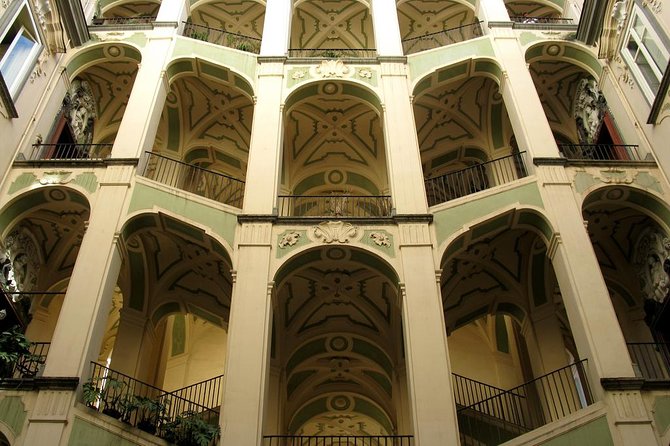
- Baroque civil architecture stops include major palazzi with standout staircases and façades.
- Coffee and food tastings are part of the route, including a historic tarallificio founded in 1920.
- Fontanelle Cemetery is a highlight and ties into Neapolitan folk belief and superstition.
- Group size stays limited (max 30), and it can feel intimate in practice.
Why Rione Sanità Works Better Than Typical Naples Tours
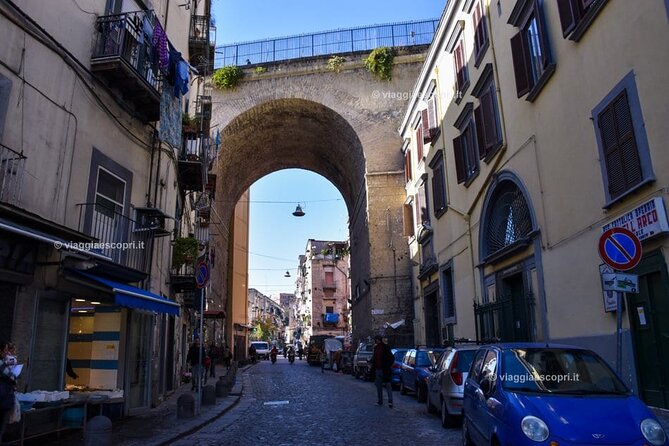
If your Naples plan is only churches, viewpoints, and quick photo stops, you’ll miss the city’s social heartbeat. Rione Sanità is different. It is Naples seen through residential streets, palazzi that show off power and taste, and cemetery traditions that explain local beliefs in a way no brochure can.
This is the kind of walking tour where you do not just look at buildings, you learn how people used to move through their world. That matters in Naples, where history is not locked behind glass. It lives in staircases, courtyards, street layout, and the way a neighborhood tells its own story.
Also, you get to beat the crowds. Even though Naples is always Naples, this route steers you away from the most obvious tourist trail. That alone changes the experience, because you can hear your guide and actually talk to yourself about what you are seeing.
You can also read our reviews of more tours and experiences in Naples.

Porta San Gennaro and Coffee: The Start That Gets You Oriented
You begin at Via Porta San Gennaro, and right away, the tour includes a coffee tasting. That sounds simple, but it is smart. Coffee at the start means you stop thinking in logistics and start thinking in place. You are also more likely to wake up your curiosity before the walk turns into a lesson in architecture and neighborhood identity.
From there, the route keeps moving. It is not a sit-and-watch kind of tour. You get short explanations at key moments, then you walk again, which helps you connect each stop to the street you just crossed.
One practical plus: the tour offers morning or afternoon departures, so you can choose a time when you feel best for walking and standing. Naples heat and light can change how buildings look, so timing can actually affect what you notice.
Palazzo Dello Spagnolo: Neapolitan Baroque Civil Power
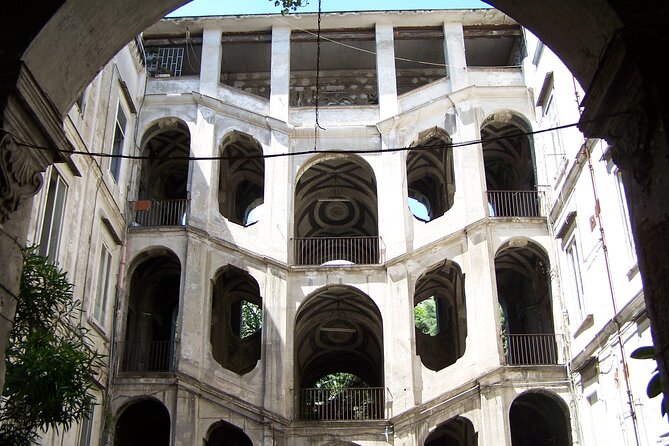
Next up is Palazzo Dello Spagnolo, a standout example of Neapolitan Baroque civil architecture. The highlight here is the building’s internal grandeur, especially the main double flight staircase, which acts like an indoor façade. In other words, this is not Baroque decoration for show in a museum sense. It is power made visible in stone and built into how people enter, move, and look.
You also stop for a food market visit, and that is more than a snack break. In this neighborhood, food is part of daily life and part of the public story. When you see a palace and then quickly move into market culture, you understand how status and everyday routine overlap in Naples.
A balanced note: this is a short stop. Around 10 minutes means you get the big idea and the key detail, not a long, lingering architecture lecture. If you love repeating the same staircase angle in photos, you might wish you had more time, but the walk keeps things flowing.
Borgo dei Vergini: Where Naples Stretches Back Through Time
Then you head into Borgo dei Vergini, often described as a place where the neighborhood’s evolution from ancient to modern Naples becomes visible in one urban sector.
What makes this stop feel meaningful is the theme: it is strongly connected to sacred spaces and cemetery traditions, favored historically by aristocratic and notable families. Your guide links this area to how people understood death, memory, and community roles. You are not just learning dates. You are learning the social logic behind why this part of town matters.
This is also a good moment to remember what kind of tour you are on. You are not hunting only for the most famous façades. You are building a mental map of how a neighborhood thinks.
Palazzo Sanfelice: The Monumental Naples You Can Actually See
After the Vergini area, the tour includes Palazzo Sanfelice, described as a monumental palace located within the Rione Sanità.
Palazzi like this are where Naples lets you read style as a language. In this neighborhood, architecture is not separated from identity. The way a palace sits in the streetscape, the sense of scale, and the look of the façade help you understand why certain families and institutions mattered.
Again, the stop is brief, so you should approach it with the mindset of spotting a few key details your guide points out, then letting those details guide your next turn. It is a walking tour, not a guided museum marathon.


Tarallificio Poppella and the 1920s Food Thread
One of the easiest ways to understand a place is through what people snack on. Here, the route includes Tarallificio Poppella, a historic pastry shop that was born in Naples in 1920.
Taralli are often treated as a casual street food, but a stop like this makes it clear that food can be tradition with a timeline. You get to connect the idea of longevity to something tangible. If the palazzi explain how Naples showed off status, the bakery stop explains how Naples kept culture in circulation.
Practical tip: if you have dietary constraints, a tasting-based stop means you should plan ahead. The tour data confirms tastings are part of the itinerary, but it does not list ingredient details, so do not assume everything is suitable. Quick heads-up to your guide can save you awkward moments mid-walk.
Fontanelle Cemetery: Folk Belief That Makes History Feel Personal
In Rione Sanità, one place tends to stop people in their tracks: Fontanelle Cemetery. It is often described as incredible and fascinating, and it comes with stories about a syncretic practice tied to superstition and folk beliefs in Neapolitan tradition.
This is the part of the tour where the mood can shift. Cemeteries are never neutral spaces, and here the meaning goes beyond architecture. You learn why certain rituals and beliefs formed, and how the neighborhood turned remembrance into something people could actively engage with.
The value for you is simple: if you have only seen Naples from afar, you will not understand how deeply local culture holds on to the spiritual and the practical at the same time. This stop gives you that missing layer.
If you are traveling with someone sensitive to intense topics, it is worth knowing this segment is meaningful and not just decorative.
Ending at Basilica di Santa Maria della Sanità: Renaissance and Baroque in One View
Your walk finishes at the Basilica di Santa Maria della Sanità in Piazza Sanità. The church architecture described along the route is clear and specific: a Greek cross plan with an apsidal presbytery, plus a façade set back from the road that makes it feel like the building is slightly withdrawing from street life.
You also get details about materials and style, including a portal in piperno and the fact that the basilica is referenced as a key point for Renaissance and Baroque art and architecture in Naples. That description matters because it gives you a framework. When you stand at the end of the tour and look back at what you walked through, the basilica becomes a capstone: sacred architecture tied to neighborhood identity.
This is also a good finish for photos, because you end your route in a recognizable landmark rather than drifting back into anonymous streets.
Price, Timing, and What You Really Get
The listed price is $24.74 per person, and the tour includes 2 hours of guide service. That might sound like a small amount, but the value is in the structure: you get multiple guided stops focused on architecture, neighborhood evolution, cemetery tradition, and food culture, all in a time window that is long enough to feel complete but short enough to stay fun.
The tour is also offered in English, which is a big deal in Naples. A neighborhood walk only works if the explanations are clear, and the high rating (4.9) and recommendation rate (99%) suggest the guide storytelling hits the mark.
Group size is capped at 30 travelers, but small groups are clearly possible in practice. One review even described a scenario with only two people. Even if you are not that lucky, a capped size helps keep the experience from turning into a herd.
One more timing angle: since you can choose morning or afternoon, you can pick the departure that suits your energy. If you tend to drag after lunch, go earlier. If you like softer light for walking, pick an afternoon slot.
Who This Tour Suits Best
This tour is ideal if you want Naples with context, not just a checklist. I think you will especially like it if you care about:
- Neighborhood history, told through streets and buildings
- Architecture you can relate to daily life, like palazzi and façades
- Local traditions, including cemetery culture and folk belief
- A walking pace that stays active but not exhausting
It is also a strong option if you are already doing the big Naples hits and want one day to feel more personal and off the main trail.
If you only want famous landmarks and long time inside major sights, you might find the short stop format less satisfying.
Should You Book Insolitaguida’s Rione Sanità Walk?
Yes, if your goal is to understand Naples beyond the obvious. For the price, you get a tightly guided neighborhood experience with real narrative stops, coffee and food culture woven in, and a cemetery segment that adds emotional and cultural depth.
Book it if you like walking tours that teach you how to look. Skip it only if you hate quick stops, prefer solo museum time, or want the kind of itinerary that revolves around big ticket monuments for hours.
If you do book, bring comfortable shoes and a curious mindset. Rione Sanità is the kind of place that rewards attention, and your guide will help you notice what most visitors miss.
FAQ
How long is the Rione Sanità experience?
It lasts about 2 hours.
Is the tour offered in English?
Yes, it is offered in English.
Where do I meet, and where does the tour end?
You start at Via Porta San Gennaro (Via Porta S. Gennaro, 80138 Napoli) and end at Basilica di Santa Maria della Sanità, Piazza Sanità 33, 80136 Napoli.
Do I receive a mobile ticket?
Yes, the experience includes a mobile ticket.
How large is the group?
The tour has a maximum of 30 travelers.
Can children join the tour?
Children must be accompanied by an adult.
What is the cancellation policy?
The experience is non-refundable and cannot be changed for any reason. If you cancel or request an amendment, the amount you paid is not refunded.
More Tour Reviews in Naples
Not for you? Here's more nearby things to do in Naples we have reviewed









Tour Reviews, compared.
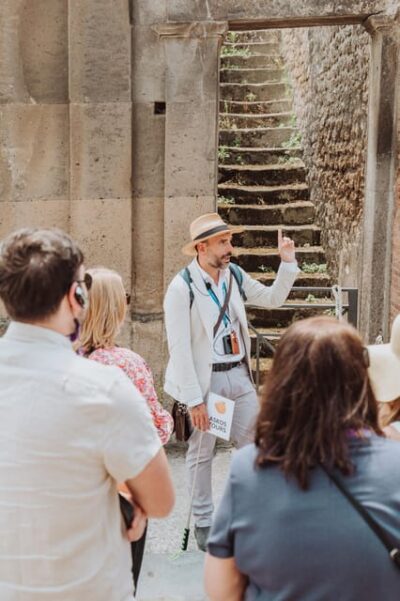 ★ 4.8Pompeii: Entry Ticket and Guided Tour with an ArchaeologistFrom $3519,459 reviews
 ★ 4.2Pompeii: Entry Ticket with Optional Audio GuideFrom $2612,360 reviews
 ★ 4.8Pompeii: Small Group Tour with an ArchaeologistFrom $4012,264 reviews
 ★ 4.3Pompeii Ruins & Mount Vesuvius Day TourFrom $12011,459 reviews
 ★ 4.6Sorrento, Positano and Amalfi Full-Day TourFrom $10710,988 reviews
 ★ 5.0Sorrento, Positano & Amalfi Coast – Small Group TourFrom $768,643 reviews
 ★ 4.6Catacombs of San Gennaro Entry Ticket & Guided TourFrom $157,941 reviews
★ 5.0Pompeii Small Group Tour with an ArchaeologistFrom $356,593 reviews
★ 4.6Catacombs of San Gennaro Entry Ticket & Guided TourFrom $157,941 reviews
★ 5.0Pompeii Small Group Tour with an ArchaeologistFrom $356,593 reviews