

Tour review · TOUR REVIEWS
Pompeii Small Group Tour with an Archaeologist
Pompeii hits harder with an archaeologist. This small-group tour starts at Porta Marina Superiore and gets you into the ruins fast, then guides you through the Forum area, standout houses, the oldest baths, and Pompeii’s big theater. It is a focused way to turn scattered ruins into a city with a story.
What I like most is the guide’s human scale storytelling. You do not just look at walls, you hear what daily life probably felt like, including the famous eruption victims and what the site still tells us today. The second big win for me is practical pacing, with a route that hits heavyweights like the Basilica and Forum, the House of Menander, and the Stabian Baths without feeling like you are sprinting the whole time. One consideration: 2 hours moves quickly through a huge archaeological park, so you will be seeing highlights, not every corner of Pompeii.
If you do not mind walking on uneven ground, this tour is one of the smartest ways to spend part of your day here.
Key things you should notice before you go
- Archaeologist-guided, small group (max 20): You get context fast, without being swallowed by a huge crowd.
- Porta Marina Superiore meeting point with Askos Tours sign: Easy start, direct entry into the ruins.
- Pompeii Express skip-the-line ticket included: Less time waiting, more time looking at real things on site.
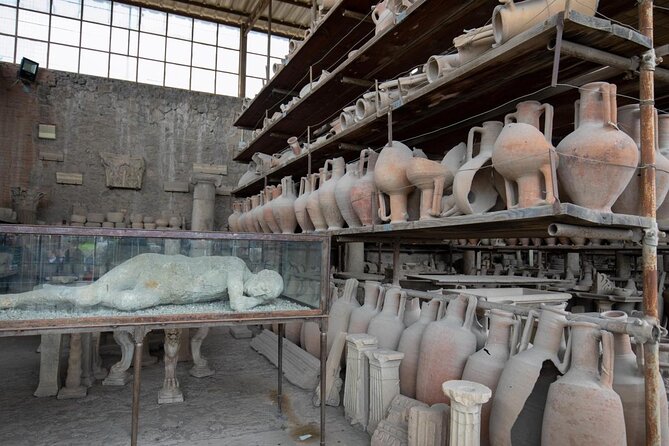
- Plaster casts at the Granaries of the Forum: A serious moment that explains what survived, what did not, and what we learned later.
- Teatro Grande at the end: You finish at Pompeii’s largest theater, so the visit closes with scale.
Meeting at Porta Marina Superiore, then straight into the ruins
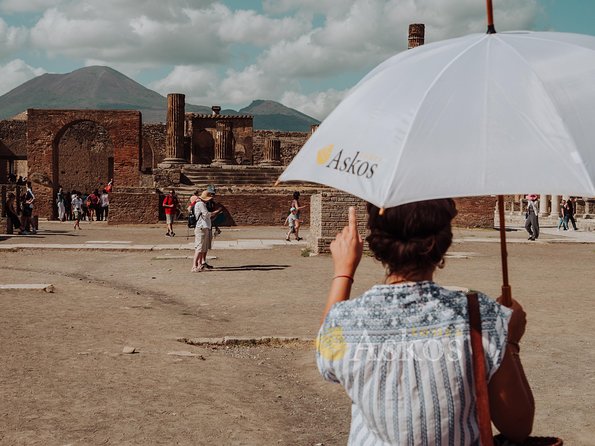
You meet at the Porta Marina Superiore entrance inside the Pompeii Archaeological Park. The guide is supposed to be holding an Askos Tours sign at the meeting spot, so you can spot them without guesswork.
From there, you head directly inside the ruins with your included skip-the-line entry ticket. That matters because Pompeii’s entry lines can eat up your time, especially in peak season. With this tour, you get your bearings while the site is still fresh in front of you, not after you have already lost half your morning or afternoon waiting.
This is also where the small-group format helps. With a maximum of 20 people per guide, you are less likely to get stuck behind a wall of bodies while your guide is trying to explain what you are seeing.
You can also read our reviews of more tours and experiences in Pompeii.
Pompeii in 2 hours: why this route works
Pompeii is huge. Even when you know what you want to see, the time crunch is real. This tour does a good job of focusing on the parts that help you understand the city quickly: the civic center (Basilica and Forum), the daily-life hubs (houses and baths), and the performance space (the theaters). Then you add the more chilling human evidence from the eruption site area.
The time breakdown is tight but not chaotic. Expect short stops like 10 to 15 minutes at each major highlight, plus walking breaks along the main street. The upside is you see many of Pompeii’s most recognizable areas. The downside is exactly what you would predict: you cannot linger forever in one spot or wander completely off-route.
Basilica and Forum: the city’s public face
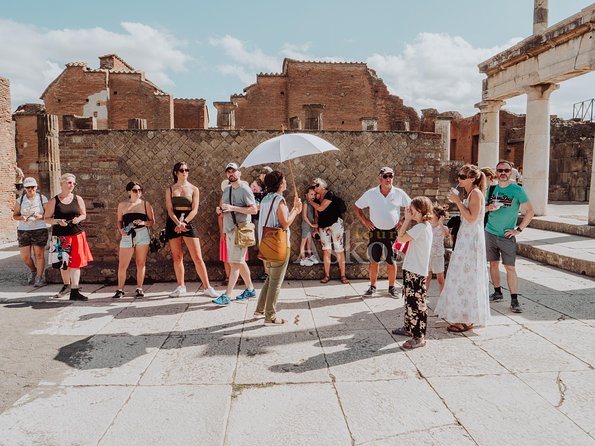
Your first major stops move you into Pompeii’s public life. The Basilica is an open portico that functioned as shelter for merchants and other activities. In plain terms, it was a practical meeting place where business happened under cover. When you look at a structure like this without context, it can feel like just another old building. With a guide, it becomes a place where people would have passed through every day.
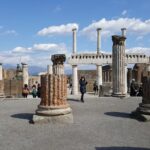
Next comes the Forum, Pompeii’s ancient main square. This is the social and administrative heart of the city. The tour gives you a look at the Forum as a space, not just as scattered ruins. You start seeing how the buildings and open areas would have worked together, the same way a modern plaza shapes foot traffic and conversations.
One small but important tip: take a minute to look around before you move. Even in a short stop, pausing lets you understand the lines of sight and the relationships between areas. That is what turns a photo into understanding.
Granaries of the Forum and the plaster casts moment
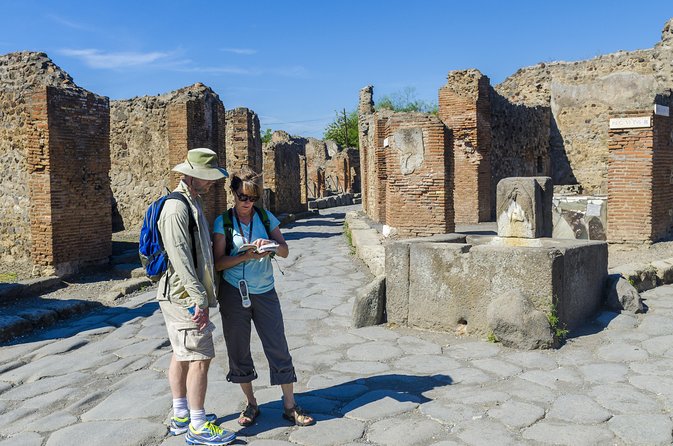
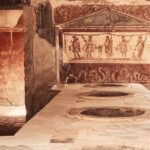
This is the stop that tends to make the tour feel real. The granaries in the Forum area include marble tables and features connected to fountains at house entrances. Then you get to the famous plaster casts of victims, plus a cast of a dog and a tree.
The practical value here is that the guide is not treating the casts as a spooky sideshow. You learn how Pompeii was preserved, what the casts represent, and why the evidence matters. It shifts the way you look at the rest of the ruins, because you stop thinking only about architecture and start thinking about people.
If you tend to get emotionally affected by disaster history, give yourself a little breathing room here. It is okay to take your time at this stop, even if the schedule is tight. A short pause to absorb what you are seeing will pay off later when you visit other houses and street scenes.
House of Menander: artwork you can actually notice
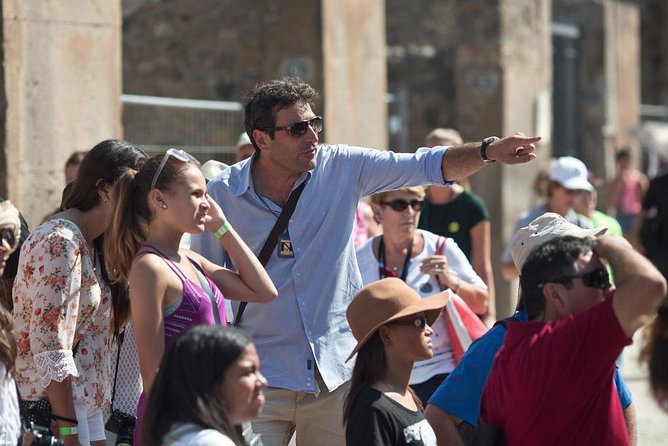
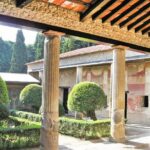
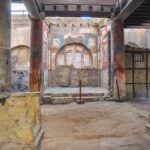
Then you move into domestic Pompeii with the House of Menander. This house is one of the richest and most magnificent in Pompeii when it comes to architecture, decoration, and what has been found inside.
Here is how the tour makes this useful: you are not left staring at fragments. The guide helps you connect the house layout and decorative choices to the idea of status and daily routine. You also get exposure to frescoes and mosaics, which are easy to miss when you walk too fast or do not know what you are looking at.
A tip that makes a difference: zoom your attention to one or two details rather than trying to photograph everything. Even if you only spend a few minutes focusing on the best-preserved area, you will come away with a stronger mental image of how these rooms looked when they were lived in.

Stabian Baths: why the oldest thermal complex matters

The Stabian Baths, also called Terme Stabiane, take you to an essential part of Roman life. These baths occupy a vast area, and the tour frames them as the oldest thermal complex in the city.
Bathrooms and baths sound basic until you understand their social role. Baths were not only for cleanliness. They were for meeting people, unwinding, and keeping a routine. With a guide, the size and the layout make more sense, and you can start imagining the flow of people through the spaces.
One practical consideration is that bath areas can feel visually busy. That can be good, because there is a lot to see, but it also means you will benefit from stopping when your guide stops. If you wander off too far during a quick segment, you may miss the point the guide is making.
Lupanar (Pompeii’s brothel ruins): history without the sensationalism
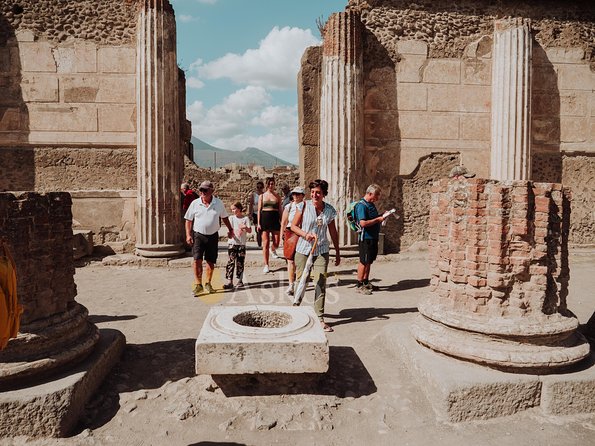
Next is the Lupanar, the most famous brothel ruin in Pompeii. It is also one of the most discussed areas in Pompeii, because it is so specific in its clues about commercial sex and the way sexuality was embedded in city life.
What helps is that the tour includes this in the same structured narrative as civic buildings and houses. It is not treated as a random shock stop. Instead, it becomes part of a broader picture of how different kinds of work and behavior fit into the city.
If you are uncomfortable with explicit topics, it helps to know what you are walking into ahead of time. Your best move is to let your guide explain it directly, then decide how long you want to linger before moving on.
House of the Faun and the Teatro Piccolo peek
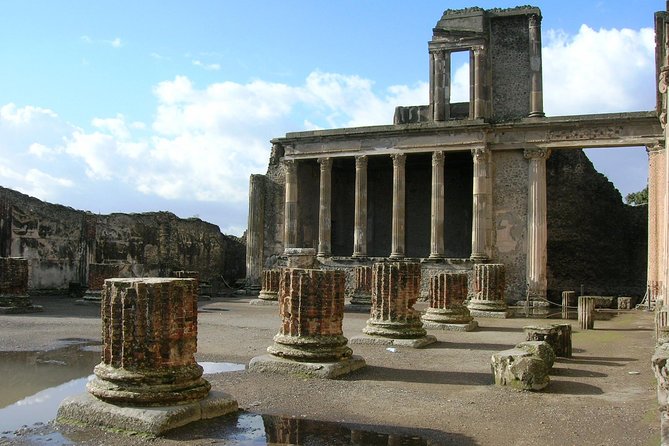
You then pass through the House of the Faun, one of Pompeii’s largest private residences. This house works as a contrast to the public spaces earlier. It shows you how wealth showed up in scale, decoration, and the overall feel of a home designed to impress.
After that, you get a look at the so-called Teatro Piccolo. Even though it is not the final big stop, it helps you understand that Pompeii was designed for entertainment and community gatherings, not only for work and shopping.
Teatro Grande: finishing at Pompeii’s biggest stage
The tour ends inside the ruins at Teatro Grande, Pompeii’s largest theater. You finish at the scale point, which is a smart choice. After seeing houses, baths, and the civic heart, the theater gives you the city’s public performance energy.
If you have not visited a Roman theater before, do not just stare at the seats. Look at the shape, the surrounding spaces, and how audiences would have gathered. With a guide, the setting turns into an event you can picture.
Because the tour finishes inside the park, you may have a window to keep exploring afterward at your own pace. Just remember that Pompeii is easy to get turned around in if you keep walking without a plan.
Price and value: what $35.67 gets you (and what it does not)
This tour costs $35.67 per person and runs about 2 hours. For that money, you get more than a generic walking tour.
Here is the value math that matters:
- You get a Pompeii Express entrance ticket included.
- You get a licensed guide with an archaeological background.
- You get a small group capped at 20 people.
- You may get headsets for groups of 16 or more, which improves the odds you actually hear the details.
What it does not do is replace a full-day visit. If you want every major site, quiet corners, and lots of time for photos and repeated stops, plan for more time beyond the tour. Think of this as a high-impact orientation plus story time, not a full survey of everything excavated.
Group size, headsets, and comfort tips that actually help
The tour is capped at 20 people. Headsets are included for groups of 16 or more, which is a real quality-of-life factor in a place where sound can bounce around and where you may not always be standing right next to the guide.
Wear comfortable shoes. Pompeii has uneven ground, steps, and ramps, and some streets feel steeper than you expect. One review note also pointed out that shade is limited, so bring sun protection.
I recommend you show up with:
- Sturdy walking shoes (not just “comfortable,” truly supportive)
- Sunscreen and sunglasses
- A small bottle of water
- A hat if you run hot
If you are traveling with mobility concerns, this tour is not recommended because of steps and ramps. Mobility scooters are also not allowed. If you need a different format, it is worth asking for a private tour that fits your movement level.
Who this Pompeii archaeologist tour is best for
This tour is a great fit if:
- It is your first trip to Pompeii and you want the main highlights explained.
- You like archaeology with storytelling, including what the eruption evidence means.
- You want an efficient route that gets you to civic spaces, houses, baths, and theaters in one go.
It is also a good fit for families where teens can handle a structured walk. Guides in the real world often keep attention by using humor and clear explanations, and that kind of energy tends to work well when you are dealing with a site this big.
If you are a serious Pompeii super-nerd who wants to spend 4 to 6 hours and go deep into every neighborhood, you might feel like the tour is too short. In that case, book the tour as your starter plan, then switch to self-guided exploring afterward.
Guides and pacing: what to look for on the day
Your guide matters here. In the field, you will see that different archaeologist-guides bring different emphases, even within the same route. Names like Alessandra, Paolo, Teresa, Vincenzo, Antonio, Julia, Rafaela, and Amadeo have shown up in past experiences, and the strongest pattern is clear: the best tours use storytelling and context while still keeping things moving.
Two things to watch for when you meet your guide:
- Do they explain what you are seeing before you move on?
- Do they check that the group can handle the terrain?
If the headset system ever has issues, stay calm and keep close to the guide. The tour depends on the guide’s timing and your ability to follow along.
Should you book this Pompeii Small Group Tour with an Archaeologist?
Book it if you want the smartest “first hit” at Pompeii: skip-the-line entry, an archaeologist guide, and a well-chosen set of major sites in about 2 hours. The price is reasonable for what you get, especially because the entrance ticket is included and the group stays capped.
Skip it or consider a longer format if:
- You want to linger at just one house or one section of ruins.
- You have mobility limitations that make uneven ground and steps difficult.
- You prefer fully self-guided wandering with no structure at all.
If you are deciding between doing nothing but maps or doing this structured tour first, my advice is simple. Start with a guide for context, then explore on your own with confidence.
FAQ
Where do I meet the guide for this Pompeii tour?
You meet at the Porta Marina Superiore entrance of the Pompeii Archaeological Park. The guide will be holding a sign with the company name Askos Tours.
How long is the Pompeii Small Group Tour with an Archaeologist?
The tour runs about 2 hours (approx.).
Is the entrance ticket included, and do I skip the line?
Yes. The tour includes the Pompeii Express entrance ticket, and you head into the ruins with skip-the-line entry.
How big is the group?
The tour is a small group with a maximum of 20 travelers per guide.
What language is the tour offered in?
The tour is offered in English.
Do we get headsets?
Headsets are included for groups of 16 or more.
What is included in the tour price?
Included items are guidance and assistance for the entire duration, the Pompeii Express entrance ticket, small group size (max 20), a licensed guide with archaeological background, and headsets for groups of 16 or more.
Is food or transportation included?
No. Food and drinks are not included, and transportation is not included.
Is this tour good for families or children?
Children must be accompanied by an adult, and most travelers can participate.
Are there any important mobility or accessibility restrictions?
Mobility scooters are not allowed. The tour is not recommended for travelers with mobility issues or impairments due to steps and ramps.
More Tours in Pompeii
More Tour Reviews in Pompeii
Not for you? Here's more nearby things to do in Pompeii we have reviewed






Tour Reviews, compared.
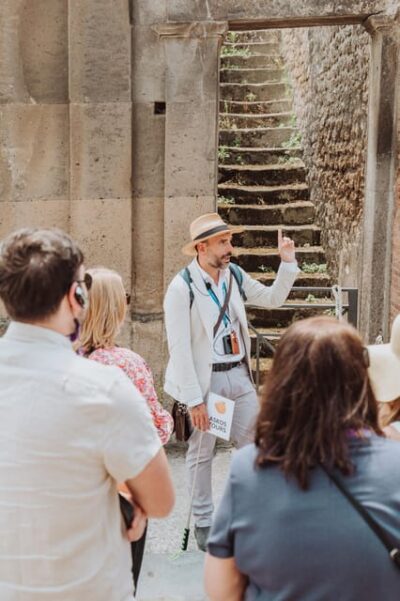 ★ 4.8Pompeii: Entry Ticket and Guided Tour with an ArchaeologistFrom $3519,459 reviews
 ★ 4.2Pompeii: Entry Ticket with Optional Audio GuideFrom $2612,360 reviews
 ★ 4.8Pompeii: Small Group Tour with an ArchaeologistFrom $4012,264 reviews
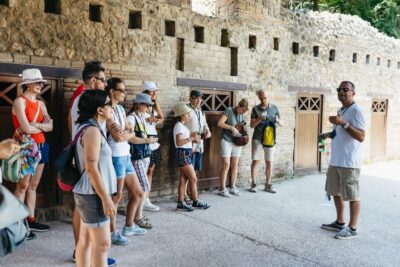 ★ 4.3Pompeii Ruins & Mount Vesuvius Day TourFrom $12011,459 reviews
 ★ 4.6Sorrento, Positano and Amalfi Full-Day TourFrom $10710,988 reviews
 ★ 5.0Sorrento, Positano & Amalfi Coast – Small Group TourFrom $768,643 reviews
 ★ 4.6Catacombs of San Gennaro Entry Ticket & Guided TourFrom $157,941 reviews
 ★ 4.9Downtown Tour with Veiled Christ & St Clare TicketsFrom $576,462 reviews