

Tour review · TOUR REVIEWS
Pompeii: Small Group Tour with an Archaeologist
Pompeii hits hard the minute you step inside. You get a focused walk through an authentic UNESCO time capsule, guided by an archaeologist who helps you read the city instead of just staring at stones. I especially like the small-group feel (you actually hear your guide, even in busy areas with headsets for larger groups) and the skip-the-ticket-line advantage that gets you into Pompeii faster. The one real drawback is the terrain, there are steps, ramps, and uneven ground, so it is not a good fit for wheelchairs or many mobility issues.
You can choose a 2-hour shared format for the big highlights or a 3-hour option that adds the Villa of the Mysteries and its famous frescoes. Either way, you start at Porta Marina Superiore, work your way toward the Forum and major public sites, then finish with time to explore on your own while your Roman “orientation map” is still fresh.
Key things I’d bet on (before you book)
- Archaeologist-led explanations that turn streets and walls into real daily life
- Porta Marina Superiore to the Forum route for the easiest first-time orientation
- Hands-on style details like how to spot commercial spots versus homes
- The Villa of the Mysteries option if you want extra fresco time
- Freedom to continue after the guided portion, with good guidance on where to go next
- Practical pacing that tries to dodge the densest crowds when possible
Pompeii in 2 hours, or 3 with the Villa of the Mysteries
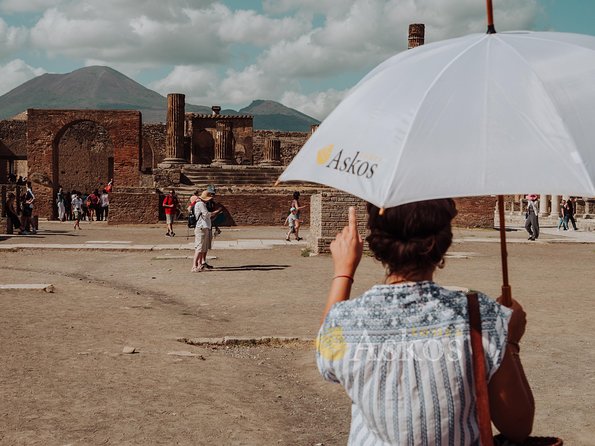
This is a short tour in the best way. Pompeii is huge, and if you go in cold you end up bouncing between impressive spots without understanding what you are looking at. Here, you get a guided storyline built around how Pompeii worked, from public life to private homes.
Choose the 2-hour version if you want a smart hit list: Porta Marina Superiore, a walk through the main streets, the Forum area, and major sights like the Basilica, theaters, and key houses. Choose the 3-hour version if frescoes matter to you, because it includes a visit to the Villa of the Mysteries, where the wall paintings are the headline.
One small note: even when the itinerary is planned, it can shift slightly due to crowds or temporary closures. That is normal at Pompeii, and it is one reason a guide is useful. You do not just move, you move with a plan.
You can also read our reviews of more tours and experiences in Pompei Campania.


Starting at Porta Marina Superiore, then finding the Forum fast
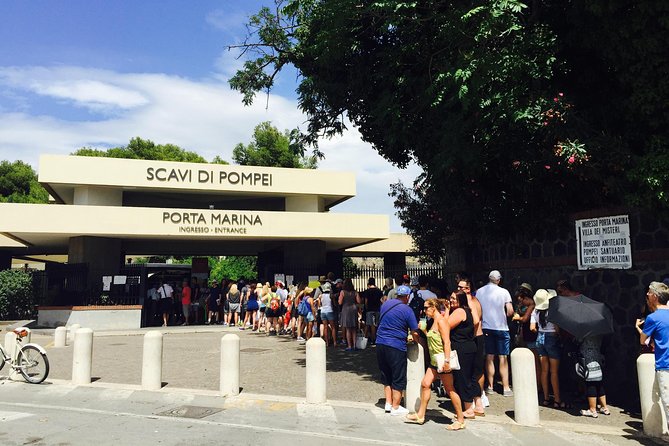
The tour starts at the ancient city gate, Porta Marina Superiore, one of Pompeii’s entry points. Walking in there is more than a dramatic start. It gives you scale and layout cues right away. You also get the sense of how people moved from the city edges into the urban core.
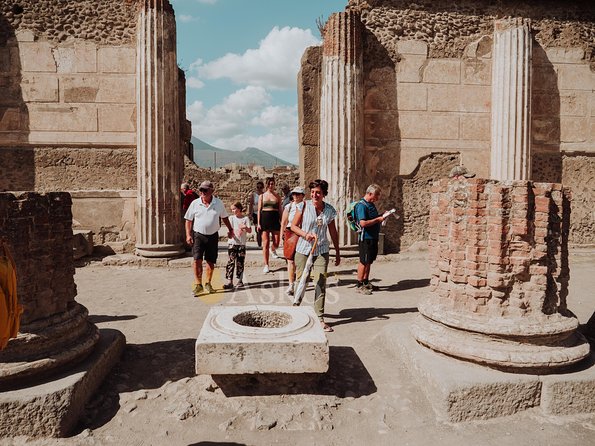
From the gate, you head along the main streets and into the heart of public life, the Forum. This is where your guide’s job really shows. The Forum can look like a collection of ruins if you are not told what each space was for. With an archaeologist explaining it, you start to connect the dots: where civic decisions happened, how crowds gathered, and why the setting matters.
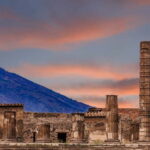
You may also get a view of Mount Vesuvius overlooking the city. That sight does not just add drama. It helps you understand the eruption context without turning the whole visit into a geology lecture. It is history you can point at.
Public Pompeii: Basilica, temples, baths, bakery stops
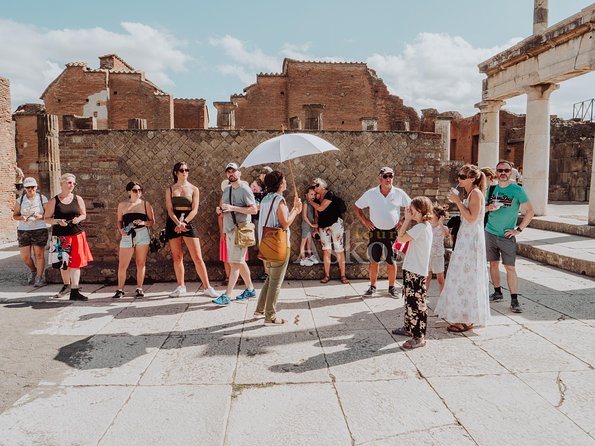
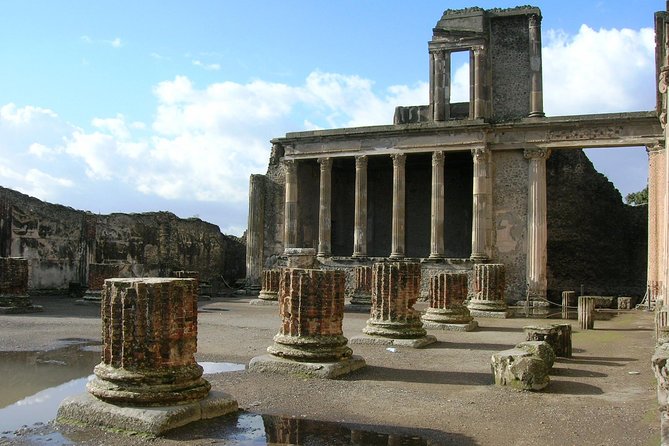
In the Forum area, the tour leans into the sites that explain how Romans ran their days. You are guided through stops like the Basilica, which functioned as a business and legal center. It is one of those buildings that makes more sense when someone explains the purpose first, then lets you look at the architecture second.
You can also expect coverage that may include thermal baths, temples, and even a bakery. It sounds random until you realize Pompeii is not only temples and big houses. It was routine life: bathing, shopping, religious practice, and food.
Then you reach the big entertainment and assembly highlights, including the Large Theatre and the Great Theater of Pompeii. The theater sections are often where people go, wow, because you can sense how performance and crowd energy worked. Your guide tends to add the human layer, not just the layout.
If you are coming from a modern city, it helps to remember Pompeii was packed and loud. A good guide makes that feel plausible without exaggerating.
The homes that teach you how Pompeians lived (House of the Vettii)
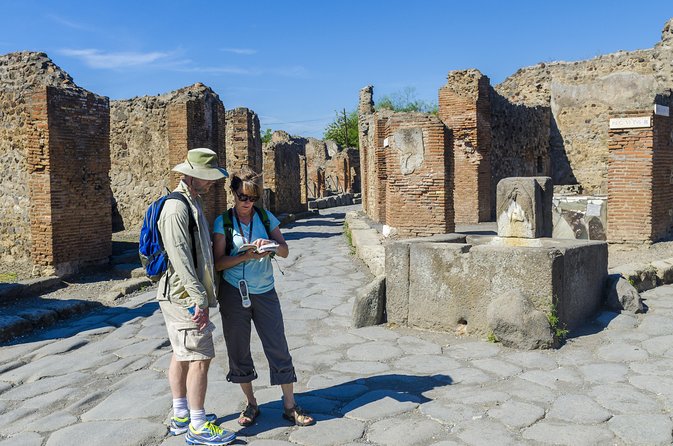
The tour includes key house visits such as the House of the Vettii, and you’ll likely hear about household life in a way that feels grounded in what survived. Pompeii’s houses are not museum dioramas. They are places that still show how wealth, work, and taste played out in space.
This is also where frescoes, artwork, and mosaics matter most. Seeing preserved wall paintings up close changes your brain from viewing ruins as objects to viewing them as rooms. Even when your guide moves quickly, the goal is to help you notice details you would normally miss: how decoration works as status, how rooms relate to daily routines, and why certain areas felt more public than others.
Some tours also include houses like the House of Menander or the House of the Faun. Even if you do not have time for everything, these stops help you understand that Pompeii had neighborhoods of different lifestyles, not just one kind of rich villa.
The Villa of the Mysteries: why the frescoes steal time
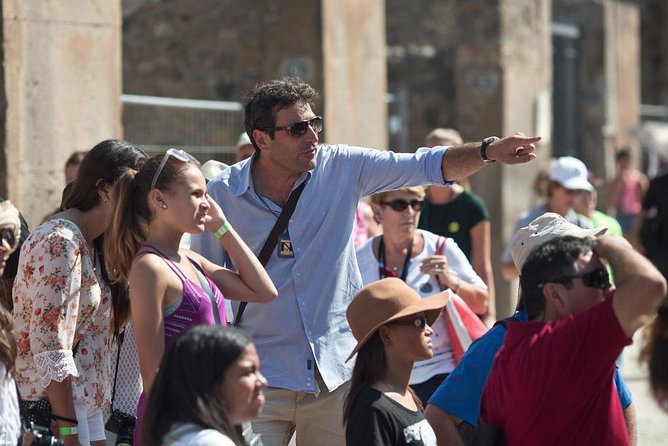
If you book the 3-hour option, you are adding the Villa of the Mysteries. This is the portion where fresco lovers usually go quiet for a bit. The wall paintings are the reason people choose the longer tour.
What makes this stop valuable is the way your guide tends to frame it. Instead of treating the frescoes as random art panels, you get context about what people used those spaces for and how imagery functioned in Roman culture. You also get a chance to slow down and look carefully, which is hard to do when your day is a sprint.
If you only do the 2-hour tour, you may still want to come back for fresco-focused wandering after. The timing is your friend here: the tour ends, you get your bearings, and then you can choose whether you want more art, more street life, or more neighborhoods.


Lupanar and the adult side of Pompeii (handled with sensitivity)
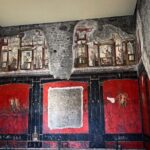
One of Pompeii’s most talked-about sites is the Lupanare, the brothel. Here, the tour does not pretend it is not there. You learn what the name is tied to, and you see the preserved stone beds and frescoes.
It can be a lot, and your guide’s approach matters. In the experience notes I pulled from, guides handled this material with sensitivity, and kids in mixed groups often ended up more focused on the setting and story than on the adult context.
Also, a practical point. Parts of Pompeii can include graffiti. If you are watching for how adult themes are discussed, this is the stop where it may come up. You can use it as a gauge for your own comfort level.
If you feel unsure, you can ask your guide before you reach it, and you can also shift your own attention to architectural details and preservation. Pompeii is not only provocative scenes. It is also a record of how everyday people lived next to each other, including in uncomfortable places.
Plaster casts: making the eruption visible in a new way
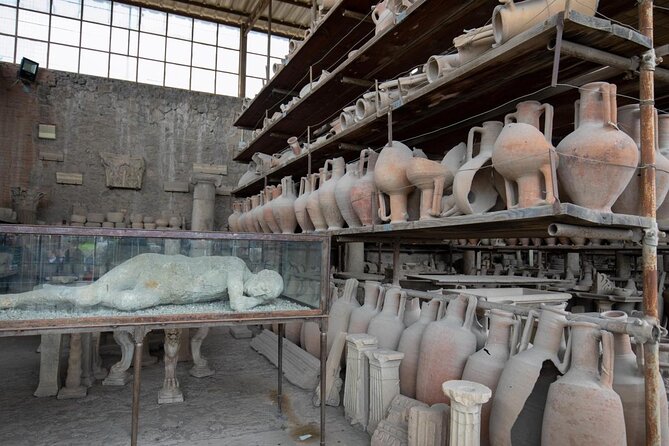
Another key stop is the display of plaster casts made from people who were in the city at the time of the eruption. This moment tends to change how people feel about Pompeii. It is one thing to read about 79 AD. It is another to see shaped remains that represent real individuals.
One helpful detail: the casts are not handled like loose “in-house” objects anymore. You might find the main displays presented in sealed cases, often described as three casts behind glass. That matters because it sets expectations. You should not count on wandering through a room where everything is open and close. Still, the display does its job.
This stop pairs well with what you saw earlier about Vesuvius and the city layout. By now you have enough context to feel why the eruption froze Pompeii in place.
Timing, crowds, and how to spend the extra time after the tour
The best part of this format is the “guided start, flexible finish.” Your tour ends and you are free to continue exploring inside the archaeological site. The guide typically leaves you with tips on where to go next, and those suggestions can save hours.
Since Pompeii closes at a fixed time each day, you should think about your start time. A morning or mid-morning slot often gives you the most options for follow-up wandering once the guided portion ends. If you go late in the day, you can still enjoy the guided highlights, but you might hit closures on more distant areas afterward.
Expect manageable walking during the tour, but the site is still large. It helps to plan your “after” priorities in advance, especially if your group has different tastes, like theaters versus frescoes versus houses.
One more practical detail: headsets can make the narration easier, particularly when you are in a crowd. Even with ear gear, some systems can feel harder to use than you expect, so check how your headset fits early.
What makes the guides so good, and why it matters at Pompeii
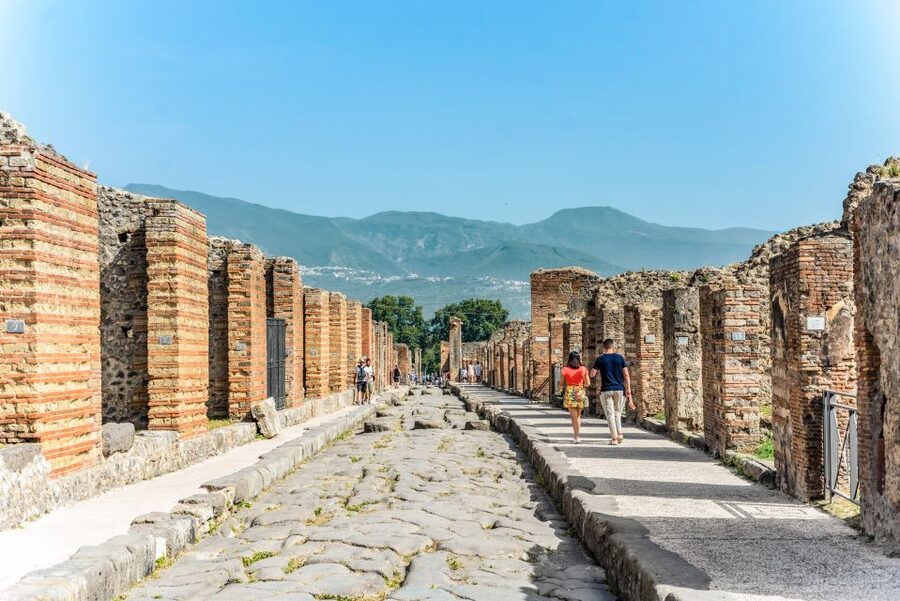
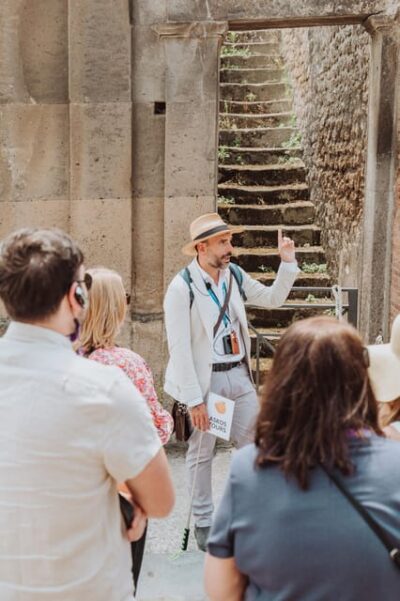
Pompeii is one of those places where the difference between a decent tour and a great tour is huge. The best archaeologist guides teach you how to look. They point out small tells, explain how spaces worked, and answer questions without turning the visit into a speedrun.
In the guide examples from the experience record, I saw a pattern: guides like Roxanne and Alexandra were praised for being easy to listen to and for keeping the group engaged with humor. Guides including Alessandra and Paulo were also noted for making the ruins feel like living places, not static ruins. Others, like Anna and Teresa, stood out for adding serious on-site excavation context, which is a big deal when you want accuracy instead of generic talking points.
Even the “how” gets attention. One guide example noted that some routes avoid the most congested areas, which can make the experience feel calmer and more personal. That is not just comfort. It improves your learning because you can actually see what the guide is pointing at.
If you want a personal recommendation in plain terms: pick the language you can understand best, then show up ready to walk and ask questions. That combo tends to produce the best memories.
Price and value: is $40 a fair deal?
At about $40 per person, this tour is priced like a smart orientation tool, not a luxury add-on. You get several value pieces bundled together:
- Pompei Express entry ticket (so you are not paying separately for entry)
- A 2- or 3-hour guided tour led by an archaeologist
- Headsets for groups of 16 or more, which helps keep audio clear
- Skip-the-ticket-line benefits, which is huge at Pompeii
- Time to explore after the official tour, so you are buying both guidance and flexibility
You also avoid one common first-timer trap. Pompeii can swallow your time if you do it unguided. Even if you are a quick reader of signs, you still miss the “why” behind the layout. This tour is built to fix that in a short window.
Where the value might be weaker is if you already know Pompeii well or you strongly prefer total self-guided wandering with no scheduled stops. In that case, you may feel the tour is trying to pack too much into too few hours. But for most first visits, the balance here feels fair.
Who should book this Pompeii archaeological tour
This works best if you:
- Want a first-time Pompeii orientation that actually explains daily life
- Care about frescoes, mosaics, and wall art, not only the big monuments
- Like stories with context, and you enjoy asking questions
- Prefer a short guided plan followed by self-guided roaming
It may not work as well if you:
- Have mobility limitations, because the route involves steps, ramps, and uneven ground
- Expect luggage-friendly touring, since luggage or large bags are not allowed
- Want a fully self-paced visit from start to finish, because this is structured around guided stops
Also, children must be accompanied by an adult. If you bring kids, the pacing is usually described as not too heavy on the feet, but the adult-themed content at certain sites means you should plan how you want it handled.
Quick planning checklist for your day at Pompeii
- Bring an ID card or passport (a copy can be accepted)
- Wear shoes that handle uneven surfaces
- Expect no smoking and no luggage or large bags
- If you need to store a small item, there is a free cloakroom next to Porta Marina Superiore, subject to availability
- Know that meeting points can vary by booking option, so double-check your exact start spot the day of
Should you book Pompeii: Small Group Tour with an Archaeologist?
If it is your first time at Pompeii, I think this is one of the simplest “get the most out of it” choices. You are paying for clarity and momentum: you walk in, you understand what you are seeing, and you leave with a map for where to spend your remaining time.
Skip it only if your mobility needs do not match the site’s steps and uneven paths, or if you already have a strong Pompeii game plan and prefer to wander without guided structure. Otherwise, the short guided window plus the option to roam afterward makes it a high-value way to meet Pompeii on its own terms.
FAQ
How long is the Pompeii small-group or private tour?
It runs 2 to 3 hours, depending on the option you choose.
What is included in the tour price?
You get Pompei Express entry ticket and a 2- or 3-hour guided tour by an archaeologist. You also get headsets for listening to the guide for groups of 16 or more, plus freedom to explore the archaeological site on your own after the tour.
Do I need to buy a ticket for the archaeological site separately?
No. Entry is included, and you also get skip-the-ticket-line service.
Where does the tour start?
The meeting point may vary depending on the option you booked.
Is there a private tour option?
Yes, private group tours are available.
What languages are offered?
The live guide is available in French, Spanish, German, Portuguese, English, and Italian. Shared and private options do not always offer the same languages, so you should check what is available for your chosen option type.
Are there any restrictions on what I can bring?
Smoking is not allowed. Luggage or large bags are not allowed, and mobility scooters are not allowed.
Do I need to bring identification?
Yes. Bring a passport or ID card, and a copy is accepted.
Is this tour suitable for wheelchair users or people with mobility impairments?
No. It is not recommended due to steps and ramps and the terrain, which includes steep climbs and uneven ground.
Is there storage for belongings?
There is a free cloakroom service located next to the Porta Marina Superiore entrance, subject to availability.
More Tours in Pompei Campania

More Tour Reviews in Pompei Campania
Not for you? Here's more nearby things to do in Pompei Campania we have reviewed




Tour Reviews, compared.
 ★ 4.8Pompeii: Entry Ticket and Guided Tour with an ArchaeologistFrom $3519,459 reviews
 ★ 4.2Pompeii: Entry Ticket with Optional Audio GuideFrom $2612,360 reviews
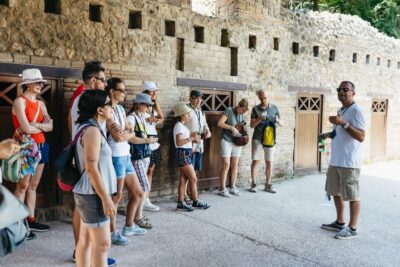 ★ 4.3Pompeii Ruins & Mount Vesuvius Day TourFrom $12011,459 reviews
 ★ 4.6Sorrento, Positano and Amalfi Full-Day TourFrom $10710,988 reviews
 ★ 5.0Sorrento, Positano & Amalfi Coast – Small Group TourFrom $768,643 reviews
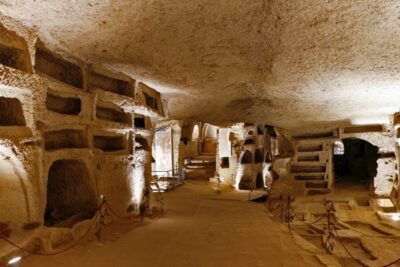 ★ 4.6Catacombs of San Gennaro Entry Ticket & Guided TourFrom $157,941 reviews
 ★ 5.0Pompeii Small Group Tour with an ArchaeologistFrom $356,593 reviews
 ★ 4.9Downtown Tour with Veiled Christ & St Clare TicketsFrom $576,462 reviews