
Tour review · TOUR REVIEWS
Pompei: the Latest Discoveries with your Archaeologist
Pompeii is never just a walk. This 2 hour guided visit focuses on the latest discoveries and restorations happening right now, led by an archaeology expert, so you see more than the usual postcard stops. I especially love the emphasis on the new openings in Regio V and the attention to how artworks like frescoes and mosaics are being protected and brought back to view. One possible drawback: it’s not a “wander at your own pace” tour, so if you want total freedom, you may find the structure a bit guiding-heavy.
You meet at Porta Marina Superiore, then your guide builds the story of Pompeii from the 79AD eruption of Mt. Vesuvius, including the plaster casts of bodies, before you move through key areas like the Forum and Macellum. The group is kept small, and you have a headset if the group gets larger, which helps when the guide is pointing out details you might otherwise miss.
Key highlights worth planning for
- Porta Marina Superiore start for an entrance that feels Roman, and gets you oriented fast
- Regio V latest digs in Pompeii’s Regio V, where restoration and discovery are ongoing
- House of the Vettii restoration story tied to a 27 year work period finished last year
- Active excavation at Insula dei Casti Amanti where photos or video are not allowed for security
- Torre di Mercurio XI views from a defending tower that gives you a higher perspective over Pompeii
Entering Pompeii from Porta Marina Superiore (and why it matters)
Starting at Porta Marina Superiore changes how the whole visit feels. Instead of arriving at Pompeii and immediately getting shuffled into a standard flow, you begin at an original Roman gate, with your guide setting the history as you move in. You also get your bearings quickly, which matters a lot at Pompeii because the site can feel like a maze once you’re inside.
This is also practical: the meeting point is clear, and you end back near where you start. That means less time trying to figure out where you are supposed to go, and more time with your guide when the details are freshest.
You can also read our reviews of more tours and experiences in Pompei Campania.



Mt. Vesuvius 79AD, plaster casts, and the guide’s pacing
One of the best parts of a Pompeii visit is getting the emotional timeline right. Here, your guide introduces Pompeii and the tragedy of the Mt. Vesuvius eruption during the season of Emperor Titus in 79AD, and you’ll see the plaster casts of the bodies. It’s not just a graphic moment, it’s a story device that your guide can use to connect what you’re about to see to real people and real choices.
Also, the pacing is built for explanation. One review mentioned a visit that ran a bit past the scheduled time, without feeling rushed, which tells me the guide’s style is to slow down where it counts. That’s exactly what you want for Pompeii, because the “wow” moments are often in small observations, like how an artwork survived or how a wall was stabilized.
The Forum Bath House reopening, and how restoration looks up close
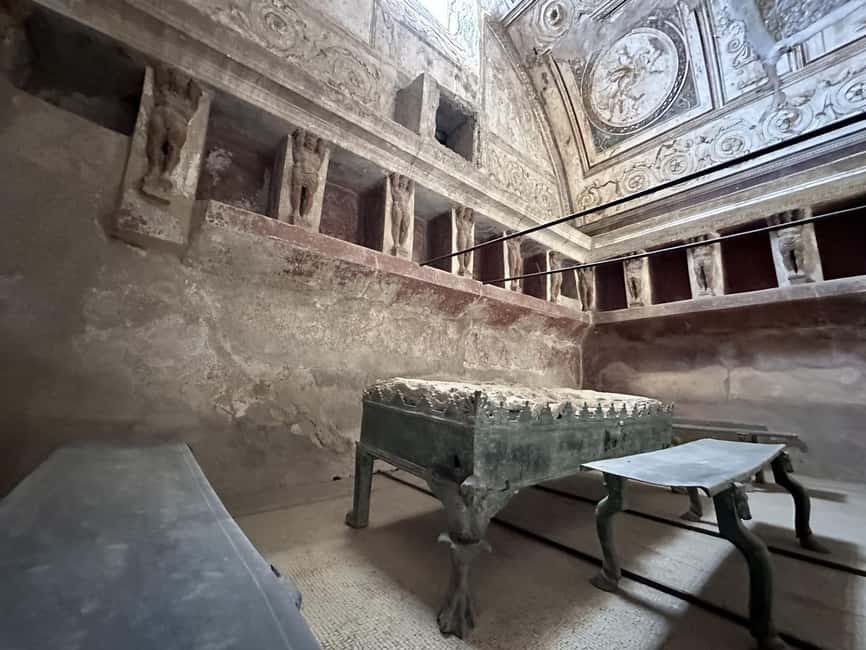
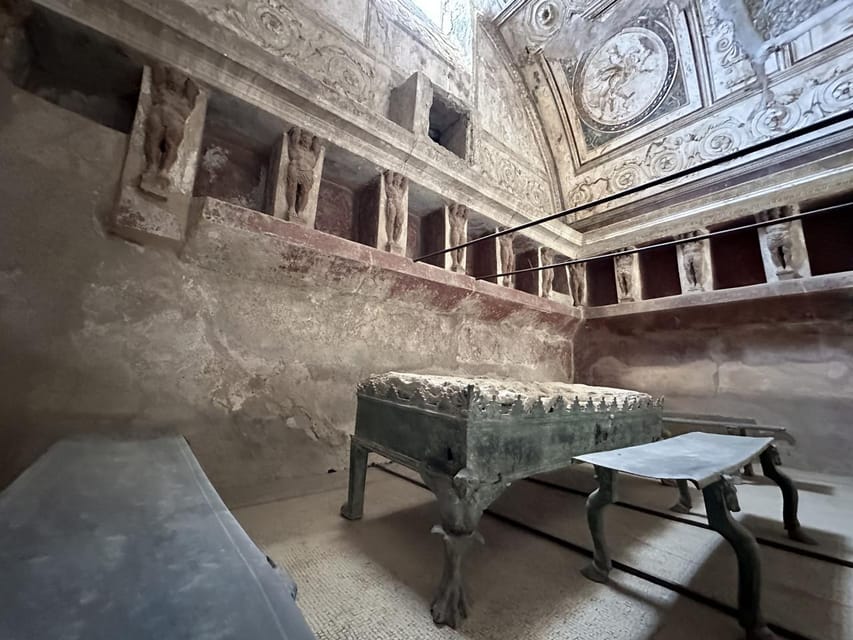
From the Roman Forum area, you’ll visit the Forum Bath House, described as recently reopened after years of maintenance. This stop is valuable because it shows restoration as a living process, not a finished museum job. You get to see preservation and repair in real time, and your guide points out the kinds of details that can disappear if you only look quickly.
In particular, the tour highlights the preservation quality of frescoes and mosaics. When restoration is done well, you stop treating Pompeii like an outline of rooms and start understanding it as a decorated, lived-in place. That shift makes every later stop hit harder, especially in houses where wall art was a status signal and a daily backdrop.
Macellum and the rhythm of city life in a compact route
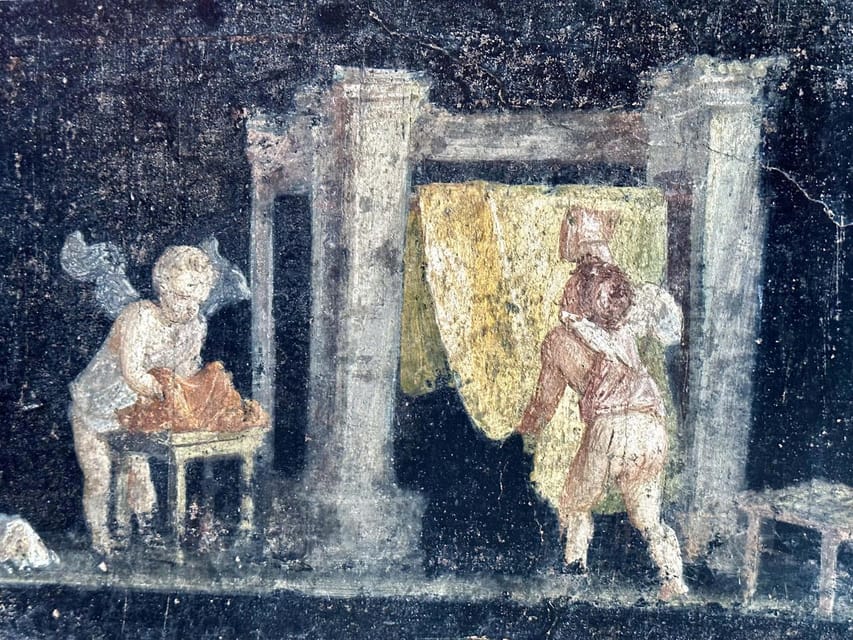
The tour moves you through important public spaces, including the Macellum. This part of Pompeii helps balance the more emotional moments with the everyday structure of the city, like markets and community routines. Even if you’ve read about Pompeii before, a guided route through these zones can make the layout click.
The value here is time. You’re only on site for about 2 hours, so you’re not “checking boxes” across the entire archaeological park. Instead, you’re seeing several meaningful stops that your guide can connect together into a single story: how Pompeii worked, how people decorated their homes, and how the eruption froze it all in place.
Regio V new digs, Mercury Tower, and views that reset your perspective
Regio V is where the tour leans into “latest discoveries” energy. You’ll walk toward the iconic Regio V area, described as the zone with the best new digs happening. That matters because it keeps Pompeii from feeling like a static ruin. You’re getting a sense of what archaeologists are still learning and what restoration teams are still making visible.
A standout viewpoint comes next at the Torre di Mercurio XI. This defending tower is described as the only Roman defending tower open in this way on the route, and from the top you can admire Pompeii from above. From street level, Pompeii feels fragmented by walls, open courtyards, and paths. From a tower, it starts to look like what it was, a planned city with recognizable connections.
If you’re someone who gets overwhelmed at Pompeii, this viewpoint can be a lifesaver. It helps you mentally map what you’ve already seen and what you’re about to see next.


House of the Vettii: the 27-year restoration you can still read on the walls
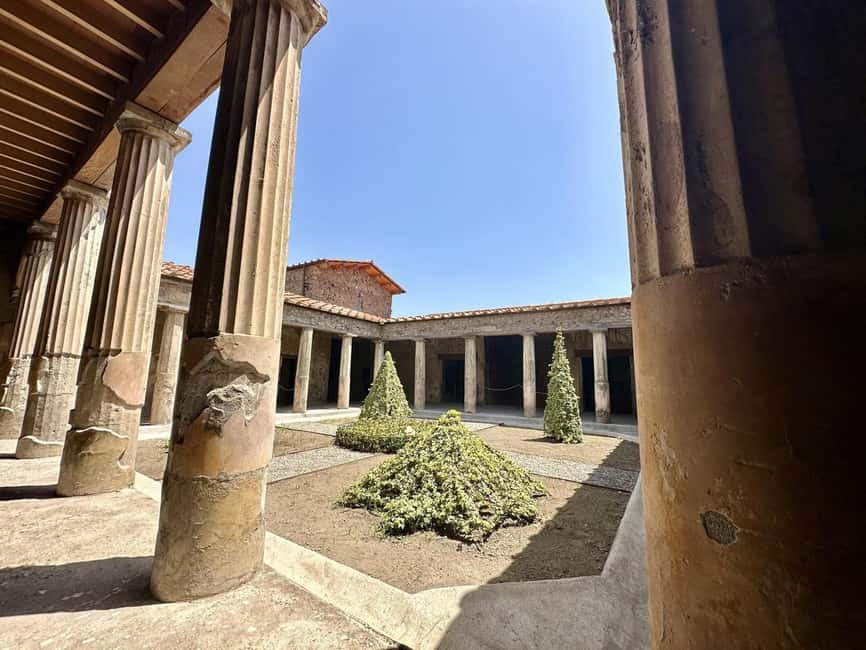
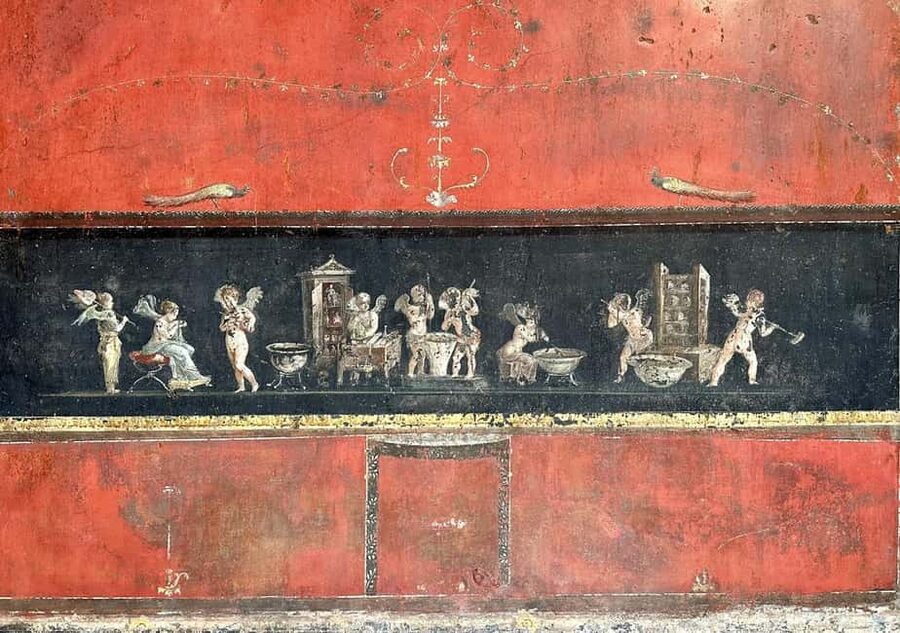
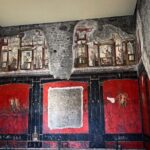
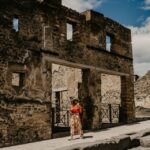
The House of the Vettii is the tour’s major art and restoration moment. Your guide will take you there with the specific story that a careful restoration process lasted 27 years and finished last year, and the secrets of the monument are ready to be revealed. That kind of detail matters because it changes what you notice. You start looking at the surfaces not just as “pretty,” but as evidence of past work, past damage, and modern conservation choices.
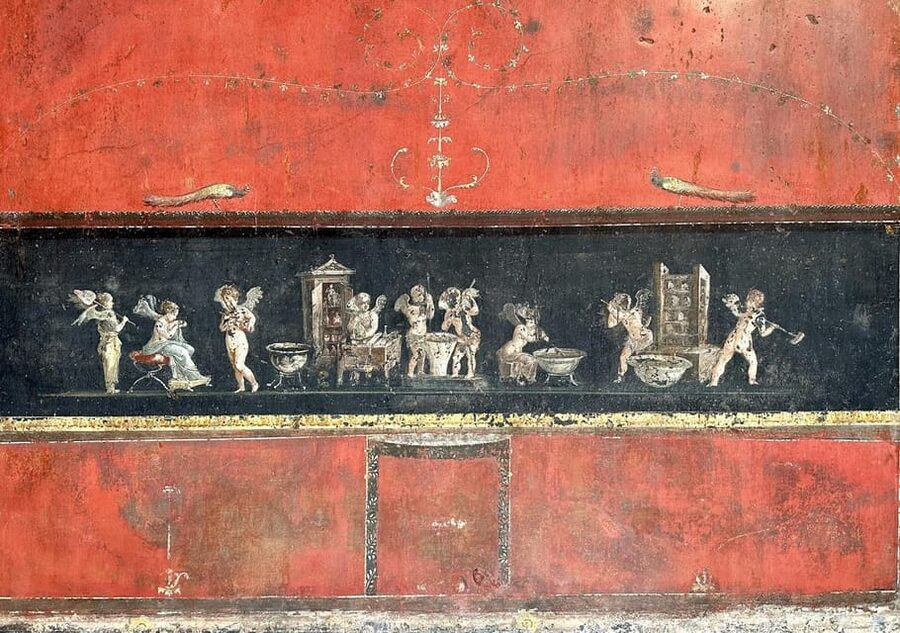
One review also emphasized the quality of frescoes and the famous Pompeian red tones in this house. Whether you love art history or not, this stop is a strong argument for booking a guide who knows what to point out. Pompeii’s houses can look similar if you’re only scanning rooms. But with the right explanation, you notice the differences in decoration, layout, and the way restored sections guide your eye.
Casa delle Nozze d’Argento and the feel of a decorated home
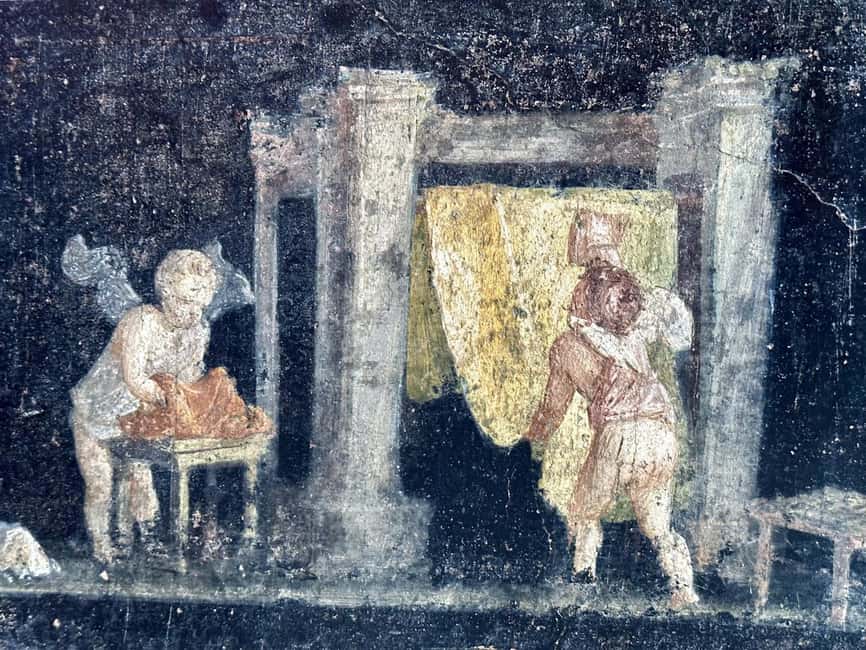
After the Vettii house, the route continues into the Casa delle Nozze d’Argento, the Silver Weddings house. This stop is positioned in the middle of Regio V, so it keeps momentum while you’re already thinking about how houses expressed identity and taste.
What makes this kind of house visit worth it is how it breaks Pompeii into “life moments.” Public spaces show civic structure, but private homes show style. Even in a short 2 hour tour, you can get a clearer sense of how Pompeians lived day to day, from room layouts to the role of decoration.
Insula dei Casti Amanti: active excavation, no photos, and real-time restoration
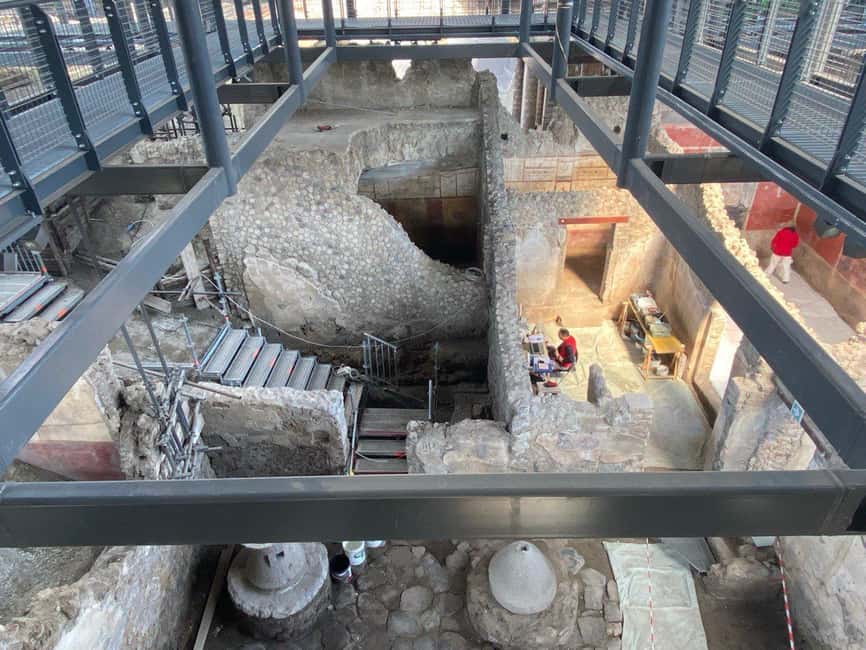
The most serious rule on the tour comes at the Insula dei Casti Amanti. This is described as a live archaeological site with restaurateurs actively working on the spot, and you’ll get guided access to remove the “shroud” of 2,000 years of time. The key thing: photos or video are not allowed for obvious security reasons. That’s not just a formality, it protects people and ongoing work areas.
I like this kind of stop for one reason. It reminds you that Pompeii is not just a graveyard of the past. It’s an active workplace. When you see restoration happening alongside excavation, you understand why some areas look incomplete and why conservation decisions matter.
Practical tip: because you can’t record, pay attention to the guide’s notes and ask questions in the moment. If you want memories, take mental notes. If you need a physical reminder, you can later write down details while they’re still fresh.
Torre di Mercurio XI to the finish: how the route ends neatly
The tour finishes where it makes sense: back at Pompeii Ruins near the meeting point. That structure is helpful because Pompeii can drain energy quickly. After standing and walking through multiple zones, you’re not left trying to figure out your exit strategy.
It also gives you flexibility after the tour ends. You’ll be oriented enough to decide whether you want to continue on your own, or simply step back for a break.
Price and value: what $294.54 gets you in a small private group
The price shown is $294.54 per group (up to 1), but the important value point is what’s bundled. You get park tickets, an expert archaeology guide, a special route to reach the new openings, and a skip-the-ticket-line entry approach. You also travel with a small private group, capped at about 15 or 17 people, and you get headsets if the group exceeds 12.
That combination is why this can be good value. Pompeii’s “best bits” are scattered, and without a guide who knows where the newest work is, you can end up spending your limited time seeing the same well-worn areas. Here, you’re specifically sent to recent discoveries and reopening sites like the Forum Bath House and the House of the Vettii restoration story, plus newer digging energy in Regio V.
For couples or small groups, it often works out better than you might expect if you’re comparing it to paying for a standard entry ticket plus a separate guide. And if you’re traveling solo, it can still make sense if you care most about expert interpretation rather than checking off every corner of Pompeii.
Group size, heat, and how comfortable the experience really is
This tour is designed to keep groups manageable. With a max around 15 or 17 and headsets if the group is bigger, you’re more likely to hear the guide’s explanations without constant shouting. One review specifically noted how the guide handled a nearly 40 degree day by keeping the group in the shade when possible, which is a reminder that your comfort matters on this site.
The route also avoids feeling chaotic. The descriptions of timing and structure suggest it’s built for efficiency without rushing you out of the important stops.
Still, plan for Pompeii conditions: bring water if you can (food and drinks are not included), wear good shoes, and expect more time standing than you’d get in a traditional “indoor” museum.
What to bring, and the few rules that affect your day
This one is simple, but Pompeii’s rules are real, especially with ticketing and security.
Bring:
- Passport or ID card for you and any children in the group
Don’t bring:
- Pets (assistance dogs are allowed)
- Drones
- Non-folding wheelchairs
- Feeding animals
- Electric wheelchairs
- Skateboards or scooter
One more practical point that can affect your schedule: Pompeii requires that tickets are personalized. Your full name and surname must be added to the ticket, so you’ll need to send participant details to the provider by email (full name, age, and booking code are part of the required information). You also need to have the original ID or passport with you when you arrive.
For photo and video:
- At Insula dei Casti Amanti, photos or video are not allowed due to security.
Who this tour fits best
Book this if you want Pompeii through an archaeology lens, not just a scenic sweep. It’s ideal if you:
- Care about restoration, conservation, and what archaeologists are actively uncovering now
- Prefer a structured 2 hour experience with a guide who can explain what you’re seeing
- Want specific highlights like Regio V new digs, the House of the Vettii restoration story, and Torre di Mercurio XI views
It may be less ideal if you want to roam freely for a long time. You get a focused selection of stops, not the entire park.
Should you book this Pompeii latest discoveries tour?
Yes, if your priority is seeing the newest openings and restoration work with expert interpretation. The tour’s strongest promise is that it isn’t just repeating the usual Pompeii checklist, it’s built around where the archaeology is still moving forward, especially in Regio V.
I’d especially recommend it if you like art details and want context for why certain frescoes and mosaics look the way they do after years of maintenance and restoration. If you prefer total freedom and lots of time to meander, you might prefer a longer self-guided option. But for a short stay in Campania where Pompeii is the big draw, this is a smart way to spend your limited hours.
FAQ
Where do I meet for Pompeii: the Latest Discoveries with your Archaeologist?
Meet at Porta Marina Superiore, the entrance gate to Pompeii park. It’s across the street from Hortus Garden Bar & Restaurant, and the tour starts and ends back at this area.
How long is the tour?
The duration is 2 hours. Starting times depend on availability.
What is included in the price?
Included are tickets to the archaeological park, an expert archaeology guide, a special route to reach new openings, headset use if the group exceeds 12, and a small group capped at about 15 or 17 people.
What is not included?
Food and drinks are not included.
Can I take photos or video during the tour?
Photos or video are not allowed at Insula dei Casti Amanti due to security rules, especially since work is active on site.
What languages is the guide available in?
The tour is offered with a live guide in English, French, Italian, and Spanish.
What do I need to bring with me?
Bring passport or ID card. This also applies for children.
Is the tour suitable for wheelchair users?
The tour is not suitable for wheelchair users. Non-folding wheelchairs and electric wheelchairs are listed as not allowed.
More Tour Reviews in Pompei Campania
Not for you? Here's more nearby things to do in Pompei Campania we have reviewed








Tour Reviews, compared.
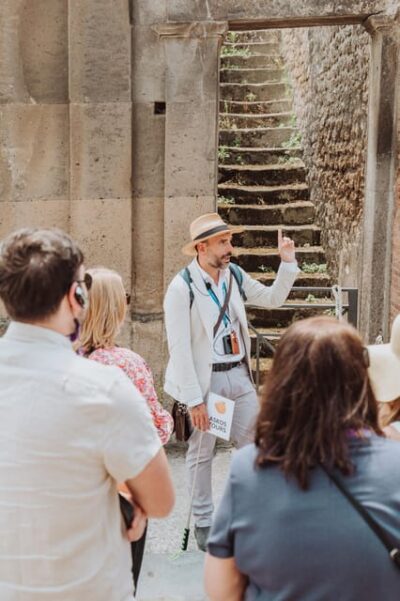 ★ 4.8Pompeii: Entry Ticket and Guided Tour with an ArchaeologistFrom $3519,459 reviews
 ★ 4.2Pompeii: Entry Ticket with Optional Audio GuideFrom $2612,360 reviews
 ★ 4.8Pompeii: Small Group Tour with an ArchaeologistFrom $4012,264 reviews
 ★ 4.3Pompeii Ruins & Mount Vesuvius Day TourFrom $12011,459 reviews
 ★ 4.6Sorrento, Positano and Amalfi Full-Day TourFrom $10710,988 reviews
 ★ 5.0Sorrento, Positano & Amalfi Coast – Small Group TourFrom $768,643 reviews
 ★ 4.6Catacombs of San Gennaro Entry Ticket & Guided TourFrom $157,941 reviews
★ 5.0Pompeii Small Group Tour with an ArchaeologistFrom $356,593 reviews
★ 4.6Catacombs of San Gennaro Entry Ticket & Guided TourFrom $157,941 reviews
★ 5.0Pompeii Small Group Tour with an ArchaeologistFrom $356,593 reviews