
Tour review · TOUR REVIEWS
Pompeii & Herculaneum Tour with an archeologist
Two ancient towns, one volcanic wall. This Pompeii and Herculaneum tour is built around a specialist archaeologist guide, so the sites feel like lived places, not just piles of rock. I especially liked how the guide focused on Herculaneum’s better preservation and how you get to see specific rooms and details that are still remarkably intact. One catch: entry tickets are not included, so factor that extra cost into your budget from the start.
I also really appreciated the flow of the day. You start in Pompeii at the Forum, the political and commercial heart, then you move through a tight net of streets with someone pointing out what matters. It is a smart way to avoid the common problem of wandering Pompeii without context.
The main consideration is practical, not personal. The two-city loop is only about 5 hours, so it is not a slow, photo-only stroll, and you will be doing plenty of walking. Also, the info on pickup and drop-off is inconsistent, so I would confirm what you are actually getting before you go.
Key points worth knowing before you book
- Archaeologist-led explanations that compare Pompeii and Herculaneum in a way that is easy to follow
- Pompeii’s Forum first, so you understand what you are looking at before you wander into side streets
- Herculaneum houses you can actually see clearly, including Casa del Salone Nero and Casa Sannitica
- Preserved everyday objects, like charred furniture and decorated spaces that still feel real
- Thermal baths with a focus on Roman leisure, not just ruins
- Small group, limited to 8, which makes questions and route tweaks much easier
Two Ruins in Five Hours: how the route really feels
This is a 5-hour tour with a live archaeologist guide in English. You start at Coffee Shop Vittoria and the tour ends back at the same meeting point, which makes your logistics simpler after a long day of walking. You also get a separate entrance to skip the line, which matters at Pompeii, where time and crowding can turn your morning into a scramble.
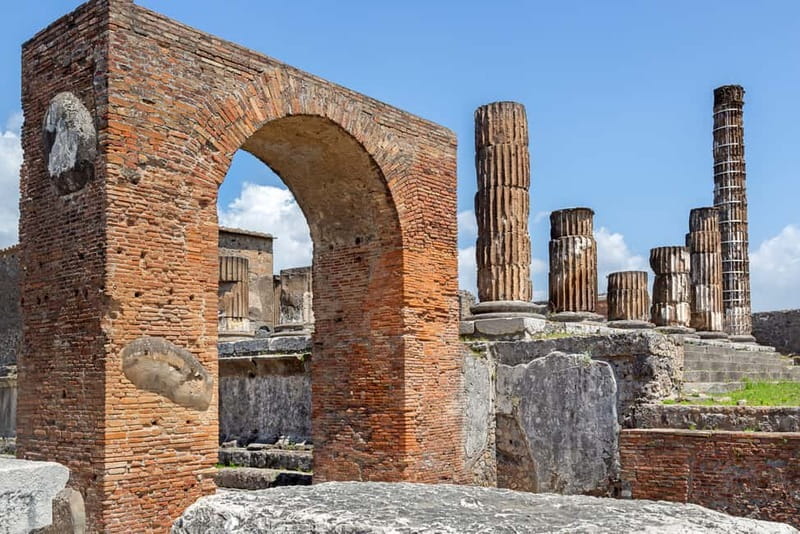
The order is straightforward: Pompeii first, then Herculaneum. That order helps you in a sneaky way. Pompeii gives you the big-city layout, with the Forum as your anchor. Then Herculaneum lands like a different story, because it is often described as better preserved, and once you see it, Pompeii’s feel changes in your mind.
This tour is small-group, capped at 8 participants. In practice, that means you are less likely to get stuck at the back like a school field trip. It is also easier for the guide to adjust pace if a question comes up, especially when you are comparing the two cities side by side.
You can also read our reviews of more tours and experiences in Pompei Campania.

Pompeii’s Forum and streets: where the guide makes sense of the scale
Pompeii can overwhelm you fast. It is huge, and if you do not have a map in your head, you can spend hours walking without ever feeling grounded.
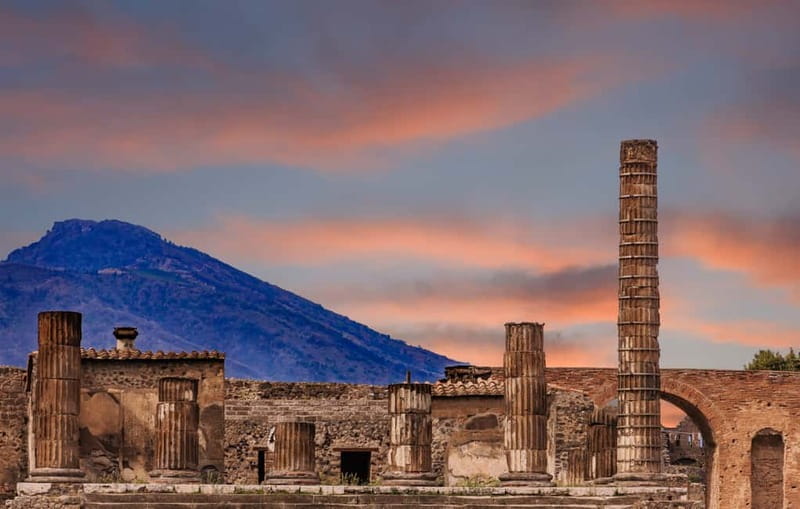
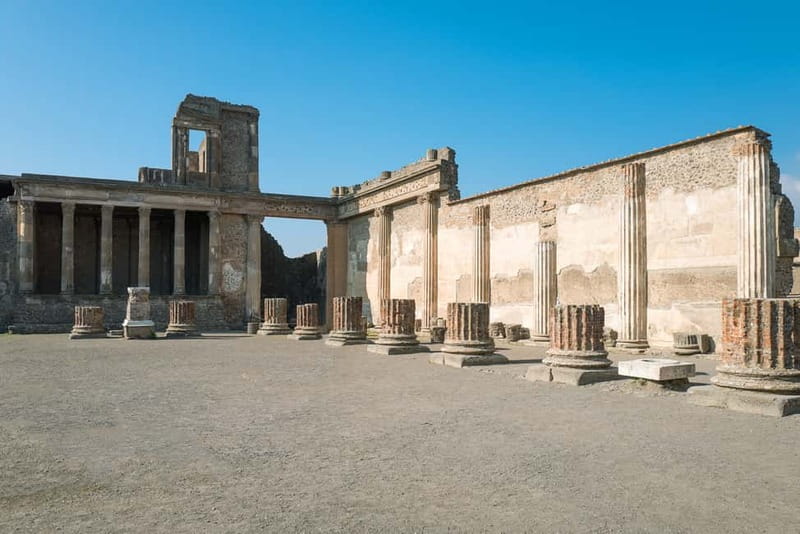
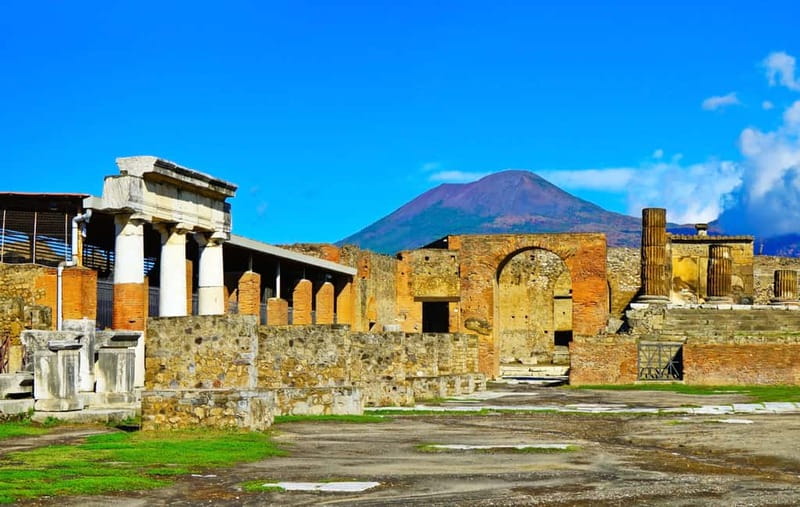
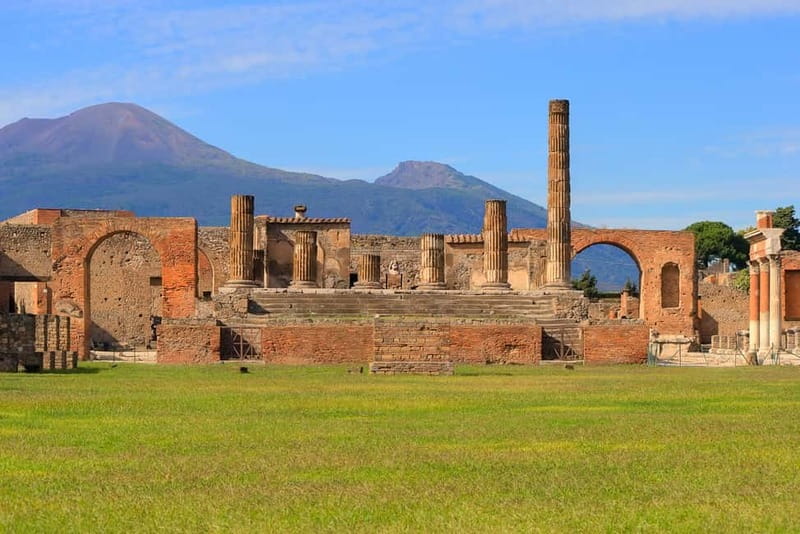
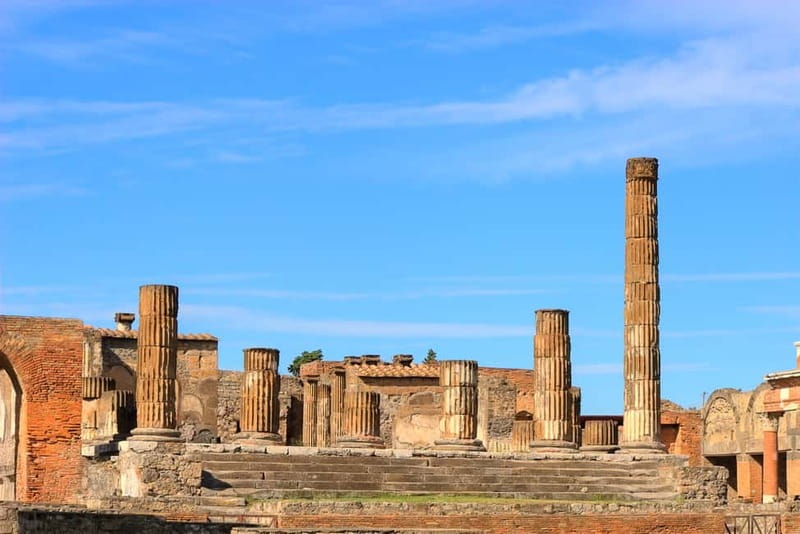
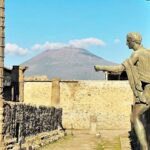
Starting at the Forum fixes that. The Forum was the center of political and commercial life, so it is where a lot of the city’s “why” becomes clear. Once you understand that this space was built for decisions, trade, and public movement, the rest of Pompeii stops being random street after random street.
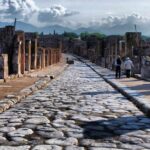
From there, you walk through the dense network of streets. The guide’s job here is not just pointing at walls. It is helping you recognize patterns: how buildings relate to the street, how public and private spaces feel different, and what daily movement might have looked like. I like this approach because it turns Pompeii from an overwhelming grid into something readable.
One practical point: Pompeii’s streets mean steady walking. If you are the type who likes to linger at every doorway, this tour may feel like a highlight reel. Still, with an expert guide, you end up seeing more meaning per minute than you would on your own.
Herculaneum’s better preservation: upper floors and intact rooms
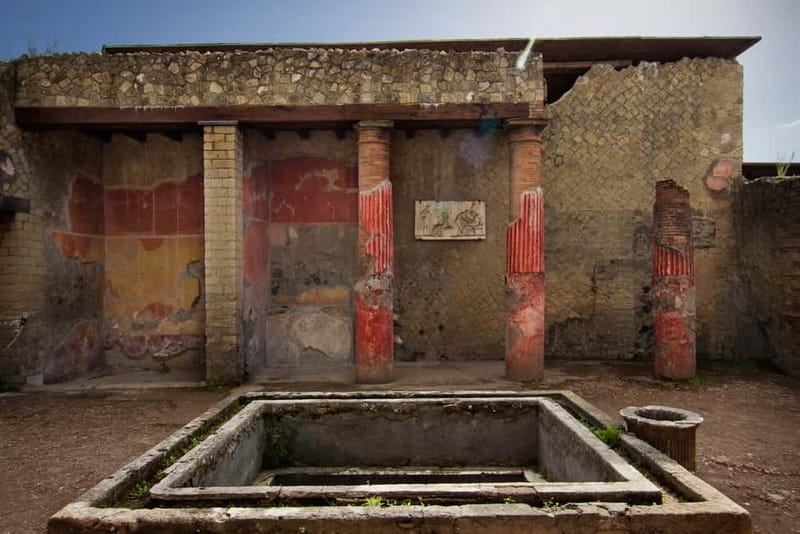
Then you shift into Herculaneum, and the change is the whole point. This town was once a glamorous seaside retreat for Rome’s wealthy, and the guide helps you notice how that shows up in the architecture and the way spaces were used.
The big selling idea here is better preservation. In Herculaneum, you can see upper floors of elegant buildings, which is not something you expect to find so clearly in a volcanic ruin. The tour specifically highlights two places you can visit with the guide, Casa del Salone Nero and Casa Sannitica.
I love when a tour gives you named buildings instead of vague wandering. Names matter because you can later remember what you saw. Casa del Salone Nero and Casa Sannitica are the kind of stops that help you connect the dots between what looks like a wall and what used to be a functional home.
The guide also uses these spaces to explain differences and similarities between the two cities. That comparison is helpful. Without it, you can easily treat Pompeii as the main event and Herculaneum as a smaller, just-as-old side stop. With the archaeologist framing it, you start seeing why Herculaneum feels different in tone, even though both were buried in AD 79.
Mosaics, charred furniture, and the shock of details
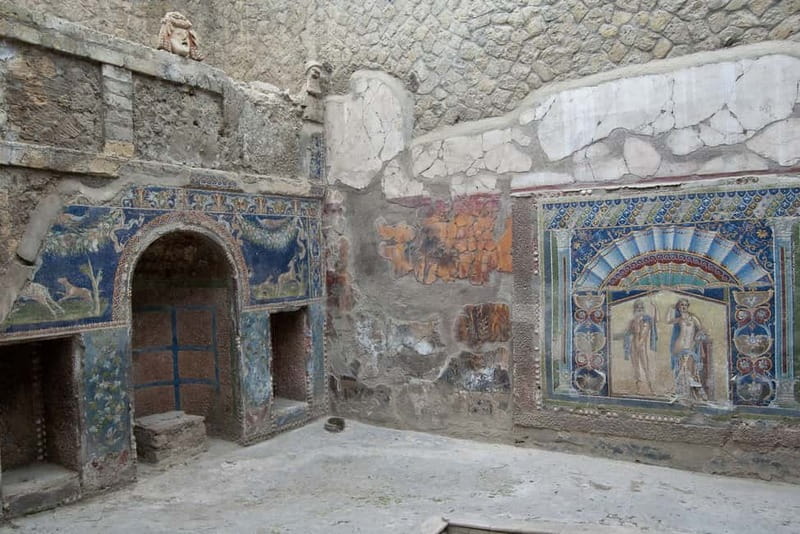
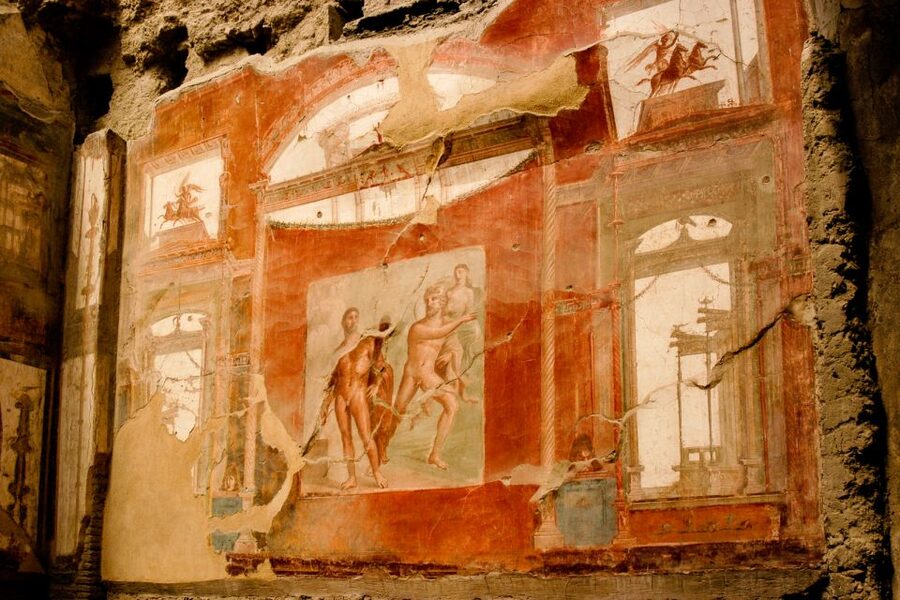
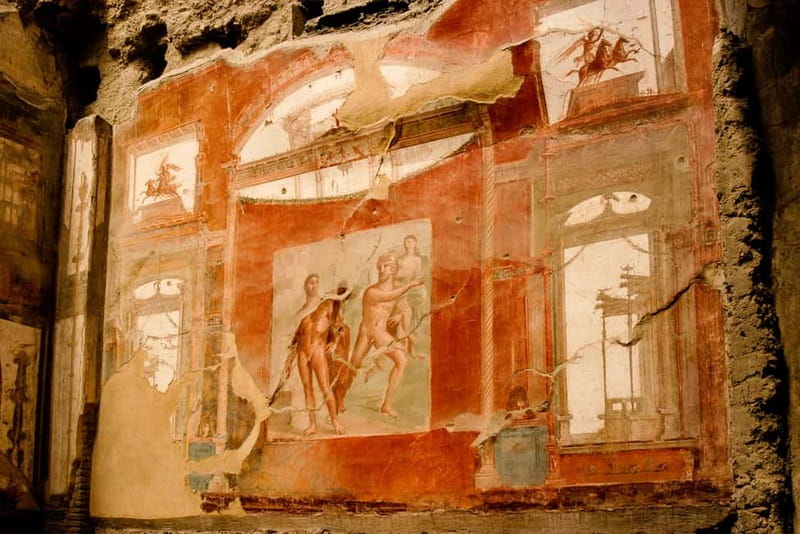
Herculaneum is where the senses get involved. The tour emphasizes beautiful mosaics and decorated interiors that survive in a way that feels almost impossible. That is not just aesthetic. It changes your understanding of what the disaster took.
You also see charred but extraordinarily intact furniture. Think about the emotional impact of that for a second. You are not just looking at a cracked wall. You are facing everyday objects that still have shape. That is why the guide matters so much here. They help you focus on what survival like this can tell you about the disaster and daily life before it.
If you like archaeology that connects objects to people, this portion is the payoff. You see how design, taste, and daily routines were built into the space. And because the guide compares the two sites, you can mentally track what changes and what stays consistent.
This is also the part of the tour where photos can help, but your eyes have to move more than your camera does. Look first, then shoot, or you will end up with images that do not fully capture what impressed you in person.
Thermal baths: Roman leisure, preserved decorations, real atmosphere
The tour does not stop at houses and mosaics. It also brings you to the thermal baths and uses them to teach the culture of recreation and bathing.
What I like about this stop is that it gives you a break from the home-focused story. Baths were social spaces. They were part of how people relaxed and connected, not just how they washed. When your guide points out the bathing culture aspect, the space starts to feel like a place with routines, not just a ruin with corridors.
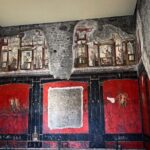
You also get to admire fine decorations perfectly preserved in the bath area. The effect is different from the houses. In the homes, you feel wealth and taste in private spaces. In the baths, you feel it in a communal setting, where daily habits and social life blended together.
If you want a tour that tells the story of ordinary life, not only major political moments, the thermal baths section is a strong reason to book.


Comparing Pompeii and Herculaneum after AD 79
The eruption of Mount Vesuvius buried both cities in AD 79. But the tour keeps returning to a key idea: the impact was not quite the same.
You can feel that difference while moving through the itinerary. Pompeii gives you a broader sense of city life and public space, especially with the Forum as your launch point. Herculaneum gives you a more intimate, room-by-room experience because the preservation is better, including upper floors and intact details.
That comparison is more than a fun fact. It changes how you interpret damage. Instead of asking why everything is broken, you start asking how the city became a time capsule in some areas, and a shattered landscape in others.
This is also where an archaeologist guide earns their fee. When you are just reading signs, the cities can blur together. With a guide, you build a mental framework: public life versus domestic life, and two kinds of “survival” inside the same disaster.
Price, entry tickets, and the one surprise you should plan for
The price is listed as $993.72 per group, up to 8 people, for the 5-hour tour. At full capacity, that works out to roughly $124 per person before add-ons like tickets and food. That is the value side.
Now the practical side. Entry tickets are not included, and that has real impact on total cost. If you are comparing tours, do not just compare the base price. You need the full picture: guided tour plus tickets plus any food you buy on your own.
One more practical note: the info about pickup and drop-off is contradictory in the details you are given. One line says pickup and drop-off are included, another says they are not included. I would treat that as a red flag and confirm it in writing before you commit.
The skip-the-line separate entrance is also part of the value story. In these sites, minutes matter. When you cut waiting time, you get more guide time and less standing around.
Walking pace, comfort, and who this small-group tour suits best
This tour is built for people who want guided interpretation, not just location checkmarks. The small group size helps a lot here, because the guide can explain as you walk, and you are less likely to get separated from the group.
You also get wheelchair accessibility listed, which is important if mobility is a factor for you. Still, Pompeii and Herculaneum are not flat museum floors. Even when a tour is labeled accessible, you should ask about route specifics if you need an easier path.
As for pace, the 5-hour duration means you will see a curated set of highlights: Pompeii Forum and streets, then Herculaneum houses like Casa del Salone Nero and Casa Sannitica, mosaics, charred furniture, thermal baths, and the comparison story between the two cities. If that sounds like your style, you are in the right place.
If your travel personality is more about slow wandering with no structure, you might find the route too tight. This tour is for focus, not for endless drift.
What the guide quality really comes down to
One strong pattern in how this tour is described is the way the guide turns history into something you can understand quickly.
For example, guides like Maria have been highlighted for being especially interesting and having perfect knowledge of the places. Another guide is praised for masterfully guiding people through the site and keeping the experience coherent all the way to the end back at the starting point.
That matters because Pompeii and Herculaneum can become a blur unless someone organizes your attention. The best guides help you know where to look and what questions to ask as you walk. That is exactly what the tour format is aiming for.
Should you book this Pompeii and Herculaneum archaeologist tour?
If you want real context fast, this is a strong choice. The combination of Pompeii’s Forum and street network, then Herculaneum’s better preservation, including Casa del Salone Nero, Casa Sannitica, mosaics, and the thermal baths, gives you variety in a short window. And the small group size plus archaeologist guide is a meaningful value boost.
I would book this if:
- you like learning while walking and you want comparisons between the two cities
- you want a guided plan that saves you from Pompeii overwhelm
- you care about seeing specific rooms and objects, not just general ruins
I would think twice if:
- you are hoping entry tickets are included, because they are not
- you need a fully relaxed, no-pressure pace, because this is a highlight-focused 5-hour route
- pickup and drop-off details are important to you, since you should confirm what your booking includes
If you handle the tickets up front and you show up ready for walking, this tour is one of the most practical ways to experience both ancient worlds in one day.
FAQ
How long is the Pompeii and Herculaneum tour?
The tour lasts 5 hours. Starting times vary, so you will need to check availability for the schedule that works for you.
What is the group size?
It is a small group limited to 8 participants.
Is the tour guided by an archaeologist, and is it in English?
Yes. You get a specialist archaeologist guide, and the live tour guide speaks English.
Are Pompeii and Herculaneum entry tickets included?
No. Entry tickets are not included in the price. The tour does include skip-the-line access through a separate entrance.
Where does the tour start and end?
The tour starts at Coffee Shop Vittoria and ends back at the same meeting point.
Is there free entry on the first Sunday of the month?
On the first Sunday of each month, entrance is free. However, tickets cannot be reserved ahead of time, so entry is not guaranteed.
More Tours in Pompei Campania

More Tour Reviews in Pompei Campania
Not for you? Here's more nearby things to do in Pompei Campania we have reviewed




Tour Reviews, compared.
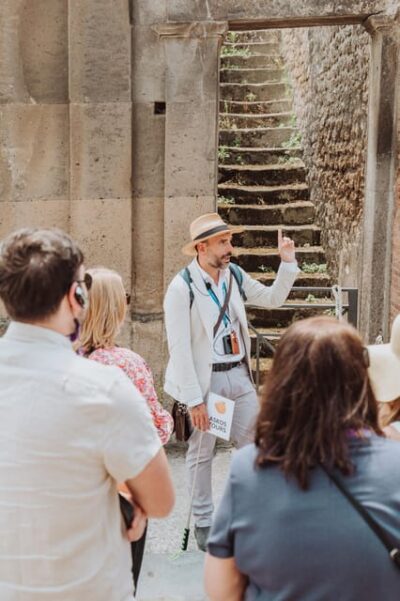 ★ 4.8Pompeii: Entry Ticket and Guided Tour with an ArchaeologistFrom $3519,459 reviews
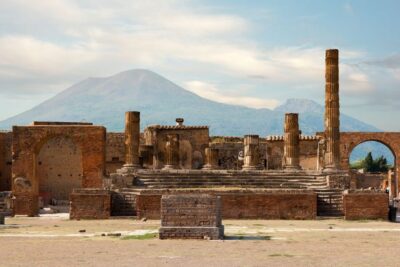 ★ 4.2Pompeii: Entry Ticket with Optional Audio GuideFrom $2612,360 reviews
 ★ 4.8Pompeii: Small Group Tour with an ArchaeologistFrom $4012,264 reviews
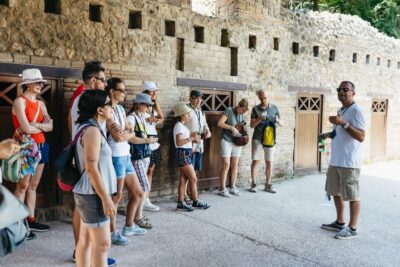 ★ 4.3Pompeii Ruins & Mount Vesuvius Day TourFrom $12011,459 reviews
 ★ 4.6Sorrento, Positano and Amalfi Full-Day TourFrom $10710,988 reviews
 ★ 5.0Sorrento, Positano & Amalfi Coast – Small Group TourFrom $768,643 reviews
 ★ 4.6Catacombs of San Gennaro Entry Ticket & Guided TourFrom $157,941 reviews
★ 5.0Pompeii Small Group Tour with an ArchaeologistFrom $356,593 reviews
★ 4.6Catacombs of San Gennaro Entry Ticket & Guided TourFrom $157,941 reviews
★ 5.0Pompeii Small Group Tour with an ArchaeologistFrom $356,593 reviews
Browse the lists this tour appears in