
Tour review · TOUR REVIEWS
Skip the Line Guided Tour of Pompeii led by an Archaeologist
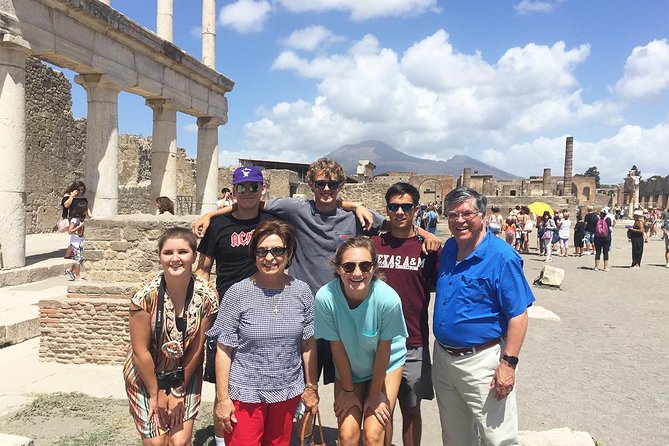
Pompeii is impressive, but a guide changes everything. This skip-the-line Pompeii tour led by an archaeologist helps you move quickly and understand what you are seeing, especially on the big set pieces like the Forum and the baths. I also like the small-group feel, because it makes the walk easier to follow and the questions feel personal. One drawback to plan for, it is only about 2 hours, so you will see the highlights, not the whole site.
You get a smart pace and a real sense of structure. You follow a route on foot through central areas, with short stops that keep the day from turning into a blur of stone. It can still be a lot of walking on the original surfaces, and you will want comfortable shoes, plus a bit of patience for Pompeii’s heat and crowds outside your group.
Finally, the guide matters here. People rave about archaeologist guides like Lello and Italo for making the ruins feel human, and the tour format seems built to help you hear and keep up, with small-group organization and support along the way.
Key highlights that make this Pompeii tour worth it
- Guaranteed skip-the-line entry, so your time stays on the ground instead of in queues
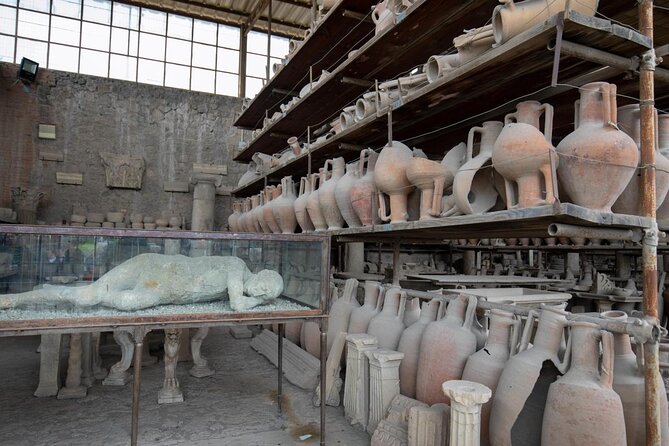
- Archaeologist-led explanations that connect streets and rooms to daily life in Roman Pompeii
- Small group size (max 15) that makes it easier to keep pace and ask questions
- Focused route covering Via dell’Abbondanza, the Forum, the Stabian Baths, and the Lupanar
- End-of-tour orientation helps you keep exploring using the grid system and the map
- Practical touring setup, including smart-casual dress expectations and comfortable-shoe advice
Price and what you are actually paying for
At $95.53 per person, this is not a budget-only way to see Pompeii. The value is that you are buying three things together: a professional guide, a set route, and skip-the-line tickets guaranteed no long waits. For many people, that combo is worth more than saving a few euros by going it alone.
The other part of the value is time. About two hours sounds short, until you remember Pompeii is big and easy to wander the wrong way in. This tour keeps you on a focused path through the city’s most recognizable areas, so you come away with a mental map rather than only photos.
You can also read our reviews of more guided tours in Pompeii


Skip-the-line tickets, and why that matters at Pompeii
Pompeii can be a line-and-wait kind of place, especially at popular arrival times. This tour includes skip-the-line admission with the promise of no long waits, which is exactly what you want for a half-day plan.
What I like about the format is that it respects your energy. Instead of spending your best daylight stuck at an entrance, you start learning right away and keep moving. If you are the type who hates wasting time, this kind of ticket value tends to feel obvious fast.
One practical note, your confirmation is not just a standalone ticket. You use it only with the guide, so show up with that booking info and expect to join the group at the meeting point.
The meeting point and the small-group pacing at Piazza Esedra
The tour starts at Piazza Esedra, 80045 Pompei NA, Italy, and it runs on foot. The meeting spot is near public transportation, which helps if you are arriving by train or bus and want an easy handoff to your tour group.
This is set up for moderate physical fitness. You are walking on original streets, and even if you do not have mobility issues, you should still plan on steady walking on uneven ground. Wear shoes you trust, not new sneakers you have never tested.
The small-group size, max 15 travelers, changes the whole feel. You are not getting marched through with a crowd pushing from behind, and your guide can keep the tempo steady without losing half the group. In the reviews, people also note tools like ear buds to keep the audio clear, which makes a big difference in an open-air site.
Stop 1, the Archaeological Park of Pompeii, 20 minutes that set the stage
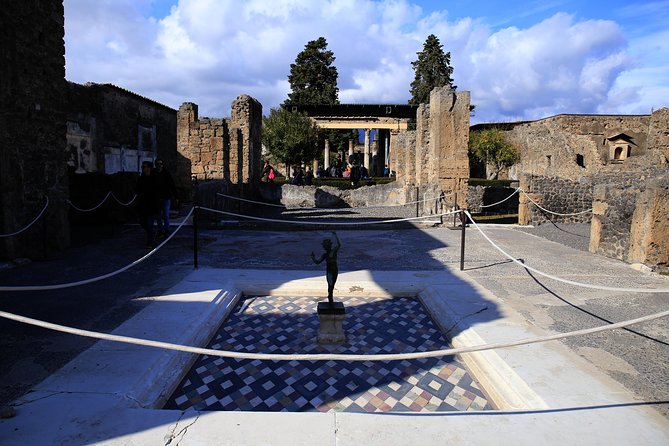
You begin in the Archaeological Park of Pompeii, a UNESCO World Heritage Site. The guide frames Pompeii as an ancient Roman city buried under ash and pumice after the eruption of Mount Vesuvius in 79 A.D. That context matters, because the rest of your walk stops feeling like random walls and starts feeling like a whole city caught mid-life.
In just about 20 minutes, you get the big picture without being overloaded. A common risk on self-guided visits is that you jump straight to the most photogenic spots and miss the story that makes them click. Here, the tour starts with orientation, so when you later see the main street and the Forum, you understand why they matter.
Possible drawback: it is a lot to cover early, and if you arrive tired or overheated, those first minutes can feel fast. Your best move is to arrive a little early, keep water handy, and treat this stop like your mental setup.
Stop 2, Via dell’Abbondanza, the main street you can picture
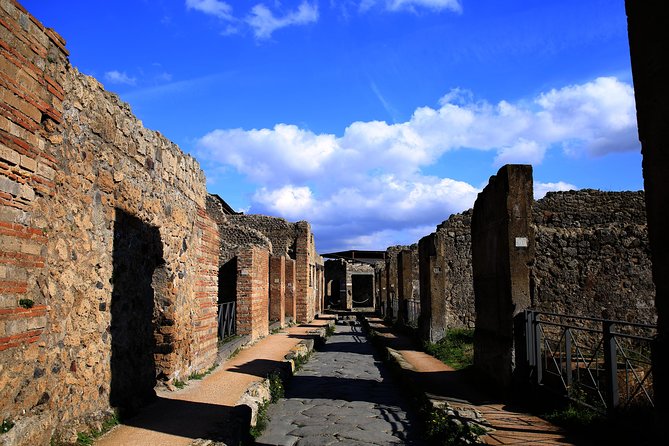
Via dell’Abbondanza is one of the main streets in Pompeii, and it is where the city’s layout starts to make sense. On this part of the tour, you are not just looking at stones, you are learning how the street functioned and how it fits into the city’s daily life.
I like this stop because it is practical. A street gives you a line of sight and an easy way to imagine movement, commerce, and neighbors going about normal routines. If you have ever walked around ruins and thought, I can see it, but I cannot picture it, this is the moment when it starts to click.
Time is short here, around 20 minutes, so your guide keeps it focused on the points that help you understand the city rather than turning it into a long lecture.
More Naples tours, ruins, coast days, and city experiences to compare




Stop 3, the Foro de Pompeya, Roman markets and city life
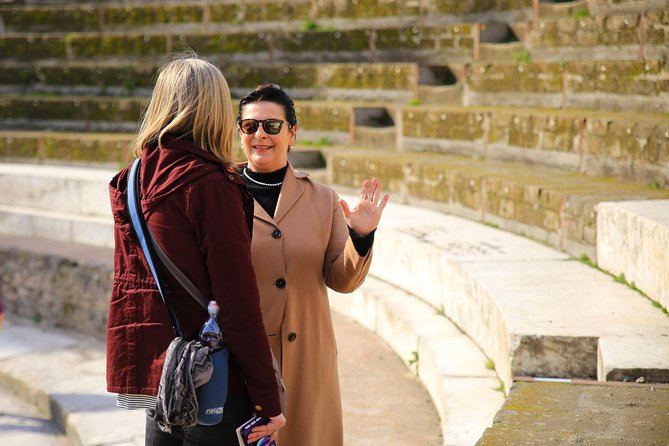
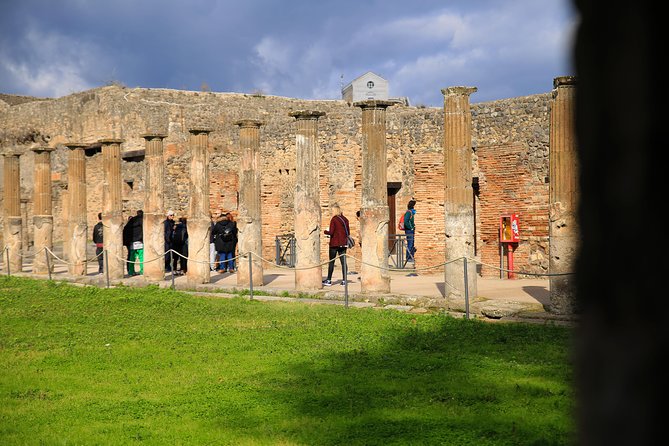
The tour then heads toward the Forum, the main square with markets in the heart of the city. This is where the tour emphasizes how Roman life worked, with you walking through the main streets and ending in the central plaza.
This stop is valuable because it gives you a social center, not just individual sites. People often remember Pompeii as a collection of famous ruins, but the Forum is where you learn the city’s rhythm, the idea of public life, and the sense of how people gathered.
Drawback to consider: the Forum area can feel busy even with a small group nearby. Because the tour is not trying to show everything, your guide prioritizes key views and explanations, so you will not feel like you are getting dragged past everything you wanted to see. But if you are hoping to linger for long, bring that intention to the follow-up exploring after the guided portion.
Stop 4, Stabian Baths (Terme Stabiane), seeing daily life beyond the streets
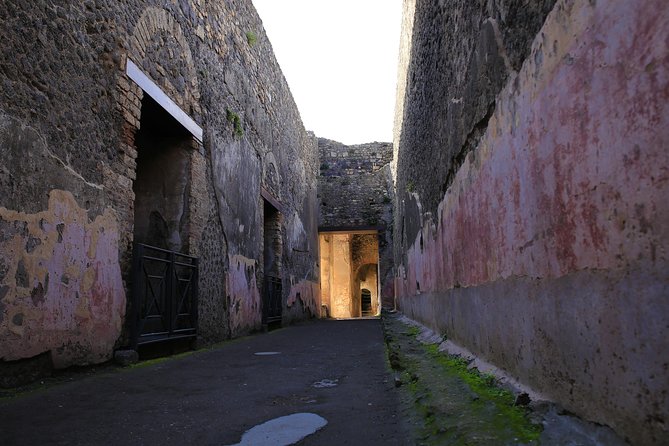
Next up is the Stabian Baths, or Terme Stabiane, where you get to see a thermal bath. This stop helps balance the tour. Streets and squares show public life, but baths show a different angle on daily routines and the kind of spaces Romans used for relaxation and social time.
In a two-hour tour, it is a smart choice to include the baths. It stops Pompeii from feeling like only politics and commerce. You see that the city’s systems included places for bodies, not just buildings for business.
Time again is around 20 minutes. If you want to study bath architecture in depth, you will likely need extra time outside this tour. But as a highlight stop, it does the job: it gives you a memorable place and a reason it is worth remembering.
Stop 5, the Lupanar and its erotic frescoes, with real context
The next stop is the Lupanar, famous for its erotic frescoes. This is one of the places that makes Pompeii feel painfully human, because it does not shy away from ordinary or complicated aspects of life.
What I appreciate here is that a guided archaeologist approach tends to keep the conversation grounded. Instead of treating it like shock value, the tour frames what you are seeing in a broader understanding of Roman culture and what this place meant inside Pompeii.
Time is short, about 20 minutes, so your goal is to understand what this building is and why it has a reputation, not to read every symbol or detail on the walls. It is a stop designed to create understanding, then move you onward before your brain and legs are both maxed out.
Stop 6, back into the park for a final guided stretch
The itinerary includes another time in the Archaeological Park of Pompeii for about 20 minutes with a top-rated guide. This final guided segment is often where the guide pulls threads together, helping you connect what you saw earlier into one story.
A good guide will do two things in this phase. First, they help you keep your bearings so you do not feel lost if you look at a map later. Second, they point out smaller details you would likely skip if you were rushing from one photo spot to the next.
In reviews, people mention guides helping with practical orientation, including using the Pompeii grid system and the map provided after the tour. That matters because it turns your two hours into a launch point for extra exploring on your own.
What makes the archaeologist-led part feel different
Pompeii can feel like a test of endurance if you are walking without a thread. With an archaeologist guide, you get that thread, and it changes what you notice.
I like how guides such as Lello and Italo are described as storytellers who make people of the past feel real. The tone seems to stay relaxed and humorous rather than stiff. That is not just nice. Humor keeps attention from dropping when the site starts to feel repetitive.
If you prefer learning in the field rather than reading guidebooks at home, this style fits you. You also get a small-group format, which helps the guide manage pace and keep you from getting swallowed by other tours.
The practical stuff you should plan for
Here is what you will actually feel in your body and schedule.
You walk on original ancient streets, so shoes matter. Even reviews mention sore feet, with one note that sneakers were still painful. For best odds, wear comfortable, supportive footwear and think about grip, not style.
Dress code is smart casual, but do not confuse smart casual with delicate. You need to move. Plan for sun and heat as a real factor, because Pompeii is outdoors and this tour is built around walking.
Also, bring your ID. IDs are mandatory the day of the tour to enter the site, and names on your reservation have to match your ID. If you are traveling as a family, adults should make sure kids are paired with the right adult and everything matches.
One more timing warning that people emphasize: local roads can be slow or unpredictable. If you are late or miss the tour, there are no refunds. Build in extra time to avoid losing your whole day’s plan.
Who this Pompeii tour fits best
This works best if you want Pompeii’s highlights without turning it into a full-day hike. Two hours is ideal for people who want structure, quick entry, and a clear route through the city’s most famous areas.
It is also a good choice if you have been to Pompeii before, but you felt like you were only skimming. A guide can give you a sharper sense of layout and meaning, so the next time you walk the streets, you notice more.
Family note: children can go, but they must be accompanied by an adult, and you should expect a lot of walking. If your kids are active and curious, the guided story format can help keep them engaged. If they tire easily, plan rest time before and after.
If you want to spend hours in one place, or you want an ultra-detailed museum-style experience at each stop, this may feel too short. Think of it as a smart overview with strong orientation, not a total Pompeii master plan.
Should you book this Skip-the-line Pompeii tour with an archaeologist?
I would book it if you want Pompeii to feel organized from the start. The biggest reasons are the guaranteed skip-the-line entry, the small group size, and the fact that you are guided by an archaeologist who connects the city layout to how people lived.
I would pause before booking if you are extremely sensitive to walking distances or you want to linger for long at each site. This tour is built to cover major highlights efficiently in about two hours, so you will still need extra time if you want to go beyond the headlines.
If you like clear direction, comfy shoes, and learning that turns ruins into stories, this is the kind of Pompeii tour that can make the whole trip land better than doing it alone.
FAQ
How long is the Pompeii skip-the-line guided tour?
It runs for about 2 hours.
Is the tour offered in English?
Yes, it is offered in English.
Where does the tour start?
The meeting point is Piazza Esedra, 80045 Pompei NA, Italy, and the activity ends back at the meeting point.
Does the price include skip-the-line tickets?
Yes. Skip-the-line tickets are included, guaranteed no long waits.
Is this a self-guided ticket to Pompeii ruins?
No. This is a guided tour confirmation. You can use it only with the guide, not as a standalone ticket.
How big is the group?
The tour has a maximum of 15 travelers.
What should I bring or know for entry?
IDs are mandatory the day of the tour, and the names from your reservation must match your ID. Also, wear comfortable shoes because you will be walking on the original ancient streets.
More Guided Tours in Pompeii




More Tours in Pompeii


More Tour Reviews in Pompeii

Not for you? Here's more nearby things to do in Pompeii we have reviewed






Tour Reviews, compared.
 ★ 4.8Pompeii: Entry Ticket and Guided Tour with an ArchaeologistFrom $3519,459 reviews
 ★ 4.2Pompeii: Entry Ticket with Optional Audio GuideFrom $2612,360 reviews
 ★ 4.8Pompeii: Small Group Tour with an ArchaeologistFrom $4012,264 reviews
 ★ 4.3Pompeii Ruins & Mount Vesuvius Day TourFrom $12011,459 reviews
 ★ 4.6Sorrento, Positano and Amalfi Full-Day TourFrom $10710,988 reviews
 ★ 5.0Sorrento, Positano & Amalfi Coast – Small Group TourFrom $768,643 reviews
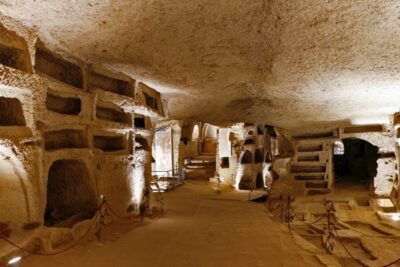 ★ 4.6Catacombs of San Gennaro Entry Ticket & Guided TourFrom $157,941 reviews
★ 5.0Pompeii Small Group Tour with an ArchaeologistFrom $356,593 reviews
★ 4.6Catacombs of San Gennaro Entry Ticket & Guided TourFrom $157,941 reviews
★ 5.0Pompeii Small Group Tour with an ArchaeologistFrom $356,593 reviews
Browse the lists this tour appears in