

Tour review · TOUR REVIEWS
Pompeii: Skip the line ticket (art) + audioguide + map
Pompeii is best when you can wander. This skip-the-line Artecard entry plus an authorized audioguide device helps you move at your pace, without getting stuck in the longest lines.
What I like is the combination of pre-booked access and an audioguide designed for the site, so you can actually make sense of what you see. I also like that you get a map and clear access point information, so you are not just wandering randomly in the ash-gray streets.
One consideration: the voucher and ticket process can be confusing on arrival, and if you miss the correct pickup or entrance, you may still end up waiting. Pay attention to where you are supposed to go next.
Key points before you go
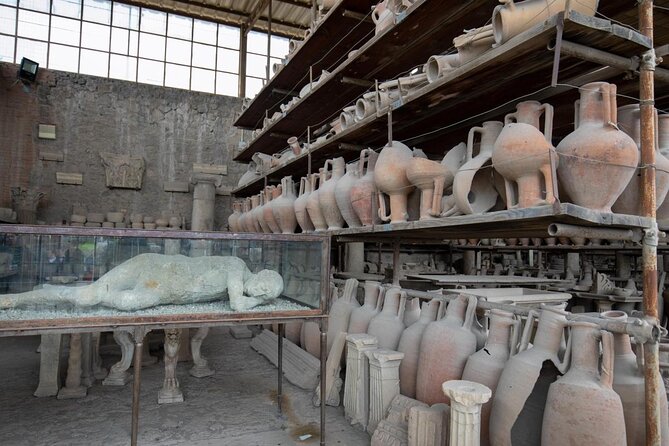
- Authorized audioguide for Pompeii that uses numbered explanations for up-to-date site info
- Skip-the-line access through Porta Marina Inferiore in Piazza Esedra, designed for priority entry
- Self-paced timing, 2 to 4 hours that works well if you want photos, pauses, and detours
- Hands-free listening option, plus you can use standard jack headphones (not included)
- Bring an ID for the device deposit, then get it back when you return the guide
- Expect limited shade, so start early and plan for heat and walking
What you’re really buying: Artecard entry + an audioguide device
This experience bundles two things that matter at Pompeii. First, you get a pre-booked Archaeological Park entry express ticket (Artecard). Second, you get an audioguide device plus a map, so you can follow the city instead of just scanning stones.
The Artecard part is what people want for value. It is meant to reduce waiting, but it does not mean you will instantly cross the gate with zero lines ever. Pompeii still has crowds, security checks, and a few steps between “voucher” and “ready to enter.” Your goal is to avoid the worst queues, not to magically skip every barrier.
The audioguide device is the other big reason this is worth considering. The park authorized operator provides the device, and it uses numbers on the guide to deliver explanations tied to what you are looking at. In plain terms, it helps you read the ruins while you walk them.
You also get dedicated access from the entrance Porta Marina Inferiore, located in Piazza Esedra. That single detail can make or break your day, because Pompeii has multiple entrances and not all are equal for priority.
More Naples tours, ruins, coast days, and city experiences to compare



The numbered audioguide: how to make it work (and not hate it)
The device is designed for Pompeii’s layout. You press or scan through numbers that correspond to the spots you pass, and the audio explains what you’re seeing. The explanations are meant to be accurate and current, since it is tied to authorized tour-operator content.
Here’s how to make this practical:
- If the device offers hands-free use, take it. Your hands are better spent holding a water bottle, waving a hand at your group, and taking photos.
- If you use headphones, bring your own standard jack headphones, since they are not included.
- Keep the map accessible but realistic. You will not “GPS” your way to the perfect route. Use the map to understand direction, then let the audio guide nudge you toward major areas.
Some people find the audio device format a little awkward, especially if it is phone-like. If you end up needing to hold it to your ear, you lose some of the benefits of a self-guided tour. This is why I recommend headphones and a lanyard or strap setup if you have one.
Also, keep your expectations tuned. This is audio guidance, not a live storyteller. You will get context, but you will not get the same back-and-forth that a human guide provides when someone asks, Wait, what was that used for?
Entering Pompeii at Porta Marina Inferiore, Piazza Esedra
This is the most important logistics piece in the whole day.
Your included express access is tied to Porta Marina Inferiore (Piazza Esedra). In real life, that means you need to follow the flow the operator provides. If you simply show up at a random gate and try to enter with a voucher or code, you may get sent to the wrong place, which costs time.
Several common snags show up when people arrive:
- They assume the voucher itself is the entry ticket, then hit a desk or gate that requires an exchange first.
- They arrive, get directed to a different office location (near the station area), then have to move back toward the park entrance.
- They miss the priority entrance routing, so the “skip-the-line” benefit becomes much smaller.
You can avoid most of this with one simple habit. When you first pick up your audioguide and ticket materials, confirm the exact next step: which entrance you should use after that pickup. Then commit to it. Do not wander off to “just check the gates.”
If you want a smoother day, arrive early enough that you can absorb a short delay without panicking about your walking window. Pompeii is not a slow-site. It is a place where every extra wait can turn into a hotter, more crowded walk.
Your 2 to 4 hour self-guided loop: what you’ll actually see
The tour is self-guided, but it still has a clear structure in your head. The audioguide leads you through Pompeii’s major categories: houses, temples, theatres, and the street network.
Stop 1: Archaeological Park of Pompeii
This is the whole experience. The goal is not to “cover everything.” The goal is to understand the city as you walk it.
Here’s what the audioguide helps you connect:
- Everyday life, not just big monuments. You’ll learn how rooms were used and how the city functioned.
- Public space, like areas where people gathered and performed civic and religious life.
- Entertainment and community, including theatres and performance spaces.
- The preservation story, where volcanic ash trapped the city in a way that keeps details visible for centuries.
One reason the audioguide format shines here is that Pompeii can be visually similar street-to-street. Without commentary, it is easy to walk past something important and only realize later. With the numbered audio, you get a nudge at the right moment.
You will also learn how people lived before the eruption, which changes the feeling of the site from “ruins” into “real places with real habits.” That is where the self-paced format becomes a strength. You can pause when something lands, rather than forcing yourself to keep up with a fast group.
More Naples tours, ruins, coast days, and city experiences to compare





A reality check on crowds and weather
Pompeii’s comfort level is mostly about sun and shade. One big takeaway from on-the-ground experience: there is not much shade, so bring a hat and plan for water. Even if the day is rainy, you are still walking lots of uneven ground.
If you are visiting during peak summer or a busy period, heat and crowding can shrink your patience. In those conditions, an audioguide still helps, but it cannot erase the fact that you are walking through a dense site. Your best move is timing: go earlier in the day when possible.
What to pack so the audio day stays enjoyable
This tour is simple on paper, but it can get annoying if you show up unprepared.
Bring:
- Headphones with a standard jack (since they are not included)
- An ID deposit, because you need a valid ID to check out the device, then you get it back when you return it
- Water and a hat, because there is limited shade
- Comfortable walking shoes with grip, because the surface is not smooth pavement
Also, think about your group. The tour is private in the sense that it is just your group, not strangers piled together. That is nice, but self-guided means you are also the project manager. If your group splits for photos, you will want a plan for regrouping at the next major stop.
One extra tip: bring a power strategy. If your smartphone is your map brain, use airplane mode to save battery. The audioguide device is separate, but your phone will still be useful for photos and navigation.
The “skip-the-line” question: when you get the benefit, and when you do not
This is where you should be honest with yourself.
When it works, the benefit is time saved. You get priority access through the designated entrance route, and you avoid the heaviest waiting that happens for standard entry.
When it does not work as expected, it’s usually because of the ticket handoff.
- You might be given a voucher and still need to exchange it for an entry ticket at a particular office.
- That exchange can involve a queue.
- After the exchange, you then join the next step toward the correct entrance for priority entry.
The good news: even when you hit lines for an exchange, the audioguide value still holds. Once you are inside, the ruins and the audio context can make up for a shaky start.
So I think of this tour like this: it reduces friction if you follow the rules. It turns into a headache if you wing it.
Price and value: is $44.31 a good deal?
At about $44.31 per person, you are paying for convenience and interpretation, not for a luxury experience.
Here’s the value equation I’d use:
- If you plan to visit Pompeii without a guide and you like structure, the audioguide + map can be worth it. Pompeii is too big to memorize on the fly.
- If you are the type who loves freedom and stops often, you get that self-paced rhythm. You are not stuck watching the same group shuffle along.
- If you just want the cheapest entry, you might find cheaper options on-site or day-of. But the saved interpretation is the part you would be giving up.
The main value risk is that time savings depend on correct ticket routing. If you lose time at pickup or exchange because instructions were unclear or the wrong office was used, you may feel like the “skip” part did not pay off.
That does not mean it is overpriced. It means you should invest a little mental energy before you go, so you do not waste the advantage you paid for.
Who this Pompeii experience fits best
This works best for you if:
- You want a self-guided visit but still want context.
- You plan to spend real time in Pompeii, around 2 to 4 hours.
- You are comfortable handling logistics like “pickup first, then enter through the right entrance.”
- You like headphones or hands-free audio and you enjoy exploring at your own rhythm.
It might not be your best choice if:
- You want a fully guided, live narrative with Q and A.
- You dislike any voucher exchange steps and you prefer a straightforward ticket purchase.
- You are traveling with people who get anxious when directions are vague. Pompeii needs calm.
If you already know you want a guided storyteller, consider paying more for a human guide. Audio is great, but humans can rescue a confusing day with real-time fixes.
Small practical notes that matter on-site
- The tour includes multilingual assistance at the office. If something feels off early, ask. Clear up confusion before you walk back and forth.
- Food is not included, and facilities can be limited. Plan for water and snacks if you need them.
- Service animals are allowed, and the site is near public transportation, so you do not necessarily need a car.
- Free parking might be available if conditions are met, from 01/04 at Osteria Nonna Cherubina, Via Andolfi 46. If parking matters to you, it is worth confirming what is available when you travel.
Should you book this Pompeii skip-the-line audio tour?
I’d book it if you want a balanced day: faster entry plus meaningful guidance, without the cost of a full live guide.
Do book it if:
- You like the idea of moving at your pace and still learning what you’re seeing.
- You are okay following step-by-step instructions for pickup and the correct entrance.
- You can bring your own headphones and an ID for the device deposit.
I would skip it if:
- You already know you get stressed by ticket exchanges and changing meeting points.
- You want someone in your face the whole time explaining every choice.
- You are extremely time-limited and cannot afford even a short queue for voucher exchange.
If you do book, your best move is simple: before you head inside, confirm the exact next action and the entrance you should use, then stick to it. That turns a potentially confusing start into a smooth, satisfying Pompeii walk.
FAQ
What is included in the Pompeii skip-the-line ticket package?
You get an Archaeological Park entry express ticket (Artecard), dedicated access from Porta Marina Inferiore in Piazza Esedra, an audioguide device, a map, and multilingual assistance at the office.
Do I need to bring headphones?
Headphones are not included. The audioguide device can be used hands-free or with standard jack headphones.
What ID do I need for the audioguide device deposit?
A valid ID is required as a deposit for the audioguide device. You should bring an ID document and plan to return it to get your deposit back.
Where do I enter the Archaeological Park?
Your priority access is from Porta Marina Inferiore, located in Piazza Esedra.
How long is the Pompeii self-guided experience?
The duration is approximately 2 to 4 hours.
What language is the tour offered in?
It is offered in English.
Is food or hotel pickup included?
No. Food and hotel pickup are not included. The package is focused on entry, audioguide, and a map.
More Skip the Line in Pompeii


More Tickets in Pompeii



More Tour Reviews in Pompeii




Not for you? Here's more nearby things to do in Pompeii we have reviewed











Tour Reviews, compared.
 ★ 4.8Pompeii: Entry Ticket and Guided Tour with an ArchaeologistFrom $3519,459 reviews
 ★ 4.2Pompeii: Entry Ticket with Optional Audio GuideFrom $2612,360 reviews
 ★ 4.8Pompeii: Small Group Tour with an ArchaeologistFrom $4012,264 reviews
 ★ 4.3Pompeii Ruins & Mount Vesuvius Day TourFrom $12011,459 reviews
 ★ 4.6Sorrento, Positano and Amalfi Full-Day TourFrom $10710,988 reviews
 ★ 5.0Sorrento, Positano & Amalfi Coast – Small Group TourFrom $768,643 reviews
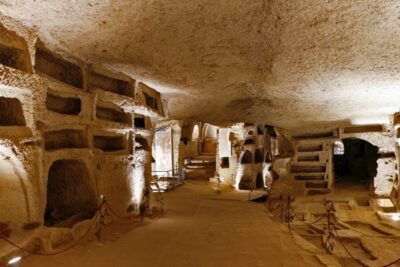 ★ 4.6Catacombs of San Gennaro Entry Ticket & Guided TourFrom $157,941 reviews
★ 5.0Pompeii Small Group Tour with an ArchaeologistFrom $356,593 reviews
★ 4.6Catacombs of San Gennaro Entry Ticket & Guided TourFrom $157,941 reviews
★ 5.0Pompeii Small Group Tour with an ArchaeologistFrom $356,593 reviews
Browse the lists this tour appears in