
Tour review · TOUR REVIEWS
Pompeii 2-hour Private Tour with an Archaeologist-Ticket included
Pompeii feels personal when you skip the crowd. This private 2-hour walk is led by an archaeologist and covers key streets and buildings with real context, plus the Pompeii admission is built into the price. The trade-off is simple: in two hours, you will see major highlights, not the entire park.
I like that the tour is in English with a mobile ticket, and the meeting is clear at Via Villa dei Misteri, 2. Many guides are described as PhD archaeologists, including Alessandra and Silvia, and that matters because Pompeii rewards detail, not just big impressions. The tour is designed for all-weather operation too, so you’ll want to wear shoes you trust on uneven stone.
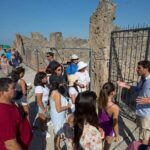
You’ll walk at a pace that fits your group, with time to ask questions and take photos without feeling like you are sprinting. It ends at Piazza Esedra, and the guide can help with practical directions back to your accommodation or to the closest train station.
Key Things I’d Prioritize on This Pompeii Private Tour
- Archaeologist-level interpretation: Guides like Amedeo, Ivan, and Diego are praised for turning walls, rooms, and street life into understandable stories.
- Admission ticket included at the start (at the archaeological park), which cuts friction when you arrive.
- A stop list that matches how Pompeii feels in real life, from forum space, to houses, to baths, to theaters.
- Personal pacing: Silvia is highlighted for slowing down when needed, and Mena is noted for being patient with photo time.
- Expert guidance with flexibility: Giovanni and Paolo are praised for clear, calm logistics when timing gets messy.
- Ends near Piazza Esedra, so you can keep your day moving without backtracking through the park.
Entering Pompeii Through a Human-Scale Plan
Pompeii can be overwhelming fast. The site is huge, the streets wind, and it is easy to walk past something important because you did not know what you were looking at. A private, archaeologist-led format helps you avoid that common problem. You are not just touring buildings, you are learning how the city worked.
I also like the shape of this experience. It is short enough to stay focused, but packed enough to leave you with clear mental anchors. In practice, that means you get a working map in your head by the time you reach the big civic spaces, then you move into the residential and daily-life highlights.
And yes, Pompeii is a workout. Even if you are not moving fast, you are on stone, often uneven stone, and you will likely feel it after. The good news is that the tour is designed for moderate physical fitness, and multiple guides are praised for adjusting the pace for different needs.
More Naples tours, ruins, coast days, and city experiences to compare


Meeting at Porta Marina Superiore, Finding Your Guide, Starting Confident
The tour starts at Via Villa dei Misteri, 2, and your guide meets you at the archaeological site entrance called Porta Marina Superiore. The guide holds an Askos Tours sign, which is one of those small logistics details that prevents the first 10 minutes from becoming a stress test.
A mobile ticket is included, which is handy because it keeps everything in one place on your phone. Confirmation happens at booking time, so you do not have to wonder if you are on the list.
From the reviews, one theme pops up again and again: clear direction helps. Giovanni is praised for being patient when people arrive late and for giving clear instructions to reach the meeting point. Paolo is also praised for making the logistics easy, including detailed directions. That is exactly what you want in Pompeii, because the last thing you need is a scramble just to start.
Stop 1: Archaeological Park Entry and Getting the Big Picture Fast
Your first stop is the Archaeological Park of Pompeii at Porta Marina Superiore. This is where the admission ticket is included in the tour, and the guide takes a moment to set the tone for what you are about to see.
This is a smart start. Before you start walking, you need at least a basic sense of where you are in the city and why Pompeii’s layout makes sense. A good archaeologist guide will also help you understand that Pompeii is not one uniform monument. It is a living city frozen in time, with different neighborhoods, functions, and wealth levels.
In reviews, the archaeologist training shows up repeatedly. People describe guides as passionate and professional, and that professional energy matters because it changes how you look at even the smallest features, like doorways, thresholds, or how spaces connect.
Time here is about 10 minutes, so you should think of it as your briefing rather than a deep lecture.
Stop 2: Basilica Portico, Where Merchants and Activity Sheltered
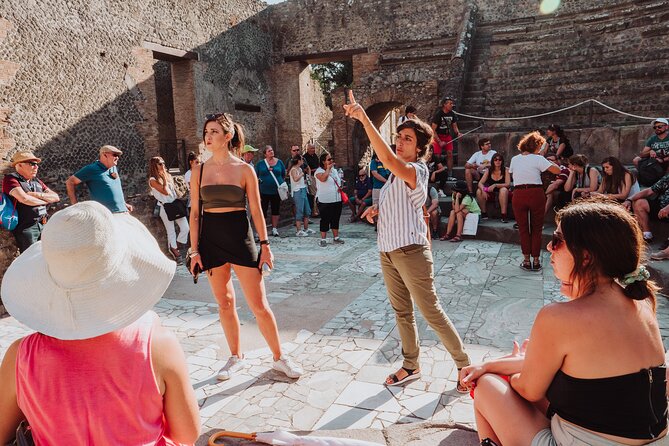
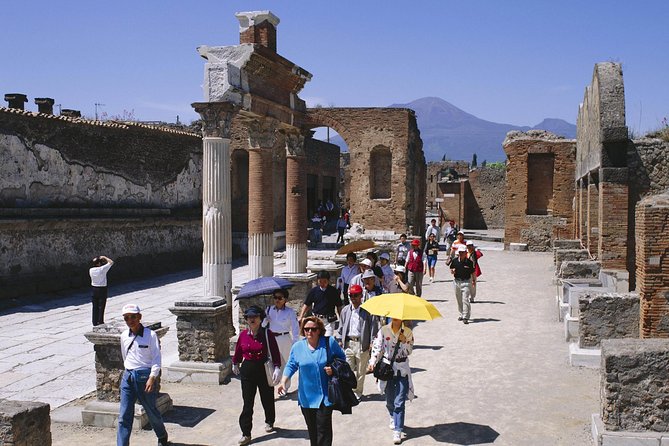
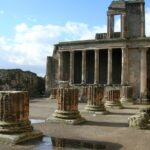
Next up is the Basilica. In simple terms, this was an open portico that gave shelter for merchants and day-to-day activity.
The key value here is learning how civic buildings shaped street life. Even if you have seen photos of Pompeii, the buildings can feel like set pieces until someone explains their role. A portico is not just architecture. It is crowd movement, commerce, and a place where people could conduct business without being baked in the sun or soaked in bad weather.
This stop is about 15 minutes. With a private tour, you can ask questions right here instead of saving them for later and forgetting what you were looking at.
Stop 3: The Forum Square, Pompeii’s Public Center
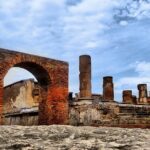
From there you head to the Foro de Pompeya, Pompeii’s ancient main square. This is one of the best places to develop orientation. The forum is where civic identity concentrated, and it helps you make sense of why other places, like houses and theaters, mattered.
Time is about 10 minutes. That is short, but it works because the guide can point out key relationships between spaces instead of trying to cover everything. You are not just seeing a square. You are learning what a square meant in Roman life.
If you are traveling with someone who wants a quick but meaningful overview, this part is a strong match. It gives you context without forcing you to commit to a longer, full-day plan.
You can also read our reviews of more private tours in Pompeii

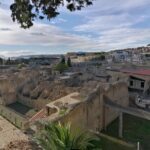
The Main Street Walk: Imagining Foot Traffic, Not Just Ruins
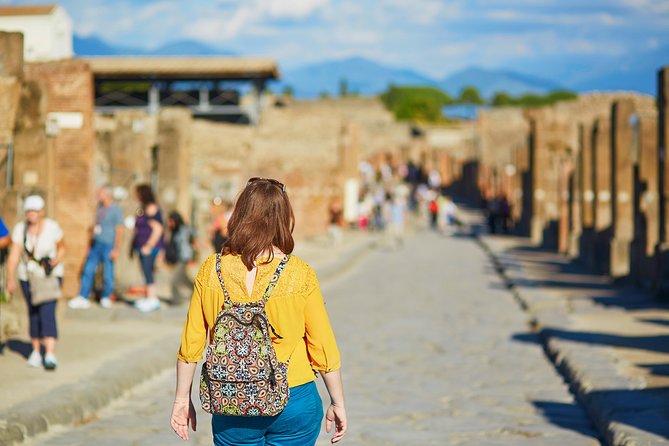
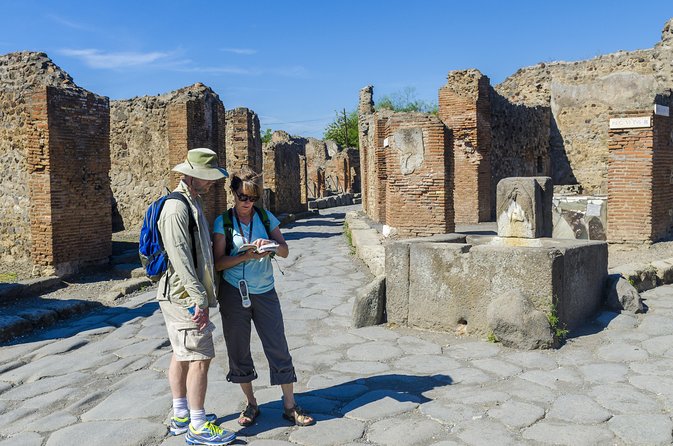
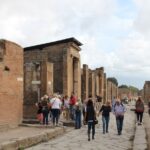
After the forum, you walk through the main street of Pompeii. The value of this segment is that it shifts you from civic space to movement space.
This is where it becomes easier to imagine the city as it was: shops, passing groups, people heading to work, people heading home, and people just out for the day. The street walk is also a good moment for photos, because you can capture perspective and the way buildings line up along the route.
The tour keeps things efficient here. You get the street experience without turning it into a long detour.
Stop 4: Granaries of the Forum, Marble Tables and the Casts That Hit Hard
Next are the Granaries of the Forum. This stop is about 15 minutes and it carries a lot of emotional and educational weight.
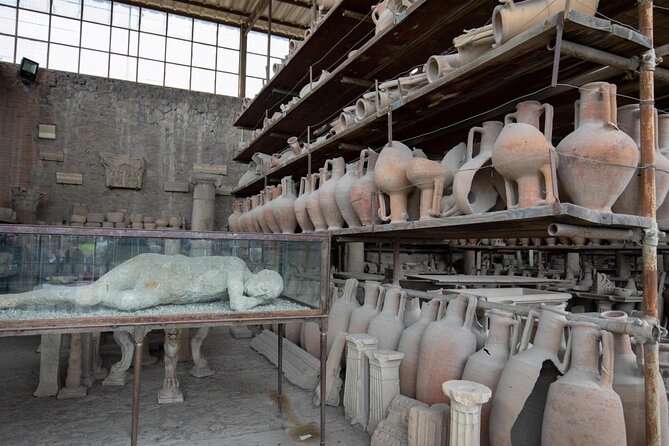
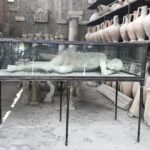
You will see marble tables and baths connected to fountains that adorned entrances of houses. You’ll also notice casts of victims of the eruption, plus casts of a dog and a tree.
This is where Pompeii gets real. It is easy to treat the site like a museum of objects. Casts break that distance. They turn the eruption from a headline into a human moment, and they remind you that the city was full of life even when disaster struck.
The guide’s role matters here. A good archaeologist will frame what you are seeing carefully, explain why the casts matter, and connect them to the surrounding structures. If you have ever felt unsure what you were looking at when you see a dramatic sculpture in a museum, this stop is where expert interpretation pays off.
Stop 5: House of Menander, Wealth in Architecture and Decoration
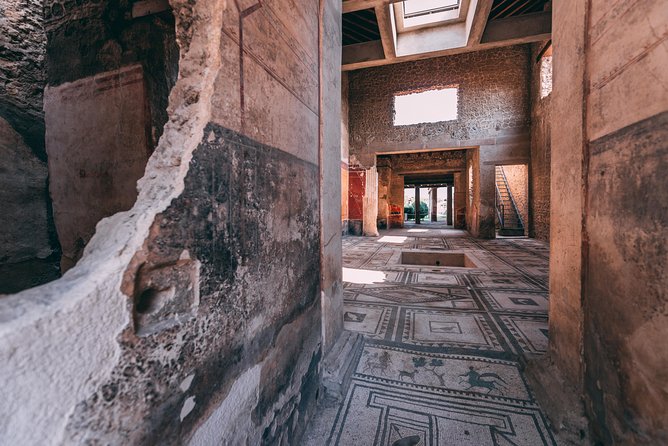
The House of Menander is next, about 15 minutes. This is described as one of the richest and most magnificent houses in Pompeii, especially for architecture, decoration, and contents.
This stop is valuable because it shows you the social ladder. Pompeii was not a single lifestyle. It ranged from working life and commerce to elite home design with formal, highly decorated spaces.
If you like interior details, this is where you will probably slow down a little, even on a timed tour. Menander tends to reward close looking, and a guide can point out design choices that are easy to miss when you are moving quickly.
In reviews, people praise guides for focusing on daily-life art and lifestyle, and this is exactly the kind of place where that approach works.
Stop 6: Stabian Baths, Oldest Thermal Complex and Roman Self-Care
Then comes the Stabian Baths, also called Terme Stabiane. These cover a vast area between the Brothel lane, the Holconius crossroads, and the Via Stabiana, and they represent the oldest thermal complex in the city. Time here is about 15 minutes.
Baths are not just about soaking. They were social hubs, workout spaces, and places to talk, trade news, and maintain status. The spatial layout helps you understand how Romans built routine into public life.
I also like that this stop changes the mood. After homes and civic spaces, baths add rhythm and movement. You get a different kind of architecture to study.
Because this tour operates in all weather conditions, you’ll want to pay attention to your footing in and around open areas. A comfortable shoe helps more than you think here.
Stop 7: Lupanar, the Most Famous Brothel in Pompeii
Next is the Lupanar, the most famous brothel in the ruined Roman city of Pompeii. Time is about 15 minutes.
I recommend treating this stop as cultural context, not shock value. The point is to understand how the Romans organized entertainment and commerce, and how Pompeii carried that same blunt pragmatism into daily life.
A good archaeologist guide will handle the topic with a factual, historical tone. In reviews, guides are praised for being patient, professional, and able to answer questions. That matters here because people often arrive with assumptions, and they want clarity rather than gossip.
If your group has kids, this is a place where you might want to decide in advance how you want the guide to handle explanations. One family-friendly highlight shows up in reviews, with Rafaella keeping kids engaged, which suggests at least some guides can adapt their approach.
Stop 8: House of the Faun, Big Residence Energy
The House of the Faun is one of the largest and most impressive private residences in Pompeii. You’ll spend about 15 minutes here.
This stop is about scale. Menander showed wealth through detail and decor. Faun tends to show wealth through size and overall home impact. It helps you understand how different elite homes expressed status in layout, not just decoration.
Even if you are not a architecture person, you should find this satisfying, because scale is visible fast. You can see why it would have impressed visitors and how everyday life in a mansion worked differently than life on the street.
Teatro Piccolo and Teatro Grande, Roman Entertainment and Public Life
The tour then includes a look at the Teatro Piccolo and finishes with the Teatro Grande, the most important theater in Pompeii. Teatro Grande gets about 10 minutes.
Here’s what makes the theaters worth your time. In a place like Pompeii, entertainment spaces explain social habits. People gathered for shows, rumors, and shared experiences. A theater is a community container.
Theater architecture also gives you a sense of engineering competence. Even in ruins, you can read how seating and stage would have shaped sightlines and crowd energy.
If you have ever wondered why people keep building theaters, this is the part that makes the answer obvious.
Price and Value: What $214.75 Buys You in Two Hours
At $214.75 per person, this is not a budget tour. But it is also not trying to be. For that price, you get a private format, an archaeologist guide, and Pompeii admission included.
For me, the value equation comes down to time and interpretation. Pompeii is a place where the difference between seeing ruins and understanding ruins is huge. If you are spending two hours anyway, hiring an expert guide is often cheaper than losing that time to confusion.
It also saves the mental energy of sorting tickets and logistics when you arrive. You already know what you are paying for, and the admission piece is handled.
One more practical plus: the tour is short. You are not locked into an all-day schedule. That matters if you want to combine Pompeii with another stop in the area or if your energy is better spent on meals and views afterward.
How to Make the Most of the Tour (Without Overplanning)
This tour is built for comfort and focus, but you still want to show up prepared.
- Wear comfortable shoes. Pompeii does not care about your itinerary.
- Bring a phone or camera for photos, and be ready to ask the guide to pause when you see something you want to capture.
- If you are traveling with older relatives, you will appreciate that some guides are praised for slowing down on rough or steep ground.
- If you have kids, pick a guide who can tell stories clearly. Reviews include examples of guides keeping children engaged.
Also, if you care about photography, I like that at least one guide is praised for being patient with photo focus. You can use that as a cue when you book, choose a time when your group will not be rushed, and don’t treat the tour like a race.
Who Should Book This Pompeii Private Tour
This experience makes the most sense if you want a focused introduction to Pompeii with expert interpretation and zero crowd pressure. It is ideal for couples, small groups, and anyone who does not want to wander with a map and hope for the best.
It is also a good choice if you like asking questions as you go. Guides named in reviews, including Amedeo, Ivan, Giovanni, Luca, Mena, Rafaella, Alessandra, Silvia, Sara, and Paolo, are repeatedly described as passionate and highly responsive.
One consideration: the tour is about two hours. If your group wants a long, deep walk through every major site, you may feel a little boxed in. That is not a flaw, it is the design. Pompeii can fill multiple days, so if you want total coverage, plan for more time on your own after the tour.
Should You Book This Private Pompeii Tour?
Yes, if you want Pompeii to make sense fast. A two-hour private tour with an archaeologist guide is a strong way to transform scattered ruins into a coherent city. The included admission ticket removes one headache, and the guide-led pacing helps you avoid the worst part of Pompeii, the feeling that you are just staring.
Book it especially if you:
- want English guidance and clear explanations
- prefer your group only over large tours
- value stops that cover civic life, elite homes, baths, and theaters
- appreciate the idea of guides adjusting pace for different needs, like older family members
If you are the type who wants to roam freely and spend extra time inside each building, you might prefer a longer guided option or a mix of self-guided time plus a short expert tour. But for most people, this is a smart, efficient way to get Pompeii right the first time.
FAQ
How long is the Pompeii private tour?
The tour lasts about 2 hours.
Is this tour private?
Yes. It is a private tour, and only your group participates.
What language is the tour offered in?
The tour is offered in English.
Where is the meeting point?
The start meeting point is Via Villa dei Misteri, 2, 80045 Pompei NA, Italy.
Where does the tour end?
The tour ends at Piazza Esedra, 80045 Pompei NA, Italy.
Is admission to Pompeii included?
Yes. Admission fees to Pompeii are included, with the ticket included at the park entry.
What stops are included during the 2 hours?
The tour includes Pompeii highlights such as the Basilica, Foro de Pompeya, the Granaries of the Forum, House of Menander, Stabian Baths, Lupanar, House of the Faun, and Teatro Grande, with additional sights like a look at Teatro Piccolo.
Is lunch included?
No, lunch is not included.
Is hotel pickup or drop-off included?
No. Hotel pickup and drop-off are not included.
What is the cancellation policy?
Free cancellation is available up to 24 hours in advance for a full refund.
More Tickets in Pompeii


More Tours in Pompeii


More Tour Reviews in Pompeii

Not for you? Here's more nearby things to do in Pompeii we have reviewed





Tour Reviews, compared.
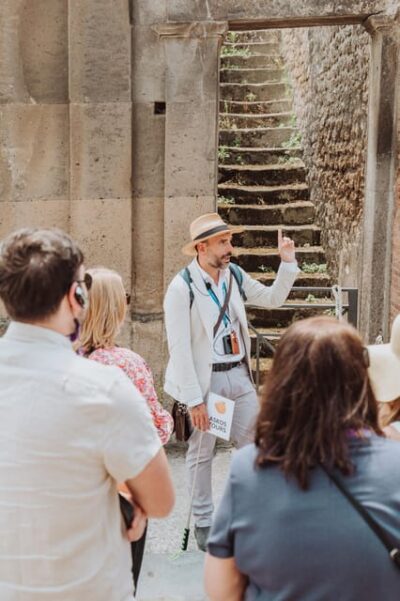 ★ 4.8Pompeii: Entry Ticket and Guided Tour with an ArchaeologistFrom $3519,459 reviews
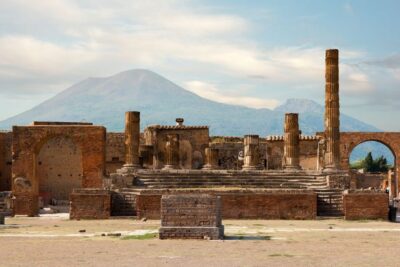 ★ 4.2Pompeii: Entry Ticket with Optional Audio GuideFrom $2612,360 reviews
 ★ 4.8Pompeii: Small Group Tour with an ArchaeologistFrom $4012,264 reviews
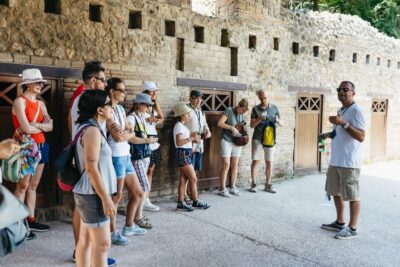 ★ 4.3Pompeii Ruins & Mount Vesuvius Day TourFrom $12011,459 reviews
 ★ 4.6Sorrento, Positano and Amalfi Full-Day TourFrom $10710,988 reviews
 ★ 5.0Sorrento, Positano & Amalfi Coast – Small Group TourFrom $768,643 reviews
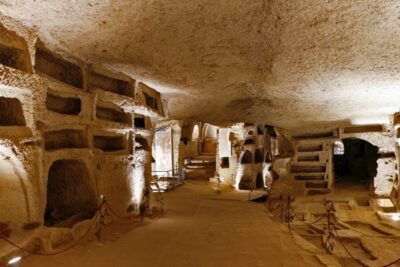 ★ 4.6Catacombs of San Gennaro Entry Ticket & Guided TourFrom $157,941 reviews
★ 5.0Pompeii Small Group Tour with an ArchaeologistFrom $356,593 reviews
★ 4.6Catacombs of San Gennaro Entry Ticket & Guided TourFrom $157,941 reviews
★ 5.0Pompeii Small Group Tour with an ArchaeologistFrom $356,593 reviews
Browse the lists this tour appears in