
Tour review · TOUR REVIEWS
Explore Pompeii with an Archaeologist
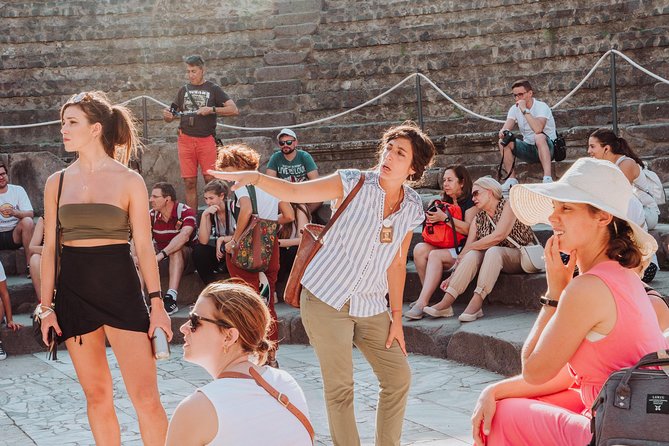
Pompeii clicks when you have an archaeologist. This 2-hour small-group walk covers the big landmarks with skip-the-line entry and clear English explanations.
I really like the archaeologist-led format, because it turns stone walls into real routines and real choices people made daily. I also like the size limit, up to 20 people, which means you are not stuck listening from the back of a crowd.
The tradeoff is time. You get about 10 minutes at each stop, so if you want to linger in one house, you will need extra time after the tour.
Key things I’d circle before you go
- Skip-the-line admission helps you avoid the worst queues right away
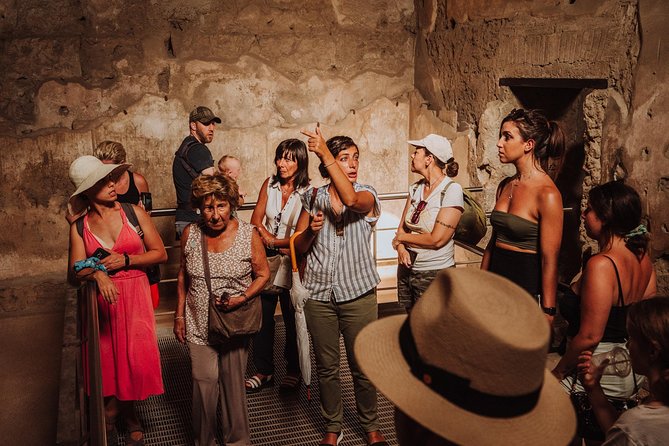
- Small group size (max 20) keeps the pace workable and questions possible
- Headsets for 16+ make it easier to hear your guide clearly
- Forum to baths route checks off major Pompeii highlights fast
- Classic “walk-through Pompeii” sequence from Porta Marina Superiore to Teatro Grande
Entering Pompeii at Porta Marina Superiore without the headache
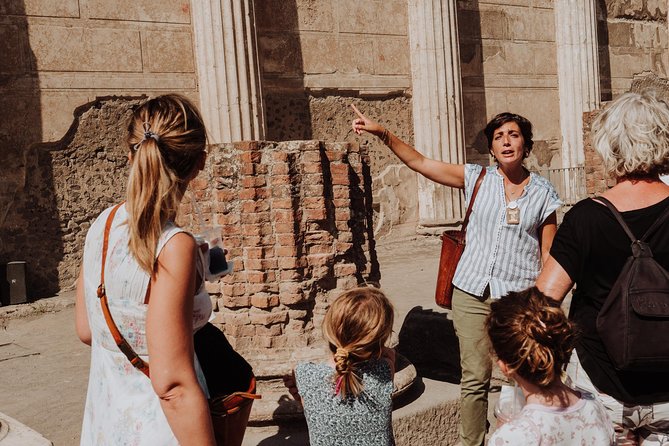
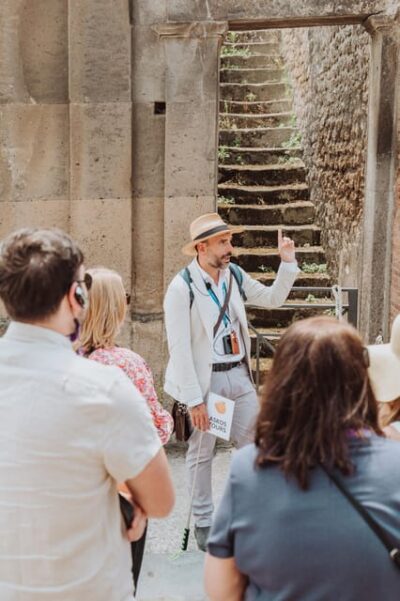
This tour starts at the main entrance area called Porta Marina Superiore. Your guide meets you there holding a sign for Askos Tours, so you can spot the group quickly instead of circling the gates. The tour lasts about two hours, and it is designed to get you moving through Pompeii’s most important, most photographed zones without burning half your day stuck waiting.
Skip-the-line matters here. Pompeii is popular, and the sightlines can be tricky when you are trying to read signs and absorb details at the same time. With admission handled up front, you can focus on the ruins instead of the lines.
Also, you are not just wandering. This is an archaeologist-guided visit, offered in English, with enough structure that you leave with a sense of how the city worked, not just a pile of buildings you half recognize.
You can also read our reviews of more tours and experiences in Pompeii.



Price and what you really get for $35.67
At $35.67 per person, this is one of the better ways to experience Pompeii with guidance, because a few money-saving pieces are wrapped into the ticket. Pompeii admission is included, and you are also getting dedicated guidance during the walk, not just an audio app.
What you pay for here is time management. In Pompeii, time is the real currency. With only two hours, you want a route that hits the essentials and explains what you are seeing while you are still standing in front of it. This itinerary does that by stacking major stops back to back.
One more value point: the guide also uses headsets for groups of 16 or more. That may sound like a minor detail, but hearing your guide matters when you are walking through open spaces where sound bounces around and questions get swallowed.
Small group flow: pace, questions, and how to avoid tuning out
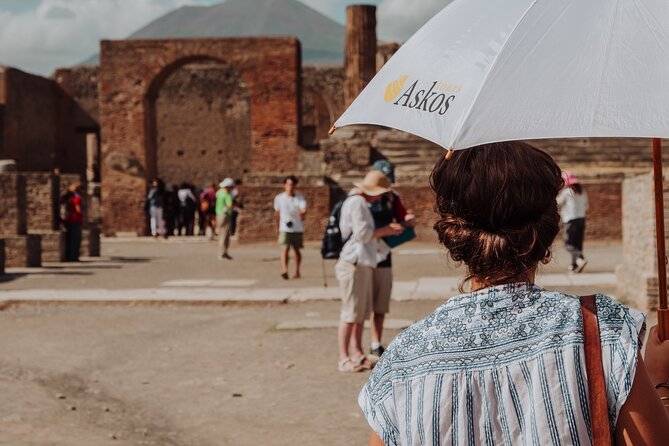
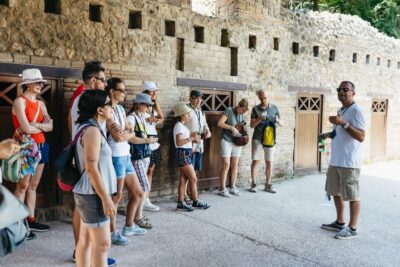
A max group of 20 per guide is not a random marketing number. It affects everything. You can actually turn your head, listen for the explanation, and ask something without feeling like you are slowing a herd.
The headset rule for larger groups is another practical win. Pompeii streets and courtyards can get noisy, and the fastest way to miss the story is to keep trying to strain for words. If you are someone who tends to forget details later, headsets are worth it.
One realistic caution: the schedule is tight. Expect a steady walk and short stops. If you get motion-sick or you hate being rushed, you might feel the pressure. But if you like a guided “hit the highlights and ask questions” style, this format fits.
The Forum circuit: Foro de Pompeya and the Basilica
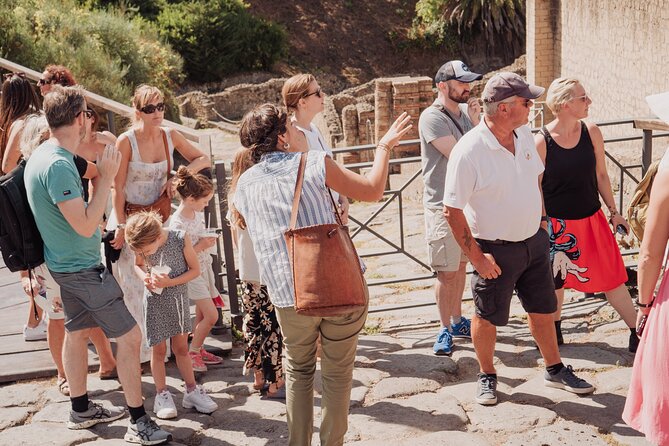
You start the tour’s core city experience at Foro de Pompeya, the main square. This is where Pompeii’s public life happened, the place where people gathered, conducted business, and acted like a community. From here, the guide can connect the dots between civic space and everyday behavior, so you understand why certain buildings were placed where they were.
Next is the Basilica, essentially a court house. It’s easy to look at it as just another ruin, but the Basilica setting helps you picture decisions, commerce, and conflict settling in public view. The best part of this kind of stop is not the building outline, it is the explanations that tell you what people likely did there and what that says about the society.
If you are the type who loves asking, this is a good section to do it. These two stops give you the framework of Pompeii’s civic system. Once you grasp that, the later stops feel less random.
Lupanar and Granaries: why Pompeii was more than temples
Then you hit Lupanar, the brothel. This is the kind of site that can feel awkward at first glance, but a good archaeologist-led explanation brings context: what this space was for, how it functioned, and why it existed in the street plan. It is also one of the quickest ways to understand that Pompeii was a real city with real human needs, not only a set of grand monuments.
After that comes the Granaries of the Forum. These are the kind of places people forget to photograph, but they matter. Food supply is city survival. Seeing granaries near the civic heart helps you understand how planning, storage, and distribution shaped daily life.
This is a smart sequencing choice for the itinerary. You move from governance and public space, into private commerce and human services, and then into the practical backbone of feeding a city. It’s not just “pretty ruins.” It’s how the city kept running.


Houses you can read: House of Menander and House of the Faun
Next you step into domestic Pompeii with two famous homes: the House of Menander and the House of the Faun.
The House of Menander is often remembered for its striking interior artworks. More importantly, it gives you a chance to see how wealth and taste were expressed through domestic design. A guide helps you make sense of what you are seeing, especially when the layout is confusing at first.
Then comes the House of the Faun, a larger, more ambitious home. This stop is where you start to notice how space worked, not just what decoration existed. It is a good contrast to the earlier city-center sites, because suddenly you are thinking about private movement, status, and the difference between a street’s bustle and the controlled life inside a courtyard.
Quick practical tip: houses mean uneven thresholds and stone flooring. Wear supportive shoes. A “pretty ruin stroll” can turn into a leg workout if your soles are too soft.
Stabian Baths and Via dell’Abbondanza: the city at street level
After the homes, you go to Stabian Baths (Terme Stabiane). Baths are one of the best places to feel the everyday rhythm of Roman life. You can often piece together the typical routine because the spaces are laid out for functions that make sense: heating, washing, resting, and social time.
Then you walk along Via dell’Abbondanza, the street called Via dell’Abbondanza. In this tour plan, it is a free ticket segment, which means you do not pay extra to enter that part during the walk. But the real benefit is the street view. It gives you the context you miss when you only focus on individual buildings. Suddenly the scale of neighborhoods clicks.
If you are visiting in warmer months, this is where comfort matters most. One simple tip from experience shared by previous visitors: bring a fan and a refillable water bottle, since water is available from fountains. Another tip you will likely thank yourself for: pack an umbrella or hat. Pompeii can be brutally sunny, and you will be walking.
Thermopolium VI and Teatro Grande: food, drink, and public entertainment
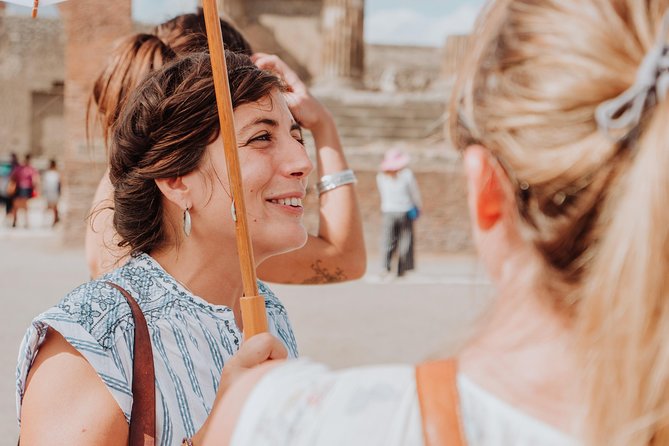
The itinerary continues to Thermopolium VI, a preserved counter-style food and drink spot. This is one of those Pompeii stops that makes the city feel shockingly immediate. A thermopolium is not a museum piece. It is where someone grabbed something hot and moved on with their day.
Then you head to Teatro Grande, the larger theater. It anchors Pompeii’s public entertainment. From a visitor’s point of view, it also serves as a visual break after lots of rooms and courtyards. A guide can explain how performances and civic life connected, and why theaters mattered beyond simple spectacle.
These two stops together do something great: they cover both bodily needs (food and drink) and social needs (gathering for entertainment). Pompeii becomes less depressing and more human when you see the full menu of daily life.
Casa dei Vettii: ending with a standout neighborhood home
The final major home on the route is Casa dei Vettii. This kind of end point works well because it lets you look at Pompeii with a fresh set of questions. After the Forum, baths, streets, food, and theater, you can better appreciate how a household expressed wealth, identity, and taste.
If you remember one thing, make it the mindset change. Midway through the walk, you stop thinking of Pompeii as ruins and start thinking of it as a functioning city that just happened to be frozen in time.
Walking reality in Pompeii: plan your comfort and your energy
Even with a guided route, Pompeii is not gentle. Expect a lot of walking on uneven surfaces. That matters for your day, especially if you have knee issues or you pack heavy day bags.
My practical advice:
- Wear shoes with grip. Stone gets slippery in spots, and you do not want to test your balance.
- Bring water and something for sun protection. A refillable bottle plus a hat or umbrella goes a long way.
- Use the time after the tour. Two hours is enough for major highlights, but not enough to fully absorb every house and corner.
Also, listen for the pacing. The tour is scheduled with short visits, and the best guides keep you moving without making you feel chased.
Who this tour is best for
This experience is a strong match if you want:
- A structured route that covers the big Pompeii sites in about 2 hours
- Archaeology-focused explanations while you are still seeing the details
- A group size that keeps Q&A realistic
It can be less ideal if you:
- Want active excavation areas or brand-new dig sites. This route is built around classic public highlights.
- Prefer a slow, wandering “I’ll stay in each room” style visit.
A good match for families too. Guides on this kind of tour often use kid-friendly storytelling, and shorter segments make it easier to keep attention.
If you are visiting from Naples or the area, it also helps that public transportation is nearby and people commonly connect by train. Just keep in mind that once you are in Pompeii, you are committing to walking.
Should you book this Pompeii archaeologist tour?
I would book it if you want the best value for your time. For the price, you get skip-the-line entry, Pompeii admission included, and a real archaeologist guide in English, plus headsets for larger groups. That is a lot of support packed into a short visit.
I would think twice if you want lots of free roaming and long stops. This itinerary is designed to move, with many highlights handled efficiently. If you are the type who needs to sit with a mosaic for 20 minutes and read every sign, add extra unstructured time on your own after you finish.
One more tip before you decide: pick your questions in advance. Even a simple list like What’s the deal with the brothel? or How did baths work? can turn a good two hours into a great one.
More Tour Reviews in Pompeii

Not for you? Here's more nearby things to do in Pompeii we have reviewed







Tour Reviews, compared.
 ★ 4.8Pompeii: Entry Ticket and Guided Tour with an ArchaeologistFrom $3519,459 reviews
 ★ 4.2Pompeii: Entry Ticket with Optional Audio GuideFrom $2612,360 reviews
 ★ 4.8Pompeii: Small Group Tour with an ArchaeologistFrom $4012,264 reviews
 ★ 4.3Pompeii Ruins & Mount Vesuvius Day TourFrom $12011,459 reviews
 ★ 4.6Sorrento, Positano and Amalfi Full-Day TourFrom $10710,988 reviews
 ★ 5.0Sorrento, Positano & Amalfi Coast – Small Group TourFrom $768,643 reviews
 ★ 4.6Catacombs of San Gennaro Entry Ticket & Guided TourFrom $157,941 reviews
★ 5.0Pompeii Small Group Tour with an ArchaeologistFrom $356,593 reviews
★ 4.6Catacombs of San Gennaro Entry Ticket & Guided TourFrom $157,941 reviews
★ 5.0Pompeii Small Group Tour with an ArchaeologistFrom $356,593 reviews