
Tour review · TOUR REVIEWS
Herculaneum Small Group Tour and Ticket With an Archaeologist
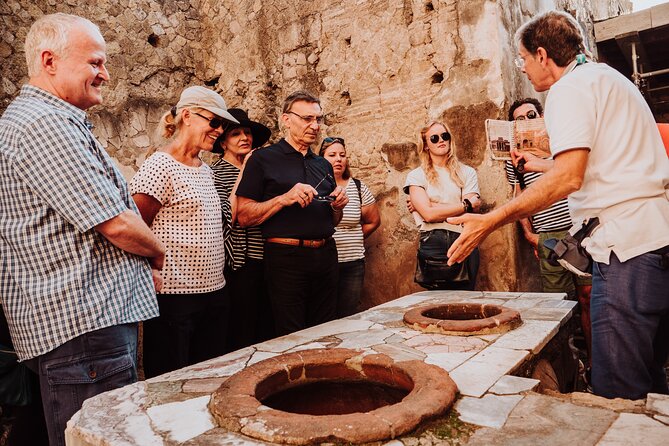
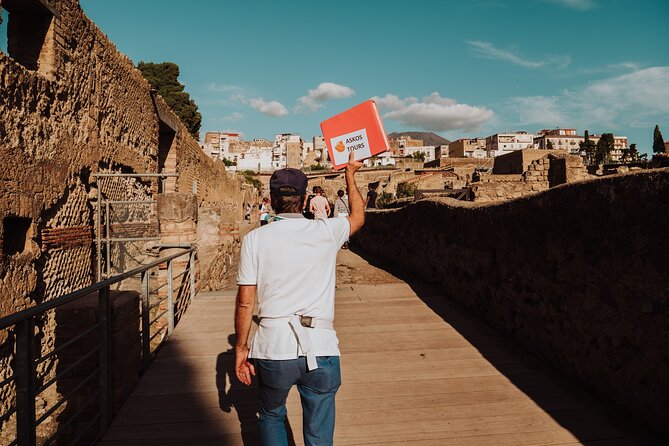
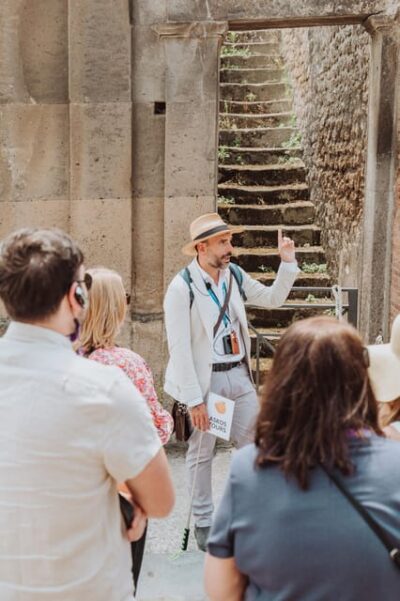
Herculaneum makes the past feel close. This archaeologist-led small-group tour gives you a smart, grounded way to read the buildings, not just look at them, and the skip-the-line entry keeps the day moving. I also like how the route hits major homes and public spaces in about two hours, so you leave with real “aha” moments about daily life.
Here’s the tradeoff: it is a walking tour with lots of standing, and the pace is usually brisk. On top of that, if your guide runs overtime, you could have less time for the on-site areas beyond the main route. For most people, that is worth it, but plan your expectations if you want lots of slow sitting time.
Key things to know before you go
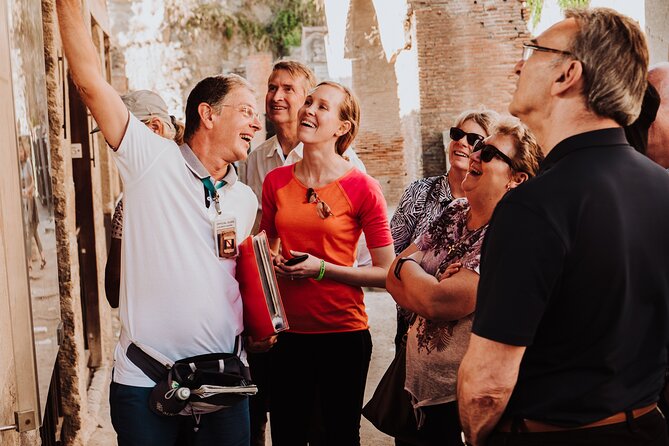
- Archaeologist in the lead: licensed guide with an archaeological background, focused on explaining what you are actually seeing
- Skip-the-line + headsets: no long queue stress, and you get headsets for clearer listening in the crowd
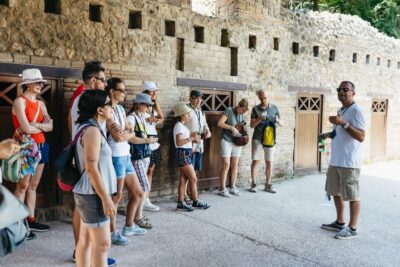
- Small group size: maximum of 20 people per guide, which makes questions easier and the experience feel less rushed
- Stop-by-stop variety: wealthy houses, religious space tied to Augustus, and men and women’s bath sections
- Short visits, strong context: about 10 minutes at each highlight, so the guide does the heavy lifting to connect the dots
Herculaneum with an archaeologist: why 2 hours works
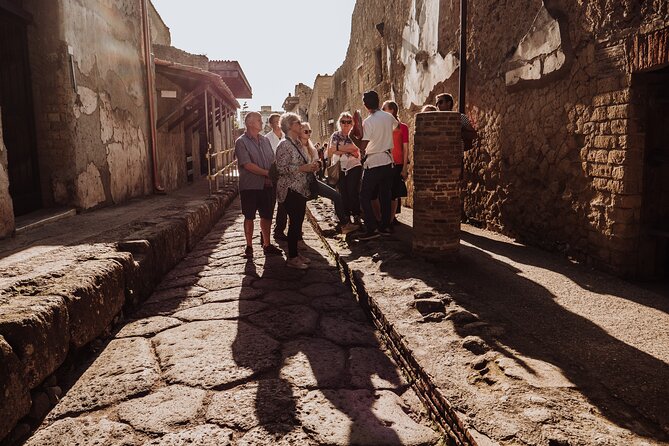
This is a 2-hour walk through Herculaneum’s highlights, led by a guide with an archaeological background. The big value for you is time compression. Instead of wandering and guessing what you are looking at, you get explanations on the spot, building a clear mental map fast.
The tour is designed for group movement. You are in a small group (up to 20), and you get headsets, which matters when you are clustered near doorways, stair steps, and narrow viewing areas. That setup also helps if you wear hearing aids, since guides are used to making sure everyone can hear.
You should also know what not to expect. This tour is not trying to be a slow museum day. It is a walking tour with a lot of “look, interpret, move on,” and the stops are short by design.
More Naples tours, ruins, coast days, and city experiences to compare

Meeting point, getting there fast, and how the walk feels
You meet at the Ticket Office of the Herculaneum ruins, which is also where the tour effectively starts from on the ground. The listed start point is Corso Resina 187 in Ercolano (Ercolane is the local name used on signs), and the tour ends inside the ruins.
Getting there is straightforward:
- By train: take the Circumvesuviana line to the Corso Resina area, then walk about 10 minutes
- By car: use via Pignalver and look for close-by unguarded parking near the meeting area
The practical tip here is simple. Try to arrive a few minutes early, even though the entry is skip-the-line. You still want time to find the Ticket Office, check in, and get your headset on before the guide starts.
The tour runs in all weather conditions, so you should dress for rain if it is in the forecast. The ruins are outdoors, and you will be walking between houses and bath complexes.
The route you will walk: stop-by-stop highlights in order
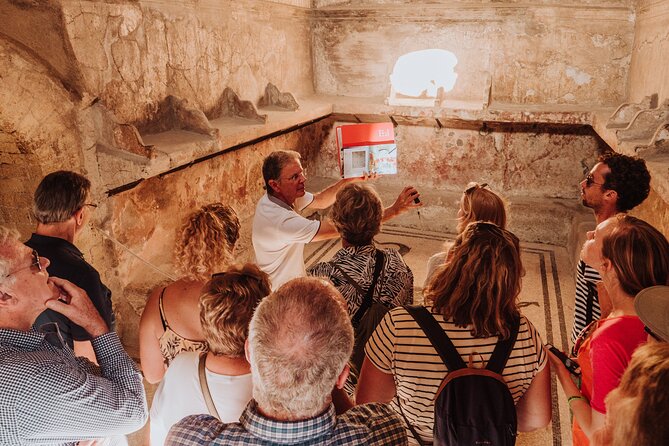
The tour structure is clean: each highlight gets about 10 minutes, with the archaeologist guide pointing out what makes that place special. If you like seeing many different types of spaces in one go, this format is excellent.
House of the Deer: reading a peristyle detail
Your first major stop is the House of the Deer. The name comes from marble stag and deer statues found in the peristyle, which is the kind of detail you would easily miss if you were only glancing around.
This is a good opener because it teaches you how to “decode” names and themes at Herculaneum. You start learning that even a label like House of the Deer is tied to an actual decorative feature.
La Terrazza di M. Nonius Balbo: benefactor power and big inscriptions
Next is La Terrazza di M. Nonio Balbo. This connects the city’s architecture to its patrons, since M. Nonius Balbus was the major benefactor who restored and built public buildings. After his death, he received honors, explained in the long inscription on his funeral altar.
What I like about this stop is the way it links stone to people. You are not just seeing an outdoor terrace space. You are learning how status worked, how public building got funded, and why inscriptions mattered.


College of the Augustales: religion tied to the emperor
Then you head to the College of the Augustales. The building is thought to have been tied to the cult of Emperor Augustus, and it may have been the headquarters of the Collegium Augustalium, or even connected to local civic leadership (the curia).
This is one of those places where a guide can change your experience. If you go in blind, it can look like another reused structure. With the archaeologist’s context, you start seeing it as a system for worship and local authority.
Casa del Rilievo di Telefo: private access and daily convenience
Stop four is Casa del Rilievo di Telefo. The house may have belonged to a leading benefactor linked to Marcus Nonius Balbus, and it is unusual because it has private access to adjoining Suburban Thermae to the south.
This is a neat “how did they live?” moment. You get a feel for convenience and status, since having private access to baths is not the same as using shared public routes.
Partem Domus lignea (Casa del Tramezzo di Legno): the wooden partition story
Next comes Partem Domus lignea, also called Casa del Tramezzo di Legno. This is important because an elegant wooden partition remained, giving you rare evidence of interior furniture and how rooms were divided.
Even in a two-hour tour, this stop can feel like the most human one. You can picture daily movement through rooms, and the guide can help translate “a preserved fragment” into “how people experienced space.”
House of the Skeleton: archaeology in the most literal sense
Stop six is the House of the Skeleton. The name comes from human remains discovered in a second-floor room in 1831, as the site was being excavated.
This stop is not for everyone if you are emotionally sensitive. But if you want the archaeological truth of what was found, this is the kind of evidence that makes Herculaneum more than architecture. You walk away remembering this city was lived in, and the excavation choices keep the story grounded in real evidence.
Central Thermae: men and women with separate entrances
Stop seven is Central Thermae, built around the beginning of the 1st century AD. This is where you see the bathing layout, since the baths were divided into men’s and women’s sections, each with its own separate entrance.
I like this stop because it adds rhythm to the tour. You go from private homes to a public routine space, then you learn that even bathing had built-in separation.
House of the Black Salon: luxury plus charred door details
Next is the House of the Black Salon, one of Herculaneum’s more luxurious mansions. The monumental entrance retains carbonised remains of the doorposts and lintel, which gives a direct view of what happened when wooden parts were burned and preserved.
This is the kind of detail that a normal walk-through would leave you guessing about. Here, the guide can point at what looks like “scorched traces” and explain why those traces matter.
Casa Sannitica: Samnite layout, frescoed rooms, Ionic gallery
Stop nine is Casa Sannitica. The layout is typical of the Samnites, and it includes a splendid atrium with a gallery supported by Ionic columns. Many rooms are decorated with frescoes.
This is where you start seeing variety within Herculaneum’s elite spaces. You are not only looking at one style. You are seeing how culture and local tradition show up in design.
Casa del Bel Cortile: a courtyard with a stair and stone balcony
Then you reach Casa del Bel Cortile, one of the more original houses in the site. Instead of the classic atrium, it has a courtyard with a stairway and a stone balcony.
If you like architecture that breaks the expected template, you will probably enjoy this stop. It helps you avoid the common mistake of treating every house as the same layout with different artwork.
House of the Grand Portal: central location, collonaded spaces, and charred wood
The final stop is the House of the Grand Portal. It sits in the center of the archaeological area, with multiple environments, collonnati (columned areas), frescoes, and charred remains of wooden parts.
This is a strong finish because it pulls together the themes you’ve built. Private luxury, public rhythm, and the material evidence of interiors all come together in one last “look closely” space.
How headsets and pacing affect what you take in
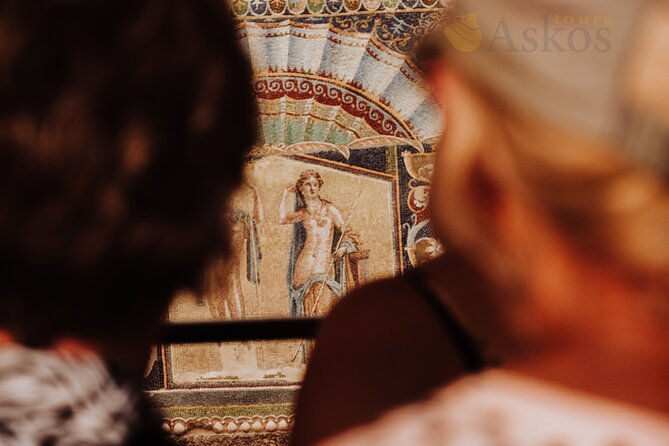
Because the tour is short at each stop, your guide’s pacing matters. Many guides are described as able to keep a steady tempo so you can actually see the details, not just hear facts while moving past.
Headsets are a big deal in outdoor archaeology. You are often facing uphill or standing near walls where sound bounces. With the headset, you can keep your attention on the floor tiles, wall paintings, and stairway angles instead of trying to read lips or turn your head constantly.
One more practical note: the tour involves a lot of standing and walking, with limited seating opportunities. If you need frequent breaks, plan for that ahead of time and consider whether you want a slower add-on visit after the tour.
Price and value: what you are really paying for
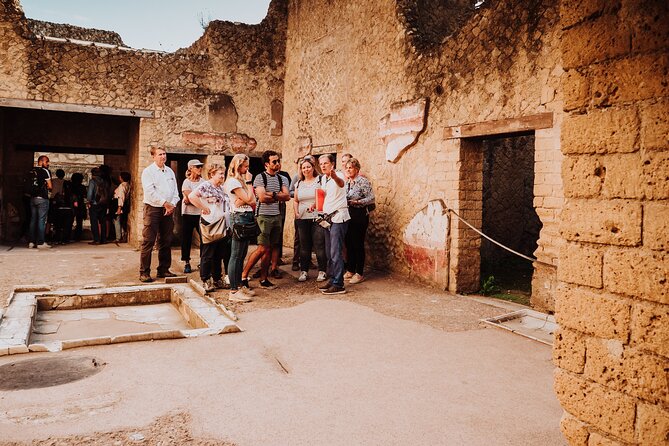
The price is listed at $53.81 per person, and the tour includes Herculaneum entry tickets. Those entry tickets are 16 euros for adults, and 2 euros for EU citizens ages 18 to 25, so the ticket cost part can vary a lot depending on your situation.
What you are mainly paying for is the guide plus the “read the site” advantage. A self-guided walk can work, but Herculaneum rewards interpretation: why a house has a specific name, what a benefactor inscription reveals, and why bath architecture is arranged in gender-separated entrances.
Add skip-the-line entry to the mix. Even if Herculaneum queues are not huge compared to mega sites, losing time at the start can steal energy from the best houses. This tour is built to reduce that friction.
So, is it worth it? If you care about understanding what you see, yes. If you only want a casual wander and you already enjoy slow exploring on your own, you might not get as much value from the paid guidance.
Who this tour suits best
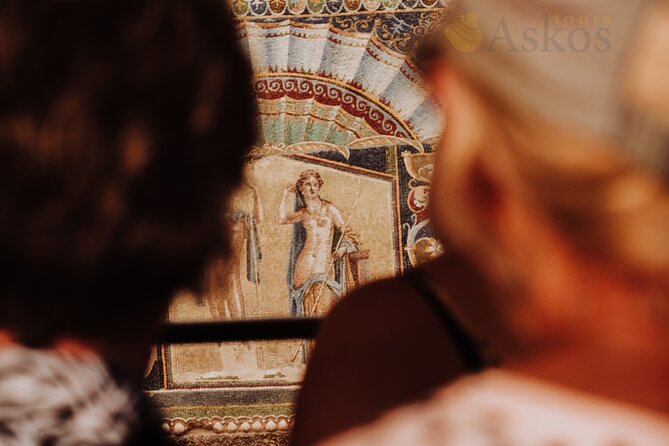
I think this works especially well if you:
- Want expert archaeological context without spending a whole day
- Like seeing a concentrated set of houses, baths, and civic spaces
- Prefer small groups and clearer audio through headsets
- Plan to walk and stand for about two hours
It may not be the best fit if you:
- Need a lot of sitting time
- Want a very leisurely pace with long stops inside any one house
- Are easily bothered by the House of the Skeleton stop
Should you book this archaeologist-led Herculaneum tour?
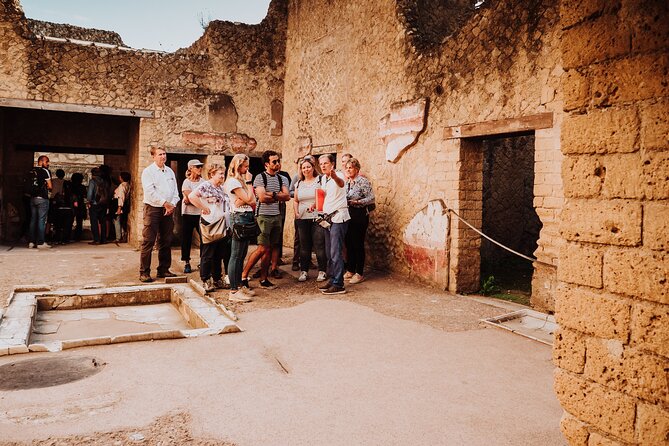
Book it if you want Herculaneum with explanations that make the site click, and you like the idea of getting through the biggest highlights in about two hours. The combination of skip-the-line entry, headsets, and an archaeological guide is where the value is, especially for first-time visitors.
Hold off or choose a different approach if you feel uncomfortable with standing-heavy tours or you are hoping for lots of long, quiet time at just one or two buildings.
FAQ
How long is the Herculaneum small group tour?
The tour runs for about 2 hours.
What group size should I expect?
It is a small group with a maximum of 20 people per guide.
Is the tour offered in English?
Yes, it is offered in English.
Where does the tour start?
You meet at the Ticket Office of the Herculaneum ruins.
How do I get to the meeting point by train?
You can take the Circumvesuviana train to Corso Resina 1, then walk about 10 minutes to the meeting point.
Is skip-the-line entry included?
Yes. The tour includes skip-the-line tickets so you avoid long queues.
Are entrance tickets included in the price?
Yes. The tour includes Herculaneum entry tickets.
Does the tour provide headsets?
Yes, headsets are included.
Is the tour affected by rain?
It operates in all weather conditions, so dress appropriately.
FAQ
Can I bring a dog?
Dogs are allowed at the Herculaneum Archaeological Park with a leash or muzzle and bags for droppings. Access restrictions apply in the Antiquarium premises, the Boat Pavilion, and domus with mosaic floors, where dogs must be carried in arms or transported in a carrier.
Is there free cancellation?
Yes, you can cancel for a full refund up to 24 hours in advance.
Can I get a refund if I cancel late?
If you cancel less than 24 hours before the experience’s start time, the amount you paid is not refunded.
What is not included in the tour price?
Meals and drinks, and private transportation are not included.
More Tickets in Naples

More Tours in Naples
More Tour Reviews in Naples
Not for you? Here's more nearby things to do in Naples we have reviewed









Tour Reviews, compared.
 ★ 4.8Pompeii: Entry Ticket and Guided Tour with an ArchaeologistFrom $3519,459 reviews
 ★ 4.2Pompeii: Entry Ticket with Optional Audio GuideFrom $2612,360 reviews
 ★ 4.8Pompeii: Small Group Tour with an ArchaeologistFrom $4012,264 reviews
 ★ 4.3Pompeii Ruins & Mount Vesuvius Day TourFrom $12011,459 reviews
 ★ 4.6Sorrento, Positano and Amalfi Full-Day TourFrom $10710,988 reviews
 ★ 5.0Sorrento, Positano & Amalfi Coast – Small Group TourFrom $768,643 reviews
 ★ 4.6Catacombs of San Gennaro Entry Ticket & Guided TourFrom $157,941 reviews
★ 5.0Pompeii Small Group Tour with an ArchaeologistFrom $356,593 reviews
★ 4.6Catacombs of San Gennaro Entry Ticket & Guided TourFrom $157,941 reviews
★ 5.0Pompeii Small Group Tour with an ArchaeologistFrom $356,593 reviews
Browse the lists this tour appears in