
Tour review · TOUR REVIEWS
Private Herculaneum for Families: Kids Archaeology Adventure
Herculaneum feels like time stopped. On this private family outing, the Herculaneum4Kids activities help your kids hunt for details and stay focused, instead of tuning out halfway through. Just plan for a decent amount of walking, and bring water, plus hats on warmer days.
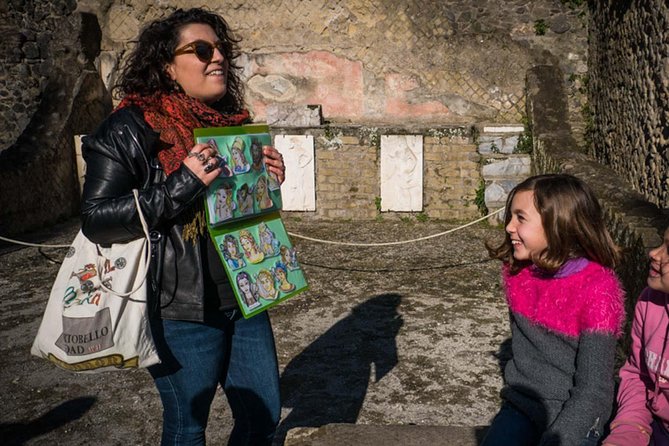
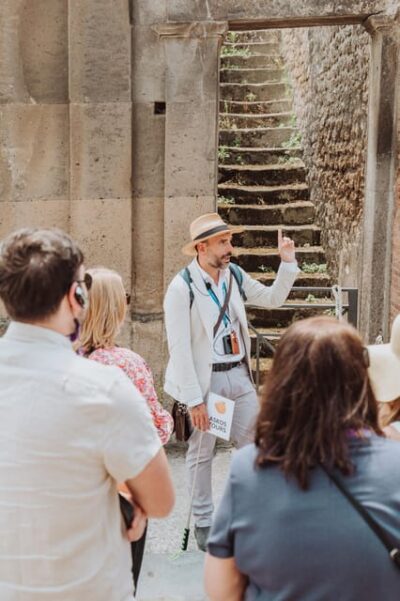
What I love most is the guide. You get a Blue Badge–accredited professional who can explain the eruption story without turning it into a lecture. In the same visit, I can see why guides like Antonella and Paola keep both kids and adults engaged with small games and stories.
This is also a smart use of time. You get a 2 to 4 hour format, and admission for the main archaeological area is included, so you are not wasting your morning standing in lines.
Key highlights that make this tour work for families
- Kids archaeology focus with the Herculaneum4Kids package and a keepsake site map
- Blue Badge guide who can pace the story for different ages
- Preserved everyday life where wooden doors, furniture, and colorful wall art survived the eruption
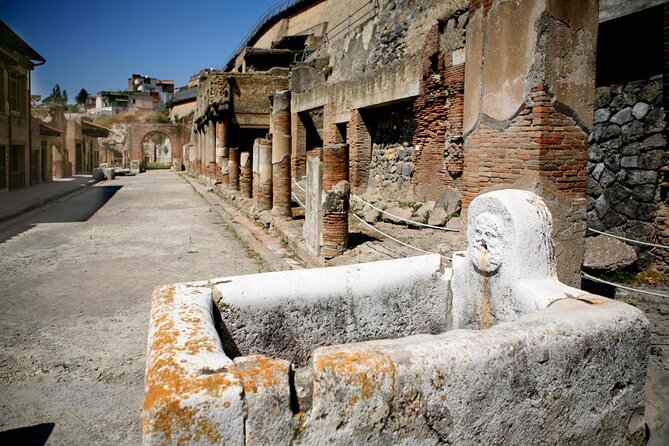
- Easy-to-walk layout compared with Pompeii, with close buildings and streets you can picture
- A mix of houses, baths, shops, and the shoreline so the day never feels one-note
Why Herculaneum feels different from other Roman stops
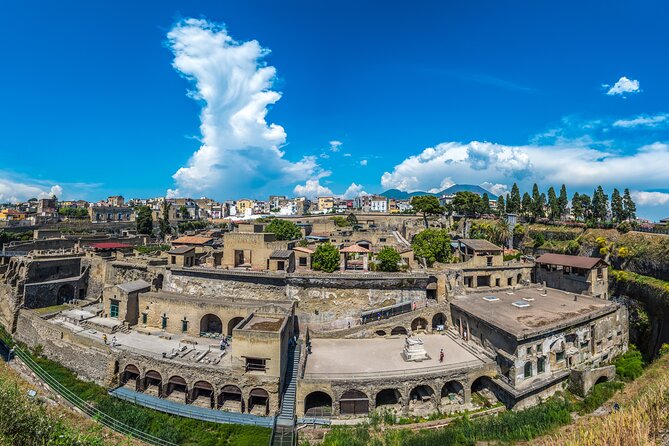
Herculaneum, near Naples, is the kind of place that makes you whisper, not because it is quiet, but because the evidence is so specific. The town was buried by Vesuvius in 79 AD, and this burial acted like a protective blanket. That matters, because you can see results of daily life in a way that is rare.
You will notice it right away: neighborhoods feel intact. Streets are close together. Rooms are laid out so you can imagine where people cooked, worked, greeted neighbors, and cooled off. And because the town was protected under volcanic material, you can spot preserved details that go beyond stone walls. Wooden doors and furniture are still there, and wall art like frescoes and mosaics often looks shockingly vivid.
For families, that is a big deal. Kids do not need abstract dates if the place gives them something to point at. That is exactly how this tour is built.
You can also read our reviews of more private tours in Naples


A Blue Badge guide and the Herculaneum4Kids game plan
This is not a generic guided walk. It is designed to keep kids interested while adults still get real context.
Here is what that looks like in practice:
- Your guide tells the eruption and Roman daily life in layers, so younger kids can follow the visuals, and older kids can handle the explanations.
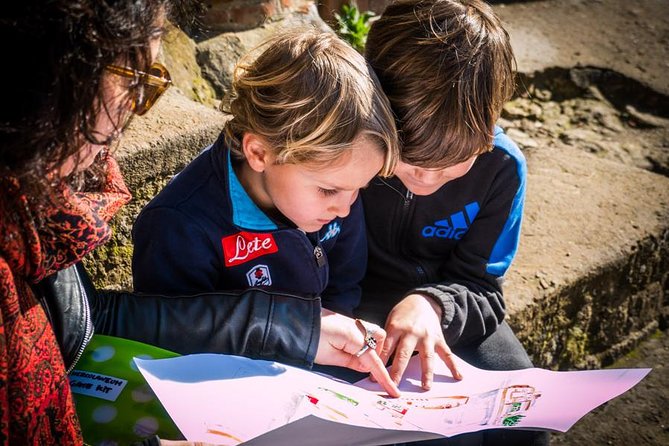
- You get fun activities, not just facts. Think clue spotting, prompts, and quick challenges that make the ruins feel like an interactive puzzle.
- You take away a keepsake site map and a Herculaneum4Kids package, so the day does not vanish once you step out into modern Ercolano.
The best part is the pacing. A private tour lets the guide slow down when kids are actually looking, and speed up when they are getting restless. You are not stuck with a one-size-fits-all group tempo.
Also, since it is private, you can ask questions without watching a clock.
Meeting point, pickup, and how long you really have
Your tour starts and ends at the meeting point in Ercolano (80056). Pickup is flexible, and it is included in the premium option. If you do not choose premium, you still pick where you want to meet.
Plan on 2 to 4 hours total. That range matters, because families often move at a “stop to point, stop to touch, stop to rest” pace. You can use the time well here, because Herculaneum is compact compared with larger sites, and many key spaces connect logically.
Bring appropriate shoes. The surfaces can be uneven, and kids legs get tired faster when they have to step around loose ground. Sun gear is recommended from May to September, and I strongly suggest packing water, especially if you travel on a warm day.
This tour is offered in English, and it is near public transportation, which is useful if you prefer to keep the arrival simple.
Parco Acheologico di Ercolano: streets you can picture in 60 seconds
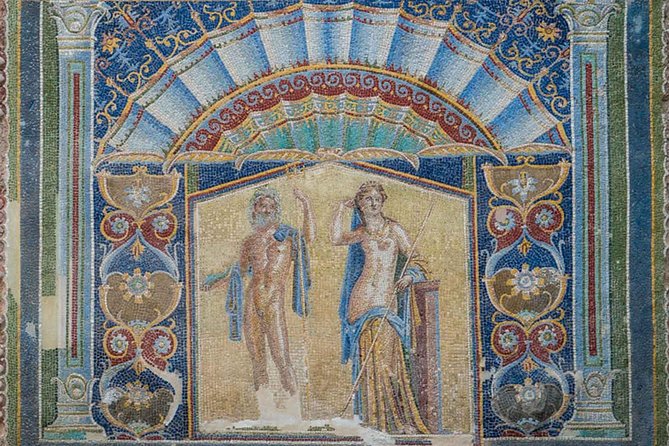
Your first real taste of the Roman world is the Parco Acheologico di Ercolano. Walking through Herculaneum feels like stepping into a neighborhood frozen mid-day.
Unlike Pompeii, Herculaneum was buried in a thicker protective blanket of volcanic material. That preservation is why you can see elements that many people only expect to find in photos or diagrams: wooden doors, furniture, colorful wall decoration, mosaics, and even food remains in some cases.
For kids, the site is like a scavenger hunt. They tend to notice details adults miss, such as:
- ancient counter-style spaces that feel like early street food or fast stop places
- bathhouse features like lockers
- decorative mythological figures on walls
The main drawback is predictable: there is walking. It is not huge like some mega sites, but it adds up. If you have a very small child, you might consider a stroller for portions, but you should still be ready to carry at some points since family routes can get crowded with other people even during quieter hours.
Vesuvius views that explain the eruption without a textbook
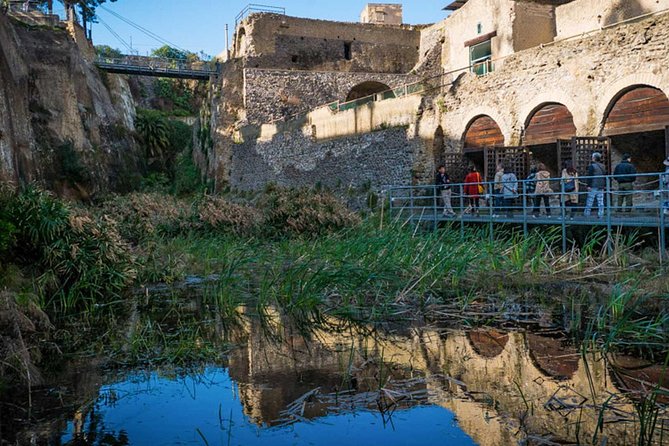
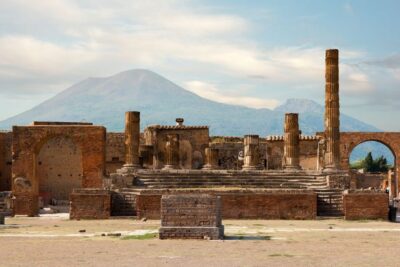
On the way in, you often get a sense of place through views of Parco Nazionale del Vesuvio and the volcano itself. Even from a distance, younger kids quickly connect the mountain they can see to the ancient city they are about to explore.
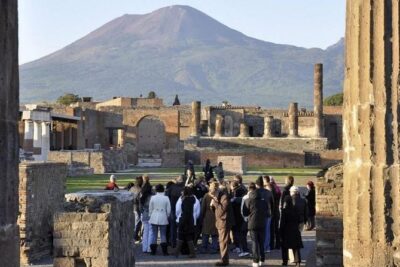
Then, once you are inside the archaeological area, Vesuvius can still appear in the background. That visual link helps you understand scale. It stops the eruption story from feeling like a random event in a history book and turns it into geography you can see.
This is a small moment, but it is powerful. It also helps you guide conversations as you move through the ruins, because you can point back to the volcano and ask kids to connect it to what they are seeing.

The Antiquarium: charred wood that is still wood
The Antiquarium is where this place becomes extra mind-blowing. You will see everyday objects that feel oddly familiar: jewelry, coins, writing tools, household items, and children’s belongings.
What really grabs families is the preservation of charred wood. The eruption heat carbonized organic materials rather than reducing everything to ash. That is why you can see pieces that still look like wood, even though they are nearly 2,000 years old.
This is an ideal stop to reset your group. Kids can slow down and look carefully, and adults can appreciate the science behind what happened. The guide turns each display into a clue, so the room feels like it is solving a mystery, not like a glass-and-facts museum.
Boat Pavilion: Herculaneum’s seaside identity
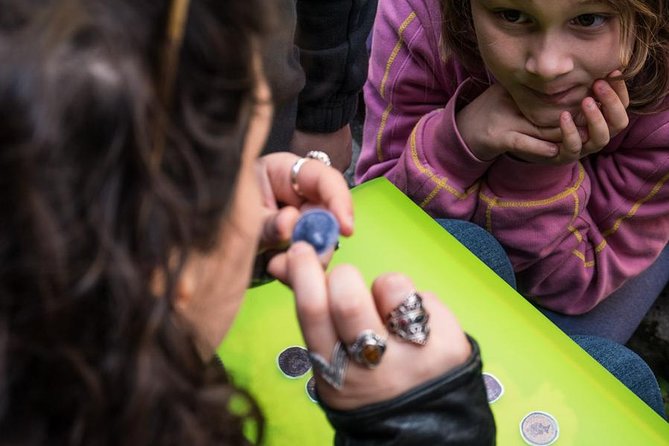
One of the surprises for many families is the Boat Pavilion. Inside, you will find a Roman boat preserved from the Bay of Naples area, along with tools and equipment tied to sailors.
Kids usually fixate on the hull, because you can still see the shape of the vessel and the character of the wood, darkened by time but remarkably intact. Adults tend to enjoy the larger implication: Herculaneum was not an isolated street grid. It was part of trade and travel networks tied to the sea.
If your family likes “how did they live” questions, this stop gives you a clear answer. You can almost hear the voices of workers and imagine cargo moving in and out.
Casa dei Cervi and Casa di Nettuno e Anfitrite: houses that invite close looking
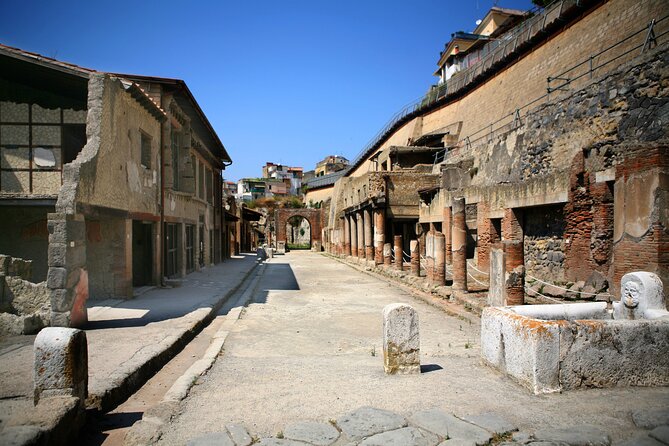
Next come the homes, and they are where the tour really pays off for families who want more than big ruins.
Casa dei Cervi
Casa dei Cervi is known for its elegant layout and a courtyard space that feels built for living and hosting. You will also see marble statues of stags attacked by hunting dogs. That detail often hooks both kids and adults because it is visual and dramatic, not just architectural.
The guide helps you connect house style to social life. Frescoes, mosaics, and decorative thresholds hint at wealth and taste. For kids, this becomes a story about people, not just stones.
Casa di Nettuno e Anfitrite
Casa di Nettuno e Anfitrite centers on a mosaic of Neptune and Amphitrite, two figures from Roman mythology connected to the sea. Families usually pause here longer than expected because the craftsmanship is visible up close, and the figures are easy to recognize once you know what you are looking at.
If you like hands-on interpretation, this is where your guide’s explanations matter most. The mosaic turns into a snapshot of what the homeowners valued, how they expressed identity, and how mythology shaped even everyday spaces.
Palestra, Women’s Baths, and the Roman gym-social mix
Two places in particular explain how Romans practiced community.
Palestra (ancient gymnasium)
The Palestra is the Roman gym and social hub rolled into one. You can see an open courtyard where youth once trained, along with shaded porticoes for chatting and talking.
Kids tend to love imagining teenage energy in an ancient space. Parents often like that it connects fitness, learning, and civic life. It also helps kids understand that school was not the only place where life happened.
Women’s Baths
The Women’s Baths show cleanliness, relaxation, and social life in a single designed sequence. You will move through changing rooms and warm or hot spaces, seeing mosaic floors, marble benches, and heating systems engineered under the floors.
The key takeaway for families is that these were not just public toilets. They were almost like a spa setup, with time to talk and unwind. It also offers a concrete example of Roman engineering that kids can understand without advanced terms.
If you have kids who get bored by long hallways, baths can still work well here because the design leads you step by step. Your guide also helps keep attention on what matters.
Ad Cucumas: commerce painted on a shop front
A fun add-on is the Ad Cucumas wine advertisement painted on a shop façade. It is the kind of visual marketing kids can recognize immediately, because it uses images and symbols to sell a product.
This is a great pause for families because it is quick and memorable. It also makes the point that Roman daily life already included advertising and impulse decisions, long before printed signs and digital menus.
Wooden preservation at its best: Casa del Tramezzo di Legno and Casa del Bicentenario
Herculaneum’s most unusual party trick is wood. Here, you do not just see stone remnants. You see wooden elements that survived the eruption.
Casa del Tramezzo di Legno
Casa del Tramezzo di Legno is famous for a large folding screen that once separated different areas inside the house. The wood is carbonized, but it retains its shape and decorative details, which is rare.
Kids often react strongly here because it looks like a piece of furniture that should belong in a theater set, not a 79 AD house. Adults like the architectural logic: you can understand how reception spaces and private quarters were structured.
This stop is also a reminder that the eruption preserved interiors in a way that changes how we study history. You learn more about daily movement through space when the partition still looks like wood.
Casa del Bicentenario
Casa del Bicentenario adds another layer of “how do we know?” Archaeologists found wooden writing tablets with court records here. That is a big deal because it shows bureaucracy existed in Roman life, not just art and food.
You will also see charred wooden elements like doors and interior partitions. Your guide turns these fragments into stories about families living their routines and handling legal matters, not just performing rituals.
If your family likes evidence and detective work, this is a strong stop. It connects objects to real human systems.
Sacello Augustali and Casa dello Scheletro: religion and the mystery factor
Religion shows up in Roman life in ways that can feel strange until you see it through the structure of civic power.
Sacello Augustali
The Sacello Augustali reveals how Romans honored the emperor through the imperial cult. You can admire statues and decorated panels tied to rituals connected to this belief system.
For kids, mythological figures and ceremony themes can turn this into a story about identity and community belonging. For adults, it is a way to understand how religion doubled as political unity and prosperity messaging.
Casa dello Scheletro
Casa dello Scheletro gets its name from a skeleton found there during early excavations. While the modern story includes that discovery, the experience for you is still about the rooms: wall paintings, decorative niches, and architectural features that help reconstruct daily life.
It is also a natural place for an emotional tone shift, because skeleton findings can feel heavy. Your family-focused guide handles this with sensitivity, especially with younger kids, while still honoring the archaeological truth.
If your family includes a kid who asks uncomfortable questions, this is one of those stops where a good guide’s framing makes the difference between fear and understanding.
Thermopolium and the shoreline shelters: the human story behind the ruins
The last stretch makes Herculaneum feel real in a final way, not just impressive.
Thermopolium: Roman street-food counters
The Thermopolium is one of the most accessible stops for families. It was a kind of street-food counter where hot meals were served from large terracotta jars set into a decorated countertop.
Kids get the concept fast, because it feels like takeaway. Parents get the bigger picture: daily rhythms of urban life included smells, quick meals, and social chatter even without home refrigerators or chain restaurants.
Look closely at the preserved jars, painted signs, and traces of ingredients, since those details bring the scene to life.
Ancient shoreline shelters and vaulted chambers
Reaching the ancient shoreline is often the emotional peak. Here, you can look into vaulted chambers where hundreds of skeletons were discovered.
This is evidence of people seeking shelter as superheated gases swept over the town. It encourages thoughtful questions, and the guide knows how to present the story with care for children while keeping it accurate.
For parents, this stop is where ruins stop being background and become people. Kids often connect the dots without needing more than the basics, because the setting already tells a story.
Price and value: what you get for $221.70 per person
At $221.70 per person, this is not a budget activity. But it can be good value if you care about your kids having a meaningful visit, not just a sit-and-stare tour.
Here is where the value comes from:
- It is a private tour, so you are not paying for a big group dynamic that pushes kids into boredom.
- You have a Blue Badge–accredited guide, which usually means better pacing and clearer explanations.
- Admission for the main archaeological area is included, which reduces the “add-on costs” problem families often run into.
- You get Herculaneum4Kids and a keepsake site map, meaning you leave with tools that can extend learning after the visit.
It is also time-efficient. A 2 to 4 hour format is realistic for families, and the site itself is compact enough to feel complete without dragging the whole day.
One practical note: this kind of tour is often booked well ahead. If you travel in peak season, plan early. It is commonly booked about 114 days in advance, so you may want to lock in your dates sooner than later.
Should you book this Herculaneum family tour?
I think you should book it if your priority is a Roman site that feels understandable to kids, with a guide who knows how to keep attention. The mix of preserved wood, mosaics, baths, houses, and even street-food counters gives you lots of entry points for different personalities.
I would skip it or adjust expectations if your group has very limited walking tolerance. Yes, the layout is manageable, but the day still includes movement through multiple spaces.
If you want a memorable family archaeology adventure in Naples that connects the eruption story to real objects and real spaces, this is a strong choice.
FAQ
How long does the Herculaneum private family tour take?
The tour lasts about 2 to 4 hours.
What is the price per person?
The price is $221.70 per person.
Is the tour private?
Yes. Only your group participates.
Is the tour offered in English?
Yes, it is offered in English.
Is pickup available?
Pickup is offered with flexible meeting points. Pickup is included in the premium option.
Does the tour include admission to the archaeological site?
Yes. Admission Ticket is included for Parco Acheologico Di Ercolano.
What do families receive for the kids portion of the tour?
You get a keepsake site map and a Herculaneum4Kids package.
Is this tour suitable for kids?
Yes. It is a family-focused, kids archaeology adventure with activities meant to keep children engaged.
What should we wear or bring?
Wear appropriate shoes. From May to September, sun gear is recommended.
Can I cancel for a full refund?
Free cancellation is available. You can cancel up to 24 hours in advance for a full refund.
More Private Tours in Naples


More Tour Reviews in Naples
Not for you? Here's more nearby things to do in Naples we have reviewed

Tour Reviews, compared.
 ★ 4.8Pompeii: Entry Ticket and Guided Tour with an ArchaeologistFrom $3519,459 reviews
 ★ 4.2Pompeii: Entry Ticket with Optional Audio GuideFrom $2612,360 reviews
 ★ 4.8Pompeii: Small Group Tour with an ArchaeologistFrom $4012,264 reviews
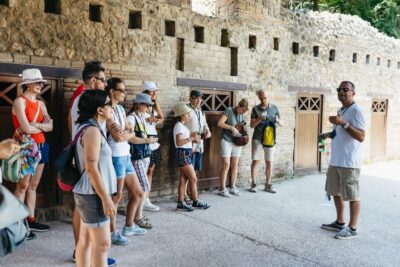 ★ 4.3Pompeii Ruins & Mount Vesuvius Day TourFrom $12011,459 reviews
 ★ 4.6Sorrento, Positano and Amalfi Full-Day TourFrom $10710,988 reviews
 ★ 5.0Sorrento, Positano & Amalfi Coast – Small Group TourFrom $768,643 reviews
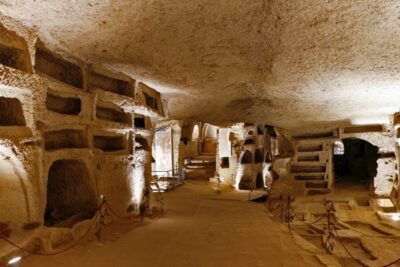 ★ 4.6Catacombs of San Gennaro Entry Ticket & Guided TourFrom $157,941 reviews
★ 5.0Pompeii Small Group Tour with an ArchaeologistFrom $356,593 reviews
★ 4.6Catacombs of San Gennaro Entry Ticket & Guided TourFrom $157,941 reviews
★ 5.0Pompeii Small Group Tour with an ArchaeologistFrom $356,593 reviews
Browse the lists this tour appears in