
Tour review · TOUR REVIEWS
Naples panoramic tour and Monumental historic center.
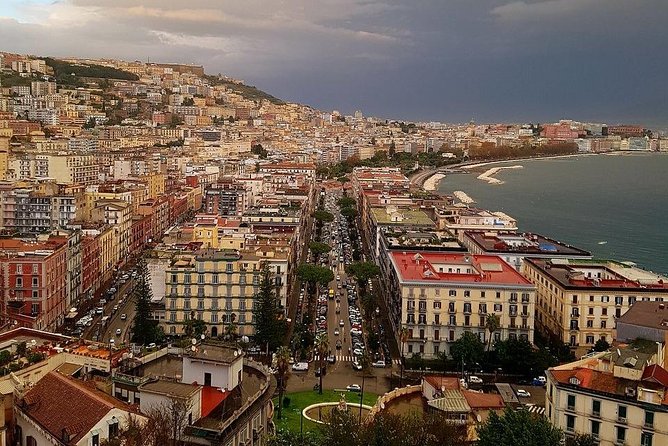
One hill. One palace. One museum. Naples compresses a lot into this panoramic half to full day.
What makes it especially fun is how the route strings together the big-name sights and the best-looking neighborhoods, with on-board narration in English and air-conditioned transport when the city heat hits.
I like the mix of major landmarks and actual viewpoint time, so you get both the postcard angles and the feel of how Naples grew. I also like that you’re not stuck playing taxi roulette, since the tour includes fees, bottled water, WiFi on board, and a driver-led flow between stops.
One possible drawback: many of the stops are museums or churches where entry tickets are not included, and this experience uses on-board commentary that can be more general than a licensed site-by-site guide. If you want deep explanations inside every room, you may need extra paid time or a separate guided option.
Key highlights worth planning for

- Royal Palace of Naples area: start at Piazza del Plebiscito and the former residence of Spanish viceroys, the Bourbon dynasty, and later the Savoys.
- Galleria Umberto I context: you’ll hear how this elegant gallery sits above older streets once known for taverns and crime.
- Castel Sant’Elmo views: a medieval fortress-museum on Vomero hill at about 250 m above sea level.
- Posillipo coast and Roman traces: the route includes the coast, Roman ruin hints, and the modern Via Posillipo era.
- Lungomare Caracciolo sea air: a simple stop that gives you payoff fast with ocean views.
- National Archaeological Museum focus: Pompeii and Herculaneum finds plus major sculpture and painting pieces.
Royal Palace and Piazza del Plebiscito, from viceroys to a national library

Your day kicks off around Palazzo Reale in Piazza del Plebiscito, and that location matters. This complex is tied to power for centuries, first as the historical residence of Spanish viceroys for over 150 years, then the Bourbon dynasty from 1734 to 1861, with brief interruptions during French rule under Giuseppe Bonaparte and Gioacchino Murat, and later as part of the Savoy period.
Built starting in 1600, the palace reached its final appearance in 1858, with multiple architects shaping different phases and restorations. Even if you only plan to see a portion of what’s open, it’s an impressive way to understand why Naples became a political and cultural hub, not just a pretty port city.
Practical note: the palace visit is listed as needing your own ticket, so budget time and money for entry if you want the Royal Apartments and the museum side of the complex. Even without going in, the surrounding square setting gives you that classic Naples grandeur.
You can also read our reviews of more historical tours in Naples


Galleria Umberto I: the elegant gallery built over rougher old streets
Next is Galleria Umberto I, and the best part here is the contrast. The ground beneath this gallery was intensely urbanized in the 16th century, with a tangle of parallel streets and short alleys connecting to Via Toledo, near Castel Nuovo.
Historically, those alleys had a bad reputation, associated with taverns and houses of malfeasance, where crimes of every kind were consumed. You’ll also hear how the area stayed in the cultural imagination for a long time, including being referenced by Giambattista Basile in Le muse napolitane.
For you, that means it’s not just a quick photo stop. You’re getting a mini lesson in how Naples layers its identity, with stylish architecture sitting over older street life that was rougher and more dangerous.
Castel Sant’Elmo on Vomero hill: fortress museum plus city wide views
Castel Sant’Elmo is the panoramic payoff, and it’s one of those Naples places where the setting explains the history. This medieval castle sits on the Vomero hill near San Martino, originally connected to earlier religious roots (a church dedicated to Sant’Erasmo, which later evolved into Ermo and then Elmo).
The fortress you see links back to Norman influence, including a Norman observation tower called Belforte, and the castle makes dramatic use of local geology, including Neapolitan yellow tuff. Because it was strategically important, it stayed a coveted possession, and from roughly 250 m above sea level you can look across the city, toward the gulf, and along the roads leading in from the surrounding hills.
The castle is also partly museum-focused. It has a permanent museum called Naples Novecento, plus temporary exhibitions, fairs, and events at certain times of year.
Practical note: Castel Sant’Elmo entry is not included, so decide ahead of time if you want to pay to go inside. If you only want the viewpoints, you can still use this stop for the classic Naples look, but stepping into the museum gives you more payoff for art and exhibitions.
Posillipo and Via Posillipo: coastal air, Roman hints, and the long arc of change

After the hilltop, the route heads toward Posillipo, which feels calmer and more coastal. Posillipo shows up in ancient sources as well, starting with Greek settlement and later becoming fully inhabited in the ancient period. There are Roman ruins near the banks and near the highest point of the hill, plus remains tied to openings of a tunnel connected to the residence of Publius Vedio Pollione.
You’ll also hear about the amphitheater remains. And then the story bends into decline after the ancient age, when the population closed in behind fortified walls and the area fell into neglect through invasions and disruption.
Later on, Posillipo modernizes with the construction of the Via Posillipo, built between 1812 and 1824, beginning at the port of Mergellina and running along the coast almost parallel to the shore. A lot was rebuilt after World War II, but historic buildings remain, including Villa Rosebery, the residence of the President of the Republic.
If you like seeing how Naples changes over time, this stop is good value because it connects ancient land use to modern coastal life in one arc. Admission is not listed here, so treat it as a viewpoint and streetscape moment.
Lungomare Caracciolo: the sea view stop that works even when you are tired

Then comes Lungomare Caracciolo, which is basically your break plus your reward. The stop is simple: you get sea views and sea air, and that’s exactly what makes it valuable after several heavier sites.
Lungomare is the kind of place where you don’t need a long explanation to feel the mood. You’ll get a reset, and you can decide if you want to linger nearby on your own afterward, as long as you stay within the tour timing.
Because it’s listed as a free admission stop, you’re not “spending” ticket time here. It’s a palate cleanser, and in Naples, that matters.





Piazza del Gesù Nuovo: church complexes, chapels, and the Cristo Velato

The tour then focuses on Piazza del Gesù Nuovo, an area where religious architecture and art references overlap. Your route points to several specific elements, including the Church of Gesù Nuovo, the monastery of Santa Chiara, and the chapel of San Domenico maggiore.
One detail worth knowing is the Cristo Velato mentioned in the itinerary as being in the chapel of San Domenico maggiore. That’s the kind of name that can help you get your bearings when you’re there, especially if you decide to step in.
Admission is listed as not included for this stop, so plan for tickets if you want to see the interiors. Even if you do not, the piazza setting and the surrounding churches give you the Naples baroque feel in a concentrated way.
Museo Archeologico Nazionale: where Pompeii and Herculaneum artifacts steal the show

If Castel Sant’Elmo gives you the view, Museo Archeologico Nazionale di Napoli gives you the weight. This is one of the biggest reasons to book a Naples highlight tour that includes museum time, because the museum collects major finds from Pompeii, Herculaneum, and Oplontis, along with sculptures and paintings described as unique pieces.
The listed time is about two hours, which is a sweet spot for seeing the big categories without turning your visit into a full day commitment. You can often get a sense of what you’re looking at and why it matters, especially if you come in knowing you’re seeing the aftermath of ancient life, not just ruins.
Admission is not included, so remember to add that cost. If you’re trying to manage the budget, this is the stop where paying the museum ticket can feel most worth it, because the collection is concentrated in one place.
Price and logistics: what you are really paying for

At $247.91 per person for about 6 to 8 hours, this is not a budget hop-on, hop-off. You’re paying for a protected flow through the city, including an air-conditioned vehicle, bottled water, WiFi on board, and commentary in English.
Also included are all fees and taxes, plus a mobile ticket. Pickup is offered, and the meeting point is described as a display of a cartel with your reservation name. That combo matters if you’re juggling jet lag, hot weather, or a tight arrival window.
What is not included is the part that changes most by your choices: monument and archaeological site entry tickets, plus tip, lunch, and dinner. So the real cost depends on which stops you enter. If you plan to go into the palace, the castle, and the museum, you should expect to add tickets on top.
Value check: If your priority is seeing Naples panoramas and the big cultural magnets without spending extra energy planning transport between them, this format is a good deal. If you want to maximize museum interiors and are comfortable navigating ticket lines on your own, you might prefer a do-it-yourself day with separate local guides.
Who this Naples panoramic tour suits best
This works well for:
- First-time Naples visitors who want the city’s main “wow” points with less friction.
- People who prefer a driver-led route plus narration, rather than constant walking between sites.
- Small groups that want control, since the tour is private, meaning only your group participates.
It’s a mixed fit if you’re the kind of traveler who wants a highly specialized guide inside every single building. One experience I saw described the service as a chauffeur-driven setup with general information, rather than a licensed site-by-site guide. If that matters to you, ask before booking what level of guiding you’ll get at ticketed stops.
Should you book this Naples panoramic tour?
I’d book it if you want a smart, structured route through Naples that hits palace grandeur, hilltop fortress views, sea air on the coast, and a museum anchor without you having to map the whole day yourself. The best reason is the pairing of panoramic settings with at least one major museum stop, so the day has both atmosphere and substance.
Skip it or adjust expectations if your main goal is deep, room-by-room interpretation inside every church and museum. In that case, you may still enjoy the panoramas, but you should be ready to pay extra for ticketed entry and perhaps consider a separate specialist guide for the sites that matter most to you.
More Historical Tours in Naples



More Tours in Naples

More Tour Reviews in Naples
Not for you? Here's more nearby things to do in Naples we have reviewed









Tour Reviews, compared.
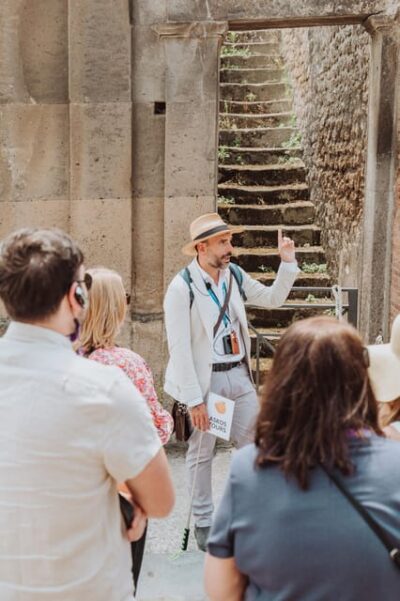 ★ 4.8Pompeii: Entry Ticket and Guided Tour with an ArchaeologistFrom $3519,459 reviews
 ★ 4.2Pompeii: Entry Ticket with Optional Audio GuideFrom $2612,360 reviews
 ★ 4.8Pompeii: Small Group Tour with an ArchaeologistFrom $4012,264 reviews
 ★ 4.3Pompeii Ruins & Mount Vesuvius Day TourFrom $12011,459 reviews
 ★ 4.6Sorrento, Positano and Amalfi Full-Day TourFrom $10710,988 reviews
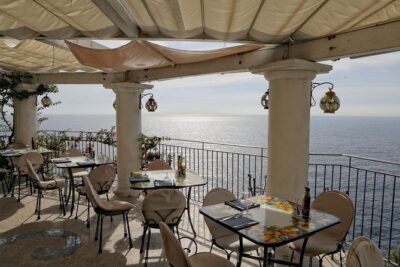 ★ 5.0Sorrento, Positano & Amalfi Coast – Small Group TourFrom $768,643 reviews
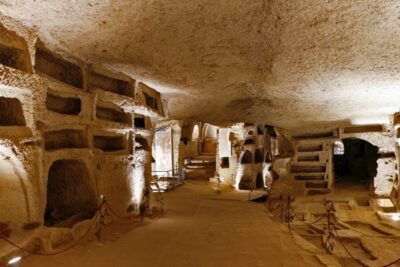 ★ 4.6Catacombs of San Gennaro Entry Ticket & Guided TourFrom $157,941 reviews
★ 5.0Pompeii Small Group Tour with an ArchaeologistFrom $356,593 reviews
★ 4.6Catacombs of San Gennaro Entry Ticket & Guided TourFrom $157,941 reviews
★ 5.0Pompeii Small Group Tour with an ArchaeologistFrom $356,593 reviews
Browse the lists this tour appears in