
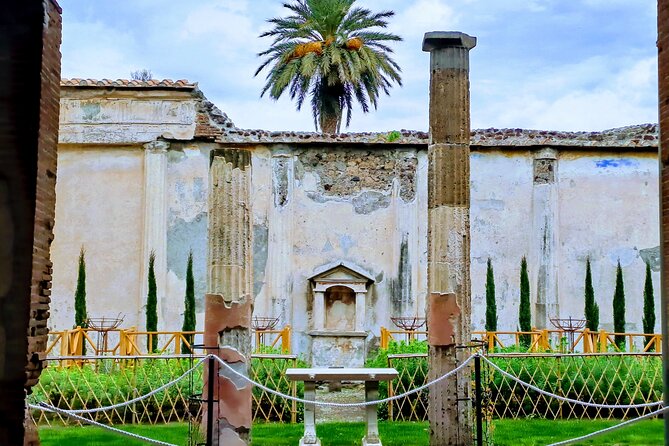
Tour review · TOUR REVIEWS
Pompeii private tour from Naples. The best choice for cruisers
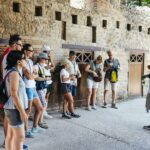
Pompeii goes down easier with private logistics. This Naples-to-Pompeii day is built for cruise timing, and you get a private group with mobile tickets so the day feels organized from the first pickup. I like how the route hits the most memorable core stops, from the Porta Marina gate to the big amphitheater, without turning your time into a maze.
The second thing I really like: the guide adds context in plain language, and you can feel it in how the stops connect. Nino Pezzullo runs the experience, and I also saw examples of Carmen handling logistics, including real archaeological study and Pompeii dig experience. One thing to note: at about 5 hours total with many sites, each stop is relatively short, so it is not the tour for people who want to linger for an hour in one room.
Key highlights for cruise passengers
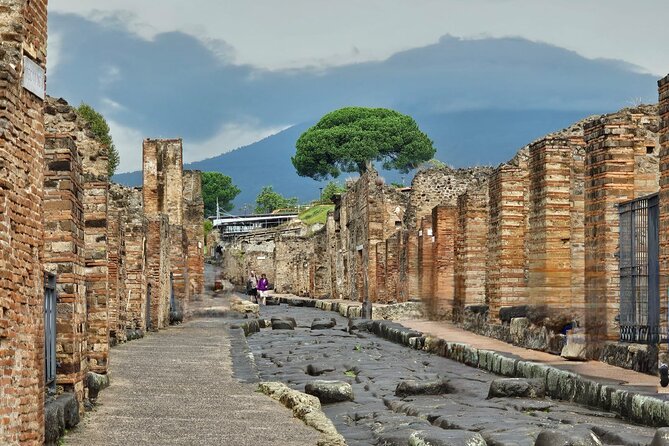
- Private pickup focus: Starts at Stazione Marittima so you are not trying to navigate Naples on your own.
- Most important Pompeii sites, in order: Porta Marina, the Forum, Apollo, Macellum, baths, major houses, theater, amphitheater.
- Old-school must-sees: Anfiteatro Romano built in 70 BC and linked to crowds up to 20,000.
- Daily life details: Macellum market and Panificio di Popidio Prisco bakery bread-making stop your brain from thinking only ruins.
- House wealth you can spot fast: Casa del Fauno and Casa dei Vettii show how social status read from the street.
- Easy entry handling: Admission tickets are included and delivered as mobile tickets.
Why this Pompeii private tour works well for cruises
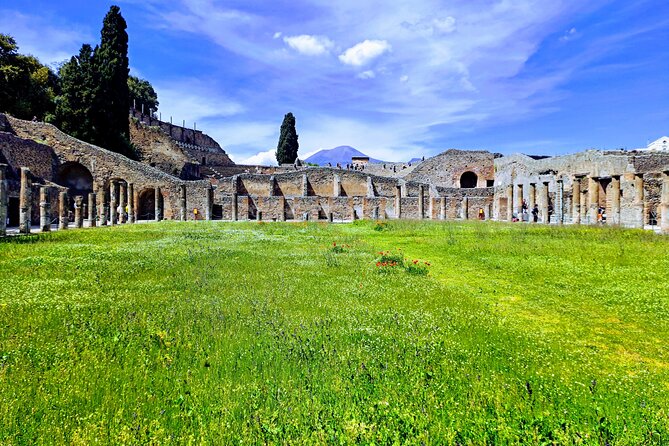
If you are arriving by ship, your time is chopped into tight chunks. This tour starts and ends back at the Stazione Marittima meeting point, which matters because you do not want to waste your best sunlight on late taxis and wrong meeting points.
What makes it cruiser-friendly is the combination of car pickup and a focused walking route. You are not trying to figure out transport and ticket lines while your schedule is ticking. In the real world, guides have picked people up right outside the cruise terminal area and then handled the walk to the car, which saves you the awkward running-around moment.
Also, the day stays English-friendly. The tour is offered in English, and the guides are communicative before you go. I saw practical examples of pre-tour contact like WhatsApp updates and even a location video, which helps when you are standing with a crowd and trying to spot one car.
The overall vibe is: you get a high-quality overview without the stress. That is the sweet spot for cruise days, especially if Pompeii is your only big stop.
You can also read our reviews of more private tours in Naples


Getting from Naples to Pompeii, and what car size you may need
Transport is part of the price, and you will ride in a Peugeot 3008 (2014 model). That is a good fit for small groups, and it is also one of those details that makes the day feel real, not theoretical.
If your group is bigger, the operator can arrange a larger car or a mini van, but it is on request with a supplement. So if you are traveling with more people than a typical couple or trio, ask early. It avoids last-minute reshuffling.
On the road, expect normal city traffic. One benefit of hiring a private driver-guide setup is that your guide is the one who deals with traffic patterns and parking near the port area, not you.
A logical Pompeii route, starting at Porta Marina
The tour begins at Porta Marina, one of Pompeii’s gates and also a strong first choice because it sets your bearings fast. Porta Marina is described as the most impressive of Pompeii’s seven gates, and it is a good warm-up because you get an immediate sense that this was a real city with real movement, not a museum warehouse.
From there, the route moves into the heart of everyday public life. You do not just see random buildings. You walk toward the areas that explain how people lived, traded, worshiped, and entertained.
Timing is also part of the design. Each stop comes with a defined visit window, so your feet keep moving and you keep seeing the big ideas. For most cruise passengers, that is exactly what you want.
If you have any flexibility, here is a smart approach: ask for an early start when you can. In past experiences with this tour, the guide encouraged starting early to avoid holiday crowds. Even on non-holiday days, fewer people usually means more clarity and less time stuck in bottlenecks.
Porta Marina, Forum, and Apollo: the public Pompeii core
Stop 1: Porta Marina and the gate-first orientation
You start at Porta Marina, with admission included. Gate entrances can sound like a small detail, but starting there helps you understand Pompeii’s layout right away. You are less likely to feel lost later, because you build a mental map from the first minute.
If you like architecture, gate openings are also a quick reality check. Pompeii was designed for flow: people, goods, and movement into and out of town. That context makes everything else feel more coherent.


Stop 2: Forum of Pompeii, center of daily life
Next is the Forum, where the main public buildings face the central space. Think of the Forum as the city’s main stage for politics, business, and civic life. With the Forum in your route early, the later stops feel connected instead of scattered.
You get about 20 minutes here, enough time to recognize why it was the hub. You will likely notice how Pompeii arranged power and public decision-making around a shared central point, so you understand that public life was built into the street-level experience.
Stop 3: Santuario di Apollo, an old worship site
Then you move to the Sanctuary of Apollo. This is among Pompeii’s oldest places of worship and it sits in a strategic position. The god Apollo connects to Greek and Etruscan presence in Campania, so the guide can frame this as a cultural blending, not a single-origin story.
You get about 10 minutes at this stop. It is short, but it is enough to grasp the why behind Apollo’s presence and how religion showed up in city planning.
Stop 4: Macellum, the market for real routines
The Macellum is Pompeii’s market, and it is a highlight for visitors who want daily-life details. In the courtyard, there was a circular structure used for selling and cleaning fish. That is the kind of physical, practical detail that brings the city to life.
You get about 20 minutes. If you are a photo person, this is a good place to shoot wide, because markets naturally tell a story through layout. If you prefer fewer photos, use the time to ask what everyday activity looked like here.
Net effect: Porta Marina to the Forum to Apollo to the market gives you public life, religion, and commerce in one stretch.
Suburban Baths and Casa del Fauno: power you can see from the street
Stop 5: Suburban Baths, private and with erotic art
Next come the Suburban Baths, and they are different from other bathing facilities because they were private. In the changing room, there are pictures with erotic subjects that advertised activities upstairs.
This is a good stop if you want Pompeii to feel human and not only tragic. People in Pompeii had leisure, social rules, and commerce tied to entertainment. You get about 15 minutes, so focus on the layout and what it suggests about who used these facilities and why they mattered.
Stop 6: Casa del Fauno, a grand house with visible status
Then you step into Casa del Fauno, one of Pompeii’s largest houses. The wealth and social level of the owner shows even from the street, which is a huge takeaway. Pompeii architecture is not subtle. Social status was displayed.
You get about 15 minutes. This is enough to understand the basic scale and use the guide’s explanations to connect the house layout to how elite living worked in daily reality.
Practical note: Houses can be visually similar at first glance. If you want more than snapshots, ask your guide to point out what makes this one stand out, like size cues, entrances, or which spaces were used for public versus private life.
Teatro Grande and Anfiteatro Romano: built for big feelings
Stop 7: Teatro Grande, stage for Greco-Roman drama
The Teatro Grande was built around the middle of the 2nd century BC. This is where Greco-Roman comedies and tragedies were performed, and the theater setting helps you imagine how public culture unfolded.
You get about 10 minutes. That is brief, but theaters are designed for sight lines and acoustics, so even a short stop can teach you a lot if you pay attention to the shape of the space.
Stop 8: Anfiteatro Romano, the Roman crowd engine
Then comes the amphitheater, described as the oldest in the Roman world. It was built in 70 BC and could accommodate up to 20,000 spectators.
You get about 15 minutes, and this is one of those places where time feels too short because it is so monumental. You will likely notice how Pompeii’s entertainment and social life were built around mass gatherings. The scale makes the city feel larger than the ruins you see at ground level.
Net effect: Theater, then amphitheater, gives you culture and spectacle back-to-back. That helps you remember Pompeii was a place for events, not just homes and commerce.
Via dell’Abbondanza, Casa dei Vettii, and the Pompeii bakery
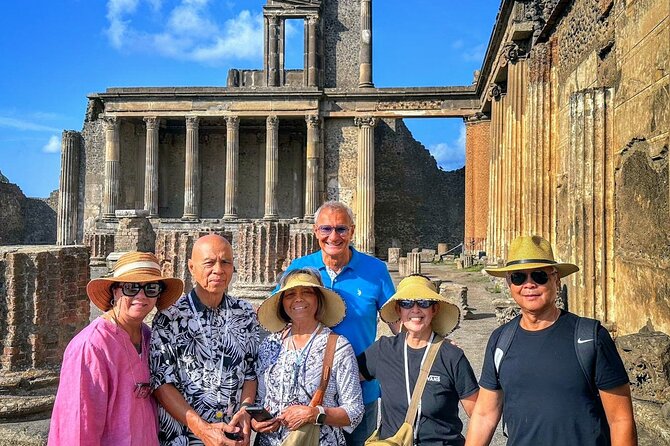
Stop 9: Via dell’Abbondanza, the shopping street
Via dell’Abbondanza is one of Pompeii’s most important streets, essentially a shopping and shopfront corridor. It is a smart mid-tour stop because it shifts you from entertainment to commerce without losing momentum.
You get about 20 minutes here. The benefit is that street life is easier to process than indoor ruins. You can glance at building fronts and imagine the movement of goods and people.
Stop 10: Casa dei Vettii, rich rooms and Priapus symbolism
Casa dei Vettii is among the richest and most famous houses in Pompeii. It is protected under Priapus, the god associated with prosperity. The rooms are richly decorated, and the guide can help you read the symbolism so it does not feel like random wall art.
You get about 15 minutes. If you usually skip house interiors, this is one to take seriously because it is designed to show wealth and status. You will likely leave with a better sense of why some people in Pompeii had lavish interiors while others lived far more simply.
Stop 11: Panificio di Popidio Prisco, how bread got made
Then you visit the Panificio di Popidio Prisco, a bakery, with an explanation of how bread was produced. This is one of the best stops for grounding Pompeii in daily routines because bread is so basic. When a tour explains bread-making in the context of an ancient bakery, you instantly understand what life required.
You get about 15 minutes. It is a quick stop, but the practical explanation can stick with you far longer than you expect.
The Basilica and the feeling of civic order
Stop 12: Basilica, business and justice in the Forum space
The Basilica is described as the most sumptuous building in the Forum. It is where business and justice took place, which is a useful lens for understanding Pompeii’s civic structure.
You get about 15 minutes. Even if you do not read ancient inscriptions, the function explains the energy of the space. People came here to handle disputes and commerce, so the Basilica is where the city’s legal and economic rhythm would have been loud.
How the last stop ties your whole circuit together
By the time you reach the Basilica, you have already seen:
- the gate and entry flow (Porta Marina),
- the city hub (Forum),
- religion (Apollo sanctuary),
- the market economy (Macellum),
- leisure and wealth (baths and houses),
- spectacle (theater and amphitheater),
- street commerce and everyday food (Via dell’Abbondanza, bakery).
That is a lot to absorb in about 5 hours. The route makes it easier because every stop feeds the next one.
Pace, comfort, and how to enjoy Pompeii more in 5 hours
This tour runs for about 5 hours total, with visits ranging roughly from 10 to 20 minutes at each stop. That means you are moving through Pompeii at a “great overview” pace, not at the “I will sit and sketch this corner for an hour” pace.
Here is how to make the schedule work for you:
- Wear shoes you can walk in comfortably on uneven ground. Pompeii can be hard on ankles.
- Bring water and keep snacks simple, because the tour time is tight.
- Pick one or two stops where you slow down for photos, then let the other stops become learning moments.
One of the most praised parts in real experiences has been the guide’s ability to keep the pace comfortable and adjust to the group. Some tours run like a checklist, but this one is framed as a private experience for your party only, so the guide can handle questions without stopping the whole crowd.
Also, if you care about language, remember the tour is in English. If you need help understanding certain details, ask your guide early in the day, not at the last minute.
Finally, Pompeii needs good weather. If conditions are poor, you may be offered a different date or a full refund. That matters on cruise days, so check the forecast.
Should you book this Pompeii private tour from Naples?
Book it if you want:
- a private Pompeii day from Naples that fits cruise schedules,
- English commentary that connects the main sites into one coherent story,
- included admission handling with mobile tickets,
- a highlights route that covers gates, Forum life, markets, houses, theater, amphitheater, and civic buildings.
Skip it (or consider a different format) if:
- you want deep, slow exploration with lots of time inside fewer places,
- you are extremely photo-heavy and hate short stop windows,
- you expect lots of downtime. This is a walking-focused circuit.
If your goal is to leave Pompeii with a clear sense of what mattered most and why, this tour is a smart way to spend a half-day in Campania.
FAQ
What is the duration of the Pompeii private tour from Naples?
The tour is approximately 5 hours.
How much does the tour cost per person?
The price is $216.27 per person.
Is the tour offered in English?
Yes, the tour is offered in English.
Are admission tickets included?
Admission tickets are included for the listed stops.
Where does the tour meet, and does it return there?
It starts at Stazione Marittima, 80133 Napoli NA, Italy, and ends back at the meeting point.
What vehicle is used for transportation?
The transport is by a Peugeot 3008 (2014 model). Larger cars or mini vans are available on request with a supplement.
What is the weather situation?
The experience requires good weather. If it is canceled due to poor weather, you will be offered a different date or a full refund.
More Private Tours in Naples


More Tours in Naples

More Tour Reviews in Naples
Not for you? Here's more nearby things to do in Naples we have reviewed




Tour Reviews, compared.
 ★ 4.8Pompeii: Entry Ticket and Guided Tour with an ArchaeologistFrom $3519,459 reviews
 ★ 4.2Pompeii: Entry Ticket with Optional Audio GuideFrom $2612,360 reviews
 ★ 4.8Pompeii: Small Group Tour with an ArchaeologistFrom $4012,264 reviews
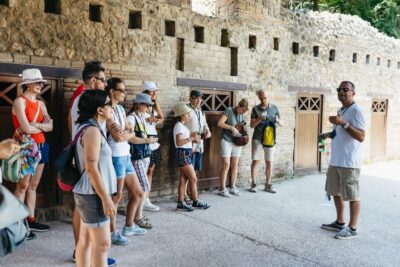 ★ 4.3Pompeii Ruins & Mount Vesuvius Day TourFrom $12011,459 reviews
 ★ 4.6Sorrento, Positano and Amalfi Full-Day TourFrom $10710,988 reviews
 ★ 5.0Sorrento, Positano & Amalfi Coast – Small Group TourFrom $768,643 reviews
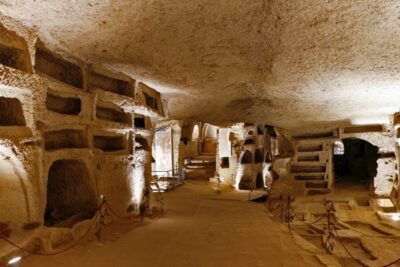 ★ 4.6Catacombs of San Gennaro Entry Ticket & Guided TourFrom $157,941 reviews
★ 5.0Pompeii Small Group Tour with an ArchaeologistFrom $356,593 reviews
★ 4.6Catacombs of San Gennaro Entry Ticket & Guided TourFrom $157,941 reviews
★ 5.0Pompeii Small Group Tour with an ArchaeologistFrom $356,593 reviews