
Tour review · TOUR REVIEWS
Private Walking Tour through the Historical City of Herculaneum
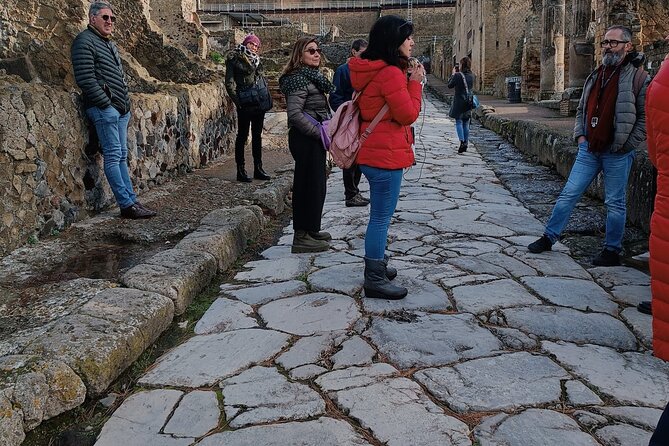
Herculaneum feels like time paused. This private walking tour through Ercolano is a smart way to see an ancient city that is only partly uncovered, while still getting a clear plan for what to look at. I love that the pacing feels people-first, so you can ask questions and linger where your curiosity lands.
I also like that the stops are built around standout buildings, with admission tickets included for each main site you visit. One catch: the €16 Archaeological Park entrance fee is not included in the $102.12 tour price, so budget that extra cost upfront.
Quick takeaways
- Private, family-and-friends friendly pacing keeps the visit relaxed instead of rushed
- Well-timed stops (mostly 10 to 15 minutes) help you cover the best-preserved highlights
- Major interiors are ticketed so you spend your time looking, not queuing
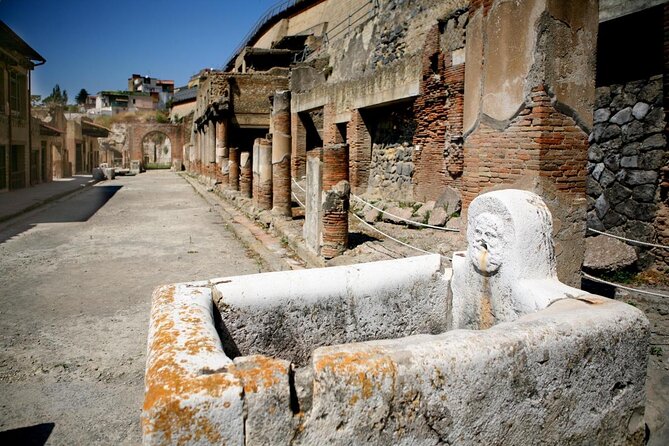
- You’ll see signature Roman life from baths to mosaics to charred wood furnishings
- A small museum stop adds the bigger story with the charred boat and finds
Herculaneum 101: why this Roman site hits different
Herculaneum is not a full reveal. Excavations have uncovered only part of the ancient city, and a lot still remains buried underground. That matters because what you do see tends to feel tightly preserved, almost like you’re reading a page of a book that was never fully finished.
This is also why a guided route helps. Without context, you might wander past the best details. With a good guide, you get the “why” behind each building, from how the thermal baths worked to what makes specific homes famous.
And if you have seen Pompeii already (or plan to later), Herculaneum gives you a different angle. Guides often frame it as a place with more intact residential spaces and a different feel. You’ll usually finish with a stronger sense of how everyday Romans lived, not just dramatic ruins.
You can also read our reviews of more walking tours in Naples



Price and what you really get for $102.12
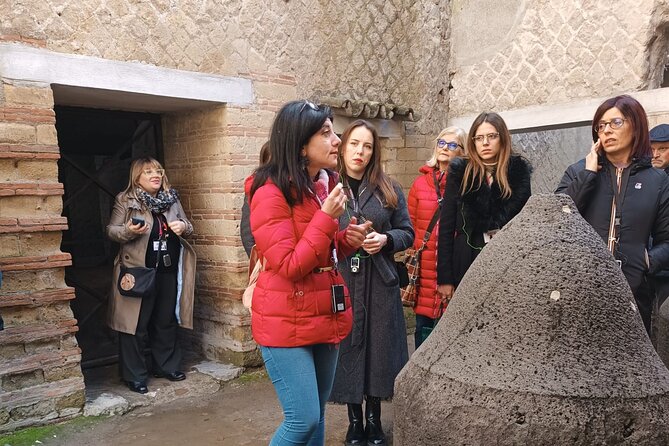
The tour price is $102.12 per person for a private, English-speaking experience of about 2 hours. That price covers the licensed archaeology guide, the private format, and taxes.
What you should add is the Archaeological Park of Herculaneum entrance ticket, listed at €16 per person (free under 18 with a document). Everything else at the main stops is included in the tour flow, with admission tickets provided for each site you enter.
Here’s why that’s good value in practice: Herculaneum is all about details, and details usually live behind doors and ticketed spaces. Paying separately only for the park entrance can be simpler than building a patchwork of tickets yourself.
You’ll also be walking, so bring sun protection. The tour recommends sunglasses, a hat, and comfortable shoes, which is useful advice in a place where you may spend a lot of time outdoors between interiors.
Starting at the Archaeological Park of Herculaneum in Ercolano
You meet at the Archaeological Park of Herculaneum, Corso Resina, 187, 80056 Ercolano NA, Italy. The tour ends back at that same meeting point.
This matters because it keeps the day clean. You’re not trying to coordinate buses or find a new pickup spot after the walk. If you’re combining this with Naples or a shore day, that round-trip simplicity helps.
Also, the tour is offered in English, and it uses a mobile ticket. If you like keeping things simple on vacation, that setup fits well. The area is described as near public transportation too, so you aren’t forced into one travel plan.
A private walk that stays relaxed: how the 2 hours are handled
The visit is planned around a chain of specific highlights, with short time blocks at each stop. Most stops are about 10 to 15 minutes, which sounds quick until you realize what you’re doing: you’re choosing context over aimless wandering.
A quick stop is actually a benefit here, because Herculaneum can overwhelm you fast. Each house or room has enough to chew on for a long time, and this route makes sure you get a taste of multiple “wow” moments without needing a full afternoon.
If you’re the type who likes to read every sign, you might feel the time pressure. If you prefer a guide to point out what matters, this timing is a good match. The structure also helps you avoid the classic problem at archaeological sites: walking in circles after you lose your bearings.
Terme Del Foro: Roman baths that still make sense
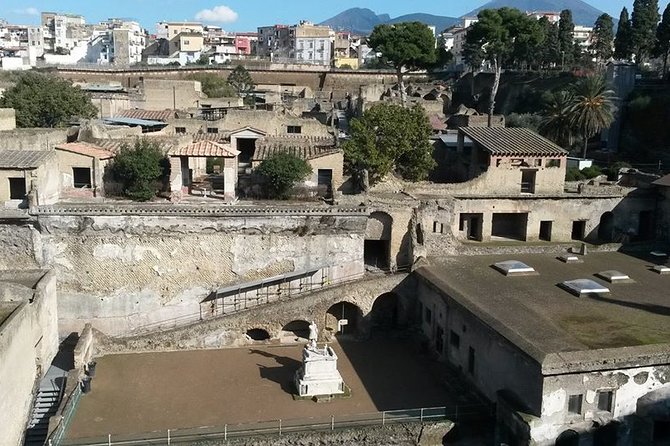
Your first real deep look is Terme Del Foro. These are Roman thermal areas, and they’re described as very well preserved. You get to see key components of how the system worked, including what the guide frames as a gym, a changing area, and rooms for warm bathing.
The best part of baths like this, even when they’re not fully restored to modern standards, is that the layout helps you understand the routine. A guide can point out how people moved between spaces, so it stops being random stone and starts feeling like a lived workflow.
A practical note: baths involve a lot of indoor lighting and stone surfaces. If you’re taking photos, check your phone camera settings because bright daylight outside can make interiors look flat unless you adjust.
You can also read our reviews of more city tours in Naples


Tramezzo di Legno and charred wood: one of Herculaneum’s big stories
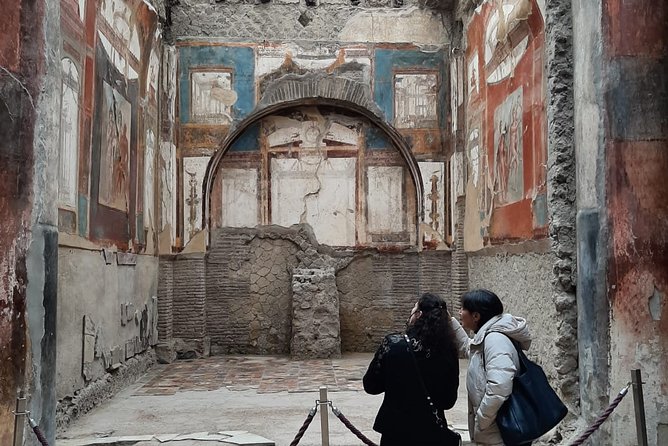
Next comes Partem Domus lignea, also known through the Casa del Tramezzo di Legno reference. This stop is famous for charred wood furniture, and it’s one of the best-preserved houses you’ll encounter on this route.
This is where Herculaneum’s reputation gets real. You’re not just seeing pottery fragments. You’re seeing evidence that the catastrophe was intense and fast enough to preserve materials that should not last. The guide’s job here is to help you connect what you’re looking at to how a room would have functioned before the eruption.
One drawback to plan for: wood and interior details can be subtle. If you don’t know what you’re looking at, you can walk past the significance. This is exactly why a licensed archaeology guide matters.
Neptune and Amphitrite mosaic: a house that feels artistic, not just tragic
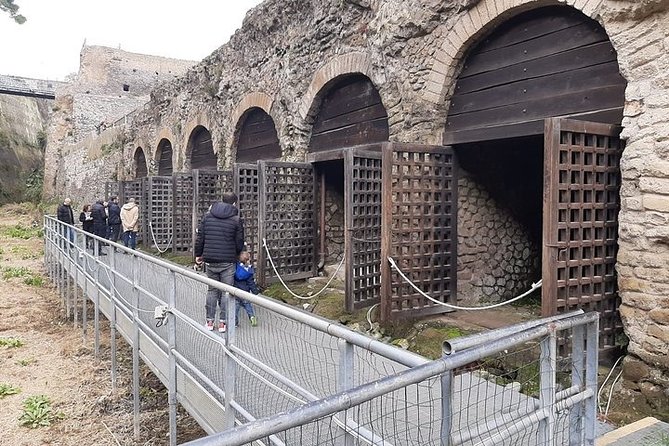
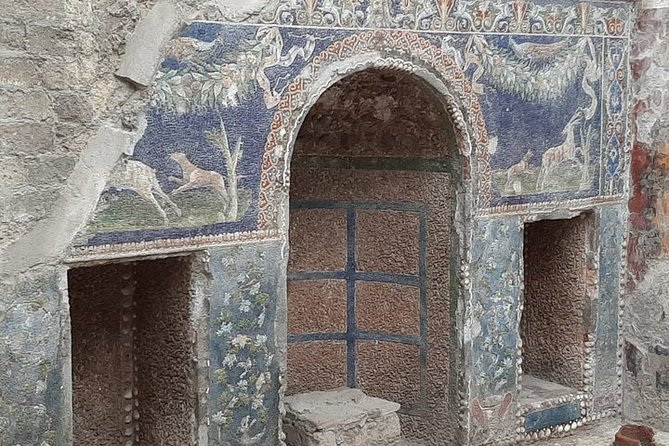
Casa di Nettuno e Anfitrite is known for its standout mosaic. It’s one of the symbolic houses of Herculaneum, and this stop highlights one of the most beautiful mosaics from Vesuvian sites.
If you love Roman art, this is a relief. The Herculaneum story can tilt heavy, because the site is shaped by disaster. A mosaic brings you back to skill, taste, and how people wanted their homes to look.
In a well-run tour, the guide will slow you down just enough to notice design details and scale. Even with a short time window, you can still come away remembering the scene because mosaics give your brain an easy visual anchor.
Casa dei Cervi: deer, panoramic views, and polychrome marble
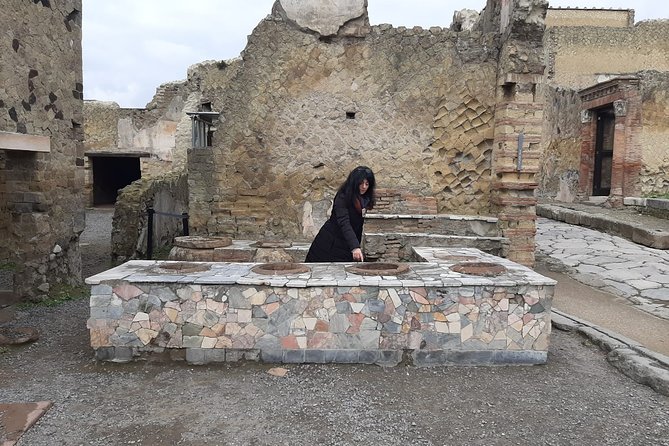
Casa dei Cervi is famous for its deer association and its dramatic location. The description emphasizes a panoramic position between the Gulf of Naples and Capri, plus an interior rich in polychrome marble.
This is a nice balance stop. You get both the built environment and a sense of where the city’s residents could see from their windows or terraces. Roman houses often worked as status statements, and the materials here fit that idea.
Because the stop is brief (about 10 minutes), you’ll want to decide what you care about first. If you care most about the view, spend a minute looking outward before you focus on interior details. If you care most about materials, do the reverse.
Casa Sannitica: older layers and early Pompeian-style decoration
Casa Sannitica is among the oldest houses in Herculaneum, and it’s known for pictorial decoration in the first Pompeian style. That phrase matters because it signals you’re looking at a specific phase of Roman interior design traditions.
This stop is short, about 10 minutes, so the goal is interpretation, not total study. A good guide will tie it back to what you’ve already seen, so it doesn’t feel like a random museum label stuck onto a walk.
If you have a strong art or architecture interest, this can be a surprisingly meaningful stop. If you’re more into everyday life, it still works because it shows how people decorated their homes, not just how they built them.
Salone della Barca di Ercolano: charred boat and finds beyond the park
Outside the archaeological area, there’s a small museum stop: Salone della Barca di Ercolano. Here, you can admire an ancient charred Roman boat and other finds.
This is a smart add-on for anyone who wants the wider picture. Houses tell one part of the story. A boat connects you to work, travel, and movement through the Vesuvian region. It also helps you understand the eruption’s reach. The same event that froze domestic life also affected the city’s connections to the sea.
Because it’s about 15 minutes, you get enough time to see the main items without turning the tour into a museum marathon.
College of the Augustales: a public temple with mythological frescoes
The next stop is the College of the Augustales, described as one of the few public temples excavated that you can visit. It’s noted for wonderful mythological frescoes.
A temple stop changes the tone of the walk. You’re not only in private spaces now. You’re stepping toward civic and religious life, which helps complete the picture of how Herculaneum functioned.
Frescoes are also a good test of a tour’s value. If the guide points out composition, subject matter, and preservation, frescoes stop being faded plaster and start becoming a window into beliefs and storytelling.
Casa del Salone Nero: the black hall and Vitruvian ideas
Casa del Salone Nero is the house of the black hall, and it overlooks the main street of Herculaneum. It’s also described as reflecting the Vitruvian model, and it’s interesting for the state of conservation of its frescoes.
This stop is about 10 minutes, so it’s built to be a focused highlight rather than a long interior study. The “black hall” reference gives you a clear mental target, and that makes it easier to feel oriented even when you’re moving fast.
If you care about Roman design principles, the Vitruvian mention is your clue. You’re not just seeing decoration, you’re seeing how builders and patrons tried to align with recognized design ideas.
Antiquarium di Ercolano: jewelry, everyday objects, and charred wood furnishings
The final stop is Antiquarium di Ercolano, where you have discretion to visit permanent and temporary exhibitions. The tour description calls out finds like jewelry, everyday objects, and charred wood furnishings.
This is where your personal interests get to steer. If you want more small-scale artifacts, you’ll like this stop. If you’re already museum-saturated, you can keep it lighter since the time is flexible.
It’s also a nice closing move for a tour like this. The walk shows big spaces. The Antiquarium brings you back to what people used, wore, and kept.
Guides matter here: English, patience, and pacing that respects real bodies
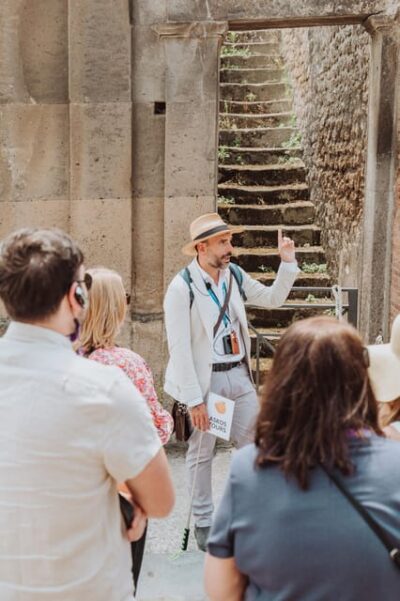
This tour lives or dies on the guide. The experience includes a licensed tour guide expert in archaeology, and the quality shows in how tours are described as calm and clear.
In the feedback you shared, guides like Martina, Carmine, Francesca, Annalisa, Alessandro, and Ernesto get praised for patient explanations and strong English. People also highlight that guides adjust for needs like slower pace for elderly parents or navigating strollers. That’s not a small detail. It can completely change whether you feel stressed or supported during a 2-hour walk.
You’ll also notice a practical touch in some accounts, like a guide providing a water spray on hot days and staying with the group until transport is sorted after the tour. Even if every guide does not do the exact same extras, this is the style you should expect from a team that understands how visitors actually experience Herculaneum in the heat.
Who should book this private Herculaneum walking tour
I think this is a strong fit if you are:
- visiting Herculaneum for the first time and want your eyes guided to the right buildings
- short on time, but still want more than a quick pass through the park
- traveling with family members who may need slower pacing (the private format helps)
- the kind of traveler who likes artifacts and interpretation more than reading every sign solo
It may not be ideal if you want to spend long, quiet time in one room taking notes for hours. The stop durations are tight, by design, so the tour works best when you’re happy with a guided overview plus a few minutes of focused looking at each highlight.
Also, it’s best if you can handle a moderate amount of walking under the sun. Bring the recommended gear and plan for breaks when your guide suggests them.
Should you book this private Herculaneum walking tour?
Yes, if you want the best chance of leaving with real understanding, not just photos. The private format, the archaeology-led guidance, and the fact that most main stops include admission make this feel efficient without turning into a rushed checklist.
The only clear reason to pause is budget math, because the €16 park ticket is extra. If that doesn’t throw off your plans, this tour is a very solid way to experience Herculaneum’s most compelling highlights in about two hours, with a guide who keeps the whole visit clear, calm, and human.
FAQ
How long is the Private Walking Tour through the Historical City of Herculaneum?
It lasts about 2 hours.
What is included in the tour price, and is the entrance fee extra?
The tour includes a licensed tour guide expert in archaeology, a private tour, and taxes. The Archaeological Park of Herculaneum entrance ticket is not included and costs €16 per person (free under 18 with document).
Where does the tour start, and where does it end?
The tour starts at Archaeological Park of Herculaneum, Corso Resina, 187, 80056 Ercolano NA, Italy, and ends back at the meeting point.
Is the tour private, and is it offered in English?
Yes, it is a private tour where only your group participates. It is offered in English.
What should I bring for the walk?
The recommendation is sunglasses, a hat, shoes, and comfortable clothing.
Can I cancel and get a full refund?
Yes. You can cancel up to 24 hours in advance for a full refund.
More Walking Tours in Naples


More Tours in Naples



More Tour Reviews in Naples

Not for you? Here's more nearby things to do in Naples we have reviewed








Tour Reviews, compared.
 ★ 4.8Pompeii: Entry Ticket and Guided Tour with an ArchaeologistFrom $3519,459 reviews
 ★ 4.2Pompeii: Entry Ticket with Optional Audio GuideFrom $2612,360 reviews
 ★ 4.8Pompeii: Small Group Tour with an ArchaeologistFrom $4012,264 reviews
 ★ 4.3Pompeii Ruins & Mount Vesuvius Day TourFrom $12011,459 reviews
 ★ 4.6Sorrento, Positano and Amalfi Full-Day TourFrom $10710,988 reviews
 ★ 5.0Sorrento, Positano & Amalfi Coast – Small Group TourFrom $768,643 reviews
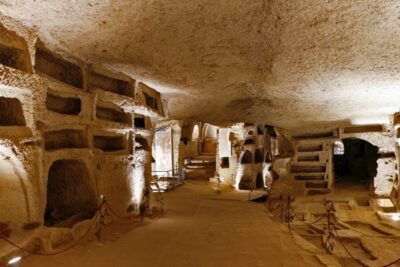 ★ 4.6Catacombs of San Gennaro Entry Ticket & Guided TourFrom $157,941 reviews
★ 5.0Pompeii Small Group Tour with an ArchaeologistFrom $356,593 reviews
★ 4.6Catacombs of San Gennaro Entry Ticket & Guided TourFrom $157,941 reviews
★ 5.0Pompeii Small Group Tour with an ArchaeologistFrom $356,593 reviews
Browse the lists this tour appears in