

Tour review · TOUR REVIEWS
History & Local Wines: Amphitheater, Mitrium and Winery Visit
Ancient stones, plus a wine pour.
This private tour hits two highlights I really like: Santa Maria Capua Vetere’s amphitheater (older than Rome’s) and the Mitreum of Mithras, one of the few preserved in the world. You also get a guided storyline that moves from Etruscans to Romans to late pagan cult history, then finishes with a winery tasting in view of Mount Vesuvius.
Your main trade-off is time and pacing. With about 5 hours total, you should be ready for guided walking and a fairly set schedule. Also, the experience needs good weather, so plan for the day to be adjusted if conditions are bad.
The upside is that this feels custom without being fussy: pickup from your hotel, a private group setup, and a mobile ticket. After the history stops, you relax at a winery with local wine and traditional food, framed by vineyards and the volcano.
Key things I’d circle before you book

- Amphitheater older than Rome’s: a big “wait, really?” moment for ancient-architecture fans.
- Santa Maria Capua Vetere timeline: Etruscans founded the town around 600 BC, Rome conquered it in 340 BC.
- Mitreum of Mithras: preserved enough to visit, yet intentionally destroyed after Christianity spread.
- Winery with Vesuvius views: tastings of local wines paired with traditional food.
- Photo-friendly, attentive guide style: the tour experience is described as organized and relaxed, with a friendly photo-focused guide dynamic.
Private day from Naples: what this 5-hour mix actually delivers
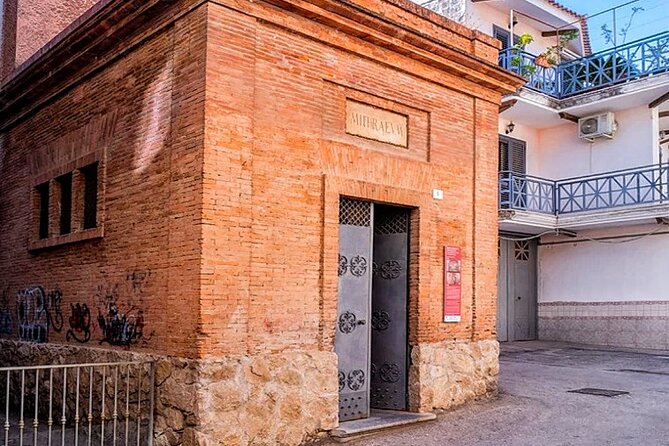
This is the kind of half-day tour that works when you want more than one theme, but you don’t want to spend your whole trip “planning your planning.” You get a guided archaeology hour-and-a-half style experience in Santa Maria Capua Vetere, then you switch to a wine tasting that’s meant to feel slower and more sensory.
The best value here is the pairing. Instead of seeing ruins in isolation, you see how pagan religious life (the Mithraic cult) connects to older Roman entertainment culture (the amphitheater). Then, you finish in Campania wine country with food and a view, which helps the whole day feel like one continuous story, not two separate excursions.
Because it’s private, the pacing can feel easier than big-group tours. Your group only, so you can move at the guide’s rhythm without getting constantly tugged along by crowds.
You can also read our reviews of more historical tours in Naples

Santa Maria Capua Vetere: Etruscans, Romans, and an amphitheater from before the Colosseum era
Your day starts with pickup from your hotel reception in Naples. A driver brings you to Santa Maria Capua Vetere, and then your private guided tour begins in the town itself.
What makes this stop special is that you are not just walking among ruins, you’re walking through a layered timeline. The town was founded by the Etruscans in 600 BC and later conquered by Rome in 340 BC. That long arc changes how you read the place. You start to notice how Roman culture reused and reorganized earlier settlement patterns, even when the names and functions shifted over centuries.
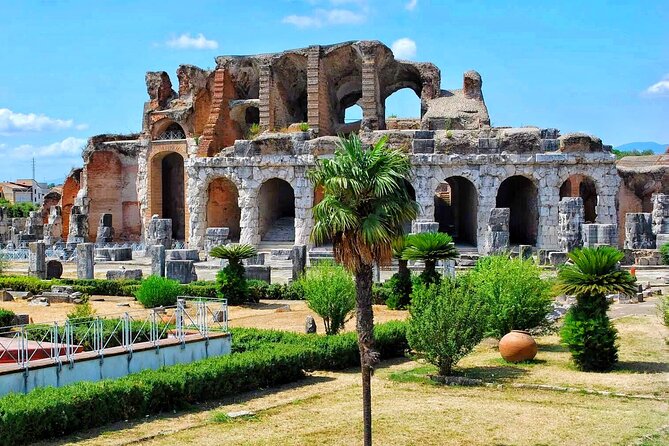
Then comes the amphitheater. You’ll visit an amphitheater that’s described as older than the famous one in Rome, built one century before the Roman amphitheater. Even if you know Roman history already, that “older than Rome” angle is a strong reason to come here. It lets you feel like you’re seeing Rome-adjacent greatness without the Rome stamp on every surface.
Practical note: amphitheaters can be open-air and stone-heavy underfoot, so wear shoes you don’t mind getting dusty. If you like taking photos, you’ll likely want to linger at viewpoints while your guide sets the context so your pictures tell a story.
The amphitheater experience: what to look for while your guide talks
This stop is most rewarding when you give your brain a minute to shift modes. For a lot of people, amphitheaters are “pretty ruins.” Here, your guide’s job is to turn them into a sense of culture and spectacle.
As you look around, try to connect three things:
- Purpose: this was built for public entertainment, like gladiatorial performances.
- Scale: even without exact measurements, your eyes can still read the structure and crowd flow.
- Time: since it predates the Roman reference point, it helps you understand Roman engineering as part of a longer local tradition, not an overnight invention.
If you’re someone who likes questions, this is the kind of stop where you can ask, Why would this town need something like this so early? Your guide should be able to steer you toward the bigger picture without getting lost in trivia.
One drawback to keep in mind: if you prefer sites with lots of accessible signage or self-guided interpretation, a guided format can feel a little more structured than you want. The trade is that you get clearer explanations in real time, which is usually worth it.
Mitreum of Mithras: seeing how a secretive cult left a physical mark
After the amphitheater, you move to the Mitreum. This is the “mysteries of Campania” part of the day, and it’s one of the few preserved Mithraic temples you can visit.
Your guide explains that the temple belonged to the cult of Mithras, and that these spaces were purposefully destroyed with the spread of Christianity. That detail changes the emotional tone of the visit. Instead of thinking of it as a forgotten artifact, you’re seeing what survived because it was not completely erased.
The Mitreum is valuable for two reasons. First, it’s rare. Second, it forces you to think about religion as a lived space, not just a name in a textbook. Even without turning this into a lecture, your guide’s framing helps you notice symbols and the kind of atmosphere temples like this were designed to create.
Practical advice: go in ready to slow down. Temple interiors can feel dim or enclosed compared with an open-air amphitheater. Give yourself a minute to adjust your eyes. If you want photos, ask your guide where it’s easiest to see details. The guide style on this tour is described as attentive and organized, which usually translates into fewer awkward “wait, where do I stand?” moments.
Campania winery time in front of Mount Vesuvius: wine, food, and a payoff view

After the history, the tour shifts to the Province of Naples for a winery stop. You’ll head to one of the most famous wineries in the area, located in front of Mount Vesuvius.
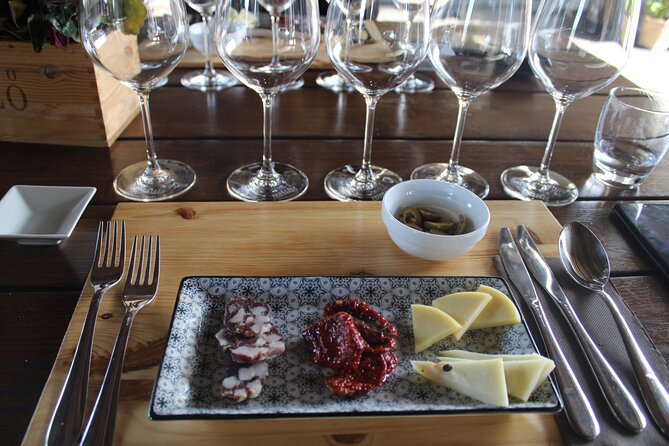
Then comes the part that most people treat as the reward: tasting local wines paired with traditional food. The pacing here is typically what makes this kind of tour feel worth the money. You stop thinking in timelines and start thinking in flavor.
What I like about this setup is that the tasting is not separate from the day’s theme. You’re still in the same region that produced the history you just toured. The food pairing also matters. Wine tastings can become just sipping and scoring. Pairing with traditional food makes it easier to understand the wines in context, not as isolated drinks.
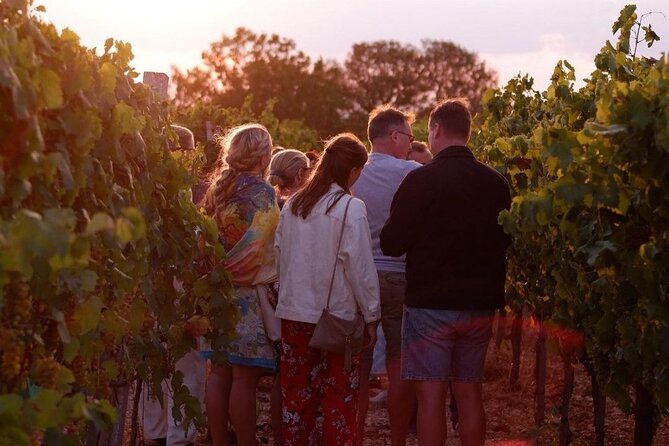
You should expect relaxing time surrounded by vineyards, with the volcano as a constant backdrop. Even if you’ve seen Vesuvius from a distance before, it hits different when you’re there for a slower activity rather than a quick photo stop.
A small consideration: winery visits depend on the day’s flow. If you are the kind of person who hates lingering, tell yourself the winery portion is only about 2 hours, so it’s not an all-day wine marathon.
You can also read our reviews of more wine tours in Naples





Pickup, private group setup, and why organization matters more than you think
This tour is private, which is a big deal on a day that mixes walking sites with a tasting. In practice, private touring means fewer timing surprises and less standing around.
You also get hotel pickup from Naples, plus a mobile ticket. Those are small details, but they reduce friction. In a half-day format, every saved minute helps you actually enjoy the sites, not just transfer between them.
The reviews for this kind of experience also point to a friendly, attentive guide dynamic. One theme stands out: the guide or photo helper is described as kind and organized, with people feeling relaxed and comfortable during picture stops. That matters because it can turn “look at the ruins” into “learn what you’re looking at, then capture it without stress.”
If you’re celebrating something, or you just like a more romantic, photo-friendly pace, this tour style seems to fit that mood. You get history, then you get a view and a tasting, which naturally creates that easy, memorable rhythm.
Price and value: is $868.20 per person reasonable here?
At $868.20 per person, this is not a budget excursion. The value question comes down to what you’re buying.
You are paying for:
- a private guided experience through multiple heritage stops
- a driver pickup from Naples
- the Mitreum visit and amphitheater guided time
- a winery tasting with food, in a setting with Vesuvius views
Also, the tour info indicates admissions for key parts are ticket-free, at least for the two main listed stops. That can help justify the total cost compared with private days where you pay separate entry fees and then still pay for guide and transport.
So, who is it a good fit for? It usually makes sense if you are:
- traveling as a couple or small group and want private pacing
- history-minded but also want a real local food and wine finish
- tired of doing ruins without context, and you’d rather pay for clear guiding
If you’re a solo traveler hunting for the cheapest option, this price will likely feel steep for a half-day. But if you want a focused day that combines rare archaeology with a classic regional wine moment, it can feel like the kind of “one good day” you’ll remember.
Weather and timing: the one thing that can change your day

This experience requires good weather. That matters because both the amphitheater and the town portions can feel less pleasant in harsh conditions. If the operator cancels due to weather, you’d be offered a different date or a full refund, so you aren’t stuck.
In terms of time of day, tours run daily from 8:00 AM to 8:00 PM. For a 5-hour day, morning or early afternoon often helps you avoid fatigue and still have energy for the winery. But the schedule is flexible enough that you can choose what fits your Naples plans.
Who should book this tour, and who might skip it
Book it if you want:
- ancient Roman-era culture outside the usual headline stops
- the rarity of a visit to a Mithraic Mitreum
- a Vesuvius-area winery tasting that includes food, not just wine
Skip or consider something else if you:
- dislike guided walking time
- want a fully self-paced tour where you can wander without a set itinerary
- are sensitive to weather-related changes
It also pairs well with travelers who like learning while still ending the day with a sensory activity. This tour doesn’t treat history like homework. It treats it like a place you can stand in, then eat and drink where that region’s life continues.
Should you book this Santa Maria Capua Vetere and Mitreum plus winery day?
I think you should book this tour if you like your days with a clear arc: ancient town, amphitheater, a rare temple site, then wine and food with Vesuvius in the background. The combination is the point. You get history with context, then a payoff that feels very Campania.
If you’re on the fence because of the price, do a quick gut check. Would you rather pay for a private day with pickup and guided stops, or would you rather spend time piecing together transport and guides yourself? If you want the easy version, this tour leans that way.
One more practical thought: bring comfortable shoes, and keep your weather expectations in the back of your mind. When conditions are good, this is exactly the kind of day that turns a region into a story you can actually feel.
FAQ
Where does this tour take place?
The tour is in Naples, Italy, with visits to Santa Maria Capua Vetere and a winery in the Province of Naples.
How long is the experience?
The duration is about 5 hours.
Is hotel pickup offered?
Yes, pickup from your hotel reception is offered.
Is this tour private?
Yes, it is a private tour/activity. Only your group participates.
What are the main stops on the itinerary?
You visit Santa Maria Capua Vetere, including the amphitheater and the Mitreum (temple of the cult of Mithras), then you go to a winery for a wine tasting with traditional food.
Is there a ticket included for the sites?
The provided details indicate admission tickets are free for the main stops listed in the itinerary.
What happens at the winery stop?
You taste different local wines paired with traditional food, and you spend about 2 hours at the winery with the vineyards and Mount Vesuvius nearby.
What is the best time to go?
The experience runs daily between 8:00 AM and 8:00 PM. The best specific time depends on your schedule and how you like to pace a half-day.
What if the weather is bad?
The experience requires good weather. If it is canceled due to poor weather, you will be offered a different date or a full refund.
What is the cancellation policy?
You can cancel for free up to 24 hours in advance for a full refund. If you cancel less than 24 hours before the start time, the amount you paid is not refunded.
More Wine Tours in Naples

More Historical Tours in Naples


More Tour Reviews in Naples



Not for you? Here's more nearby things to do in Naples we have reviewed






Tour Reviews, compared.
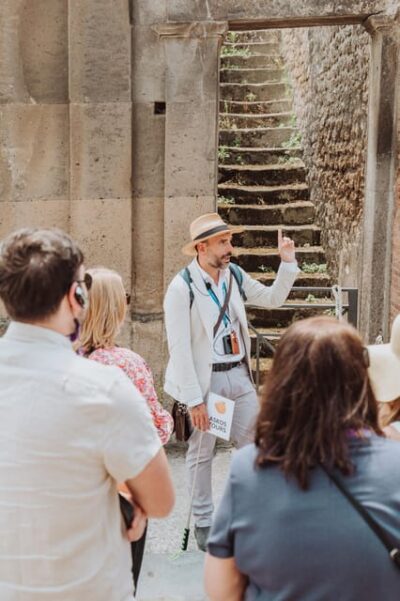 ★ 4.8Pompeii: Entry Ticket and Guided Tour with an ArchaeologistFrom $3519,459 reviews
 ★ 4.2Pompeii: Entry Ticket with Optional Audio GuideFrom $2612,360 reviews
 ★ 4.8Pompeii: Small Group Tour with an ArchaeologistFrom $4012,264 reviews
 ★ 4.3Pompeii Ruins & Mount Vesuvius Day TourFrom $12011,459 reviews
 ★ 4.6Sorrento, Positano and Amalfi Full-Day TourFrom $10710,988 reviews
 ★ 5.0Sorrento, Positano & Amalfi Coast – Small Group TourFrom $768,643 reviews
 ★ 4.6Catacombs of San Gennaro Entry Ticket & Guided TourFrom $157,941 reviews
★ 5.0Pompeii Small Group Tour with an ArchaeologistFrom $356,593 reviews
★ 4.6Catacombs of San Gennaro Entry Ticket & Guided TourFrom $157,941 reviews
★ 5.0Pompeii Small Group Tour with an ArchaeologistFrom $356,593 reviews
Browse the lists this tour appears in