
Tour review · TOUR REVIEWS
The Phlegrean Fields Discover the ruins of Baia, Cuma and Pozzuoli
Catching ancient ruins in one day sounds hard, but this route makes it doable. You’ll tour the Phlegrean Fields with stops at Cuma, Baia, and Pozzuoli, plus quick looks at volcanic lakes like Averno, Fusaro, and Miseno. The big win is pickup and full-day transport, so you are not spending your energy figuring out trains, buses, and connections.
Two things I really like about this experience are the guided context and the pacing. A strong highlight from one set of reviews is the guide, Gennaro, and how his love for the Baia area comes through, especially in the way he ties together geology, history, and archaeology across the sites.
One thing to keep in mind is that site access can change. In a reported case, the acropolis at Cuma and the Flavian Amphitheater at Pozzuoli were closed, and that cut into two of the three top priorities, even though the group still spent extra time at Baia.
Key Things To Know Before You Go
- Port or hotel pickup across Campania saves real time, especially if you are starting at a cruise port.
- Cuma has an uphill walk (about 10 minutes) to reach the acropolis, so wear grippy shoes.
- You get both Sybil and Apollo landmarks at Cuma in the same guided stretch.
- Baia includes a castle terrace and the Roman Baths area for photos plus major ruins.
- Pozzuoli brings the Flavian Amphitheater and scenic glimpses of volcanic lakes.
- Only your group participates, since it is a private tour with a single party size.
Why the Phlegrean Fields Feel Different From Your Typical Day Trip
The Phlegrean Fields are right outside Naples, but they do not feel like a simple add-on to the usual Roman sights. Here you are dealing with a volcanic zone and a layered mix of old stories, forts, temples, baths, and big public entertainment spaces. That matters because it gives you variety without bouncing around all day.
This tour is built around that variety: Cuma for the ancient acropolis and the Cave of the Sybil, Baia for a castle setting and Roman-era thermal ruins, and Pozzuoli for a major amphitheater plus volcanic-lake scenery. The result is a day that feels like you are seeing distinct chapters of the region, not just repeating the same kind of ruins in three different places.
You can also read our reviews of more tours and experiences in Naples.

Getting From Naples and Nearby Ports Without Losing Half the Day
A big practical advantage is that you are not on your own with transit. Pickup is offered at every cruise port in Campania, and also from hotels or other meeting locations within Naples, Salerno, and the Amalfi Coast. That is especially valuable if you are on a cruise, because you avoid the common “get to the meeting point by yourself” scramble.
Once everyone is together, you use a private minivan for full-day driving between sites, including the driver and professional guidance and assistance through the day. This is the kind of arrangement that helps you stay focused on ruins and viewpoints instead of navigation and schedules.
Tip for your planning: because you start at 9:30 am and the duration is about 8 hours, the tour is set up as a single concentrated day. If you are prone to delays from earlier plans, build in breathing room before the pickup time.
Cuma Acropolis and the Apollo Temple Area
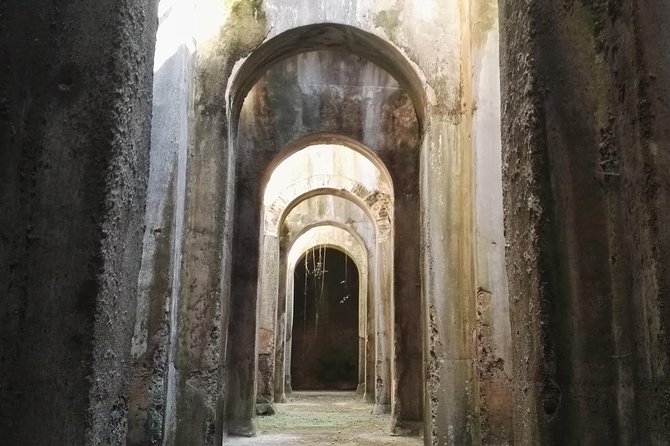
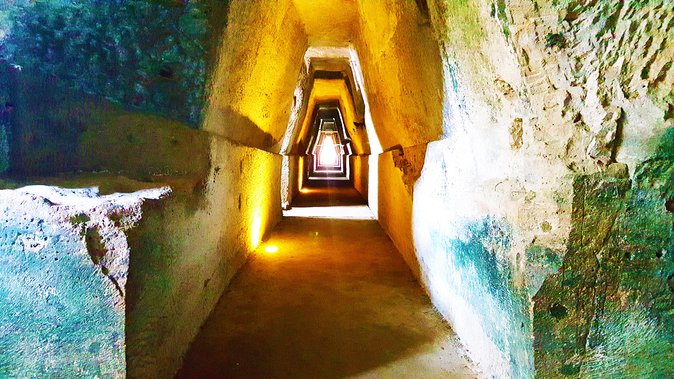
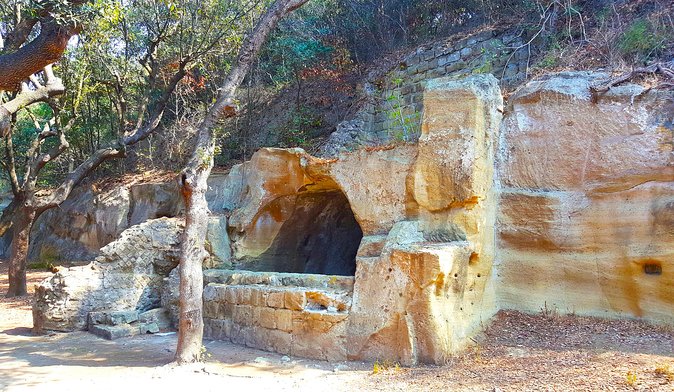
Cuma is where the tour starts in a meaningful way, because you begin with the acropolis and the ruins tied to Apollo’s Temple. Even if you have only a passing interest in Roman and pre-Roman mythology, this stop has a built-in sense of place. You are also headed to the Cave of the legendary prophetess Sybil, which adds a dramatic, story-driven contrast to the stone remains.
The logistics here are simple but worth respecting. You will walk about 10 minutes uphill to reach the acropolis. It might not sound long, but in warm weather or with slick paths it can feel longer than expected. Wear comfortable shoes with good traction, and expect a bit of effort before you get to the views and the ruins.
What you gain from a guided stop at Cuma is context. In the better reviewed experiences, the guide connects the area’s geology, history, and archaeology, so you are not just reading signs. You are understanding why these structures landed here and what makes the site significant.
A consideration: if conditions change at the site level, access can be impacted. In one reported case, the acropolis at Cuma was closed, and that reduced how much the group could see there. Since Cuma is a core priority in the tour, I would treat it as your main “should be open” anchor when you pick your day.
Baia Castle, the Museum, and the Terrace Photos
After Cuma, the day shifts to Baia. This is where the tour becomes more varied visually, because Baia blends a castle setting with archaeological areas.
You will see a Castle built by Alfonso d’Aragona that now houses the archaeological museum of Baia. That matters for two reasons. First, the castle structure gives the ruins a different feel than open-air fields. Second, the museum component helps you connect what you see outdoors with what the site has preserved and explained inside.
Then comes the part that many people really remember: the terrace panorama from the castle. Even if you are not a “views person,” this kind of terrace stop is useful because it gives you orientation. You can step back, look out, and then return to the ruins with a better sense of the coastline and the region’s dramatic setting.
You will also visit the archaeological park with the spectacular ruins of Roman Baths. Baths are not just pretty masonry. They show you how daily life, engineering, and status worked together in the Roman world. With a guide, it tends to land better because you get pointed attention at what to notice, rather than wandering through and guessing.
One small trade-off: because you have a fixed route and time budget, your time at Baia is partly shaped by what is available at the other stops. In at least one reported scenario, when Cuma and the amphitheater were closed, the group ended up spending more time at Baia, which turned the day into a Baia-focused experience instead of a balanced three-stop plan.
Pozzuoli Flavian Amphitheater and the Volcanic Lake Lookouts
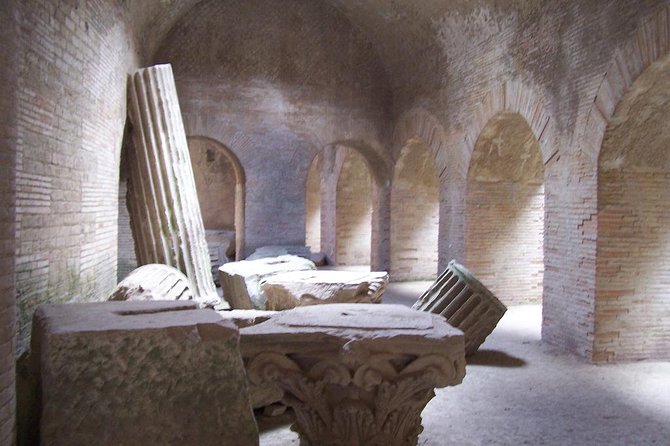
Pozzuoli is the late-day centerpiece for big-scale Roman entertainment. You’ll visit the Flavian Amphiteather, described as one of the most important amphitheaters in the world. That phrasing is not just marketing fluff. Amphitheaters are among the strongest reminders of how massive Roman public life could be, and Pozzuoli’s scale is part of why it is worth the trip.
The key advantage of having this as a scheduled stop is that you get help interpreting what you are looking at. A guided walkthrough can help you read the amphitheater as more than “an old stadium.” You are seeing a major Roman venue within the distinctive Phlegrean landscape.
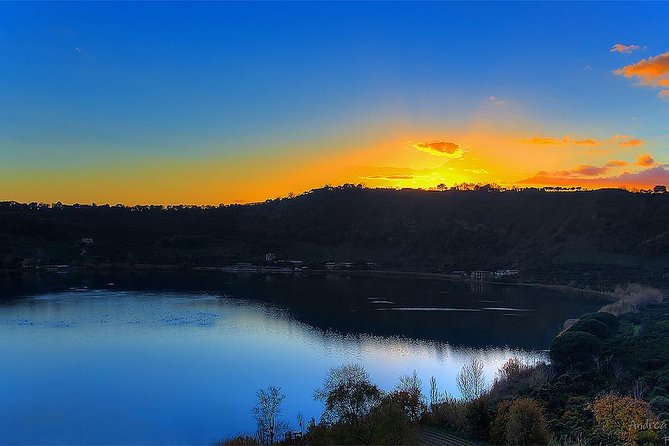
Then you get a glimpse of volcanic lakes: Averno, Fusaro, and Miseno. Even if you do not spend a long time at each lake, these quick looks add a layer of atmosphere. It’s a reminder that this region is not just ancient buildings, it is a living landscape shaped by volcanic activity.
Drawback to plan around: access to the Flavian Amphitheater can also be affected by closures. In one reported case, the amphitheater was closed, so the group could not fulfill a major part of the priority list. When that happens, having Baia as the more flexible anchor stop can help reduce disappointment, but it is still a real risk if your heart is set on one specific monument.


What the Full Day Logistics Actually Mean for Your Comfort
This is an 8-hour tour with a 9:30 am start, and it is built around a full-day minivan schedule. That tends to work well because you are not trying to squeeze each site into separate, rushed travel windows.
You should plan for a few things:
- You will do some walking, including the uphill acropolis portion at Cuma.
- You will likely spend a fair amount of time outside, moving between viewpoints, terraces, and ruins.
- The route is structured, so you cannot drift too far from the group.
On the plus side, you are not left to figure things out. The tour includes guidance and assistance for the entire duration, plus local taxes, fuel, and parking expenses. Admission fees for the Phlegrean museum and sites are included, which helps the day feel “all in” without surprise ticket lines.
Also, this is a private tour. Only your group participates, so you are less likely to feel like you are being swept along with strangers. Private does not automatically mean slow, but it usually means smoother communication, better timing, and fewer waiting moments.
Price and Value: Is $618.08 a Person Worth It?
At $618.08 per person for an approximately 8-hour private day, the price is not low. But you are also paying for a lot of the expensive parts of a good day trip: private transport, a professional driver, full-day guidance, and included admissions.
Here is where the value math often makes sense:
- You get pickup from cruise ports and from hotels or meeting points across Naples, Salerno, and the Amalfi Coast. That eliminates separate taxis and wasted time.
- Private minivan transport for the full day means you spend less energy on logistics and more time on ruins and viewpoints.
- Admissions are included for the Phlegrean museum and sites, which matters because admission costs can add up quickly when you are covering multiple locations.
- Taxes, fuel, and parking are included, so you are not paying extras at the curb.
The one clear “not included” cost is meals. You will need to plan your own food stop or bring snacks, depending on your preferences and your appetite for walking between lunch options.
So who gets the best value? People who want a guided, door-to-door day without the stress of self-planning. If you are comfortable with public transit, you could do it independently, but you will trade that control for time and effort. This tour buys convenience and interpretation.
Who Should Book This Tour (and Who Might Skip It)
This is a great match if you:
- Want Cuma, Baia, and Pozzuoli in one go without managing transit between them.
- Like guided interpretation, not just photos.
- Prefer a private group so the day feels tailored to your pace.
It may be less ideal if you:
- Are laser-focused on seeing one specific monument with zero tolerance for site closures, because access can change at the acropolis at Cuma or the amphitheater at Pozzuoli.
- Hate uphill walks, since Cuma’s acropolis includes an uphill trek of about 10 minutes.
If you are traveling as a couple, with family, or with a small group and you want a single well-organized day, this hits the sweet spot. The Phlegrean Fields reward curiosity, and this route keeps you moving with purpose.
Should You Book? My Practical Take
With a 4.3 rating based on 6 reviews, the track record suggests more good than bad. The strongest praise centers on the guide experience, especially Gennaro’s ability to connect the sites through the area’s geology and archaeological context. The second big positive theme is that the day still works well even when plans need to shift, as shown by a case where the group spent more time at Baia.
My recommendation comes down to your priorities. If Cuma and the Flavian Amphitheater are top-two “must sees” for you, be aware that closures can affect what you get. If you can treat this as a guided Phlegrean Fields day that might shift emphasis, you will likely enjoy the balance of Cuma legends, Baia panoramas, Roman baths ruins, and the volcanic lake atmosphere.
If your goal is an efficient, guided, pickup-to-dropoff day that covers the core of the Phlegrean story in one shot, this is a solid choice.
FAQ
What time does the tour start?
It starts at 9:30 am.
Where do you offer pickup?
Pickup is offered at every cruise port in Campania, plus client hotel locations or other meeting locations within Naples, Salerno, and the Amalfi Coast.
How long is the tour?
The duration is about 8 hours.
Is meals included in the price?
No. Meals are not included.
Is this tour private?
Yes. This is a private tour/activity, and only your group participates.
Can I cancel and get a full refund?
Yes, there is free cancellation. You can cancel up to 24 hours before the experience start time for a full refund.
More Tour Reviews in Naples
Not for you? Here's more nearby things to do in Naples we have reviewed







Tour Reviews, compared.
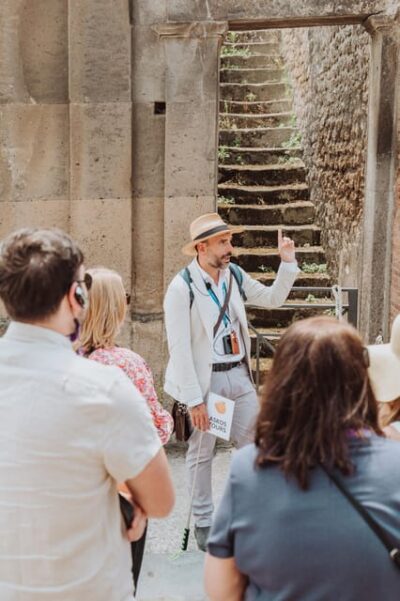 ★ 4.8Pompeii: Entry Ticket and Guided Tour with an ArchaeologistFrom $3519,459 reviews
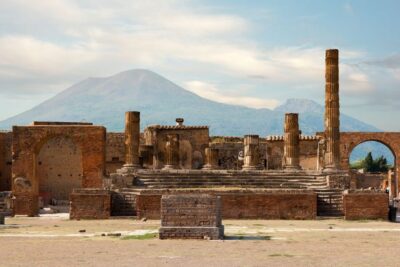 ★ 4.2Pompeii: Entry Ticket with Optional Audio GuideFrom $2612,360 reviews
 ★ 4.8Pompeii: Small Group Tour with an ArchaeologistFrom $4012,264 reviews
 ★ 4.3Pompeii Ruins & Mount Vesuvius Day TourFrom $12011,459 reviews
 ★ 4.6Sorrento, Positano and Amalfi Full-Day TourFrom $10710,988 reviews
 ★ 5.0Sorrento, Positano & Amalfi Coast – Small Group TourFrom $768,643 reviews
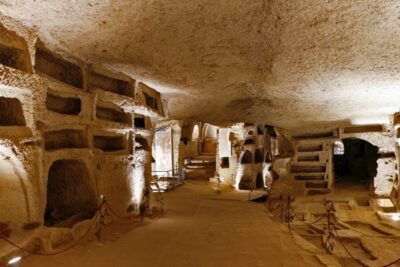 ★ 4.6Catacombs of San Gennaro Entry Ticket & Guided TourFrom $157,941 reviews
★ 5.0Pompeii Small Group Tour with an ArchaeologistFrom $356,593 reviews
★ 4.6Catacombs of San Gennaro Entry Ticket & Guided TourFrom $157,941 reviews
★ 5.0Pompeii Small Group Tour with an ArchaeologistFrom $356,593 reviews