
Tour review · TOUR REVIEWS
Transfer From Naples Train Station/area to Sorrento 2hr stop in Herculaneum
Herculaneum feels like time slowed down. This Naples to Sorrento transfer gives you a smooth ride plus a focused, 2-hour stop in Herculaneum to see why this Roman town survived under volcanic mud for centuries. I like that it removes the hardest logistics from your day, and it keeps you in control of how much structure you want, with an optional guide.
Two things I especially like: the English-speaking professional driver and the air-conditioned comfort for a hot stretch on the coast. You also get a true “do the sights, then move on” format, instead of trying to hop between regional buses while your schedule is slipping.
One thing to consider is timing. Your day can feel tight, and there is no meals or drinks included, so you will want to plan for heat and refreshment.
Key points to know before you go

- Private transfer door-to-door feel: only your group rides, not a shared shuttle of strangers.
- Two hours in Herculaneum: enough time for the main highlights without turning the day into a marathon.
- Optional licensed guide for added context: add a guided 2-hour tour for €150 paid directly in cash to the guide.
- Smart infrastructure you can still see: Herculaneum had sewer and aqueduct systems that Pompeii did not.
- Mud and pyroclastic layers explain the preservation: volcanic blanket helped protect richer houses and streets.
- No entrance tickets included: budget separately so you do not get surprised at the gate.
From Naples train station to Sorrento, with Herculaneum as your anchor
This is the kind of trip I like for first-timers: you start near where you already are in Naples (the train station area), you get shuttled to one high-impact site, then you end in Sorrento where many people want to be for the rest of their itinerary. The trip is designed around a clear sequence, not endless waiting around.
The full experience runs about 3 hours total, which matters because it shapes how you should plan your expectations. You are not getting a long, deep study day. You are getting a concentrated taste of Herculaneum, then moving on.
Because it is private, the driver can adapt to your group pace better than a fixed-route group bus. You also have mobile ticket access, which is handy once you are in the flow of Naples and the surrounding towns.
More Naples tours, ruins, coast days, and city experiences to compare


The transfer: what the ride gets you (and what can affect timing)
Your pickup starts in Naples, around the Naples Metropolitan City of Naples train station area. From there, the driver handles the drive to Herculaneum, then later brings you onward to Sorrento for drop-off at the end point listed for the tour.
What is included is exactly what you hope for in this kind of transfer:
- Air conditioning on board
- Tolls, parking, gasoline, and taxes
- Insurance passenger coverage
- A professional driver who speaks English
This is practical value. Parking and tolls can eat up time and stress, especially when you are trying to move quickly between Naples and the Amalfi-coast area. Also, having an English-speaking driver cuts down on the small miscommunications that can cause delays.
Where timing can get touchy is simply human logistics. In one recent experience, the start of the day was delayed by a few minutes because there was a wait for pickup at the point where the driver had left the group off. The good part was communication with the driver, and the company noted flexibility in adjusting pickup time to meet needs.
My advice: build a little buffer. If your next stop depends on a tight connection, keep that schedule loose. You will feel it less.
Herculaneum in 2 hours: the sights that make it worth the detour
You get about two hours to explore Herculaneum. That is enough time to get your bearings and see several key zones, as long as you do not try to do everything at a sprint. The layout and preservation style reward slow wandering, but the time window means you should pick what you want to focus on.
Here is what makes Herculaneum different, and why that difference is visible when you are standing in the streets:
Streets, sidewalks, and plumbing that actually changed daily life
Herculaneum was uncovered gradually, and it was only accidentally found during well excavations in 1709. Excavation started in 1764, resumed in 1823, paused again in 1875, then restarted in 1927. That history matters because it helps explain why what you see today is a curated slice of a larger ancient city.
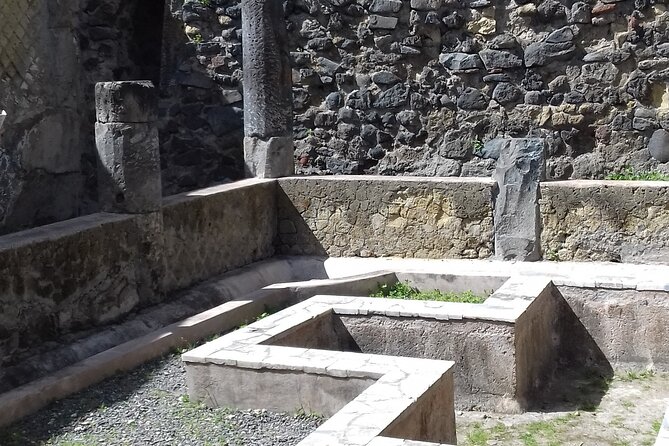
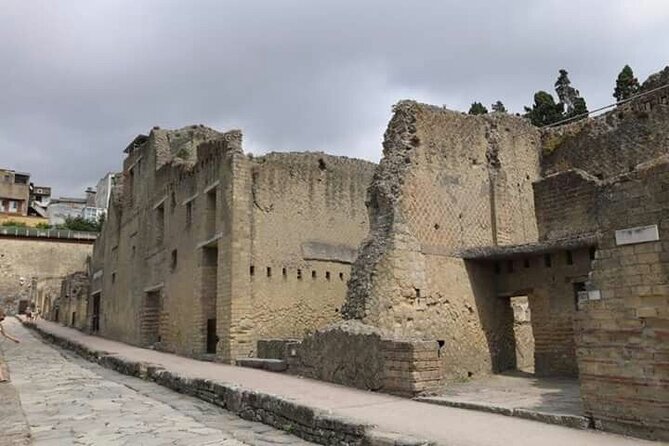
When you walk the narrower streets, you can still understand daily urban life. The sidewalks feel more normal in height than what many people expect from Pompeii, largely because Herculaneum had a sewer system. Pompeii, by contrast, did not have the same level of sanitation infrastructure.
So your “what am I looking at?” moment is actually answered by the town itself. You can see how Rome built for drainage and health, not just for buildings and views.
Cleaner, calmer streets came with preservation that looks almost unfair
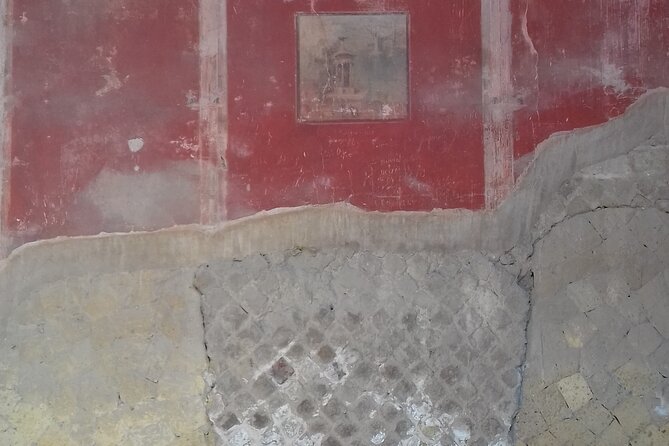
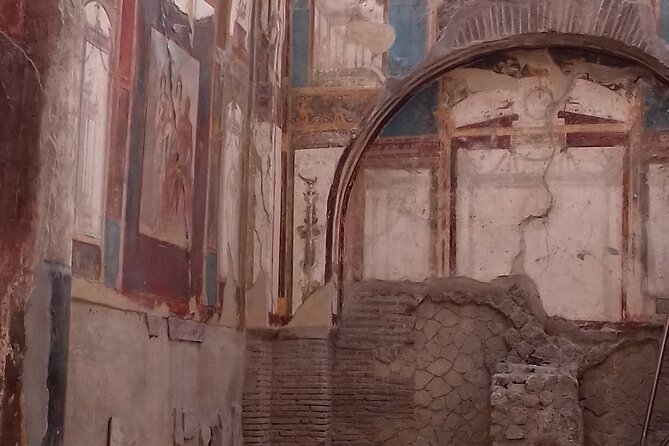
One reason Herculaneum feels so intact is the nature of the volcanic event. A blanket of mud and pyroclastic material, estimated at 10 to 25 meters, cooled and solidified, forming a rock layer often described as Pappamonte. This kind of preservation is why houses and details look sharper than you might expect.
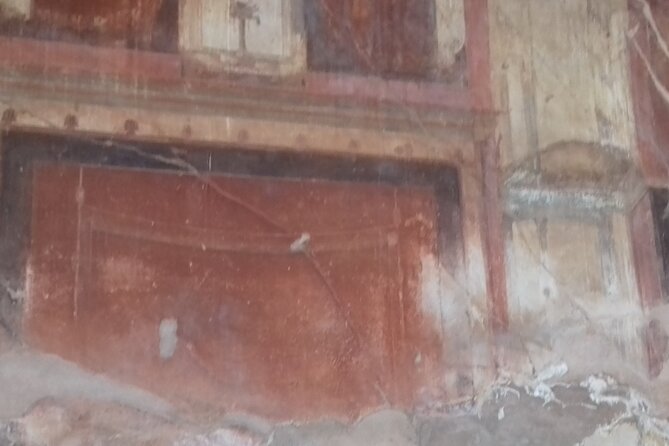
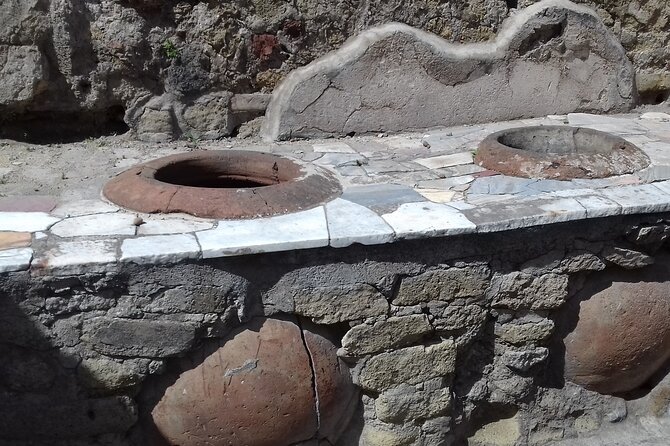
And here is a big difference you should remember: Herculaneum was more of a residential base for Roman aristocracy, while Pompeii leaned more working-city. That helps explain why many structures and spaces feel more luxurious.
When you walk through, pay attention to the quality of residential spaces compared with the more “everyday” feel you may associate with Pompeii. If you have seen Pompeii before, Herculaneum can feel like the richer cousin with better-maintained bones.





The water story: an aqueduct that served wealth
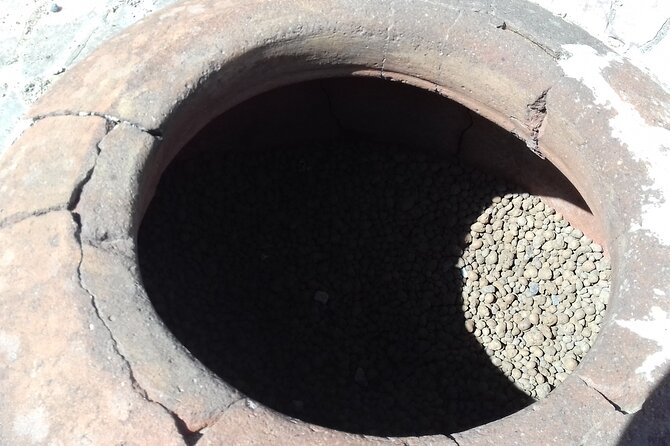
Rich people in Herculaneum had a city aqueduct, meaning water could reach their houses. This is where the site becomes more than pretty ruins. It becomes a lesson about Roman privilege made physical.
If you are the kind of traveler who likes practical context, try to spot where water access might have mattered in daily routines. Even without a full technical explanation, you will feel the difference between a city that struggles with basic needs and one that built water delivery into the upper-class lifestyle.
What to prioritize with only two hours
With limited time, I would focus on three goals:
- Street-level experience (narrow lanes and the feeling of a planned city block).
- Residential preservation cues (the places that look more “lived-in” for wealthier residents).
- Infrastructure signals (sewer and water delivery concepts).
If you spread out too much, you might end up seeing fragments instead of patterns. Two hours rewards choosing a theme and sticking to it.
Optional 2-hour guided tour: when €150 cash to the guide is worth it
You can add a two-hour guided tour with an authorized licensed guide for an additional €150. The important part: you pay directly to the guide in cash (euros).
So when is this worth it?
- If you want the city explained as a system, not just “look at that ruin.”
- If you like archaeology details, like how the mud layers relate to what you can see today.
- If your group includes people who want context and answers, not just sightlines.
When it might not be worth it:
- If your group is happy with self-paced wandering and you do not need extra interpretation.
- If you are planning to fit other guided experiences later and this one would feel redundant.
One more reality check: paying for a guide changes the “value math.” The transfer itself is priced in, but you still need to consider what you will spend on top.
Also note that entrance tickets are not included, so even with a guide, you should still plan to buy site entry separately.
Price and value: does $178.03 make sense for your day?
At $178.03 per person, this transfer is not a budget impulse buy. But it can be very good value if you count what you are actually paying for: door-to-door private transport plus a structured two-hour window in a major archaeology stop, with the driver handling navigation, tolls, parking, and logistics.
Here is the value breakdown in plain terms:
- You get transport and comfort (air-conditioning, English-speaking driver, and paid road costs).
- You get a time-controlled sightseeing block (about two hours on-site).
- You do not have to solve public transport transfers or parking issues.
What is not included:
- Entrance tickets
- Authorized guide (unless you add it)
- Meals and drinks
If you already planned to spend money on entry tickets anyway, and you want the day to feel organized, the price starts looking reasonable. If, however, you are traveling with several people and are comfortable doing independent transit, you might feel the cost more.
Still, private transfers are often about time and sanity. This is especially true when your day ends in Sorrento, where you likely want to be settled rather than navigating at the end of a long day.
Practical tips for a smooth Herculaneum visit
Because you are dealing with volcanic site preservation and a walking environment, your comfort choices matter.
Plan for the heat and the water situation
No meals and drinks are included. One recent comment pointed out that it would have been nice to have water offered after a hot Herculaneum tour. That lines up with what the tour does not include, so take it seriously: bring water with you, and bring more than you think you need.
Entrance tickets are on you
The tour handles transport, not admission. Make sure your group knows the entry is separate, so your two-hour exploration does not get chewed up by ticket confusion.
Use the two-hour window wisely
In two hours, you are not collecting every detail. You are building understanding. If you add the optional licensed guide, decide what you want to learn so the time feels focused.
Keep pickup and drop-off points simple
This is a private experience, but logistics still depend on meeting the driver at the right place. If you change the plan, do it early and communicate clearly. The company response to a recent concern emphasized constant communication and flexibility with pickup timing changes, which is a good sign.
Who should book this Naples to Herculaneum to Sorrento transfer
This is a strong fit if you:
- Want a low-stress way to reach Herculaneum from Naples train station area without wrestling with transit timing.
- Like Roman sites but want a short, focused stop rather than a full-day commitment.
- Are staying in Sorrento or heading there next and want an easy drop-off.
It is also a good match for groups that prefer privacy. The tour is private, so only your group participates. That generally means less waiting for others and fewer “where are you?” moments.
If you are the type who loves wandering with no structure at all, you might still enjoy the two hours. Just be ready to pick your own priorities, since the time window is tight.
Service animals are allowed, and most travelers can participate, based on the information provided.
Should you book this transfer?
I would book it if your priority is getting to Herculaneum cleanly from Naples and continuing straight to Sorrento without turning the day into transportation puzzles. The included comfort and the English-speaking driver add real value, especially if your schedule is tight.
I would pause if you hate the idea of paying extra for entrance tickets and possibly an optional licensed guide, or if you need a longer than two-hour exploration window to feel satisfied. In that case, you might look for a longer Herculaneum-focused experience instead of a transfer-shaped one.
If you want an organized, efficient day with a high-impact stop, this one is worth serious consideration.
FAQ
How long is the total experience?
The duration is listed as approximately 3 hours total, including pickup from Naples, about 2 hours in Herculaneum, and then the ride onward to Sorrento.
What is included in the price?
Included features are air conditioning on board, toll and parking costs, gasoline and taxes, passenger insurance, and a professional English-speaking driver. Entrance tickets, meals, and drinks are not included.
Are entrance tickets included?
No. Entrance tickets are not included in the tour price.
Do I need cash for the optional guide?
If you request the optional 2-hour guided tour, it is an additional €150, and it needs to be paid directly to the guide in cash in euros.
Does the tour include food or water?
Meals and drinks are not included. The tour data lists meals and drinks as not included.
Where does pickup and drop-off happen?
Pickup starts in Naples in the Metropolitan City of Naples, Italy area, and the end point is listed as 80067 Sorrento, Metropolitan City of Naples, Italy.
Is the tour private?
Yes. It is described as private, meaning only your group will participate.
More Private Drivers in Naples



More Tour Reviews in Naples
Not for you? Here's more nearby things to do in Naples we have reviewed










Tour Reviews, compared.
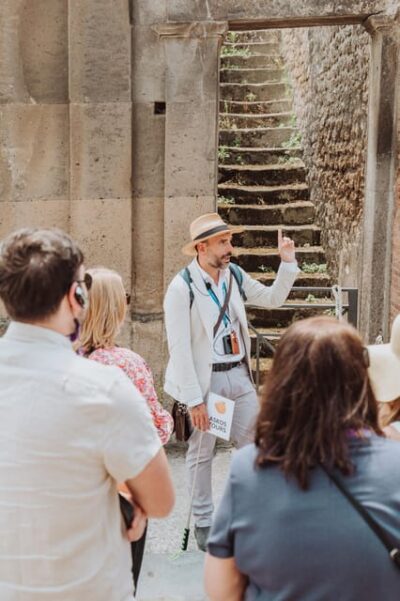 ★ 4.8Pompeii: Entry Ticket and Guided Tour with an ArchaeologistFrom $3519,459 reviews
 ★ 4.2Pompeii: Entry Ticket with Optional Audio GuideFrom $2612,360 reviews
 ★ 4.8Pompeii: Small Group Tour with an ArchaeologistFrom $4012,264 reviews
 ★ 4.3Pompeii Ruins & Mount Vesuvius Day TourFrom $12011,459 reviews
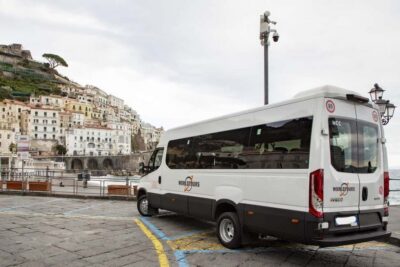 ★ 4.6Sorrento, Positano and Amalfi Full-Day TourFrom $10710,988 reviews
 ★ 5.0Sorrento, Positano & Amalfi Coast – Small Group TourFrom $768,643 reviews
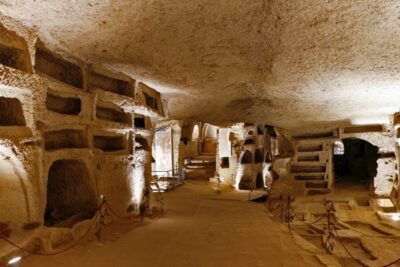 ★ 4.6Catacombs of San Gennaro Entry Ticket & Guided TourFrom $157,941 reviews
★ 5.0Pompeii Small Group Tour with an ArchaeologistFrom $356,593 reviews
★ 4.6Catacombs of San Gennaro Entry Ticket & Guided TourFrom $157,941 reviews
★ 5.0Pompeii Small Group Tour with an ArchaeologistFrom $356,593 reviews
Browse the lists this tour appears in