

Tour review · TOUR REVIEWS
Walk through Naples City or National Archaeological Museum
Naples makes sense in two hours. This guided walk led by Dr. Pina Esposito pairs Pompeii and Herculaneum artifacts with a smart street circuit so you get context fast. I love how the group stays small and how she explains what you are looking at, from blown-glass house items to Farnese marble giants. One thing to consider: entry tickets are not included, so you’ll budget a bit more for the museum rooms.
You meet at the Museo Archeologico Nazionale di Napoli, Piazza Museo 19, right at 8:00 am, and the tour ends back at the same spot. Expect the tour in English, a mobile ticket, and a pacing that fits an about-2-hour visit.
If you would rather focus more on streets than galleries, the guide can shift to the historic districts instead, while still passing by landmarks like Santa Chiara and the Sansevero Chapel Museum area.
Key things I’d circle before you book

- Dr. Pina Esposito (PhD, Greco-Roman archaeology/art history) turns museum labels into real stories
- Pompeii and Herculaneum daily life, from frescoes and painted terracotta to bronze, ivory, mosaics, and jewelry
- Roman Imperial Age power through the Farnese Collection’s major marble statues
- A small group feel (capped at 15 for the tour experience, with an overall activity max listed at 30)
- Real Naples orientation on the walk, with stops passed by including Santa Chiara and the Sansevero Chapel Museum
Meeting at Museo Archeologico Nazionale, and why 8:00 am matters
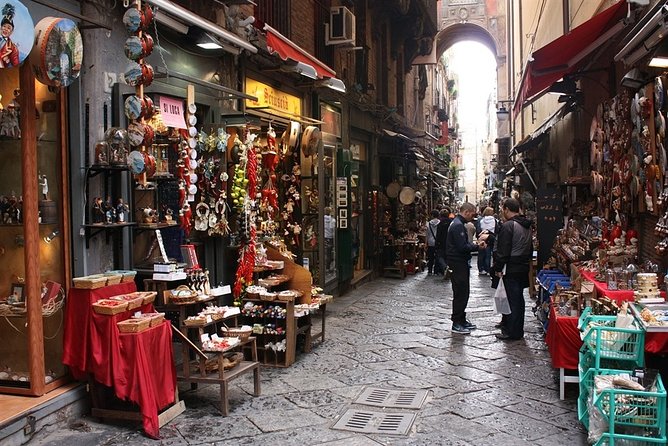
Starting at the Museo Archeologico Nazionale di Napoli is a smart move, because it gives you Naples context before you wander its streets. At 8:00 am, you avoid some of the crowd pressure that can make museums feel like stampedes. You’ll also finish back near where you started, which keeps your morning plan clean.
The meeting point is precise: Piazza Museo 19, right at the museum. If you like an easy start, this is one of those tours where you can arrive, locate the group fast, and settle in without a scavenger hunt.
You can also read our reviews of more walking tours in Naples



How the guide connects Pompeii and Herculaneum to what you see in Naples
The core value here is the way the guide links what’s on display to the towns buried by Mount Vesuvius in 79 AD. She doesn’t treat the objects like isolated antiques. You get the big picture first: how the eruption froze moments in time, and how that makes these collections a shortcut to understanding Roman life.
You’ll hear about a wide range of object types, not just the famous statues. Think frescoes, statues, domestic items made from blown glass, plus bronze and ivory pieces. You’ll also get context for painted terracotta, semi-precious stone details, and mosaics. When a guide explains the function and the craft behind an item, your eyes start to pick up patterns you would miss on your own.
And because Dr. Pina Esposito is a local with specialized training in Greco-Roman art, she can connect the dots between archaeology and Naples as a living city. In practice, that means the tour feels less like museum homework and more like seeing why these objects matter to the region.
Frescoes, blown glass, mosaics, and the stuff of everyday life
One reason I like this format is that it tackles everyday objects, not only big-ticket art. Pompeii and Herculaneum were ordinary towns, so the collection includes the practical and the personal. That shows up in the kinds of artifacts the guide highlights.
You’ll likely focus on:
- Frescoes (mural paintings) that help you understand what Romans wanted their walls to communicate
- Blown glass domestic items, which are a reminder that even dramatic glasswork was part of normal household life
- Bronze and ivory objects, which can shift your perspective from “museum wow” to “this was used”
- Painted terracotta and semi-precious stone details, which help explain taste and status in small ways
- Mosaics, so you can see how floors were designed to be both durable and decorative
The takeaway for you is simple: you’ll spend your time looking at fewer things, but with more meaning. In a place as large as this museum, that matters. A good guide doesn’t need to show you everything. She needs to help you see the right things in the right order.
Farnese Collection giants: Roman Imperial power in marble
A standout in the tour description is the emphasis on the monolithic marble statues linked to the Farnese Collection, from the Roman Imperial Age. These are the kind of objects that can look impressive even before a guide talks. But the magic is what happens after: you start to understand what the statues were trying to say.
When you hear that these are huge marble figures from the imperial period, the context changes how you look at them. You stop seeing only anatomy or technique, and you start noticing how power gets expressed through scale, posture, and presence. That is exactly the kind of interpretive help you want in a limited-time tour.
If you only have a couple of hours in Naples, this emphasis helps you get a “major works” moment without getting lost in a warehouse of galleries.
Secret Cabinet topics: what to expect with explicit museum material
The tour highlights specifically mention erotica from the famous Secret Cabinet. That can be surprising if you expected a purely classical, family-friendly sweep.
Here’s the practical way to handle it: go in knowing the guide may mention or explain explicit artifacts as part of the museum’s historical record. If you are easily uncomfortable with sexual content, it might affect your enjoyment. If you can handle frank historical material, this is also an opportunity to understand how different eras categorized and kept artifacts out of ordinary view.
Either way, the guide’s job is to provide context, not shock value. Still, it’s worth flagging ahead of time so you can decide if this is the right mix for your trip.
You can also read our reviews of more city tours in Naples



The Naples street walk: Santa Chiara and the Sansevero Chapel Museum area
After the museum focus, you’ll shift into getting your bearings. Even if you do a museum-heavy version, the walking part is what helps Naples become real, not just a collection of rooms.
The tour description calls out pass-by sights like Santa Chiara and the Sansevero Chapel Museum. Even when you are not going deep inside a chapel, a good guide can tell you why a neighborhood’s landmarks matter: what eras shaped the street layout, what religious buildings signal to the city, and how the architecture hints at Naples’ layers.
If you’re the type of traveler who likes to return later on your own, this part is also strategic. You’ll come away with mental maps. Then, when you walk back through the area another day, you won’t be stuck at the level of “I recognize the street.” You’ll have something to look for.
Small-group pacing, English delivery, and how 2 hours really feels
This tour is designed to keep you moving without feeling rushed. Group size is kept small, with a cap of 15 people mentioned in the highlights. There’s also a wider maximum listed for the activity, but the small-group cap is what usually protects your experience quality.
With an about-2-hour duration, you should expect a highlights tour. That means:
- you focus on key objects and key explanations
- you do not attempt to see every room
- you benefit from the guide picking a path that makes sense
Because the tour is in English, you can follow the connections from object to story without playing guessing games. In this setting, good English delivery is not a luxury. It directly affects how much you retain.
Tickets and the real value of $34.85
The price is $34.85 per person, and the guide service is included. Entry tickets are not included, but the guide arranges them and you reimburse the guide. That matters for value calculations.
Here’s how I think about it. You are paying for:
- expert, structured guidance in English
- a route that points you to the most meaningful highlights
- help interpreting complex objects fast
The extra cost is for museum entry, which is common for tours that include specific rooms. The smart part is that you are not doing paperwork or hunting down what to buy. You just reimburse for what the guide arranged.
If you were planning to DIY the museum, you might save some money. But you’d likely lose something equally important: the meaning of what you are seeing. For many people, that tradeoff is the difference between a museum visit that feels like browsing and one that feels like learning.
Practical tips to get the most from this Naples guide-led highlight tour
A couple of practical notes that make the experience smoother:
- Wear comfortable walking shoes. You’ll be on your feet during the museum portion and the Naples orientation walk.
- Arrive a few minutes early. The meeting point is specific, and starting on time helps you keep the 2-hour flow.
- Bring cash or a simple way to reimburse ticket costs. Since entry tickets are not included, having a plan prevents last-minute friction.
- Ask what you care about. The guide is there to explain what you are looking at, so if you prefer statues over mosaics, tell her and follow along.
Who this tour fits best
This tour is a strong match if you want a Naples introduction that includes more than street views.
You should book it if:
- you have limited time and want a curated museum highlights experience
- you like context, not just photos
- you enjoy Pompeii and Herculaneum and want those objects explained clearly
- you want someone local and academically trained guiding the story
It may feel less ideal if you want only outdoor Naples, with zero museum focus. The good news is that you can request a shift toward historic districts instead of staying museum-first.
Should you book this Naples walk plus museum highlights tour?
Yes, I’d book it if you’re planning a first trip to Naples and you care about understanding what you see. The standout strength is the combination of expert interpretation plus the small-group pace. You get an organized visit to some of the most important Pompeii and Herculaneum-related objects, and then you walk out with bearings you can use the rest of your day.
Before you decide, weigh one practical point: you will pay entry tickets on top of the $34.85 fee. If that extra cost is fine for you, this tour is a smart way to make Naples feel coherent fast, not scattered.
If you want, tell me your travel dates and whether you prefer museum-first or streets-first, and I’ll help you plan a tight 1-day or 2-day Naples schedule around this.
More City Tours in Naples
More Walking Tours in Naples



More Tour Reviews in Naples




Not for you? Here's more nearby things to do in Naples we have reviewed










Tour Reviews, compared.
 ★ 4.8Pompeii: Entry Ticket and Guided Tour with an ArchaeologistFrom $3519,459 reviews
 ★ 4.2Pompeii: Entry Ticket with Optional Audio GuideFrom $2612,360 reviews
 ★ 4.8Pompeii: Small Group Tour with an ArchaeologistFrom $4012,264 reviews
 ★ 4.3Pompeii Ruins & Mount Vesuvius Day TourFrom $12011,459 reviews
 ★ 4.6Sorrento, Positano and Amalfi Full-Day TourFrom $10710,988 reviews
 ★ 5.0Sorrento, Positano & Amalfi Coast – Small Group TourFrom $768,643 reviews
 ★ 4.6Catacombs of San Gennaro Entry Ticket & Guided TourFrom $157,941 reviews
★ 5.0Pompeii Small Group Tour with an ArchaeologistFrom $356,593 reviews
★ 4.6Catacombs of San Gennaro Entry Ticket & Guided TourFrom $157,941 reviews
★ 5.0Pompeii Small Group Tour with an ArchaeologistFrom $356,593 reviews
Browse the lists this tour appears in