
Pompeii and Vesuvius in one long day. You get a guided walk through one of the best-preserved Roman cities in the world, then a crater hike on an active volcano with panoramic Bay of Naples views. I especially like that the Pompeii guide helps connect the ruins to everyday life before the eruption, and that the tour includes unlimited free Wi-Fi so the ride stays painless. The main drawback is simple: it is a long day, and the Vesuvius crater hike asks for good physical fitness.
From the moment you meet at Piazza del Popolo, this feels like a well-run, practical day trip. You are on an air-conditioned bus, you get headsets for clearer guidance, and you stop for a break in Cassino before Pompeii and Vesuvius. Just keep in mind it runs rain or shine, and it is not suitable for wheelchair users or people with mobility impairments.
Key highlights you will feel right away

- Pompeii guided time that explains the eruption day, not just the stones
- Expert help plus headsets, so you do not lose the story in a crowd
- Vesuvius crater hike with a chance to look into the volcano and see the Bay of Naples
- Unlimited free high-speed Wi-Fi during the drive from Rome
- Lunch included near Pompeii so you do not have to hunt for food
- Backup plan for closures, with Sorrento as the substitute if Vesuvius is shut
Piazza del Popolo departure: the ride, the Wi-Fi, and the first break
.jpg)
The tour starts at Piazza del Popolo, in front of the Leonardo da Vinci Museum next to the church of Santa Maria del Popolo. You will spot the guide holding a sign for Veditalia, with Pompeii & Vesuvius on it. If you like to travel without stress, arrive a bit early, get your bearings fast, and take a moment to meet the right person.
Once you are on the air-conditioned coach, you get the unusual bonus of unlimited high-speed free Wi-Fi for the ride. That matters more than it sounds, because this is a 12-hour day, and the bus time adds up. There is also a scheduled break in Cassino, around 20 minutes, which is a nice reset point before you tackle the ruins.
The structure here is also helpful. You are not guessing when to eat, when to walk, or when to switch locations. It is the kind of trip design that keeps the day moving, even if you are tired before you even reach Pompeii.
More Naples tours, ruins, coast days, and city experiences to compare

Pompeii with a licensed guide: what to focus on in the 2 hours
.jpg)
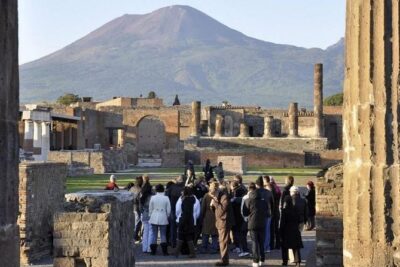
Pompeii is a UNESCO World Heritage Site and it is one of the best-preserved archaeological places you can visit. That preservation is the point: instead of vague ruins, you see the shape of streets, rooms, and public spaces, and you can imagine the city as it was. The guide’s job is to turn the stones into a timeline of the eruption and the daily rhythm of Roman life.
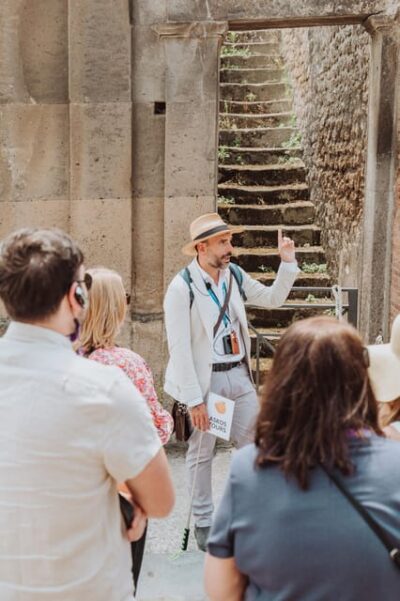
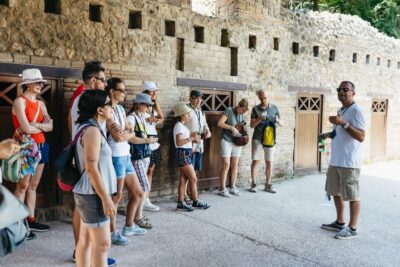
During the Pompeii portion, you get a guided walk of about two hours. Your guide points out major areas, including the Forum, thermal baths, the Greek Theatre, and the Lupanare. Those locations help you understand Pompeii as a real city, not just a museum of old walls. You also get time to wander, with photo stops and room for your own exploring.
Here is what I’d recommend you pay attention to, so your time feels worth it even if you move quickly. In the Forum, focus on how the public spaces connect people. In the thermal baths, look for the layout that shows how Romans spent leisure time. In the Greek Theatre, notice how performance and community fit into everyday life. And in the Lupanare, the guide’s context is key, because it is one of those places where the details are startling until someone explains what you are looking at.
One more practical plus: you get headsets. Pompeii can get loud, groups can stretch out, and guides often talk while walking. Having audio clarity makes a big difference in comprehension, especially when you want to understand what the eruption meant for the city.
Pompeii’s free time: how to shop for your own pace
.jpg)
After the guided portion, there is a window for exploring on your own. Use this time strategically. If the guide covered the highlights well, your best move is to return to one or two areas you liked and look longer, instead of trying to see everything at once.
You may see well-preserved villas and frescoes as part of what the guide shows or as you wander near key zones. These are the moments that make Pompeii feel human. They are also the easiest places to miss if you only glance and move on. If you enjoy visual details, spend a bit of your free time lingering on frescoes and wall paintings, and let your eyes adjust to how close everything looks.
The trade-off is that Pompeii is large. Two guided hours plus walking time means you will not cover every single corner. That is normal. Your goal on this kind of day trip is to get the story and the biggest anchors, then soak in the parts that grab you personally.
Lunch near Pompeii: refuel so Vesuvius does not feel brutal
.jpg)
Lunch is included and happens in the Pompeii area, about an hour. This is not a fancy add-on. It is a practical part of the day, designed to keep you from losing time to finding food after you have already walked through ruins.
The lunch is described as traditional Italian, with regional specialties and fresh ingredients. I like this setup because it lets you focus on the day ahead without worrying about restaurant timing or transit. Also, because your next stop is Vesuvius, eating in a scheduled window helps you avoid the late, hungry scramble that makes hikes harder.
If you are the type who needs time to decompress, aim to eat at a steady pace and give yourself a few minutes after the meal to reset. The Vesuvius walk is where energy matters most.
Mount Vesuvius: crater views, active-volcano context, and the hike time
.jpg)
After lunch, the group heads to Mount Vesuvius. You get a short ride and then a photo stop, followed by sightseeing time and a walking or hiking segment. The total time for this part is about two hours, which includes the effort of getting up and moving around near the crater area.
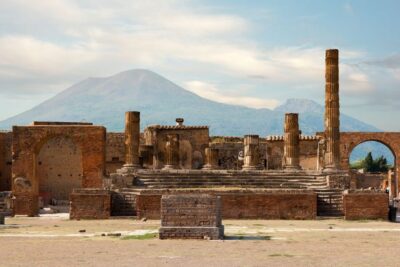
This is the signature of the day. Mount Vesuvius is still active and rises to 1,281 meters tall. Your guide shares geological and historical significance, including past eruptions and how volcanic activity affected the surrounding area. Even if you are not a science person, a good guide makes the volcano feel understandable, not just dramatic.
Then comes the part you will talk about later: the crater hike. You get the opportunity to hike up to the crater, and it is described as challenging but rewarding. The payoff is the chance to peer into the depths of the volcano and take in panoramic views over the Bay of Naples.
One thing to be honest about: this is not a stroll. The tour explicitly recommends good physical fitness and appropriate clothing for reaching the crater. If you know you get winded easily, plan to pace yourself, take breaks when you can, and avoid rushing just because other people feel more confident.



When Vesuvius is closed: Sorrento as the fallback
.jpg)
Volcano days can be unpredictable, and the tour accounts for that. In the event of an exceptional closure of Mount Vesuvius, the group visits Sorrento instead. Sorrento is known for coastal views, lemon groves, and local culture.
If you are hoping for a specific, crater-level experience, understand that this is a contingency plan, not a guarantee. But it is still a useful option. You are not stuck sitting out the entire day. You get a different kind of Campania day trip, still with scenery and a strong sense of place.
Price and value: why $168.23 can make sense for a Rome day
.jpg)
At $168.23 per person for a 12-hour day, this can feel pricey until you look at what is included. The tour covers round-trip transportation by air-conditioned bus, Pompeii entrance tickets, the crater ticket, and lunch near Pompeii. On top of that, you get bilingual English/Spanish guidance, headsets, and unlimited free high-speed Wi-Fi during the drive.
When you travel independently from Rome, the biggest costs usually show up in transport and entry tickets. Here, those are bundled with a guide who saves you from trying to figure out Pompeii’s layout and story on your own. I think that is the real value proposition: you are paying for someone to help you see the right things in the right order, and you are not wasting half your day coordinating logistics.
The other value piece is time. This tour is built for a single-day rotation: Pompeii, lunch, Vesuvius, then back to Rome by late afternoon. If your schedule is tight and you want the highlights of Campania without extra planning, this format is a smart way to do it.
Who should book, and who should think twice
.jpg)
This trip fits best if you want a classic Rome-area day that covers two headline sights without forcing you to manage tickets and transit. You will enjoy it most if you like walking, historical context, and the mix of archaeology plus an active-volcano experience.
It also helps if you appreciate a guided approach. The guide format, including headsets, is designed to keep the stories clear while you move. And the Pompeii focus on places like the Forum, thermal baths, Greek Theatre, and the Lupanare gives you multiple angles on Roman daily life.
That said, it is not suitable for people with mobility impairments or wheelchair users. The tour notes it operates rain or shine, and it also recommends good physical fitness for the crater hike. If you or someone in your group cannot manage uneven walking, stairs, or a challenging climb, you might want to choose a different plan.
Practical tips for a smoother day (so you enjoy it more)
.jpg)
Start by dressing for both walking and weather. The tour runs rain or shine, and you will be out at Pompeii and on the Vesuvius walking route. Pack layers you can adjust, and wear clothing that matches the recommendation for appropriate gear for the hike.
Next, plan your energy like it is a mini marathon. Pompeii is an archaeological site where you will spend time walking and looking. Then you have a hike segment tied to getting up toward the crater. If you pace yourself from the beginning, the day feels more manageable.
Finally, use the tools you are given. The headsets exist for a reason, and Wi-Fi is there too. If you want to capture photos, do it during the photo stops and your free time in Pompeii, then focus on the guide’s explanation during the main guided sections.
Should you book this Pompeii and Vesuvius day trip?
Yes, if you want a guided Pompeii visit plus the chance to hike up to Vesuvius and see the Bay of Naples in one organized day. This is the kind of itinerary that works well when you are based in Rome and do not want to spend your travel time figuring things out. The Pompeii guide experience, the included lunch, and the practical features like headsets and unlimited free Wi-Fi add up to real convenience.
Consider a different option if the crater hike is a dealbreaker for you, or if mobility limitations make the walking part unsafe or uncomfortable. This tour is not written for wheelchair access, and the crater visit is explicitly described as challenging.
If you are on the fence, think about your priorities. If Pompeii’s story and Vesuvius’s views are both on your must-do list, this is a strong, time-efficient way to check them off.
FAQ
How long is the Pompeii and Vesuvius experience from Rome?
The tour duration is 12 hours.
Where do I meet for the tour?
You meet at Piazza del Popolo, in front of the entrance of the Leonardo da Vinci Museum next to the church of Santa Maria del Popolo. The guide will be holding a sign with the name Veditalia and the indication Pompeii & Vesuvius.
Is lunch included?
Yes. Lunch in the Pompei area is included, and it is scheduled for about one hour.
Do I get Wi-Fi during the trip?
Yes. You get unlimited high-speed free Wi-Fi on the bus.
What do you do at Pompeii?
You have a guided visit of Pompeii for about two hours, plus time for photo stops and free time. Key areas mentioned include the Forum, thermal baths, Greek Theatre, and the Lupanare.
Do I hike to the Vesuvius crater?
There is an opportunity to hike up to the crater of Mount Vesuvius. It is described as challenging but rewarding.
What happens if Mount Vesuvius is closed?
If Vesuvius is exceptionally closed, the tour will instead visit Sorrento.
Is the tour suitable for wheelchair users or mobility impairments?
No. The tour is not suitable for people with mobility impairments and not suitable for wheelchair users.
More Lunch Experiences in Mount Vesuvius
More Tour Reviews in Mount Vesuvius
Not for you? Here's more nearby things to do in Mount Vesuvius we have reviewed
Tour Reviews, compared.
 ★ 4.8Pompeii: Entry Ticket and Guided Tour with an ArchaeologistFrom $3519,459 reviews
 ★ 4.2Pompeii: Entry Ticket with Optional Audio GuideFrom $2612,360 reviews
 ★ 4.8Pompeii: Small Group Tour with an ArchaeologistFrom $4012,264 reviews
 ★ 4.3Pompeii Ruins & Mount Vesuvius Day TourFrom $12011,459 reviews
 ★ 4.6Sorrento, Positano and Amalfi Full-Day TourFrom $10710,988 reviews
 ★ 5.0Sorrento, Positano & Amalfi Coast – Small Group TourFrom $768,643 reviews
 ★ 4.6Catacombs of San Gennaro Entry Ticket & Guided TourFrom $157,941 reviews
★ 5.0Pompeii Small Group Tour with an ArchaeologistFrom $356,593 reviews
★ 4.6Catacombs of San Gennaro Entry Ticket & Guided TourFrom $157,941 reviews
★ 5.0Pompeii Small Group Tour with an ArchaeologistFrom $356,593 reviews
Browse the lists this tour appears in