
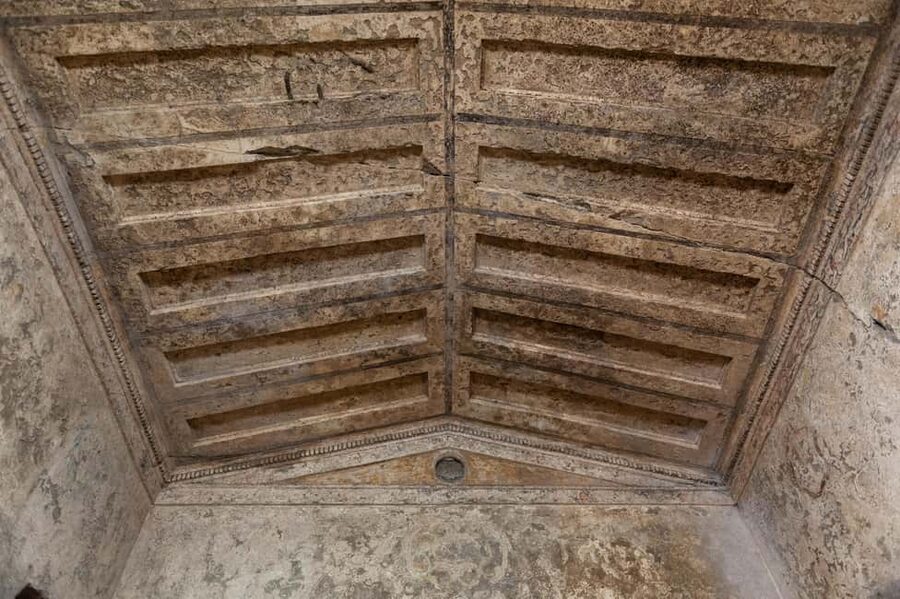
Tour review · TOUR REVIEWS
Hypogeum of the Crystallines Standard Visit
Down 12 meters, Naples turns Greek.
This Hypogeum of the Crystallines visit is a short, focused walk into an underground Naples that dates to the 4th century BC, where you’ll see Greek-painted frescoes and the famous Medusa carved and painted by the ancient Greeks. I loved how well the site preserves its art and atmosphere. One thing to consider is that it is a small, historic space with architectural barriers, so it is not a long, slow browse, and access needs planning.
You descend into Neapolis itself, walking along the ancient road of the underground city and seeing four Hellenistic tombs carved and painted in a style that mixes Greek origins with Roman additions. I also appreciated the way the guide connects the archaeology to the human stories, including the chance 1889 discovery led by Baron Giovanni di Donato. You get a real sense of why the Rione Sanità matters beyond this one stop.
The visit runs about 25 minutes, it stays small with a group limited to 10 participants, and it’s available in Italian, English, Spanish, and French. If you want maximum time in every corner, the format might feel a bit tight, but for most travelers it’s a smart, high-impact use of time that still includes a helpful video virtual reconstruction.
Key highlights you will feel as soon as you arrive
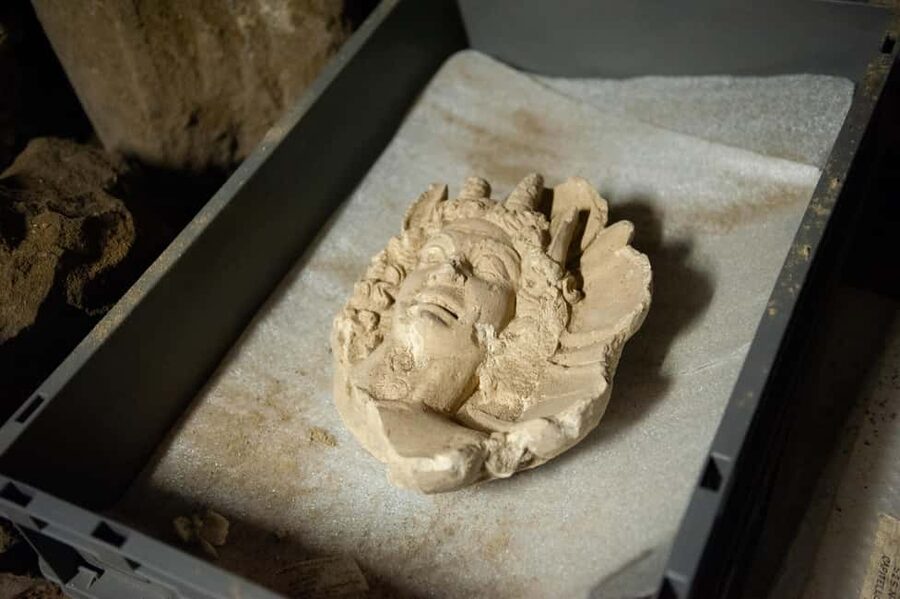
- 2400-year-old Neapolis beneath Naples, with an underground street and tombs
- The Medusa carving and painting, described as a rare unicum in the world
- Frescoes and architecture still beautifully preserved, with Greek myths tied to what you see
- Greek and Roman artistic blend, where origins and later additions overlap
- Discovery story from 1889 with Baron Giovanni di Donato, which adds context fast
- Small-group pace (up to 10 people) that keeps the visit moving in 25 minutes
Neapolis Underground: What the Hypogeum of the Crystallines really is
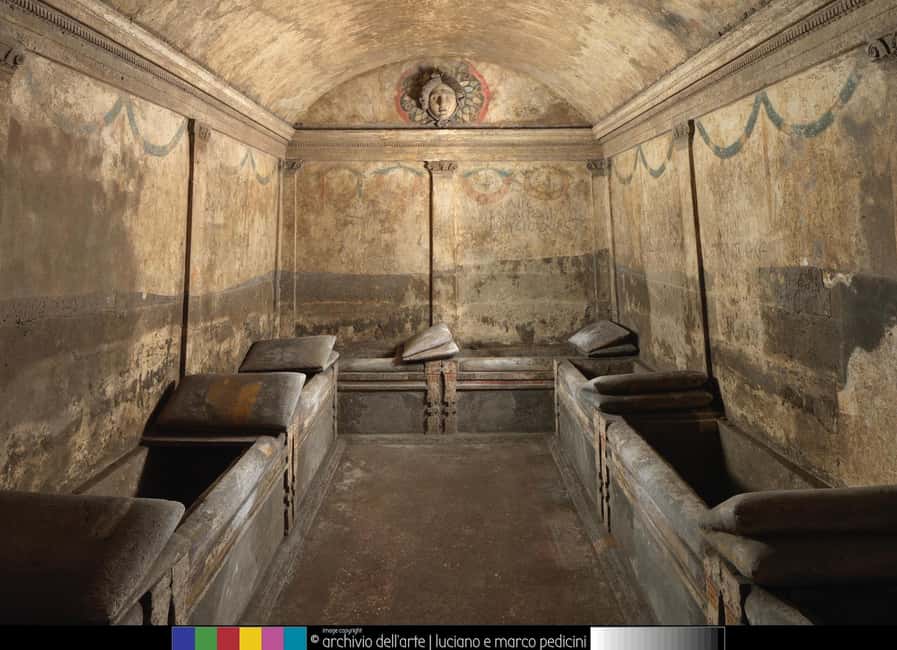
The Hypogeum of the Crystallines is not a museum-style hallway with replicas. You are walking in and around the remains of Neapolis, an underground world linked to the Greek presence in Naples, with preserved spaces that still show how people decorated and used their funerary landscape.
You’ll be guided through a 4th-century BC setting, with the key idea being “walk through ancient Naples,” not just “look at ancient Naples.” The experience is built around myths, legends, archaeology, and color, and that mix is exactly why this one is worth planning for.
And yes, this is the kind of place where the art feels close enough to question how it was made. Even in a short visit, the frescoes and painted details give you that wow, how is this still here feeling, without needing you to be an art historian.
You can also read our reviews of more tours and experiences in Naples.



The 12-meter descent and the ancient road you will walk
Your visit starts with the physical change of going underground. You descend 12 meters into Naples, into an original street of Neapolis, so the architecture does the storytelling for you before anyone even points.
Walking the ancient road matters because it changes your scale. On the surface, Naples is loud and modern. Underground, you feel the geometry of the place, and you can better picture how these tomb spaces sat within daily meaning, not just as distant artifacts.
The visit is also designed to keep you oriented. You are not left wandering. You follow the guide, and you move through the site’s main highlights in a tight time window.
The main drawback is timing. At 25 minutes, you are not going to soak up every wall detail the way you might in a longer museum visit. If you want extended reading time, you may need to manage expectations and focus on the biggest visual anchors.
Four Hellenistic tombs, painted and carved for a reason
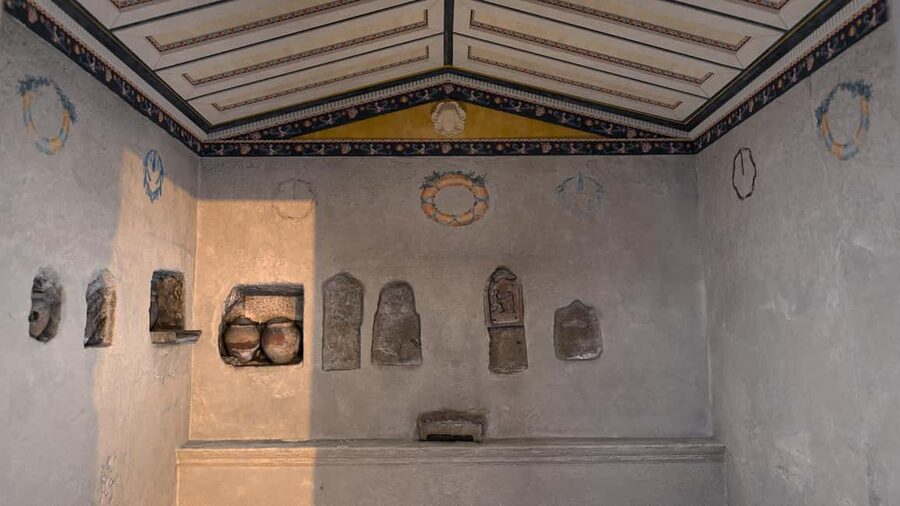
One of the best parts of this visit is that you get to see funerary spaces that are both carved and painted. You’ll explore four Hellenistic tombs, and the emphasis stays on their preservation, so you are looking at forms that survived rather than fragments patched together in your imagination.
These tombs help you understand the deeper theme behind the art. The experience is meant to put you in front of the ideas ancient people carried about life and death, love, care, family, and friendship. That’s a lot for one stop, but the way the guide frames the stories makes it feel coherent instead of scattered.
This is where the Greek myths and legends come in. Even if you don’t know the myths beforehand, you can still read them through the visuals, because the tour is built to connect “what you see” to “what it meant.”
If you’re traveling with kids or you’re short on time, this section is usually the sweet spot. There is enough visual action to keep attention, while still feeling respectful of the site’s sacred purpose.
Frescoes and architecture: the Greek to Roman artistic blend
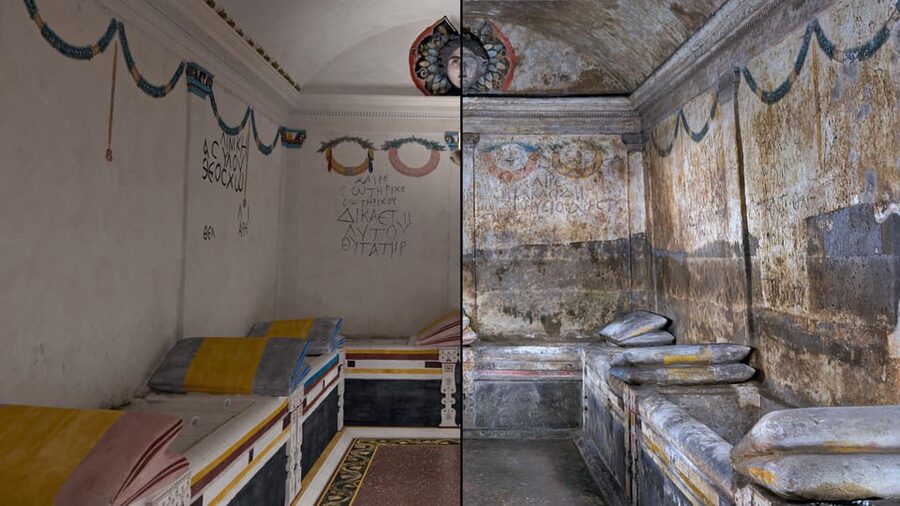
The Hypogeum of the Crystallines highlights a cultural mix you can actually see. You’ll encounter a fusion where Greek origins meet Roman artistic additions, and the guide helps you notice the difference in styles and layers rather than treating it all as one flat look.
The frescoes are described as brilliant and beautifully preserved, and that matches the core value of this visit. You’re not just stepping into darkness and guessing what once existed. You’re seeing color that has stayed strong enough to be meaningful, which makes the whole experience feel more human.
Architecture plays a supporting role, too. You’re not only watching paintings, you’re also getting a sense of how the carved spaces and painted surfaces worked together as part of a designed environment.
One practical consideration: because it’s an underground, historical site with architectural barriers, the flow can be constrained. It is still a guided walk, but you should assume the environment can limit how long you can pause in any one exact spot.
The Medusa you came for: carved and painted by the ancient Greeks
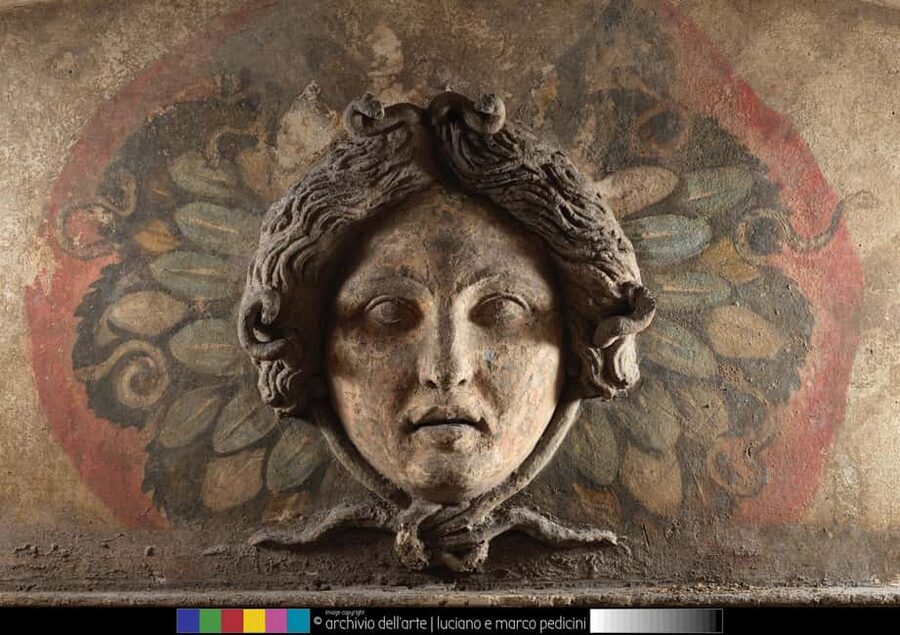
Let’s talk about the star. The experience centers on the Medusa carved and painted by the ancient Greeks, presented as a precious unicum in the world.
What makes this moment especially powerful is the combination of medium and intent. You get both the sculptural element and the painted element, so Medusa is not only a symbol you interpret, it’s something you visually meet through multiple layers of craftsmanship.
Medusa has a long afterlife in art, but here the focus is on ancient work itself, not later echoes. The guide’s framing keeps it from becoming just a cool photo spot. You see it as part of the underground narrative, tied to myths and the way ancient communities expressed protection, fear, and meaning through imagery.
If you’re the kind of traveler who likes one main payoff per activity, this is a strong match. The Medusa scene gives you a clear reason to care, then the rest of the visit builds the context around it.


The 1889 discovery story that adds real momentum
A good tour doesn’t just show objects, it explains why the story survived. Here, the guide connects the discovery to a specific event: the Hypogeum of the Crystallines was found by chance in 1889 by Baron Giovanni di Donato.
That detail matters because it turns the site from “something old” into “something that was almost lost to time and then found.” The quick hit of history also keeps you oriented when you’re underground, where it’s easy to feel detached from the outside world.
I like this kind of historical anchor because it gives you a mental timeline. You’re standing in a place created for ancient life and death, and then you’re reminded that it wasn’t automatically preserved for modern visitors. It took a moment of chance, then human effort to understand what they had.
Rione Sanità context: why this isn’t just an underground stop
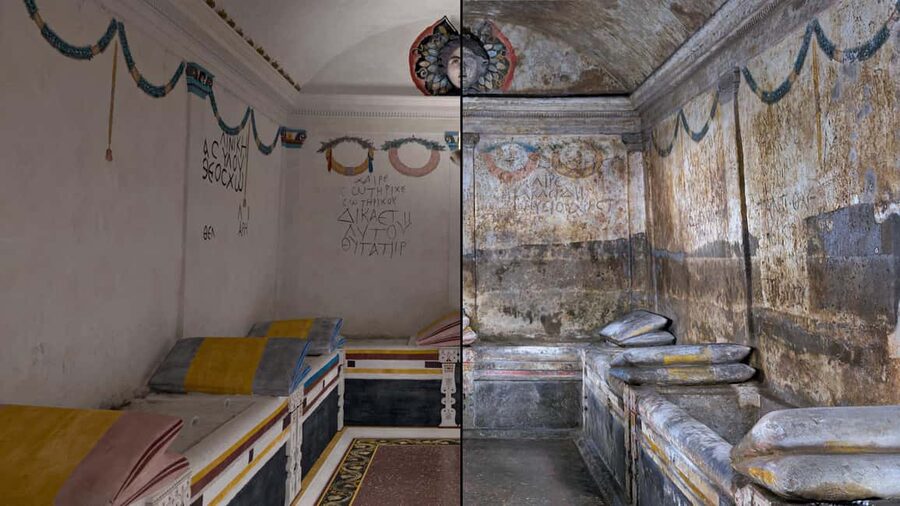
The Hypogeum of the Crystallines is presented alongside the powerful history of the Rione Sanità. That matters because you’ll hear about sociocultural redevelopment, which is a big deal in neighborhoods that have to fight for visibility and care.
So even though the visit is physically underground, it’s not emotionally cut off from Naples today. The guide ties the site to the neighborhood’s ongoing story, which makes your visit feel more responsible, not just recreational.
You also get the sense that the site is part of a larger cultural project. In other words, the Hypogeum isn’t floating in isolation. It connects to community identity, restoration choices, and the way historic spaces can still influence the present.
This is the kind of context I appreciate, especially if you’re trying to travel beyond a checklist. It helps you understand why people work to protect and interpret a place that is both fragile and priceless.
The virtual reconstruction video: what it does for your understanding
Not everyone naturally understands an underground layout on the first try. That’s why the experience includes a video with a virtual reconstruction of the archaeological site.
Use this segment like a preview and a decoder. Even in a short tour, the video helps you build a mental map, so the carved areas and painted details connect into something bigger than a sequence of isolated rooms.
It also keeps the myths and legends from feeling random. When you understand how the site might have looked as a whole, the stories attached to specific scenes land better.
You should expect it to support the walk, not replace it. The real value is still the on-site view, especially the frescoes and Medusa, but the video makes your observations more meaningful.
Price and time: is $11 for 25 minutes good value?
At $11 per person for a 25-minute guided visit, this is priced like an “easy win.” You are paying for access to a preserved underground archaeological environment plus interpretation from a guide connected to Rione Sanità.
The short duration is a double-edged sword. It can feel brisk if you like lingering. But it also means you’re not trapped in a long schedule while you wait for art and architecture to register. Most people will leave with a clear set of memories because the visit is concentrated.
The group size helps, too. With a limit of 10 participants, you’re less likely to feel lost or squeezed into a crowd. This is the sweet spot for guided attention, especially when you’re trying to see frescoes and carved details in a tight space.
You also skip the ticket line, which is practical in a busy city. If you’re planning multiple stops in Naples, the combination of short duration and line-skipping access tends to reduce stress.
Language, guide welcome, and how to make the most of the visit
The guide welcomes you to the archaeological site, and the tour is offered in Italian, English, Spanish, and French. That’s important because myths, legends, and art interpretation really depend on language clarity.
You’ll also get a guided focus on frescoes, ancient myths, and architecture, plus you’ll walk the ancient road of Neapolis. With a small group, the guide can keep the flow smooth and point out the features you might otherwise miss.
To make this experience land, do one simple thing: decide in advance what you want most. If it’s the Medusa, keep your eyes on the art when you reach it and let the guide connect it to the myths. If you care more about the bigger picture, pay attention to how the Greek and Roman layers are explained.
And keep your expectations aligned with the setting. This is a historical underground site with architectural barriers. If you have mobility needs, plan early instead of assuming you can handle it on the fly.
Who should book the Hypogeum of the Crystallines standard visit
You’ll probably love this if you want an art-and-archaeology experience that is tightly paced, story-driven, and visually specific. It’s a great match for people who like myths and symbolism, not just stones in a room.
It also works well for families with older kids, since children aged 8 to 12 are free. Younger children under 8 are not permitted, so you’ll want to plan accordingly.
If you’re short on time in Naples but you still want something genuinely different from surface sights, the underground Neapolis format is a strong way to get variety fast.
Who might skip it? If you need step-free access and you cannot contact the provider in advance to assess feasibility, you may want to look for another option. Also, if you prefer long independent exploration, 25 minutes may not satisfy.
Should you book the Hypogeum of the Crystallines standard visit?
I think you should book it if you’re the kind of traveler who likes preserved art with a clear focal point, and you enjoy short guided experiences that give you context in real time. The combination of an ancient underground street, four painted tombs, and the carved and painted Medusa makes for a strong “I actually saw it” payoff.
It’s also good value for money, not because it’s cheap, but because you get interpretation and access to a one-of-a-kind setting without a long time commitment. Just make sure you’re comfortable with a brief visit and the reality of a historic underground environment.
If that fits your trip, this is one of those Naples experiences that quietly becomes a highlight, even when you’re busy checking off the big names above ground.
FAQ
How long is the Hypogeum of the Crystallines standard visit?
The duration is about 25 minutes. Starting times depend on availability, so you will want to check the schedule when you book.
What is the price per person?
The price listed is $11 per person.
Is there a way to skip the ticket line?
Yes. This experience includes skip the ticket line.
Will I have time to walk through the underground Neapolis?
You will walk on the ancient road of Neapolis during the visit. You also explore the site’s key painted and carved areas in that same 25-minute timeframe.
What will I see underground?
You can expect four Hellenistic tombs with carved and painted details, preserved frescoes, ancient myths tied to what you see, and the carved and painted Medusa. There is also a video with a virtual reconstruction of the site.
What languages are available for the guide?
The tour is offered in Italian, English, Spanish, and French.
Are children allowed?
Children aged 8 to 12 are free. Children under 8 are not permitted.
What should I know about accessibility for disabilities?
The site has architectural barriers due to its historical nature. If you have accessibility needs, you should contact the provider before your visit to assess the possibility of access.
Is there free cancellation?
Yes. You can cancel up to 24 hours in advance for a full refund.
More Tour Reviews in Naples
Not for you? Here's more nearby things to do in Naples we have reviewed










Tour Reviews, compared.
 ★ 4.8Pompeii: Entry Ticket and Guided Tour with an ArchaeologistFrom $3519,459 reviews
 ★ 4.2Pompeii: Entry Ticket with Optional Audio GuideFrom $2612,360 reviews
 ★ 4.8Pompeii: Small Group Tour with an ArchaeologistFrom $4012,264 reviews
 ★ 4.3Pompeii Ruins & Mount Vesuvius Day TourFrom $12011,459 reviews
 ★ 4.6Sorrento, Positano and Amalfi Full-Day TourFrom $10710,988 reviews
 ★ 5.0Sorrento, Positano & Amalfi Coast – Small Group TourFrom $768,643 reviews
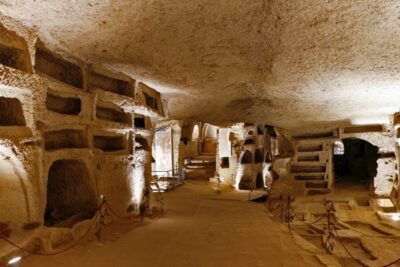 ★ 4.6Catacombs of San Gennaro Entry Ticket & Guided TourFrom $157,941 reviews
★ 5.0Pompeii Small Group Tour with an ArchaeologistFrom $356,593 reviews
★ 4.6Catacombs of San Gennaro Entry Ticket & Guided TourFrom $157,941 reviews
★ 5.0Pompeii Small Group Tour with an ArchaeologistFrom $356,593 reviews