
Tour review · TOUR REVIEWS
Naples: National Archaeological Museum of Naples Guided Tour
Two hours, and Naples clicks into place. This skip-the-line guided tour turns the National Archaeological Museum of Naples into a clear, walkable story, from the Farnese Collection to the best-preserved Pompeii and Herculaneum finds.
I love that the guide points out what matters, so you do not wander for 2 hours staring at statues and guessing. I also love the way the route ties together big themes, like Greek myths, Roman power, and the shock of 79 AD Vesuvius, with memorable stops such as the Hercules and the Toro Farnese.
One thing to plan around: the museum experience is active and walking focused, and it is not suitable for wheelchair users or people with mobility impairments. Also, the tour is only 2 hours, so you will likely want extra time on your own if you fall in love with a specific sculpture or mosaic.
Key Highlights You Should Know Before You Go
- Skip-the-line entry that gets you past the ticket hassle and into the museum’s highlights
- Farnese Collection powerhouses, including Hercules and the Toro Farnese
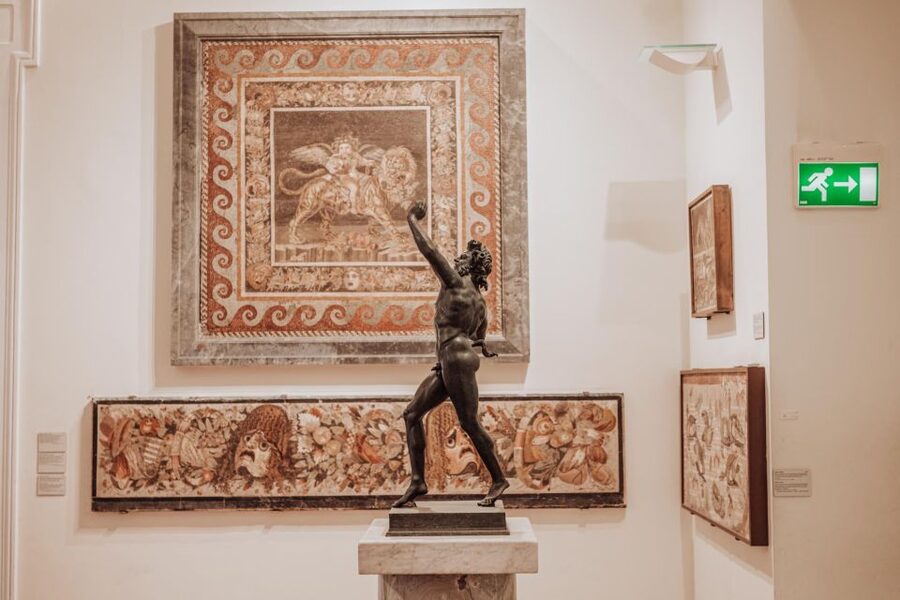
- Pompeii and Herculaneum art, especially frescoes and mosaics tied to the Vesuvius eruption of 79 AD
- Myth and imperial Rome in the corridors, with busts of Greek and Roman gods and major figures
- A guide who makes questions worth asking, with some tours offering ear pieces that help hearing
Finding Your Way In: Skip the Ticket Line, Then Get Oriented
The tour starts at Museo Archeologico Nazionale di Napoli, meeting outside the ticket office. The guide holds an Askos Tours sign, so you can line up fast and step in without playing museum roulette with the queue.
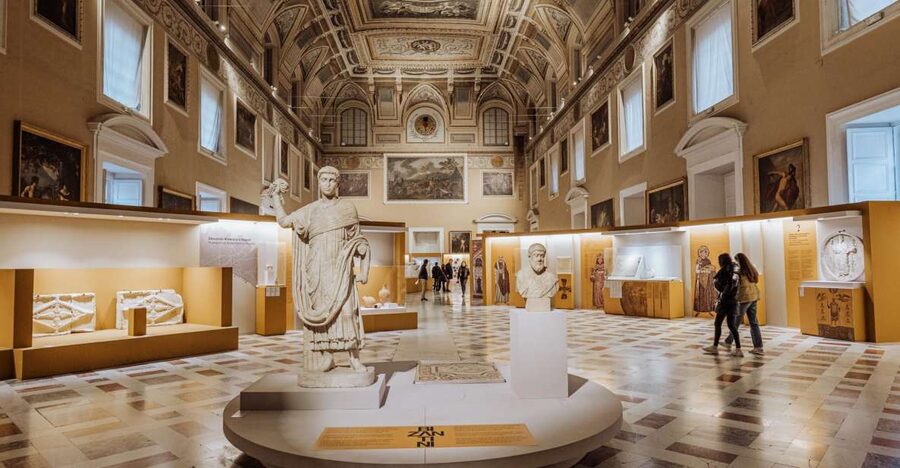
This museum is not just a container for artifacts. The building itself is a landmark, and the atmosphere can feel grand right from the entrance hall. Once you are inside, the guide’s job is basically to help you sort the chaos of a huge collection into a route that makes sense.
A smart tip: since this is a walking tour, wear shoes you can move in all day. If you are coming from Pompeii earlier in the trip, expect to feel like you have moved from outdoor ruins into the “explain it to me like I am smart” version of ancient Campania.
Also, keep in mind the practical rules. Oversize luggage, baby strollers, and large bags are not allowed, and non-folding or electric wheelchairs are also not permitted. If you are traveling light, you will glide through. If not, it is worth planning for what stays in your hotel.
You can also read our reviews of more guided tours in Naples National Archaeological Museum
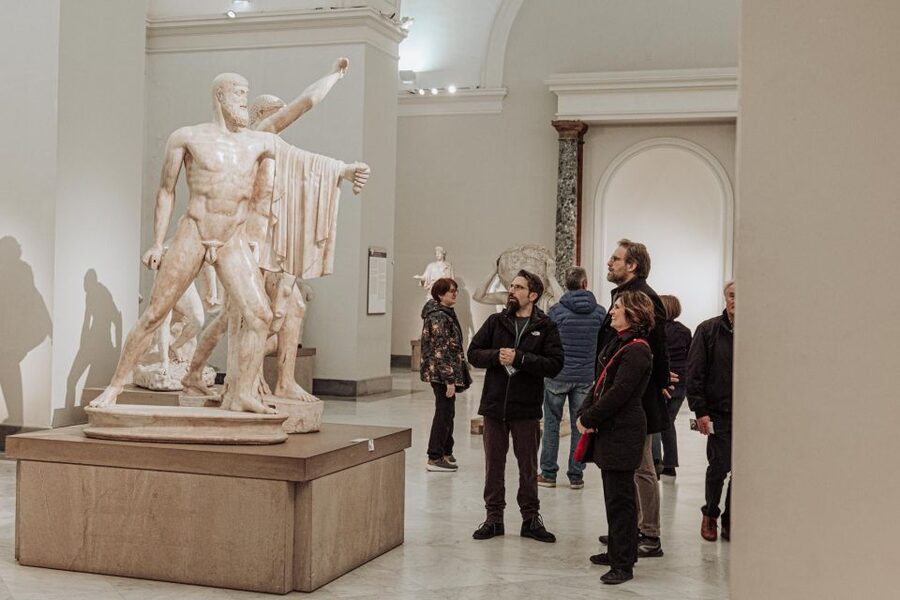
Farnese Collection: Hercules, Toro Farnese, and Myth Made Marble
The Farnese Collection is the headline for a reason. This is where you get iconic classical sculpture on a scale that feels almost unfair, like someone said, let us put the best parts of ancient taste in one room and call it a day.
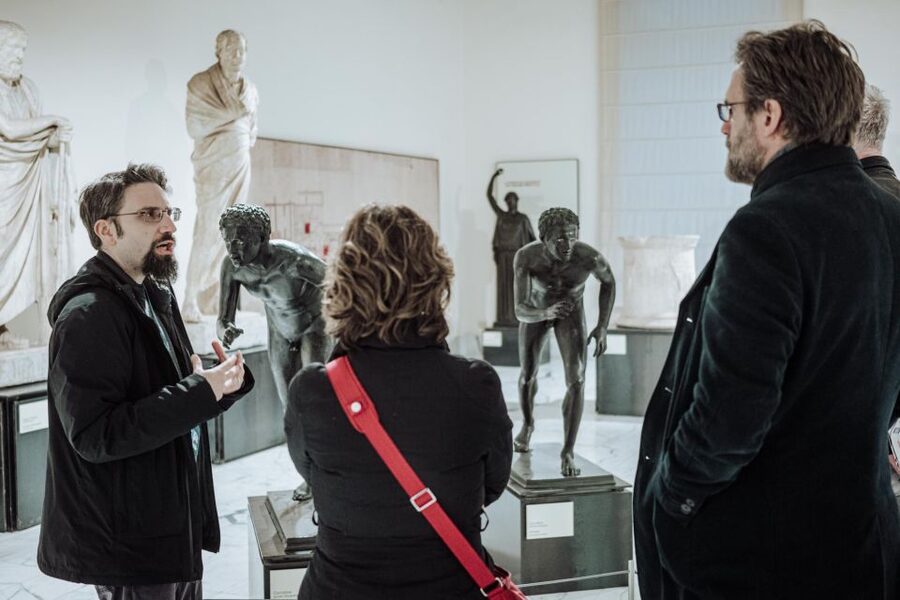
Expect to spend real attention here, not just a stop-and-snap photo moment. The guide helps you see the myths and symbolism behind the figures, which makes the sculptures more than “wow, that is old.” You learn how Greek stories and Roman collections braided together in Naples.
Two pieces you will hear about are the Hercules and the Toro Farnese. When you stand in front of them, you start to understand why the Farnese Collection is often described as the standout name in classical sculpture. The guide’s explanations also help you read the details: posture, musculature, and how artists conveyed drama without modern lighting or motion.
This is also a good place to ask questions, because the guide can connect what you see in the marble to what you have seen (or will see) in Pompeii and Herculaneum. One common thread in the Naples region is that people brought Greek and Roman identity into everyday life. The Farnese pieces are like the “identity poster” for the ancient world.
Pompeii and Herculaneum Frescoes and Mosaics from 79 AD
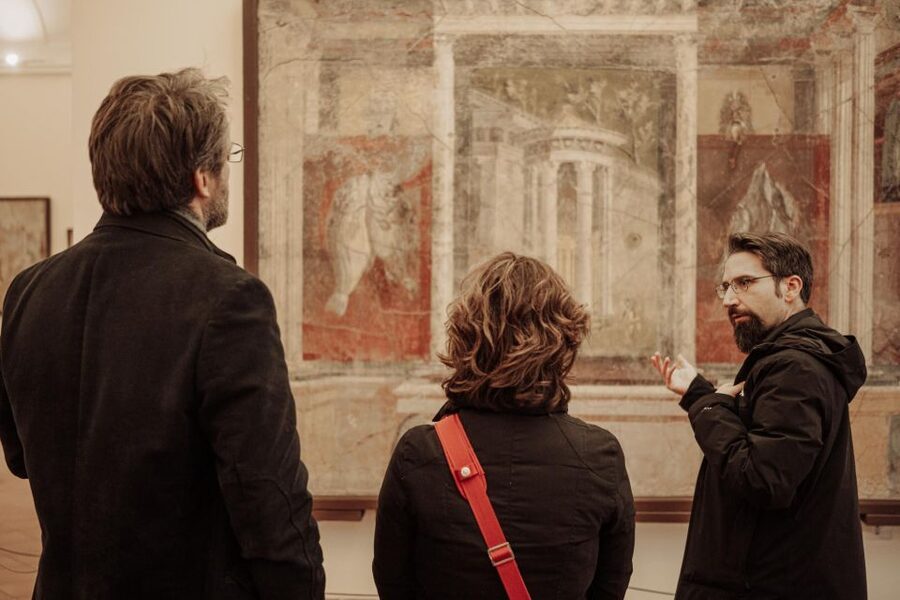
After the sculpture anchors, the tour shifts to the art that feels closer to daily life. This is where frescoes and mosaics from Pompeii and Herculaneum come into focus, including works tied to the eruption of Mount Vesuvius in 79 AD.
The mosaics have a special power because they survive in a way that still feels visual and immediate. You are not just looking at decoration. The guide helps you notice patterns and scenes and explains how these images functioned in homes and public spaces.
You will also see examples where restoration or work in progress can affect what you experience. One mosaic mentioned is the Alexander the Great and Darius work, noted as being restored during one tour. If you run into a similar situation, do not panic. Ask the guide what is going on, because restoration can actually help you understand how fragile and valuable these surfaces are.
This part of the tour is often the moment when a first-time Naples museum visit turns into a “wait, I get it now” visit. If you already saw Pompeii, the museum becomes a translation tool. If you have not, it still works, because the guide builds the cultural context before you move on.
Roman and Greek Gods in Stone: Busts, Corridors, and Power
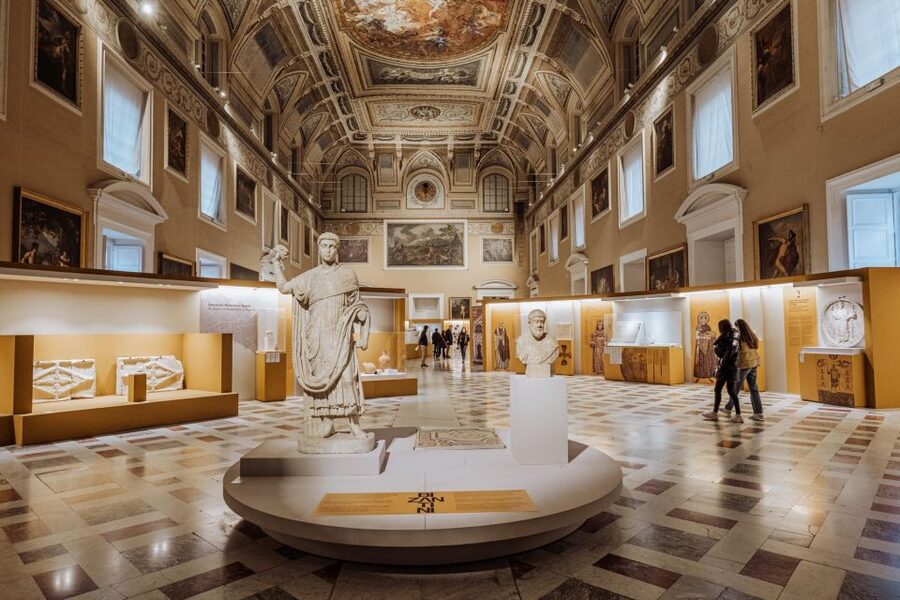
One of the most memorable visual elements in the museum route is the way galleries are filled with busts and sculpted figures. Corridors feature busts of Roman and Greek gods, along with depictions of major people from the classical world.
This section matters because it trains your eye. Instead of treating each statue like a random find, you start noticing how the ancients presented authority. Gods were not just stories. They were part of the political and cultural language. Roman emperors and mythic figures often served similar roles: they conveyed values, legitimacy, and identity.
The guide can also help you separate style from meaning. You learn that Roman taste often borrowed Greek forms, then repackaged them for Roman audiences. That is why this tour pairs well with the rest of a Naples itinerary, because you keep seeing the same cultural DNA in different places.
As you walk, the tour pace is designed to keep you moving through the museum’s layout without getting stuck. The best guides also make time for your questions while keeping the group flowing, so you do not feel like you have to choose between your curiosity and the schedule.
How the Guide Changes Everything in a Huge Museum
The museum is large, and without help it is easy to lose the plot. What makes this tour valuable is not the ability to say you saw things. It is the way you learn what you are looking at and why it mattered.
A recurring strength is guide quality. On different tours, the guides have included people like Carmine, Nicoletta, Nikkola, Gennaro, Salvatorre, Laura, Adele, Maria, Sylvia, Annalise, Silvia, Vincent, and Barbara. The consistent theme is structured storytelling, and a willingness to answer questions on the spot.
If you care about hearing clearly, pay attention to one practical review detail. Some tours provide ear pieces, which can be helpful if you are hard of hearing. The sound setup can vary, so if you rely on audio, do not be shy about letting the guide know early.
One other pattern I like: the guide usually gives you a “reading method.” You learn how to approach artifacts as evidence, not just as art objects. That can include explaining symbols, techniques, and how the pieces connect back to Pompeii and Herculaneum.
There is also a pacing advantage. Even people who want to wander on their own often admit the tour gives them bearings fast. After that, you can return to the pieces that pulled you in, instead of hoping you guessed right on your first pass.
You can also read our reviews of more museum experiences in Naples National Archaeological Museum
Where the 2 Hours Actually Works: From Highlights to Your Own Plan
The tour is 2 hours, and that is a sweet spot for the Naples Archaeological Museum. You get a guided overview without being trapped into watching someone rush you through everything.
Here is how to make that time pay off. When the guide points you toward a major highlight, take one minute to look closely before you move on. After that, use your own judgment for where you want to linger. If you are the type who loves sculptures, you might want extra time by Hercules and the Toro Farnese. If mosaics pull you in, spend your self-guided time on the Pompeii and Herculaneum rooms.
Also, plan your order intelligently. One guide recommendation you may hear is to see Pompeii before the museum, because you then recognize how the museum helps you interpret what you saw outside. Doing the museum after Pompeii and Herculaneum often feels like the “why” comes after the “what.”
Do not forget there may be small practical limits during the museum visit. One person noted they would have appreciated a few minutes to rest. So if you need frequent breaks, carry water if allowed, and plan to pause briefly when you see a spot to sit.
A bonus tip if your timing is right: you might find the museum is free to everyone on the first Sunday of the month. If you can line that up with your schedule, you could save money, then decide whether a guided route is still worth it for you.
Price and Value: What You Pay For (and What You Get)
The price is $52 per person for a 2-hour guided experience. The museum entry is included in the tour offering, with the local entry pricing listed as 20 euros for adults and 2 euros for reduced EU citizens aged 18 to 25.
In plain terms, you are paying for three things:
- Admission, so you do not juggle museum tickets right at the door
- A live archaeologist guide who knows how to explain the big pieces
- Skip-the-line access, so you spend your time inside seeing, not waiting
For many people, that combination is the value play. This is not a museum where a quick self-tour automatically turns into a meaningful understanding. A guided route helps you focus on highlights like the Farnese Collection, and it provides context for the Pompeii and Herculaneum frescoes and mosaics.
If you are on a tight schedule in Naples, the 2-hour format also helps. You can fit this in without sacrificing the rest of the day, and then you can build your own time afterward around what you truly want to see.
Who This Tour Suits Best (and Who Might Want Another Option)
This tour makes the most sense if you like ancient art but do not want to guess your way through a huge museum. If you want to see the best-known sculptures and the famous Pompeii and Herculaneum artworks, the guided route is an efficient way to do it.
It is a good fit for:
- First-time visitors to Naples who want the museum highlights in a logical order
- People who already visited Pompeii or Herculaneum and want the museum to make those sites click
- Art lovers who want myths, Roman identity, and symbolism explained in human language
It is not a good fit for:
- Wheelchair users or people with mobility impairments, since it is not suitable
- Anyone hoping to bring large bags, oversize luggage, or a stroller
If you fit the walking profile and you care about context, this tour is easy to recommend. If you need minimal walking, or if you cannot navigate steps and galleries comfortably, you will probably feel constrained by the museum logistics and rules.
Should You Book This Naples Archaeological Museum Guided Tour?
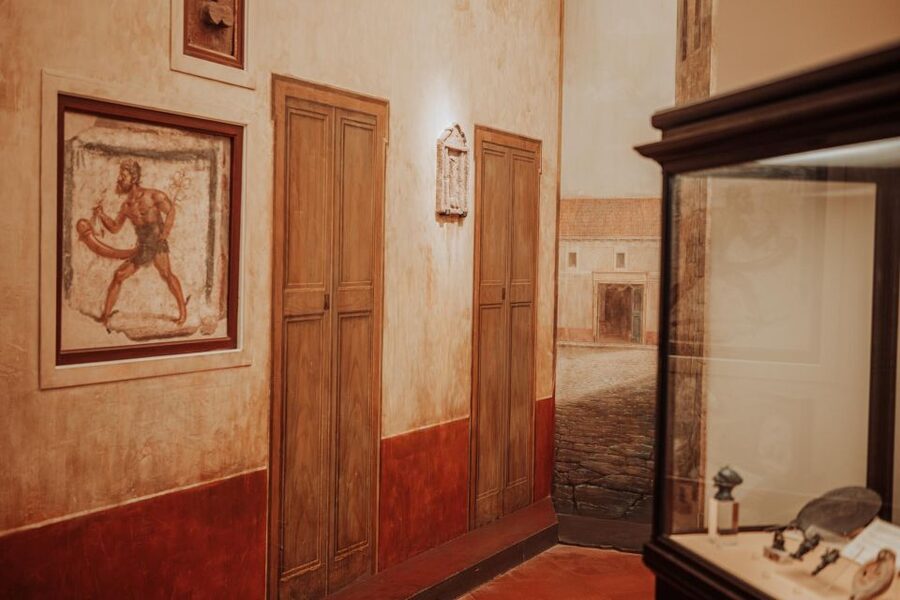
Book it if you want the National Archaeological Museum of Naples to feel understandable, not overwhelming. The mix of Farnese sculpture, Pompeii and Herculaneum frescoes and mosaics, and the guide’s explanations turns a big museum into a focused route you can remember.
If you are short on time, the value is strong because the admission and skip-the-line access are built into the experience. If you are the type who loves to linger, plan to stay after the tour and revisit the pieces that grabbed your attention.
One final check before you commit: bring your walking shoes, travel light, and show up ready to look closely for 2 hours. Do that, and you will leave with a much clearer picture of how Greek art, Roman power, and the tragedy of 79 AD shaped what you see in Naples today.
More Guided Tours in Naples National Archaeological Museum

More Tours in Naples National Archaeological Museum
More Tour Reviews in Naples National Archaeological Museum
Not for you? Here's more nearby things to do in Naples National Archaeological Museum we have reviewed
Tour Reviews, compared.
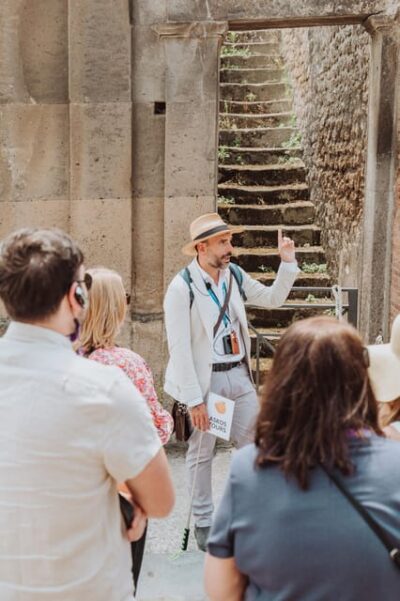 ★ 4.8Pompeii: Entry Ticket and Guided Tour with an ArchaeologistFrom $3519,459 reviews
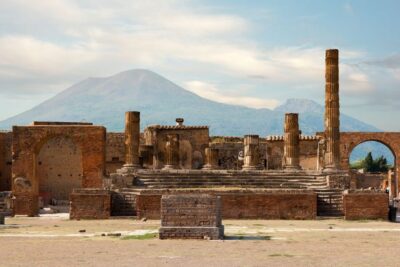 ★ 4.2Pompeii: Entry Ticket with Optional Audio GuideFrom $2612,360 reviews
 ★ 4.8Pompeii: Small Group Tour with an ArchaeologistFrom $4012,264 reviews
 ★ 4.3Pompeii Ruins & Mount Vesuvius Day TourFrom $12011,459 reviews
 ★ 4.6Sorrento, Positano and Amalfi Full-Day TourFrom $10710,988 reviews
 ★ 5.0Sorrento, Positano & Amalfi Coast – Small Group TourFrom $768,643 reviews
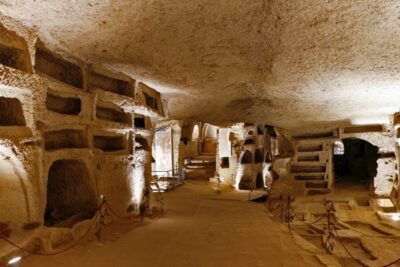 ★ 4.6Catacombs of San Gennaro Entry Ticket & Guided TourFrom $157,941 reviews
★ 5.0Pompeii Small Group Tour with an ArchaeologistFrom $356,593 reviews
★ 4.6Catacombs of San Gennaro Entry Ticket & Guided TourFrom $157,941 reviews
★ 5.0Pompeii Small Group Tour with an ArchaeologistFrom $356,593 reviews
Browse the lists this tour appears in