
Tour review · TOUR REVIEWS
Phlegraean Fields: Cuma Baia and Pozzuoli private excursion
Naples is loud, but this day is different. You trade city streets for the Phlegraean Fields, a volcanic zone where Roman ruins sit beside smoking history and changing ground.
I especially love the mix of archaeology and geology here. You’re not just touring ruins, you’re learning how extinct volcanoes and bradyseismic activity shaped what Romans built in the first place.
One possible drawback: certain sites close on specific days, so your exact flow can shift if you book on a closure day.
Key things to know about this private Phlegraean Fields excursion
- Private transport in a Mercedes vehicle, with an English-speaking driver to handle traffic and timing
- Skip-the-line admissions so you lose less time waiting and more time walking
- Campi Flegrei science-meets-ruins approach, with volcanic lakes plus major Roman sites
- Pozzuoli’s Macellum of Serapis as a centerpiece, including the story behind the former market
- Underwater Baiae remains above-ground temples and a museum stop that depends on closures
- Big Roman water engineering at Piscina Mirabilis in Miseno (Bacoli area)
Naples to Campi Flegrei, without the stress
This outing is built for people who want a full day outside Naples, without a headache. You get picked up from your chosen start point, either Naples, Sorrento, or Salerno, then head into the Campi Flegrei region with a dedicated vehicle.
What I like about the format is how it protects your time. You’re not stitching together buses, timed tickets, and half-missed connections. Instead, you follow a guided route across multiple sites, with the guide keeping the story in order as the terrain changes.
Expect an 8-hour day, with starting times that depend on availability. You’ll spend that time moving between archaeological parks, museums, and a few outdoor viewpoints tied to volcanic activity. And because this is a private group, the pace is adjustable to your comfort level, within the constraints of timed site visits.
You can also read our reviews of more private tours in Naples

The volcanic setting that makes the ruins make sense
The Phlegraean Fields are famous because they’re alive in the past. Even though many volcanoes are dormant or extinct, the area is still known for bradyseismic phenomena, slow ground movement that can affect what stands above and below sea level.
That matters because you’re not looking at ruins in a vacuum. In Pozzuoli and the surrounding area, the ground changes are part of why certain structures are discovered, preserved, or altered over time. The tour connects those dots, so the site descriptions feel like a coherent puzzle rather than a checklist.
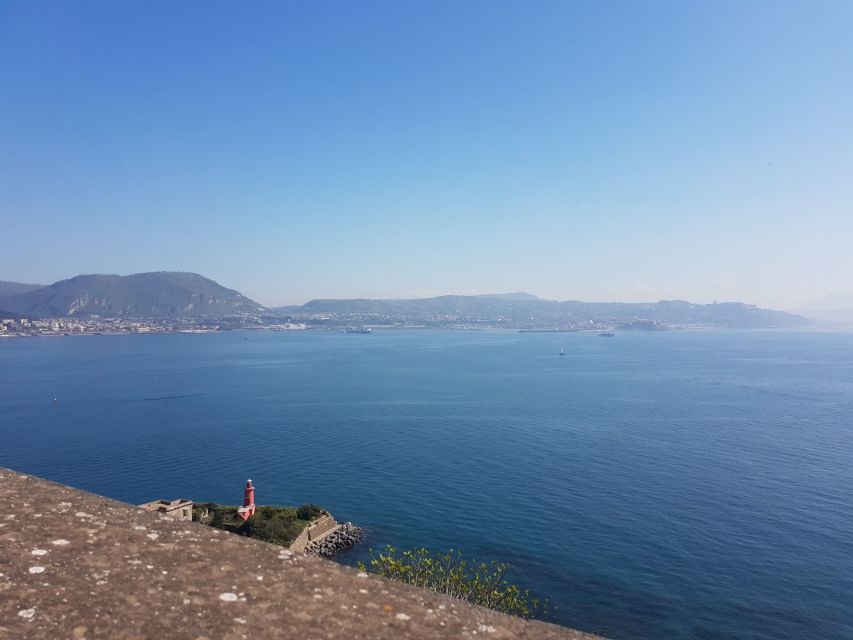
You’ll also get to see volcanic lakes such as D’Averno, Fusaro, and Miseno during the day. Standing near these water bodies adds context, because they help you picture the same kind of natural forces that shaped the coastline, the harbors, and the Roman fascination with dramatic terrain.
If you like places where you can see the human story and the natural story at the same time, this is a smart day to choose.
Pozzuoli’s former market: the Macellum Temple of Serapis
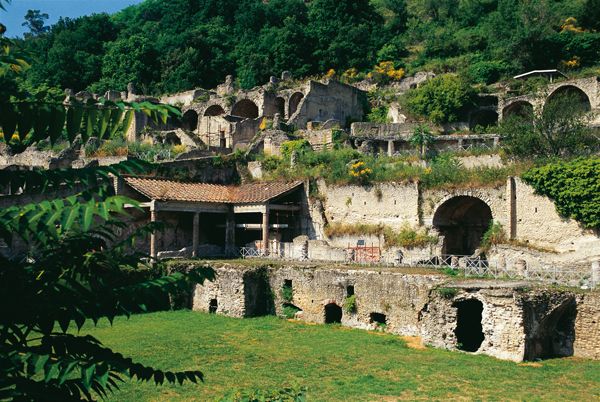
Pozzuoli is where the day starts turning from scenery into specific Roman life. The highlight here is the Macellum Temple of Serapis, tied to the story of the Roman colony of Puteoli and a major archaeological discovery.
The former market was excavated in the 18th century after the discovery of a statue of Serapis. That gives the site more than just a name, it gives you a clear reason it became an archaeological focal point. You’ll tour with a guide who can explain what a macellum was in Roman urban life: a structured commercial and communal space, not just a shopping stop.
One detail I really like is the way you can still see physical clues on the surviving columns, including mollusc holes. It’s a small visual reminder that Pozzuoli’s coastal and sea conditions were not static. The sea and the ground both matter here.
Practical note: the Macellum has specific closures, so if you’re traveling during the wrong part of the week, you may get a modified route or a different balance of stops. Knowing this helps you avoid disappointment on day-of.
Cumae’s ruined city and the Sybil cave sanctuary
Next you head to Cumae, an archaeological park on the coast of the Tyrrhenian Sea. Cumae matters because it connects early Greek presence in Campania with later Roman reuse and fascination.
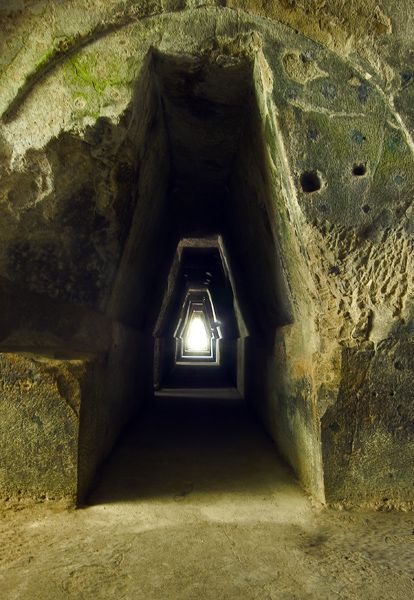
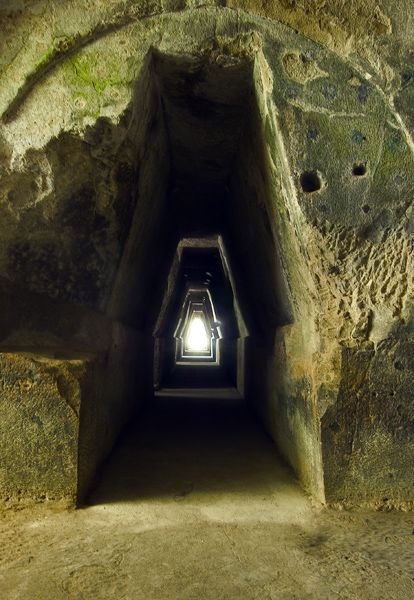
The Acropolis of Cuma is the key structure group here. It was founded by Euboean Greeks, and that early influence helps explain why one of the most famous elements is the Sybil cave sanctuary. If you’ve ever wondered why ancient cultures built sacred spaces into dramatic natural features, this stop gives you a concrete example.
What I find valuable about this part of the route is the atmosphere shift. You move from Roman civic spaces to a sacred landscape tied to prophecy and myth, and the setting makes the story feel less abstract. It’s also a good break from the more museum-like segments of the day.
Drawback to keep in mind: Cuma is closed on Tuesdays, so if you’re picking your travel date, plan around that or be ready for a route adjustment.
Baiae’s underwater ruins, Aragonese fortress museum, and temple remains
Baiae is where the day gets cinematic. The former seaside resort includes many remains that are partly underwater, so what you see depends on what parts are exposed above ground and what’s accessible at the time of your visit.
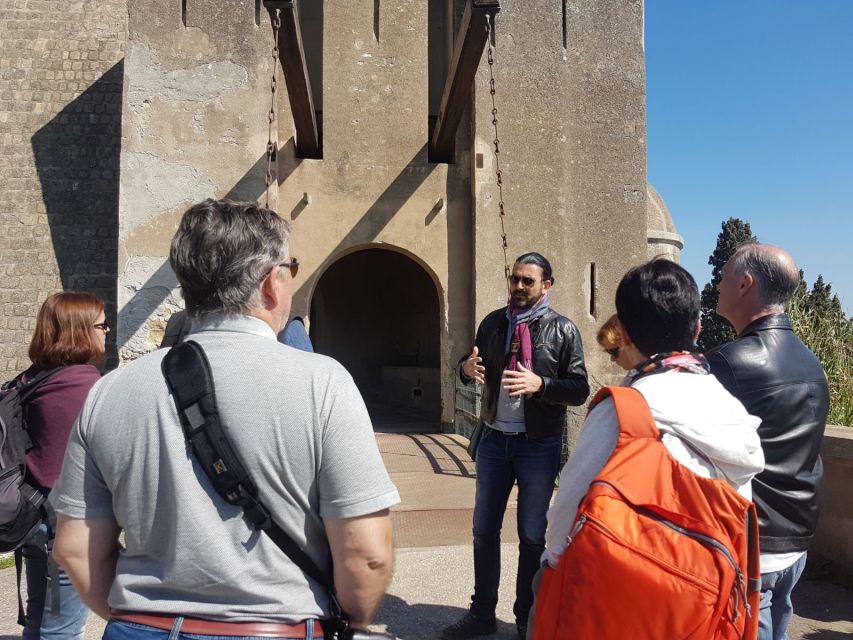
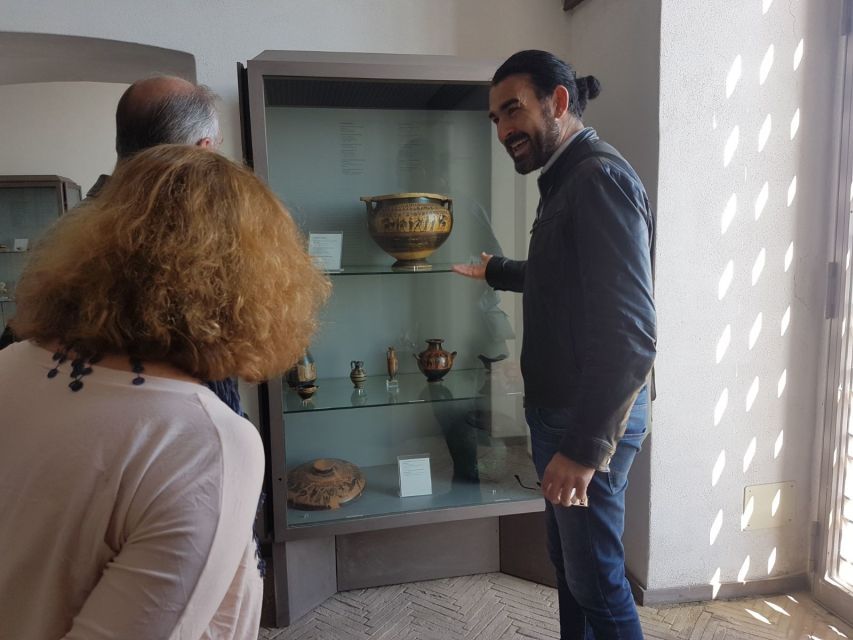
The tour includes the Museum of the Phlegrean Fields in the former Aragonese fortress. Even when you can’t see everything, museum material can help you understand what you’re looking at outside. It’s the kind of stop that turns random fragments into a real picture of how this place functioned.
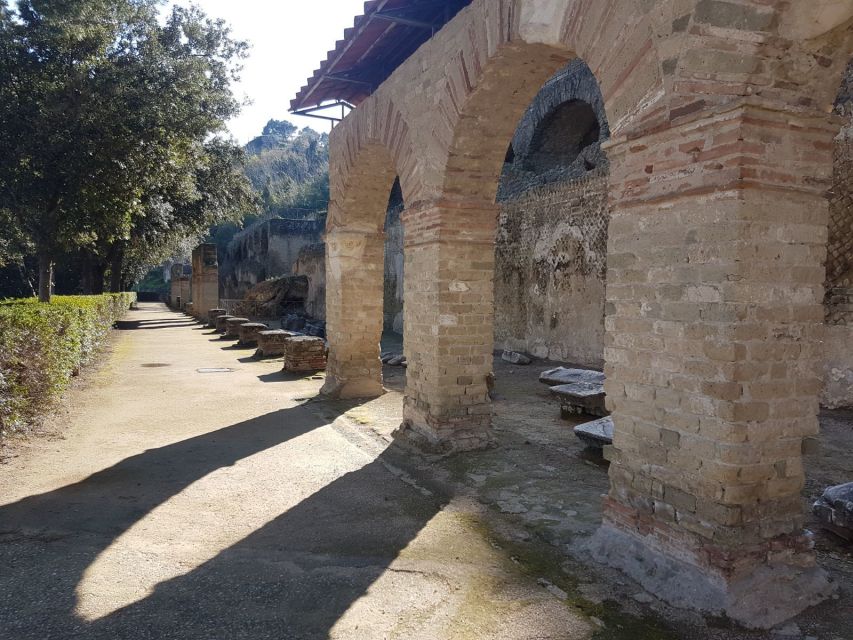
Above ground, you’ll be able to see remains of temples to Venus, Diana, and Mercury. I like that focus because it tells you what kind of visitors and worshippers Baiae attracted. It wasn’t only a resort town, it was a religious and cultural stage too.
One more practical detail: Baiae Thermal Baths and the Museum are closed on Mondays. If your trip lands on a Monday, you may still see Baiae-related elements, but this specific museum and bath stop may not be available, so check dates carefully.



Bacoli and Miseno: Piscina Mirabilis, the Roman navy’s water engine
From Baiae you continue toward Bacoli and the famous water system at Miseno, ancient Misenum. This is one of the most satisfying stops on the day because it shows Roman power in a practical, physical way.
The centerpiece is the Piscina Mirabilis, described as an enormous Roman cistern. Roman sources associate Misenum with one of the largest naval bases of the empire, so the point of the cistern is clear: supply a major operation reliably.
What you’ll appreciate here is that this is not a fragile palace or a single statue. It’s infrastructure on a grand scale. Even if you’re not a hardcore history fan, it’s hard not to admire the engineering logic: capture, store, and distribute water for a huge community tied to the sea.
This stop also helps you balance the day. After the volcanic lakes and the myth-heavy Sybil sanctuary, you get a grounded reminder of how Romans solved everyday problems at an empire level.
Volcanic lakes: Averno, Fusaro, and Miseno’s natural drama
Toward the end of the route, the tour leans back into the natural side of Campania. You’ll go to volcanic lakes including D’Averno, Fusaro, and Miseno, each part of the same larger story of volcanic terrain.
These are the kind of places that make you slow down. You can see how volcanic activity can shape coastal geography, water basins, and the way ancient people talked about unusual terrain. Even if you don’t read every plaque, the setting does half the explaining.
I also like that these stops come after the big Roman sites, because by then you have context. After Pozzuoli, Cumae, Baiae, and Piscina Mirabilis, the lakes stop being random scenic breaks. They become part of why the region’s history was so distinctive.
If you’re someone who enjoys viewpoint time, bring a little patience for walking and occasional outdoor time. The day is full, but the lakes offer a natural rhythm reset.
The guide and driver difference you can feel
This is where private tours can either feel stiff or feel personal. The setup here is geared toward comfort and clarity.
You’ll have a live guide, and the tour lists multiple languages: Spanish, English, Italian, French, and German. In at least one praised experience, a guide named Massimo is credited with sharing a deep store of knowledge without wasting time.
For driving, you’re not just waiting at the curb. The driver is described as attentive and safe, and in one example a driver named Giovanni handled complicated traffic with real care. That matters in Naples-area travel, where roads can be tight and schedules can get stressed.
If you care about learning more than just facts, choose this tour on a day when you want both explanations and smooth logistics.
Price and value: why $558.97 can make sense
The price is listed at $558.97 per person for an 8-hour private excursion. On its face, it’s not a cheap day trip. But value here comes from the mix of inclusions and the number of major stops.
You’re paying for:
- A private vehicle (Mercedes S-Class sedan, van, or minivan)
- A live guide
- Skip-the-line admission fees
- Transportation timed around a full route across multiple archaeological sites
That combination is the key. If you were to try to piece together this route on your own, you’d likely spend time coordinating tickets and transport, and you might still lose flexibility if closures or site timing don’t cooperate.
Still, the cost will feel different depending on how many people are sharing the private ride. If you’re traveling solo or as a couple, the price may feel steep because you’re not splitting the vehicle and guide cost. If you can share the day with travel companions, it becomes easier to justify.
Who should book this tour, and who might prefer something else
I’d steer you toward this private excursion if you want a day that blends:
- Roman archaeology across several locations
- volcanic terrain and volcanic lake scenery
- clear guided storytelling across places that are close enough to cover in a single day, but different enough to feel like separate worlds
You might reconsider if your mobility is limited, because this tour is not suitable for wheelchair users based on the provided information. Also, if you’re set on visiting Baiae Thermal Baths and the museum, plan around the Monday closure, and if you want Cuma, avoid Tuesday.
Should you book Phlegraean Fields: Cuma, Baia, and Pozzuoli?
I think this is a strong choice if you’re already in the Naples area and you want one day that’s more than a simple city add-on. The value sits in the way the tour links geology, changing coastal conditions, and Roman life, then gives you major anchor stops like the Macellum of Serapis, Cumae, Baiae, and Piscina Mirabilis.
Book it if your goal is a guided day with minimal waiting and a coherent storyline. Skip it, or pick your date carefully, if your travel day lines up with closures at Cuma (Tuesday), the Macellum (several weekdays), or Baiae Thermal Baths and the museum (Monday).
If your calendar is flexible, you’ll get the most from the full lineup.
FAQ
What is the duration of the private excursion?
The tour duration is 8 hours. Starting times vary, so you’ll need to check availability for the time options.
Where does pickup happen?
Pickup is available from Naples, Sorrento, or Salerno. You provide the exact pickup details.
What kind of transportation is included?
The tour includes transportation by a Mercedes S-Class sedan, van, or minivan, plus an English-speaking driver.
Is skip-the-line admission included?
Yes. Skip the line admission fees are included.
What are the main stops during the day?
Key stops include the volcanic lake of Averno, Baiae, Pozzuoli (including the Macellum Temple of Serapis), Cumae, Piscina Mirabilis (Miseno area), and volcanic lakes such as Fusaro and Miseno.
What days are specific sites closed?
- Macellum of Pozzuoli: closed on Monday, Tuesday, Wednesday, and Friday, open on Thursday, Saturday, and Sunday.
- Cuma: closed on Tuesday.
- Baiae Thermal Baths and Museum: closed on Monday.
Are there different languages for the guide?
Yes. The live guide language can be Spanish, English, Italian, French, or German.
Is the tour wheelchair accessible?
No. It is not suitable for wheelchair users.
Is there free cancellation?
Yes. You can cancel up to 24 hours in advance for a full refund.
Is it a private group tour?
Yes. The tour is listed as a private group experience.
More Private Tours in Naples

More Tours in Naples

More Tour Reviews in Naples
Not for you? Here's more nearby things to do in Naples we have reviewed


Tour Reviews, compared.
 ★ 4.8Pompeii: Entry Ticket and Guided Tour with an ArchaeologistFrom $3519,459 reviews
 ★ 4.2Pompeii: Entry Ticket with Optional Audio GuideFrom $2612,360 reviews
 ★ 4.8Pompeii: Small Group Tour with an ArchaeologistFrom $4012,264 reviews
 ★ 4.3Pompeii Ruins & Mount Vesuvius Day TourFrom $12011,459 reviews
 ★ 4.6Sorrento, Positano and Amalfi Full-Day TourFrom $10710,988 reviews
 ★ 5.0Sorrento, Positano & Amalfi Coast – Small Group TourFrom $768,643 reviews
 ★ 4.6Catacombs of San Gennaro Entry Ticket & Guided TourFrom $157,941 reviews
★ 5.0Pompeii Small Group Tour with an ArchaeologistFrom $356,593 reviews
★ 4.6Catacombs of San Gennaro Entry Ticket & Guided TourFrom $157,941 reviews
★ 5.0Pompeii Small Group Tour with an ArchaeologistFrom $356,593 reviews