
Tour review · TOUR REVIEWS
Pompeii: Private Tour with an Archaeologist
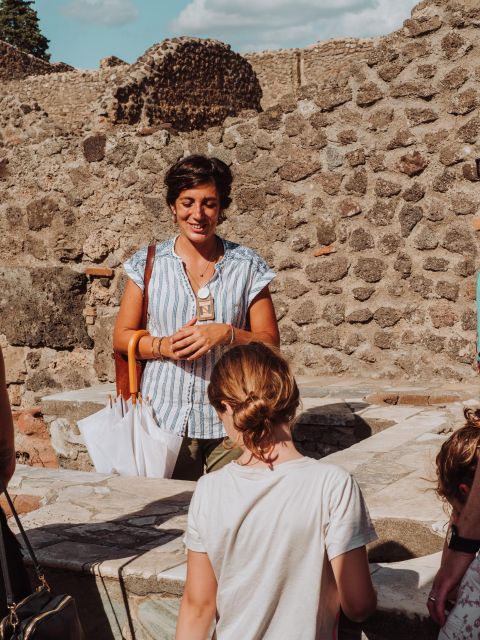
Pompeii hits different with the right guide. This private 3-hour tour lets you see the big Roman highlights without getting lost, starting at Porta Marina Superiore and working through the city like it is still lived-in. I especially like the archaeologist-led explanations that turn stone and mosaics into clear stories, and the fact that you cover the top sights in one focused route instead of bouncing between busier checkpoints.
One consideration: Pompeii is a serious walking circuit. Expect uneven ground, lots of stairs and short climbs, and an overall intense pace, so comfortable shoes matter more than you think.
Key things I’d circle before you go
- Private, archaeologist-led guidance that helps you read the ruins like a place, not just a photo spot
- Skip-the-line admission built in, so you spend your time walking Pompeii, not waiting for entry
- A tight 3-hour route that hits the Forum, baths, major houses, theatres, and the amphitheater
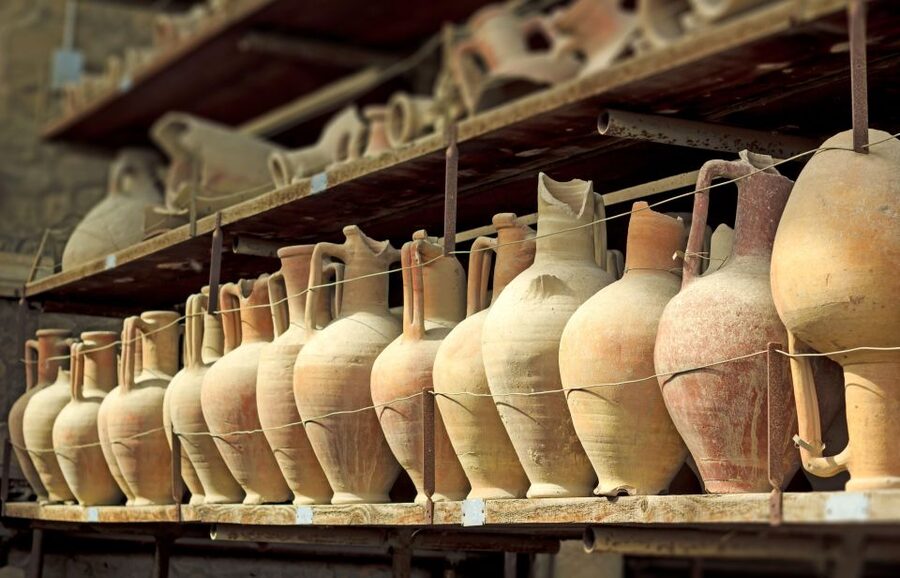
- Human-scale details, from shops and fountains to the plaster casts of victims
- Flexible language support across many languages, so you can actually follow the story
Pompeii makes more sense with an archaeologist in your ear
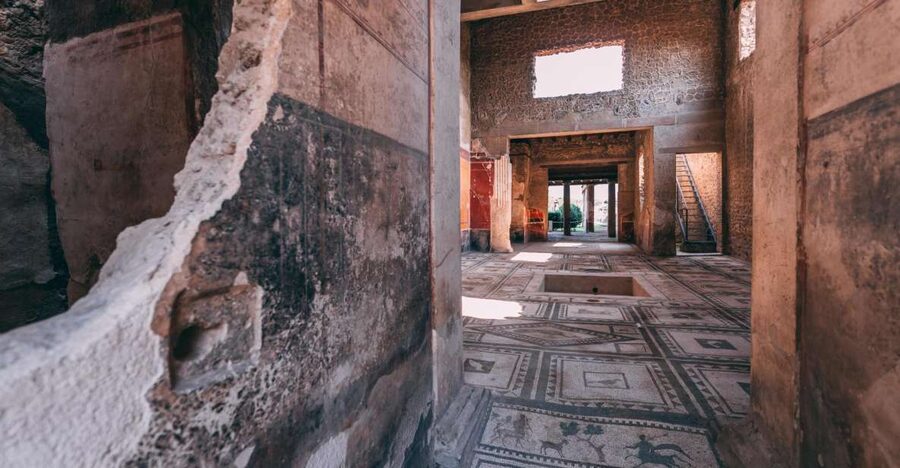
Pompeii is famous for a reason. When you walk the streets and see the public buildings plus homes, you get the unusual sense that you are looking at a town mid-day, just paused. A good archaeologist guide helps you connect those dots, including what the city was like before Mount Vesuvius erupted in 79 A.D., and how people used these spaces day to day.
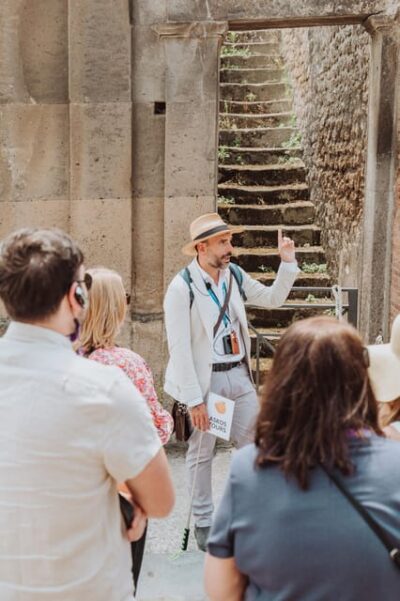
I like that this tour is built around walking, not staring at one highlight and calling it a day. With a certified archaeologist-guide leading, you get context for what you are seeing, whether it is a temple front, a civic hall, or the layout of a private home.
This also matters for value. Pompeii can eat hours fast, and a guided route keeps you from missing major sights that most visitors would not naturally connect.
You can also read our reviews of more private tours in Naples



Meeting at Porta Marina Superiore, then getting your bearings fast
You meet your guide at the Pompeii main gate, Porta Marina Superiore, in front of the bar-restaurant Hortus, the building with lemons and oranges hanging outside. That is a practical start point, and it keeps the tour simple: you do not have to hunt for your guide inside the chaos.
From there, the route steadily moves through major areas of western Pompeii. That matters because Pompeii is large, and seeing it efficiently is hard without a plan. This tour also ends back near Porta Marina Superiore, so you do not get stuck far from the main entrance area when you are done.
If you are sensitive to long walks, plan for breaks only when your guide naturally stops at key areas. Pompeii walking is intense, and your best strategy is to pace yourself with the guide rather than trying to sprint between stops.
Marina Gate to the Temple of Apollo: public Pompeii at street level
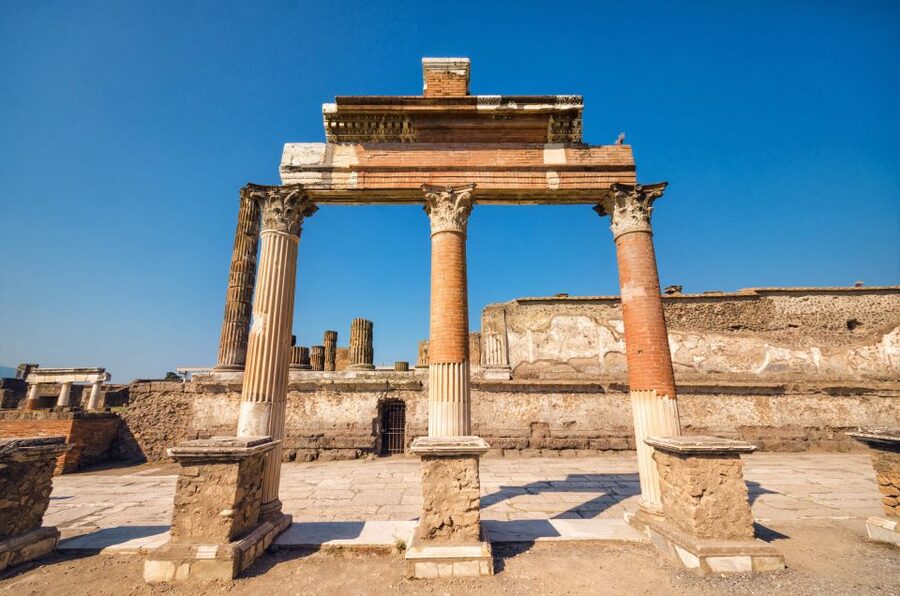
The tour kicks off at Porta Marina, one of the city’s gates and a key entry point into the urban grid. Standing near a gate is a reminder that Pompeii was not one monument, it was a working city with movement and trade.
Next up is the Temple of Apollo. Temples like this help you understand the religious side of Roman civic life, and how worship and public identity were tied together. A guide is helpful here because the ruins are fragmentary. Without context, it is easy to see columns and platforms but miss what the space was meant to do.
What to watch for: Roman architecture tends to be “readable” when someone points out relationships, like where you would have approached, how spaces framed views, and how the building fit into the broader city rhythm.
The Forum Civile and the Basilica: where power showed up
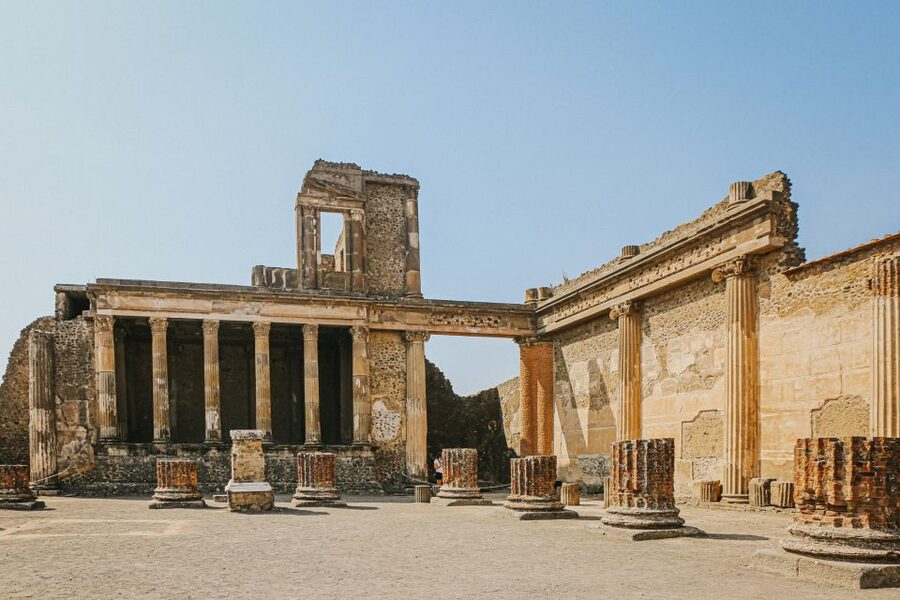
The heart of the civic story comes in the Foro Civile di Pompei and the Basilica. This is where Pompeii’s public life concentrated. Think meetings, business, legal matters, and the kind of everyday civic activity that made a city feel like a city, not a village of ruins.
The Basilica is especially satisfying on a guided walk because it helps you picture how Romans used large interior spaces for public functions. Even if you only catch parts of the structure, a guide can explain why the layout mattered and what kinds of activity would have filled the space.
This is also a good area to pay attention to “small” details. Pompeii rewards close looking, and a guide can connect dots between what you see in the forum area and the homes you visit later.
House of Menander and the Forum Baths: private rooms and public routines
Next you step into the House of Menander, which shifts you from public formality to household life. The name alone sounds academic, but the experience is more grounded. You start seeing how people lived at home, how rooms were organized, and how domestic design reflected social status.
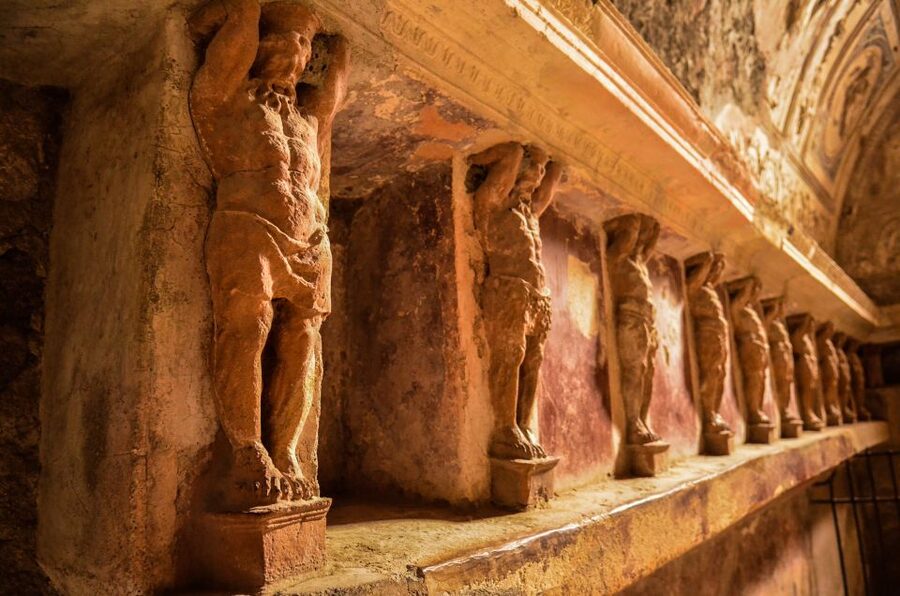
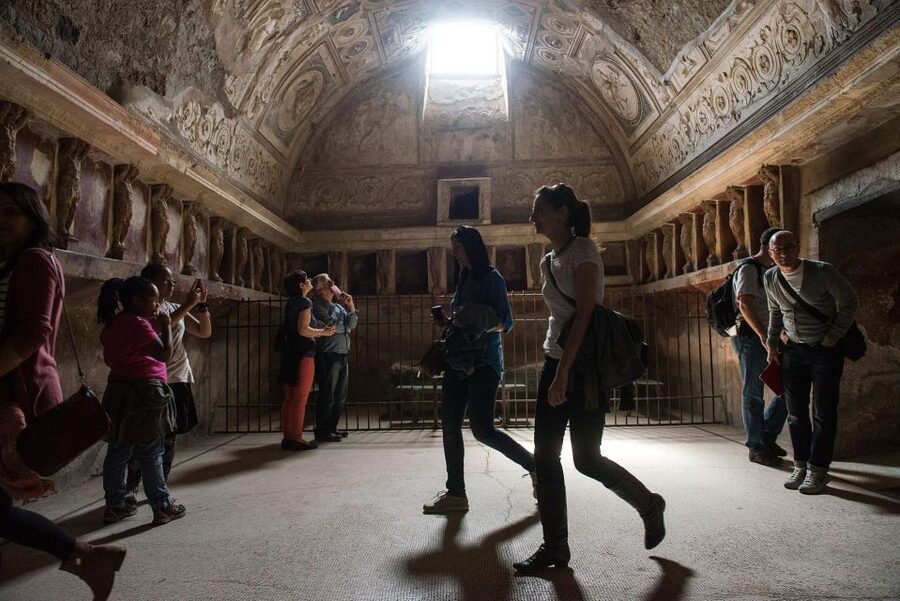
Then you move to the Forum Baths. Roman baths were more than hygiene. They were social hubs where you could talk, relax, and run into neighbors. With a guide, you get practical interpretation, like how circulation and room functions would have worked.
This is a smart sequence: you get the contrast between a private home environment and a shared public routine. That contrast is one of the reasons Pompeii sticks in your mind.
If you tend to lose focus after a couple of stops, this is a good place to slow down mentally. The baths and nearby civic buildings help you understand the city as a system.




Lupanare: a frank look at one side of Roman life
The tour includes the Lupanare, the brothel. Pompeii does not shy away from the realities of daily life, and neither should you. Still, it helps to approach this stop with a neutral, educational mindset, since it is easy to get distracted by shock rather than understanding.
A guide’s job here is to keep it grounded in what it tells you about Roman society: how commercial spaces functioned and how entertainment, vice, and economics were part of the urban fabric.
Practical tip: if you want a heavier, more reflective tone, tell your guide early. Private tours are better at tailoring your pacing and tone than group tours.
House of the Faun and the Large Theatre: scale, art, and performance
The House of the Faun is next, a major home known for its importance in Pompeii’s domestic story. You get a sense of wealth, planning, and artistic choices. A guide can help you look past the wow-factor and see how the home worked as a social statement.
Then comes the Large Theatre, where Pompeii shows another kind of civic energy. Theatres were key for public entertainment and community identity. When you stand in the spaces around performances, it is easier to imagine how events pulled people together.
This section is where Pompeii feels most like a real Roman city rather than an archaeological exhibit. The home stops show status and taste, while the theatre stop shows public gathering and shared culture.
If you are visiting with kids or teens, this is also where you can get the most “ask questions” energy. The theatre and homes naturally invite discussion.
House of the Vettii and the Amphitheater of Pompeii: status and spectacle
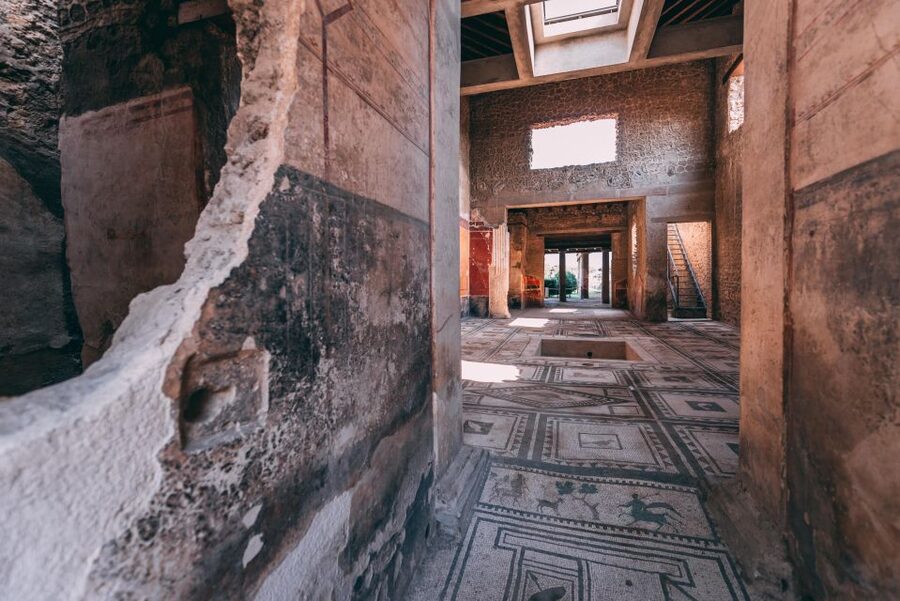
The House of the Vettii follows, another important home that reinforces what Pompeii’s elite wanted you to see. Domestic decoration and layout can sound like lecture material, but in Pompeii the rooms often feel like they are staging a message. A guide can translate that message into plain language.
Finally, you end at the Amphitheater of Pompeii. Amphitheaters are all about crowds and spectacle, and seeing one in Pompeii gives you a sense of how intense public entertainment could be. It is also a natural ending point for a 3-hour walk because it brings the city’s public life back into focus after the home section.
When you finish, you have a clear loop in your mind: gate, civic center, baths and homes, entertainment spaces, then the amphitheater. That loop is exactly what makes a guided Pompeii visit feel organized.
Price and logistics: what you are really paying for
The price is $508.15 per group, up to 1, for a 3-hour private tour. On paper, that number can look steep. In practice, you are paying for expert time and a guided route through one of the world’s most complex archaeological sites, plus skip-the-line admission.
Skip-the-line matters here. Pompeii can have entry bottlenecks, and every minute counts when you have a limited time window. This tour also includes disposable earphones for bigger groups, which is useful because Pompeii’s outdoor spaces can be loud and echoing.
What is not included: transportation, food and drinks, and other personal expenses. That is typical, but you should plan accordingly. Pompeii is best done as a full, shoe-first outing, not something to combine with a quick snack run.
Practical tips that will make the route easier
- Bring comfortable shoes. Pompeii is a walking circuit with uneven surfaces.
- Umbrellas are listed as not allowed, and rain guidance is contradictory. If rain is possible, I would trust a raincoat more than a fold-out umbrella.
- Pets are not allowed.
- The tour takes place in any weather condition, so dress for rain and sun, and assume you will still walk.
- There are multiple language options, including Japanese, English, Spanish, Italian, German, French, Portuguese, Chinese, and Russian.
One more practical note: the tour is labeled as private and also includes earphones for bigger groups. That usually means you might still have a small cluster, so arriving on time helps you start smoothly.
Should you book this Pompeii private tour?
Yes, if you want Pompeii with direction. I recommend booking when you care about understanding what you are seeing, not just collecting landmarks. A private archaeologist-led walk is the best way to connect public buildings, baths, major homes, and entertainment spaces into one coherent story in just 3 hours.
I would think twice if you hate walking on uneven ground or you want a strictly self-paced experience with no structure. Also, if the archaeologist credential is non-negotiable for you, confirm it before you go. The tour is advertised as a certified archaeologist-guide, but if you are making a special effort to meet that exact expectation, it is worth verifying details upfront.
FAQ
How long is the Pompeii private tour with an archaeologist?
The tour lasts 3 hours.
Where do I meet the guide?
Meet at Porta Marina Superiore, in front of the bar-restaurant Hortus, the building with lemons and oranges hanging outside.
What is included in the ticket portion?
The tour includes skip-the-line admission fees, plus a guided Pompeii tour by a certified archaeologist-guide.
What should I bring with me?
Wear comfortable shoes. In bad weather, the info recommends bringing a small umbrella and/or a raincoat.
Is transportation included?
No. Transportation is not included.
Are food and drinks included?
No. Food and drinks are not included.
What languages are available for the live guide?
Japanese, English, Spanish, Italian, German, French, Portuguese, Chinese, and Russian.
Is the tour wheelchair accessible?
Wheelchair accessibility is listed, but there is also a note that it is not suitable for wheelchair users. If wheelchair access matters for you, check directly with the provider.
Are pets and umbrellas allowed?
Pets are not allowed. Umbrellas are listed as not allowed.
Does the tour happen in rain?
Yes. The tour takes place in any weather condition.
More Private Tours in Naples



More Tours in Naples

More Tour Reviews in Naples
Not for you? Here's more nearby things to do in Naples we have reviewed










Tour Reviews, compared.
 ★ 4.8Pompeii: Entry Ticket and Guided Tour with an ArchaeologistFrom $3519,459 reviews
 ★ 4.2Pompeii: Entry Ticket with Optional Audio GuideFrom $2612,360 reviews
 ★ 4.8Pompeii: Small Group Tour with an ArchaeologistFrom $4012,264 reviews
 ★ 4.3Pompeii Ruins & Mount Vesuvius Day TourFrom $12011,459 reviews
 ★ 4.6Sorrento, Positano and Amalfi Full-Day TourFrom $10710,988 reviews
 ★ 5.0Sorrento, Positano & Amalfi Coast – Small Group TourFrom $768,643 reviews
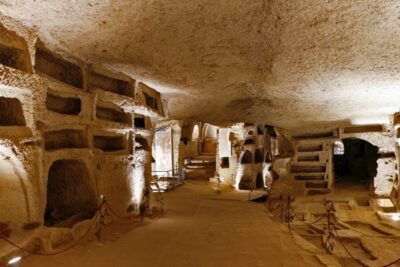 ★ 4.6Catacombs of San Gennaro Entry Ticket & Guided TourFrom $157,941 reviews
★ 5.0Pompeii Small Group Tour with an ArchaeologistFrom $356,593 reviews
★ 4.6Catacombs of San Gennaro Entry Ticket & Guided TourFrom $157,941 reviews
★ 5.0Pompeii Small Group Tour with an ArchaeologistFrom $356,593 reviews