
Tour review · TOUR REVIEWS
Napoli: Entrance Tickets to Sant’Anna dei Lombardi Complex
Renaissance drama, in under an hour. The Sant’Anna dei Lombardi complex is a compact Naples stop where you can study big-name art without a long day plan, and it moves fast. I love how the Giorgio Vasari frescoed sacristy vault turns a simple ticket into a real art moment.
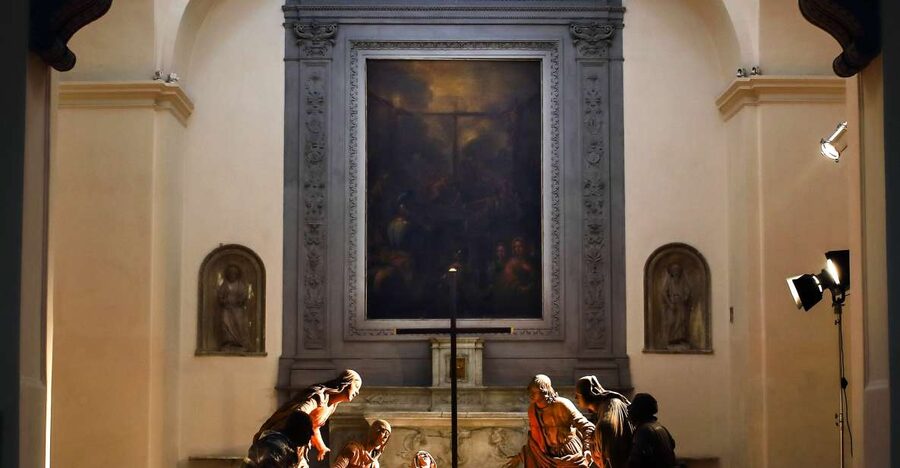
My favorite part is the emotional punch of the Compianto sul Cristo Morto experience. The included app audioguide helps you follow the story, so you are not just looking at sculpture and frescoes, you understand what you are seeing.
One catch: you need to bring your own headphones, since headphones are not included. Also, this visit is not suitable for people with mobility impairments, so plan accordingly if that matters for your group.
Key highlights worth knowing before you go
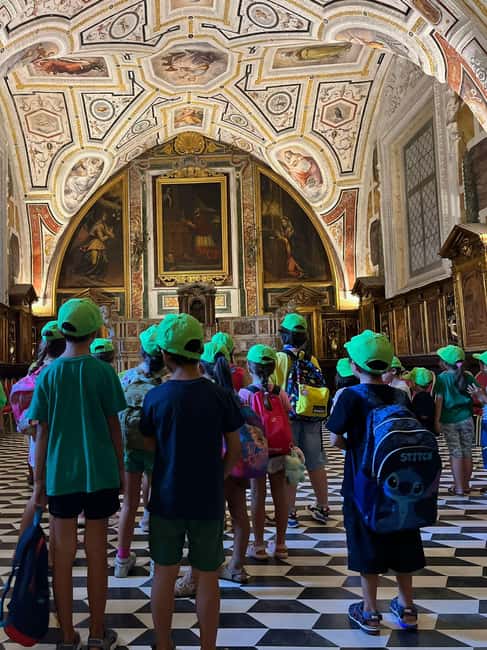
- A 30 minute visit that still hits the main sights of the monumental complex
- Giorgio Vasari fresco focus, with an app audioguide built for the sacristy
- Guido Mazzoni’s Compianto sul Cristo Morto, with guided help to read the emotion
- Abbott’s Cript, adding depth to a church visit that feels more like an art tour
- A strong artist mix, including Spanish Pedro Rubiales and a young Michelangelo puttino
- $7 value, plus discounts tied to several major Naples attractions
Sant’Anna dei Lombardi: a Tuscan Renaissance pocket in Naples
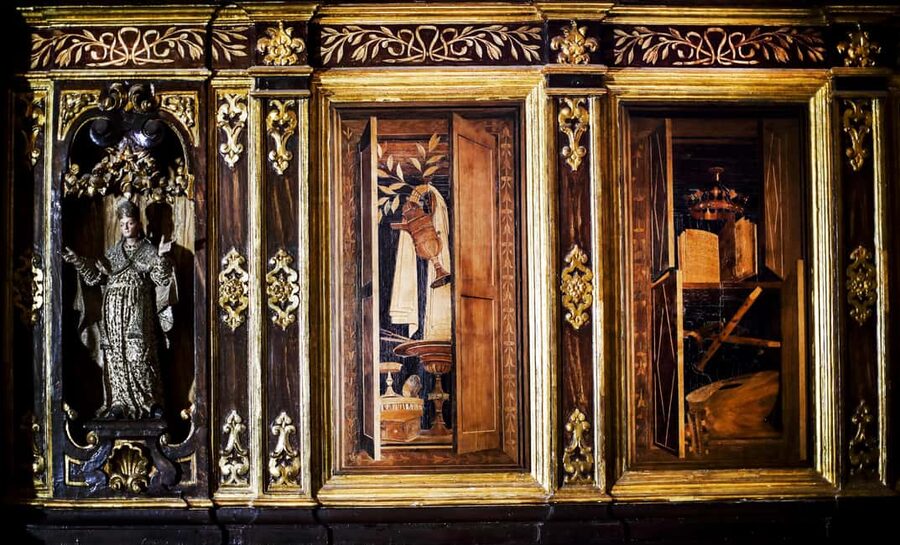
Sant’Anna dei Lombardi, also known as Santa Maria di Monteoliveto, feels like someone slid a piece of Tuscany into Naples. The complex traces back to 1411, and it earned real court-level attention from the Aragonese Dynasty. Alfonso II of Aragon reportedly went there daily, which tells you this place was not a random stop for curious tourists, it was part of real life for the powerful.
What I like most for your planning is that this site is manageable. You are not committing to a half-day crawl. Instead, you get a focused entry into a monumental complex where the art and the atmosphere do the heavy lifting.
The complex also gives you a clear theme: connections across regions. In the mid-1500s, it reflects fruitful relationships between foreign artists and Neapolitan ones, including Spanish artist Pedro Rubiales and Tuscan artist Giorgio Vasari, who frescoed the sacristy vault. That mix matters because it helps you see Naples as part of the wider Renaissance conversation, not a separate art island.
More Naples tours, ruins, coast days, and city experiences to compare


Tickets, time, and what the 30 minutes really covers
This entrance ticket is built for a short, concentrated visit. The duration listed is about 30 minutes, so you should treat it as a focused stop you can fit between other Naples sights.
Here is what you are paying for, and why the timing works:
- You get entry into the Sant’Anna dei Lombardi Monumental Complex.
- You get an app audioguide with specific tracks for the sacristy of Giorgio Vasari and the Compianto sul Cristo Morto tied to Guido Mazzoni.
- You also get a discount for several other Naples attractions, which can stretch your day value if you plan a sequence of sites.
Because it is audio-guided, you can do this even if you are not a specialist in Renaissance art. The app format is also practical in a museum-like environment, where reading labels can slow you down and you may miss details in the artwork itself.
Walking into the monumental complex: the setup that helps you see
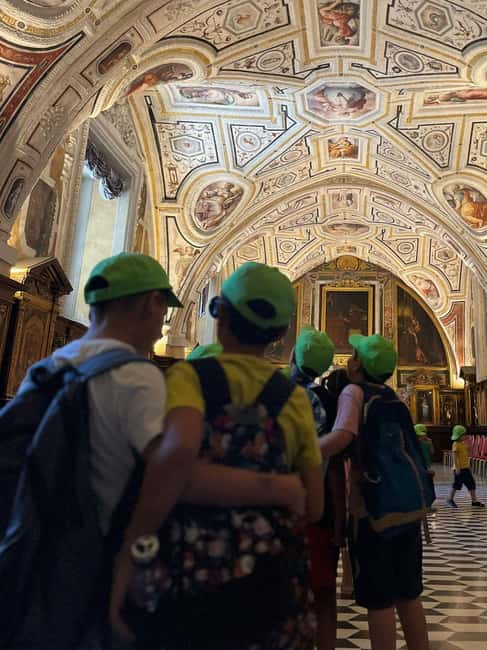
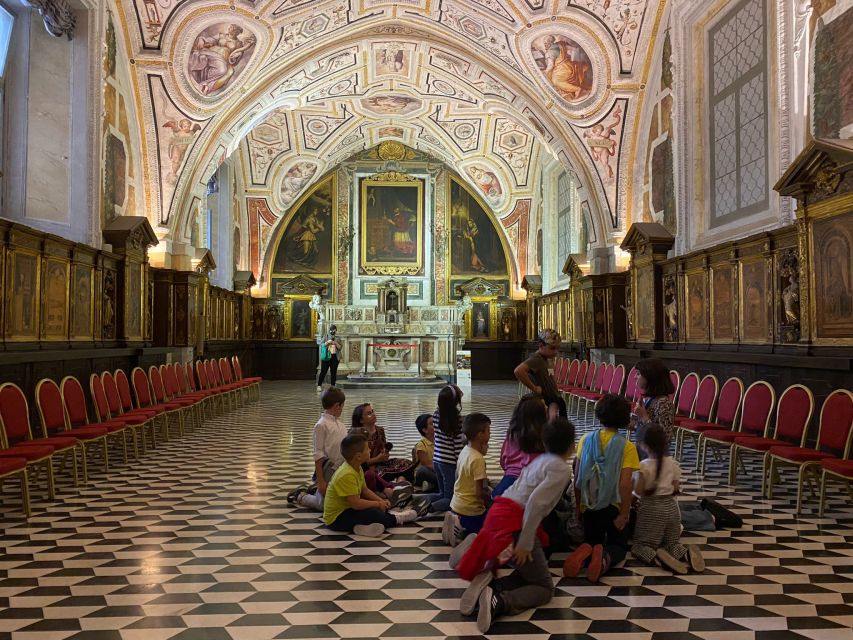
Once inside, the space is designed for you to move through art in a natural way. Think of it like guided attention. You are not just standing around and hoping something clicks. The experience is set up so that you can connect visuals to the story, especially through the audioguide tracks.
One practical tip: charge your phone fully before you go. The experience includes an app audioguide, and with a visit this short, you do not want to lose time hunting for power or connectivity.
Also, note the rules: flash photography is not allowed. That is a normal request in places that protect art, but it also means you should rely on your eyes and the guide, not on photos with flash.
Giorgio Vasari’s frescoed Sacristy: what to look for
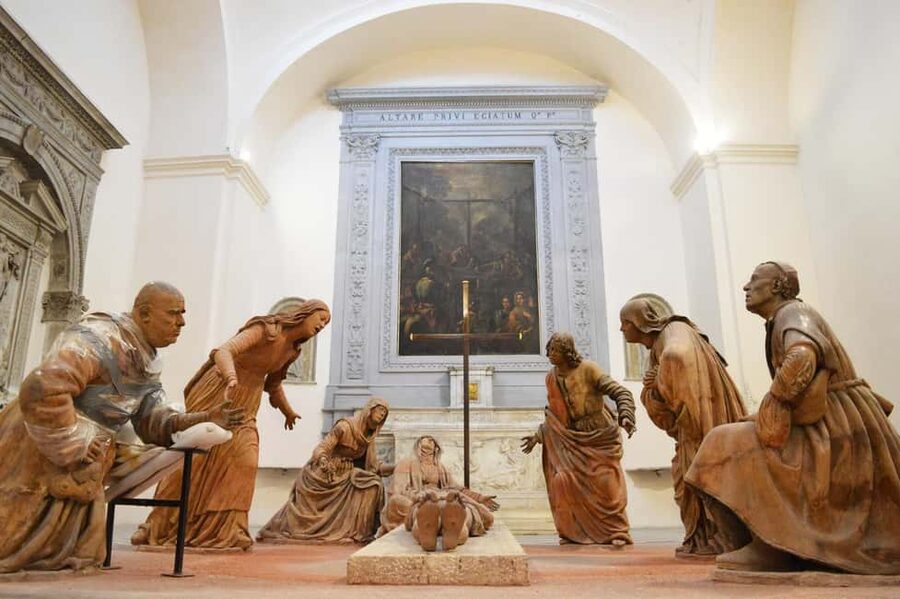
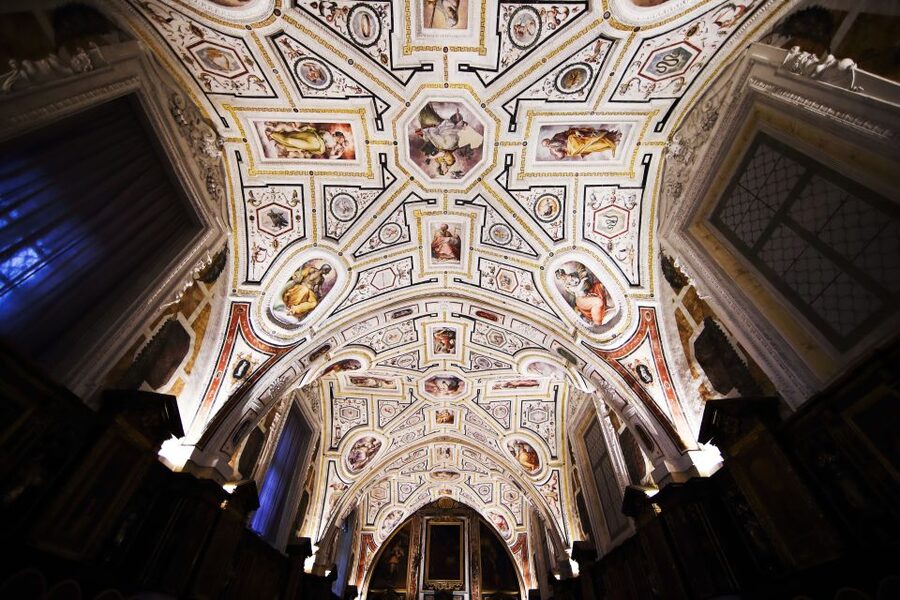
The Sacresty frescoed by Giorgio Vasari is one of the main reasons to choose this ticket. Vasari is a name you often hear in Italian art history, but here you get to see the work in context, tied directly to the space.
What makes this part feel worthwhile for you is the way the audioguide is targeted. You are not getting a generic audio tour. The app includes a dedicated guide for The Sacristy of Giorgio Vasari, so it is meant to point your attention at the right spots during your limited time.
In practical terms, when you are standing where the fresco work is strongest, do two things:
- Slow down for a minute and let your eyes follow the guide cues.
- Look for relationships between figures and architecture, not just individual details.
This is where the experience earns its reputation for explanation that is actually useful. If you like art but usually feel lost in churches, the focused guidance helps you feel oriented fast.
Abbots’ Cript: the underground layer you should not rush
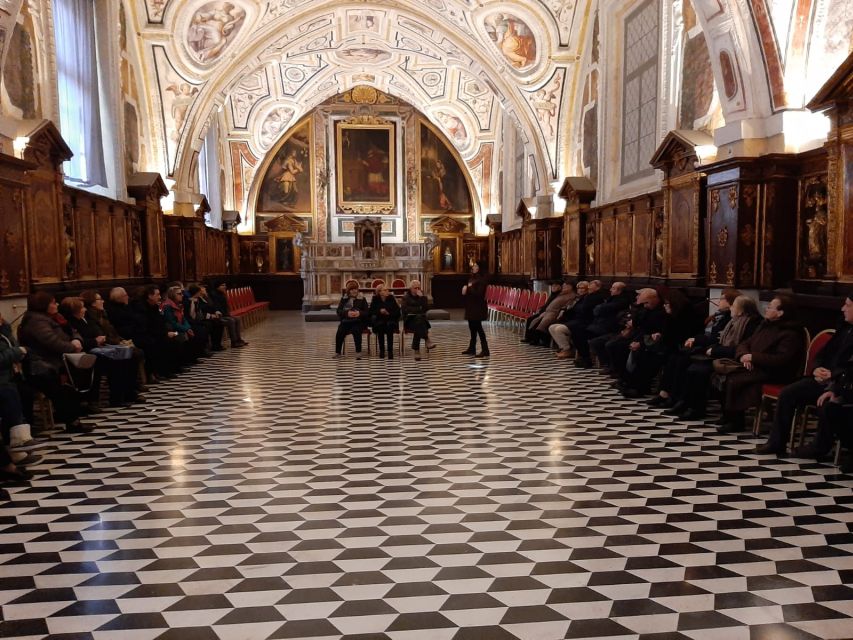
Another highlight is the Abbots’ Cript. Even if you are short on time, I recommend treating the crypt as its own mini-story rather than a quick hallway stop.
Why? Because a crypt changes the tone. You are in the same complex, but the experience shifts. It is the kind of setting that makes religious art feel less like decoration and more like part of how people understood life, death, and memory.
The ticket includes access to this area, and the tour concept pairs it with other emotionally driven art in the complex. So by the time you reach the lamentation scene, the experience has already trained your attention on meaning.
If you are the type who tends to speed through darker spaces, resist that habit here. In a short visit, rushing the crypt can make the rest feel less connected than it should.


Guido Mazzoni’s Compianto sul Cristo Morto: the emotion you can read
This is the dramatic centerpiece: the Compianto sul Cristo Morto. The audio guide track is included for it, and the guide focuses on the Lamentation Over The Dead Christe connected to Guido Mazzoni.
The key thing I want you to know is what to watch for. The description emphasizes accuracy of details and how characters express energy and emotional force in their movements. In other words, this is not meant to be observed from one angle only. The emotion is communicated through posture, gestures, and the way figures interact as a group.
For your visit, here is a simple way to get more out of it in less time:
- First pass: look at the overall arrangement and the gestures.
- Second pass: use the audioguide to connect what you see to the meaning.
- Final minute: pick one small section, and study it instead of scanning everything.
That method is especially helpful in a 30 minute visit, because it prevents you from treating the scene like a quick photo moment. You end up feeling the work, not just collecting a viewpoint.
Michelangelo’s puttino and the artist network behind the scenes
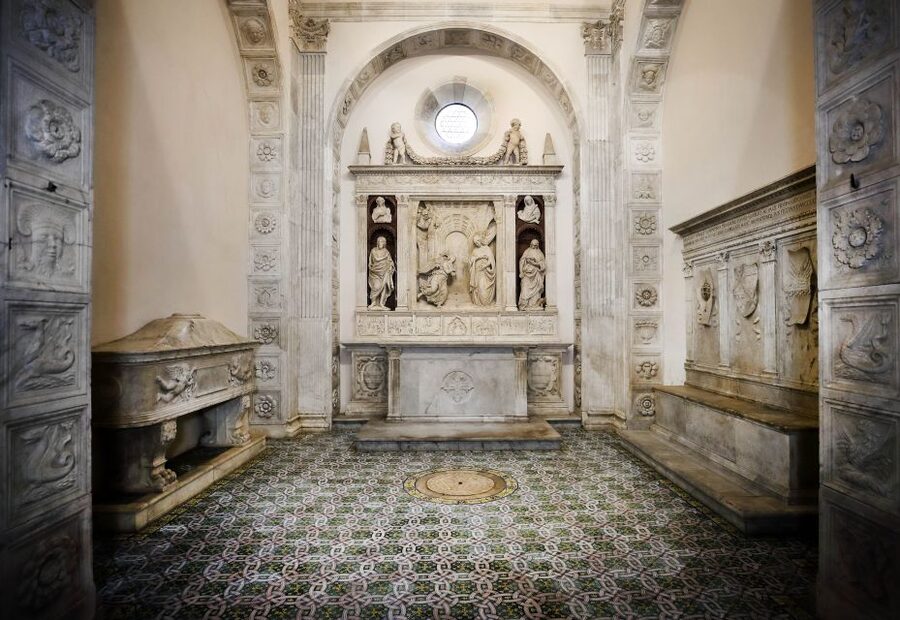
One of the most interesting facts tied to the complex is that a young Michelangelo sculptured a puttino. That detail alone is a great hook because it sets up the complex as a place where big creative names were part of the story.
The complex also highlights artistic relationships across borders. Pedro Rubiales, a Spanish artist, appears in the mid-1500s relationships, and Giorgio Vasari represents the Tuscan side. When you understand that the complex was shaped by multiple schools, you get a better sense of why the art can feel both local and connected to the wider Renaissance world.
What you should do with this information is practical. When you see any small sculptures or details, do not ignore them as decorations. In Renaissance settings like this, small elements often carry weight, especially when artists known for precision were involved.
Using the app audioguide the right way (and bringing the right gear)
The audioguide is included, and the language options are clearly set: Italian, English, French, German, and Spanish. That is helpful if you want the guidance without needing to book a full live guide.
You also need to think about equipment. Headphones are not included, so bring a simple wired or Bluetooth set that you know works with your phone. With no headphones, you lose the core value of the ticket.
If you are traveling in a group and you each have your own phone, you can use the app on a shared schedule. If only one phone works well for audioguide playback, consider taking turns. The visit is short, so it helps to have a plan instead of everyone standing around waiting.
Also, keep your expectations aligned. This is not a museum where you have hours to wander. The best experience comes from following the audioguide track while you are in the right spots.
Value for $7: why this is a smart short-stop ticket
At $7 per person, this ticket is priced for access to key artworks in a time-friendly format. You are not paying just for entry, you are paying for targeted interpretation for two major areas: the Vasari sacristy and the Compianto scene.
That matters because Naples can eat your schedule quickly. Between transport and longer visits elsewhere, this short stop can protect your day. You can also turn it into a value multiplier, because the ticket includes discounts for other Naples attractions.
The listed discounted options include:
- Catacombe di San Gennaro
- Pio Monte della Misericordia, connected to Caravaggio
- Archeological Museum, MANN
- Neapolis Sotterrata, Complesso Monumentale di San Lorenzo Maggiore
- Museo Diocesano di Donnaregina
If you are building a Naples itinerary around a mix of major museums and darker, underground sites, this ticket can help you line up several experiences without paying full price on each.
Who should book this ticket
This is best for you if:
- You want a short, high-impact cultural stop with built-in explanation.
- You like Renaissance art but do not want a long museum day.
- You appreciate emotion and storytelling in religious sculpture, not just architecture.
- You plan to visit at least one other major Naples site where the ticket discount can apply.
It may be less suitable if:
- Your group needs mobility-friendly access, since it is not suitable for people with mobility impairments.
- You do not want to use your phone for an app audioguide, since the experience relies on that track.
The $7 price also makes it an easy add-on if you are already in the area and want something focused.
FAQ
FAQ
How much does the Sant’Anna dei Lombardi entrance ticket cost?
The price is $7 per person.
How long does the visit take?
The duration is about 30 minutes. Starting times depend on availability.
What does the ticket include?
It includes entry to the Sant’Anna dei Lombardi Monumental Complex and an app audioguide for the Sacristy of Giorgio Vasari and the Lamentation Over The Dead Christe of Guido Mazzoni.
Are headphones included?
No, headphones are not included.
What languages are available for the audio guide?
The app audioguide is available in Italian, English, French, German, and Spanish.
Where is this experience located?
It is in Campania, Italy.
Is flash photography allowed inside the complex?
No, flash photography is not allowed.
Is this activity suitable for people with mobility impairments?
It is not suitable for people with mobility impairments.
Is food or drinks included?
No, food and drinks are not included.
What other Naples attractions can I get discounts for?
The ticket provides a discount for Catacombe di San Gennaro, Pio Monte della Misericordia (Caravaggio), Archeological Museum (MANN), Neapolis Sotterrata, and Museo Diocesano di Donnaregina.
Final call: should you book this ticket?
I would book it if you want a fast, art-forward Naples stop that comes with actual guidance. The Vasari sacristy track and the Compianto sul Cristo Morto audio help you get more meaning from what you are seeing, without requiring a long time commitment. Just plan on bringing your own headphones, and keep it in mind that it is not suitable for mobility impairments. If you can fit 30 minutes into your day, this is one of those tickets that pays you back quickly.
More Tickets in Naples


More Tour Reviews in Naples
Not for you? Here's more nearby things to do in Naples we have reviewed








Tour Reviews, compared.
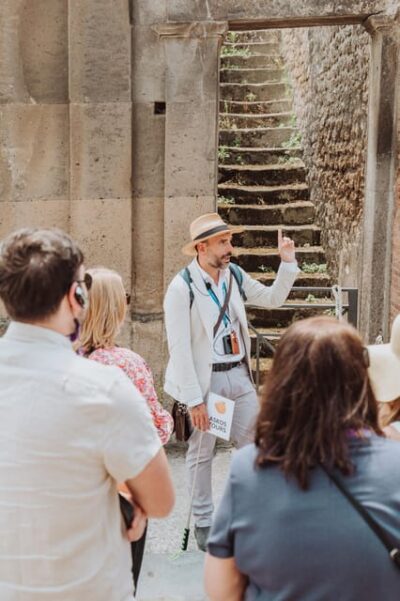 ★ 4.8Pompeii: Entry Ticket and Guided Tour with an ArchaeologistFrom $3519,459 reviews
 ★ 4.2Pompeii: Entry Ticket with Optional Audio GuideFrom $2612,360 reviews
 ★ 4.8Pompeii: Small Group Tour with an ArchaeologistFrom $4012,264 reviews
 ★ 4.3Pompeii Ruins & Mount Vesuvius Day TourFrom $12011,459 reviews
 ★ 4.6Sorrento, Positano and Amalfi Full-Day TourFrom $10710,988 reviews
 ★ 5.0Sorrento, Positano & Amalfi Coast – Small Group TourFrom $768,643 reviews
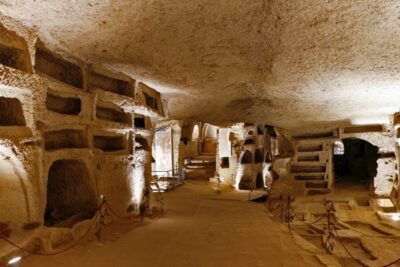 ★ 4.6Catacombs of San Gennaro Entry Ticket & Guided TourFrom $157,941 reviews
★ 5.0Pompeii Small Group Tour with an ArchaeologistFrom $356,593 reviews
★ 4.6Catacombs of San Gennaro Entry Ticket & Guided TourFrom $157,941 reviews
★ 5.0Pompeii Small Group Tour with an ArchaeologistFrom $356,593 reviews