
Tour review · TOUR REVIEWS
Pompeii and Herculaneum: Private Tour with Transportation
Two cities, one volcano’s fallout. This private tour links Pompeii and Herculaneum in a single 7-hour day, with a guide who turns the ruins into real daily life. I love how the private guide walks you through the major highlights with enough context to make sense of what you are seeing, not just where you are walking. I also love the contrast in preservation, because Herculaneum shows everything from intact mosaics to carbonized wood, while Pompeii hits you with sheer scale. One consideration: Pompeii is an intense, high-density walk, and the time is limited, so you cannot expect to cover every street and corner like you could if you stayed for days.
The logistics are the part that feels most stress-free. You get pickup and drop-off options around Naples, Sorrento, and the Amalfi Coast, a private van, and a visit plan that keeps moving at a sensible pace. There is also a handy line-saver built in, since your guide can buy tickets in about 10 minutes, so you are not stuck waiting around while everyone else files in. The only real tradeoff is the schedule is built for sightseeing flow, not long lounging.
Key highlights to plan around
- Private guide for both sites so you get meaning, not just monuments.
- Two guided walks per city (Pompeii first, then Herculaneum), each around two hours.
- Herculaneum’s preservation advantage explained through objects like carbonized wood, intact paintings, and mosaics.
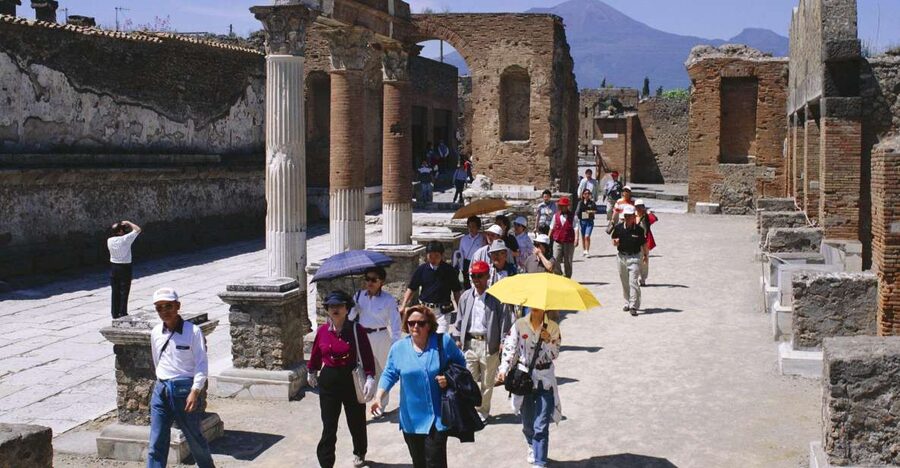
- Pompeii’s major sights in the western area including the Forum, Basilica, Lupanar, and plaster casts.
- Skip-the-line style ticket handling with your guide buying tickets in about 10 minutes.
- Traditional lunch stop (at a restaurant, winery, or pizzeria), with restaurant suggestions from your guide.
Pompeii and Herculaneum: what this day trip does right
A lot of people think Pompeii and Herculaneum are just two ruined cities you should tick off. I get it, because the photos are dramatic. But the real value here is the guided connection between the two places. Pompeii feels like a city you are walking through. Herculaneum feels like a snapshot preserved mid-life.
The eruption of Mount Vesuvius in 79 A.D. is the thread that ties the day together. Pompeii was covered by several meters of ashes, around 4 to 5 meters, and the city reads like a massive archaeological puzzle. Herculaneum, though smaller, was buried by a landslide of mud that was reported as about 20 meters deep, and that different kind of burial helps explain why so many fragile things survived. You start to see why a “smaller” site can feel more personal.
You can also read our reviews of more private tours in Naples


Your guides and drivers: why the ruins land better with explanations
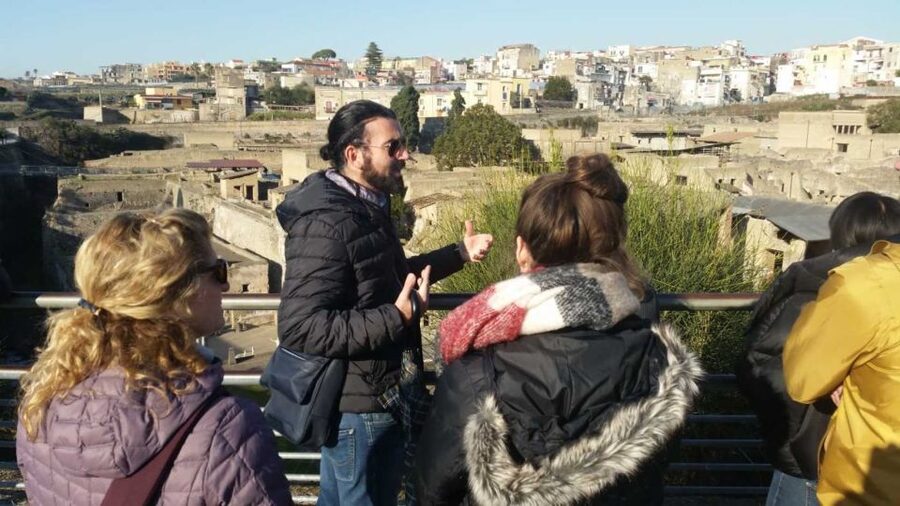
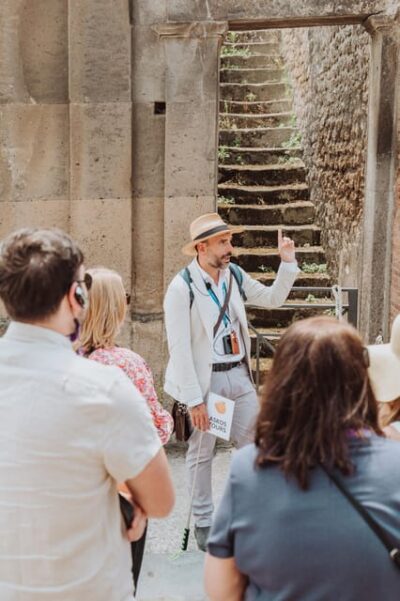
This is a private group tour with a live guide, and that makes a big difference in how the day feels. Pompeii is crowded, signage is sometimes scattered, and you can easily walk right past the details that tell you what mattered to everyday Romans. With a strong guide, you get an interpretive map in your head, so the place starts behaving like a story.
In guides and drivers tied to this tour, a few names come up often, including Alfredo, Francesco, and Gabriella, with Luca as a common driver name. I cannot promise which person you will have on your date, but the pattern you will want is consistent: they tend to focus on big themes like homes, public life, work, and food, then anchor those themes in specific stops.
You will also have options for languages. The tour lists Spanish, English, French, German, Italian, Chinese, Japanese, Portuguese, and Russian. That matters if you want the historical context to land without translation lag.
The Pompeii portion: a fast but focused walk through the western part
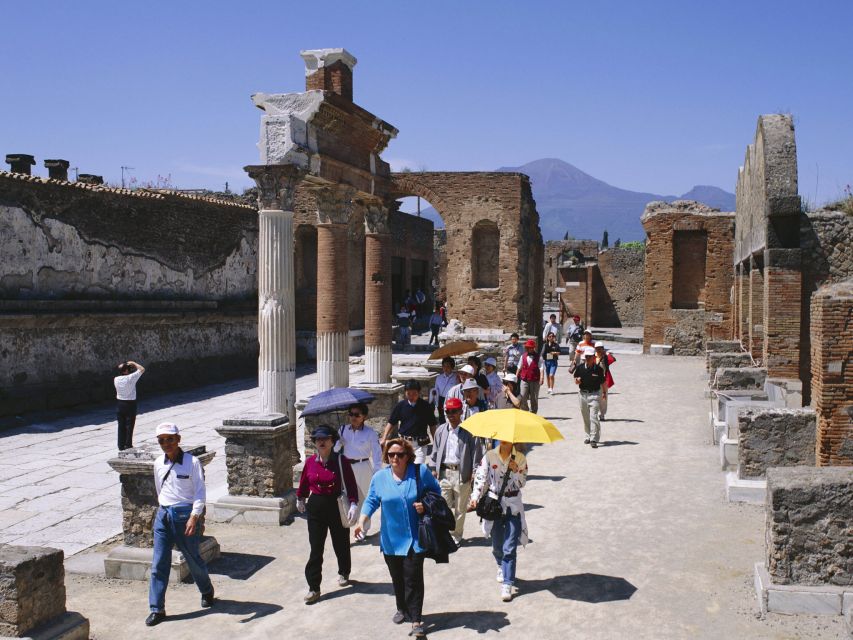
Pompeii is famous for a reason. It is the larger, louder feeling city. You will start with a guided visit of about two hours concentrated on the western part of the ancient town. Two hours is not enough to see everything, and that is the point. This is designed to hit major public buildings and the kinds of houses and businesses that explain how Pompeii functioned.
Expect a tour that moves through a sequence of standout stops such as the Marina Gate, the Basilica, and the Forum area. Those landmarks matter because they set the social rhythm of the city: where people met, traded, argued, and planned their lives.
You will also spend time around the Forum baths and other public spaces. Baths were not just “washing,” they were community hubs. When you see the layout while a guide explains it, you understand why Romans treated hygiene like a social calendar.
Some of the most eye-opening stops include everyday business and unusual sights that still feel very human. You might see the bakery, the Termopolium Capuano (a type of quick-service food spot), and the Lupanar, which was a brothel. These are not there to shock you. They show how Pompeii worked as a real economy, not a museum set.
The tour can also include famous domestic viewpoints like the House of Faun and the House of the Tragic Poet. If you’ve ever wondered what “rich” meant in Roman terms, house details give you the answer fast: courtyards, decorative floors, and the way rooms relate to daily routines.
One more Pompeii stop that adds a different layer is the plaster casts. They help you grasp what the eruption did to people and objects. This is one of those moments where a guide’s pacing helps, because you are meant to look, then understand what you are looking at.
Practical pacing tip: Pompeii can feel intense. The site is big, the walking is steady, and the crowd can get thick near popular points. This tour keeps you moving with a plan, which is exactly why you should wear comfortable shoes and keep water in mind, even though food and drinks are not included.
Lunch break: a 30-minute reset that keeps the day sane
After Pompeii, there is a break built in for lunch, with about 30 minutes allocated. Your guide will stop you at a place that can be a typical restaurant, a winery, or a pizzeria, but you will pay for your meal yourself. The good news is you are not left guessing what is nearby or where to go. The guide can point you to a spot that fits the time.
This is also the moment to reset your energy. Pompeii can feel like information overload, because the site throws details at you constantly. A quick lunch gives you a mental breather so Herculaneum does not blur into the same visual soup.
Herculaneum: the better-preserved city that feels more intimate
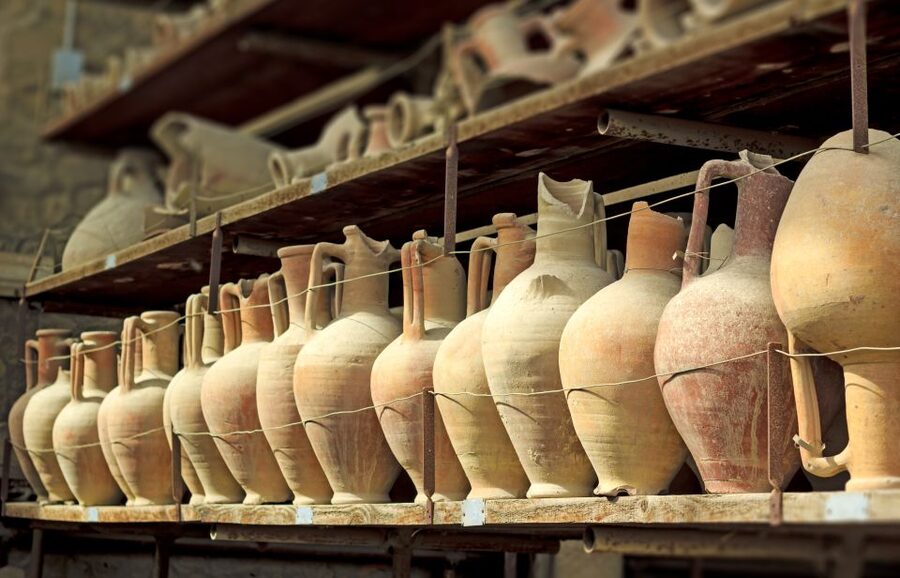
Then the day turns, in a good way. You head from Pompeii to Herculaneum, and you get another guided visit of about two hours.
If Pompeii feels like scale, Herculaneum feels like survival details. It is smaller, but it is better preserved. The difference comes from that mud burial that was so deep it helped protect delicate materials. In plain terms, you get to see more of what everyday people actually owned and decorated their homes with.
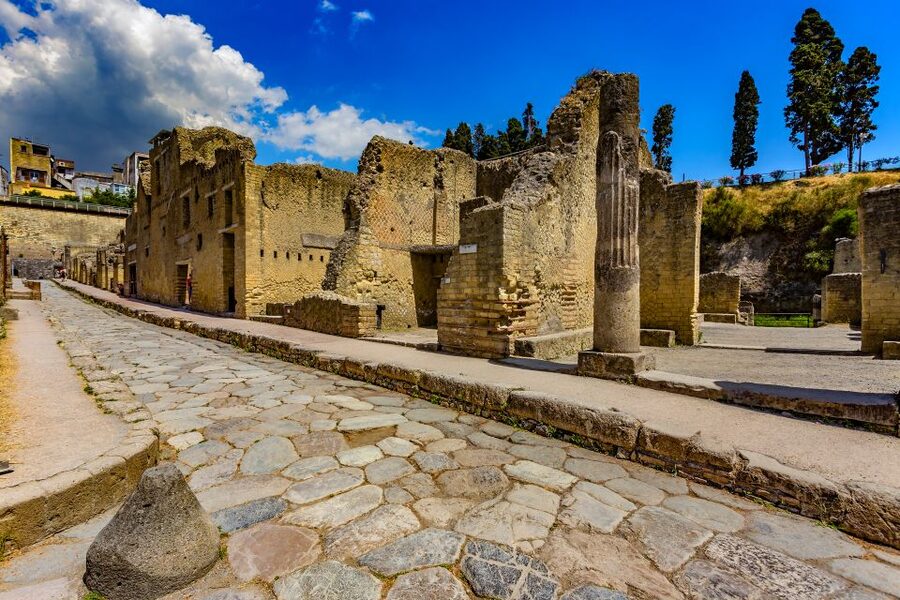
A guide will likely lead you to major highlights like the Temple of the Augustali. Religious buildings help you connect the city to wider Roman traditions, including how local communities showed loyalty and power.
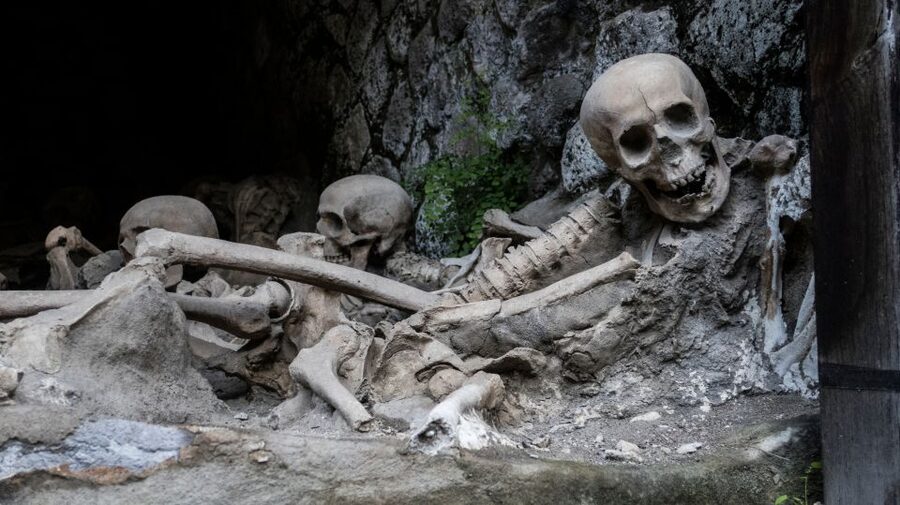
You may also visit the beach area where over 300 skeletons were discovered. That stop can be heavy. A good guide will explain what this means for the story of the eruption without turning it into a spectacle. It is also where the smaller size of Herculaneum can help, because the tragedy feels more personal when you can imagine people moving through a smaller space.
Another key stop group includes the thermal baths, plus civic spaces like the forum. Bathrooms and forums again show you routine life, but you can often appreciate the preservation more in Herculaneum, where surfaces and structures hold up better.
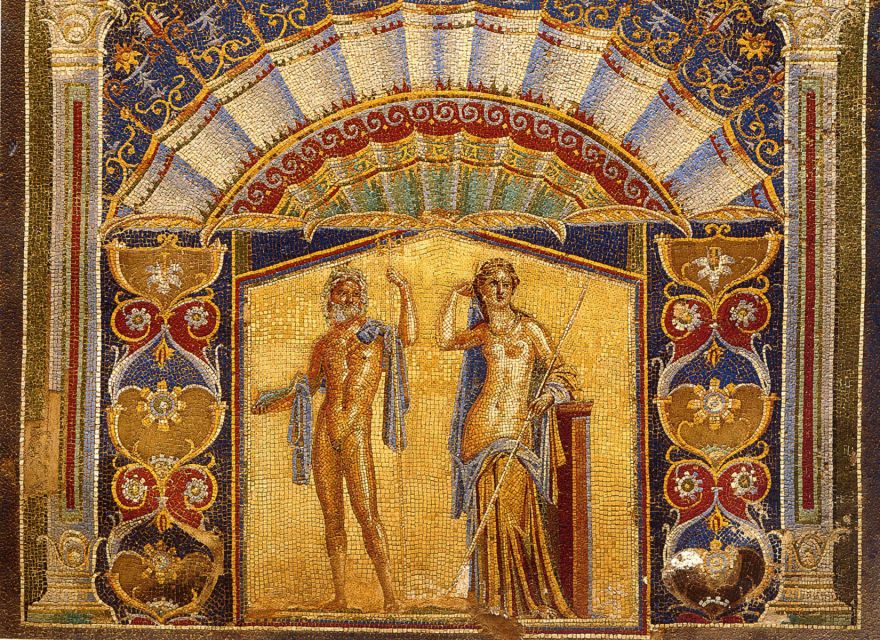
Home highlights are a big part of this city. You might see the house of Neptune and Amphitrite, the Samnite house, the gymnasium, and the house of the Deers. When you look at mosaics and wall decoration while your guide explains what the scenes might have meant, the ruins stop feeling like bare stone and start feeling like homes with personality.
One of the most special aspects of Herculaneum is the evidence of materials that usually do not survive. Carbonized wooden objects, intact paintings, and mosaics are specifically called out as preserved. That matters because it gives you a more complete picture of what Roman interiors and daily objects looked like.



Entry tickets and skip-the-line handling: what to expect at the gates
One practical win is that ticket handling is built into the tour. Your package includes a Pompeii Express entry ticket for Pompeii, plus the Herculaneum entry ticket listed as 16.00 euros each. Your guide can also purchase tickets for skipping the line, estimated at about 10 minutes.
That has real value on a day trip, because it protects your limited time. You have two guided blocks of about two hours each. Losing even 30 minutes to queue stress can tip the day from enjoyable to rushed.
Two small “know before you go” notes you should take seriously:
- No luggage or large bags. Travel light.
- Bring passport or ID card for children.
Price and value: is $623.90 per person worth it?
At $623.90 per person, this is not a casual-budget outing. It only makes sense if you see the value of paying for three things at once: private guiding, private transport, and tickets for two major sites.
Here’s how I think about the value in real terms:
- Two private guided visits give you interpretation at both Pompeii and Herculaneum, not just one. That is where tours often win or lose.
- Transportation plus pickup and drop-off removes the hardest part of a day trip in this region, getting between the sites and getting back to the Amalfi Coast. Pickup options include Amalfi, Positano, Salerno, Sorrento, and Naples.
- Tickets are included for Pompeii and Herculaneum. That helps with planning and reduces friction.
The main cost risk is the same one you face on any private day: if you end up wanting a slower pace, more breaks, or you want to go deeper than the major highlights, this one can feel like a highlight reel. But if you want a structured day that covers the essentials without wasting time, it can be a strong use of money.
Who this tour suits best
This works best if you:
- Want Pompeii and Herculaneum in one day.
- Prefer a plan that keeps moving so you do not lose hours to logistics.
- Like specific sights and want someone to explain what they mean, especially the public spaces and house interiors.
- Care about preservation differences, like why Herculaneum can feel more complete.
It is not a great fit if you:
- Need wheelchair access, because it is not suitable for wheelchair users.
- Expect lots of free wandering time. This is guided, focused, and time-boxed.
Should you book this private Pompeii and Herculaneum day?
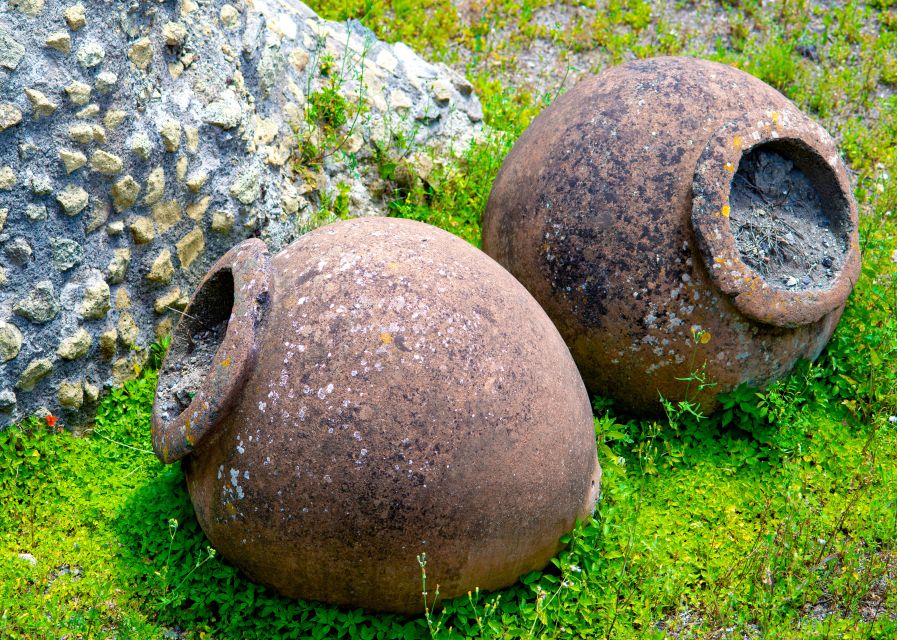
I’d book it if your priority is a guided, efficient day that connects both cities and explains why they feel different. Pompeii alone can swallow a whole day, and doing it without context can turn into a repetitive walk of stone. This tour gives you the structure to see the major highlights and understand how the eruption shaped what survived.
Skip it if you know you want a slower pace, more stops, and the ability to roam without a timed route. Pompeii is big enough that you can easily spend days there, and this plan is designed for a single-day hit.
If you are on the fence, here’s your simplest decision rule: if you want help turning the ruins into a story, this private format is the right tool. If you prefer independent wandering and flexible pacing above all else, you may prefer a less structured approach.
FAQ
What is the duration of the Pompeii and Herculaneum private tour?
The tour runs for 7 hours total. Guided visits at Pompeii and Herculaneum are each about 2 hours.
Where does pickup happen?
Pickup is available from five locations: Amalfi, Positano, Salerno, Sorrento, and Naples. You choose your pickup location and provide your exact pickup details.
Where do you drop off after the tour?
Drop-off options include Salerno, Sorrento, Positano, Amalfi, and Naples.
How long is the guided tour at each site?
You get about 2 hours of guided time at Pompeii and about 2 hours of guided time at Herculaneum.
Are entry tickets included?
Yes. The tour includes a Pompeii Express entry ticket and the Herculaneum entry ticket (16.00 euros each).
Is lunch included, and do I pay for it?
Food and drinks are not included. There is a lunch stop, and your guide can suggest a typical restaurant, winery, or pizzeria.
Can we skip the ticket line?
Yes. The guide can buy your tickets within approximately 10 minutes, helping you skip the line.
Is the tour wheelchair accessible?
No. The tour is listed as not suitable for wheelchair users.
Is luggage allowed?
No. Luggage or large bags are not allowed.
More Private Tours in Naples


More Tours in Naples

More Tour Reviews in Naples
Not for you? Here's more nearby things to do in Naples we have reviewed






Tour Reviews, compared.
 ★ 4.8Pompeii: Entry Ticket and Guided Tour with an ArchaeologistFrom $3519,459 reviews
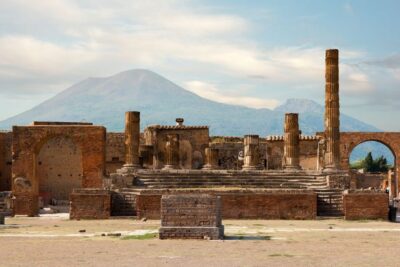 ★ 4.2Pompeii: Entry Ticket with Optional Audio GuideFrom $2612,360 reviews
 ★ 4.8Pompeii: Small Group Tour with an ArchaeologistFrom $4012,264 reviews
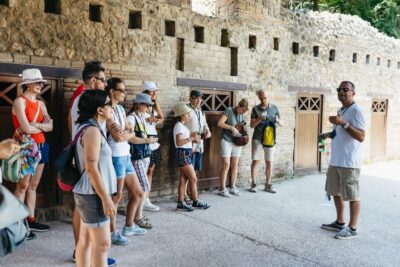 ★ 4.3Pompeii Ruins & Mount Vesuvius Day TourFrom $12011,459 reviews
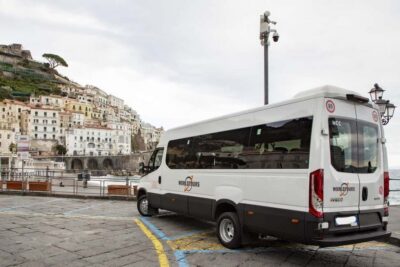 ★ 4.6Sorrento, Positano and Amalfi Full-Day TourFrom $10710,988 reviews
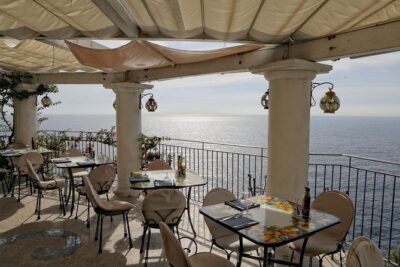 ★ 5.0Sorrento, Positano & Amalfi Coast – Small Group TourFrom $768,643 reviews
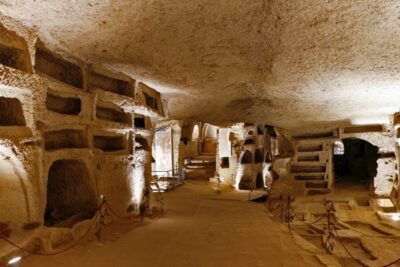 ★ 4.6Catacombs of San Gennaro Entry Ticket & Guided TourFrom $157,941 reviews
★ 5.0Pompeii Small Group Tour with an ArchaeologistFrom $356,593 reviews
★ 4.6Catacombs of San Gennaro Entry Ticket & Guided TourFrom $157,941 reviews
★ 5.0Pompeii Small Group Tour with an ArchaeologistFrom $356,593 reviews
Browse the lists this tour appears in