
Tour review · TOUR REVIEWS
Galleria Borbonica Entrance Ticket in Standard Route
Naples goes underground in 60 minutes. You’ll descend into Galleria Borbonica and walk through tunnels that shifted roles from Bourbon-era plans to World War 2 shelter use. It’s a very different way to feel the city, because you’re not just looking at history, you’re moving through it.
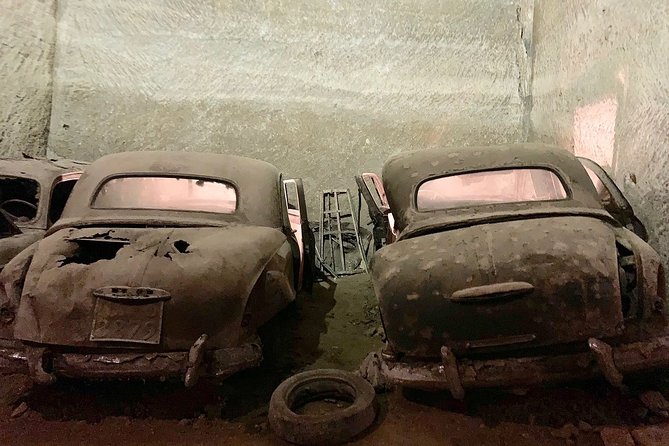
I love how the tour pairs big backstory with real objects, like old cars and other period items tucked into the underground spaces. I also love the human side, when a guide like David, Sabrina, or Roberto brings the stories to life in clear English.
One thing to plan for is the physical side of the route. The opening descent includes steep, narrow steps and ramps, so the tour may feel tough if you have limited mobility or strong claustrophobia.
Quick hits before you go
- Two nearby entrances let you choose the easier route for your comfort (Vico del Grottone 4 or Via Domenico Morelli 40)
- A real WWII air bomb shelter story inside a space that served multiple purposes over time
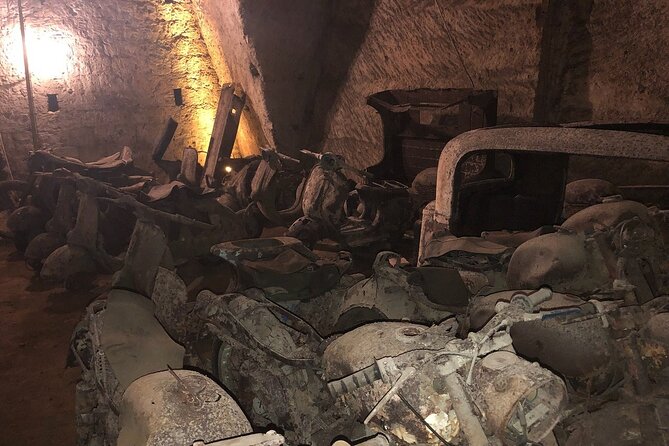
- Artifacts from the tunnels, including old cars and other period finds
- Short but packed timing, about 1 hour with guided explanation throughout
- One group size limit (max 50) helps keep the tour manageable in tight walkways
The real draw: Bourbon tunnels turned WWII shelter in one loop
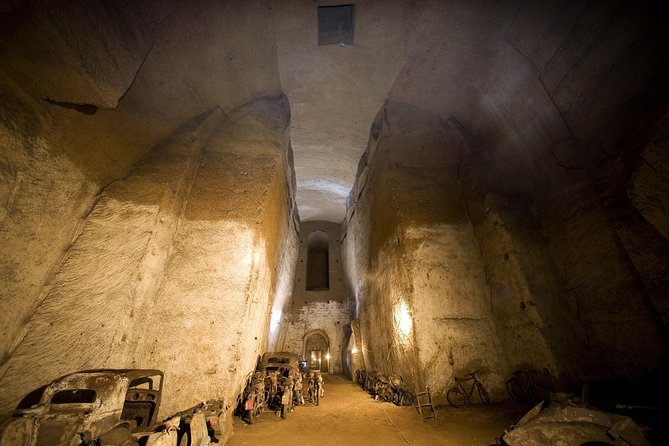
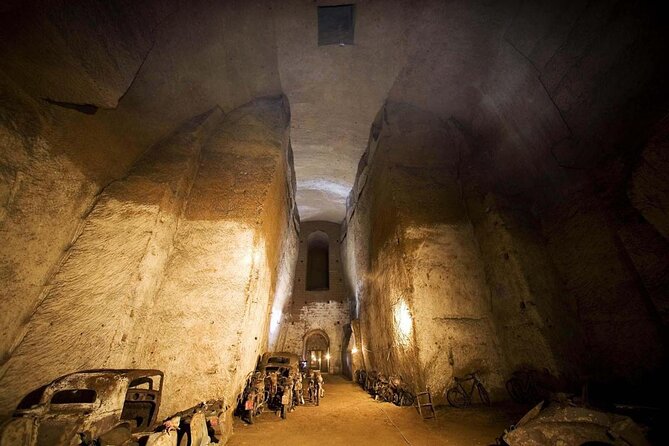
Galleria Borbonica is one of those Naples experiences where the setting does half the work. You start near Plebiscito Square area, then head down into the belly of the Chiaia district, and the city changes scale fast. Instead of street noise, you’re in a stone corridor world where the past is literally under your feet.
The highlights are not just the tunnels themselves. You also get the WWII angle, including an air bomb shelter, plus the way the underground spaces were reused again and again. That mix is exactly why this tour works. It connects the Bourbon-era escape idea from Ferdinand II of Bourbon to what people needed during the war, and it helps the details feel practical, not abstract.
You’ll come away with a better sense of how Naples adapts. Even when the city is trying to defend, escape, treat people, or store things, the “underground plan” is there, waiting.
More Naples tours, ruins, coast days, and city experiences to compare


Price and value: $18.14 for a guided hour underground
At $18.14 per person for about 1 hour, this is solid value if you’re the type who likes story-driven sightseeing. You’re not paying for a long museum visit or a bus ride. You’re paying for a professional guide who explains what you’re seeing as you go, in English, while you’re down in the tunnels.
What makes the price feel fair is that the tour is tightly focused. You descend, you hear the key historical threads, you see period artifacts like old cars, and then you exit. In Naples summer heat, that single-hour format also helps. You get a strong “cool-down plus culture” combo without losing a full morning or afternoon.
The main value tradeoff is that you don’t control the pace completely. Narrow walkways and group movement mean you might not get lots of extra lingering time at the end, even if there’s a small shop or museum area.
Entry points near Plebiscito Square, and why you should double-check yours
This tour has two entrances, and it matters. The ticket redemption point is Vico del Grottone, 4, 80132 Napoli, and it’s about 100 meters from Plebiscito Square. That’s the easiest address to anchor yourself to before you walk to the right place.
But there’s also a second entry: Via Domenico Morelli, 40, accessed through the crosswalk of Quick parking. This entrance is the one I’d steer you toward if you’re claustrophobic or have walking issues, since the route can be easier depending on how you enter and exit.
Here’s the practical advice: confirm the entrance you’re meant to use and plan to arrive a bit early. One review experience described being sent to the wrong entry point for the English tour, which meant re-routing through the tunnels to meet the guide elsewhere. It wasn’t the end of the world, but it was a pain, and you want to avoid that kind of extra walking underground.
Also note a common theme from experience reports: your start and exit point may be different. That’s not a red flag, it’s just how the route is designed. It also means you should not expect to simply walk back to where you started.
What the first descent feels like: ramps, stairs, and that 33-yard drop
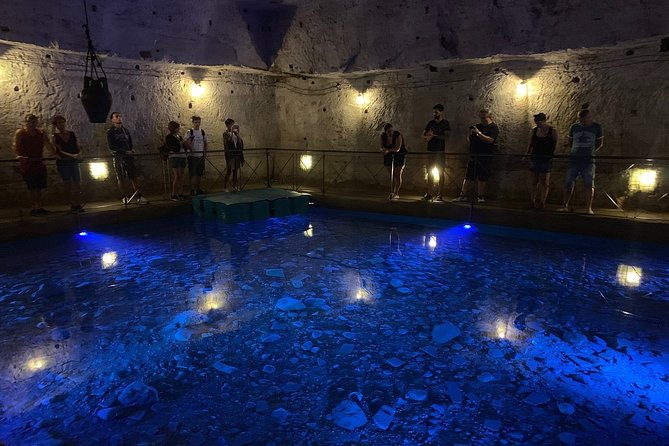
Your experience begins with the descent. The route includes a staircase with 8 ramps and goes down about 33 yards. Expect that first stretch to feel narrow and steep, especially at the beginning.
If you’re thinking this is like a gentle stroll into an attraction, adjust your expectations. This part is physical. Several accounts specifically call out steep, narrow steps, and one notes about 90 steps down. Even if you’re fine with stairs, it’s still worth moving slowly and giving yourself time to steady your footing.
Good news: once you’re past the initial drop, the walk often feels easier along the way. The guide keeps the group moving, and you’ll usually find more space as the tour continues.
Bring the right mindset. Treat it like a short hike with history narration, not a casual “stand and look” tour.
Stop inside Galleria Borbonica: the stories of escape, war, and reuse
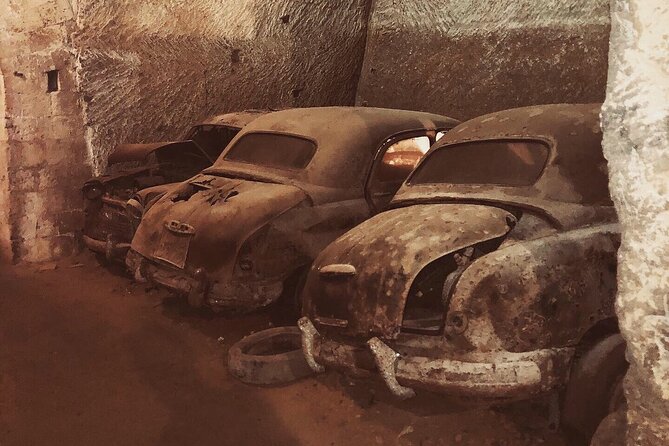
Inside, the tour turns into a guided timeline you walk through. A key thread is the Bourbon-era origin. The tunnel was built in 1853 by Ferdinand II of Bourbon. His concern was an outbreak of rebellion, and he asked for an escape route from the Royal Palace to the barracks area in what’s now Via Morelli.
The work wasn’t completed as originally intended. Then history took over. During World War 2, residents of the area used the tunnels as a military hospital. Later, it became the Hall Judicial Deposit. That means what you see isn’t only one purpose at one point in time. It’s layered use, shaped by what people needed when events changed.
Then comes the WWII air bomb shelter focus. The underground setting makes this portion hit harder than it would in a typical exhibit. You’re not staring at diagrams. You’re standing in the kind of space where people would have sought protection.
And yes, you’ll see artifacts, including old cars. One review described the cars and other period items as a standout visual, and multiple accounts link those objects to the guide’s storytelling, so the items don’t feel random. They help you picture the tunnel as a real working environment, not a sealed-off curiosity.




The sound and the pace: what to expect from the guide and the echo
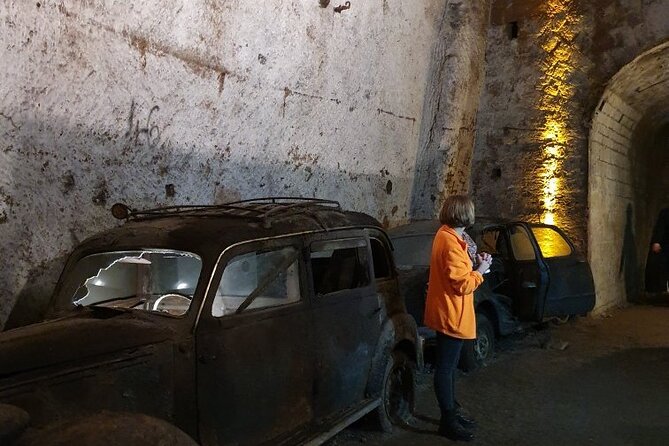
In tunnels, sound bounces. That’s physics, not a complaint. Still, it affects your comfort.
If your guide speaks quickly, or if the group is large, you might miss some lines. One review praised a guide’s English but noted the delivery felt scripted and less interactive. Others said the guide spoke clearly and answered questions well.
So here’s what you can do to make your own tour smoother:
- Stay close to the guide during narrow sections.
- If you can, ask questions during moments with more space.
- If you struggle with accents, position yourself where you can see the guide’s face and mouth more clearly.
Headsets were specifically mentioned as something that would have helped in one experience, which is a useful reminder: you should expect echo and plan to listen actively rather than assuming perfect clarity everywhere.
Exiting through a different point: how to avoid getting turned around
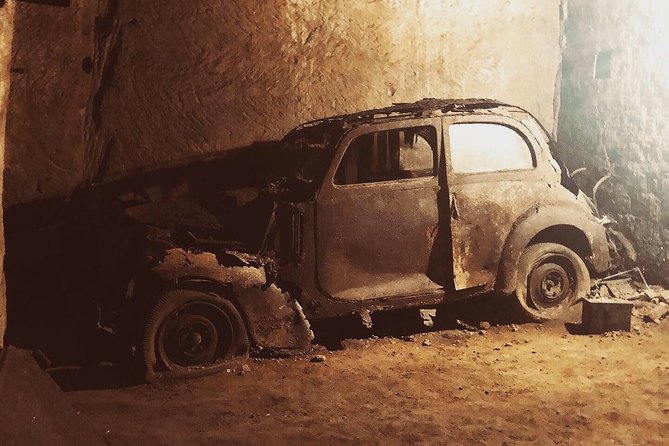
Your route may not exit where you entered. That’s part of how the underground walk is set up.
One experience noted an exit through a public car park with limited signage, which meant a little confusion at the end. That doesn’t mean it’s unsafe or chaotic, just that you should keep your bearings and don’t assume you’ll pop out into a familiar street corner.
If you’re taking photos, do it while you have a stable walking rhythm. Don’t stop abruptly on narrow steps, and don’t let your group spread too far apart near entrances and exits.
This is also a good time to remember a practical Naples rule: if you’re moving between points, have your map ready and don’t rely on memory once you’re underground.
Who should book this, and who might want a different plan
This tour fits best if you like history that shows up as physical space. If you enjoy war-era stories, underground city design, or the “how did they live and work here” side of urban history, you’ll likely have a strong time.
It also works well as a break from heat. More than one review pointed out the underground setting as a relief during hot weather, and the timing is short enough to pair it with other Naples stops.
Family fit depends on the kids. One account said younger than 5 might struggle, and another mentioned kids around school age having a good time. The reason is simple: steep steps at the start and tight tunnels mean not much wiggle room for little legs.
If you have mobility limitations or claustrophobia, the tour can still be possible, but you should choose entry #2 through Via Domenico Morelli 40, as the guidance specifically recommends it for those situations.
Most people can participate, but your comfort with stairs and confined spaces is the deciding factor here.
Practical tips that make the tour feel easier
The tour comes with a few clear practical notes, and they matter.
Wear comfortable shoes. You’re dealing with steep, narrow steps and ramps, and you don’t want slick soles.
Bring a sweater. The underground environment can feel cooler than street level, so you’ll be glad you’re not sweating through the tour.
If you’re sensitive to tight spaces, use the recommended entrance. That’s not just advice, it’s how the route can be adjusted for comfort.
Also plan your arrival. One review mentioned the start area can be restricted, so you might wait outside before you enter. There’s not a lot of seating or facilities, so show up calmly and with patience.
Finally, if you’re booking during a period when access is limited, double-check your day. One review specifically noted that tours are only available on weekends, so don’t assume daily operation.
Should you book the Galleria Borbonica Standard Route ticket?
Book it if you want a one-hour Naples experience that combines real atmosphere with clear guided context. The price is fair for what you get, and the WWII air bomb shelter angle plus artifacts like old cars gives the tour a stronger payoff than a generic “tunnels in a basement” stop.
Consider passing or choosing a different format if stairs and tight spaces would stress you out. The opening descent is steep and narrow, and while the second entrance is recommended for claustrophobia and walking issues, it still isn’t an elevator ride.
If you’re the kind of traveler who loves seeing a city’s layers, from Bourbon-era escape plans to wartime protection, this underground walk is worth your time. Just arrive early, confirm your entrance, wear grippy shoes, and treat the first few minutes as the hardest part.
More Tickets in Naples


More Tour Reviews in Naples
Not for you? Here's more nearby things to do in Naples we have reviewed










Tour Reviews, compared.
 ★ 4.8Pompeii: Entry Ticket and Guided Tour with an ArchaeologistFrom $3519,459 reviews
 ★ 4.2Pompeii: Entry Ticket with Optional Audio GuideFrom $2612,360 reviews
 ★ 4.8Pompeii: Small Group Tour with an ArchaeologistFrom $4012,264 reviews
 ★ 4.3Pompeii Ruins & Mount Vesuvius Day TourFrom $12011,459 reviews
 ★ 4.6Sorrento, Positano and Amalfi Full-Day TourFrom $10710,988 reviews
 ★ 5.0Sorrento, Positano & Amalfi Coast – Small Group TourFrom $768,643 reviews
 ★ 4.6Catacombs of San Gennaro Entry Ticket & Guided TourFrom $157,941 reviews
★ 5.0Pompeii Small Group Tour with an ArchaeologistFrom $356,593 reviews
★ 4.6Catacombs of San Gennaro Entry Ticket & Guided TourFrom $157,941 reviews
★ 5.0Pompeii Small Group Tour with an ArchaeologistFrom $356,593 reviews
Browse the lists this tour appears in