
Tour review · TOUR REVIEWS
Herculaneum Private Guided Tour Led by a Local Top-rated Guide – All inclusive
Buried Roman streets still read like today. This private guided tour is interesting because it targets the best-preserved corners of the UNESCO site of Herculaneum, not a rushed stamp-collection. I like the skip-the-line entry that gets you inside fast, and I like that the guide brings art history into the ruins, down to small visual details. One tradeoff: there is no hotel pickup, so you are responsible for getting yourself to Ercolano Scavi.
Herculaneum is different from Pompeii, and the tour makes that difference easy to see. You walk past ancient streets and public spaces, then move into houses where mosaics still pop and even carbonized objects help you picture daily life. The only catch is the walking, so comfortable shoes matter.
This is also a people-matching tour: you get questions answered in real time, in English, as you follow the guide through about a 2.5-hour circuit. Guides like Italo, Anna, Lelo, Loretta, and Roberta are praised for making the site click, with focus on details like the angel symbols that are easy to miss on your own.
Key things to know before you go
- Skip-the-line access to the Parco Acheologico di Ercolano ticket office, so your time is spent walking, not waiting.
- Private walking tour with a local guide and professional art historian guidance for context as you see the ruins.
- You get morning or afternoon options, meeting at either 8.30am or 12.30pm.
- Herculaneum’s standout rooms include the mosaics at the House of the Mosaic Atrium and the House of Neptune and Amphitrite.
- You see the public core, including the Forum, Basilica, Thermal Baths, and more Roman-era structures.
- Comfort and pacing are on you, since the tour expects moderate walking with no pickup or drop-off.
Entering Herculaneum fast, with skip-the-line tickets
The tour starts where the site begins, at Parco Acheologico di Ercolano, in Ercolano. You meet your guide at either the 8.30am morning departure or the 12.30pm afternoon departure, then you go in using your skip-the-line tickets. That matters here. Herculaneum is compact, so losing time at the entrance can feel like a bigger hit than it would at a massive complex.
Because it is private, you do not do the awkward thing where a group funnels forward while half the people try to keep up and the other half tries to guess what they are looking at. Your guide can slow you down at a mosaic, point out a symbol, or explain a layout without needing to keep a huge crowd moving.
One detail I really value is the mix of roles: you are not just getting a generic walkthrough. The tour includes a professional guide, a local guide, and professional art historian guidance. In plain terms, that means you get both the site basics and the art and symbolism behind what you see.
You can also read our reviews of more guided tours in Naples

The Roman city essentials: Decumanus, Forum, and Basilica
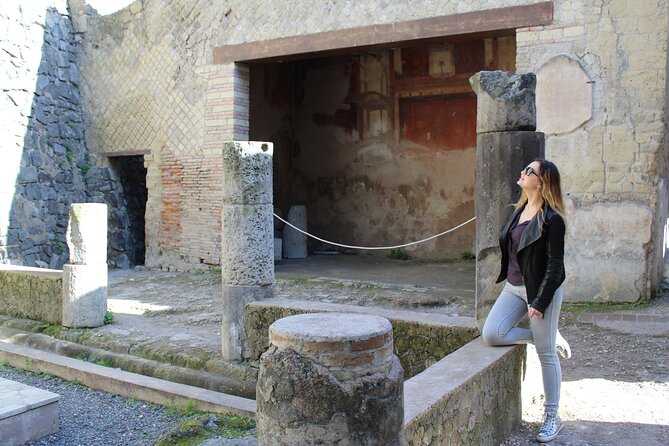
Once inside, the tour follows the story of an ancient Roman town. You will see ruins dated as early as the 7th century BC, then understand how the city functioned as Roman life evolved there. This is where the guide work becomes more than trivia. Herculaneum looks like “old walls” until someone translates the spaces into real routines.
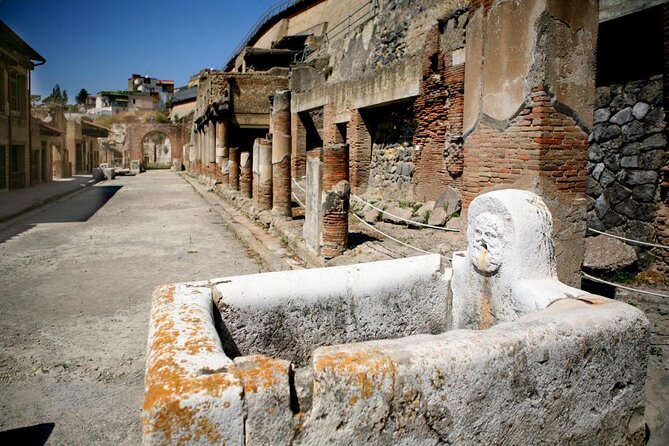
A big focus is the Decumanus, the main east-west street that organizes much of the site. When the guide explains how the city was laid out, you start to read where people would have walked, shopped, and gathered. You are also guided through major public spaces, including the Forum and the Basilica.
If you like architecture, the Basilica is a good anchor stop. It helps you understand what public life meant in Roman cities: civic business, meetings, and the social rhythm of the day. The Forum is where that energy becomes practical. You are not just staring at stones. You are learning what happened in the center of the city, and then you can see the surrounding structures as a working system.
The nice part of a private pace is that you can linger where your attention goes. If your eyes go straight to an artistic detail, you can follow that thread. If you are more into street life and layout, the guide can keep it centered on how the town worked.
Thermal Baths, Palestra, and amphitheater perspectives
Herculaneum is famous for public spaces, and this tour brings you to the ones you can actually visualize. You will see the Thermal Baths, plus the Palestra, and you will also get to view structures tied to entertainment and community life, including the amphitheater.
The Thermal Baths are especially worth your attention. Baths were part hygiene, part social time, part gossip circuit, and part status symbol. When the guide connects what you see with how people used the space, you stop thinking of it as a damp-looking ruin and start thinking of it as a routine.
The Palestra and gymnasium areas help you grasp how training and physical culture fit into Roman daily life. Even if you do not care about the technical terms, it helps to see where exercise happened and how the town invested in that kind of public setting.
Then there is the amphitheater. Even in ruins, you can imagine the crowd. And if you have ever watched a movie set in an ancient world, this is where your brain does the translation work for you. The guide’s job is to speed that up, so you get a clearer mental picture in minutes, not hours.
Seafront villas and the mosaic rooms people talk about
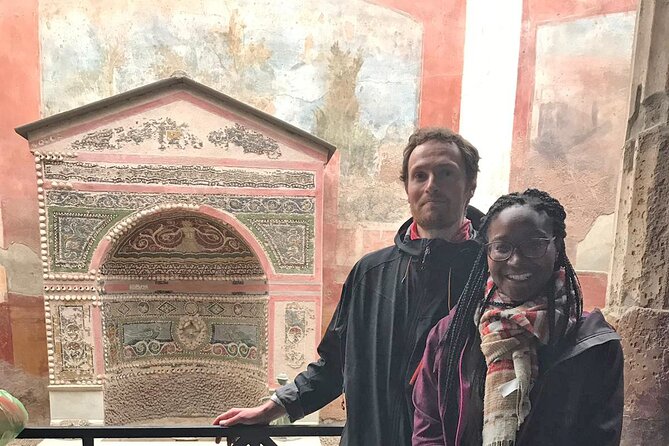
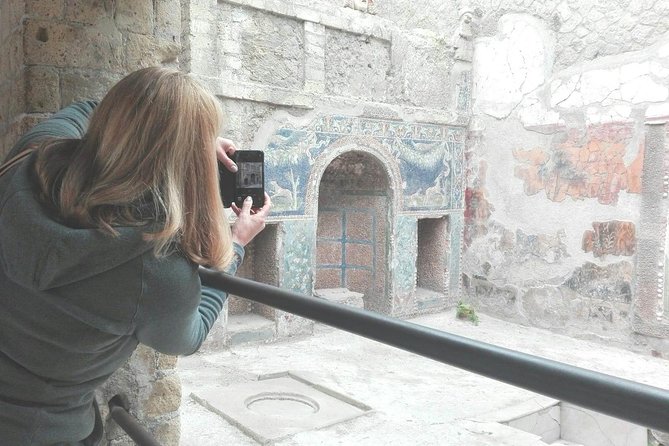
Now comes the part that makes Herculaneum feel personal. You move from public life into private houses and grand villas, where art, decoration, and everyday objects show up in a way you cannot easily recreate in your head.
Expect stops focused on the grand seafront villa and multiple house highlights, including the House of Neptune and Amphitrite and the House of the Mosaic Atrium. You will also encounter additional house spaces such as the House of the Deer. These are not just named for marketing. Each one gives you a different angle on how people decorated rooms and displayed taste.
The mosaics are a major reason to book. Your guide helps you look at them in a structured way, so you notice more than color. One standout example from the guide experiences shared in this tour line is Italo, who points out details that are not obvious at first, including angel symbols. That kind of attention changes the whole experience. Instead of thinking, That’s a pretty floor, you start thinking, This person wanted a message here.
The House of Neptune and Amphitrite is a great place to focus on how maritime imagery fits the identity of the home. The Mosaic Atrium can feel like a museum room, but your guide keeps it grounded in what it meant inside a living space.
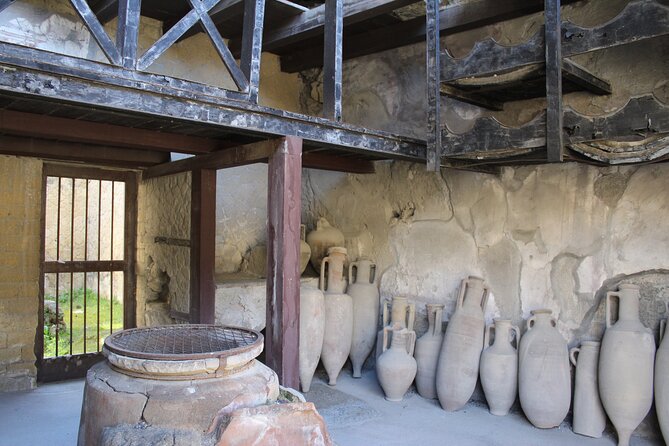
One more powerful detail here is that you may see carbonized furniture. That sounds heavy, but the value is clarity. It anchors the story of AD 79 in objects tied to ordinary living. You get the sense that the eruption was not just a tragedy of buildings, it was a sudden interruption of daily patterns.
Amphitheater, streets, and why Herculaneum survived so clearly
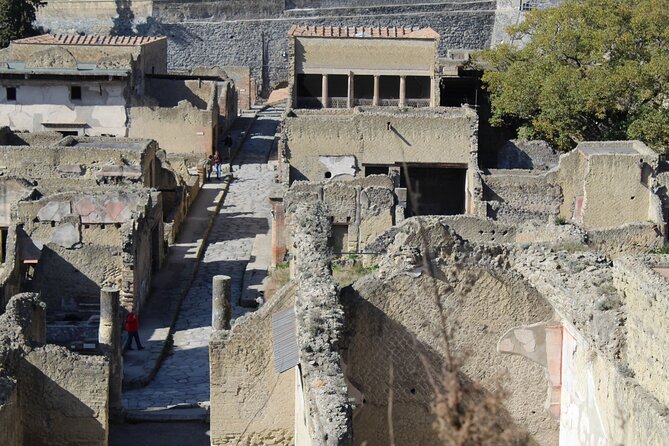
So why does Herculaneum feel different when you walk it? The big historical point you will hear is that the city was buried by the AD 79 eruption of nearby Mt Vesuvius. But the tour makes you understand what that means visually. Herculaneum was not wiped into total confusion like some disaster sites. Many structures stayed in place enough that you can still imagine the city’s design and the interior look of homes.
This is where the guide’s art history piece really earns its keep. You are not simply being told the facts. You are learning what to look for, and why certain elements were placed where they were. Roman homes, public buildings, and decorative programs were deliberate. Once you recognize that, the site becomes readable.
The walking route also supports this. You see the city’s spine in public areas first, then you move into the seafront luxury spaces. That shift helps you compare how different social groups used the same urban environment. It is a strong way to understand Roman society without needing a separate lecture.
You can also read our reviews of more private tours in Naples





Morning vs afternoon departures, and how to pick the timing
You get a choice of departure time: either 8.30am or 12.30pm. For many people, the timing comes down to comfort and energy.
If you prefer a calmer start, the morning option is usually easier for sight-seeing. You will likely be less rushed, and you can maintain your focus through the full circuit. If you want a more relaxed half-day before or after other Naples plans, the afternoon departure can work well.
Either way, plan to arrive with a little buffer at the entrance. You meet at Ercolano Scavi, and the guide needs you on time so the skip-the-line flow works as promised.
What to bring and what to wear for a smooth 2.5-hour walk
This is a walking tour with moderate physical fitness expectations. The good news is it is private, so the guide can pace you. The practical piece is simpler: wear comfortable shoes, because you will be moving through uneven ground and outdoor ruin settings.
Also check the details tied to entry and communication. A current valid passport is required on the day of travel, and you are asked to specify your mobile number including your country code in case of emergency. You will have a mobile ticket, and the meeting point is near public transportation, which helps if you are not using a car.
If you are traveling with kids, the requirement is clear: children must be accompanied by an adult. Since the route is outdoors and involves walking through a large archaeological area, you will want to match their pace to your own comfort level.
Price and value: what $207.11 per person buys you
At $207.11 per person, this is not a budget tour. The question is what you get in return.
You are paying for three main things. First, you get a private tour, not a shared group experience. That means the guide can tailor explanations, answer questions, and slow down where you want details. Second, the tour is built around skip-the-line access with admission included, so you start seeing the site right away. Third, you get the added layer of art history guidance. That is often the difference between, Here are ruins, and, Here is what those ruins meant.
There is also mention of group discounts, which can improve the value if you are traveling with others. And the fact that the tour tends to be booked far in advance suggests people plan carefully for their Naples itinerary. For value-minded travelers, early booking is often the easiest way to secure the slot that matches your timing.
If you are the kind of visitor who wants to understand symbolism in mosaics, or you care about how public spaces worked, this price starts to make sense quickly. If you prefer a slower self-guided visit and you already know Roman art and city planning basics, you might be able to do it cheaper alone. But if you want the site to make sense fast, the guide-driven format justifies the cost.
Who this private Herculaneum tour is best for
This is an excellent fit if you want a guided route that stays focused on the best-preserved elements of the city. It is also ideal for classic students or anyone who likes learning in context rather than reading plaques.
Based on the guide strengths that come up here, you will likely enjoy this most if you appreciate details and stories. Guides like Roberta, who is described as an archaeologist who worked on site, bring a hands-on tone. Anna and Loretta are praised for strong site history explanations and making the place feel alive. Lelo is noted for being helpful, friendly, and humorous, which can be a big plus if you want history without stiffness. Italo’s attention to subtle features like angel symbols shows the value of having someone who teaches your eye how to see.
In short, this works well for couples, families who can handle a walk, and anyone who wants their Herculaneum visit to feel guided and meaning-filled.
Should you book? My practical recommendation
Book this tour if you want Herculaneum to feel understandable and specific, not vague. The private format, the skip-the-line entry, and the art history angle are a strong combination for a site that can look confusing at first glance.
Skip it, or consider a different approach, if you want a more flexible day with no set meeting time and you are comfortable navigating independently. Also consider it if the idea of moderate walking through the ruins does not sound fun.
If you are choosing between a quick stop and a serious visit, this tour leans serious. In about two and a half hours, you get the city’s public structure, the baths and athletic spaces, and the house interiors with mosaics and even carbonized furniture details. For a one-time stop in the Naples area, that is a lot of payoff per hour.
FAQ
How long is the Herculaneum private guided tour?
The tour runs about 2 hours (approx.), and the walking experience is planned for around two and a half hours on site.
What time does the tour start?
You meet your guide for an 8.30am or 12.30pm departure, depending on the option you choose.
Is the admission ticket included?
Yes. The admission ticket is included, and you also receive skip-the-line access.
What is included in the price?
The price includes a professional guide, a private tour, a local guide, professional art historian guidance, and guaranteed skip-the-line entry.
Is hotel pickup or drop-off included?
No. Hotel pickup and drop-off are not included.
What language is the tour offered in?
The tour is offered in English.
Can I cancel for free, and until when?
Yes. You can cancel for a full refund up to 24 hours in advance of the experience start time.
More Guided Tours in Naples


More Tours in Naples




More Tour Reviews in Naples

Not for you? Here's more nearby things to do in Naples we have reviewed








Tour Reviews, compared.
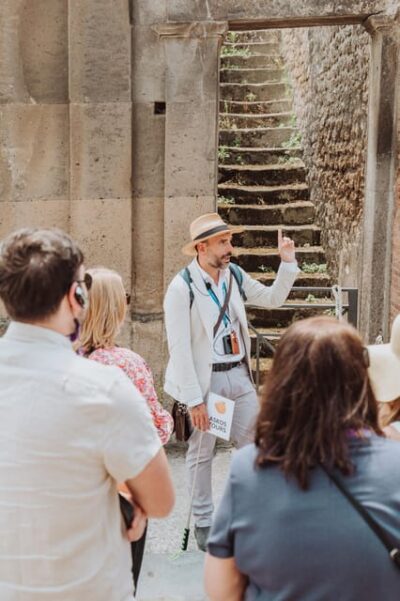 ★ 4.8Pompeii: Entry Ticket and Guided Tour with an ArchaeologistFrom $3519,459 reviews
 ★ 4.2Pompeii: Entry Ticket with Optional Audio GuideFrom $2612,360 reviews
 ★ 4.8Pompeii: Small Group Tour with an ArchaeologistFrom $4012,264 reviews
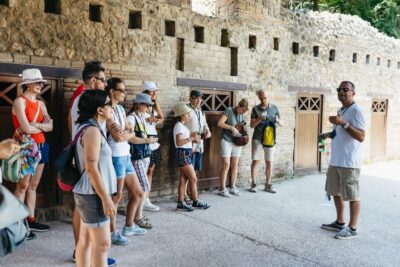 ★ 4.3Pompeii Ruins & Mount Vesuvius Day TourFrom $12011,459 reviews
 ★ 4.6Sorrento, Positano and Amalfi Full-Day TourFrom $10710,988 reviews
 ★ 5.0Sorrento, Positano & Amalfi Coast – Small Group TourFrom $768,643 reviews
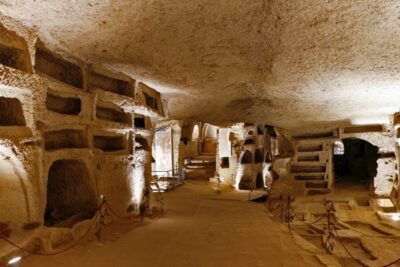 ★ 4.6Catacombs of San Gennaro Entry Ticket & Guided TourFrom $157,941 reviews
★ 5.0Pompeii Small Group Tour with an ArchaeologistFrom $356,593 reviews
★ 4.6Catacombs of San Gennaro Entry Ticket & Guided TourFrom $157,941 reviews
★ 5.0Pompeii Small Group Tour with an ArchaeologistFrom $356,593 reviews
Browse the lists this tour appears in