
Tour review · TOUR REVIEWS
Herculaneum Private Tour with an Archaeologist
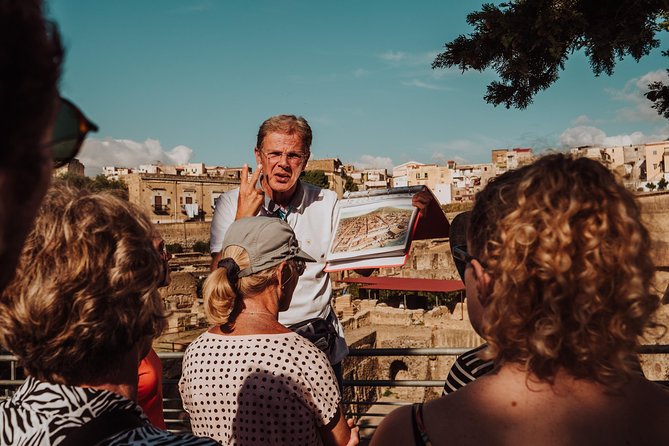
Herculaneum feels like time travel. This private, English-language walk with an archaeologist guide turns the town’s street-level ruins into something you can actually picture, including domestic spaces and public areas. You’ll move efficiently across the site, with a clear meeting point outside the archaeological grounds and short, focused stops.
I especially like that it’s private, so your guide can answer your questions and keep things at your pace. I also like the tight 2-hour route with multiple named highlights, which is great if you want more than a quick stamp-and-go visit. One consideration: the Herculaneum entrance ticket is not included, so you need to budget the site entry separately.
Key highlights worth your attention
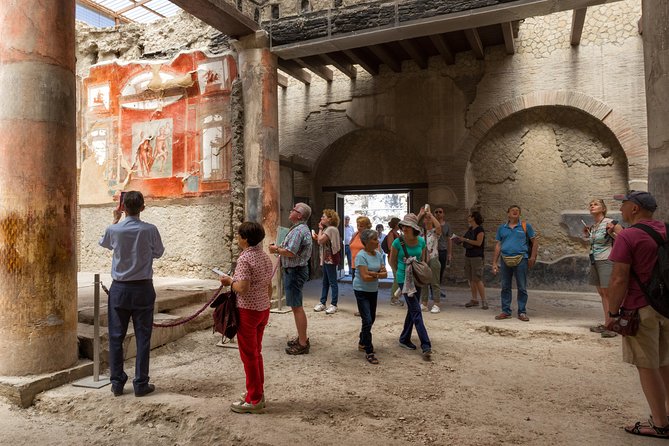
- A true private format: only your group, so you get real back-and-forth with your guide.
- Short stops, big payoff: each highlight is handled in tight time blocks so you see more without rushing.
- Herculaneum’s “better preserved” feel: it’s often described as the more intact experience compared with Pompeii, especially for understanding everyday life.
- Domes and terraces, not just walls: the route mixes houses, courtyards, and elevated viewpoints.
- Guide quality matters: the best runs can feel story-driven, with guides like Mena, Luciano, Michele Lamberti, and Antonella showing strong depth.
- Plan for heat: if you’re visiting in summer, an early slot can make the walk much more comfortable.
Why this Herculaneum private tour works (even if you like independent travel)
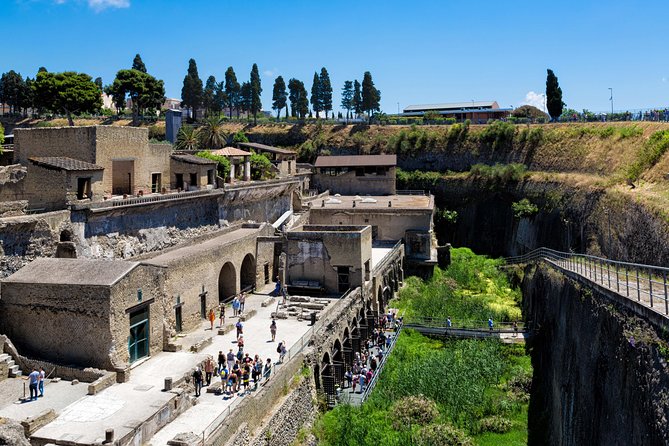
Herculaneum is one of those places where a self-guided visit can look impressive, but guided help makes it click. The ruins were uncovered from a seaside Roman town that was buried and preserved after the eruption of Mount Vesuvius. That preservation is the star of the show, but you still need help connecting what you see with what life may have looked like.
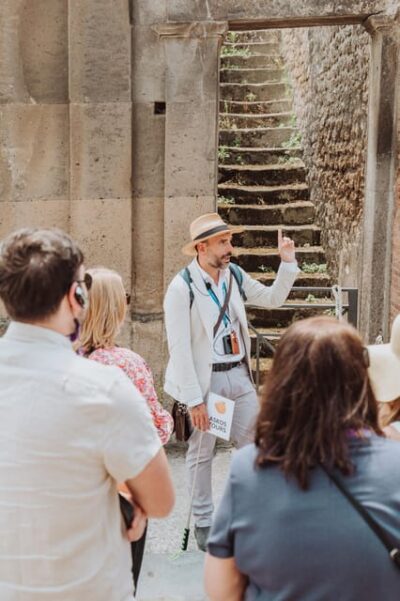
This tour’s format is designed for that “connection.” You meet the guide outside the ticket office of the archaeological site, in front of the red building, then head into a set sequence of named highlights. The stops are short, about 10 minutes each, so you cover a lot of ground without turning it into an exhausting marathon. And because it’s private, your guide can correct misconceptions as you go, instead of waiting until the end when you might have forgotten what question you meant to ask.
You’re also getting an archaeologist-led approach, which is the difference between seeing ruins as objects and seeing them as evidence. In the best versions of this tour, the guide brings out the human scale of the place, like how rooms were used, how homes were organized, and how public spaces would have felt in daily life.
One more practical thing: the meeting point is specific, and there’s a free luggage store at the start. That matters at Herculaneum, where you do not want a heavy bag weighing you down while you’re trying to enjoy close-up ruins.
You can also read our reviews of more private tours in Naples


Getting your bearings: meeting point, timing, and what to expect
You’ll start at Via dei Papiri Ercolanesi, 80056 Ercolano NA, Italy, outside the ticket office building (the red one). The tour ends back at the same meeting point. The duration is about 2 hours.
This is offered in English and runs multiple times throughout the day. On average, it’s booked about 45 days in advance, which is a hint that popular time slots can fill up, especially in high season.
Here’s the practical rhythm to expect. You’ll hit a sequence of major sights inside Herculaneum, with brief introductions at each. In the best-case scenario, your guide will help you see patterns across the whole town. For example, you might notice how homes organize around courtyards, how public bath areas relate to community life, and how reliefs and decorative elements hint at status and taste.
If you’re traveling with kids, this family-friendly structure usually works. Short blocks are easier for young attention spans, and a private guide can adjust pacing fast when energy dips.
Price and value: what you pay for, and what you still need to buy
The tour costs $178.38 per person and is a private experience. There are also group discounts listed for this type of format, and you should ask about them if your travel party is more than two people.
The big value question is what’s included versus what’s not. Included is guidance and assistance by the archaeologist guide, plus the private tour itself. Not included is the Herculaneum entrance ticket, transportation, and food and drinks.
So yes, you’ll still need to buy entry to the Herculaneum ruins. The site entry is 16 euros for adults, and 2 euros for EU citizens 18 to 25. That means the real total cost per person is the tour price plus the admission ticket.
Is that worth it? For many people, yes, because you are paying for interpretation. With a great guide, you’re not just looking at surviving walls and floor plans. You’re learning how everyday spaces functioned, and you catch details you’d likely miss on your own. Several guides featured in past tours, including Mena, Lucio, Michele Lamberti, Daniela, Sara, Giuseppe, and Antonella, are repeatedly praised for turning preserved rooms into something you can imagine using.
There is one important caution you should know: not every guide described as an archaeologist always matches that exact credential in every booking. One review explicitly raised that concern. If having an actual practicing archaeologist credential is your top priority, I’d treat it as a question to ask during booking or before your start time.
The itinerary in human terms: what each stop is really about
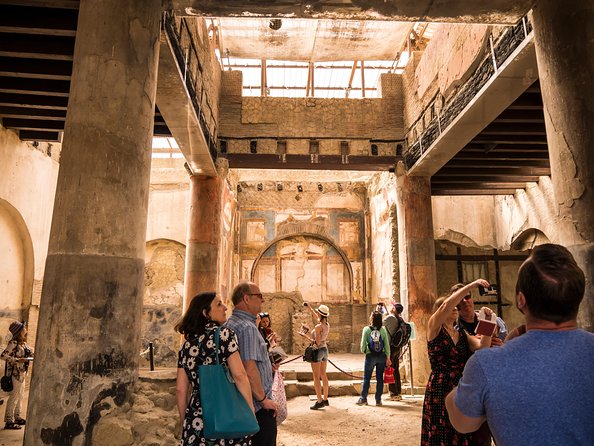
The tour visits 11 highlights in about 2 hours. Each stop is roughly 10 minutes. That timing is designed for “see it, understand it, move on,” not for long museum-style reading.
Also, the itinerary lists Admission Ticket Free for each stop, but the overall tour information makes it clear that Herculaneum entrance tickets are not included. In other words, you still need the site entry for the day. The free note is best understood as the route not adding extra separate admissions per stop.
College of the Augustales
You start with the College of the Augustales. Even if you don’t come in with a lot of Roman institutional history, you’ll get context for what such spaces could represent in civic and religious life. This is a strong first stop because it helps you anchor what you’re looking at beyond “houses and baths.”
What I like about starting here: it sets the framework early, so later domestic and decorative areas make more sense.



House of the Skeleton
Next is the House of the Skeleton. Names like this are often tied to a recognizable feature or discovery. The guide’s job here is to turn that one striking element into a bigger picture, so you don’t just remember the scary name and forget the rest.
If you’re visiting with kids, this stop can spark questions quickly. If you’re sensitive to macabre imagery, just know the name alone signals that this house is likely to feature a notable human-related finding.
Casa del Rilievo di Telefo (Relief of Telephus)
Then you’ll head to Casa del Rilievo di Telefo. This is where the tour usually shifts from layout to storytelling and art. Reliefs and decorative elements can tell you a lot about taste, myth, and how people wanted to present themselves inside their homes.
A practical tip: slow down visually even if the guide keeps you moving. Take 30 seconds at the relief area to let the details register before you step onward.
Partem Domus lignea, Casa del Tramezzo di Legno (Wooden Partition)
You’ll visit the House of the Wooden Partition area. This stop tends to be especially useful for understanding how rooms separated and how people moved through space.
Why it matters: even in ruins, a partition helps you picture daily routines. Where would someone pass through? Where would a private space begin? With a good archaeologist guide, this stop becomes more than a wall section, it becomes a map of household life.
La Terrazza di M. Nonio Balbo (M. Nonio Balbo Terrace)
Next comes La Terrazza di M. Nonio Balbo. Terraces are great because they help you understand perspective and elevation. You get a better sense of how the town’s layout could create views, light, and airflow.
If you like photographs, this is one of the more “look around” moments. Just remember that you still have a sequence to follow, so don’t spend your whole time trying to frame the perfect shot.
House of the Black Salon (Salon of Nero)
You’ll then see the House of the Black Salon, associated with the Salon of Nero. Even if you don’t focus on the exact nickname, it signals a dramatic interior decoration. With the guide’s explanation, you can understand why color and room type mattered, and how a decorated space could communicate prestige.
This stop is often a favorite because it feels like a glimpse into what interiors might have looked like when they were still functioning as living spaces.
Casa Sannitica (Samnitic House)
Then comes Casa Sannitica. A guided visit helps you place this home within the larger evolution of the town and its cultural influences, even if the tour keeps things accessible and practical.
This is also a good place to compare what you’ve already seen. Look at how the home’s layout and decoration relate to the earlier houses.
Central Thermae
After that, you’ll visit the Central Thermae. Thermae are bath areas, so this stop gives you the community side of Herculaneum. You’ll get a feel for shared spaces, not just private rooms.
In the best tours, the guide links these bath spaces to everyday social life, which is where Herculaneum can feel less like a ruin and more like a functioning city that happened to vanish.
Casa del Bel Cortile (Fine Courtyard)
Next is Casa del Bel Cortile, the House of the Fine Courtyard. Courtyards are the emotional center of many Roman homes. Even when a courtyard is partially preserved, it still helps you understand how light and open air shaped living.
If you want to understand how people actually got through a house, this stop usually makes the circulation clearer.
House of the Grand Portal
You’ll see the House of the Grand Portal. Portals and entrances are one of the best ways to understand status and how households presented themselves. Even without long lectures, a guide can point out what an impressive entrance would mean in a neighborhood context.
This is a good stop for anyone who likes architecture details, because entrances tend to show the “first impression” idea in stone.
House of the Deer
Finally, you’ll visit the House of the Deer. Like the Skeleton house, the name suggests a notable feature tied to what was found or displayed. This last stretch is designed to leave you with a memorable visual moment, so the end of the tour feels complete.
It’s also a good time to ask any last-minute questions, since you’re approaching the close.
What makes the best archaeologist guides shine here
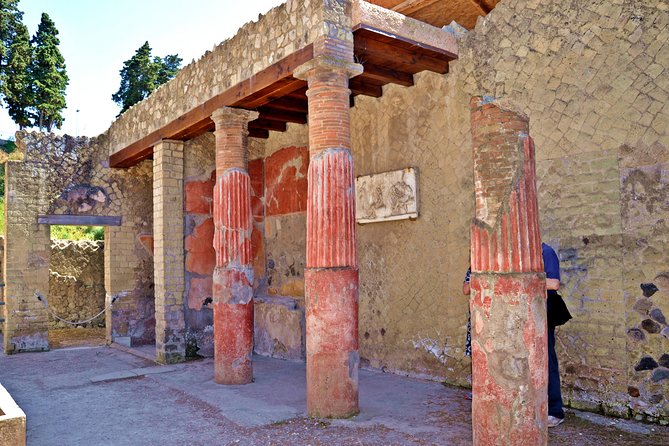
The standout theme across high ratings is simple: the guide makes you see the town as people lived there. Several named guides are praised for being entertaining and for explaining how parts of the site connected to daily life. Mena stands out for making the excavated city feel vivid. Luciano is repeatedly described as passionate, humorous, and exciting in a way that never feels like a textbook.
You’ll also see patterns in the reviews that match what works in real life:
- Strong guides point out details you’d miss, like how a room’s layout changes what you imagine happened inside.
- Great guides make comparisons, including how Herculaneum can feel different from Pompeii.
- Top guides handle questions well, so your tour doesn’t become a one-way lecture.
One caution from a review: some guides marketed under an archaeologist label were described as not actually being practicing archaeologists. That doesn’t automatically mean your tour will be off, but it does mean you should treat the credential promise as something to confirm if it matters to you.
Timing tips: beat the heat and see it at your pace
Because this is an outdoor archaeological site with repeated short walks between highlights, comfort matters. If you’re visiting in summer, consider booking an earlier tour time. One review specifically advised this approach because by noon it can get very hot.
Since your tour is private, you’ll also have an easier time adjusting if you need a quick breather. Still, because stops are structured for about 10 minutes each, don’t plan on long detours unless your guide offers it.
If you wear comfortable shoes, you’ll enjoy the close-up moments more. Herculaneum is about stepping slowly and looking carefully, not sprinting for the next photo.
Who this tour is best for
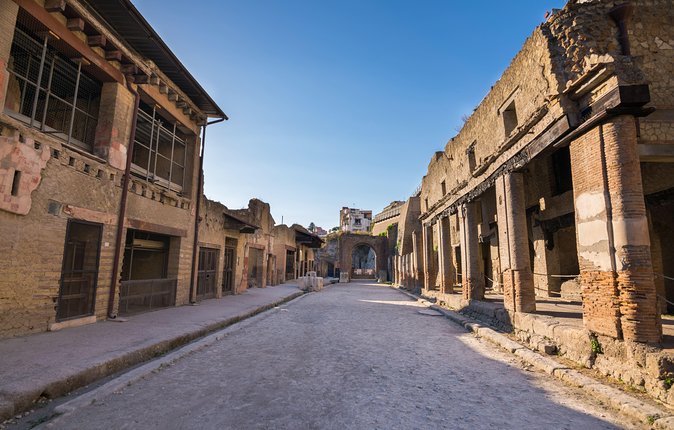
This tour shines if you fit one of these profiles:
- You want a curated, efficient tour of top Herculaneum highlights without planning the route yourself.
- You care about context, especially how homes and public spaces might have worked day to day.
- You’re traveling with family and want short, lively segments that keep kids engaged.
- You want a private experience in English with a guide who can answer questions as you go.
It’s also a solid choice if you’re already toying with Pompeii but want a different feel. Many people pick Herculaneum because it’s often described as more preserved and easier to understand at ground level.
If you have limited mobility, one review mentioned that a guide was considerate. Still, I’d suggest asking ahead about your walking comfort and keeping in mind the site terrain.
Should you book this Herculaneum private tour?
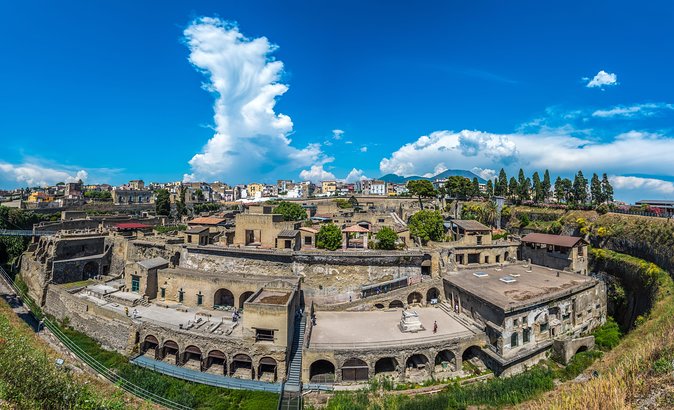
I’d book it if you want more than ruins as scenery. You’ll get the named highlights in about 2 hours, plus the value of an expert-style guide who can turn preserved rooms, courts, terraces, and bath areas into a clearer picture of Roman life.
I’d think twice if you’re strictly budgeting and already plan to rely on your own reading and museum time. The tour price is not cheap, and since the entrance ticket is extra, your total spend is higher than a self-guided visit.
And one final decision shortcut: if an actual archaeologist credential is essential to you, confirm that point before you pay. If the credential is confirmed and you want a guided, human-paced tour, this is a strong way to experience Herculaneum.
FAQ
What is included in the Herculaneum private tour?
The tour includes guidance and assistance by an archaeologist guide, plus the private tour format.
What is not included?
Herculaneum entrance tickets are not included, along with transportation and food and drinks.
Where do we meet the guide?
You meet the guide outside the ticket office of the archaeological site, at the red building, in Ercolano (Via dei Papiri Ercolanesi).
How long is the tour?
The tour lasts about 2 hours.
Is it offered in English, and is it private?
Yes, the tour is offered in English. It is private, meaning only your group participates.
What is the cancellation policy?
You can cancel for free up to 24 hours in advance of the experience start time for a full refund.
More Private Tours in Naples



More Tours in Naples

More Tour Reviews in Naples
Not for you? Here's more nearby things to do in Naples we have reviewed









Tour Reviews, compared.
 ★ 4.8Pompeii: Entry Ticket and Guided Tour with an ArchaeologistFrom $3519,459 reviews
 ★ 4.2Pompeii: Entry Ticket with Optional Audio GuideFrom $2612,360 reviews
 ★ 4.8Pompeii: Small Group Tour with an ArchaeologistFrom $4012,264 reviews
 ★ 4.3Pompeii Ruins & Mount Vesuvius Day TourFrom $12011,459 reviews
 ★ 4.6Sorrento, Positano and Amalfi Full-Day TourFrom $10710,988 reviews
 ★ 5.0Sorrento, Positano & Amalfi Coast – Small Group TourFrom $768,643 reviews
 ★ 4.6Catacombs of San Gennaro Entry Ticket & Guided TourFrom $157,941 reviews
★ 5.0Pompeii Small Group Tour with an ArchaeologistFrom $356,593 reviews
★ 4.6Catacombs of San Gennaro Entry Ticket & Guided TourFrom $157,941 reviews
★ 5.0Pompeii Small Group Tour with an ArchaeologistFrom $356,593 reviews
Browse the lists this tour appears in