
Tour review · TOUR REVIEWS
Herculaneum – Small Group Tour
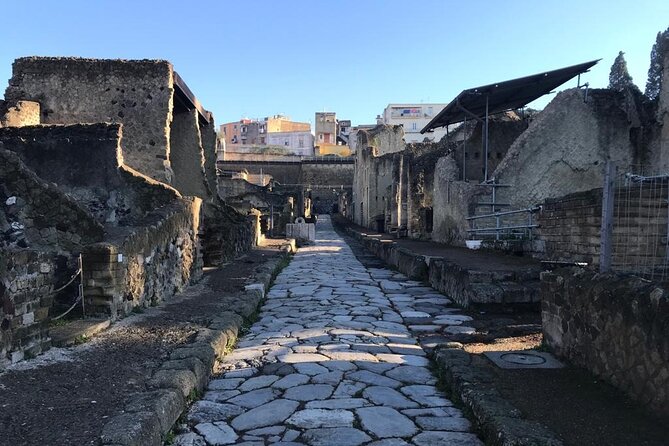
Two hours is plenty here. This small-group guided walk through Herculaneum’s most important buildings makes the eruption story and everyday Roman life feel clear, not confusing. I like that you get a licensed guide leading the way, and I also like how the route hits both grand homes and public spaces, plus the seafront finds like the preserved wooden boat. One consideration: admission tickets aren’t included, and parts of the site can feel punishing in hot weather, so plan for sun.
What makes this tour work so well is the pace and the “see it, understand it” factor. Herculaneum can look like a jumble of stone walls until someone explains what you are actually looking at, from floor plans to daily routines. And because the group is capped at 15, you have room to ask questions instead of shouting across a crowd.
This is also practical for real schedules. You can choose a morning or afternoon start, and you will receive a mobile ticket. The visit is near public transportation, and service animals are allowed, so it is set up for normal, day-trip logistics in the Naples area.
Key things to know before you go
- A focused 2-hour route through the park’s most prominent private houses, baths, and public areas
- Small group size (max 15) for real interaction, not a lecture delivered at speed
- English guides with a clear, story-based approach, including frequently noted guides like Francesco Pagano, Marco, Marzia, Roberta, and Antonella
- Seafront highlights including the ancient beach area with skeletons in the seafront structures and a wooden boat preserved in place
- Admission not included, so budget for entry separately if you are counting euros carefully
- Time to self-explore after the guided portion is often the best way to slow down and look longer at the details that stick with you
Entering Ercolano: the fastest way to get oriented
Herculaneum is one of those places where the ruins are not just scenery. They are a snapshot of a city, frozen in time. The biggest challenge is that the site does not do the hard work for you. Many buildings are not labeled in a way that quickly turns ruins into meaning, so you spend your first minutes guessing what you are seeing.
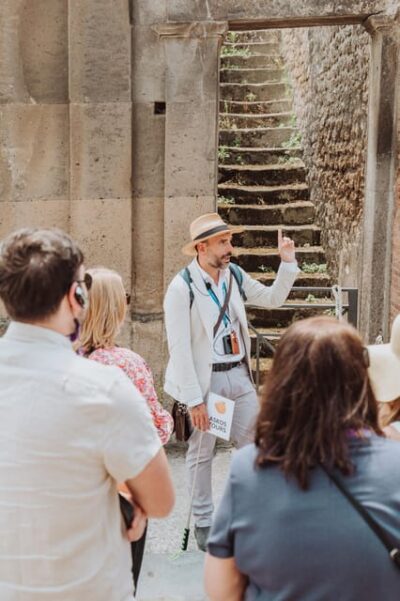
That is where a licensed guide changes everything. Right at the start in Parco Acheologico di Ercolano, you get the context you need to read the buildings. Your guide explains how the eruption affected the area and also helps you frame how Herculaneum compares to Pompeii, so later, when you visit another site, you can actually spot the differences instead of just collecting photos.
The other smart thing is how quickly the route moves from big-picture explanation to specific places. You start with major private houses, then you move into public life, and you end with the seafront tragedy. In two hours, you cover what most people want most, without feeling like you are doing laps in the heat.
You can also read our reviews of more tours and experiences in Naples.

Private houses in Ercolano: Deer, Neptune, and wooden partitions
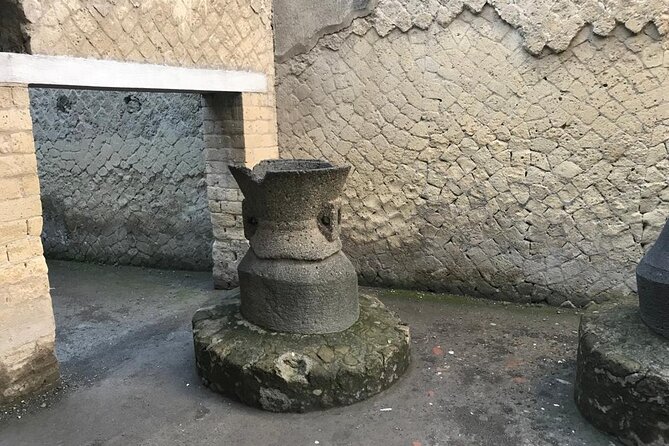
The heart of this tour is the walk through prominent homes. These are not generic “Roman ruins.” They are recognizable family spaces, and the guide’s job is to make that obvious.
Here is what you can expect to see during the guided portion:
- House of the Deer
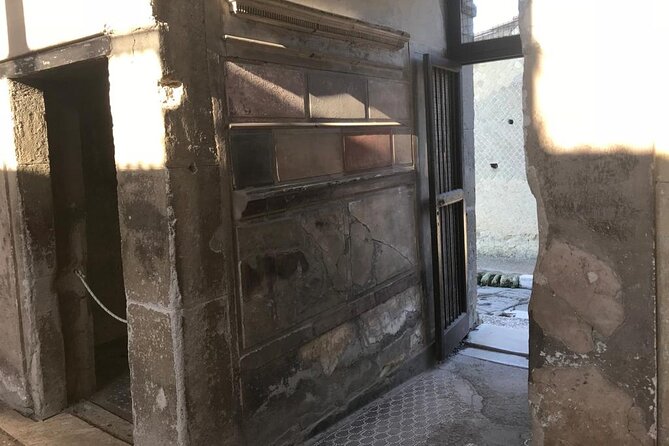
- House of the Wooden Partition
- House of Neptune and Amphitrite
- House of the Bicentenary
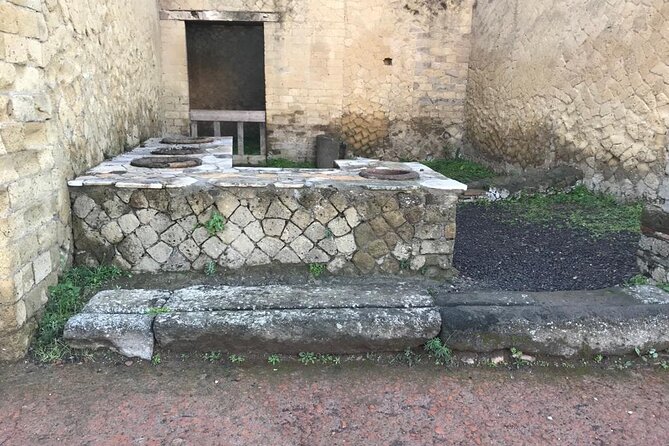
- Plus typical Roman shops connected to the city’s everyday street life
Each of these spots is a chance to understand how people lived: how homes were organized, how rooms related to one another, and how decorative or functional features fit into daily routines. One of the most consistent themes from guides on this route is that they do not just point at walls. They explain why those walls, openings, and layouts matter, so you can look at the remains and build a mental picture.
A bonus of this house-heavy route is that it gives you variety in a short window. One stop can feel more architectural and household-focused, while another can bring you back to the city’s design and street connections. It is an efficient way to learn without needing multiple long visits.
Public baths, shops, and the main street routine
After the big homes, the tour shifts into the civic and commercial side of town. This is where Herculaneum stops feeling like a museum of houses and starts feeling like a real city.
You will see:
- Roman shops and the kind of commerce that lined the area
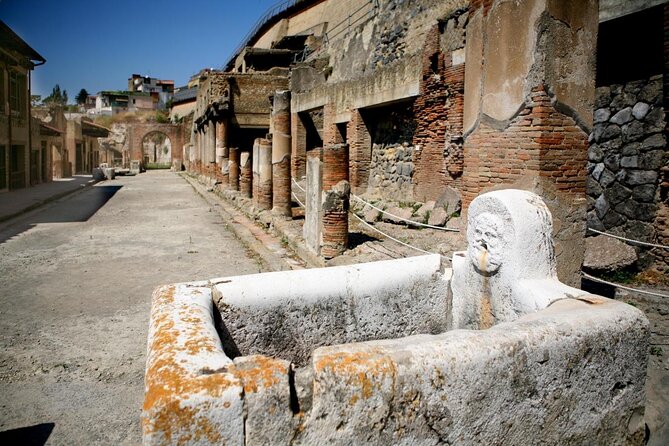
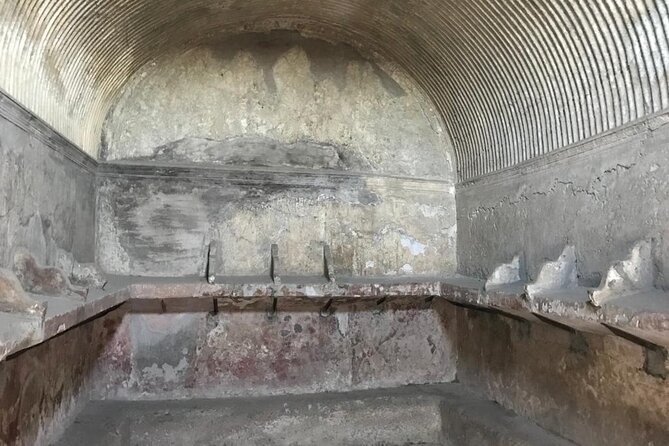
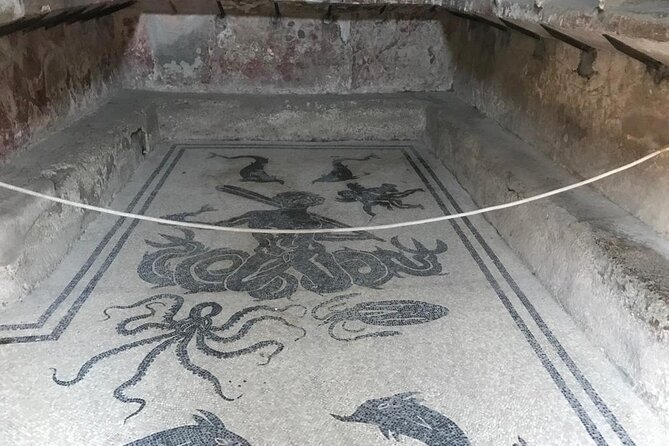
- Public baths, a key part of social life in Roman towns
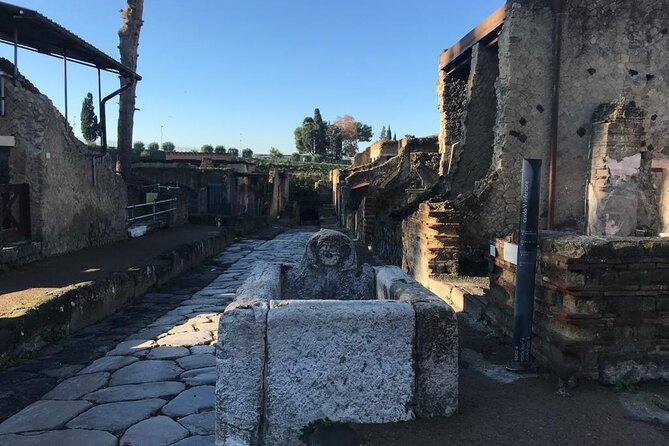
- The main street and significant public buildings
The guide helps connect these spaces to how people moved through the city. Even if you only remember a few details, this part tends to be the most “human” because baths and streets are easy to imagine day-to-day. You also get a stronger sense of how private life and public life blended, which is something that photographs alone do not usually communicate.
If you like walking tours that make you feel like you are learning while you move, this section is a good match. It keeps momentum, but it also gives you a mental structure. You start to see the city as zones, not as random ruins scattered over a hillside.
The seafront tragedy zone: skeletons and a preserved wooden boat
The last part of the route leans hard into the most memorable, emotional aspect of Herculaneum. You will visit the ancient beach area on the seafront, including the structures connected to skeletons of people who took shelter and a wooden boat still preserved found on the beach itself.
This is the moment when the whole place stops being “cool Roman stuff” and becomes a real story. The guide’s role is crucial here, because you are not just looking at objects. You are looking at a physical aftermath that needs explanation to make sense.
The preserved wooden boat is especially powerful because it is physical evidence, not an idea. You can see how the coastline related to daily life and the disaster’s impact. It is one of those stops that sticks with you after the tour ends, even if you do not remember every house name.
Practical note: this part of the day can feel exposed depending on weather and the exact path. If you are visiting in hot months, bring a hat and expect to manage sun.
Two hours, small groups, and how the best guides pace you
This tour is set for about 2 hours, and it is designed to keep you moving through the most important sights without feeling rushed into oblivion. The group is capped at 15 travelers, and that changes the feel immediately. You get more back-and-forth with your guide, and it is easier to hear explanations clearly.
A recurring advantage in the experience is how the guides handle pacing and questions. Many visitors highlighted guides like Francesco (including Francesco Pagano), Marco, Marzia, Roberta, Antonella, and Francesca for energetic, clear storytelling and a knack for staying on task while still answering questions. That is not a small thing. At Herculaneum, there is a lot to look at, and without guidance you can easily miss the meaning behind what you see.
Shade and comfort also come up in the real-world feedback. There is not guaranteed shade everywhere, so plan for sun exposure. At the same time, good guides can help you time your stops and stay comfortable as much as possible, which makes the short duration feel even smarter.

Price and value: what you pay for, and what to add on
The price is listed at $50.81 per person for the small-group experience. That number matters less than what is actually included.
You do get:
- A visit with a tour guide licensed by Regione Campania
- English-language guidance
- A mobile ticket
- A route that covers the standout ruins, including private houses, public spaces, and the seafront finds
You do not get:
- Admission ticket entry cost (admission is listed as not included)
So the best way to think about value is this: you are paying for interpretation and a structured, time-efficient route. If you are the type of person who can wander through ruins and enjoy them even without context, you might skip a guide. But if you want Herculaneum to click fast, this format usually earns its price.
Also, because it is only about two hours, you are not locking yourself into a full day. That is helpful in the Naples area, where schedules can be tight and you may want time for Pompeii afterward, or for a slower evening.
Pairing it with Pompeii: use Herculaneum as your “upgrade lens”
If you are doing both Herculaneum and Pompeii, this tour can actually improve your second stop. Many guides on this route explain how the eruption affected the area, and they often point out contrasts between the two sites. That gives you a framework, so your Pompeii visit becomes more than a pile of ruins.
Here is the practical way to use this strategy:
- Treat Herculaneum as your model for daily Roman life in a preserved setting.
- Then go to Pompeii expecting differences, and look for how those differences change what you can imagine about the final moments.
Because this tour is focused, it also reduces decision fatigue. You will leave with a clear picture of what kind of place Herculaneum is, so the later comparisons feel intentional rather than accidental.
Should you book this Herculaneum small group tour?
Book it if you want Herculaneum to make sense quickly. The guided route hits the right mix of private homes, baths, street life, and the seafront tragedy, and the small group format makes it easier to ask questions. It is also a great choice if you dislike long museum lectures and prefer learning while walking.
I would pass or think twice if you know you hate tours and you are happy treating Herculaneum as independent photo time. Since admission is separate, also double-check your total budget before you commit.
If you are visiting in summer or during hot weather, pack for sun and plan for a site that may not give you constant shade. The best value comes when you pair smart preparation with a guide that can turn buildings into stories.
In short: for most people, this is the kind of Herculaneum experience that feels like you got the meaning, not just the view.
FAQ
How long is the Herculaneum small group tour?
The tour is approximately 2 hours.
Is the tour offered in English?
Yes, the tour is offered in English.
Is the admission ticket included in the price?
No. Admission tickets are not included.
What is the maximum group size?
The tour has a maximum of 15 travelers.
Do I get a mobile ticket?
Yes, the tour includes a mobile ticket.
Can I choose between a morning or afternoon tour?
Yes, you can choose a morning or afternoon tour to fit your schedule.
Is the guide licensed?
Yes. It includes a tour guide licensed by Regione Campania.
Are service animals allowed?
Yes, service animals are allowed.
Is the meeting area near public transportation?
Yes, it is near public transportation.
What happens if the minimum number of travelers is not met?
If the experience is canceled because the minimum isn’t met, you will be offered a different date or experience, or you will receive a full refund.
More Tours in Naples

More Tour Reviews in Naples
Not for you? Here's more nearby things to do in Naples we have reviewed





Tour Reviews, compared.
 ★ 4.8Pompeii: Entry Ticket and Guided Tour with an ArchaeologistFrom $3519,459 reviews
 ★ 4.2Pompeii: Entry Ticket with Optional Audio GuideFrom $2612,360 reviews
 ★ 4.8Pompeii: Small Group Tour with an ArchaeologistFrom $4012,264 reviews
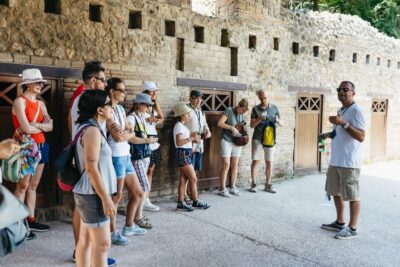 ★ 4.3Pompeii Ruins & Mount Vesuvius Day TourFrom $12011,459 reviews
 ★ 4.6Sorrento, Positano and Amalfi Full-Day TourFrom $10710,988 reviews
 ★ 5.0Sorrento, Positano & Amalfi Coast – Small Group TourFrom $768,643 reviews
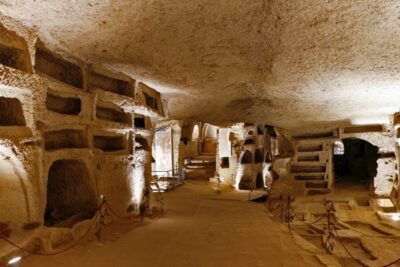 ★ 4.6Catacombs of San Gennaro Entry Ticket & Guided TourFrom $157,941 reviews
★ 5.0Pompeii Small Group Tour with an ArchaeologistFrom $356,593 reviews
★ 4.6Catacombs of San Gennaro Entry Ticket & Guided TourFrom $157,941 reviews
★ 5.0Pompeii Small Group Tour with an ArchaeologistFrom $356,593 reviews
Browse the lists this tour appears in