
Tour review · TOUR REVIEWS
Naples Historic Center: Traditions, Legends & Folklore Tour
Naples has stories in every stone. This 2-hour walk takes you from the Duomo into the city’s legend-soaked streets, starting with the famous miracle tied to Saint Gennaro. I especially liked how the tour turns big landmarks into real-world scenes, like the street-art touches near Jorit and the eerie stops that feel like they belong in a folk tale.
Two highlights I really appreciated: the stop at the Complesso Museale Santa Maria delle Anime del Purgatorio ad Arco and the way you hear the legend behind the skulls, and the playful good-luck moment with the statue of Pulcinella. One thing to keep in mind is that this is a walking tour and it is not suitable for wheelchair users, so plan for time on foot and uneven old-street terrain.
Key Highlights at a Glance
- Saint Gennaro’s miracle explained right where it all starts at the Duomo
- San Gennaro street graffiti by Jorit gives the old city a modern pulse
- Dolls Hospital and artisan street stops add character beyond the postcard spots
- Santa Maria delle Anime del Purgatorio ad Arco with the skull collection and folk legend
- Port’Alba and Saint Chiara for major architecture moments in a short loop
Starting at the Duomo: Saint Gennaro’s Miracle and Street Legends
The tour kicks off outside the Cattedrale di Santa Maria Assunta, near the main Duomo complex. From the first minutes, you are not just looking at a church. You are learning the story Naples tells about it, especially the miracle of Saint Gennaro’s blood liquefaction. That legend is the kind of thing that makes locals talk, and understanding it changes how you see the space. It gives you context for why people treat this place like more than architecture.
Next, the walk moves along Via Duomo, with a pause to admire the famous San Gennaro street graffiti by the artist Jorit. I like this kind of stop because it shows how Naples keeps layering new meanings onto old places. One minute you are thinking about religious devotion, the next you are watching street art turn a saint into something almost street-level and personal.
You can also read our reviews of more historical tours in Naples


What to watch for
This early stretch is where you get your bearings fast. If you care about stories, pay attention here. The guide sets the tone for the rest of the route: legend, tradition, and how Naples explains itself.
Via Duomo to Spaccanapoli: Jorit, the Dolls Hospital, and Artisan Streets
After the Duomo area, you head through Via Duomo and onto Via Spaccanapoli, one of the historic center’s main spine streets. This is where the tour starts to feel like Naples you can walk through, not just Naples you can photograph. You will hear why the city’s layout matters, how neighborhoods link, and why the same street can feel sacred in one corner and everyday in the next.
A stop at the Dolls Hospital breaks up the big-church rhythm. The name sounds playful, but the point is serious: Naples has a tradition of craft and repair, not just grand monuments. The guide uses it to show a different side of local history, the kind you usually miss when you rush from one attraction to another.
Then you reach Saint Gregorio Armeno, the street famous for skilled artisans who make nativity scenes and more. I like this stop because it is hands-on culture without the museum glass. Even if you only window-shop, you get a feel for how tradition becomes a living craft, not a static display.
Why this matters for your trip
If your Naples plan is mostly churches and views, this section balances the day. It also gives you practical ideas for what to look for later on your own, like when you see the same characters and motifs repeated across different corners of the city.
Via dei Tribunali to the Purgatory Museum: Skull Legends That Actually Stick
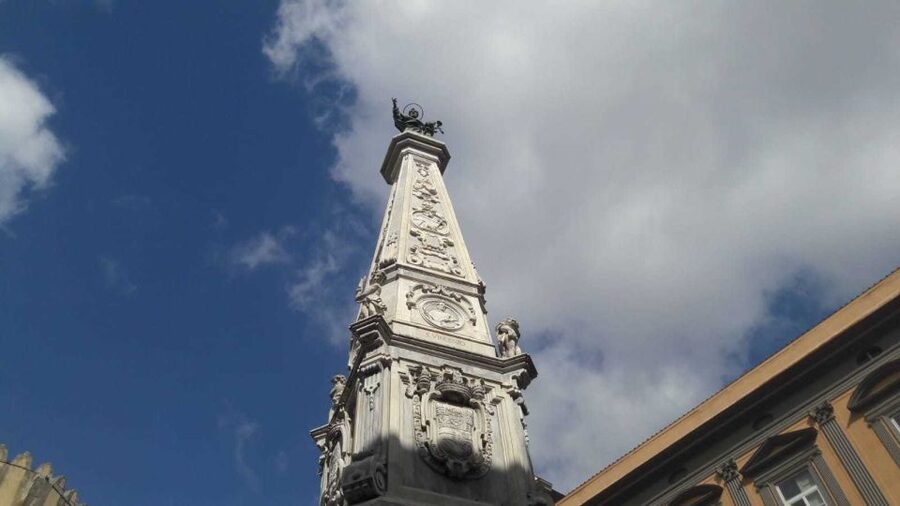
One of the most memorable parts of the walk is the Complesso Museale Santa Maria delle Anime del Purgatorio ad Arco. This is where the tour leans into the city’s darker folklore. You will learn about the so-called souls of purgatory and see the famous skulls connected to this site.
I found this stop valuable because it is not treated like a spooky detour. The guide ties it to how Naples thinks about faith, memory, and storytelling. The legend behind the place gives meaning to what you are seeing, instead of leaving you with just a list of objects.
You will also pass Via dei Tribunali, known for some of Naples’ famous pizzerias. Since food is not included on this tour, this is a smart moment to mentally tag where you might want to eat later. Even if you do not stop for a slice, you are learning the city’s everyday rhythms.




A quick tip for this stop
Go in with a slightly slow mindset. This is the kind of place where short attention spans miss the story thread. If you want the legend to make sense, give the guide your eyes and your ears.
Touching Pulcinella for Good Luck, Plus a Chance at Music
The tour keeps one hand on tradition and one on personality. You will not miss the moment to touch the statue of Pulcinella for good luck. It is a small action, but it is exactly the sort of tradition that makes Naples feel like a living city. You are participating in an old custom, not just watching one.
Right after that, you pass the oldest conservatory in Italy. The guide adds a fun possibility: if you are fortunate, you may hear music along the way. Even when that does not happen, the stop signals something helpful for planning. Naples is full of sound, street musicians, and music linked to institutions, so keeping your ears open can pay off.
What I like about the pacing here
This section acts like a reset. After skull legends, you get a lighter, human tradition (Pulcinella) and a chance for music. It keeps the tour from feeling heavy all the way through.
Port’Alba’s 17th-Century Gate: Architecture With Legend Attached
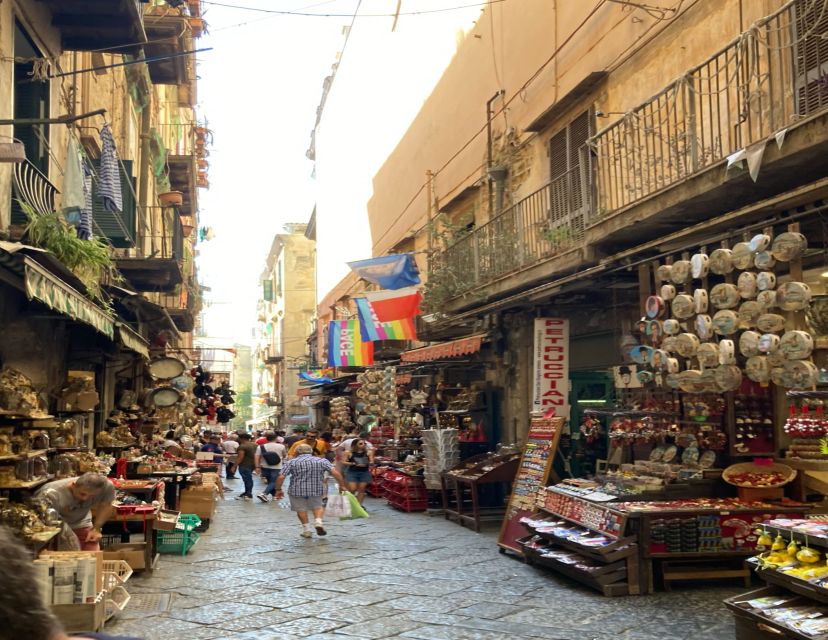
As the walk continues, you reach Port’Alba, known for its impressive seventeenth-century gate and the mystical legends attached to it. Gates are usually just photos for most people, but here the guide gives you the story reasons they mattered. The size and architecture are the visible part, the legend is the meaning part.
I like Port’Alba because it is a change of scene. You feel the scale of the city differently when you are not staring only at buildings and doorways. It also helps you understand how the historic center protected itself and how entrances shaped movement.
A practical note
This is still a walking tour, so wear shoes that can handle old stone. You will appreciate Port’Alba even more if you are not busy thinking about your feet.
Saint Chiara and Gesù Nuovo Square: Gothic Symbolism and a Facade Story
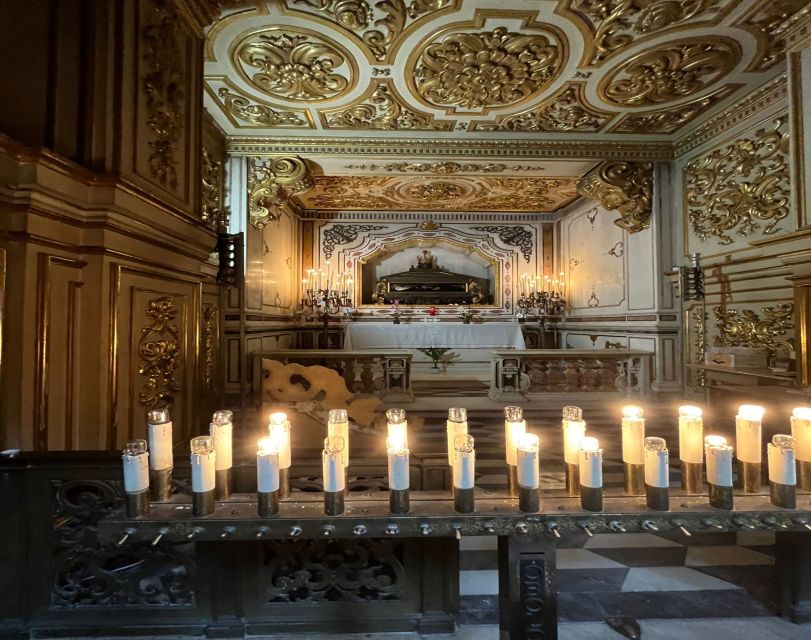
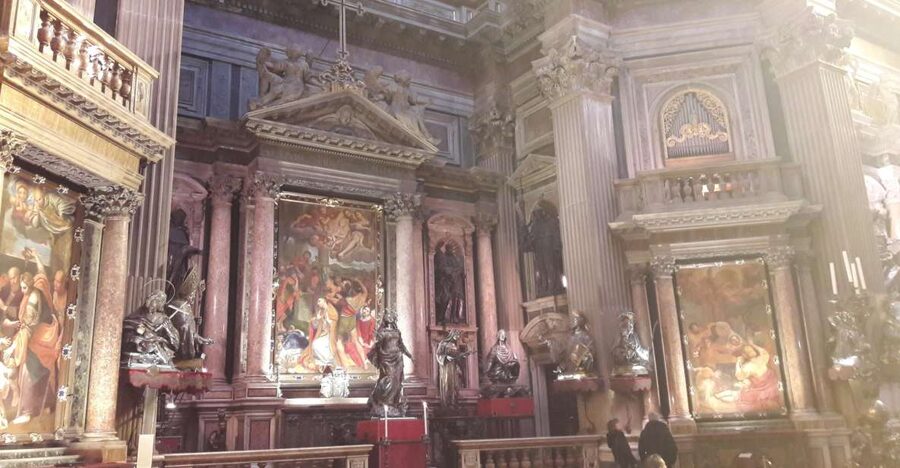
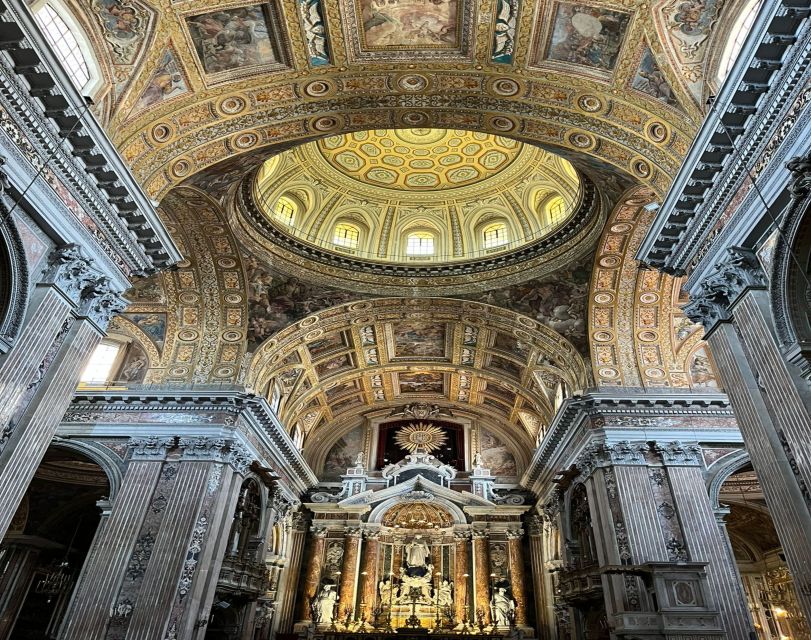
The finale brings you to the austere and Gothic church of Saint Chiara, a major symbol of Naples. This is the kind of stop where the guide’s framing helps. You are not just looking at a church, you are learning how it fits into Naples identity and visual language.
Then you finish at Gesù Nuovo Square. You will learn the history beyond the front wall of the Church of Gesù Nuovo. That detail matters. It changes the way you read a building that, from the street, can look like a single flat experience. The guide helps you understand that the front is only one layer.
One more thing to note: the operator states the activity ends back at the meeting point outside the Duomo/Cattedrale di Santa Maria Assunta. So you should expect the walk to return you to the start area after the final square stop.
Price and Value for a 2-Hour Walking Tour
At $51.24 per person for a 2-hour, English-language walking tour, the price makes sense if you factor in what you actually get: a local, professional guide and a route built around major sites plus story-driven pauses.
You are not paying for transportation or for a museum ticket included in the cost. Food and drinks are not included either, so you should budget separately for your own break after the tour. Still, for a compact time window, you get a lot of story density: Saint Gennaro’s miracle, street art by Jorit, the nativity craft street, a museum stop tied to purgatory lore, and then Port’Alba plus Saint Chiara.
This price feels most fair if you are the type of traveler who likes context. If you prefer to just wander and read signs on your own, you might feel the cost is harder to justify. But if you want the city’s legends translated into something you can actually understand on the spot, it is good value.
Group Size, Guide Quality, and How to Choose Your Expectations

The tour keeps groups to a maximum of 20 people, which is a helpful size for a walking route. It should be easier for the guide to be heard and for you to keep up at stops.
One practical expectation point based on available feedback: the guide experience can vary. There are reports praising a guide named Ludovica for humor, clear explanations, and a friendly, helpful approach. There are also reports criticizing a guide for being weak on art history and for lacking connection with the group. In other words, if you care deeply about art history detail, keep your expectations flexible and ask yourself whether you want more storytelling or more academic analysis.
Who This Tour Fits Best
This Naples historic center tour is a strong match if you want:
- A tight 2-hour overview of major sites plus legend-focused stops
- Story explanations tied to places like the Duomo, purgatory skulls, and Saint Chiara
- A walk that includes both big landmarks and smaller cultural moments, like craft street areas and Pulcinella tradition
It is not a good match if you:
- Need wheelchair access, since the tour is not suitable for wheelchair users
- Have limited stamina for walking and standing during church and street stops
Should You Book Naples Historic Center: Traditions, Legends & Folklore?
I would book this if you want Naples to feel like a place with explanations, not just stops on a list. The mix is smart: devotion, street art, artisan culture, purgatory lore, and architecture with legends attached, all within a short walk.
If you are extremely art-history focused, go in with the right mindset. The best version of this tour is when the guide makes the stories make sense. The good feedback specifically calls out guides like Ludovica as strong at humor and clarity, and that is exactly the style that turns a walk into a memory.
If you want a straightforward, self-guided highlights route, you might skip the tour. But if you enjoy legends and want context you can carry with you the rest of the day, this one is worth it.
FAQ
Where does the tour start?
It starts outside the Duomo/Cattedrale di Santa Maria Assunta.
How long is the tour?
The tour lasts 2 hours.
How much does it cost?
The price is $51.24 per person.
Is food or drinks included?
No. Food and drinks are not included.
What language is the tour guide in?
The live tour guide speaks English.
Is the tour wheelchair accessible?
No, it is not suitable for wheelchair users.
How big is the group?
The tour has a maximum of 20 people.
Is there free cancellation, and can I pay later?
Yes, you can cancel up to 24 hours in advance for a full refund. You can also reserve now & pay later, meaning you pay nothing today.
More Historical Tours in Naples


More Tours in Naples

More Tour Reviews in Naples
Not for you? Here's more nearby things to do in Naples we have reviewed









Tour Reviews, compared.
 ★ 4.8Pompeii: Entry Ticket and Guided Tour with an ArchaeologistFrom $3519,459 reviews
 ★ 4.2Pompeii: Entry Ticket with Optional Audio GuideFrom $2612,360 reviews
 ★ 4.8Pompeii: Small Group Tour with an ArchaeologistFrom $4012,264 reviews
 ★ 4.3Pompeii Ruins & Mount Vesuvius Day TourFrom $12011,459 reviews
 ★ 4.6Sorrento, Positano and Amalfi Full-Day TourFrom $10710,988 reviews
 ★ 5.0Sorrento, Positano & Amalfi Coast – Small Group TourFrom $768,643 reviews
 ★ 4.6Catacombs of San Gennaro Entry Ticket & Guided TourFrom $157,941 reviews
★ 5.0Pompeii Small Group Tour with an ArchaeologistFrom $356,593 reviews
★ 4.6Catacombs of San Gennaro Entry Ticket & Guided TourFrom $157,941 reviews
★ 5.0Pompeii Small Group Tour with an ArchaeologistFrom $356,593 reviews
Browse the lists this tour appears in