
Tour review · TOUR REVIEWS
Pompeii and Amalfi Coast Unique Experience Private Tour
Two icons, one long day. You’ll cover Pompeii and the Amalfi Coast with comfort, thanks to an air-conditioned Mercedes and an English-speaking driver who gives live commentary. I like that it feels private and flexible, so you can spend your limited time where you care most.
The big drawback: you’ll still need to handle Pompeii entrance details yourself, including bringing an identity document and paying the site entry fee. Also, the driver is the only guide during the visit, so inside the ruins you’ll rely on signage and any optional Pompeii guide you hire on site.
Key things that make this tour work
- Air-conditioned Mercedes for a long day with the comfort factor you want when roads get slow and the coast gets crowded.
- Live English commentary in the vehicle, so the drive does not feel like dead time.
- Pompeii priority stops in a tight 2-hour visit, including the Forum, amphitheater, Lupanar, Stabian Baths, and both theatres.
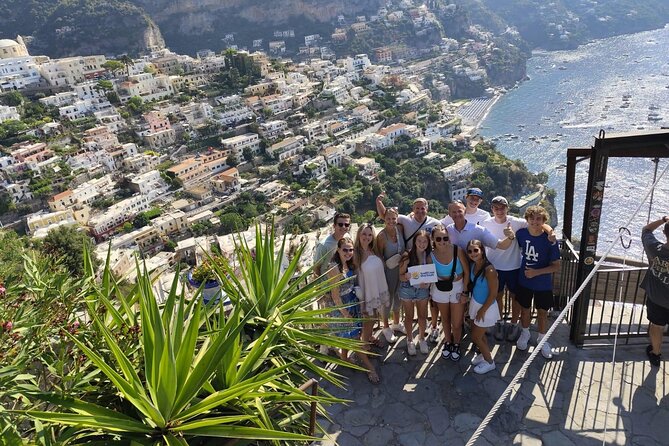
- Positano by the water, not just a photo stop, with time for Spiaggia Grande, the Santa Maria Assunta church, and optional calmer Spiaggia di Fornillo.
- Amalfi highlights in one hour, including the Duomo di Sant’Andrea, Chiostro del Paradiso, and Museo della Carta.
- Weather-ready approach, since the service operates in all weather conditions and your driver can adjust how the day feels on the ground.
The Mercedes day plan: comfort, time, and control from Naples
This is the kind of day trip that only works if you take the logistics seriously. With an 8-hour total duration and stops in Pompeii, Positano, and Amalfi, the “how” matters as much as the “where.” You start in Naples and return to Naples at the end, which keeps things simpler than doing separate transfers.
What you’re really buying here is transportation plus context. You’re in a Mercedes with air conditioning, and you get live commentary with an English-speaking driver while you ride. That matters because the Amalfi Coast approach can be slow, and you do not want to waste the day staring out the window without any guidance.
It’s also private, so it’s not the typical you follow the group shuffle. If you have your own priorities, you’re better positioned to shape the day around what you care about most, whether that means more time near Vesuvius views in Pompeii or leaning into Amalfi’s church and cloister atmosphere.
One practical note: dress smart casual, and also plan for weather. The service says it operates in all weather conditions, so if you’re going in cooler months, layers help. And if you visit in the summer, lightweight breathable clothes are a better bet than stiff formal wear.
If you’re coming from Rome, there’s a suggested plan: take the Freccia Rossa Fast Train from Rome Termini around 7:35 AM to Naples Centrale around 8:45 AM, then you get picked up from the train station. At the end of the day, you’re driven back to Naples so you can catch a train back to Rome, suggested around 6:30 PM. That schedule is tight, but it’s built to fit a same-day round trip.
You can also read our reviews of more private tours in Naples



Value check: what $352.27 buys, and what costs extra
At $352.27 per person, this is not a budget excursion. But it’s also not just a driver and a car. Your price includes the Mercedes air-conditioned vehicle plus the English-speaking driver with live commentary, along with all tolls, parking, petrol, and taxes. That’s the kind of “hidden cost” you often get hit with on your own once you add toll roads and parking on a day like this.
What is not included is important for your budget planning. Entrance fees where applicable are not included, and Pompeii is specifically called out as about 18 euros per person. There’s also the note that you need to coordinate entry time at the Pompeii office before buying tickets. The tour is set up so you don’t get stuck standing around at the wrong moment, but you still need to do your part.
Then there’s the ID requirement: an identity card is required to enter the site, so bring it with you that day. That is the kind of detail that can ruin your morning if you forget.
Finally, Pompeii guide time is not automatically part of the service. The driver does not escort you inside attractions, and a Pompeii guide can be hired on site. If you want deeper context for the ruins, consider adding that. If you’re happy reading and focusing on the big visual stops, you may not need it.
For value, here’s the simple way I’d think about it. If you’re traveling with others, the private-vehicle cost can start to make sense because you’re not paying for multiple local taxis and you’re not spending the day bargaining with public transit schedules. If you’re solo, it’s still a good day trip, but you’ll want to be sure Pompeii plus two coast towns in one shot is exactly what you want.
Pompeii’s Forum, Baths, and Theatres in a tight 2-hour visit
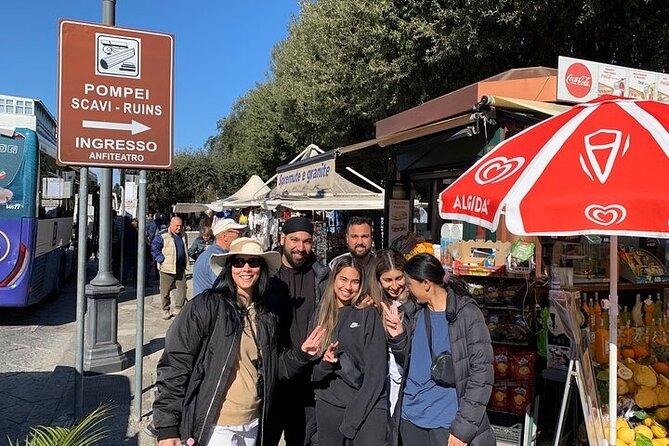
Pompeii is one of those places where you can easily lose your whole day. This tour gives you about two hours on site, so you’ll want to aim for the “big pictures” rather than trying to see everything. The good news is that the itinerary is built around the exact areas that tell Pompeii’s story fast.
Forum: the city’s center of power and everyday life
Start in the Forum, Pompeii’s political, economic, and religious hub. This is where you’ll find remains of the Temple of Jupiter, the Basilica, and the Macellum. If you want one mental image to carry through the day, make it the Forum as the place where citizens would have gone for official business, religion, and commerce.
Amphitheatre: where entertainment turned into drama
Next is the Pompeii Amphitheatre, one of the oldest Roman amphitheaters (dating back to 80 BC). It was used for shows and gladiator fights. Even in ruins, you can feel how performance was part of civic life. It also helps that this stop is visually striking, so it’s a good use of limited time.






Lupanar: the reminder that daily life included adult themes
The Lupanar is the ancient brothel of Pompeii, with small rooms and erotic frescoes showing the “specialties” offered. If you feel a bit uncomfortable, that’s normal. It can be useful to see Pompeii as a real community, not just a set of dramatic ruins.
Stabian Baths: thermal complex, hot and cold rooms
Then comes the Stabian Baths, one of the oldest thermal complexes in the Roman world. You’ll see rooms for hot and cold baths and saunas. This is one of the best stops if you want a sense of how Romans relaxed and organized their day, since baths were social spaces, not just hygiene.
Teatro Grande and Teatro Piccolo: views that connect Pompeii to Vesuvius
Finally, you’ll hit Teatro Grande and Teatro Piccolo. These theatres were used for performances, and from Teatro Grande you get a view of Vesuvius. That view is not just scenic. It’s a reminder of the volcano’s shadow over daily life here, and it helps the city’s story click into place faster.
How to handle Pompeii logistics without stress
You’ll see listed guidance that you must bring an identity card. You’ll also need to coordinate your entrance time at Pompeii before purchasing tickets. Since your driver does not escort you inside attractions, I’d recommend arriving with calm energy and giving yourself enough time to get through the checkpoint and start walking.
If you want more depth inside the ruins, you can hire a Pompeii guide on site. One example you might hear recommended is a Mondo Tour guide named Patrizia for clear explanations of history and architecture. I like having that option available because two hours is short, and a good guide can sharpen what you’re seeing.
The big Pompeii lesson for your day: focus on a few places and let them anchor your understanding. You’ll leave feeling like you actually grasped the city, not just that you survived the walking.
How to spend your Positano hour: beaches, church dome, and a quieter option
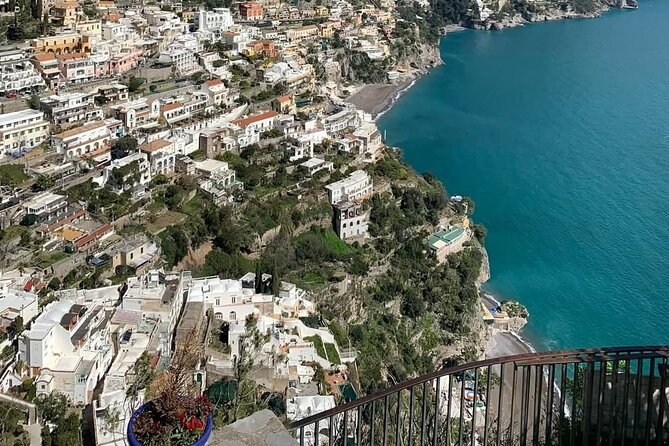
Positano is one of those towns that looks like a postcard, but the reality is more practical. Streets climb steeply, and time slips fast. This tour gives you about one hour in Positano, so you’ll want to pick what matters most: views, church details, or beach time.
Spiaggia Grande: the iconic postcard beach
Spiaggia Grande is the main beach, with bars, restaurants, and places that feel lively. This is where you’ll likely spend your first moments just soaking in the view of the colorful houses stacked along the rocks. It’s also a good base for photos because it frames the town clearly.
Chiesa di Santa Maria Assunta: majolica dome and the Black Madonna icon
Don’t skip the church. Chiesa di Santa Maria Assunta is famous for its colorful majolica dome and for a Byzantine icon of the Black Madonna inside. Even if you’re not a “church person,” this is one of Positano’s defining visual markers. If you only do one non-beach stop here, make it the church.
Spiaggia di Fornillo: calmer beach time if you want less crowd noise
Spiaggia di Fornillo is listed as quieter than Spiaggia Grande and reachable via a panoramic walk. This is the best choice if you want your hour to feel more restful, even if it means walking a little more uphill or downhill depending on where you start. If you like the idea of a slower beach scene, go for Fornillo rather than trying to cram everything into one stop.
The practical Positano tip
Bring comfortable shoes. Positano is all angles and steps. If you try to do it in slippery sandals, you’ll spend your time adjusting, not enjoying. Smart casual helps, but walking comfort matters more.
Amalfi Coast time: Duomo di Sant’Andrea, cloister calm, and Marina Grande
After Positano, you’ll shift to Amalfi itself. This is where the coast stops being just a view and becomes a place with its own rhythms, architecture, and traditions. Your time here is also about one hour, so again, focus on signature stops.
Duomo di Sant’Andrea: Arab-Norman façade and a scenic staircase
The Duomo di Sant’Andrea is the symbolic cathedral of Amalfi, known for its Arab-Norman façade. The Duomo also has a scenic staircase, so you get the feel of Amalfi’s dramatic hill town layout before you even reach the entrance. Inside, there’s a crypt with relics of Sant’Andrea.
Even if you only see the façade and the general interior once, the Duomo gives you the “why” behind Amalfi’s importance, especially when you compare it with the more seaside feel of Positano.
Chiostro del Paradiso: a 13th-century cloister with Arab influence
Next is the Chiostro del Paradiso, a 13th-century cloister next to the Duomo. It’s described as elegant, with intertwined arches of Arab influence, and it creates a quieter atmosphere right next to a major religious site. If Positano feels loud and bright, this cloister is a nice counterbalance.
Museo della Carta: Amalfi’s paper-making tradition
Amalfi is famous for its paper-making tradition, and you have time for Museo della Carta, housed in an old paper mill. This is a different kind of “history stop” than ruins. If you like craft, industry, and how everyday products were made, this museum can be a satisfying change of pace.
Just keep expectations realistic: with only one hour, you’ll likely want to target the most interesting parts rather than reading everything cover to cover.
Marina Grande and the Lungomare: end with sea air
Finish with Marina Grande and the Lungomare, the main beach area and the seaside promenade. This is your chance for a casual aperitif with a sea view, or just to stand by the water and reset before the ride back.
The best way to use this last hour is to slow down. After Pompeii’s stone and Positano’s stairs, the sea air and the promenade give your brain a break.
Weather, walking shoes, and how the driver keeps the day moving

This tour operates in all weather conditions, so don’t plan your outfit like you’re guaranteed sunshine. If rain or hail shows up, you’ll be in a car with air conditioning or covered space for the transit parts, which helps.
A real strength of this kind of private day is how the driver adapts. In at least one past experience, the driver, Francesco, was prompt and helpful, and he changed things when hail and rain hit. That adaptability is not just comfort. It can save your day from feeling like everything is cancelled.
For you, the takeaway is simple:
- Bring layers so you can handle fog, wind, or sudden showers.
- Wear walking shoes for Pompeii and the coast, especially if you plan to do Spiaggia di Fornillo’s panoramic walk.
- Plan on standing and walking more than you think, because these towns are built for views, not flat sidewalks.
Who this private Pompeii and Amalfi Coast day suits best
This tour fits best when you want three things together: iconic sights, comfort in between, and a day paced by a driver rather than by strict group timing.
You’ll likely enjoy it if:
- You care about seeing Pompeii but do not want to coordinate buses and parking on your own.
- You want Amalfi and Positano included without extra transfers.
- You prefer live commentary during the drive, since you get context while you ride.
It may be less ideal if:
- You love lingering. Two hours in Pompeii and one hour each in Positano and Amalfi is tight, so you’ll be moving.
- You want a guided walkthrough inside every attraction. The driver gives live commentary on board, but the service notes driver only, no guide escort inside.
- You forgot your ID. Identity card is required for the site entry.
Should you book this tour?
I’d book this tour if you want one well-organized day that covers Pompeii plus two major Amalfi Coast stops in a private, comfortable Mercedes ride. It’s a smart choice when you value reduced hassle, live English commentary, and an itinerary that hits major Pompeii areas without wasting your day.
I would think twice if your top goal is to spend long hours inside museums and side streets, because the time at each stop is short. Also, budget for Pompeii entry and make sure you bring your identity card, because those are the details that matter most on the ground.
If you want a day that feels efficient but not rushed in the car, this one is a strong match.
FAQ
How long is the Pompeii and Amalfi Coast private tour?
It runs for about 8 hours.
Where does the tour start and end?
It starts in Naples and ends back at the meeting point in Naples.
Do you get picked up in Naples?
Pickup is offered.
Is this a private tour?
Yes. Only your group participates.
What is included in the price?
A Mercedes air-conditioned vehicle, an English-speaking driver with live commentary, and all tolls, parking, petrol, and taxes are included.
Are entrance fees included?
Entrance fees are not included where applicable. Pompeii is specifically listed as about 18 euros per person.
Do I need an ID to enter Pompeii?
Yes. An identity card is required to enter the site, so you should bring it the day of the tour.
Is there a guide inside Pompeii and the coastal stops?
The driver provides live commentary, but there is no guide escort during visits. A Pompeii guide can be hired on site.
What should I do if I’m traveling from Rome?
A suggested approach is taking the Freccia Rossa Fast Train from Rome Termini to Naples Centrale in the morning, then being picked up from the Naples train station, and returning to Naples at the end of the tour for a train back to Rome around 6:30 PM.
More Private Tours in Naples


More Tours in Naples

More Tour Reviews in Naples
Not for you? Here's more nearby things to do in Naples we have reviewed









Tour Reviews, compared.
 ★ 4.8Pompeii: Entry Ticket and Guided Tour with an ArchaeologistFrom $3519,459 reviews
 ★ 4.2Pompeii: Entry Ticket with Optional Audio GuideFrom $2612,360 reviews
 ★ 4.8Pompeii: Small Group Tour with an ArchaeologistFrom $4012,264 reviews
 ★ 4.3Pompeii Ruins & Mount Vesuvius Day TourFrom $12011,459 reviews
 ★ 4.6Sorrento, Positano and Amalfi Full-Day TourFrom $10710,988 reviews
 ★ 5.0Sorrento, Positano & Amalfi Coast – Small Group TourFrom $768,643 reviews
 ★ 4.6Catacombs of San Gennaro Entry Ticket & Guided TourFrom $157,941 reviews
★ 5.0Pompeii Small Group Tour with an ArchaeologistFrom $356,593 reviews
★ 4.6Catacombs of San Gennaro Entry Ticket & Guided TourFrom $157,941 reviews
★ 5.0Pompeii Small Group Tour with an ArchaeologistFrom $356,593 reviews