
Tour review · TOUR REVIEWS
Private Herculaneum Tour – Top Experience with Local Guide
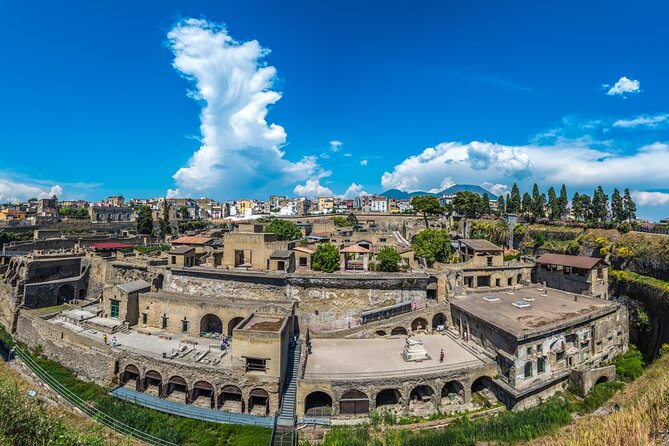
Charred boats make ancient history hit fast. This private Herculaneum tour turns Parco Acheologico di Ercolano into a guided walk through real homes, street corners, and sea life, and it does it with better preservation than Pompeii. I especially like how the route is built for understanding, from the Antiquarium first to the waterfront evidence that explains what happened in the eruption.
The main thing to watch is the walking. You’ll cover a moderate amount on uneven ancient paths, so comfy shoes matter, and your time can land anywhere in the 2 to 6 hour range based on your pace.
Key Highlights You Should Know
- A private guide means real questions get real answers, and you can move at your speed.
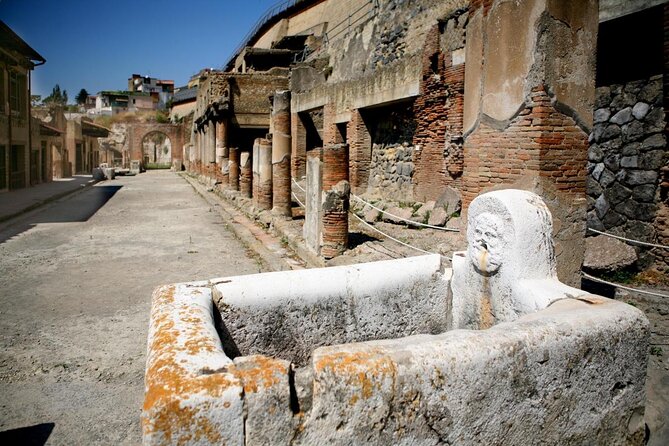
- Herculaneum is smaller and calmer than Pompeii, with frescos, mosaics, and even carbonized everyday details that feel close-up.
- The Boat Pavilion focuses on the waterfront story, including carbonized boats and structures tied to trade and rescue attempts.
- The Antiquarium gets you oriented fast, so the ruins make sense before you walk far outside.
- Waterfront homes, baths, and sport spaces show daily life across social classes, from luxury houses to the Palestra.
- Optional Cantina del Vesuvio wine lunch on Vesuvius slopes adds a relaxed, scenic finish with tasting.
Why Herculaneum Feels Different Than Pompeii
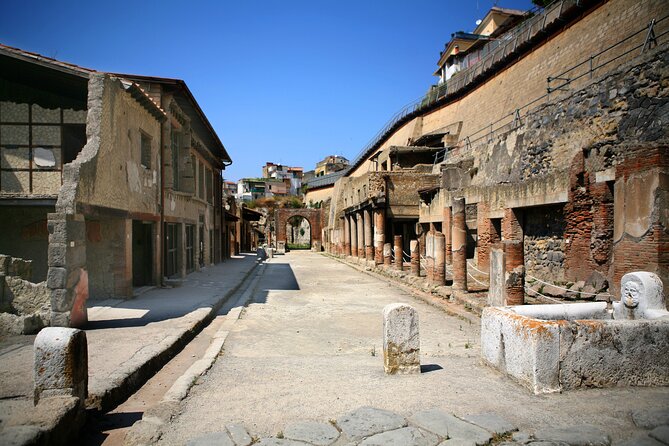
Most people pick Pompeii because it’s famous. Then they arrive and realize it’s also big, loud, and chopped up by crowds. Herculaneum is different. It’s smaller, and it often feels more intimate because so much survives in place.
The big payoff is how preserved the details can be. You’re not just looking at floor plans and stone walls. You’re seeing mosaics, recognizable room layouts, and artwork fragments that still hint at color and style. Even the waterfront angle feels more emotional here, since the sites tied to sea life and last moments are especially strong.
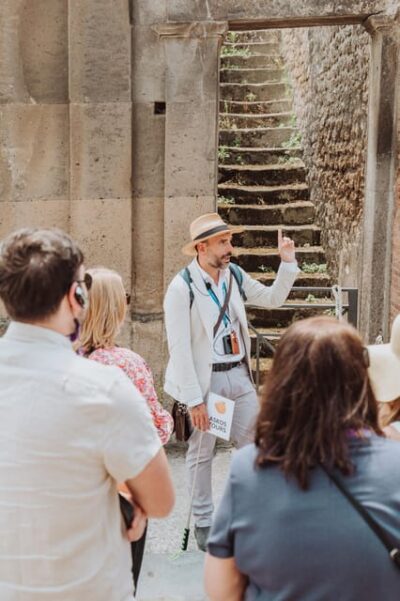
A private guide makes that difference even clearer. A good guide connects the dots for you as you move from one spot to the next, so you’re not stuck reading signs that barely explain what you’re seeing.
You can also read our reviews of more guided tours in Naples

The Private Guide Advantage at Parco Acheologico di Ercolano
This is built as a true private experience, meaning it’s only your group. You also have the option of pickup, which can save time and stress if you’re based in Naples or Sorrento.
What you’ll feel most is control. Your guide can pace the visit, slow down when you ask questions, and spend more time where your interests land. If you’re the kind of person who wants the why behind the what, this is the format that works.
In the same vein, several guides associated with this tour stand out for being professional and people-friendly. Fabrizio comes up in feedback as an excellent match for visitors who want context, not just facts. Paulo also gets credited with making the day fun and moving at a good pace. Different guide personalities, same theme: you’re not just walking through ruins, you’re understanding them.
Boat Pavilion: The Waterfront Story in Carbonized Detail
The emotional punch often comes early at the Boat Pavilion. This is where Herculaneum’s relationship to the sea becomes more than a backdrop. You’re looking at carbonized remains of boats and waterfront structures preserved under volcanic material.
The guide-led explanation matters here. You’re shown how these vessels likely belonged to fishermen, merchants, and officials who used the shoreline for trade and transport. Then the story shifts to the eruption timeline, with residents gathering at the waterfront and trying to be rescued by sea.
If you care about how archaeology turns evidence into human stories, this stop is a highlight. It’s one thing to hear about volcanoes. It’s another to see preserved maritime items that help explain what people depended on, right up until it stopped.
Practical note: this section can feel somber. If you’re traveling with kids, consider setting expectations gently ahead of time.
Antiquarium First, Then the Ruins
A smart trick in this itinerary is the order. Before you spend much time walking the outdoor park, you visit the Antiquarium, a small museum that gives you a sense of what lived here.
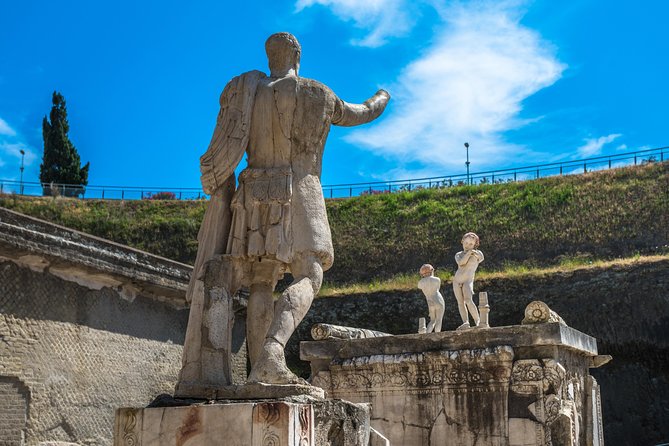
Inside, you’ll see original artifacts such as statues, inscriptions, household objects, and personal belongings. It’s also where preserved charred timbers come into focus, giving rare proof of wooden architecture that defined parts of the waterfront.
This matters because it helps your eyes while you’re walking outside. When you’re later standing near houses and shops, you’re not only seeing walls. You’re learning what belonged there, and what it likely looked like before the eruption.
If you’ve visited Pompeii already, this stop is a great way to reset your brain. Pompeii can train you to look for stone. Herculaneum makes you pay attention to everyday life, including materials you usually only hear about.
The Ancient Beach and the Vaulted Boat Houses
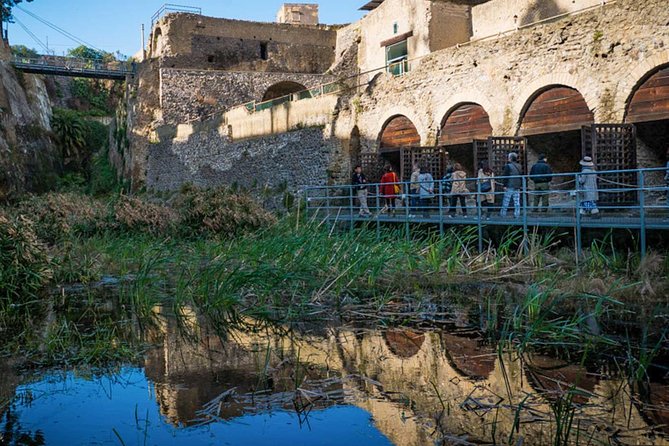
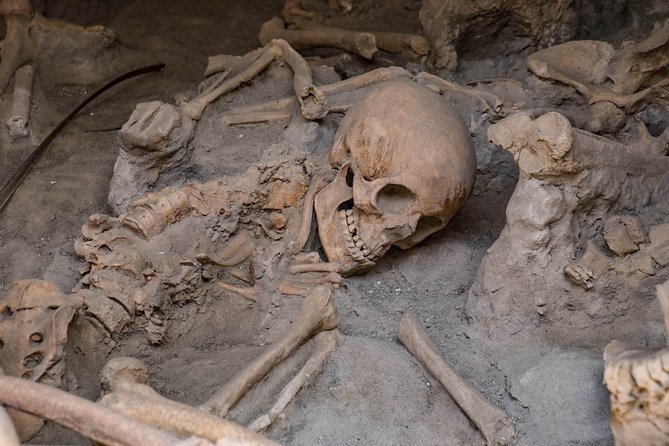
Next comes one of the most powerful areas, the ancient beach area connected with vaulted boat houses. Archaeologists uncovered skeletons of hundreds of people who gathered at the water’s edge during the eruption, hoping for rescue.
Seeing remains in place changes the way you stand in front of ruins. You move from thinking in terms of history to thinking in terms of families. The site also helps explain just how close Herculaneum once sat to the sea, and how pyroclastic surge likely overtook the waterfront in seconds.
Your guide’s job here is to keep it understandable, not confusing or morbid for the sake of it. You’ll get context for the geography and the sequence, so your brain can hold the full picture while your emotions do their thing.
You can also read our reviews of more private tours in Naples




Elegant Waterfront Homes: Casa dei Cervi and Beyond
After the waterfront evidence, the tour shifts to how people lived. One of the first standout homes is the Casa dei Cervi, named for marble statues of stags being attacked by hunting dogs found in the garden and displayed separately.
Inside and around the house remains, you’ll notice a mix of luxury cues: marble floors, colonnaded garden areas, rooms that once held fine frescoes, and a sense of how the wealthy would have enjoyed sea air and views.
This is where private guiding really pays off. A good guide helps you read the space like a story, explaining architectural details and social customs. So instead of treating the house as a pile of walls, you see how status, taste, and connections mattered in a Roman seaside town.
Casa di Nettuno e Anfitrite: Art That Still Hits Hard
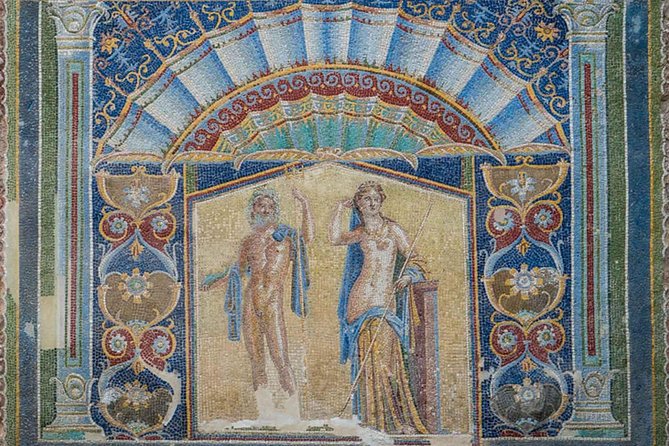
Another big art moment is Casa di Nettuno e Anfitrite. The name comes from a wall mosaic with tiny glass tesserae that still shimmer in blues and golds. It depicts Neptune and the nymph Amphitrite with marine motifs.
You also see how decoration and domestic life tied together. Around the mosaic, the remains hint at a private dining room and a decorated nymphaeum, suggesting dinners and hosting designed to impress.
If you love visual details, this is the stop to slow down. Ask your guide what the imagery likely signaled socially and how water themes fit a seaside identity.
Women’s Baths: Roman Daily Life Without the Museum Feeling
Baths can sound like a dull topic until you’re inside a place where engineering and social routine are still visible. The Women’s Baths show changing rooms and heated areas, plus the Roman engineering that warmed spaces using hollow floors and wall pipes that carried hot air.
What surprised me in this kind of tour format is the vibe you get. You’re not only looking at infrastructure. You’re seeing a setting for conversation, relaxation, and daily care. The decoration is refined, with geometric patterns and marine themes, and fragments of frescoes that add personality to the space.
A private guide can also help you understand how the building worked, which turns what could be confusing into something clear. If you’ve ever wondered why Roman cities invested so much in public and semi-public spaces, this is one of the better proofs.
Palestra: Sports and Social Life in One Place
The Palestra is like the sports and social club of ancient life. You’ll walk through a large open courtyard framed by porticoes, designed for training, events, and gathering.
The scale tells you it mattered. It wasn’t only about exercise. It tied into education and civic identity. A good guide helps you connect the physical layout to how young men might have trained, wrestled, or relaxed after workouts.
Even if you’re not a sports person, this stop gives you a break from the heavy emotion of the waterfront and the solemnity of remains. It brings you back to the rhythm of everyday routines.
Street-Level Commerce: Ad Cucumas
Not everything here is elite. One of the most fun moments is Ad Cucumas, an ancient advertisement painted onto a tavern wall that promotes wine by the jug.
The text is still legible after two thousand years and lists prices for different quantities. It shows commerce woven into street rhythm long before modern menus.
If you like seeing how normal life worked, this is a great contrast to temples and grand houses. You can almost picture customers stopping by to compare bargains, the same way people still do when they travel and want to find good deals.
Casa del Bicentenario and the Paper Trail of Ancient Homes
Casa del Bicentenario is a strong example of refined urban living. You’ll see vivid wall paintings, wooden partitions, and marble thresholds that suggest how spaces were arranged for family life and social display. There’s also a small shrine with delicate frescoes.
What makes this stop especially interesting is the hint of legal life. Excavations here produced carbonized wooden writing tablets linked to property and inheritance disputes. That means you’re not only viewing leisure and beauty. You’re seeing the paperwork of how a household managed power and responsibilities.
Your guide can help you connect those writing tablets to the spaces you’re standing in, so the home feels active and functional, not just decorative.
Sacello degli Augustali: Imperial Power in a Small Temple
Not every ruin here is about daily routines. The Sacello degli Augustali adds a political and religious layer that many visitors miss.
This small temple-like building was dedicated to the imperial cult, where local elites honored the emperor as a living symbol of Rome’s power and unity. Inside, you can still make out fresco fragments showing Hercules alongside members of the imperial family.
The big idea: local mythology and Roman propaganda worked together. It’s a reminder that even in a provincial city, identity and loyalty connected to the wider empire.
If you want your tour to include more than archaeology and architecture, this is a key stop. It gives the town a place inside the larger Roman machine.
Casa del Tramezzo di Legno and Casa dello Scheletro: Privacy and Interruption
Two of the most memorable stops deal with how people structured their lives and how abruptly that changed.
Casa del Tramezzo di Legno is named for a wooden partition wall. Because it was carbonized, the partition is preserved in a way that’s almost rare for Roman sites. The folding screen helped separate a reception area from more private parts of the house.
Walking through the rooms, you can sense the social choreography. Where guests were welcomed, where business happened, and where family life retreated from view. Private spaces mattered, and this house makes that visible.
Then comes Casa dello Scheletro, literally the House of the Skeleton. The name alone signals the tone shift. As you step inside, skeletal remains discovered here remind you Herculaneum was lived-in, not just a museum of fallen things. Around the bones, architectural details and fresco fragments show the rhythms of daily life before the eruption.
This is a hard stop in the best way. It’s not about big spectacle. It’s about humanity, interrupted.
Optional Cantina del Vesuvio Lunch: Wine, Terroir, and Vesuvius Views
If you add the optional winery visit, the day expands beyond the ruins into how the same volcanic ground shapes modern life.
Cantina del Vesuvio is a family-run winery on the slopes of Mount Vesuvius. You can stroll the vineyards with an enologist who explains how volcanic soils influence grape cultivation and how terroir shapes native varietals used to produce historic Lacryma Christi wine.
Then there’s a relaxed lunch and tasting. Local dishes pair with the estate’s bottles. From the terrace, you get sweeping views across the Bay of Naples and up toward Vesuvius.
This section is valuable because it links place and taste. You’re not just enjoying food. You’re seeing how the region keeps turning volcanic conditions into something people enjoy.
Price and Timing: Is It Worth $142.82?
At $142.82 per person, the value depends on what you want your day to do.
You’re paying for three things that often cost extra separately:
1) a private guide, meaning your questions get answered and your pacing is flexible
2) admission tickets included for the park and the optional winery
3) optional pickup with private transportation if you choose that mode
Also, this tour tends to be a smarter use of time than a do-it-yourself day. Herculaneum can be easier to navigate with a guide because the site is packed with details. Without that context, you can miss the connections between waterfront evidence, museum artifacts, and what the houses were built to do socially.
The duration is listed as 2 to 6 hours. That range is a real benefit if you want to keep it tight or make it longer with extra explanation. If you’re short on time, you can focus on the most meaningful stops. If you love architecture and daily-life details, you can let the guide steer the day.
A Quick Reality Check on Logistics and Comfort
This experience assumes moderate physical fitness and a moderate amount of walking, so plan for comfortable shoes. The park is outdoors with ancient surfaces, so you’ll want good traction.
The tour is offered in English, and you’ll receive confirmation at booking time unless you book very close to travel. It also includes a mobile ticket.
Service animals are allowed. And if you’re traveling with children under 18, they can enter for free with a valid ID.
If you’re sensitive to heat, start early if your schedule allows. Even if the itinerary length changes, the walking time in daylight is still walking time.
Should You Book This Private Herculaneum Tour?
Book it if you want Herculaneum to feel human. This tour is built to explain what you’re seeing, from the Antiquarium orientation to the waterfront evidence at the Boat Pavilion and the emotional beach area. You’ll also get strong payoff from the houses and baths, because the guide’s interpretations help you notice what makes each place different.
Skip it or choose a shorter format if you’re looking for a quick highlights pass. The tour includes many stops, and it’s designed for walking plus explanation. If you want minimal movement and minimal interpretation, you might feel stretched by the amount of ground covered.
If your main goal is to do Herculaneum right, this private format is a solid choice. Especially if you’ve already seen Pompeii and want something calmer, smaller, and more preserved, Herculaneum gives you a different emotional and visual experience.
FAQ
How long is the private Herculaneum tour?
The duration is listed as about 2 to 6 hours, depending on how the day is paced.
Is this tour private or shared with other groups?
It is a private tour/activity, so only your group participates.
Are admission tickets included?
Yes. Admission tickets are included for the Parco Acheologico di Ercolano portion, and admission ticket inclusion is also noted for the optional Cantina del Vesuvio visit.
Can the tour pick me up in Naples or Sorrento?
Yes. There is an option that includes private transportation, with pickup offered anywhere in Naples or Sorrento. If you choose the walking-only option, you meet the guide at the Herculaneum archaeological site.
Is the tour offered in English, and do kids pay?
The tour is offered in English. People under 18 can enter for free with a valid ID.
Can I get a full refund if I cancel?
Yes. You can cancel up to 24 hours in advance for a full refund. If you cancel less than 24 hours before the start time, the amount paid is not refunded.
More Guided Tours in Naples


More Tours in Naples


More Tour Reviews in Naples

Not for you? Here's more nearby things to do in Naples we have reviewed




Tour Reviews, compared.
 ★ 4.8Pompeii: Entry Ticket and Guided Tour with an ArchaeologistFrom $3519,459 reviews
 ★ 4.2Pompeii: Entry Ticket with Optional Audio GuideFrom $2612,360 reviews
 ★ 4.8Pompeii: Small Group Tour with an ArchaeologistFrom $4012,264 reviews
 ★ 4.3Pompeii Ruins & Mount Vesuvius Day TourFrom $12011,459 reviews
 ★ 4.6Sorrento, Positano and Amalfi Full-Day TourFrom $10710,988 reviews
 ★ 5.0Sorrento, Positano & Amalfi Coast – Small Group TourFrom $768,643 reviews
 ★ 4.6Catacombs of San Gennaro Entry Ticket & Guided TourFrom $157,941 reviews
★ 5.0Pompeii Small Group Tour with an ArchaeologistFrom $356,593 reviews
★ 4.6Catacombs of San Gennaro Entry Ticket & Guided TourFrom $157,941 reviews
★ 5.0Pompeii Small Group Tour with an ArchaeologistFrom $356,593 reviews
Browse the lists this tour appears in