
Tour review · TOUR REVIEWS
Private Pompeii Tour With Guide and Transfer Included
Pompeii hits different when the plan is good. This private guided tour pairs pickup from Naples with a licensed guide and Pompeii tickets, so you spend your time looking at the ruins instead of figuring out logistics. I especially like that it’s focused on major sites you can actually appreciate in just half a day, with one clear drawback to consider: the guided part is about 2 hours and follows set highlights, so you may want extra time later if you’re the type who loves roaming.
The second thing I really like is the stop selection. You move from the city’s food market (Macellum) to the grain warehouses (Granai del Foro) and onto public life like the ancient amphitheater and the Forum baths, then finish with the more upscale stories tied to buildings like the Lupanar and Casa del Fauno.
Finally, the vibe here is practical and well-run. The overall rating is 4.2 out of 5 based on a small set of reports, and the common praise points are clear communication and punctual service, often with a guide who’s friendly and good at explaining. Still, there is at least one negative report about the visit being less smooth, so I’d recommend you confirm your exact pickup details when you book.
Key points to know before you go
- Private transfer included so you do not have to stitch together buses and tickets on your own
- 2 hours of guided time with Pompeii highlights you can follow without getting lost
- Admission tickets are included for the stops listed in the itinerary
- A mix of Pompeii life stages, from market trade to public spectacles to elite homes
- Small-group setup by design, since it’s a private experience for your group only
- Mobile ticket support makes check-in easier once you’re on site
Private Pompeii from Naples: how the transfer works
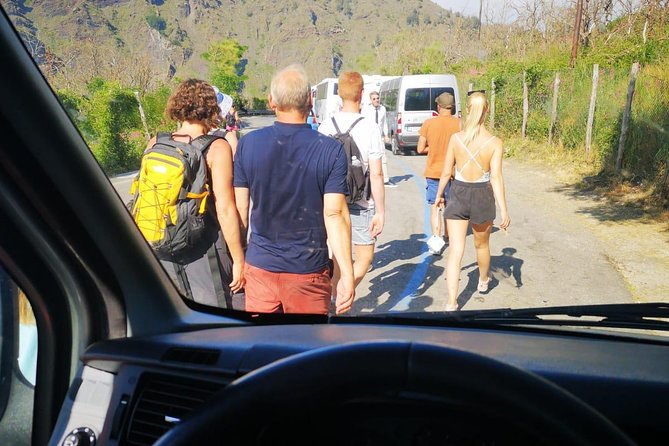
This is a true “door to ruins” style outing. You get private transport and pickup is offered, with the tour described as starting at Molo Beverello (80133 Napoli), then returning you back there at the end. In other words, you’re not left scrambling for a ride after walking in Roman streets.
That matters because Pompeii is popular, and timing is everything. When you have a driver lined up and a guide who knows the flow, you can keep your day on track. You also get the benefit of privacy. This is listed as a private tour/activity, so it’s for only your group, not a mixed crowd where you are competing for the guide’s attention.
If you’re staying in Naples proper, this setup is especially helpful. If you’re coming from farther out, the included transfer can save time and stress, because the schedule is built around getting you to Pompeii and back within a 4-hour window.
One small note for your planning: the meeting point is clearly stated as Molo Beverello, while pickup is also included. When you reserve, double-check what that means for your exact pickup location, so you’re not surprised about where you meet the driver.
You can also read our reviews of more guided tours in Naples

The 4-hour schedule: what you actually get for your time
On paper, the tour duration is about 4 hours. The structure is basically this: transport in, then a guided walk through key Pompeii locations, then transport back.
The guided portion is described as about 2 hours with a licensed guide. After that, the remaining time is best thought of as travel time plus short pauses as you move between stops. Each listed stop is tight and deliberate, usually around 10 minutes, with one longer highlight at the Forum area at about 20 minutes.
That timing approach is a plus if you want a smart, high-impact route without spending most of the day in lines and wander mode. It’s also the reason I call out the main drawback earlier: if you’re hoping for a very slow, pick-your-own-adventure tour across every street corner, this format may feel a little structured.
Pompeii stops that matter: Macellum to Casa del Fauno

This tour is built like a guided story of daily life. You see commerce first, then storage and trade, then public entertainment, then civic space, then baths, then private interiors, and finally elite wealth. Each stop is short, but the guide’s job is to connect the dots for you.
Below is what to expect at each location, and what’s worth noticing even when you only have 10 minutes.
Macellum (main food market)
You start at the Macellum, Pompeii’s main food market where meat and fish were sold. This is not just a scenic ruin stop. It’s the Roman version of a local hub, and your guide should explain the layout and how trade shaped daily routines and the city’s economy.
In a short visit, I’d focus on questions like: How was the market organized? Who would shop here? What does the design say about speed, service, and supply?
Granai del Foro (grain warehouses and casts)
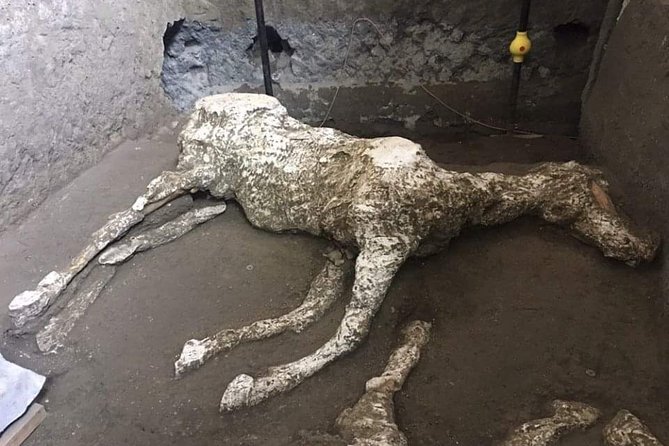
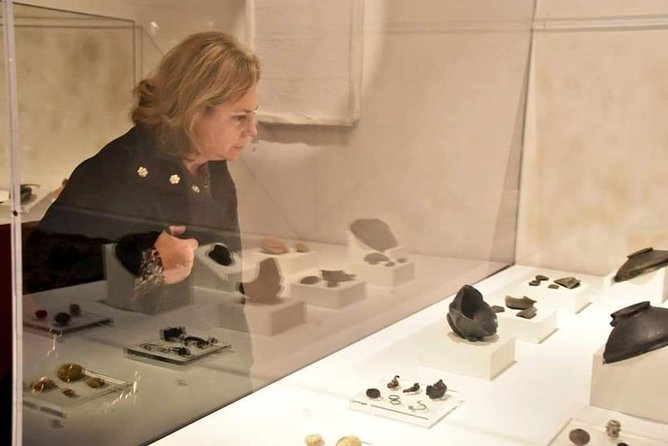
Next are the Granai del Foro, ancient warehouses used to store grain and supplies. Today, these spaces also display casts of victims of the eruption and other archaeological finds.
This stop is emotionally heavier than the market. Even though it’s listed as a brief stop, it’s one of the most important ones for understanding why Pompeii stopped so suddenly and why we have so much evidence preserved from everyday life.
If you’re sensitive to this kind of material, it helps to know it’s coming so you can mentally pace yourself.
You can also read our reviews of more private tours in Naples






Anfiteatro Romano (the oldest surviving Roman amphitheater)
Then you’ll reach the Anfiteatro Romano, built in 70 BC. It’s described as the oldest surviving Roman amphitheater, and your guide will connect it to gladiatorial games and public entertainment.
When you see an amphitheater from the outside, it’s easy to imagine the noise and crowd. When you’re told how Roman public life worked, the space becomes more than stone. Even on a quick stop, look for how the building would have directed sightlines and movement.
Foro de Pompeya (the Forum area)
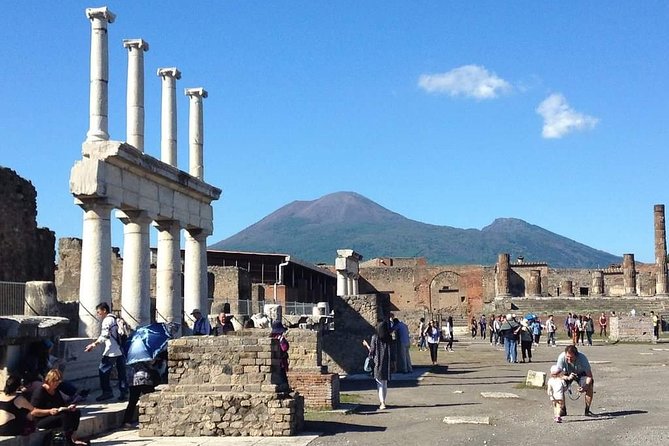
The Forum is a centerpiece. You’ll walk through the Foro de Pompeya, the central square of the ancient city, surrounded by temples, administrative buildings, and markets. This stop is longer than the others at about 20 minutes, which suggests it’s a key part of the story.
This is also where your guide can translate Pompeii from “cool ruins” into civic life. Ask about who ran things, what would have been happening here during the day, and why this central space mattered.
Terme del Foro (Forum Baths)
From the civic center you move to the Forum Baths, the Terme del Foro. This stop focuses on daily routines, including changing rooms, heated pools, and decorative frescoes.
I like baths in Pompeii because they show social behavior. You are not just looking at an artifact, you’re imagining how people met, talked, and spent time. Even with a short visit, frescoes can help you grasp how art and comfort were part of everyday living for many Romans.
Lupanar (fresco cycles and possible Dionysian rites)
One of Pompeii’s best-preserved buildings on this route is the Lupanar. It’s known for a vivid fresco cycle, and the description notes it may be linked to Dionysian rites.
Even if you only have about 10 minutes here, it’s worth paying attention to how the building communicates. The point of this stop is not just the subject matter, it’s how Pompeii’s interiors were decorated and how people understood symbolism in their world.
This is also a moment where a private guide really earns their keep. If you’re curious, you can ask how historians interpret these frescoes, and what can be supported versus what’s still debated.
Casa del Fauno (elite home, dancing faun, and Alexander Mosaic)
You end at Casa del Fauno, famous for the statue of the dancing faun and the Alexander Mosaic. This home is described as a luxurious residence connected to Pompeii’s elite.
If you like the “how rich people lived” angle, this is the payoff. The Alexander Mosaic and the faun statue aren’t just famous names, they help you see what wealth meant in material culture: art, display, and status.
In a brief stop, I’d focus on two things: what the major artworks are, and how their presence changes what this house represents compared to market or bath areas.
Tickets, pickup options, and what is actually included
One reason I’m comfortable recommending this tour is that the core pieces are bundled in. The included items are:
- Private transport
- Private guide
- Pickup at your accommodation
- Pompeii tickets
That last part is important. Pompeii can be a ticket-and-entry headache if you try to manage it yourself, especially when you want to keep a strict half-day schedule.
You also get a mobile ticket. That tends to make arrival smoother because you are not juggling paper.
What is not included is also clear: tips and food and drink. If you want to keep the tour comfortable, I’d plan to eat either before you go or after you return, since the tour itself does not include meals.
Is $358.86 per person good value for a private Pompeii day?
At $358.86 per person for about 4 hours, the price is not “budget day trip” territory. You are paying for a package that includes private transport and a private guide, plus the Pompeii tickets for the listed stops.
So the value question comes down to your group and your style.
If you’re going with a partner, the private format is often easier to justify because you get attention from the guide for your shared interests, and you avoid time spent coordinating across multiple people. If you can benefit from the listed group discounts, that can also help the math.
Where I see the strongest value is when you care about meaning, not just photos. The itinerary is designed around key areas, and the guide’s job is to connect them into a coherent picture of Roman life. If you’ve got questions, this kind of structure can turn “standing in a ruin” into “understanding what you’re seeing.”
The main thing to consider is the time cap. Because the guided route is time-limited and the stop list is set, you are not getting a full, open-ended exploration of Pompeii. If you prefer to wander longer on your own, you may feel like you need an extra add-on day.
Communication and guide quality: what to expect from the human side
From the feedback, the most repeated strengths are practical and human: good communication, punctual service, and a guide who’s friendly and explains things well.
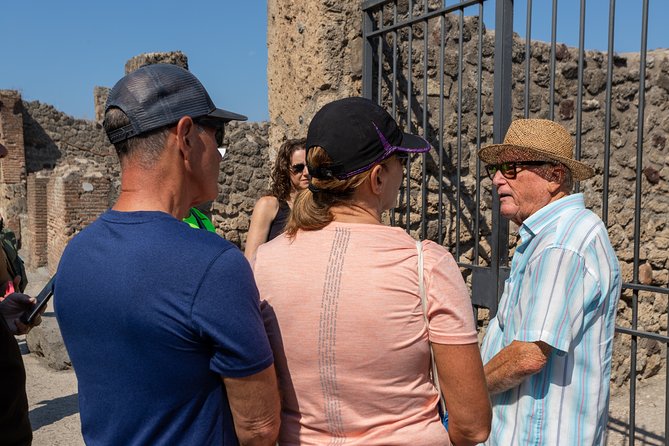
In other words, this is not described as a tour where you are left with silence and a printed map. Instead, the tone is set for interaction. The tour description encourages you to ask questions and take your time at each highlight, which is exactly what makes a short guided window feel more satisfying.
That’s also why I like the private format. You can ask follow-up questions without feeling like you’re holding up a large group.
One caution: there is one notably negative report about a bad experience when visiting Pompeii, and it raises a concern about how the booking or experience matched expectations. Since you only control what you confirm in advance, I’d do this: when you book, verify pickup details, confirm that tickets are included for your dates, and make sure the start time is clear.
Who this private tour suits best
This tour fits best if you want a strong Pompeii route without turning your day into an admin task.
You’ll likely enjoy it if:
- You want private transport from Naples so the day stays simple
- You like guided context at each stop, especially markets, public space, baths, and elite houses
- You’re traveling as a couple, a small family, or a group that wants only your party in the experience
You might consider adding your own time before or after if:
- You want to see more than the listed sites
- You’re the type who needs longer stops to read and re-read details
And if you travel with a service animal, service animals are allowed, which is a helpful note for planning.
Should you book this private Pompeii tour with transfer?
If you want a half-day Pompeii that is organized, ticketed, and guided, this is a solid option. The big wins are the included private transfer and the way the stops tell a story from daily commerce to public life to elite interiors. For many people, that combination is exactly what makes Pompeii feel real instead of just impressive.
Book it if your priorities are:
- A smooth Naples to Pompeii plan with transport and tickets included
- A guide-led route that covers the essentials in a manageable 4-hour window
- Private attention for your questions
Hold off or plan extra time if:
- You want an unstructured, very long Pompeii exploration
- You’re worried about matching expectations, in which case confirm your pickup details and start time before you go
If you do book, your best move is simple: come with a few questions in mind, and treat the short stops as chances to connect the dots. Pompeii rewards that kind of curiosity.
More Guided Tours in Naples



More Tours in Naples




More Tour Reviews in Naples

Not for you? Here's more nearby things to do in Naples we have reviewed










Tour Reviews, compared.
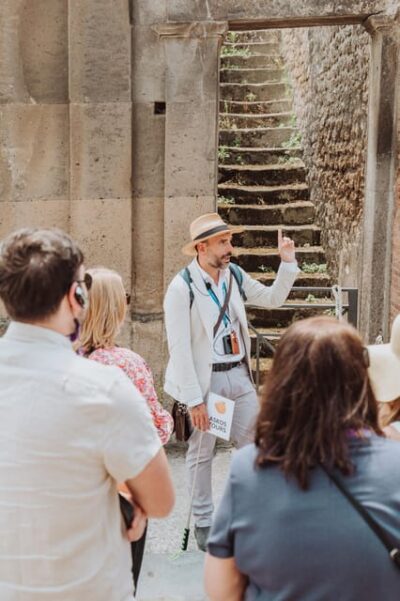 ★ 4.8Pompeii: Entry Ticket and Guided Tour with an ArchaeologistFrom $3519,459 reviews
 ★ 4.2Pompeii: Entry Ticket with Optional Audio GuideFrom $2612,360 reviews
 ★ 4.8Pompeii: Small Group Tour with an ArchaeologistFrom $4012,264 reviews
 ★ 4.3Pompeii Ruins & Mount Vesuvius Day TourFrom $12011,459 reviews
 ★ 4.6Sorrento, Positano and Amalfi Full-Day TourFrom $10710,988 reviews
 ★ 5.0Sorrento, Positano & Amalfi Coast – Small Group TourFrom $768,643 reviews
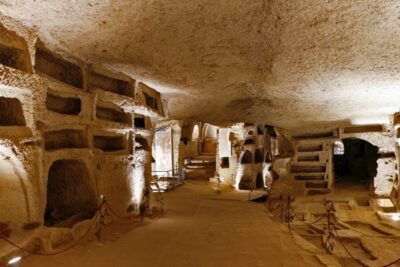 ★ 4.6Catacombs of San Gennaro Entry Ticket & Guided TourFrom $157,941 reviews
★ 5.0Pompeii Small Group Tour with an ArchaeologistFrom $356,593 reviews
★ 4.6Catacombs of San Gennaro Entry Ticket & Guided TourFrom $157,941 reviews
★ 5.0Pompeii Small Group Tour with an ArchaeologistFrom $356,593 reviews
Browse the lists this tour appears in