
Tour review · TOUR REVIEWS
The Mystery of Naples Saga: The Skull with ears
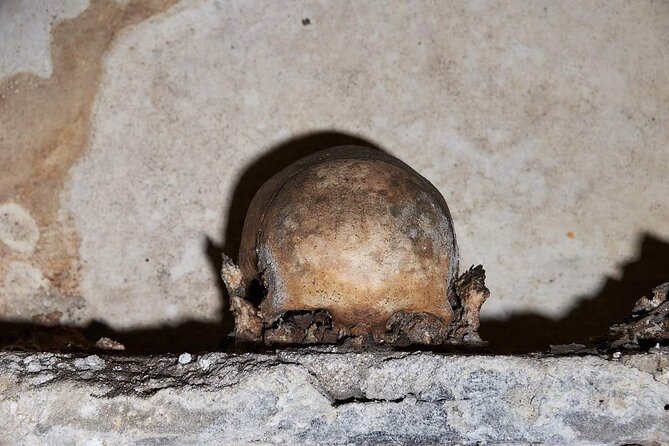
A skull with ears changes the tone of Naples. This private, English-led visit takes you straight into the story behind the Skull with Ears, a relic once prayed to in Naples, and it does it in a way that feels personal, not staged. I like that you get real context from an authorized guide and archaeologist while you walk through the streets that still make the city feel like itself.
I also love the focus on Santa Luciella ai Librai, a small church that has a history reaching back to the 1300s, tied to local trades and a very specific local belief. You are not just staring at something strange, you are learning why people cared so much.
One consideration: this experience is short (about an hour), and much of the value is in the storytelling. If you want a long, big-view sightseeing crawl, this will feel more like a concentrated chapter than a whole book.
Key points to know before you go
- A private tour for up to 10 people, so your guide can keep the pace human
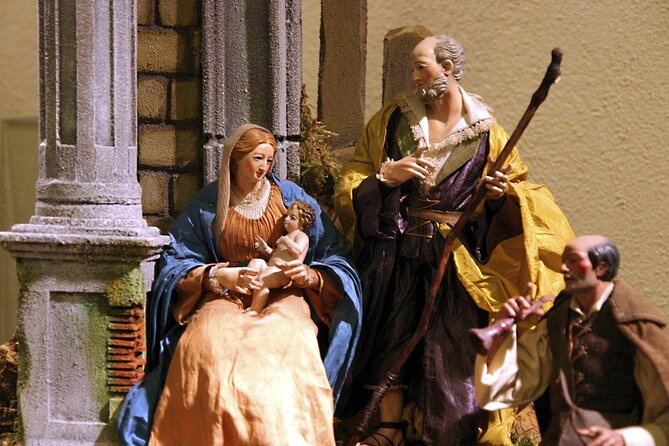
- Via San Gregorio Armeno as the lead-in, where artisans and presepi craft the mood
- Santa Luciella ai Librai and its underground connection to the relic
- The Skull with Ears, once used for prayers tied to protection and the afterlife
- Authorized guide plus archaeologist, which helps the facts feel grounded
- You may need an €6 admission ticket per person, so check the final price before you go
Naples’ spooky side, explained on your terms
Naples has plenty of ghost stories, but this experience is different because it treats the strange as something locals once handled seriously. You will spend about an hour on a small, specific path of the city, starting with a well-known street and ending at a central point that makes it easy to keep exploring after.
What makes it work is the structure. You begin in a place where Naples’ craft tradition is on display all around you. Then you shift into a church that has been saved and reopened after a long stretch of neglect. The whole hour is built to connect street life, religious practice, and the relic itself in a way that makes sense, even if you are not the type who seeks out macabre sites.
If you like your travel with a little mystery and a lot of explanation, you will probably have a great time. If you need big monuments and long walks to feel satisfied, you might prefer a longer itinerary elsewhere.
You can also read our reviews of more tours and experiences in Naples.


Via San Gregorio Armeno: the artisan street that sets the mood
You meet in the area of Via San Gregorio Armeno, famous for its shops and artisans connected to presepi, those Neapolitan nativity scenes you keep hearing about for a reason. This street is one of those places where the everyday craft culture is so strong it feels like a living museum, even when you are not in peak holiday season.
Here is how I’d think about this start: you are not wandering randomly. Your guide uses the street as a tool to show how Naples makes meaning through work. The shops and techniques are part of the background for why the city’s sacred sites and local traditions feel so intertwined.
Practical angle for you: arrive a few minutes early so you can get your bearings fast. The meeting point is in a lively, foot-traffic area, and your time inside the church is the main event. If you are the type who likes to take photos, do it after you meet your group, then let the guide steer you so you do not spend the best part chasing angles.
Santa Luciella ai Librai: a church founded for protection
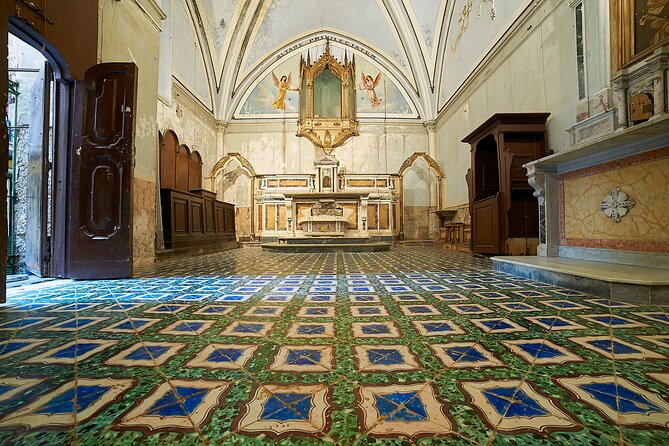
The heart of the experience is the Chiesa Museo di Santa Luciella ai Librai, tucked into the San Gregorio Armeno area. It is small, hidden-feeling, and that matters. When a place like this is out of the way, you tend to get a more intimate atmosphere once you are inside.
You learn that the church was founded by Bartolomeo Di Capua in 1327. That is the kind of detail that instantly upgrades the visit from a quick curiosity stop into something you can place in time. Then the story shifts to trade: the church became a place of worship for a workers’ group tied to the Corporazione of Pipernieri, Fabbricatori e Tagliamonti.
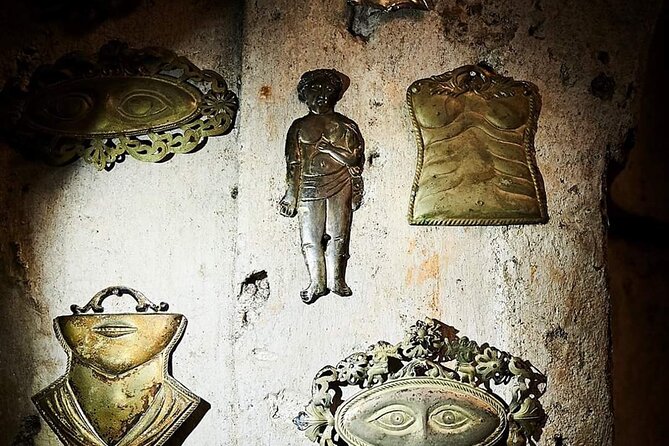
The key idea is simple and human. Certain jobs put eyesight at risk, and the people who did that work asked for protection. The story explains how they entrusted the church of Santa Lucia with that care, which gives the whole visit a grounded reason to exist, not just spooky vibes.
One more reason this stop feels rewarding: it was not always open. It is described as being saved and reopened after a long period of abandonment, with the site’s modern caretakers working to restore it. That gives you a chance to see how local preservation efforts keep older beliefs and architecture from fading away.
The Skull with Ears relic: why people prayed to it
Now for the headline item: the Skull with Ears, kept in the subterranean area connected to the church. This is a relic that was once worshipped by local cults, and Naples people went to it with prayers, hoping those words would carry into the afterlife.
The most interesting part for me is the belief system around it. Up to the mid-1900s, people would come to ask the relic for help, with the idea that it acted like a messenger between the living and the dead. That turns the relic from a weird artifact into a piece of personal coping, like a very specific kind of faith tool.
You should not expect a dramatic performance. The value here is that the guide helps you understand what the relic meant in daily life: why someone would make the effort, what they were hoping for, and how a community assigns meaning to an object.
Also, try to keep an open mind about what you see. Relics can feel unsettling if you are not used to them, but the experience frames it with care. You are not being pushed to believe. You are being taught how beliefs worked here, and how Naples kept a thread running through the centuries.
Underground setting: what to expect inside
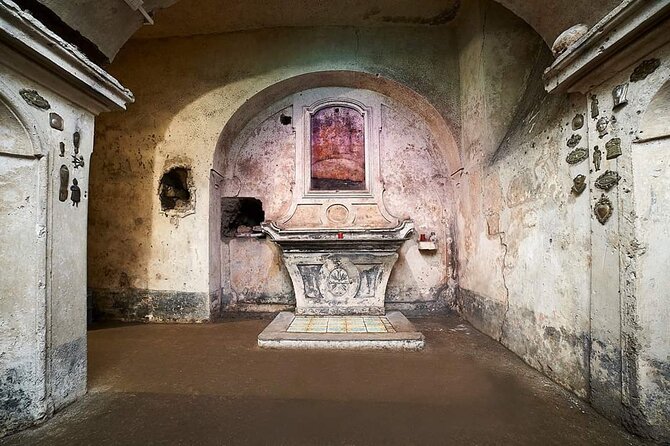
Because the relic is housed in the church’s subterranean space, the experience naturally feels more “inside-the-story” than “look-and-leave.” The guide’s job is to help you understand the layout and what you are seeing, rather than letting you stare at darkness and guess.
If you are planning your visit, keep your expectations realistic. This is not a massive museum hall with tons of signage and exit routes. It is a specific site with a specific focus. That is a good thing if you want depth in a short time.
A practical tip: wear comfortable shoes. You will be moving through an old neighborhood where streets and access points can be uneven, and you also want to be at ease when the tour shifts into a smaller internal space.
And if you are sensitive to the idea of skulls or religious relics, it’s still worth noting: the site’s theme is exactly that. The tour does not hide what it is about, so you should go only if you are comfortable with the concept.

The guide and archaeologist combo makes the hour feel grounded
One of the best values in this tour is the team: an authorized guide plus an archaeologist. Even if you normally skip “lecture” tours, this pairing helps. It is easier to trust the story when you hear both the human tradition and the interpretive context.
In practice, it means you are more likely to get clear explanations instead of just a sequence of facts. The guide can connect the relic to why the church mattered, while the archaeologist helps you place the site into a broader understanding of material culture and long-term continuity.
That also explains the top-rated reviews you’ll see for this kind of tour format. When people feel guided, and not rushed, the experience tends to stick with them. For you, it likely means you will leave with more than a photo and a vague sense of mystery. You will leave with a mental model for how and why this relic was treated with such importance.
Palazzo Venezia finish: easy to roll into more Naples
After the church visit, the tour ends near Palazzo Venezia, in the main street of Naples’ historic center. This matters because it prevents the common problem of “you finish in the middle of nowhere.”
From here, you can keep going on your own with less effort. You are still in the thick of the old city, with streets and sights close enough to transition without an awkward gap.
I like a finish point like this because it helps you control your pacing. If you want to grab a coffee or walk toward another church or viewpoint, you can. If you have energy for one more stop, you can use the next hour well. If you want to head back, you can do it without stress.
Price and value: what $156.62 really buys

The price is listed as $156.62 per group, up to 10 people, for about one hour. That price structure is where the value can really show. If you are a couple, a family, or a small group, you can often split the cost in a way that brings it closer to what a standard guided visit would cost per person.
You also get a private setup, English offering, authorized guiding, archaeologist support, insurance, and 24-hour assistance. Those are “quiet” benefits. You may not notice them minute-to-minute, but they reduce friction if anything goes off schedule.
One cost item to factor in: an €6 admission ticket per person is listed as not included. Since there is some variation between how different tours phrase ticket inclusion, I’d treat this as a working assumption until you confirm the total on your booking.
Is it worth it? For me, it is worth it if you like short, story-led experiences and you want something specifically Neapolitan, not just generic “Naples in general” content. If you are the type who wants to hit five major sights in 90 minutes, you might decide this is too narrow. But if you want one sharp, meaningful slice, this is priced like a good “specialist visit,” not a mass-market stroll.
Who this tour suits best
This is a good fit if you want Naples with a brain and a heart, plus a bit of spooky curiosity. You will probably enjoy it most if you like:
- Religious history and how local faith becomes tradition
- Offbeat sites with explanations, not just shock value
- Short private tours where the guide can tailor the pacing
It may not be your best choice if you need lots of open-air walking, major panoramic views, or a long time to explore multiple neighborhoods.
The tour description also says most travelers can participate, service animals are allowed, and it is near public transportation. If you are traveling without a private car, that matters. You should still plan to get to the meeting area with enough time to find your guide before the church segment begins.
Tips to get the most from your hour
To make the most of your time, treat this like a focused appointment, not a casual walk. Arrive a few minutes early at Vico Santa Luciella, 5/6, 80138 Napoli, so you can settle in. That also helps if the street is busy, because it usually is in one way or another.
When you reach the church, listen for the thread connecting the relic to the local trades and the idea of protection. That connection is what turns the experience from a “strange object” into an understanding of community belief.
And if you are buying time to take photos, do it strategically. The main value is what the guide explains and how it changes your understanding of what you see underground. You will have plenty of time for a photo or two, but do not let it replace the story.
Finally, because this is booked ahead on average (about 19 days in advance), I’d plan to secure your slot early if your schedule is tight. Naples is popular, and specialty tours like this can fill up.
Should you book this private Naples relic tour?
Book it if you want an hour that feels intentional: a private group visit, a knowledgeable guide paired with an archaeologist, and a story tied to Naples’ local trades and a relic that was once prayed to. The best part is that it is not just dark for the sake of dark. It has a social, historical reason, and the restoration story adds meaning beyond the relic itself.
Skip it if you want a long day of major landmarks, wide views, and lots of variety. This tour is narrow by design. When that narrow focus matches what you like, it lands very well.
FAQ
How long is the tour?
The tour lasts about 1 hour.
Is this tour private, and how many people are included?
Yes, it is a private tour/activity. The group size is up to 10 people.
Where do we meet for the tour?
You meet at Chiesa Museo di Santa Luciella ai Librai, Vico Santa Luciella, 5/6, 80138 Napoli NA, Italy.
What language is the tour offered in?
It is offered in English.
Is there an extra admission ticket cost?
An admission ticket of €6.00 per person is listed as not included.
Is the tour easy to reach, and are service animals allowed?
The site is listed as near public transportation, and service animals are allowed.
More Tour Reviews in Naples
Not for you? Here's more nearby things to do in Naples we have reviewed










Tour Reviews, compared.
 ★ 4.8Pompeii: Entry Ticket and Guided Tour with an ArchaeologistFrom $3519,459 reviews
 ★ 4.2Pompeii: Entry Ticket with Optional Audio GuideFrom $2612,360 reviews
 ★ 4.8Pompeii: Small Group Tour with an ArchaeologistFrom $4012,264 reviews
 ★ 4.3Pompeii Ruins & Mount Vesuvius Day TourFrom $12011,459 reviews
 ★ 4.6Sorrento, Positano and Amalfi Full-Day TourFrom $10710,988 reviews
 ★ 5.0Sorrento, Positano & Amalfi Coast – Small Group TourFrom $768,643 reviews
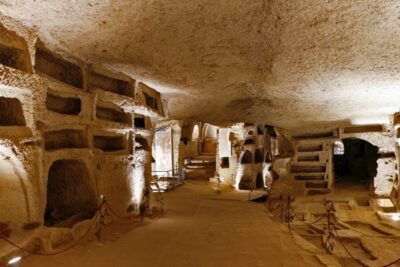 ★ 4.6Catacombs of San Gennaro Entry Ticket & Guided TourFrom $157,941 reviews
★ 5.0Pompeii Small Group Tour with an ArchaeologistFrom $356,593 reviews
★ 4.6Catacombs of San Gennaro Entry Ticket & Guided TourFrom $157,941 reviews
★ 5.0Pompeii Small Group Tour with an ArchaeologistFrom $356,593 reviews