
Tour review · TOUR REVIEWS
The Skull with the Ears: the Cult of the Dead in the Church of S. Luciella
This short Naples stop has a big story behind a small doorway. Inside the Chiesa Museo di Santa Luciella ai Librai, you’ll get guided access to the church and its underground cemetery, centered on a skull believed to have special powers for Neapolitans.
I love how the experience mixes devotion and real place details, not just spooky theater. You get a guided walk with lots of clear explanations in a compact time window, and it feels more personal than the usual tour pileups.
One thing to consider: even though the tour is offered in English, I’d be ready for some Italian during the visit. That mismatch is the main practical hiccup I’d plan around.
Key highlights you should care about
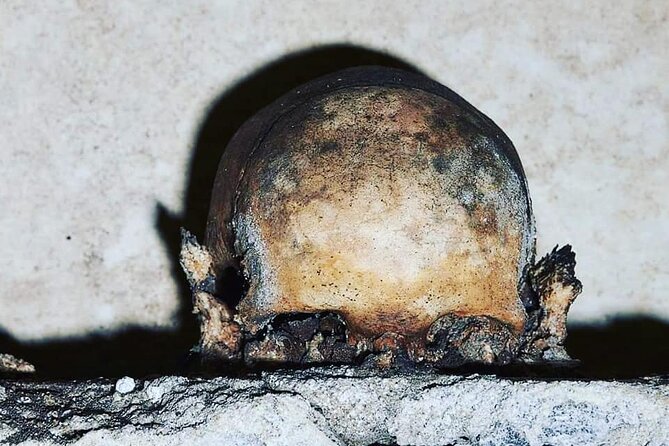
- Skull with ears at the center of local prayers, with the tradition explained in plain terms
- Underground cemetery access in a church setting, not a museum maze
- Short, structured visit (about 15 minutes) that fits into busy sightseeing days
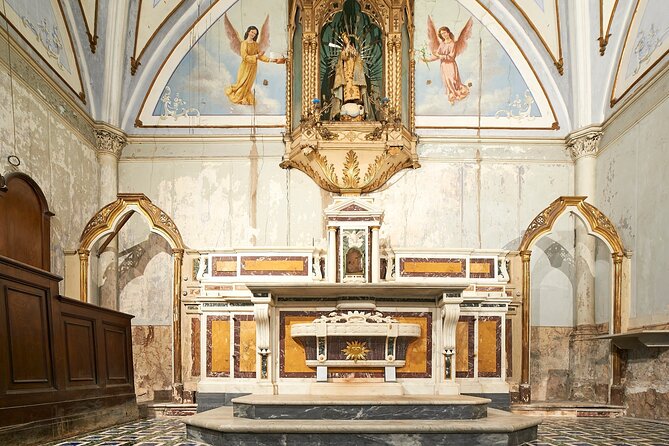
- Ongoing restoration, with frescoes reported as being revealed under plaster
- A youth-run conservation angle via Breathe Art Association, focused on jobs and preservation
- High satisfaction for a small site, with strong praise for punctual, enthusiastic guidance
Why Naples keeps a skull with ears in its church
Naples does odd, in the best way. In the Church of Santa Luciella ai Librai, people don’t treat death as something to avoid. They build a place where the dead are part of everyday spiritual life, and the guide explains how that belief is tied to a very specific object: the skull with ears.
The skull is more than a curiosity. The tradition says that having ears made it easier for the soul connected to the skull to act as an intermediary and offer miracles and favors. Even if you’re not the type to buy into miracles, the logic of the belief helps you understand how people used faith to cope, to hope, and to ask for help.
What makes this church especially interesting is that it isn’t just preserved as an artifact. It has a living “now” story, too. The site reopened after 30 years of neglect, and the current work is tied to saving monuments and supporting young people through restoration jobs. That means you’re not only looking backward.
You can also read our reviews of more tours and experiences in Naples.


Chiesa Museo di Santa Luciella ai Librai: what happens in your 15 minutes
The visit is built as a quick guided tour. Expect to spend roughly 15 minutes total on site, which is ideal if you’re doing Naples by foot and don’t want to lose half a day.
You start in the church area and move through the highlights with the guide pointing things out as you go. The church is small, but the key is that the guide keeps pulling you toward the meaning of what you’re seeing. It feels like a “concentrated lesson,” with enough time to get oriented without rushing.
Because the tour is short, pacing matters. Go in with the mindset that you’re there for one main focus, not a long browse. If you try to treat it like a casual museum stop, you might feel a bit squeezed. If you lean into the guide’s flow, it lands well.
One practical note: the experience is listed as offered in English, and in practice some groups may hear mostly Italian. I’d treat the visit as guided first, language second. If you understand spoken Italian only a little, you can still follow a lot from the guide’s explanations and your own eyes on the objects.
The underground cemetery: skulls, context, and the feeling of place
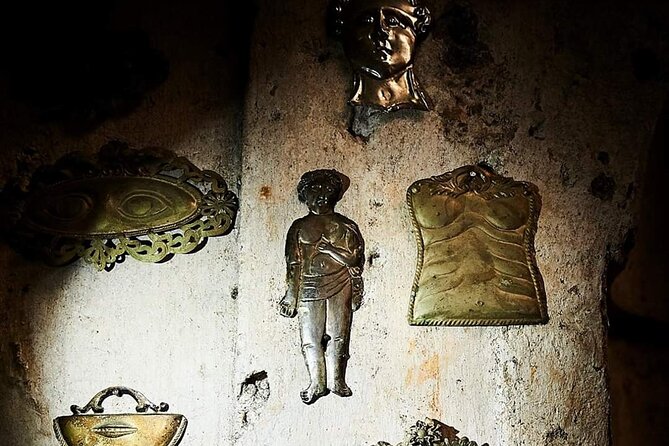
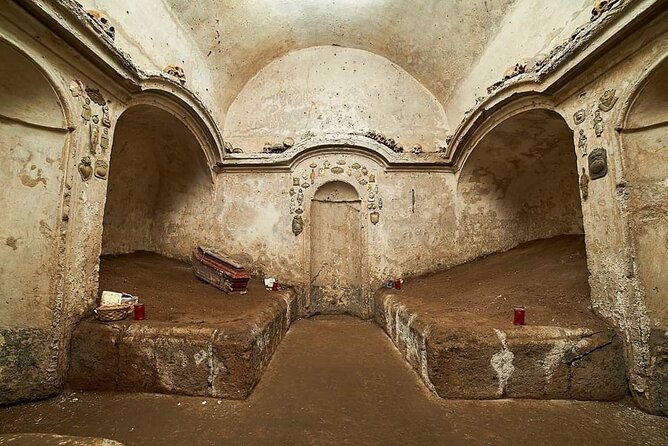
The main “wow” moment is not upstairs. It’s the access to the underground cemetery beneath the church. This is where the whole cult-of-the-dead vibe becomes real.
You’ll see many skulls, and the guide helps you connect the details to the local belief system. The skull with ears gets special attention, because it’s framed as a reference point for Neapolitans who came to it to pray. In other words, you’re not looking at a random display. You’re learning how people used this space as a spiritual channel.
What I like about this part is the tone. The guide keeps the explanations tied to the site, not vague lectures. That makes it easier for you to picture how devotion might have worked here, rather than only thinking about the objects as curiosities.
Drawback? Because it’s underground and compact, you’ll want to pay attention to group flow. There may be limited space to stop and stare for long. If you love slow, solo wandering, this might feel more guided and more “in motion” than you’re used to.
The skull with ears: why it’s treated differently here
Let’s talk about the headline object. The skull with ears is treated as the star, and the guide lays out why.
In this tradition, the ears are not decorative. They are part of the explanation. The story is that ears make the skull soul better at acting as an intermediary, improving the odds that prayers reach the right place and that favors and miracles can follow.
Even if you don’t use this worldview yourself, you can still appreciate how specific the belief is. It’s a reminder that for many people, faith becomes concrete. It takes shape in an object, a ritual space, and a recognizable focal point.
I also like that the guide doesn’t only drop the legend and move on. The framing helps you understand why the skull became a reference point. That turns the visit from a quick look at an odd artifact into a short cultural lesson.
Restoration in progress: why a reopened church changes your visit
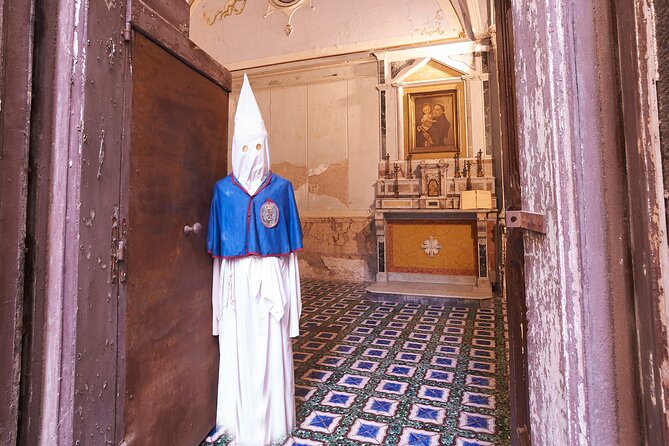
This isn’t a finished, perfectly polished site. It’s a place actively being repaired and revealed.
The church reopened after 30 years of neglect through the work of Breathe Art Association. The goal isn’t only conservation for conservation’s sake. Their plan also includes creating jobs for young people, which gives the restoration real-world momentum.
As you visit, pay attention to what the guide points out about the work itself. One review notes ongoing restoration and the reveal of frescoes under preserving plaster in the undercroft. I’d treat that as a sign you are seeing something in motion, not sealed off as “museum past.”
For you, that matters because it changes what you’re taking home. Instead of only getting eerie stories, you also leave with a sense of effort and responsibility. You can feel that the site is being cared for, and that your ticket supports that continued effort.


The guides and the tone: enthusiastic, punctual, and focused
The strongest praise for this experience centers on the guiding. People consistently mention punctuality, clear explanations, and a guide who can answer questions after the tour.
You’ll likely notice that the people involved in the project care about the site. One review even highlights the association as young women with a desire to bring history and tradition back to life. That kind of energy can turn a small space into something memorable.
Also, don’t be shy about staying a moment if the guide is available after the group finishes. One review described the guide taking time to answer questions, including for English-speaking members. In a short 15-minute visit, those extra minutes can make a big difference in what you understand when you walk out.
Language and group pacing: how to avoid the common hiccup
Here’s the honest expectation-setting part.
The experience is offered in English. But one review reports the tour was only in Italian, despite the booking expectation. The same review also notes that the group members who spoke English got time for questions afterward.
So what should you do?
- Plan for the possibility of Italian during the main tour
- Use the time to focus on visual cues and the guide’s gestures
- If you speak a bit of Italian, you’ll get more out of the spoken parts
- If you want English answers, ask questions right at the end while the guide is still there
Because the tour is short, this isn’t a dealbreaker. It just affects how much you may understand in real time.
Who this tour suits best (and who should skip it)
This is a great fit if you want something different from the main Naples checklist. The site works especially well as a small detour from higher-profile stops, particularly if you like religious history, local beliefs, and human stories tied to real spaces.
It also suits you if you enjoy compact tours. Fifteen minutes is long enough for the main object, the meaning, and the underground context. Then you can move on without feeling trapped in a long schedule.
You might want to skip it if you want a long, gallery-style experience. This is not a slow wander through dozens of rooms. It’s guided, focused, and brief.
And if language precision matters a lot to you, I’d treat English as a best-case scenario rather than a guarantee. Even then, the visuals and the attention to meaning tend to make the experience work.
Price and value: $9.67 for a very specific Naples experience
At about $9.67 per person, this tour is priced for a quick, meaningful stop. The value comes from access and context.
You’re not just paying for a view. You’re paying for guided entry to the underground cemetery and the church focal points, including the skull with ears and the explanation of why it mattered. The fact that the admission ticket is included also helps you avoid surprise add-ons.
Yes, it’s short. But in Naples, short is sometimes smart. With time for only one unusual stop, this gives you something tightly themed and easy to fit between bigger landmarks.
If you’re comparing costs, think about what you’re buying: a guided window into a local belief system, plus a restoration-supported site under active care. That combination feels like more than the money’s “worth” in a strict sense. It feels like paying to keep a small piece of Naples from slipping back into neglect.
Timing it right in Naples: opening hours and nearby plans
The experience runs on Fridays with multiple time slots. For the date range listed, you can find sessions at 11:00 to 11:30, 12:00 to 12:30, 1:00 to 1:30, 2:30 to 3:00, 3:30 to 4:00, 4:30 to 5:00, and 5:30 to 6:00.
Plan your day around that structure. If you like to wander, don’t schedule this as the first stop of the day. Aim to give yourself time to get there without stress, then use the tour as a focused mid or late-afternoon “story stop.”
Also think about what’s nearby. One review mentions it being close to the sculpture of Jesus with the veil and also close to a street with local craft displays and sales on a Sunday. You can use that as a clue that this area rewards extra time spent slowly walking and browsing local life.
Practical tips so the tour feels smooth
A few small choices will help you get the most out of a short visit.
First, arrive a little early for your slot. The church visit is scheduled in tight windows, so being on time keeps you from feeling rushed.
Second, take your phone out only when you need it. In small sacred spaces and underground areas, you’ll get more from listening and watching than from trying to document everything.
Third, if you’re hoping for more English than Italian, prepare one or two questions in advance. After the main tour ends, ask calmly. The guidance is praised for being available for follow-up questions.
Fourth, bring a bit of curiosity about restoration. Even a quick mention of plaster, undercroft changes, and revealed frescoes can turn “odd skull photos” into a story you remember.
Should you book the Skull with the Ears tour?
If you want a short, story-driven Naples detour that feels different from the big-name circuits, I’d book this. The combination of the skull with ears, the underground cemetery setting, and the restoration mission gives you more than a one-note curiosity stop.
Book it especially if you like authenticity, compact guided experiences, and places where young people are actively working to preserve monuments. If you’re sensitive to language changes, plan for a possible Italian-led tour while still expecting helpful explanations and end-of-tour Q and A time.
In short, for the price and the time, this is one of those Naples experiences that can surprise you, in a thoughtful way.
FAQ
Where is this tour located?
It takes place in Naples, Italy, at the Chiesa Museo di Santa Luciella ai Librai.
How long is the tour?
The duration is approximately 15 minutes.
What is the price per person?
The price is listed as $9.67 per person.
Is the admission ticket included?
Yes, admission ticket is included.
Is the tour offered in English?
The experience is offered in English, but one review reports the tour was only in Italian even when it was told it would be in English.
When is it running?
For the listed date range, Friday sessions run at 11:00 AM to 11:30 AM, 12:00 PM to 12:30 PM, 1:00 PM to 1:30 PM, 2:30 PM to 3:00 PM, 3:30 PM to 4:00 PM, 4:30 PM to 5:00 PM, and 5:30 PM to 6:00 PM.
Do I get a mobile ticket?
Yes, it is a mobile ticket.
What happens if the minimum number of travelers is not met?
If the experience is canceled because the minimum isn’t met, you’ll be offered a different date or experience, or a full refund.
Can I cancel for a full refund?
You can cancel up to 24 hours in advance of the experience for a full refund.
Final call: book or skip
Book if you want a short, guided Naples stop with access to an underground cemetery and a famously specific local devotion. Skip if you want a long, self-paced museum visit, or if you strongly need an English-only guided format.
More Tour Reviews in Naples
Not for you? Here's more nearby things to do in Naples we have reviewed










Tour Reviews, compared.
 ★ 4.8Pompeii: Entry Ticket and Guided Tour with an ArchaeologistFrom $3519,459 reviews
 ★ 4.2Pompeii: Entry Ticket with Optional Audio GuideFrom $2612,360 reviews
 ★ 4.8Pompeii: Small Group Tour with an ArchaeologistFrom $4012,264 reviews
 ★ 4.3Pompeii Ruins & Mount Vesuvius Day TourFrom $12011,459 reviews
 ★ 4.6Sorrento, Positano and Amalfi Full-Day TourFrom $10710,988 reviews
 ★ 5.0Sorrento, Positano & Amalfi Coast – Small Group TourFrom $768,643 reviews
 ★ 4.6Catacombs of San Gennaro Entry Ticket & Guided TourFrom $157,941 reviews
★ 5.0Pompeii Small Group Tour with an ArchaeologistFrom $356,593 reviews
★ 4.6Catacombs of San Gennaro Entry Ticket & Guided TourFrom $157,941 reviews
★ 5.0Pompeii Small Group Tour with an ArchaeologistFrom $356,593 reviews
Browse the lists this tour appears in