
Tour review · TOUR REVIEWS
Walking Tour of Naples with Traditional Music
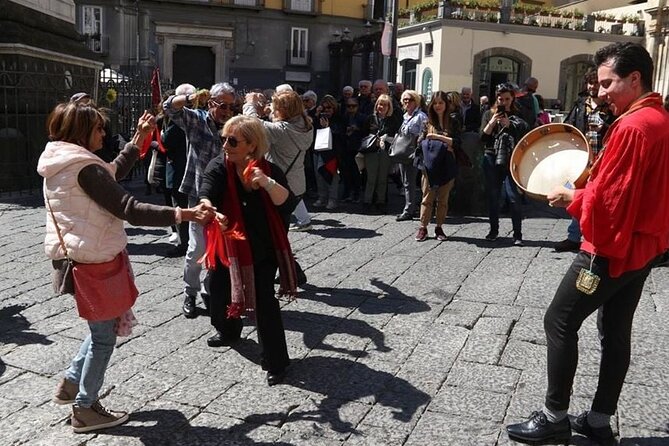
Naples sounds better on foot. This 2 hours 15 minutes walk pairs traditional music with lively explanations as you move from piazza to church and back to street life. I especially liked how the route teaches the Greek and Roman layout and how the performance turns ordinary corners into scenes. One thing to consider: the tour needs good weather, so plan for a rainier day.
You’ll start at Greek Walls, Piazza Bellini, and finish at Piazza del Gesù Nuovo. Along the way, you’ll hear songs tied to Neapolitan tradition and watch a staged storytelling style that keeps the group attentive, even when the streets get busy. With a maximum of 10 people, it feels less like a lecture and more like you’re getting an insiders guide.
If you want Naples history in clean facts only, this may not be your match. But if you like your city lessons with music, acting, and atmosphere, it’s a smart way to spend an afternoon.
Key highlights you should know before you go

- Small group, max 10 people, so the performance and Q and A feel personal.
- Traditional songs plus theatrical acting, not just background music.
- A route built around Naples’ ancient street grid, including decumani.
- Major church stops with no admission fees listed, so your money goes to guiding and performance.
- Coffee and/or tea included, a nice break during the walk.
- Performers and guides like Antonella Esposito, plus Enzo and Salvatore, bring energy to the storytelling.
A small-group walk where traditional music drives the story
This is not the usual Naples sightseeing shuffle. The guide keeps pointing out what you’re seeing, then the music and acting take over at key moments so the streets feel staged, not just explained. You’re walking through real Naples neighborhoods, but the show format helps you connect the names, the architecture, and the legends.
I like that the experience is built to be heard. A group of up to 10 makes it easier for everyone to catch lyrics and explanations without shouting. Since it’s offered in English, you get the why behind the places, not just a sign-based skim.
One practical note: since it runs in the afternoon and is weather dependent, you’ll want an outfit you don’t mind moving in. Comfortable shoes matter here more than you might expect.
You can also read our reviews of more walking tours in Naples



Price and value of this 2 hours 15 minutes Naples tour
At $83.08 per person, you’re paying for a guided walk plus a live performance component. That’s the difference between this and a basic city-walk tour. The price also includes coffee and/or tea, which helps the overall value feel fair, especially when you’re planning a few hours in a city where snacks can add up fast.
You also avoid major extra costs at the specific stops, because the listed sights have free admission tickets for the visit portion. In other words, the fee is mostly about interpretation, music, and theatrical storytelling rather than paying entry fees one by one.
If you’re comparing options, ask yourself what you want most: fast coverage of landmarks, or a paced walk where you understand why the city is laid out the way it is and why these churches matter to locals.
From Piazza Bellini to Via dei Tribunali: the city starts with a plan
You begin at Piazza Bellini, a square tied to the origins of Naples. This first stop is a good “gear shift” moment, because it frames the walk as more than a photo tour. You get a sense of where the city grew from, which makes everything that follows easier to place in your head.
Next is Via dei Tribunali, described as the major decumanus, the kind of east-west street you’d expect in a Greco-Roman city grid. When the guide talks about a decumanus, it stops being abstract. On foot, you start seeing the city as built on structure, not just random alleys.
If you like learning through patterns, this section is a win. The drawback is timing: these early explanations move quickly, so arrive on time and stay alert right from the start.
Santa Maria Maggiore and Purgatorio ad Arco: churches that explain Naples character
Stop 3 is Basilica di Santa Maria Maggiore alla Pietrasanta, with attention on the church and the bell tower. Bell towers in Naples are not just skyline objects. They often mark how a community signals time and identity, and this stop helps you see that symbolism up close.
Then you move to Complesso Museale Santa Maria delle Anime del Purgatorio ad Arco. This is one of the most distinctive stops on the route, because the tour connects the church’s story with the cult of the pezzentelle souls. Even if the details are new to you, the point lands: Naples faith culture has strong street-level roots, and these sites are part of that emotional map.
The challenge with church stops is pace. Sometimes people want longer inside time, but this tour keeps moving so the performance stays woven into the route. If you’re the type who likes to linger quietly for a long look, treat these moments as “chapters,” not full-page essays.
Duomo di Napoli to Spaccanapoli: the spiritual center and Naples’ main spine
You hit Piazza San Gaetano next, described as the agora of the ancient city. That matters because it reframes the square as a social engine, not just an open space. When you understand piazzas as meeting points, the rest of the walk feels more like city life.
From there, you go to the Duomo di Napoli, Naples’ cathedral, tied to the cult of San Gennaro. This is where religious tradition becomes visible through the way people talk about the saint, the way the space feels, and the guide’s focus on meaning rather than just dates.
Then comes Spaccanapoli, the lower decumanus. This is a key “aha” moment because you’re walking a street whose role was defined by ancient city planning. The tour ties that ancient layout to what you experience now, so the city feels like one long timeline instead of separate eras.
Possible drawback: the route mixes big names with tight walking segments. If you prefer slow, wide-open strolling, pace yourself and keep an eye on where you’re stepping. Naples alleys can be uneven underfoot.



Via San Biagio, Via San Gregorio Armeno, and Piazza San Domenico Maggiore
Stop 8 is Via San Biagio dei Librai, described as a street with buildings and shops. This is where the tour shifts from monumental to everyday. You start noticing how storefront energy and street narrowness shape the way people interact, and you get a “real Naples” sense that you won’t get from only big sights.
Then you walk to Via San Gregorio Armeno, known as the way of the shepherds, plus a connection to a baroque church. This stop gives you a myth-and-tradition vibe, the kind of place where Naples identity shows up in the details of daily culture.
You’ll finish this cluster at Piazza San Domenico Maggiore, framed as the center of the city today. That label matters because the walk has been building toward it. By the time you arrive, you’ve already learned how Naples connects ancient street logic to modern gathering spots.
One practical consideration: this part of the walk can feel busy. If you want clear photos, be ready to take them quickly when you have a break in pedestrian flow.
Santa Chiara to Piazza del Gesù Nuovo: from Angevin stone to baroque drama
The final stretch is Complesso Monumentale di Santa Chiara. The tour highlights its Angevin connection, and it helps you see how dynasties, politics, and faith all leave marks on the built environment. Even if you don’t catch every architectural term, you’ll understand the big idea: Naples’ churches act like historical records.
Then you wrap up at Piazza del Gesù Nuovo, with Piazza del Gesù and a baroque church as the finishing focus. Ending on a baroque-feeling scene gives the walk momentum. It’s a strong final impression, because you leave with visuals that match the performance energy you’ve been experiencing throughout.
If you’re planning your next stop, keep some breathing room after the tour. You’ll want time to process what you just learned, then wander a little while it’s still fresh.
How the performance and music shape the Naples experience
The traditional music is central, not decorative. The show format blends site explanations with theatrical anecdotes, so you’re always doing two things at once: looking at Naples and listening to a story about Naples. In the reviews, the combination of music, acting, and guides who keep the group at ease comes through clearly, and you can feel the intention behind it in how the tour is structured.
You may notice different kinds of delivery: spoken guiding, performance moments, and musical interventions timed between stops. Some of the songs come through in the style associated with tamorra, a popular regional energy that fits the city’s soundscape. This is the kind of tour where the music helps you remember what you saw, not just what you heard.
Names like Antonella Esposito appear as standouts in the performance. You’ll also hear praise tied to Enzo and Salvatore for guides who bring passion and clear organization. That matters for you because it usually translates into smooth pacing, easy group management, and fewer awkward pauses.
Practical tips for a comfy afternoon walk
This tour lasts about 2 hours 15 minutes, and it’s in an afternoon window (the listed operating hours show 3:00 PM to 7:00 PM). Because it’s weather dependent, check forecasts the day before. If conditions aren’t good, you’ll be offered a different date or a refund.
Bring water, and wear shoes you can move in on uneven pavement. The walk hits churches and streets, so you’ll be doing both sightseeing and short transitions. If you use a phone for directions, you’ll still want to follow the guide closely, because the best angles are often at street corners.
For planning, note that it’s near public transportation and allows service animals. The group limit of 10 people makes it easier to stay together, but you should still keep close when the performance starts.
Should you book this traditional music walking tour?
I think you should book it if you want Naples in a way that feels more like a living story than a checklist. The pairing of traditional music, acting, and a route built on ancient street logic is a smart mix. You get meaningful context at stops like Duomo di Napoli and Spaccanapoli, then finish in a baroque mood.
Skip it if you only want quiet museum-style explanations or if you hate performance elements. Also, go only if you’re comfortable with a walk that relies on good weather and keeps moving between multiple churches and piazzas.
If you’re on a short stay and want one activity that teaches you how Naples is put together, this is a strong pick.
FAQ
How long is the walking tour?
The tour lasts about 2 hours 15 minutes.
What is the meeting point for the tour?
The start is at Greek Walls, Piazza Bellini, 80138 Napoli NA, Italy.
Where does the tour end?
The tour ends at Piazza del Gesù Nuovo, 80134 Napoli NA, Italy.
What language is the tour offered in?
The tour is offered in English.
How much does the tour cost?
It costs $83.08 per person.
Is a mobile ticket used?
Yes, the tour uses a mobile ticket.
What’s included in the price?
Coffee and/or tea are included.
Are the sites on the route free to enter?
The listed admission for the stops is shown as free.
Is the tour suitable for most travelers?
Yes, most travelers can participate.
What is the cancellation policy and weather requirement?
You can cancel for a full refund up to 24 hours in advance. The experience requires good weather, and if it is canceled due to poor weather, you’ll be offered a different date or a full refund.
More Walking Tours in Naples



More Tours in Naples

More Tour Reviews in Naples
Not for you? Here's more nearby things to do in Naples we have reviewed








Tour Reviews, compared.
 ★ 4.8Pompeii: Entry Ticket and Guided Tour with an ArchaeologistFrom $3519,459 reviews
 ★ 4.2Pompeii: Entry Ticket with Optional Audio GuideFrom $2612,360 reviews
 ★ 4.8Pompeii: Small Group Tour with an ArchaeologistFrom $4012,264 reviews
 ★ 4.3Pompeii Ruins & Mount Vesuvius Day TourFrom $12011,459 reviews
 ★ 4.6Sorrento, Positano and Amalfi Full-Day TourFrom $10710,988 reviews
 ★ 5.0Sorrento, Positano & Amalfi Coast – Small Group TourFrom $768,643 reviews
 ★ 4.6Catacombs of San Gennaro Entry Ticket & Guided TourFrom $157,941 reviews
★ 5.0Pompeii Small Group Tour with an ArchaeologistFrom $356,593 reviews
★ 4.6Catacombs of San Gennaro Entry Ticket & Guided TourFrom $157,941 reviews
★ 5.0Pompeii Small Group Tour with an ArchaeologistFrom $356,593 reviews
Browse the lists this tour appears in