
Tour review · TOUR REVIEWS
From Naples: Herculaneum Skip-the-Line Guided Tour
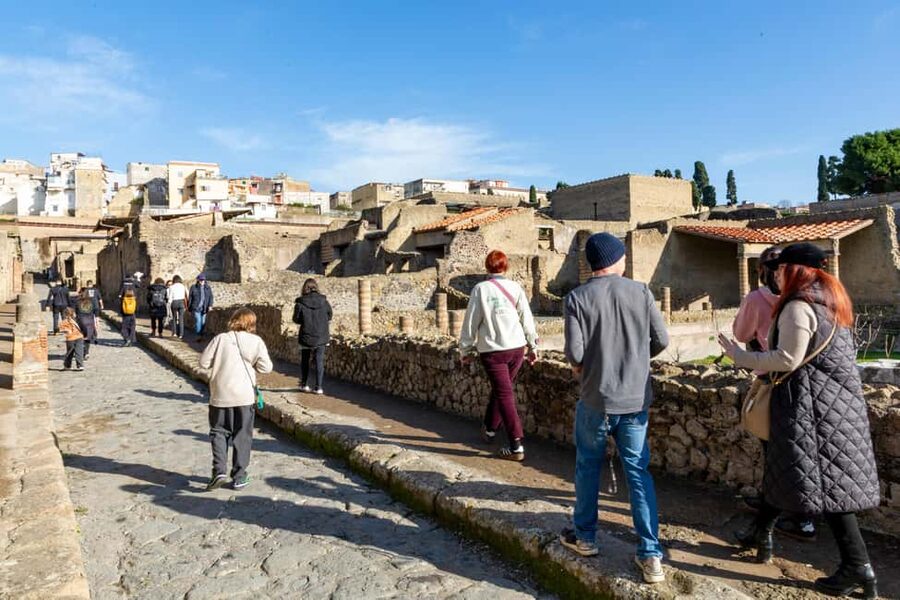
Herculaneum feels like time froze. On this Naples tour, you get skip-the-line entry plus a short guided walk through one of the Roman world’s best-preserved towns.
I love the skip-the-line access that gets you into Herculaneum quickly, and I love the archaeologist-led storytelling, the kind of clear on-site guidance people often name like Tomas or Alessio. You will see the places that make Herculaneum famous, like House of the Deer and the Forum Baths, with explanations that help you picture daily life.
One possible drawback is the tight schedule. With about 1.5 hours inside Herculaneum, you have to decide what you want to slow down for, because you cannot see everything at a relaxed pace.
Key highlights to look for

- Skip-the-line priority access to Herculaneum, so you start walking faster
- Archaeologist-guided route of about 1h30, with onboard commentary during the drive
- Top stops included such as House of the Deer, Forum Baths, House of Neptune and Amphitrite, Gymnasium, and Forum
- The eruption story is part of the walk, with evidence of the 79 AD disaster preserved in ash and material
- Naples pickup is designed for convenience, including options near the port (useful for cruise days)
- Small-group pacing helps keep it manageable, and some departures are reported as only six people
Why Herculaneum hits harder than a DIY visit from Naples
If your first thought is Pompeii, that is normal. But Herculaneum is different, and that difference is why this tour can feel so much more human. The town is smaller, better preserved in key spots, and it is easier to connect the ruins to real rooms and real routines.
The other big win is time. A Naples to Herculaneum day can turn into a lot of logistics, ticket lines, and figuring things out. This tour does the heavy lifting for you, with pickup and drop-off plus skip-the-line entry built in. For many people, that alone turns the trip from stressful to straightforward.
You can also read our reviews of more guided tours in Naples

Naples to Ercolano: pickup options and the 30-minute ride rhythm
The tour is built around short transfers. You start with pickup in Naples, then a coach ride of about 30 minutes to reach Ercolano, where Herculaneum sits. After roughly 1h30 on site, you head back with another about 30 minutes by bus.
Why that rhythm matters: Herculaneum is not huge, but it is detailed. When the group schedule is tidy, you spend more time looking at the archaeology and less time watching the clock.
Pickup is flexible, with multiple Naples options listed, including major hotel areas and port-adjacent meeting points like Stazione Marittima and Molo Beverello. If you are sailing, having a port-area pickup option can be the difference between enjoying your afternoon and sprinting across town.
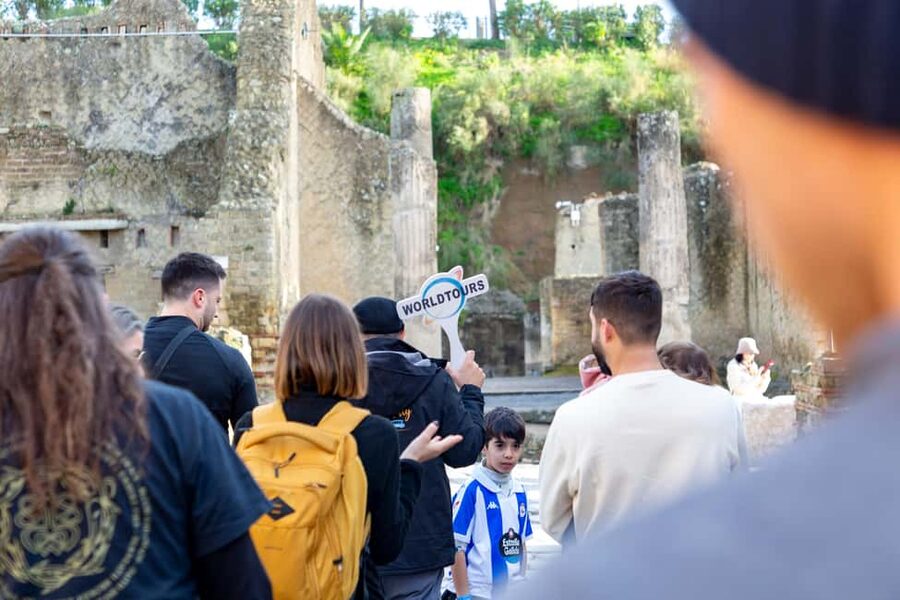
One practical detail I appreciate: the guide or driver holds a sign with the logo Worldtours. And if the van cannot reach your accommodation, you will be directed to the nearest meeting point. That is useful to know so you are not hunting for someone at the last minute.
Skip-the-line entry: what it changes (and what it does not)
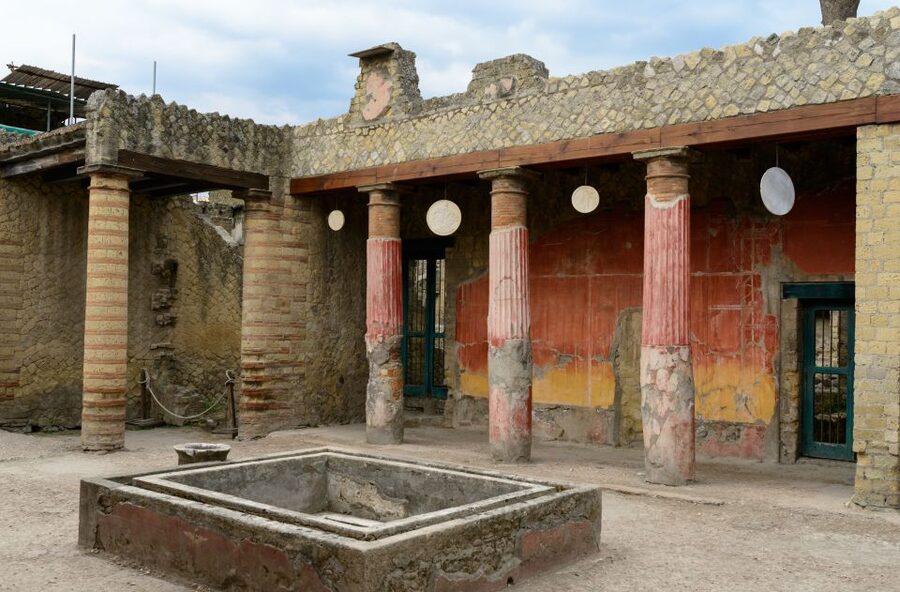
Priority access helps you avoid the most annoying part of an archaeological outing, standing around before you even begin. Once you cross the threshold, the experience moves fast in the best way: you are walking while the story is still fresh and the guide can connect each stop.
But let us be honest about expectations. Herculaneum is outdoors, and it takes time to see mosaics, fresco fragments, and floor plans properly. Skip-the-line does not turn the ruins into a highlight reel in one glance. It just gives you the chance to use your guided time well.
If you are sensitive to hearing or small audio issues, pay attention to how the group runs. A few reviews noted trouble hearing bus commentary when microphone systems were muffled or the audio headsets crackled. In most cases, being in a smaller group can make it easier to hear the guide directly, especially closer to the front.
Your guided walk: the 1.5 hours that actually make sense
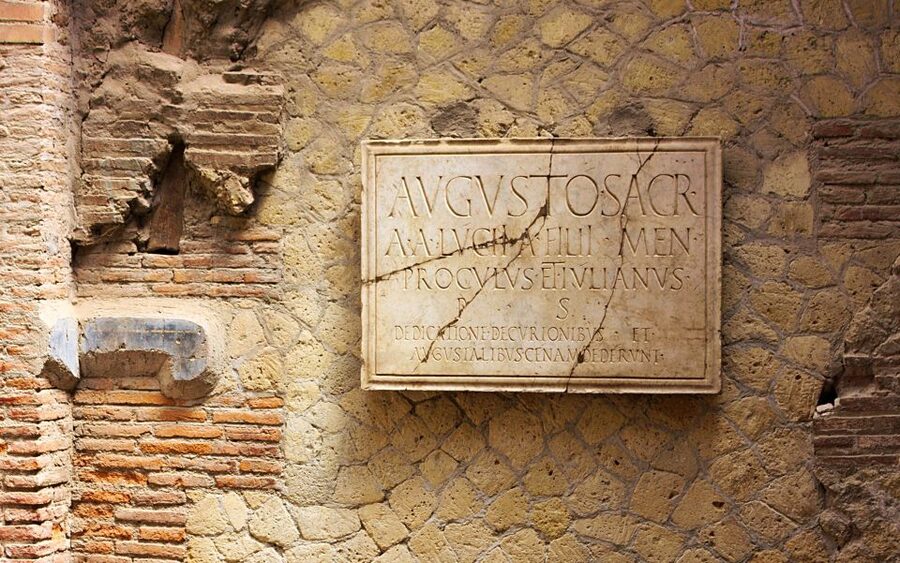
You get about 1h30 of guided time inside Herculaneum. That is a smart length for this site. It is long enough for a real storyline and for you to see the main preserved areas. It is also short enough that you can keep moving and not lose the thread.
The tour is designed as a “Roman life” walk. You are not just looking at ruins as shapes on the ground. The guide frames what you are seeing as housing, public life, and everyday goods. You connect rooms and decorative floors to people you can picture: merchants, nobles, families, and workers living before the eruption.
The guide also brings in the catastrophe. The 79 AD eruption is not just mentioned at the end like a footnote. You are guided through the terror and sudden disruption, including references to remains of people who tried to flee toward the sea. You also see preservation that feels eerie in a vivid way, like charred wood and surviving wall and floor decoration.
House of the Deer and the surviving luxury of daily life
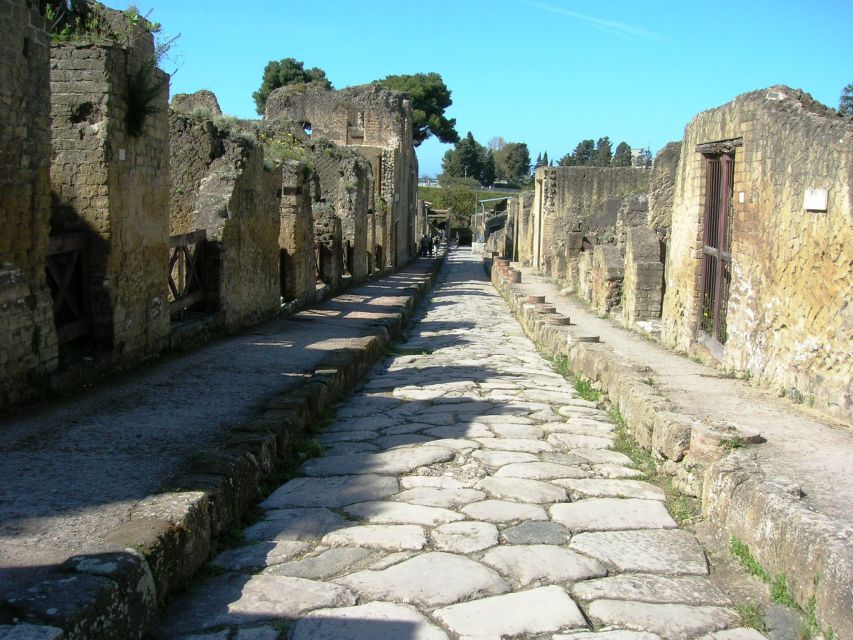
House of the Deer is one of the stops included on this tour, and it is exactly the kind of place that helps you understand why Herculaneum feels so personal. When floors and decorative details survive, you stop thinking of the ruins as distant history. You start imagining steps on stone, everyday conversations, and the effort behind making a home look impressive.
This is also where you will get to see the visual language of Roman interiors, especially decoration style and how space was used. The guide’s job is to point out what matters: which areas were more public, how rooms relate to each other, and how these features show status and taste.
If you love mosaics and fresco-style decoration, this stop can be a highlight. The area is known for preserved decorative elements, and the guide helps you read them instead of just photographing them from the same angle.
More Naples tours, ruins, coast days, and city experiences to compare


Forum Baths and the Gymnasium: public spaces, not just homes
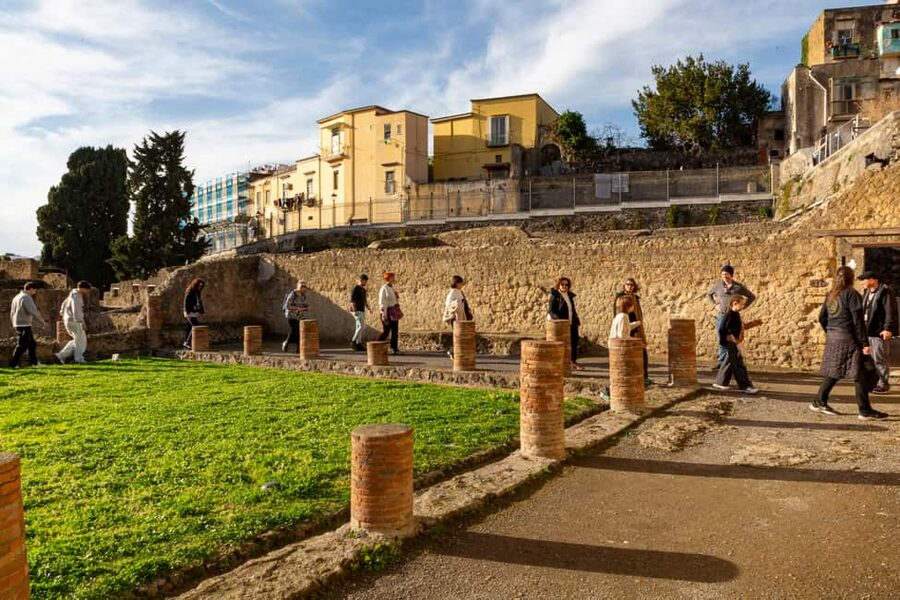
The inclusion of Forum Baths is a big deal. Many first-time visitors focus on houses, but Herculaneum also shows you how people spent time in public and semi-public settings. Baths were social centers, places for conversation, routine, and getting clean. Seeing them on a guided walk helps you understand them as lived space, not just “ruins that happen to look like a bath.”
The Gymnasium and the Forum continue that theme. You are looking at places where the city’s social structure shows up in architecture and layout. The guide typically connects these areas to the day-to-day rhythm of Roman life, helping you understand what would have happened there at different times.
If you like historical contrast, you will also appreciate the Pompeii comparisons that often come up in guides’ explanations. Even when you have not visited Pompeii, learning what is similar and what is different helps your brain sort the two cities into clear identities.
House of Neptune and Amphitrite, plus the small details that stick
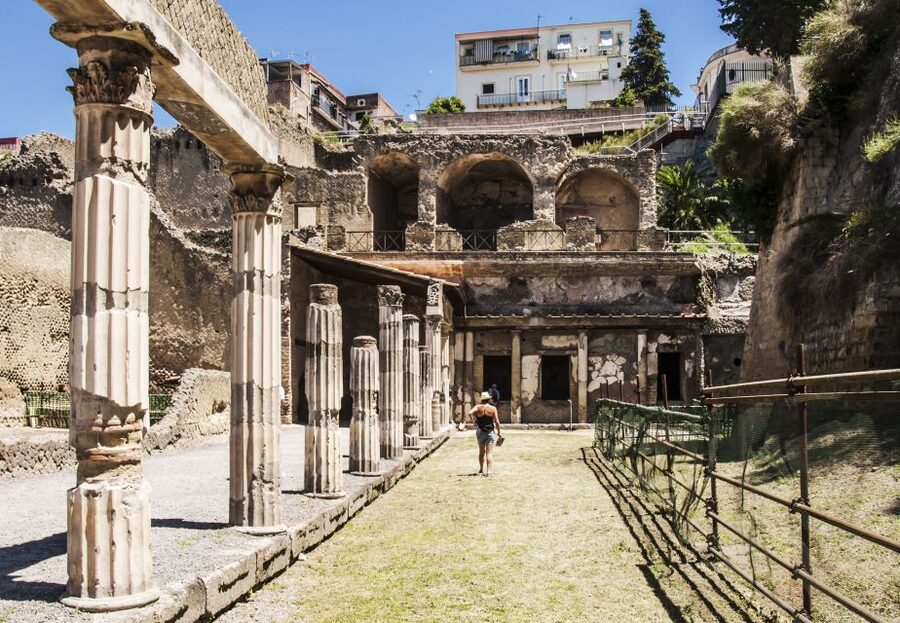
House of Neptune and Amphitrite is another included highlight. Names like that are not random. Roman decoration and myth-driven imagery were part of how people communicated identity and culture. When you see a named interior area with surviving detail, it helps you connect the visual themes to Roman tastes.
What I like about having this on the tour is pacing. The guide usually threads the narrative so that by the time you reach these decorated spaces, you already understand the basics of how the town’s layout works. That makes the details easier to appreciate.
Also, Herculaneum can be more emotionally intense than you expect. Some visitors think Roman sites are all calm and tidy. Then you see the evidence left behind by the eruption, and suddenly the scale of what happened becomes real. Charred remnants and preserved surfaces do that job quickly.
The eruption story: 2,000 years of preservation in plain sight
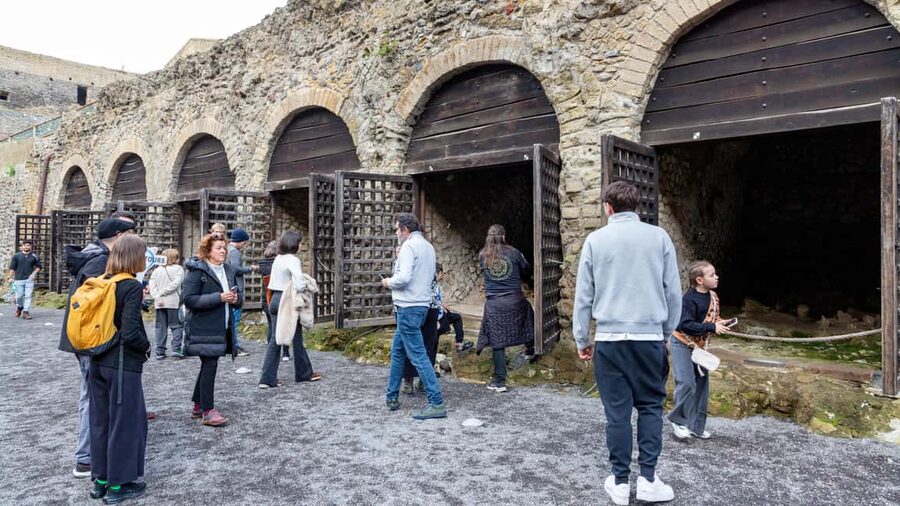
The tour frames the eruption with the key date: October 24, 79 AD. You are guided to imagine what would have happened fast, with Vesuvius erupting and the town suffering destruction that affected both Pompeii and Herculaneum.
Here is why this matters to you on a practical level. A site like Herculaneum is easiest to understand when someone helps you connect preservation to process. You see what survived nearly 2,000 years, and you learn what that survival tells you about conditions during and after the eruption.
You will also be shown the remains of people who tried to flee to the sea, along with elements like charred wood, paintings, mosaics, and ceramics that endured. It is not just about shock. It is about learning how disasters can preserve. That is the weirdly fascinating part of Herculaneum.
Small-group touring and guide quality: why it affects your photos and your questions
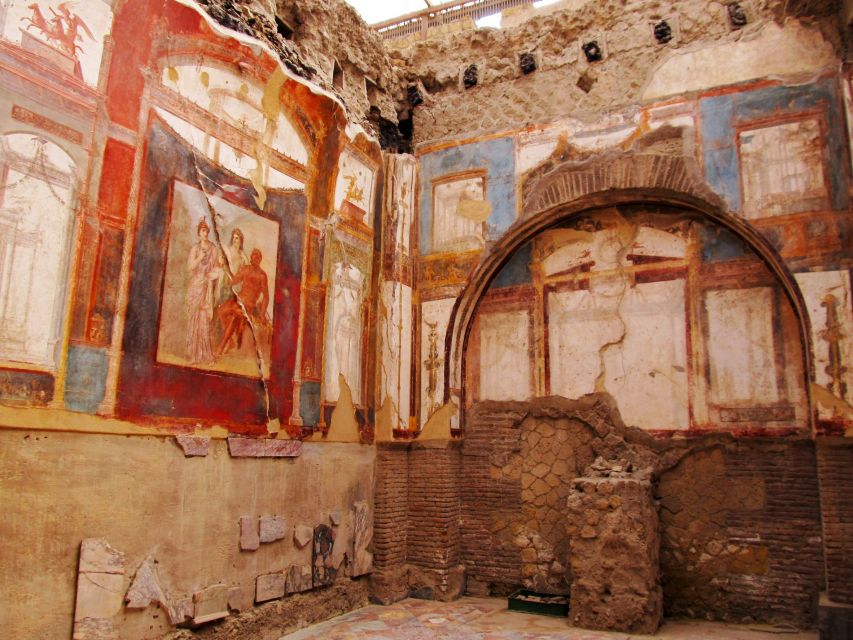
This is offered as a small group tour. Some reports describe groups as small as six people. That scale changes the whole experience.
In a smaller group, it is easier to ask questions and get answers that fit what you are actually looking at. You are also less stuck waiting behind a wall of people trying to get one photo. The group can also move with better timing inside a site where stops are not spaced like a theme park.
Guide quality also gets noticed in the reviews. People name guides such as Tomas, Salvatore, Gelsomina, Lello, and Alessio, and they consistently describe the on-site guide as a key part of why the tour felt worthwhile. On the transportation side, drivers were also mentioned for safety and helpfulness, with some guides providing commentary during the short drive.
That does not mean every ride is perfect. One review mentioned the bus was uncomfortable for taller people. Another noted that communication through headsets or microphones on the bus ride could be muffled. If you know you are sensitive to audio, plan to sit where you can hear the guide best once you arrive on-site.
Practicalities that help you enjoy Herculaneum more
This tour has clear rules on what to bring and what not to bring. It is worth scanning them so you do not lose time.
Bring:
- Passport or ID card
- Comfortable shoes
- Sunglasses and a hat
- Camera
- Water
- Comfortable clothes
Not allowed:
- Pets
- Luggage or large bags
- Smoking in the vehicle
- Unaccompanied minors
- Non-folding wheelchairs and non-collapsible strollers
There is also a note that large suitcases, wheelchairs, walking sticks, and non-collapsible strollers are not allowed on board due to limited space on the bus. So if you are traveling light, good. If you are bringing a lot of gear, you will want to rethink your packing.
Weather can matter, because you are outside for the walk. The good news is that the tour still runs in rain, and the small group format makes it easier to stay together and keep moving.
Accessibility note: this tour is not suitable for people with mobility impairments and wheelchair users. If that applies to you, it is better to look for a different format that is built for accessibility needs.
Price and value: is $63 worth it?
At $63 per person for a 3-hour tour with pickup, drop-off, a skip-the-line ticket, and a guided archaeological visit, you are paying for convenience plus interpretation.
Here is the value math that matters:
- You are paying to avoid ticket lines and time lost to logistics.
- You are paying for an expert archaeologist guide for about 1h30, which is what turns ruins into understanding.
- You are paying for round-trip transport from Naples, which can be a headache if you are coordinating yourself.
Reviews also suggest it can compare well with cobbling together entry plus transport plus the hassle of crowds when you try to go independently. And if you are on a cruise day, the port-area pickup option can save you real stress.
It is not a long tour, so you will not get a slow, spend-all-afternoon pace. But for most people, that is also what makes it feel doable.
One small pricing note: there is a discounted price on the first Sunday of each month because Pompeii’s entrance is free. That discount is tied to Pompeii, but it can affect what you pay for this kind of outing during that period.
Who this Naples to Herculaneum tour is best for
You will likely love this tour if you want:
- A guided history walk without spending your day on transport planning
- Skip-the-line access so your time starts on the ground
- A focused route, with major stops like House of the Deer and Forum Baths
- A short outing that fits an afternoon in Naples, or a cruise schedule
I would also steer couples, solo travelers, and small groups toward this. The small-group feel and the chance to ask questions work best when there are not dozens of people in your way.
If you want to linger for hours, you may find the 1.5-hour site time too tight. And if audio quality is a big concern for you, you will want to position yourself well on the bus and focus on the guide once you are inside the site.
Should you book this tour
Book it if you want an efficient, well-structured way to see Herculaneum from Naples, with skip-the-line entry and an on-site archaeologist guide. It is especially smart if you are short on time, traveling on a cruise schedule, or you do not want to wrestle with logistics after a long day.
Skip it if you need long, unhurried browsing time, or if you are not able to handle a tour route that is not suitable for wheelchair users and people with mobility impairments. Also, if you are very tall or sensitive to bus comfort, keep that in mind.
FAQ
How long is the tour, and how much time is spent at Herculaneum?
The total duration is 3 hours, with about 1.5 hours guided time inside Herculaneum.
What is included in the price?
Pickup and drop-off in Naples are included, along with a skip-the-line entrance ticket to Herculaneum. You also get a guided tour with an expert archaeologist for about 1h30 and commentary on the board.
Is food included?
No. Food and drinks are not included.
Which languages are offered for the live guide?
The tour is available in English, Italian, and Spanish. In low season, there may be live guiding for groups meeting a minimum size per language, otherwise audioguides may be provided.
Where are the pickup locations in Naples?
The tour lists multiple Naples pickup options, including places such as Royal Continental Hotel, Palazzo Caracciolo Napoli – MGallery, Stazione Marittima near Molo Beverello and Porto di Napoli, Terminus, and Hotel NH Napoli Panorama.
Does this tour really skip the ticket line?
Yes. It includes skip-the-line entrance ticket access and priority entry to Herculaneum.
Is this tour suitable for wheelchair users or people with mobility impairments?
No. It is listed as not suitable for people with mobility impairments and wheelchair users.
What should I bring, and what is not allowed on the bus?
Bring passport or ID card, comfortable shoes, sunglasses, a hat, a camera, water, and comfortable clothes. Pets are not allowed, and luggage or large bags are not allowed on board. Smoking in the vehicle is also not allowed.
More Guided Tours in Naples
More Tours in Naples



More Tour Reviews in Naples

Not for you? Here's more nearby things to do in Naples we have reviewed









Tour Reviews, compared.
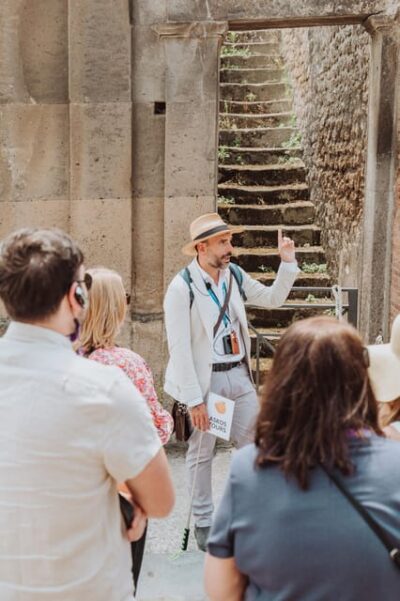 ★ 4.8Pompeii: Entry Ticket and Guided Tour with an ArchaeologistFrom $3519,459 reviews
 ★ 4.2Pompeii: Entry Ticket with Optional Audio GuideFrom $2612,360 reviews
 ★ 4.8Pompeii: Small Group Tour with an ArchaeologistFrom $4012,264 reviews
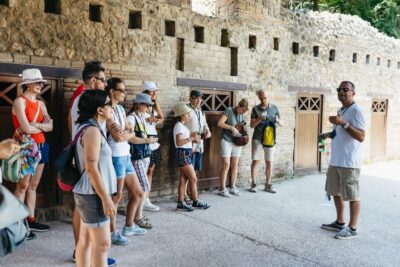 ★ 4.3Pompeii Ruins & Mount Vesuvius Day TourFrom $12011,459 reviews
 ★ 4.6Sorrento, Positano and Amalfi Full-Day TourFrom $10710,988 reviews
 ★ 5.0Sorrento, Positano & Amalfi Coast – Small Group TourFrom $768,643 reviews
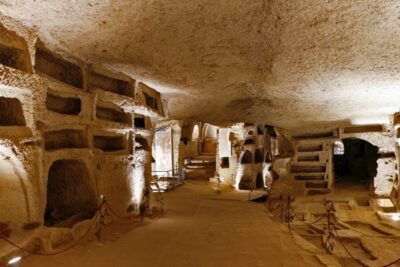 ★ 4.6Catacombs of San Gennaro Entry Ticket & Guided TourFrom $157,941 reviews
★ 5.0Pompeii Small Group Tour with an ArchaeologistFrom $356,593 reviews
★ 4.6Catacombs of San Gennaro Entry Ticket & Guided TourFrom $157,941 reviews
★ 5.0Pompeii Small Group Tour with an ArchaeologistFrom $356,593 reviews
Browse the lists this tour appears in