
Tour review · TOUR REVIEWS
Skip the Line Herculaneum Ruins Ticket
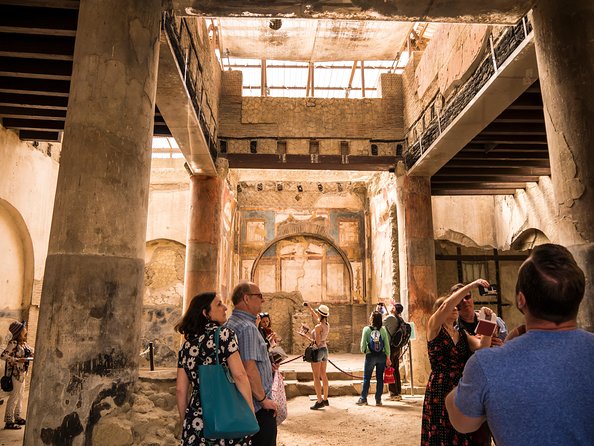
Roman ruins under Vesuvius mud will surprise you. This skip-the-line ticket gets you into Herculaneum, the Roman city buried in AD 79 volcanic mud and dust, so the place feels like it stopped time. I love that you choose your own pace inside the ruins, and I also love the simple, hands-on way you can focus on standout spaces like the House of the Skeleton without feeling rushed.
The main catch is that this is an entry ticket, not a guided talk. So if you want explanations, you’ll need to rely on your own reading, a map, or an audio guide you pick up on site. The good news: the site is compact enough that you can make this work even if you are not a Roman-history expert.
Key things to know before you go
- Skip-the-line entry with scheduled entry times you select when booking
- Smaller group size (max 15) keeps things calmer than the biggest sights
- Self-paced walking through major houses, terraces, and thermal-bath areas
- Standout rooms like the House of the Skeleton, Salon of Nero, and the House with the Large Doorway
- Mosaics and reliefs are a big part of what you will notice as you move around
- Good photo opportunities when the site is not packed
Herculaneum’s AD 79 setting feels personal and close
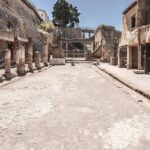
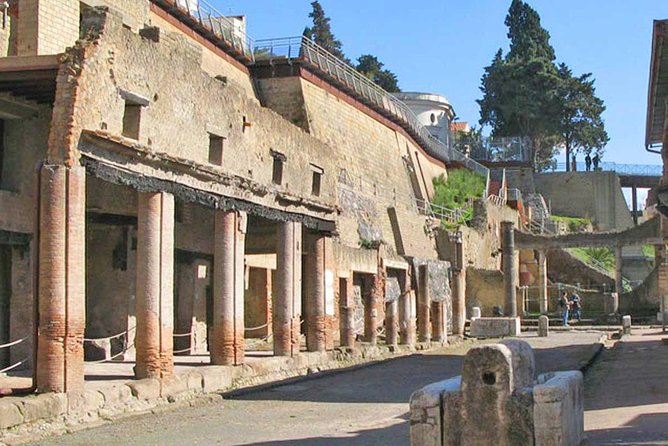
Herculaneum is famous for one thing, the way it was preserved when Mount Vesuvius erupted in AD 79. The city was buried by volcanic mud and dust, and that odd kind of preservation is why the ruins feel so direct. You are not looking at scattered stones from far away. You are walking through recognizable parts of everyday Roman life, including houses and thermal baths.
It also helps that Herculaneum often feels less overwhelming than Pompeii. If you like sites that feel atmospheric and walkable, this is a strong pick. And because your visit is self-paced, you can slow down where you care most, like mosaics, bath areas, or house interiors.
More Naples tours, ruins, coast days, and city experiences to compare


Skip-the-line ticket value, and what to expect at the gate
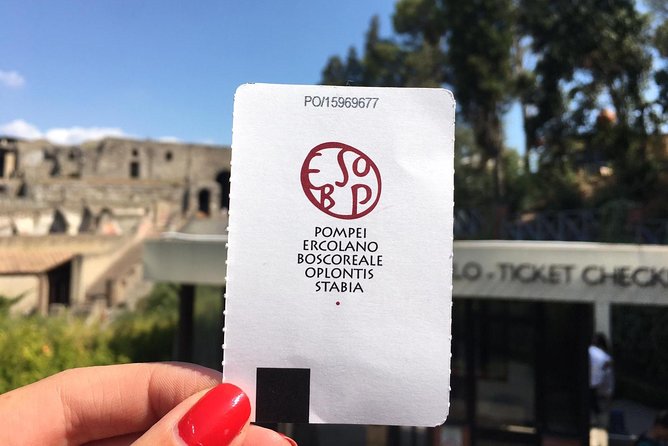
At about $25 for roughly 4.5 hours, this is a straightforward value play if you are visiting during a busier period or you simply want less time stuck in queues. The core promise is “skip the main entrance line,” and you also get the benefit of choosing from a selection of entrance times.
That said, a practical reality can show up on the ground. Some people have found there may not be a totally separate skip-the-line desk, and you might still queue briefly for paper tickets. Another snag to plan for: if your ticket is checked via a scanner that cannot read barcodes from a screen, you may need to swap for a paper ticket before entry. The fastest fix is to be prepared to handle whatever format they ask for.
My advice: print your voucher if you can, bring a backup copy on your phone, and keep a little patience in your pocket. You are paying for time savings, but you do not want to arrive with a zero-tolerance attitude toward how ticket offices run.
Where your visit starts, and how to use the 10:00 a.m. start well
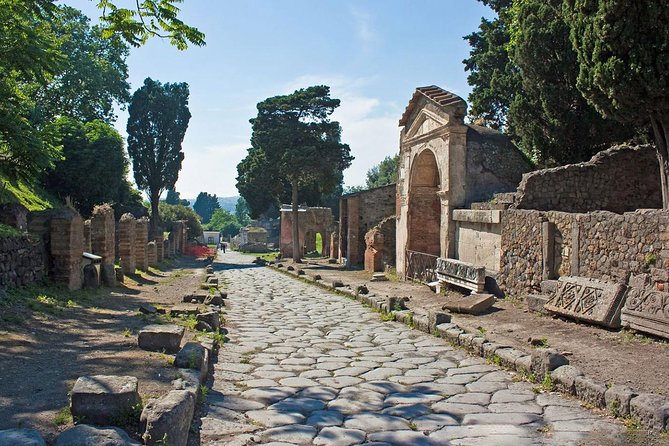
Your meeting point is at Excavations Corso Resina, 187, 80056 Ercolano NA, Italy, and the activity ends back at the meeting point. The listed start time is 10:00 a.m., and the site visit is about 4 hours 30 minutes.
Why the start time matters: Herculaneum is an outdoor site with stone floors, walls, and sun exposure. Getting going earlier can make the walk more comfortable. Even if the crowd is light, a morning entry tends to feel easier for photos and for moving between key areas without rushing.
Also, the group is capped at 15 travelers, so this is not a giant herd tour. You will still want to keep your own rhythm. This ticket works best when you treat it like a guided walk without the guiding, meaning you follow a suggested route, then linger where your eyes catch something.
How to plan the walk: 4.5 hours that actually fits real energy
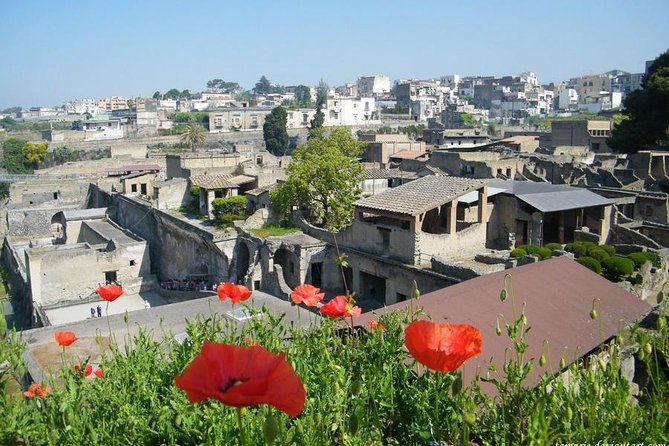
A 4.5-hour window sounds long for ruins, but it is a good fit for a few reasons:
- You can spend time on detailed surfaces like mosaics and wall reliefs without feeling guilty.
- You can take breaks in shaded pockets when needed.
- You can adjust on the fly if one area pulls you in longer than expected.
Some people find they can cover Herculaneum quickly, even in about an hour if they move at a fast pace. If you do that, you might end up watching the site rush past. I prefer you use the full half day, especially if you want time for photos and to actually see what is preserved.
A self-paced route through Herculaneum’s standout houses and rooms
Below is the order you will hit key stops, with what to look for and what makes each one worth your time.
House of Neptune and Amphitrite (mosaic)
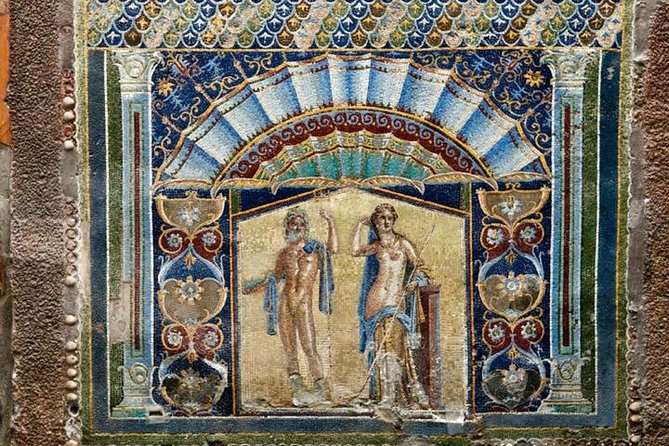
This is your opening stop and it sets the tone fast. You will see the mosaic of Neptune and Amphitrite, and it is exactly the kind of detail that makes Herculaneum feel more “lived in” than many ruin sites.
La Terrazza di M. Nonio Balbo (terrace)
Next comes a change of pace: a terrace viewpoint area. You will see the Terrace of M. Nonio Balbo, and this is a good moment to reset your eyes before the route shifts back into more interior-like spaces.
Casa del Rilievo di Telefo (relief)
Then you move to a house space featuring the House of the Relief of Telephus. It is all about the kind of carved storytelling you can spot in the architecture once you slow down and look.
Partem Domus lignea, Casa del Tramezzo di Legno (wooden partition)
This stop leans into a unique feature. You will see the House of the Wooden Partition, a reminder that this was not just stone shells. Even after burial and excavation, you can still run into evidence of how spaces were divided inside.
House of the Deer
Now you hit another famous household. You will see the House of the Deer, and it is the kind of name that usually means you will find something memorable in the decoration or floorwork.
College of the Augustales
This stop is different because it is not just a private house feeling. You will see the College of the Augustales, which helps broaden your mental picture of who used spaces in Herculaneum.
House of the Black Salon, Salon of Nero
Next is the Salon of Nero in the House of the Black Salon area. The “black salon” label is your clue to look closely for how dark-room features are preserved in this environment and what stands out against the surrounding architecture.
House of the Skeleton
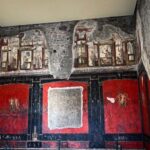
If you do only one “famous name” moment, make it this one. You will see the House of the Skeleton, one of the most talked-about places at Herculaneum. Take your time here. It is not just about the story, it is about how close the remains and the rooms feel when you are standing in them.
Casa Sannitica (Samnite House)
Then you move to Casa Sannitica, the Samnite House. This is a good stop for comparing styles and layouts as your walk continues. Even without a guide narrating every detail, the differences in space help you understand the site as more than one single house type.
Central Thermae (thermal baths)
Now you shift to a major “public-facing” function of Roman life: bathing. You will see the Central Thermae, and it is worth slowing down because bath areas tend to have more structure, more circulation space, and more sense of how people moved through the day.
Casa del Bel Cortile (house with fine courtyard)
Next is a courtyard stop. You will see the House of the Fine Courtyard. Courtyards are where ruins can start to make emotional sense, because they read like open-air breathing space inside dense housing.
House of the Grand Portal, House of Galba (large doorway)
You will visit the House with the Large Doorway, also connected with the House of Galba label. This is another good “step back and look” moment, because portal-sized openings shape your sense of entrance, movement, and how dramatic certain thresholds were.
Salone della Barca di Ercolano (Salon of the Boat)
Your final listed highlight is the Salon of the Boat. When you reach it, treat it like a closing scene: pause, take in the room name, and let it be a reminder that this place has personality, not just architecture.
More Naples tours, ruins, coast days, and city experiences to compare


What I recommend you bring, since guidance is not included
This ticket includes skip-the-line entry, but guidance is not included. That is not a deal-breaker. It just means you should prepare for a self-guided visit.
Here is what helps most:
- A map or a clear route plan before you start walking. It saves time when you are trying to decide what to revisit.
- A guidebook or audio guide if you want explanations while you look at specific rooms. I like audio because it turns your pauses into learning moments, not dead time.
- Comfortable shoes and water. The site is outdoors and you can feel the sun quickly.
If you like a mix of structure and freedom, you will enjoy the way this ticket gives you a route through major points, then leaves the rest to you.
Using an audio guide well at Herculaneum
If you use an audio guide (or even just a phone-based guide), Herculaneum can feel like it “clicks” once you understand how the audio is organized. Some audio sets also include written material on the device, and that makes it easier to follow along as you move between spaces.
Your best strategy is simple: listen in chunks. Use audio for the first couple of highlights, then switch to quiet looking in between. You want your eyes to do part of the job. The site is visually strong, especially where mosaics and reliefs are visible.
Getting there from Naples without making it complicated
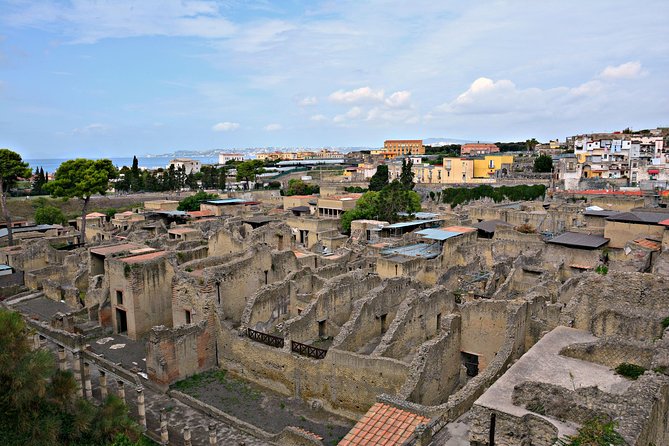
Transportation is not included, but this is an easy Naples-side trip. You can access Herculaneum by train, and the site is about 1 km from the train station if you are carrying your gear. If that distance sounds like a lot with heat and cameras, plan a slower walk and a couple of breaks.
Once you are there, you will start and end at the same meeting point. That reduces guesswork. You are not juggling multiple drop-off locations.
Photos, heat, and pacing tips that save your day
Herculaneum is usually not as crowded as Pompeii, and it can feel calmer and more atmospheric. That is when photos are easiest because you have fewer people cutting in front of you at the most important moments.
Still, you should plan for heat and sun. Build in pauses at terraces and courtyard-like spaces. Also, if you find yourself tempted to rush through because you fear missing something, slow down for the stops that have names tied to specific features, like mosaics, reliefs, and the House of the Skeleton.
Who should book this skip-the-line ticket
This ticket is a great fit if you want:
- A low-stress, self-paced visit with an organized route through major highlights
- A smaller group experience (max 15 travelers)
- A shorter planning burden than a full guided tour, since you can use your own reading and an audio guide if you want it
It is also a good choice for people who are not trying to do everything in one day. With four and a half hours, you can actually look.
On the other hand, if you love museum-style storytelling and want someone to explain everything step by step, you might find you miss a guided narrative. In that case, consider pairing this with your own audio guide, a guidebook, or a separate guided option on a different booking.
Should you book this skip-the-line ticket for Herculaneum?
Yes, if you want to spend your time where it counts, inside the ruins. For around $25, you are buying the ability to enter with less waiting and then use a half-day window to see the most memorable rooms, from the mosaic-focused house stops to thermal baths and the House of the Skeleton.
Book it especially if:
- You care about not losing time at the entrance.
- You prefer a self-paced way of exploring.
- You are visiting during a period when lines can form, or you just want a smoother start.
I would hesitate only if you strongly need live guidance to understand what you are looking at, because guidance is not included. In that case, you can still make this work with an audio guide and a good map, but you should go in knowing you are driving the learning part.
FAQ
What does this ticket include?
It includes skip-the-line tickets for entrance to the Herculaneum ruins.
How long is the experience?
The duration is approximately 4 hours 30 minutes.
What time does the tour start?
The listed start time is 10:00 a.m.
Can I choose an entrance time?
Yes. You can choose from a selection of entrance times when you book.
Where is the meeting point?
The meeting point is Excavations Corso Resina, 187, 80056 Ercolano NA, Italy.
Is transportation included?
No. Transportation to and from the attraction is not included.
Is guidance or a tour guide included?
No. Guidance is not included.
Are children allowed?
Children must be accompanied by an adult.
Are service animals allowed?
Yes. Service animals are allowed.
How will I get my ticket after booking?
After booking, you will receive a Viator voucher, followed by your site entry ticket. Check your email inbox after you book.
What is the cancellation policy?
There is free cancellation. You can cancel up to 24 hours in advance for a full refund.
More Skip the Line in Naples
More Tickets in Naples
More Tour Reviews in Naples


Not for you? Here's more nearby things to do in Naples we have reviewed








Tour Reviews, compared.
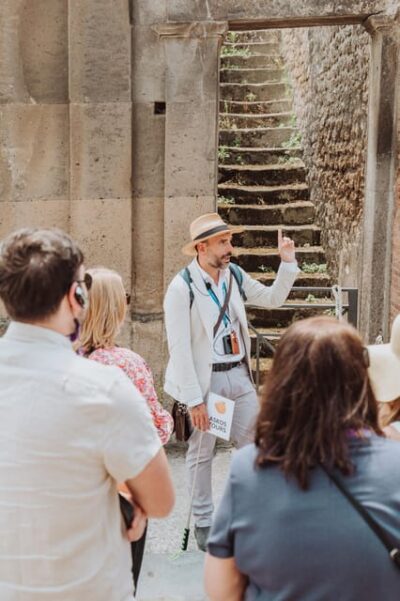 ★ 4.8Pompeii: Entry Ticket and Guided Tour with an ArchaeologistFrom $3519,459 reviews
 ★ 4.2Pompeii: Entry Ticket with Optional Audio GuideFrom $2612,360 reviews
 ★ 4.8Pompeii: Small Group Tour with an ArchaeologistFrom $4012,264 reviews
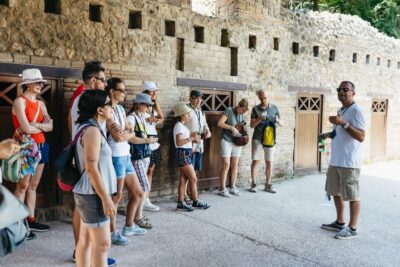 ★ 4.3Pompeii Ruins & Mount Vesuvius Day TourFrom $12011,459 reviews
 ★ 4.6Sorrento, Positano and Amalfi Full-Day TourFrom $10710,988 reviews
 ★ 5.0Sorrento, Positano & Amalfi Coast – Small Group TourFrom $768,643 reviews
 ★ 4.6Catacombs of San Gennaro Entry Ticket & Guided TourFrom $157,941 reviews
★ 5.0Pompeii Small Group Tour with an ArchaeologistFrom $356,593 reviews
★ 4.6Catacombs of San Gennaro Entry Ticket & Guided TourFrom $157,941 reviews
★ 5.0Pompeii Small Group Tour with an ArchaeologistFrom $356,593 reviews
Browse the lists this tour appears in