
Tour review · TOUR REVIEWS
Transfer from Naples to Positano with 2 hours Private Tour in Pompeii
Pompeii, without the logistical headache. This private Naples to Positano setup pairs a smooth transfer with Pompeii admission and a Pompeii guide, so you get answers while you walk, not after. I especially like that you learn from both your driver and your Pompeii guide, which makes the whole day feel less like checkboxes and more like a guided story.
The main thing to consider is that the vehicle details can vary. One booking note said the listing described a minivan, but the car arrived as a sedan, which matters if you have lots of luggage. If you need the larger space, confirm the exact car type before you go.
Key points you will actually care about
- Pompeii Archaeological Area entry included, so you do not have to figure out tickets mid-trip
- Private transfer Naples to Positano one-way with hotel drop-off, saving you time and walking with bags
- A real guide in Pompeii, plus your driver for extra context on the drive and route
- A tightly planned, fast stop sequence, ideal if you only have a short window
- English-speaking guide, confirmed at booking
Naples to Positano with a Pompeii stop that fits real schedules
This is a smart option when Pompeii is on your list, but your time is not. Instead of dedicating a full day (or dealing with separate transport and tickets), you get a private transfer from Naples onward while squeezing in a Pompeii visit with a professional guide.
Your total time on the Pompeii side is built around a “get your bearings fast” rhythm. The day is designed to keep momentum, which is great if you are moving between towns and want one strong cultural hit rather than a drawn-out travel day. If you are the type who hates wasting hours figuring out where to meet and how to get in, this format is designed for you.
The experience is listed as about 4 hours total, with a Pompeii portion of around 2 hours. That time balance matters because Pompeii is huge. With only a short window, the guide’s job is not to see everything, but to show you the right things in the right order so you leave with understanding.
You can also read our reviews of more private tours in Naples



Pickup in Naples: straightforward, sign-on, and luggage reality
The pickup is flexible in Naples: airport, central station (NAP), or your accommodation. The driver will meet you with a sign showing your name. That sounds small, but in Naples traffic and station chaos, it is one less thing to worry about.
One detail you should plan around: private transfers for multiple travelers can mean tight space. In one case, the vehicle described as a minivan turned out to be a sedan, and the group had to fit and reposition 6 pieces of luggage. If you have more than a couple of bags, do yourself a favor and confirm the vehicle type when you book.
If you travel with kids, car seats are available on request. Service animals are allowed, and the meeting area is noted as near public transportation, which can be comforting if your plans change.
Because this is private, only your group participates. That usually means fewer delays and fewer “wait while everyone finds their way” moments. Still, do not assume the day will feel leisurely. It is structured, and you will likely move at a steady pace.
Entering Pompeii at Porta Marina Superiore and getting oriented fast
You meet the guide at the main entrance called Porta Marina Superiore. Starting at the “main entry” matters because it helps you understand the layout. Pompeii can feel like a maze if you are walking randomly, especially in a short visit.
The guided entry begins with a brief orientation, then you move into the sites the guide has chosen to cover. In a two-hour window, the difference between “wandering” and “having a plan” is everything. A good guide helps you see relationships, not just isolated ruins.
If you want to get more out of Pompeii than surface photos, look for two things as you go:
- What role a building played in daily life, business, worship, or leisure
- How the streets and squares connected people across the city
Even if you only catch quick glimpses, these two habits help you read Pompeii like a living city instead of a museum of stone.
Basilica portico and the Foro square: Pompeii’s social center, in two quick stops
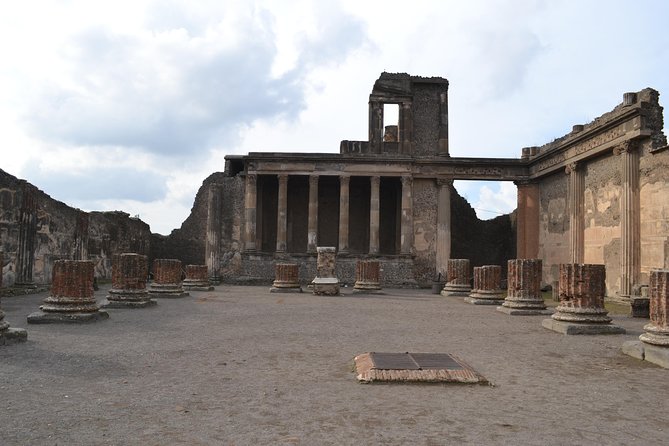
Your Pompeii visit begins with the Basilica, a large open portico space that offered shelter for merchants and activities. Think of it as the “covered place where business happened.” This stop is useful because it gives you a sense of how people moved through civic and commercial life, even before you reach the big open areas.
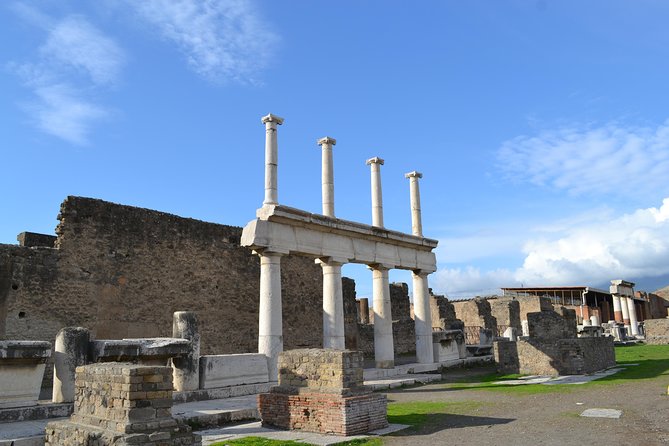
Next comes the Foro, Pompeii’s ancient main square. This is one of the most important places in the city because it is where public life concentrated. In many Roman towns, the square is not just for sightseeing. It is where the city shows its face.
Then you will walk through the main street. This is a key part of the experience because it turns the ruins from a collection into a connected route. You start seeing street scale, street function, and how the city would have felt when it was active.
Time here is brief, so focus on getting the “feel” rather than trying to memorize every label. If you can, take a minute to stand somewhere and look across the square or down the street. A guide can point out what you might otherwise miss, like how these spaces shaped movement and meetings.
Granai del Foro: where commerce meets the human impact of 79 AD
The Granai del Foro is the stop that tends to make Pompeii feel real in a different way. It is a granary area where you can see marble tables and baths for fountain features that once adorned entrances to houses. Even in ruins, these details help you understand how wealth and design showed up in daily surroundings.
It is also where the story becomes more emotional. The space includes casts of victims from the eruption, along with casts of a dog and a tree. The presence of these casts changes how you walk the site. You stop thinking only about architecture and start thinking about people caught in seconds.
In a short visit, casts can feel heavy. My advice is not to rush past them. Spend a moment looking at the cast placements and then ask your guide what the context is in that spot. When a guide explains what you are seeing, the stop becomes part of understanding Pompeii’s tragedy, not just a photo moment.
More Naples tours, ruins, coast days, and city experiences to compare






Casa del Menandro and Casa del Fauno: domestic Pompeii, fast but meaningful
The tour includes two major houses, both with the kind of decoration and layout that show you what wealth looked like in Roman private life.
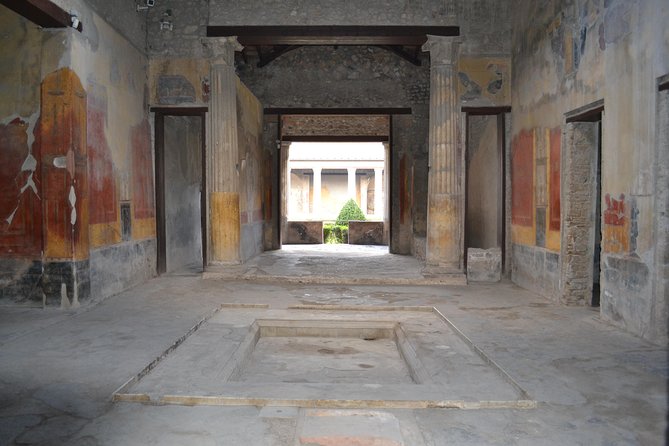
First is Casa del Menandro, known as one of the richest houses in Pompeii in terms of architecture, decoration, and contents. A house like this is not just a place to sleep. It is a world where art, rooms, and thresholds tell you who had status and how people entertained.
Next is Casa del Fauno, one of the largest and most impressive private residences. This stop helps you compare a “rich home” with a “big statement home.” Even with limited time, your guide’s framing can help you notice differences in space and priorities.
Because the time at each house is limited, do not try to read every room like a textbook. Instead, use the guide to help you identify:
- where you would have seen everyday movement
- how decoration signaled taste and rank
- what parts of the home made it feel luxurious or grand
If you are new to Pompeii, these houses are a strong “taste test” of the city beyond streets and squares. They also give you a sense of why Pompeii was worth preserving in the first place.
Stabian Baths and the Lupanar: everyday leisure, then a darker corner
The tour moves into two very different parts of city life, and that contrast is one reason this itinerary works well.
Stabian Baths (Terme Stabiane) cover a vast area and are described as the oldest thermal complex in the city. Baths were not only about cleanliness. They were social. You would see people relaxing, chatting, and passing time. When you stand in the scale of a bath complex, you can feel how important communal leisure was.
Then comes the Lupanar, the most famous brothel in Pompeii. It is one of the most talked about stops for a reason. It gives you a reality check: Pompeii was a full working city with every kind of human behavior, not a curated dream.
This section can be uncomfortable for some visitors, and that is normal. If you prefer gentler content, you can still use this stop in a constructive way. Ask your guide for the context, not just the sensational reputation. The goal is to understand how the city functioned and how urban life included everything from worship to commerce to entertainment.
Pompeii’s theaters: Teatro Piccolo, Teatro Grande, and plaster casts
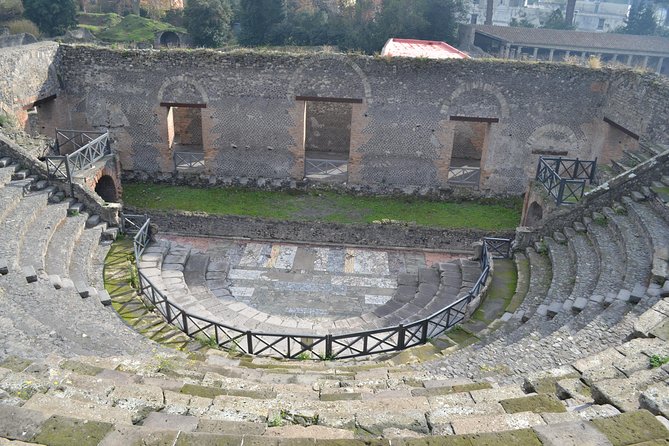
The itinerary includes a look at Teatro Piccolo and then focuses on Teatro Grande, described as the most important theater in Pompeii. A theater stop works especially well on a guided visit because Roman performance spaces have a lot of built-in meaning. They reflect civic pride, public life, and who gathered where.
In addition to the theater sites, you will also see the house of Tragic Poet and famous plaster casts. That combination is useful because it connects art and architecture to the broader preservation story.
Here is a practical way to enjoy the theater portion even if you are short on time: watch how the guide describes audience flow and viewpoint. In ruins, it is easy to see walls and seats but miss the logic. Your guide can help you visualize how people would have used the space. Then the plaster casts add a final emotional layer, reminding you that Pompeii is not just about what people built, but about what happened.
Price and value: is $467.63 per person worth it for a 4-hour day?
The price is listed at $467.63 per person and the duration is about 4 hours. That may feel steep at first glance, but with private transfer plus Pompeii entry and a professional guide, you are paying for time-saving and stress control.
Here is what you get that directly affects your day:
- Transport by private air-conditioned minivan (private car service)
- One-way private transfer from Naples to Positano
- Hotel drop-off
- Pompeii guide and assistance in Pompeii
- Admission fees to the Pompeii ruins
- All taxes
- English language support
Meals are not included, so budget for a quick bite either before pickup or after drop-off. That is a normal trade-off for a short, efficient cultural stop.
You also get group discounts, which can help if you are traveling with friends or family and can split the cost. Because it is private, the value often looks best when you are not comfortable with crowded tours or when your schedule is tight between towns.
My quick rule: this is a good value if Pompeii is a must-do and you want it handled in one organized package. If you have lots of spare time in Naples and you enjoy planning your own route, you might find cheaper options. But if you hate uncertainty, this arrangement reduces the biggest friction points.
Who should book this Pompeii stop on the way to Positano?
This experience is best for travelers who want Pompeii without turning the trip into a logistics project. I would strongly consider it if:
- you are short on time in Italy and still want Pompeii
- you prefer private guiding over figuring out ruins on your own
- you want your transfer from Naples to Positano handled smoothly with a hotel drop-off
- you appreciate getting context quickly, building an overall picture fast
It can also be a good fit for first-time Pompeii visitors. Starting at a main entrance, hitting major civic and domestic stops, then ending with theater and casts gives you a well-rounded introduction, even in a short day.
If you are the type who likes to linger for 30 to 45 minutes in one spot, then come back later, this may feel a bit rushed. The site is huge and the stops are timed. This plan is built for efficient learning, not slow wandering.
A practical checklist before you go
To make the most of a tight schedule, I recommend you do a little prep:
- Bring comfortable shoes, because you will be walking through the main street and between multiple stops
- Plan for a quick meal outside the tour window since meals are not included
- If you have lots of luggage, confirm whether you will receive a minivan or a sedan, especially if your booking description mentions a minivan
- If you need a car seat, request it ahead of time
- Have an idea of what you care about most: civic life in the Foro, daily life like baths, or the more emotional casts
Should you book this Naples to Positano transfer with Pompeii?
Yes, you should book it if Pompeii is a priority and you want the day organized for you. The combination of Pompeii Archaeological Area admission included, a professional guide on-site, and a private Naples to Positano transfer with drop-off is exactly the kind of convenience that makes short trips feel complete.
Skip it or rethink it if:
- you are expecting a slow, unguided stroll where you can stay in one place for a long time
- you have heavy luggage and you cannot confirm vehicle size
- you want to control every detail of timing and route yourself
If you are trying to connect towns and squeeze in Pompeii without fuss, this is a solid, efficient way to do it, and it has strong satisfaction signals tied to the quality of the guiding.
More Private Tours in Naples



More Tours in Naples





More Tour Reviews in Naples

Not for you? Here's more nearby things to do in Naples we have reviewed










Tour Reviews, compared.
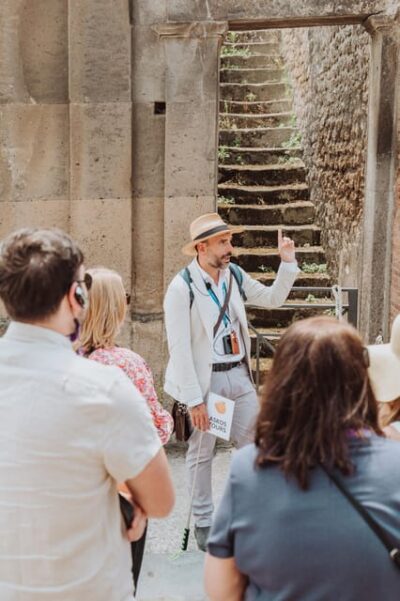 ★ 4.8Pompeii: Entry Ticket and Guided Tour with an ArchaeologistFrom $3519,459 reviews
 ★ 4.2Pompeii: Entry Ticket with Optional Audio GuideFrom $2612,360 reviews
 ★ 4.8Pompeii: Small Group Tour with an ArchaeologistFrom $4012,264 reviews
 ★ 4.3Pompeii Ruins & Mount Vesuvius Day TourFrom $12011,459 reviews
 ★ 4.6Sorrento, Positano and Amalfi Full-Day TourFrom $10710,988 reviews
 ★ 5.0Sorrento, Positano & Amalfi Coast – Small Group TourFrom $768,643 reviews
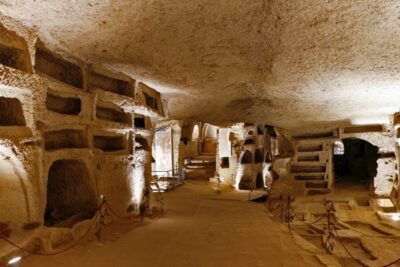 ★ 4.6Catacombs of San Gennaro Entry Ticket & Guided TourFrom $157,941 reviews
★ 5.0Pompeii Small Group Tour with an ArchaeologistFrom $356,593 reviews
★ 4.6Catacombs of San Gennaro Entry Ticket & Guided TourFrom $157,941 reviews
★ 5.0Pompeii Small Group Tour with an ArchaeologistFrom $356,593 reviews
Browse the lists this tour appears in