

Tour review · TOUR REVIEWS
Herculaneum: Skip-the-Line Guided Tour with Archaeologist
Herculaneum hits you fast. This skip-the-line guided visit gets you into one of Italy’s best-preserved Roman cities with an archaeologist who explains what happened when Vesuvius erupted nearly 2,000 years ago.
I especially love the way the tour turns scattered ruins into real daily life, and you’ll get a focused run through big highlights like the House of Neptune and Amphitrite and the waterfront. I also like the included headsets, which help you follow along even as the group moves.
One drawback to plan for: the site is vast and very exposed, so you’ll want good footwear and sun protection, and the tour is not suitable for wheelchair users or people with mobility impairments.
Key things to know before you go
- Skip-the-line entry saves time so you spend it inside the ancient city
- Archaeologist-guided storytelling turns names like Forum and Augustales into lived-in places
- A port-town perspective including the waterfront area where more than 300 people died trying to escape by sea
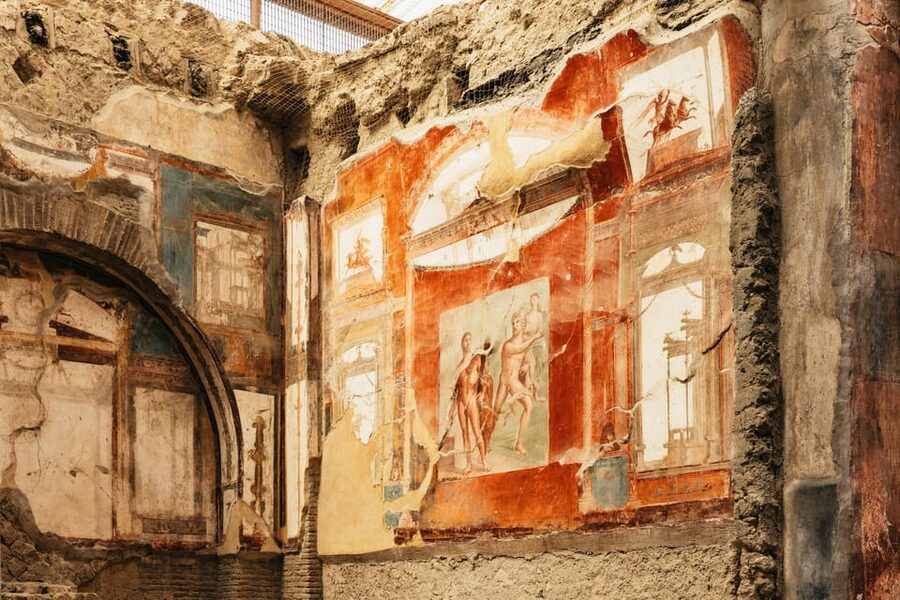
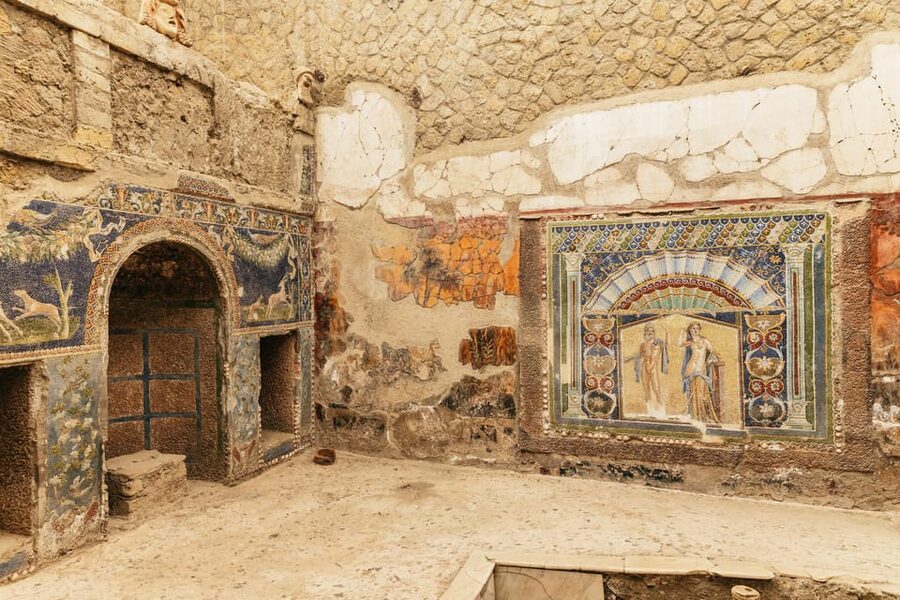
- Well-preserved interiors with ceramics, paintings, and mosaics, plus carbonized wood preserved by the eruption
- Packed highlights in 2 hours covering baths, temples, forum areas, and signature houses like Neptune and the House of Skeletons
- Admission fees are included, so you can continue exploring after the guided portion
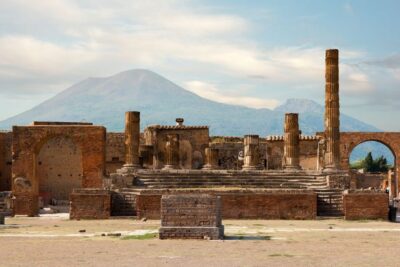
Herculaneum feels calmer than Pompeii, and that matters
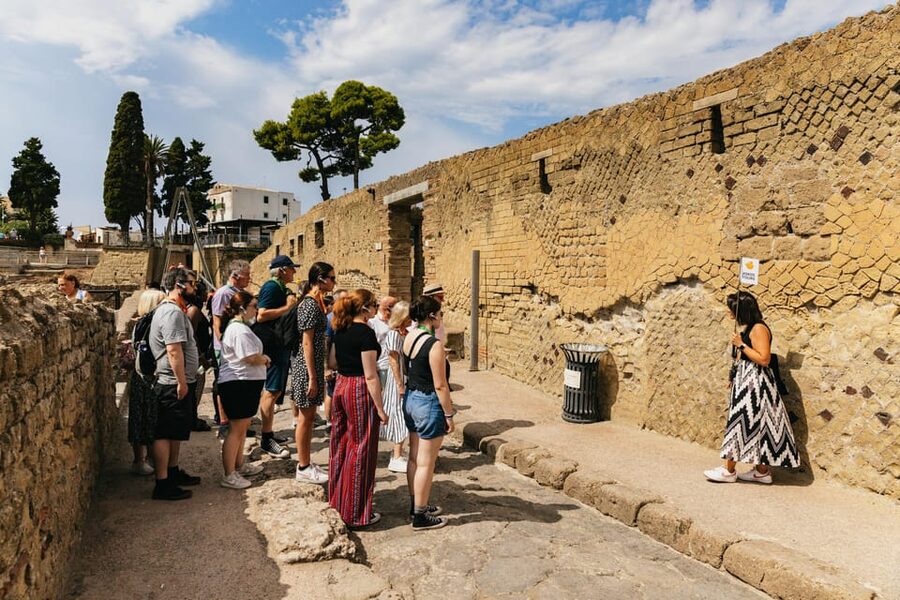
If you’ve seen Pompeii before, Herculaneum can surprise you. The first thing I think you’ll notice is the size and pacing. Herculaneum is more compact, and the ruins often feel more “up close,” not just like a big open museum. That makes it easier to connect the archaeology to everyday moments, like bathing routines, civic gatherings in public spaces, and the status signals in wealthy homes.
The second big difference is what survived. In Herculaneum, you’re not only looking at stone walls and carved marble. You also see evidence of domestic art such as paintings and mosaics, and even carbonized wood that survived the eruption. That mix gives you a fuller sense of what the city looked and felt like right up until the moment it was buried.
You can also read our reviews of more guided tours in Naples

Skip-the-line entry, smart meeting point, and how the tour actually flows
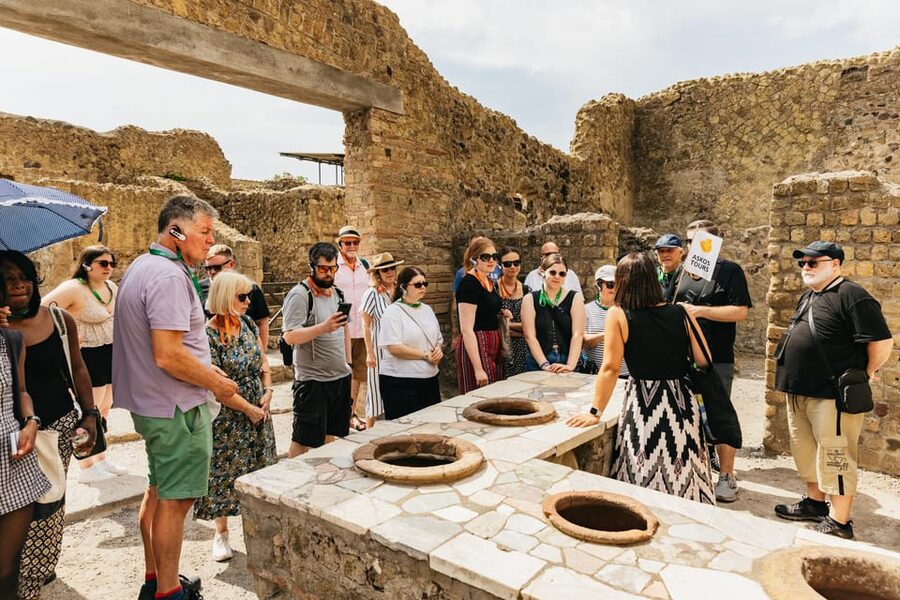
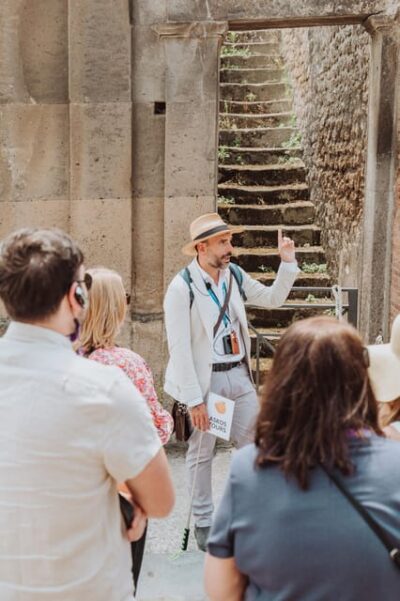
This is a true guided-site experience, not a quick “here’s the ticket, go wander” plan. You meet at the ticket office of the Herculaneum Ruins, and your guide will be holding an Askos Tours sign. The starting area is listed as Via dei Papiri Ercolanesi, so if you’re using a map app, you’ll want to line it up with the ticket office rather than guessing from the ruins entrance view.
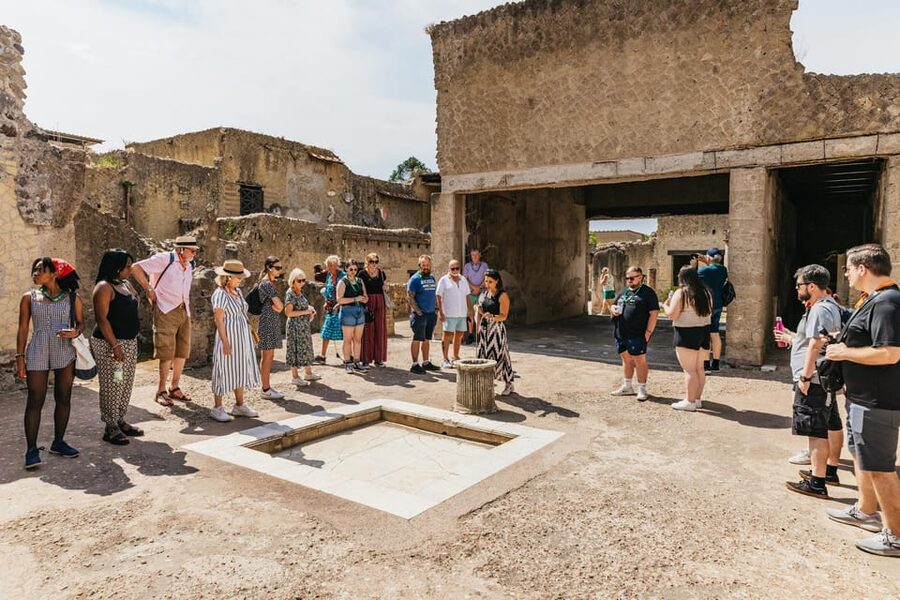
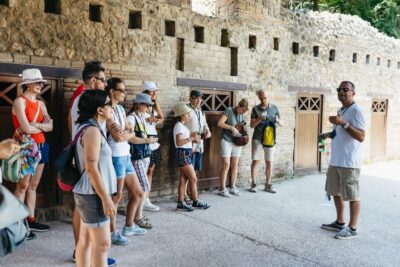
The tour lasts 2 hours with an archaeologist guide. To keep everyone on the same track, you get headsets. That’s a big deal in Herculaneum because you are outside, moving between areas, and the ruins can create sound gaps. In practice, you’ll get the best results if you stay close to the guide while listening through the headset.
Guides can vary, and the style is consistent across names people have had: archaeologists such as Luciano Leone, Diego, Teresa, Yolanta, and Roberta are repeatedly praised for clear explanations and an ability to make the story understandable. Expect humor and real enthusiasm, not just a lecture.
Your guided hit list: Waterfront, baths, forum spaces, and key homes
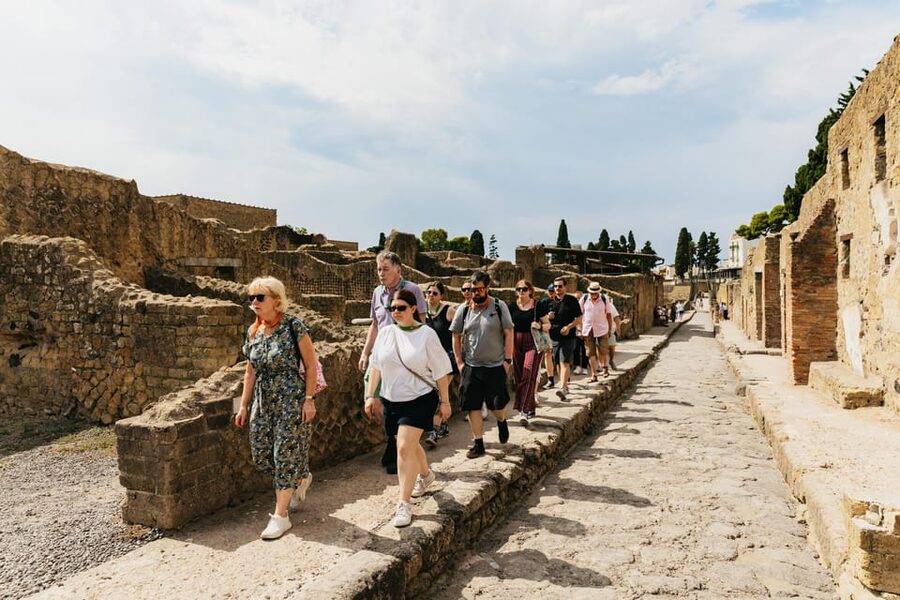
The tour is designed to cover major sections efficiently, so you get a strong map of the site without spending the whole day lost. Here’s what you’ll likely experience as your archaeologist guide takes you around.
Waterfront and the port-town story
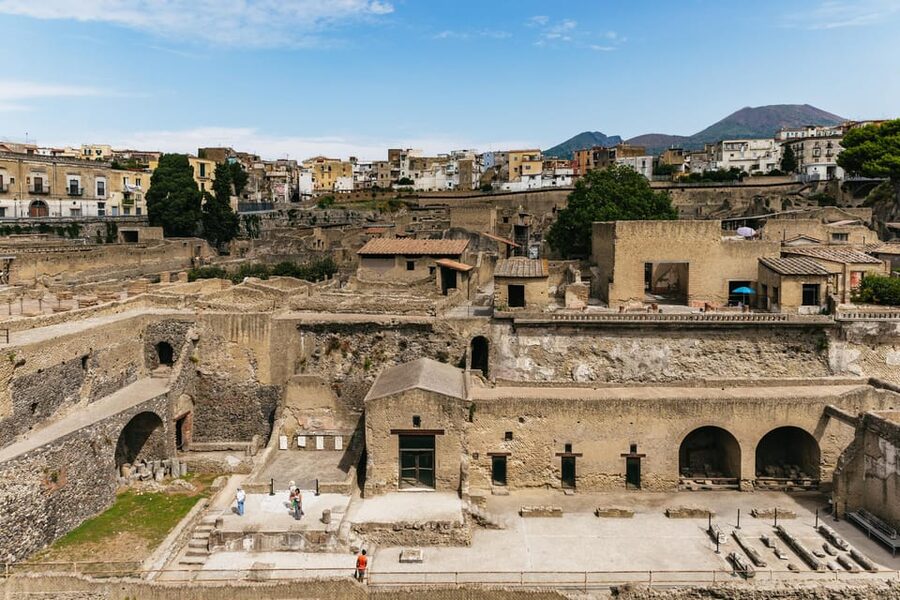
You’ll start building context fast with what this city was. Herculaneum was a former port town, and the tour focuses on the mix of wealthy merchants and nobility who lived there. Then the story turns sudden and heavy: you’ll see the waterfront area connected to the more than 300 people who died attempting to escape by sea.
This is one of those stops that works best when the guide connects the physical space to human choices. The shoreline isn’t just a scenic viewpoint. It’s a turning point in the narrative.
Thermal baths: where Roman life ran on routines
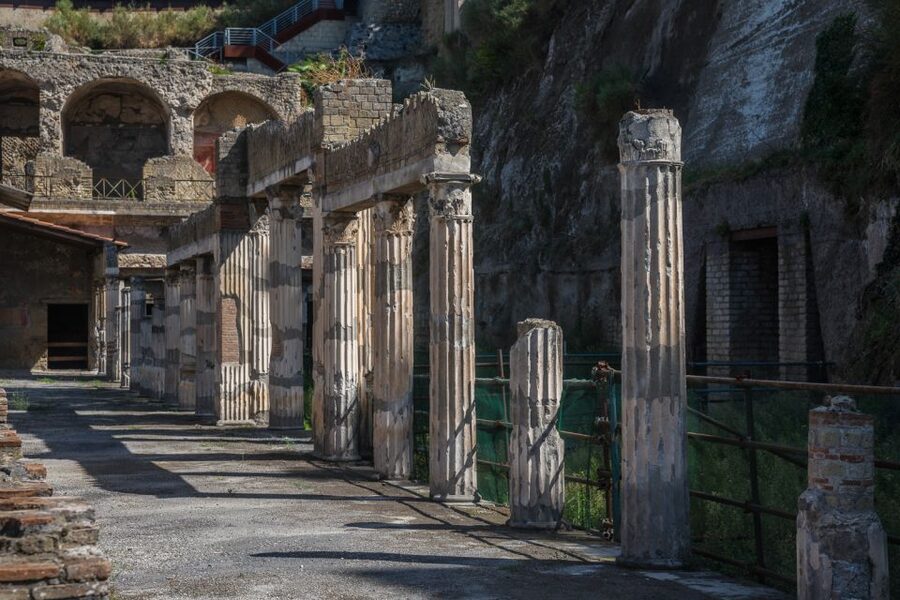
Next, the tour highlights the thermal baths. Roman baths weren’t only about hygiene. They were social space, part of status, and a daily rhythm. When your archaeologist guide explains how these spaces functioned, you’ll start seeing the ruins less like “columns and walls” and more like a functioning building where people met, relaxed, exercised, and talked.
The practical side: baths are interior or semi-interior areas within the ruins, which can feel better in strong sun. Still, you’ll be outdoors between buildings, so keep your sunscreen and water mindset on.
More Naples tours, ruins, coast days, and city experiences to compare


Sacellum of the Augustales and the Temple of the Augustales
You’ll also visit the Sacellum of the Augustales (often described as the Temple of the Augustales). This stop is where civic and religious life comes into focus. It helps explain how people organized public identity, loyalty, and status in Roman society.
If you’ve ever wondered why Roman cities feel so formal in the way they laid out public worship and civic space, this is the answer you’ll get. Your guide is the key here, since architecture names mean little without context.
The Forum and civic center feel
The tour includes the Forum, a central area that helps you understand the city’s “where business happened” and “where public life happened” logic. When the guide talks about how the Forum connected to other parts of daily life, the layout starts to click. You stop thinking of ruins as isolated rooms and start seeing systems.
Inside the homes: Casa dei Cervi, Neptune and Amphitrite, and more
Herculaneum’s greatest power is how much you can grasp about private life. This tour steers you through several standout houses, each with a strong identity.
You’ll see:
- Casa dei Cervi (House of the Stags)
- Casa di Nettuno ed Anfitrite (House of Neptune and Amphitrite)
- House of Skeletons
- Casa dell’Albergo
- Casa del Salone Nero
For me, the value here is that the tour doesn’t just point at walls. It tries to connect the house type and decoration to who lived there and how that mattered socially. You’ll also get repeated emphasis on preservation of domestic materials, including ceramics, paintings, and mosaics, plus the shocking survival of carbonized wood.
The House of Skeletons is the emotional anchor. Even if you already know the general Vesuvius story, being in the place linked to the victims makes the disaster real in a way a textbook never does.
What makes the archaeologist guide worth it
You could technically wander Herculaneum on your own. But the reason this tour works is the translation layer. Archaeology names and layout can feel abstract unless someone explains how the spaces were used and what the evidence suggests.
What I love about this format is that the guide’s job is not only to point out highlights, but to give you a mental model. Many people specifically call out archaeologists who use comparisons between Pompeii and Herculaneum and who make the pre-eruption details and post-eruption evidence easy to hold in your head at once.
You’ll also notice that the tour is fast enough to keep energy up, but focused enough that the story stays coherent. People repeatedly mention that the guide crams a lot into 2 hours without turning it into chaos, which is hard to pull off in a place with lots of small, detailed features.
Value and price: $53 plus included admission changes the math
The listed price is $53 per person for a 2-hour archaeologist-led experience, and it includes admission fees to Herculaneum plus headsets. That matters for value because the entry ticket on your own is listed as 16.00 euros for adults (and 2.00 euros for EU citizens 18 to 25).
In other words, you’re not just paying for the guide. You’re effectively getting help with the site experience, plus you’re bundling the ticket into one price. For many visitors, the biggest advantage is peace of mind: you show up, you get in efficiently, and you follow a plan rather than spending your best energy trying to figure out what to prioritize.
If you’re comparing against other options, this is the sweet spot when:
- you want the highlights without missing the story,
- you’re short on time,
- and you’d rather pay for explanation than guess your way through the ruins.
Pacing, headsets, and choosing the right time slot
Two hours sounds short until you’re walking. This tour covers a lot of ground and several meaningful buildings, including homes and civic spaces. That’s great if you want an efficient orientation.
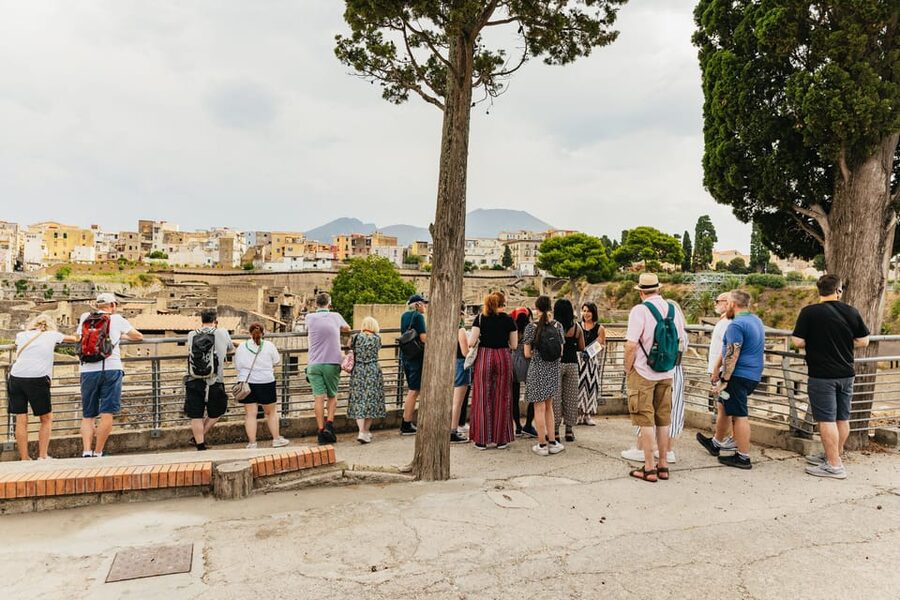
It does also mean you should be ready for movement. Some people mention that when the group stretches out, headset audio can drop if you are further back. You don’t have to run, but you will enjoy the tour more if you stay in the listening zone closest to the guide.
Timing matters too. The site is exposed and there is no substitute for shade breaks if the day is hot. Also, if you book a later departure, you might not have much time to roam independently after the tour. Since admission is included, I’d lean toward a morning slot when you can, so you have energy left to explore further at your own pace.
Practical stuff you will thank yourself for later
This site is outdoors, uneven, and sun-heavy. Plan like you’re visiting an archaeological park, not a cathedral.
Wear: comfortable, closed-toe shoes. It can be difficult walking around Herculaneum with open sandals.
Bring: a passport or ID card, plus sunscreen and ideally a hat.
Weather: the tour runs rain or shine, so bring a raincoat if the forecast looks iffy.
Bags: luggage or large bags are not allowed. Travel light so you don’t waste time dealing with restrictions.
Kids: unaccompanied minors are not allowed, and children must be accompanied by an adult.
Also note that the tour is not suitable for wheelchair users or people with mobility impairments. If that applies to you, you’ll want to look for an alternative format.
Who should book this tour?
Book it if you want:
- an archaeologist-led understanding of what you’re seeing,
- a fast but meaningful overview of the waterfront, baths, forum area, Augustales site, and major homes,
- and a solution for first-time visitors who want to avoid getting overwhelmed.
It’s especially good if you are doing Pompeii and want the contrast. People consistently praise guides for explaining the difference in what happened and why Herculaneum feels distinct, including the preservation of organic materials and the character of life in a port town.
You might skip it if you:
- need full accessibility accommodations for mobility limitations,
- prefer long unstructured wandering without a set plan,
- or want a slower pace with lots of time to stop and stare at every mosaic detail.
Should you book Askos Tours skip-the-line Herculaneum?
Yes, I’d book it if your goal is to understand Herculaneum, not just take photos. The skip-the-line value is real, the archaeologist guide changes the experience from confusing ruins into a story of daily life and sudden disaster, and admission is included so you can continue exploring afterward.
If you go, come ready for sun, bring ID, and wear proper shoes. And when you’re listening through the headsets, stay within the guide’s main area so you catch the details that make Herculaneum feel human.
FAQ
How long is the Herculaneum skip-the-line guided tour with an archaeologist?
The tour duration is 2 hours.
Where do I meet for the tour?
Meet at the ticket office of the Herculaneum Ruins. Your guide will be holding an Askos Tours sign. The listed starting area is Via dei Papiri Ercolanesi.
Is admission to Herculaneum included?
Yes. Admission fees to Herculaneum are included in the tour.
What languages is the tour offered in?
The live tour guide is available in English, Italian, German, Spanish, and French.
What should I bring?
Bring a passport or ID card, wear comfortable shoes, and bring sunscreen. You may also want a raincoat because the tour runs rain or shine.
Is this tour wheelchair accessible?
No. The tour is not suitable for people with mobility impairments or wheelchair users.
More Guided Tours in Naples


More Tours in Naples




More Tour Reviews in Naples

Not for you? Here's more nearby things to do in Naples we have reviewed










Tour Reviews, compared.
 ★ 4.8Pompeii: Entry Ticket and Guided Tour with an ArchaeologistFrom $3519,459 reviews
 ★ 4.2Pompeii: Entry Ticket with Optional Audio GuideFrom $2612,360 reviews
 ★ 4.8Pompeii: Small Group Tour with an ArchaeologistFrom $4012,264 reviews
 ★ 4.3Pompeii Ruins & Mount Vesuvius Day TourFrom $12011,459 reviews
 ★ 4.6Sorrento, Positano and Amalfi Full-Day TourFrom $10710,988 reviews
 ★ 5.0Sorrento, Positano & Amalfi Coast – Small Group TourFrom $768,643 reviews
 ★ 4.6Catacombs of San Gennaro Entry Ticket & Guided TourFrom $157,941 reviews
★ 5.0Pompeii Small Group Tour with an ArchaeologistFrom $356,593 reviews
★ 4.6Catacombs of San Gennaro Entry Ticket & Guided TourFrom $157,941 reviews
★ 5.0Pompeii Small Group Tour with an ArchaeologistFrom $356,593 reviews
Browse the lists this tour appears in