
Tour review · TOUR REVIEWS
Pompeii: Small-Group Guided Tour with Skip-the-Line Ticket
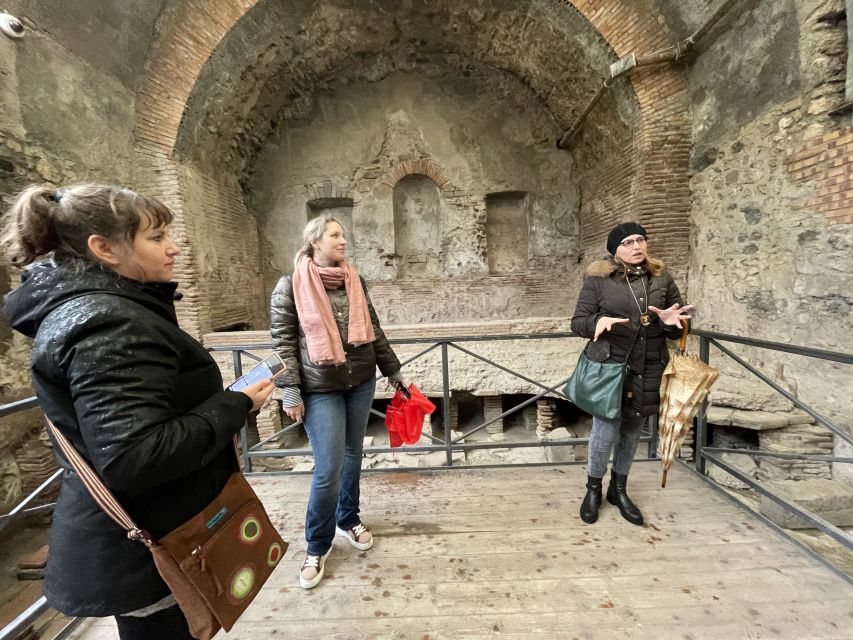
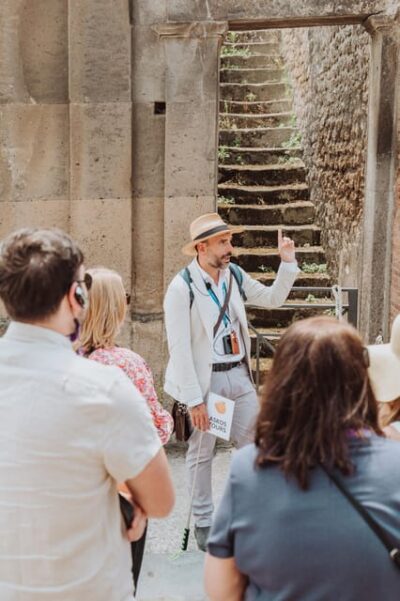
Pompeii feels close up, not museum-flat. This small-group Pompeii tour uses skip-the-line entry and a tight route through the best-preserved stops, guided by people like Glauco who can spot what matters fast. You also get the kind of human pacing that makes ruins feel readable instead of overwhelming.
I really like the expert guidance at each stop, with clear explanations and lots of room for questions, even on busy days. I also like the lineup of places you do not want to miss, from the Amphitheater to the Forum area.
One thing to watch: 2 hours goes quickly in Pompeii, so you’ll still want extra time to wander afterward if you love photos, details, or slow walking.
Quick hits
- Skip-the-line access with pre-reserved tickets so you spend less time queued
- Private group for up to 2 for an easier pace and more flexibility to ask questions
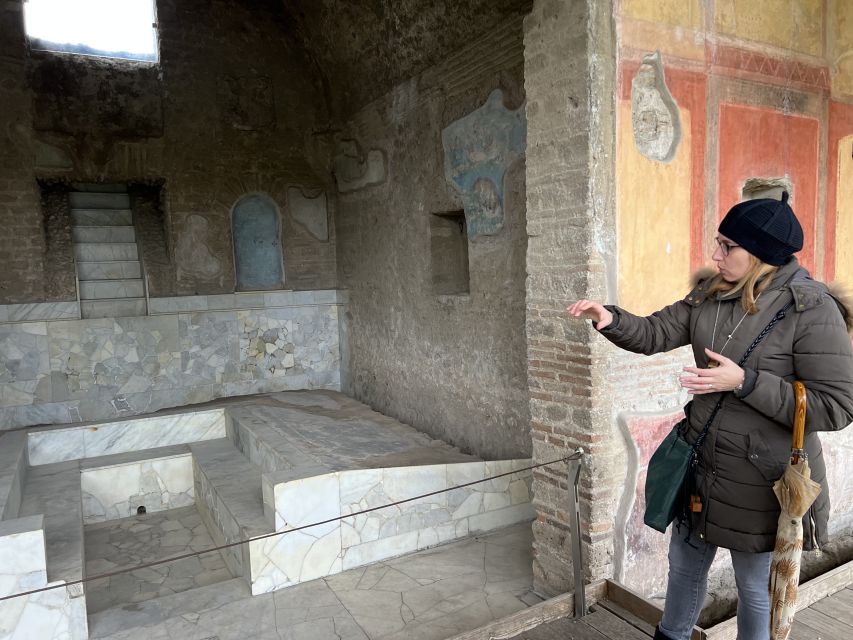
- A highlight itinerary built around major public spaces and standout homes
- Plaster-cast moment connected to the final scenes Pompeii visitors always remember
- Pompeii Forum finish so you end where the city’s civic life was centered
- Practical meeting point by the statue of the Virgin Mary, with a clear Walks In Europe sign
Why skip-the-line matters in Pompeii
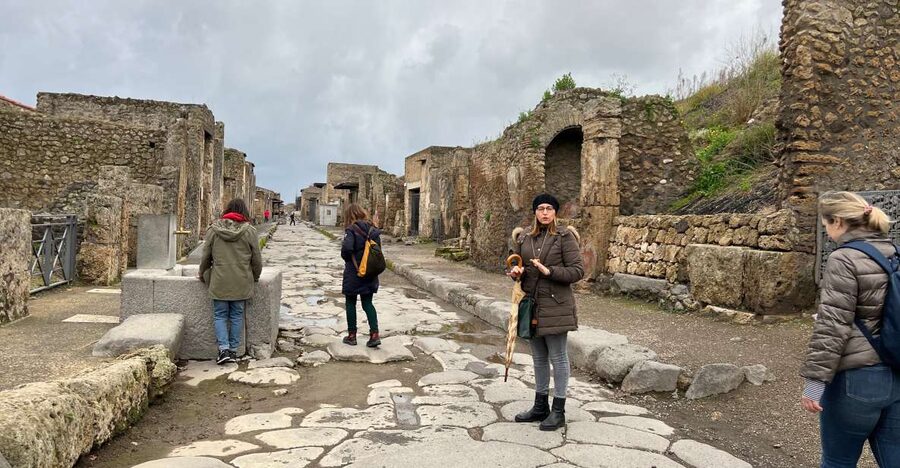
Pompeii is one of those places where the site itself is the star, but the logistics can get in the way. With this tour, you start by cutting the typical waiting. That means you can spend your limited time actually inside the Pompeii Archaeological Park, instead of losing it to lines and slow entry.
The other hidden win is momentum. Once you enter, a guide keeps you moving with a sensible route. Pompeii is huge, and without a plan it’s easy to zigzag, miss a key landmark, or end up walking extra distance just to backtrack.
More Naples tours, ruins, coast days, and city experiences to compare


The 2-hour route you can actually finish (and what you miss)
This tour runs for 2 hours, so it’s designed like a highlight sprint, not a full-day excavation experience. That’s good if you want the big names and want to understand what you’re seeing without turning the whole visit into a marathon.
You’ll cover a sequence of major stops, including:
- Amphitheater of Pompeii
- House of the Faun
- Temple of Apollo
- Vetutius Placidus House and Thermopolium
- Garden of the Fugitives
- Foro Civile di Pompei
The tradeoff is simple. Two hours means you’ll see the top layers of the story, not every small side street or room. If you want deep time in one house mosaic or one forum corner, plan to continue on your own after the tour ends.
Getting there: the Piazza Anfiteatro area meets the real-world check-in
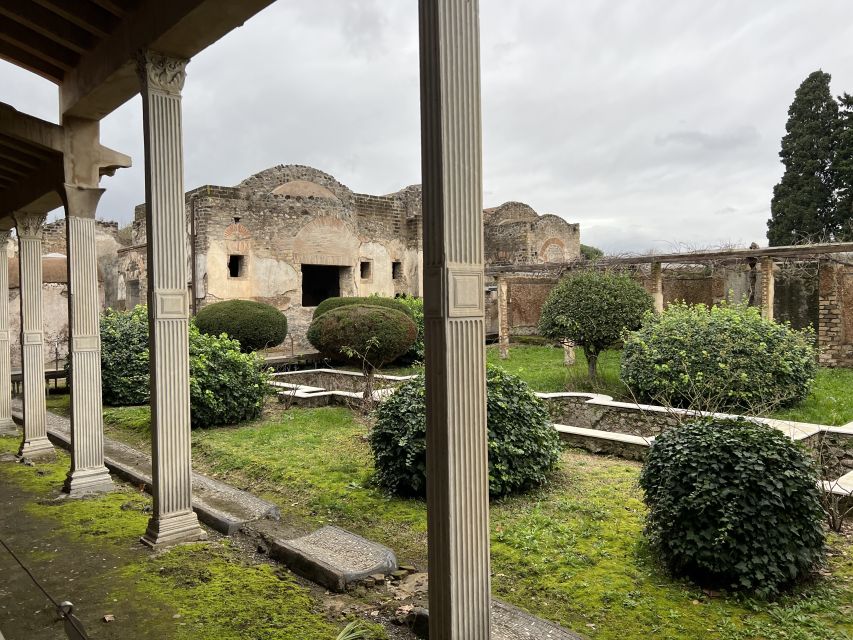
Your meeting point is very specific, which is a relief when you’re traveling on foot and not sure where the crowd funnels. Meet at the piazza just opposite the entrance gate of Piazza Anfiteatro, in Piazza Immacolata. Your guide will be by the statue of the Virgin Mary holding a sign that says Walks In Europe.
Two practical notes matter here. First, you should arrive 5 to 10 minutes early so you’re ready when the group heads in. Second, it is not possible to join after the tour has started, so if you’re late, you’ll miss the start.
Stop 1, Pompeii Archaeological Park: start with orientation, not random wandering
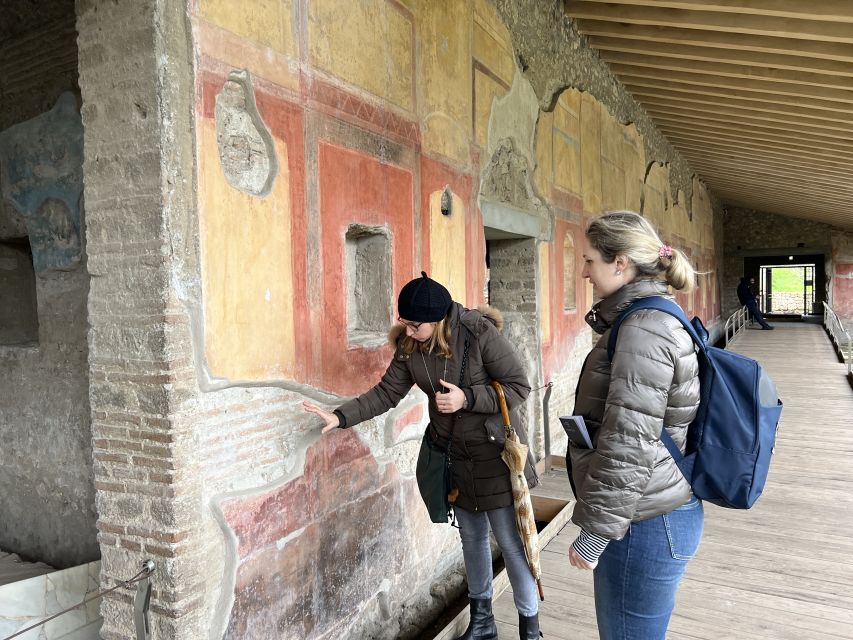
The tour begins at the Pompeii Archaeological Park entrance area. For the first stretch, you’re mostly getting your bearings, plus a guided setup for what you’re about to see.
This early orientation is underrated. Pompeii is not laid out like a tidy museum. Knowing the basics before you walk the streets helps the next stops click into place: civic life in the forum, entertainment at the amphitheater, and everyday routines in homes and public spaces.
Stop 2, Amphitheater of Pompeii: gladiators, crowds, and a sense of noise
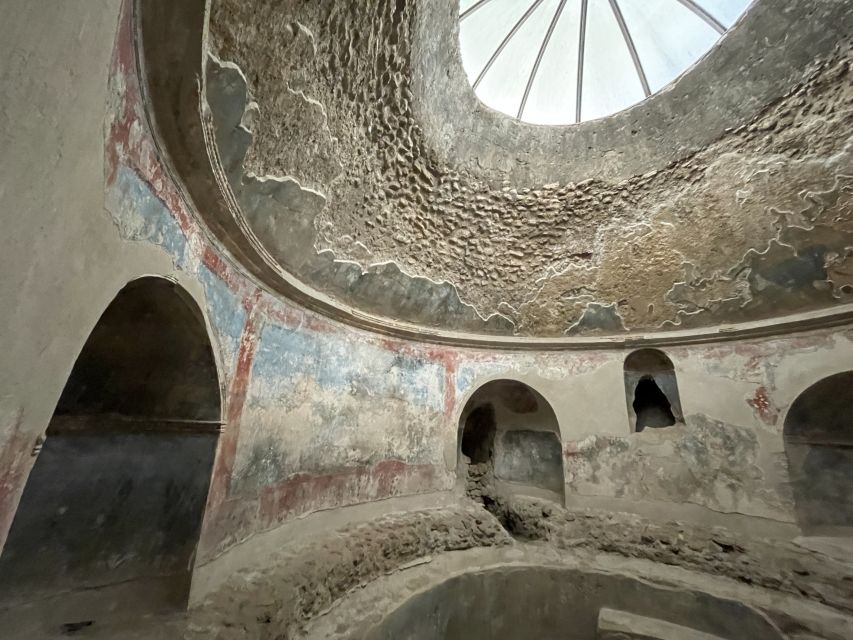
You then head to the Amphitheater of Pompeii, with a guided visit and walking time that stays focused rather than dragging. The big hook here is the entertainment angle. This was a place where gladiators fought, a brutal spectacle that would have been loud, crowded, and highly organized.
Even if you’re not a Roman history superfan, the amphitheater gives you a strong sense of scale. It’s one of the easiest places to imagine the city’s social world, not just its architecture.
A bonus you’ll feel during this tour is pacing. People who joined with guides like Vito or Glauco often mention that the guide keeps things moving and connected, rather than reading dates off a sign.
You can also read our reviews of more guided tours in Naples




Stop 3, House of the Faun: homes that show status and daily life
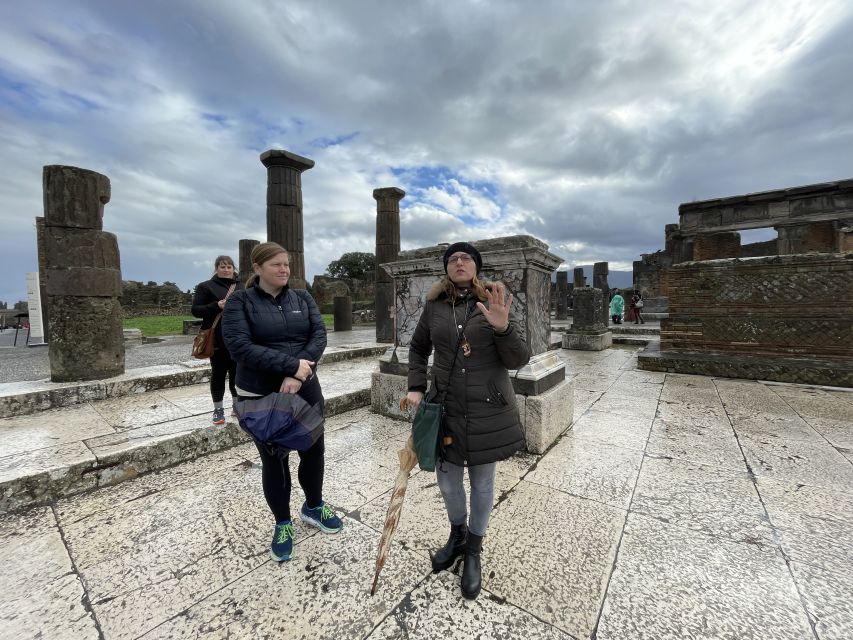
Next comes the House of the Faun. This is where Pompeii stops feeling like ruins and starts feeling like a lived-in city.
Homes like this help you understand how wealth and taste showed up in daily space. You also get your first taste of why Pompeii is famous beyond just the dramatic story of Vesuvius. The preserved surfaces, room layouts, and decorative elements make it easier to picture what people might have talked about while walking from room to room.
If you’re the type who likes to learn how people actually lived, this stop is one of the best on the itinerary.
Stop 4, Temple of Apollo: religion as city center
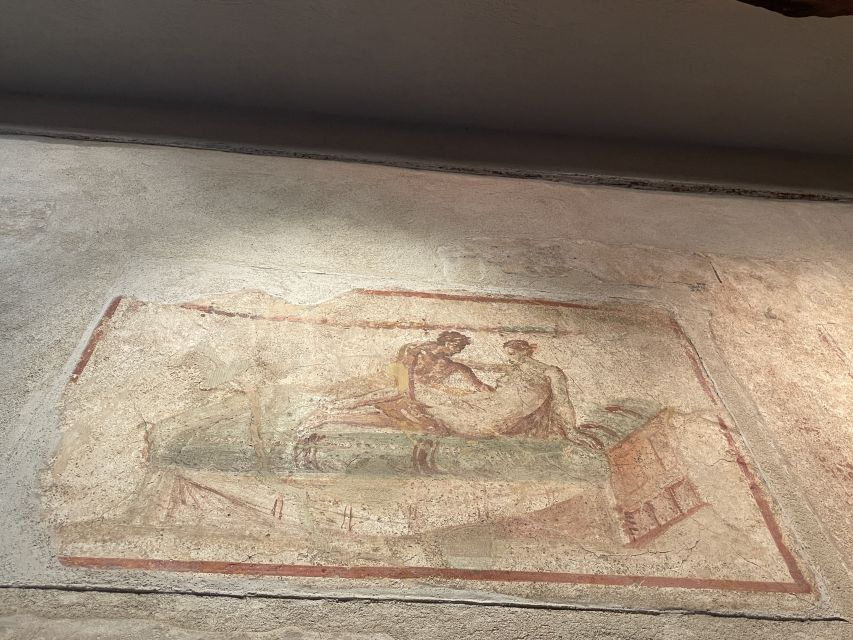
The Temple of Apollo brings you back to the civic and religious heartbeat of Pompeii. This kind of space helps you see how belief and public life were interwoven, not separate.
What I like about including a temple here is that it breaks the tour into different modes of understanding: entertainment, domestic life, then religion and civic identity. You’re not just walking from one building to another. You’re moving through the main systems of how the city worked.
Stop 5, Vetutius Placidus House and Thermopolium: everyday business, not only big monuments
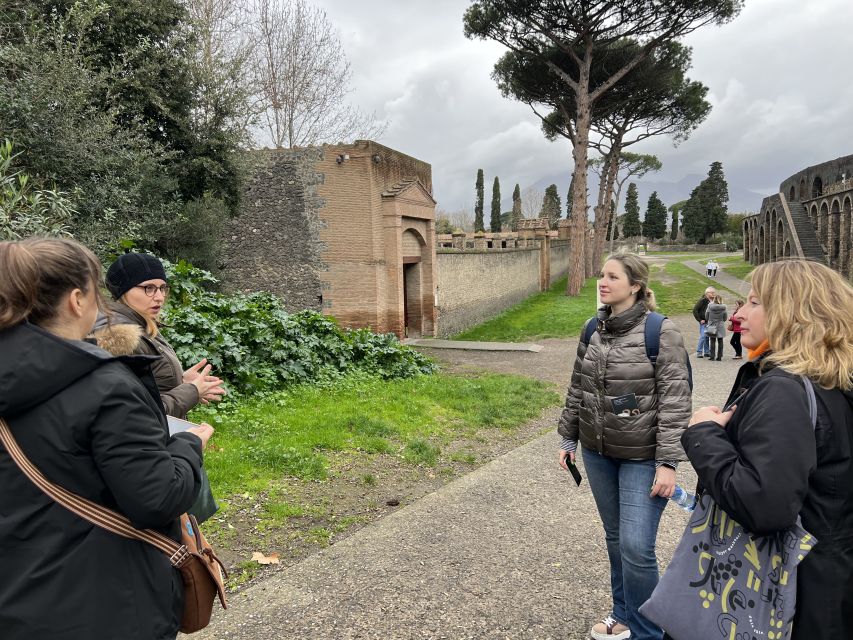
After the major landmarks, the tour moves into Vetutius Placidus House and Thermopolium. This is a good moment for context because it connects the big public spaces to day-to-day life.
You’re looking at preserved residential space alongside a public eating and refreshment setting. That pairing matters. It shows that Pompeii was not only temples and theaters. It was also meals, quick stops, conversation, and local routines.
This segment is shorter than some of the others, so don’t expect every wall detail to get its full spotlight. But you will get the big ideas: how space functioned and what kinds of activities happened there.
Stop 6, Garden of the Fugitives: the emotional center of Pompeii
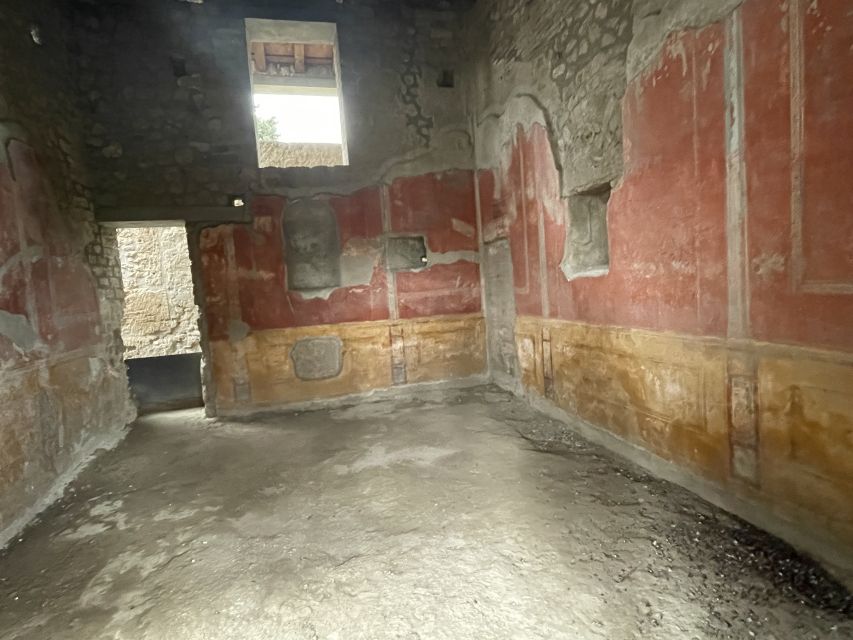
Then you reach the Garden of the Fugitives. This is one of the emotionally heavy stops in Pompeii, and it’s also one of the most famous.
This is where you get the plaster-cast remains moment. Those casts turn the eruption from an event in a textbook into people you can picture. It’s uncomfortable in the best way, because it forces you to see the human reality behind the disaster.
Practical tip: take a breath before you look too closely. Pompeii is powerful. Let yourself process before the walking continues.
Stop 7, Foro Civile di Pompei: where civic life happens, and where the tour ends
The final stop is the Foro Civile di Pompei, the civic forum area. You’ll walk, see the big public spaces, and get guided context for how the forum functioned as the heart of Pompeii.
This is a smart ending point for two reasons. First, the forum area ties together what you saw earlier: public movement, social order, and civic power. Second, finishing here makes it easier to continue on your own, because you’re in the part of Pompeii that people naturally want to revisit after a guided walk.
When the tour ends, you can keep exploring. If you have questions or you want a recommendation for what to hit next, you can ask your guide.
What you’ll feel when the guide is good (and why this tour gets high marks)
The standout pattern in the experience is the guide quality. Names like Glauco, Vito, Vito, Laura, Caterina, Alicia, and Alessia come up again and again, and the common thread is how they explain what you see in plain language.
A few specific things you can expect from strong guiding on this tour:
- Clear explanations that link each stop to everyday Roman life
- A route that avoids getting stuck in crowds whenever possible
- A good sense of humor, which matters in open-air ruins where you’re sweating and walking
One highlight story that stuck with me is how guides will point out small opportunities for watching ongoing archaeological work from places where it’s possible to observe. That kind of local, practical tip makes you feel like you’re being guided, not just herded.
Also, if you ever worry about the tour feeling rigid, the small private setup helps. People also noted they had an especially easy time moving through the site, because the group size stays manageable.
Value check: is $282 per group good for Pompeii?
This tour costs $282.08 per group, up to 2 people. That pricing structure changes how you should think about value.
If you go as a pair, you split the cost and you effectively pay for three things you’d otherwise have to hunt down on your own:
1) entry handled for you with skip-the-line
2) an expert guide to interpret what you see
3) an itinerary that hits major highlights without chaos
Pompeii is not the best place to do a pure self-guided walk if you want meaning, not just photos. A well-run guided visit can save you both time and frustration, especially around the busiest entry moments.
If you’re traveling solo, the math may be less comfortable. But for couples or friends who like a tight plan, this pricing can feel fair because you’re buying time saved and clarity gained.
Practical stuff that makes your day smoother
Bring what you actually need outdoors. You’re asked to bring a hat and water. That’s not just a polite suggestion. Pompeii has open walking. Even a great guide cannot undo heat and sun.
Also remember the ID rule. All visitors, including children, must provide a valid ID upon entry to the Pompeii Archaeological Site. Don’t show up empty-handed, even if you think the ID requirement is meant for adults only.
One more practical note: the tour is not suitable for wheelchair users. If mobility support is an issue for your group, you’ll want to look for a different format.
Who this tour fits best (and who may want another plan)
This tour is a strong fit if you:
- Want Pompeii highlights with less waiting
- Prefer a small private group pace
- Like learning the story behind what you see, not just moving from landmark to landmark
It may not be the best fit if you:
- Want an all-day, slow-exploration visit with zero rushing
- Need wheelchair accessibility
- Plan to arrive late and hope you can join once the tour starts
Should you book it?
I’d book this tour if you want Pompeii to feel organized and understandable within a compact visit. The skip-the-line setup plus the highlight itinerary is a practical combo, and the guide style seems consistently geared toward making the ruins readable, not confusing.
I’d also consider a later starting time if you can choose it. One guide experience noted that a 4pm tour felt less crowded and cooler, which can make a big difference in comfort.
If you like to wander a lot on your own, book this anyway, then plan extra time after the tour so you can slow down where something grabs you. Pompeii rewards repeat visits, and this tour helps you know exactly where to return.
FAQ
How long is the Pompeii tour?
The tour lasts 2 hours. Starting times vary, so you’ll need to check availability to see what times are offered.
Does the tour include skip-the-line entry?
Yes. You get pre-reserved tickets with skip-the-line access, including entry through a separate entrance.
Where do we meet for the tour?
Meet at the piazza just opposite the entrance gate of Piazza Anfiteatro, in Piazza Immacolata. The guide will be by the statue of the Virgin Mary holding a sign that says Walks In Europe.
Is hotel pickup or drop-off included?
No. Hotel pickup and drop-off are not included.
What should I bring?
Bring a hat and water.
Do children need ID for Pompeii entry?
Yes. All visitors, including children, must provide a valid ID upon entry to the Pompeii Archaeological Site.
Can I join if I arrive after the tour starts?
No. It is not possible to join the tour after it has started.
Is the tour wheelchair accessible?
No. This activity is not suitable for wheelchair users.
More Tickets in Naples
More Tours in Naples


More Tour Reviews in Naples

Not for you? Here's more nearby things to do in Naples we have reviewed










Tour Reviews, compared.
 ★ 4.8Pompeii: Entry Ticket and Guided Tour with an ArchaeologistFrom $3519,459 reviews
 ★ 4.2Pompeii: Entry Ticket with Optional Audio GuideFrom $2612,360 reviews
 ★ 4.8Pompeii: Small Group Tour with an ArchaeologistFrom $4012,264 reviews
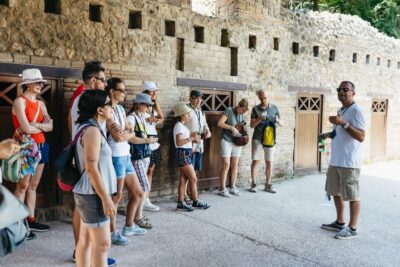 ★ 4.3Pompeii Ruins & Mount Vesuvius Day TourFrom $12011,459 reviews
 ★ 4.6Sorrento, Positano and Amalfi Full-Day TourFrom $10710,988 reviews
 ★ 5.0Sorrento, Positano & Amalfi Coast – Small Group TourFrom $768,643 reviews
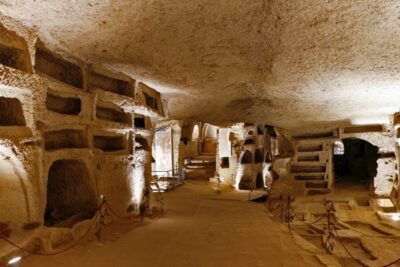 ★ 4.6Catacombs of San Gennaro Entry Ticket & Guided TourFrom $157,941 reviews
★ 5.0Pompeii Small Group Tour with an ArchaeologistFrom $356,593 reviews
★ 4.6Catacombs of San Gennaro Entry Ticket & Guided TourFrom $157,941 reviews
★ 5.0Pompeii Small Group Tour with an ArchaeologistFrom $356,593 reviews
Browse the lists this tour appears in