
Tour review · TOUR REVIEWS
Naples: LAPIS Museum Guided Visit in Italian
Naples has a second city underground. This guided visit takes you into the underground aqueducts beneath the Basilica of Pietrasanta, where Greco-Roman cisterns come back to life with show-and-tell lighting. You also get a real wow moment with a fast ride down to the subsoil levels, all explained in Italian by a live guide.
I love how the tour gives you a true different-angle view of Naples from beneath the Basilica, and I love the way the hydraulic engineering story is turned into a walkable experience, not just a lecture. One possible consideration: the site is not suitable for people with mobility impairments or wheelchair users, since the visit is built around the underground path and elevator descent.
Key things I’d watch for
- The LAPIS Museum setting: the underground path inside the Basilica of Pietrasanta
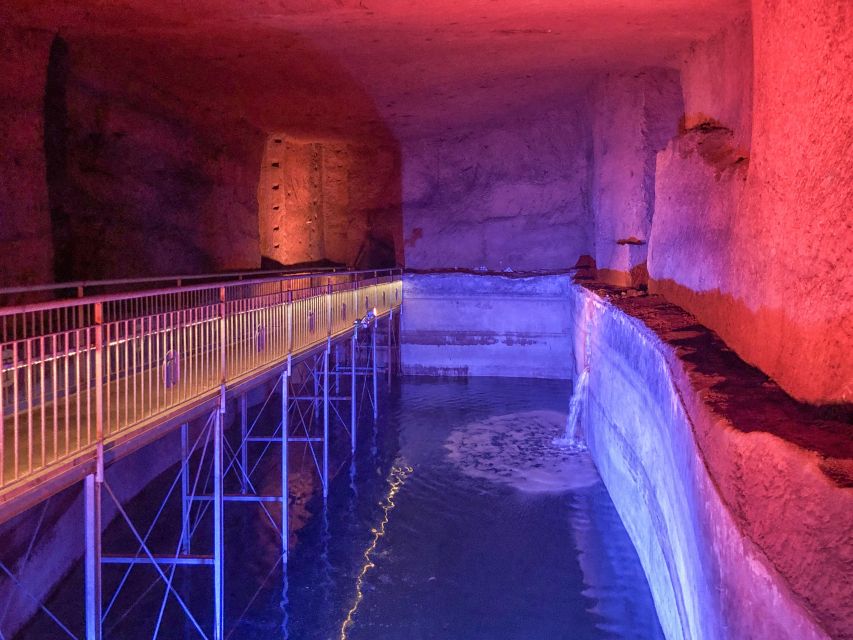
- A lighting-led walkthrough: lights and colors emphasize vaults and volumes
- Greco-Roman cisterns in use: runoff and water help explain how it functioned
- The 35-meter archaeological lift: quick descent and a big time-jump
- Small group scale: limited to 10 participants, so your guide can keep it flowing
Entering the Basilica of Pietrasanta, where Naples drops underground
The hardest thing about Naples tourism is figuring out what you want to see beyond the street. This tour is built for that moment when you realize the city has more than one layer. You start in the historic center and move into the water-focused underground spaces of the Basilica of Pietrasanta, now home to the LAPIS Museum.
What makes this feel worthwhile is the context you get while you walk. Instead of treating it like a random basement attraction, the experience frames the underground as part of the city’s real infrastructure. That shift matters, because it changes how you read what you see. You start noticing shapes, vaults, and flow lines like a system, not just “cool old stuff.”
Your guided visit also keeps the pace tight. With a duration of about 75 minutes and a group cap of 10, you get enough time to understand what you’re looking at without the tour dragging. The Italian-speaking guide is part of why it works, too, since explanations are likely paced around how people can follow along inside dimmer spaces.
You can also read our reviews of more guided tours in Naples
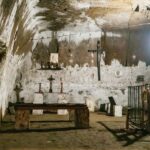

The Submerged Decumanus path, and why it makes the water story click
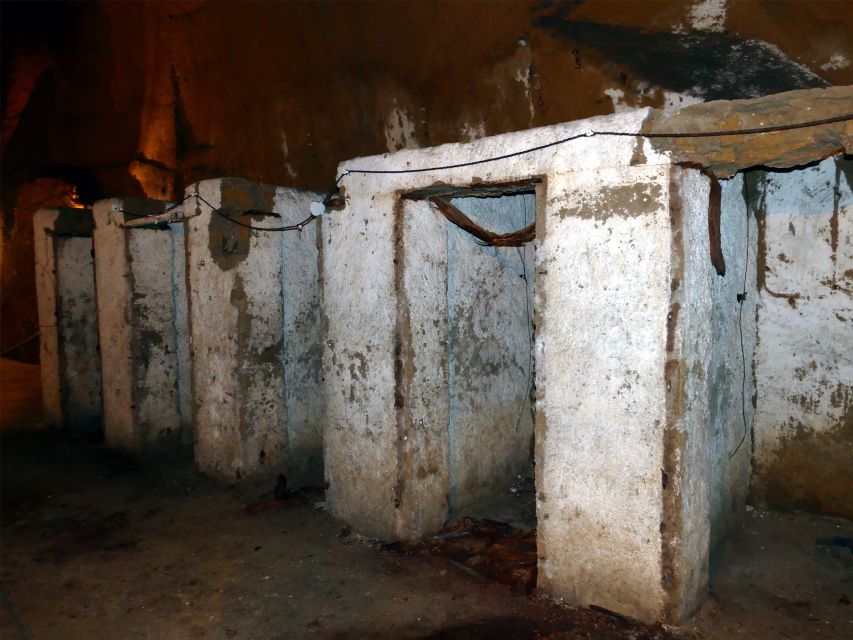
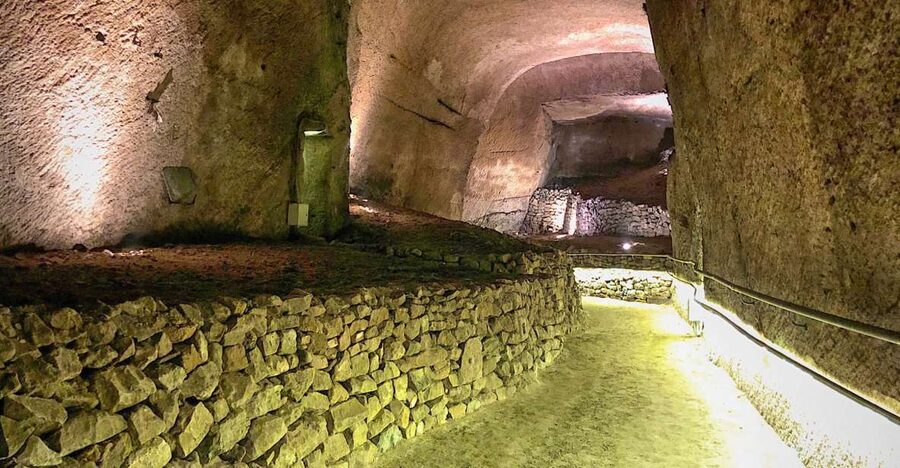
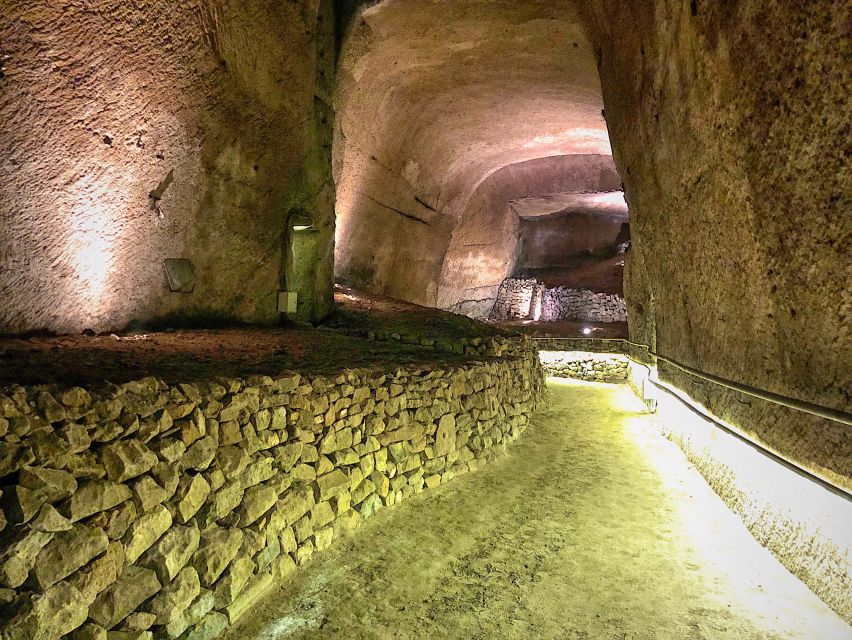
Inside the LAPIS Museum, your walk follows a “Submerged Decumanus,” an underground route that leads through the ancient cisterns. The key idea here is that the space is designed to be experienced as a journey. You move through chambers while the tour connects what you’re seeing to how the system operated.
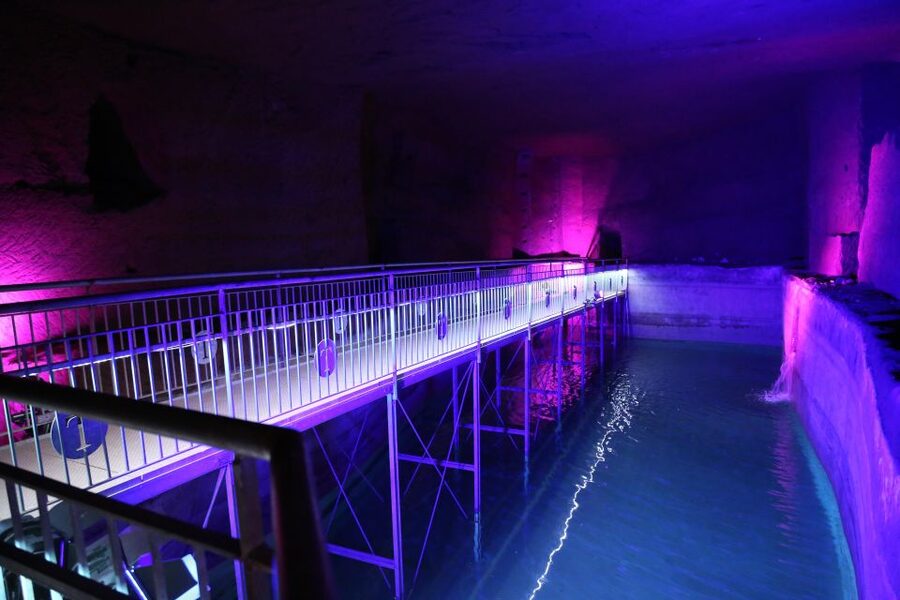
The cisterns are not presented as dead ruins. They find water and runoffs, and the museum lighting is engineered to help you visually separate the volumes and the vaults. In plain terms, the visuals are doing part of the teaching work. You can look up and get a sense of scale that you would miss if everything were lit evenly or kept dim without guidance.
That guided structure is especially valuable for a place like this, because underground spaces can blur together. Your guide’s job is to keep each stop meaningful. You’re not just passing through rooms, you’re collecting a sequence of “now I see why that mattered” moments.
Greco-Roman cisterns, Cosimo Fanzago, and the water engineering angle
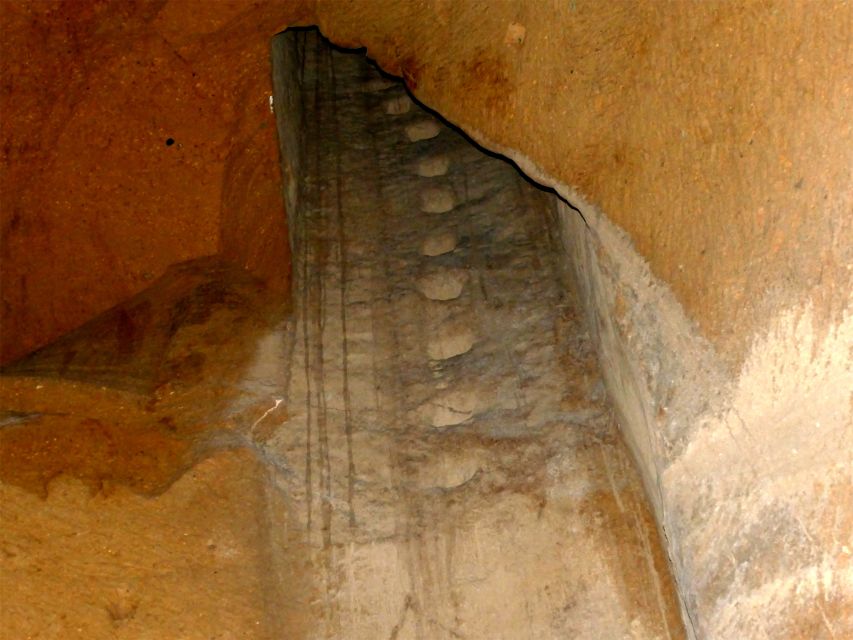
This is one of those tours where the “why” is the main attraction. The Basilica of Pietrasanta and its underground hydraulic systems were developed on older foundations, including the remains of the Ancient Temple of the goddess Diana. The mid-seventeenth-century architect Cosimo Fanzago plays a starring role in the story of how the underground structures were brought into a functional water context.
The museum’s focus is the hydraulic engineering project that brings the ancient Greco-Roman cisterns back into operation. That means you’re not only looking at architecture, you’re looking at engineering choices that shaped how water could be stored, channeled, and managed.
If you like tours that give you context you can repeat later, this is a good match. You’ll walk away with a clearer picture of how Naples handled water in the past, and why the underground design matters to the city above it. It also helps that the lighting system emphasizes the geometry. When the guide connects engineering to space, the underground becomes easier to visualize.
One more point I appreciate: this isn’t framed as a purely archaeological fantasy. It’s presented as a working concept, with water and runoff playing a role. That practical detail helps the whole thing feel grounded.
The archaeological lift to 35 meters, fast enough to feel like a time machine
The tour’s signature moment is the ancient elevator ride down to about 35 meters deep. The idea is simple but effective: you descend quickly, and the guide connects that vertical movement to the “2000 years back in time” angle of the site.
The lift is described as the first archaeological lift in the historic center, capable of connecting the crypt environment with the subsoil in about 20 seconds. For you, that translates into a short, memorable transition rather than a long, exhausting wait. You’ll feel the shift in setting without losing the tour momentum.
This kind of transport detail is more than a gimmick. It changes your perception of scale. When you drop tens of meters, the underground stops feeling like a basement and starts feeling like its own world. That’s when the cistern layout and vault shapes start making more sense, because you’re experiencing a vertical relationship, not just wandering horizontally.
Quick note for planning: since it’s not suitable for wheelchair users and mobility impairments, this is not the best option if you need step-free access or a very relaxed route.
How the lighting and vaults turn architecture into a story
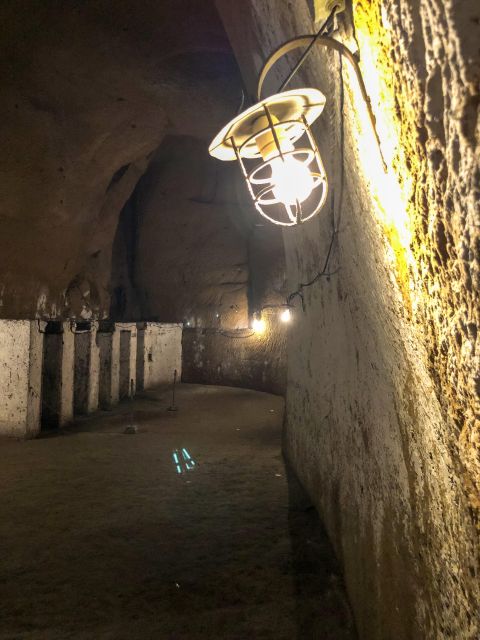
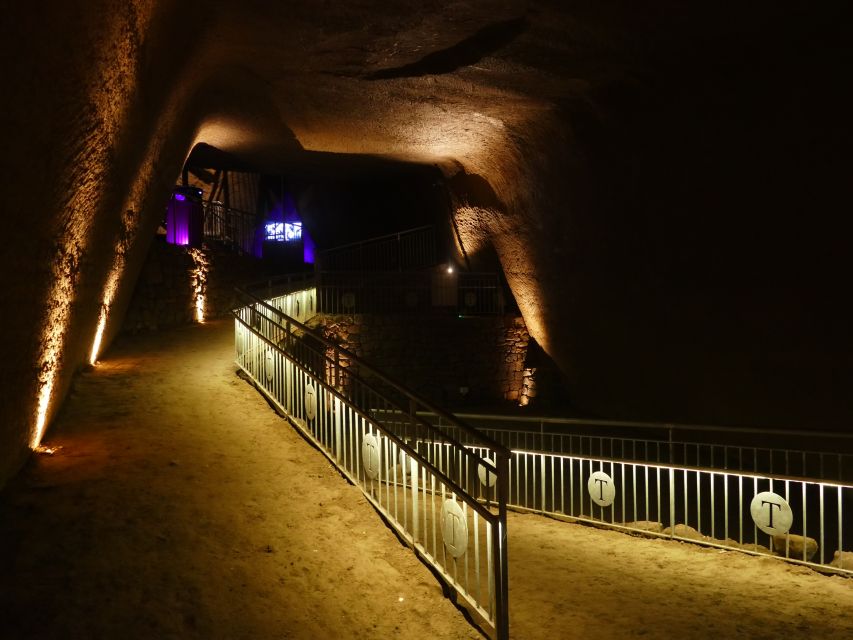
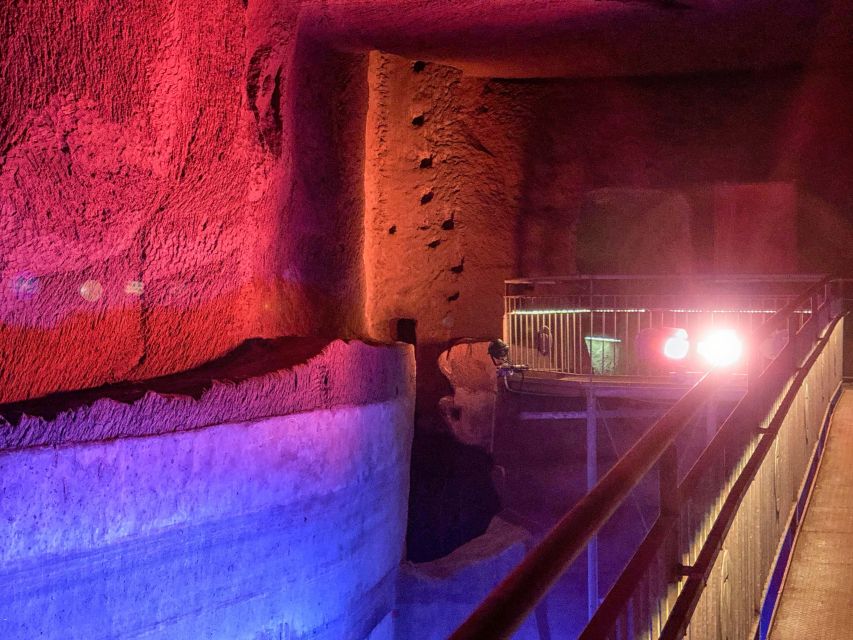
One of the most distinctive parts of the LAPIS Museum experience is the technical lighting system. It enhances what’s already there, with lights and colors that emphasize volumes and vaults. That matters because without lighting cues, underground architecture can be hard to read. You might only see darkness and stone.
With this setup, you can look at ceilings, curved surfaces, and structural rhythm and actually track the guided narrative. The lighting doesn’t just decorate. It helps your eyes understand where to focus during each explanation.
This is also where the “guided” part becomes essential. The tour isn’t just walking through a lit environment. Your guide helps you connect the visual cue to what the system did. When you understand that link, you start seeing the museum as a teaching tool built out of architecture.
If you’re the kind of person who likes to take photos, this is one of the better underground stops in Naples for pictures. The lighting is designed to show form, not just glow.
You can also read our reviews of more museum experiences in Naples






What’s included, who leads, and how the small group works in practice
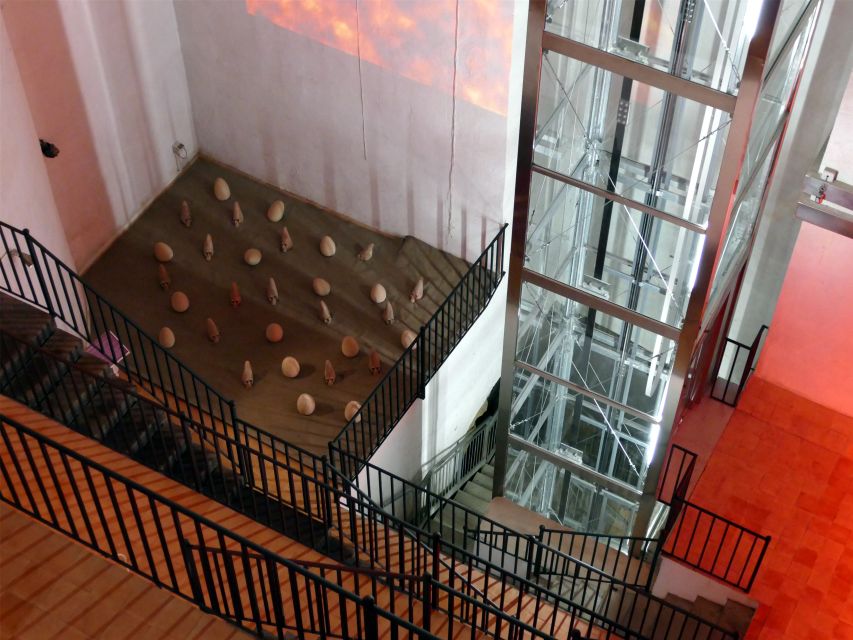
Your ticket includes admission plus an Italian-speaking tour guide. The group is limited to 10 participants, which is important here because underground spaces can get tight and you want time for questions and direction.
The reviews you’ll find for this visit tend to focus on organization and the sense that the guide is prepared. That’s exactly what you want in a 75-minute underground tour, where every stop needs a purpose. If the timing is good, you don’t feel rushed and you don’t feel lost in the dark.
Since the tour runs in Italian, it helps to have at least some comfort with the language or a willingness to follow along without perfect comprehension. The explanations are the core value. If you don’t speak Italian, you might still enjoy the architecture, but the full story will be harder to catch.
Price and value for a 75-minute underground guided visit
At $15 per person for a 75-minute experience, this tour is positioned as strong value if you want something more memorable than a standard museum stop. You’re paying for three things that usually cost extra elsewhere: a timed guided visit, admission access to a specific underground site, and a structured walkthrough that includes the lift descent.
That duration also matters. You’re not sacrificing a half day in Naples to get one good experience. At 75 minutes, it’s easy to plug into a day that already includes surface sights, and it gives you a payoff that feels like a real change of pace.
Small group size adds value, too. When the group is capped at 10, you’re more likely to get clear guidance and less standing around. In underground sites, that can make the difference between an enjoyable flow and a frustrating shuffle.
Practical tips so you enjoy it fully
Underground tours are simple, but they reward smart prep. Here are a few things I’d do so you feel comfortable and get more from the visit:
- Wear shoes with solid grip. Even if the floor looks steady, you’re in an underground museum environment.
- Expect it to be cooler and dimmer than street level. Bring your phone battery expectations accordingly.
- Plan your day so you arrive ready to start. In a 75-minute tour, late arrivals can cut into the guided parts.
- If you have mobility concerns, take the accessibility note seriously. This experience is not suitable for wheelchair users or people with mobility impairments.
Also, because the tour is in Italian, check whether the starting times you want fit your day. The visit is described as dependent on availability for starting times, so you’ll want to match it with your broader Naples schedule.
Should you book LAPIS Museum Guided Visit?
Yes, if you want Naples in a form most visitors skip. This is a rare combo: underground infrastructure, guided interpretation, and a lift ride that actually changes your sense of space. For $15 and 75 minutes, you get a structured, lighting-enhanced walkthrough of cisterns, plus a clear story about how water works in the city’s historic heart.
Book it especially if you like tours where architecture and engineering feel connected, not separated. The small group format helps, and the emphasis on the guided explanation makes it a good choice if you want to understand what you’re seeing.
Skip it if mobility access is a concern for you, since it’s not suitable for wheelchair users or people with mobility impairments. And if you only want surface landmarks, this is intentionally the opposite direction, literally and mentally.
FAQ
How long is the LAPIS Museum guided visit?
The tour lasts 75 minutes.
What language is the tour guide?
The live tour guide speaks Italian.
What is included in the ticket price?
The experience includes the admission ticket and an Italian-speaking tour guide.
How big is the small group?
The group is limited to 10 participants.
Where does the tour take place?
It takes place in Naples, Campania, at the Basilica of Pietrasanta, where the LAPIS Museum is located.
How deep does the lift go?
The archaeological lift descends to a depth of 35 meters.
Is the experience suitable for wheelchair users?
No. It is not suitable for wheelchair users or people with mobility impairments.
Is there free cancellation?
Yes, you can cancel up to 24 hours in advance for a full refund.
Can I reserve now and pay later?
Yes. You can reserve your spot and pay nothing today.
More Museum Experiences in Naples
More Guided Tours in Naples



More Tour Reviews in Naples




Not for you? Here's more nearby things to do in Naples we have reviewed










Tour Reviews, compared.
 ★ 4.8Pompeii: Entry Ticket and Guided Tour with an ArchaeologistFrom $3519,459 reviews
 ★ 4.2Pompeii: Entry Ticket with Optional Audio GuideFrom $2612,360 reviews
 ★ 4.8Pompeii: Small Group Tour with an ArchaeologistFrom $4012,264 reviews
 ★ 4.3Pompeii Ruins & Mount Vesuvius Day TourFrom $12011,459 reviews
 ★ 4.6Sorrento, Positano and Amalfi Full-Day TourFrom $10710,988 reviews
 ★ 5.0Sorrento, Positano & Amalfi Coast – Small Group TourFrom $768,643 reviews
 ★ 4.6Catacombs of San Gennaro Entry Ticket & Guided TourFrom $157,941 reviews
★ 5.0Pompeii Small Group Tour with an ArchaeologistFrom $356,593 reviews
★ 4.6Catacombs of San Gennaro Entry Ticket & Guided TourFrom $157,941 reviews
★ 5.0Pompeii Small Group Tour with an ArchaeologistFrom $356,593 reviews
Browse the lists this tour appears in