

Tour review · TOUR REVIEWS
Naples: Capodimonte Museum 2-Hour Guided Private Tour
Capodimonte turns art into a Naples story. I love how this private tour gives you a focused run through the Farnese collection and the old-royal rooms with royal porcelain. One catch to consider: two hours moves fast, so it is a highlights-and-context visit, not a museum-wide marathon.
What makes it especially practical is the setup. You meet your guide at the museum entrance called PORTA GRANDE, and the guide holds a sign with your name. In the best cases, you also get a guide like Lorenzo, the type who can connect paintings to the Bourbon family and to the wider story of Naples, not just point at labels.
Key things to notice before you go

- Farnese and Borbone at the center: this is where the tour puts most of your attention.
- Major names, but with meaning: you are not just seeing titles, you are getting why they matter.
- Religious art highlights: works like Masaccio’s Crucifixion and Carracci’s Mystic Marriage of St. Catherine shape the tour’s tone.
- Royal palace details: the old apartments, 18th-century furniture, plus porcelain and majolica add a “lived in” feel.
- Michelangelo shows up in drawings: not just paintings, but draftsmanship and ideas.
- Two floors of the story: after the main collections, you also reach the 3rd floor for more contemporary works.
Capodimonte in a Bourbon palace, where art and power share rooms
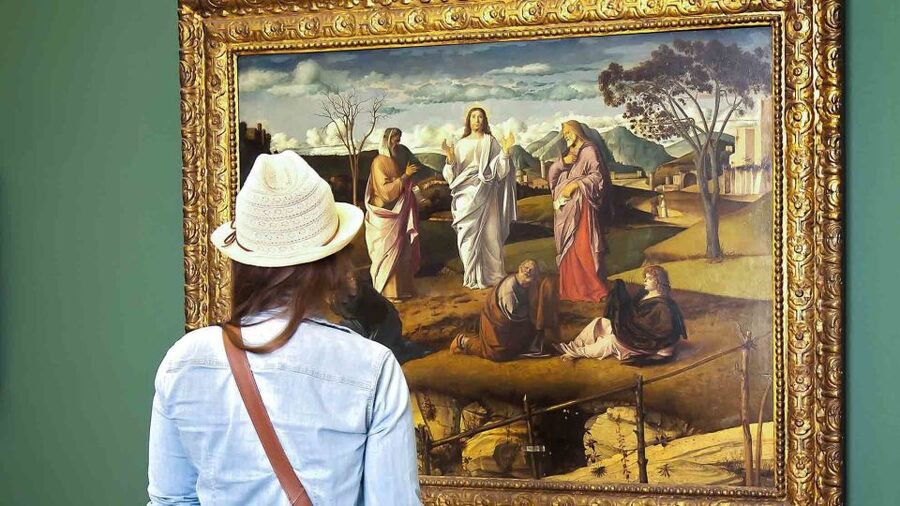
The Museo di Capodimonte is not just another stop with paintings behind glass. It sits inside the grand Bourbon Palace of Capodimonte, a summer residence and hunting lodge used by the kings of the Two Sicilies. That setting matters, because you are walking through spaces that originally had status built into the walls.
In a good art museum, context is everything. Here, you get a clear line between what royalty collected and what the court wanted to display. That is why I like this as a guided experience, even if you are a casual visitor. The guide helps you read the palace as part of the show.
You will also appreciate the basic logistics. Skip-the-line admission fees are included, and you stay in a private group. That means less time circling, checking tickets, and playing museum roulette with your schedule.
You can also read our reviews of more guided tours in Naples

Two hours: how the tour keeps the best parts and skips the busywork
A 2-hour private tour is a specific promise. It says, I am going to pick the most important rooms and works, and I am going to help you understand them quickly.
So yes, you will not see every corner of the museum. That is also the point. Capodimonte can swallow a whole day if you let it. With a guided structure, you get the core Farnese and Borbone sections plus the palace apartments, then a look at the 3rd floor collection. You are leaving with a mental map, not just a pile of impressions.
This format tends to work best if you:
- want big-name art without drowning in details
- are visiting Naples for a limited time
- prefer learning through a person who can connect works and historical setting
A small consideration is pacing. In two hours, questions can add time, so you might not want to treat it like a classroom seminar. Still, the overall reviews emphasize guides who give detailed answers, so expect room for questions when it fits the flow.
The Farnese and Borbone collections, the real reason people come
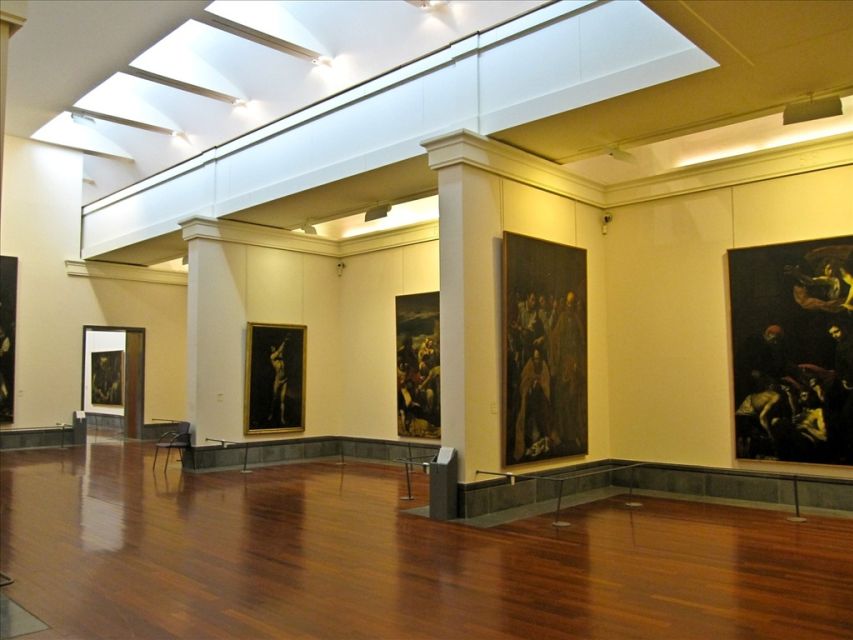
The tour’s spine is the Farnese and Borbone collections. These are described as the largest and most important collections of art in Southern Italy, and this is where the guide will steer you first.
Think of it like this: the museum gives you Italian and European art, but the Farnese and Borbone sections are the “main chapters.” You are seeing the kind of collection that made Naples a major cultural player, not just a city famous for pizza and street life.
On this tour, you will get an organized sense of what you are looking at. The guide takes you to the major areas, so you are not spending your limited time trying to figure out where the big works are located.
It also helps that the experience focuses on both paintings and decorative culture. You are not only learning about artists, you are learning how art functioned in a royal world, including what was displayed, why, and how that related to Bourbon identity.
The big-name art list, and what to watch for as you move
Capodimonte is famous for high-powered Italian art. During this 2-hour route, the guide points you toward standout works and then explains what makes them significant.
Here are some of the artists and works you should expect to encounter:
- Botticelli, Bellini, and Michelangelo (in drawings)
- Tiziano (Titian) and Correggio
- Parmigianino
- Carracci and Lotto
- Brueghel
- El Greco
The trick is not memorizing names. The trick is spotting the patterns your guide points out. For instance, when religious scenes show up, the tour shifts tone into sacred storytelling and style. When Renaissance masters like Botticelli and Bellini appear, you get a sense of Italian painting language, color choices, and composition.
Two very specific works are highlighted:
- Masaccio’s Crucifixion
- Carracci’s Mystic Marriage of St. Catherine
When you see these with context, they stop being just “famous paintings.” You start recognizing how artists used emotion, symbolism, and structure to communicate belief.
Sacred paintings and Michelangelo drawings: where the tour gets sharper
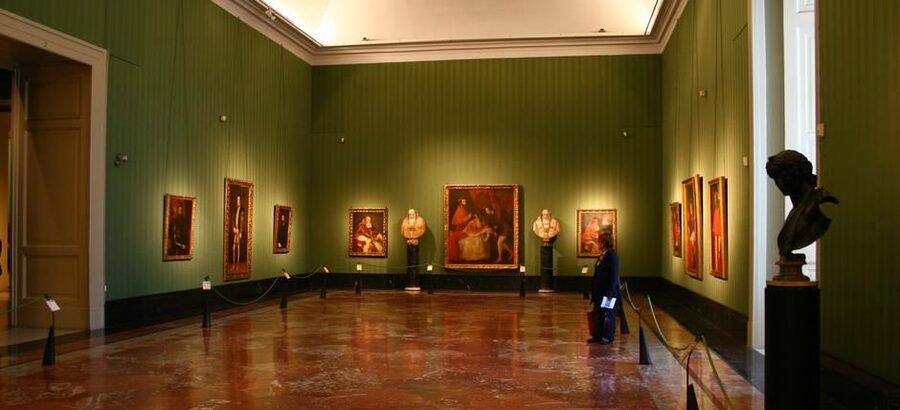
A lot of museum visits get soft around the middle. You see a painting, nod, then move on. This tour keeps you anchored with two kinds of material that reward attention.
First, there are the sacred paintings, tied to artists such as Carracci, Lotto, and Titian. The guide helps you connect the image to the meaning behind the scene, so you understand what the viewer was meant to feel and why that mattered in the broader art world.
Second, Michelangelo enters through drawings. That detail matters. Drawings can be easier to underestimate because they feel less finished than paintings. But they often reveal the thinking process, the design of figures, and the structure an artist used before paint. If you like art that shows ideas, this part is a real payoff.
The goal here is clarity. In a short tour, these stops do the heavy lifting because they give you emotional and technical anchors.
You can also read our reviews of more private tours in Naples






Royal apartments: porcelain, majolica, and 18th-century furniture
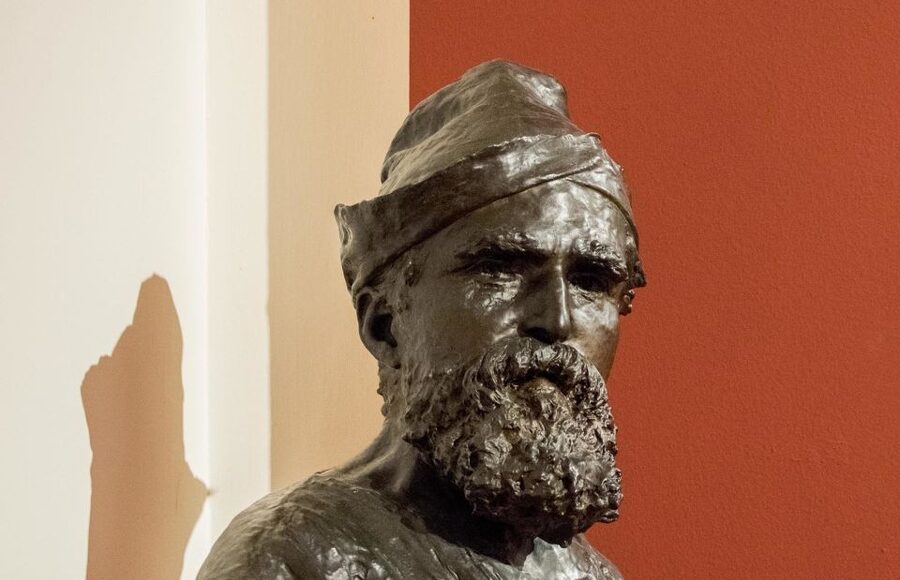
One of my favorite reasons to do this instead of a self-guided visit is that it does not stop at paintings. You also wander into the old apartments, where you see 18th-century furniture and a royal collection of porcelain and majolica.
This is the part that often surprises people. You might come for Botticelli and Titian, then end up looking longer at decorative objects because they feel like evidence. They show what the court valued and how everyday life, display, and status were connected.
Majolica adds a special texture to the experience. It is colorful, practical in spirit, and visually playful, which creates a nice contrast with the solemnity of religious paintings. Even if you do not consider yourself a decorative arts person, the guide’s framing helps you see these objects as part of the same cultural machine.
The 3rd floor’s contemporary collection, and why it still belongs

After you get through the main heritage collections and the palace apartments, the tour includes the 3rd floor, where you find more contemporary art in the museum’s growing international collection.
At first, this might feel like a different museum topic. But it actually helps you understand Capodimonte as a living institution rather than a frozen box of Renaissance and Baroque. The guide’s job here is to connect the present to the tradition you just saw.
In a 2-hour tour, this section is naturally shorter than the Farnese and Borbone areas. But I like that the visit ends with a sense of continuity. You leave thinking less like a tourist who checked a box, and more like a person who saw how museums keep evolving.
Price and value: is $195.42 per person worth it?
The price is $195.42 per person for a 2-hour guided private tour, with guide service and skip-the-line admission fees included.
Here is how I think about value with a museum guide:
- You are paying for an efficient route through the museum’s most important sections.
- You are paying for interpretation, especially for the Farnese and Borbone material and the palace context.
- You are paying to avoid the time cost of ticket lines.
If you are visiting with one or two art-interested people, a private guide can be a smart tradeoff. You spend less time figuring things out and more time learning why the art works.
If you are on a strict budget or you love to wander without guidance, the cost may feel steep. In that case, you might prefer a self-guided visit plus a short museum audio tour. Still, for this specific museum, the guide focus on the Farnese and Borbone highlights is exactly where expert help can justify the price.
One more practical note: the tour is private, so you are not splitting the guide’s attention across a large crowd. That tends to make questions feel natural instead of rushed.
Timing, meeting, and the one big day-of-week issue

Meet your guide at the entrance of Capodimonte called PORTA GRANDE. Your guide will hold a sign with your name so you can spot the group fast.
The tour lasts 2 hours, and starting times depend on availability. Also, the museum is closed on Wednesdays. That matters because Capodimonte is one of those places you might build your day around, so do not plan it on a Wednesday.
On languages, you can choose English, Italian, French, Spanish, or German. If you have a language preference, pick it at booking so you get full explanations without compromise.
A note for mobility needs: the details include wheelchair accessibility, but they also say it is not suitable for wheelchair users. If mobility is part of your planning, I would confirm with the provider directly so you know what route and floors your group can manage, especially since the visit includes the 3rd floor.
Who this tour fits best, and who should reconsider
This is a strong match for you if:
- you want Italian masters plus decorative arts in a single, tight timeframe
- you like history that connects art to the people in charge, in this case the Bourbon world
- you want a private experience with a guide who can answer questions
It may be less ideal if:
- you need a slower pace and want to spend hours in many rooms
- you want a full survey of the museum, not selected highlights
- you are relying on wheelchair access without confirming the route, due to the mixed accessibility notes
The reviews also point to something you should care about: the guide’s ability to explain art and ancient history with clear connections. That is the difference between seeing paintings and understanding what you are looking at.
Should you book this Capodimonte 2-hour private tour?
I think you should book it if you value focus and explanation. Capodimonte is a big museum, and the Farnese and Borbone collections can overwhelm you if you go in cold. With a guide like Lorenzo style, you get a clear route, major works like Crucifixion and Mystic Marriage of St. Catherine, and the palace apartment side of the story, porcelain included.
Skip it or reconsider if your priority is wandering with zero structure, or if two hours will feel too rushed. If you want structure plus interpretation in a famous Naples museum setting, this private format is a practical way to get it done.
FAQ
How long is the Naples Capodimonte guided private tour?
The tour lasts 2 hours.
Where do I meet the guide?
Meet your guide at the entrance of Capodimonte Museum called PORTA GRANDE. The guide will hold a sign with your name.
Which day is the museum closed?
The museum is closed on Wednesdays.
What art will we see during the tour?
You will visit the main areas focused on the Farnese and Borbone collections and see works by artists such as Botticelli, Michelangelo, Carracci, Lotto, Titian, Brueghel, Parmigianino, Correggio, El Greco, and Bellini. Highlights include Masaccio’s Crucifixion and Carracci’s Mystic Marriage of St. Catherine. The tour also includes royal porcelain and majolica in the old apartments.
What languages are available for the live guide?
The live guide is available in English, Italian, French, Spanish, and German.
Is skip-the-line admission included, and what about cancellation?
Skip-the-line admission fees are included. There is free cancellation up to 24 hours in advance for a full refund.
More Guided Tours in Naples



More Tours in Naples




More Tour Reviews in Naples

Not for you? Here's more nearby things to do in Naples we have reviewed









Tour Reviews, compared.
 ★ 4.8Pompeii: Entry Ticket and Guided Tour with an ArchaeologistFrom $3519,459 reviews
 ★ 4.2Pompeii: Entry Ticket with Optional Audio GuideFrom $2612,360 reviews
 ★ 4.8Pompeii: Small Group Tour with an ArchaeologistFrom $4012,264 reviews
 ★ 4.3Pompeii Ruins & Mount Vesuvius Day TourFrom $12011,459 reviews
 ★ 4.6Sorrento, Positano and Amalfi Full-Day TourFrom $10710,988 reviews
 ★ 5.0Sorrento, Positano & Amalfi Coast – Small Group TourFrom $768,643 reviews
 ★ 4.6Catacombs of San Gennaro Entry Ticket & Guided TourFrom $157,941 reviews
★ 5.0Pompeii Small Group Tour with an ArchaeologistFrom $356,593 reviews
★ 4.6Catacombs of San Gennaro Entry Ticket & Guided TourFrom $157,941 reviews
★ 5.0Pompeii Small Group Tour with an ArchaeologistFrom $356,593 reviews
Browse the lists this tour appears in