
Tour review · TOUR REVIEWS
Naples: National Gallery of Capodimonte Tour
Capodimonte turns a museum visit into a walk through power and art. I love how the Royal Palace setting shapes your experience, and how the route hits major periods fast: Renaissance, Neapolitan painting, and even Andy Warhol. The one drawback to plan around is that it is a 2-hour visit, so you will move briskly through big highlights rather than linger for deep-study time.
You’ll start at the Museo e Real Bosco di Capodimonte, with your English or Italian guide keeping the story clear and organized. I especially like that this is a private group setup, so you are not fighting crowds and you can ask follow-up questions. Consider that transportation is not included, so you will want to factor in how you get to Capodimonte on your own.
What I took away from the tour is simple: a guide who is expert and kind makes the building and art click. If you want an efficient, high-impact introduction to Capodimonte without feeling lost, this format is a strong fit. If you are the type who needs lots of free time afterward to read labels slowly, you may feel slightly rushed.
Key things to know before you go

- Royal Palace rooms: you are not just viewing paintings, you are walking rooms designed for the Kings of Naples.
- The Farnese Collection on the first floor: Renaissance heavy hitters and drawings by major artists.
- The Caravaggio payoff: the visit is paced to bring you to The Flagellation by Caravaggio.
- Neapolitan art across centuries: Medieval to Renaissance and Mannerism in one guided sweep.
- A modern surprise upstairs: Vesuvio by Andy Warhol shifts the mood in a smart way.
- Skip the ticket line: you gain time for the art instead of waiting outside.
Capodimonte in a park: what makes this Naples museum different
Capodimonte is not a cookie-cutter museum. It sits in a park, and the setting matters because it gives you a sense of place before you even step inside. You are going from outdoors to monumental interior spaces, and that contrast makes the art feel more grounded in Naples rather than floating in a sterile gallery.
I like that the museum’s identity is tied to the palace that came first. This place was born as a Royal Palace, and the rooms were designed to house the legacies of the Kings of Naples through the centuries. That changes the tone of the visit, because you are seeing art in spaces that were meant to impress, govern, and preserve.
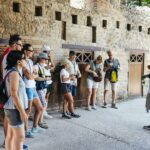
The practical upside for you: with a guide, you can understand what you are looking at without getting stuck translating on your own. The guide’s job is to connect the dots between artists, time periods, and the building itself, so you come away with a mental map.
You can also read our reviews of more museum experiences in Naples


Walking up the monumental stairs: the palace experience you’ll feel
The first big moment is the walk up the monumental stairs. It is not just “get to the exhibition,” it is the museum signaling that this is a serious building with serious collections. As you climb, you move from a general arrival atmosphere into a more ceremonial experience, which helps you settle in.
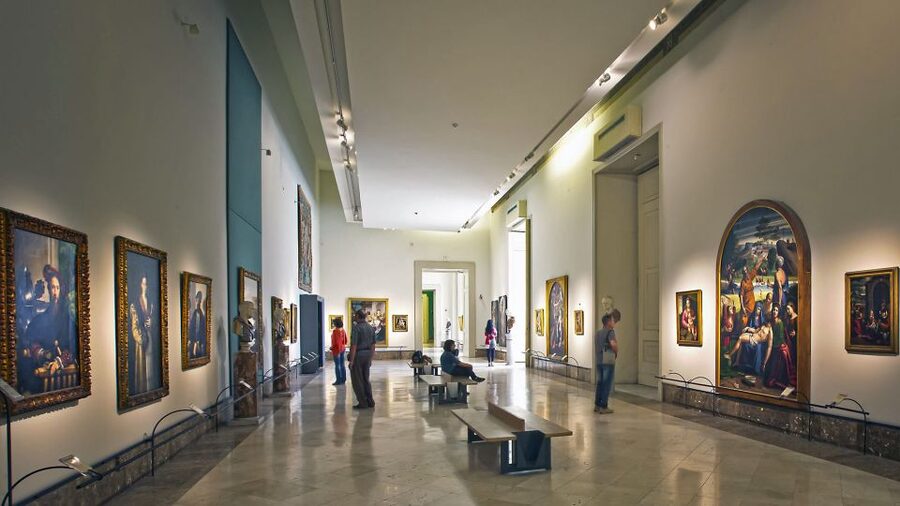
Once inside, the tour focuses on how the collection is arranged across floors. That matters because Capodimonte can feel huge if you try to plan your own route on the fly. With a guided flow, you get a logical progression rather than an “all directions at once” problem.
Also, the architecture is part of the show. You will get time to appreciate the National Museum’s building and how it frames the art. That is not a small thing. Many museums are famous for paintings, but Capodimonte is famous for the way the paintings live in an old palace structure.
The Farnese Collection: Renaissance masterpieces on your first floor route

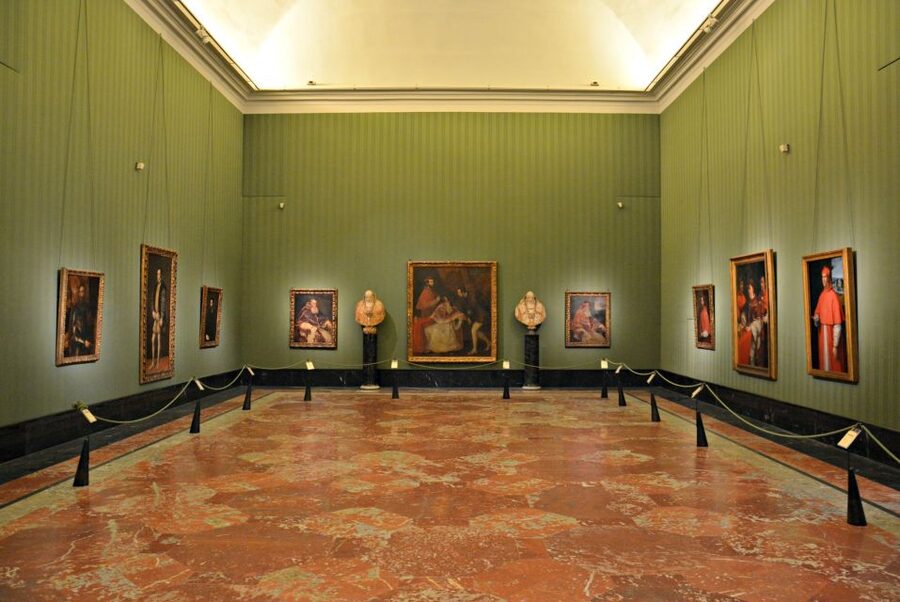
The tour’s pacing is smart because it begins with the Farnese Collection. This is the part of the museum that sets a high bar quickly, and it does so with major works and related drawings that help you see how Renaissance artists thought.
On the route, you will encounter names that anchor Renaissance painting. The highlights include artists like Tiziano and also works by Masolino and Masaccio. You are not only looking at finished paintings, you are also seeing the research side of art through drawings by Raffaello and Michelangelo.
What I like about this first-floor focus is that it gives you a foundation. After you understand the Renaissance anchors and the way artistic styles developed, later stops make more sense. You start to notice how Naples artists carried influences forward and how Baroque drama grows out of earlier traditions.
If you care about the “how” behind big artworks, drawings are a bonus. You will get that extra layer that many visitors skip when they only look at the biggest oil paintings. Even if you are not an art scholar, it helps you slow your brain down and look with more intention.
Neapolitan art across the centuries: medieval to Mannerism
Then comes the second floor, where the tour shifts to Neapolitan art from the Medieval Ages through Renaissance and Mannerism. This is one of the most useful parts for you because it turns Naples into the main character. Instead of treating Naples as a backdrop for famous Italian masters, you see a local story that runs for centuries.
The range matters. When you move from medieval-era work to Renaissance and Mannerism, you can start spotting how taste, technique, and subject matter changed over time in this specific place. That is exactly what helps Capodimonte feel more than a checklist of famous names.
And the tour does not just scatter you across rooms. It guides you toward a major highlight that acts like a spotlight at the end of the corridor: The Flagellation by Caravaggio. That kind of pacing is genuinely helpful, because it prevents you from wandering and forgetting what you came for.
Caravaggio’s The Flagellation: the highlight the guide builds toward
Caravaggio can be intense, and this stop is the kind of moment that changes your whole mood in a museum. The tour builds to The Flagellation, so you do not arrive at it cold. You have already seen how earlier art shaped the visual language, and now you get the kind of dramatic effect Caravaggio is famous for.
I like that the tour frames this as a specific destination, not just “and here is a painting.” When you are guided to a single masterpiece in a structured way, you tend to notice more details. You also avoid the common problem of reaching a famous work after you are already tired or disoriented.
Plan to give this one extra attention. Even if the tour is timed, you can usually ask a quick question or request one focused minute for the parts you care about most. This is your chance to connect the guide’s explanation to what your eyes are seeing.



The third floor and the modern shift: Warhol’s Vesuvio
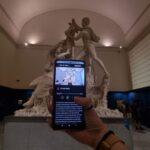
Capodimonte also includes contemporary work, and this is where it surprises people. On the third and last floor, you will reach the contemporary collection, with one of the main works being Vesuvio by Andy Warhol.
This modern stop is more than a novelty. It shows you that the museum is not stuck in the past. Warhol’s presence helps you understand that Naples is still producing and reframing cultural symbols now, not just during the Renaissance or Baroque eras.
If you are worried that “contemporary art” means something complicated that you will not understand, don’t panic. In this format, the guide helps connect what you saw earlier to what you see now. Even if you do not love the modern section, it gives you a better sense of how the collection thinks across time.
How the 2-hour private guided flow works
This tour is 2 hours, and that duration is both a strength and a constraint. The strength is focus. You get a coherent arc through the building and the collections without the long fatigue that can come from trying to cover everything alone.
The constraint is that it is not designed for slow, line-by-line label reading. You are going to look, learn, and move. The guide’s job is to steer your attention toward the key works and explain what matters, so you can still feel satisfied even when you cannot see every room.
You will have a break time and a photo stop as part of the guided experience. That small break matters in a museum like this, because Capodimonte’s scale can wear you down if you keep pushing without pausing.
At the end, the tour returns you back to the meeting point at Museo e Real Bosco di Capodimonte. That is useful if you have another plan nearby or you simply want a clean finish with no extra coordination.
Skip the ticket line: saving time in a big museum

Capodimonte is the kind of place where time adds up quickly. A ticket line can eat up your energy before you even reach the art. Here, you get skip the ticket line, which helps you start your visit with momentum.
This is especially valuable in a 2-hour tour. When you have limited time, every minute gained at the start tends to translate into an extra moment with a painting, or an extra explanation that helps you understand what you’re seeing.
I also like the “private group” angle for this reason. You are less likely to be pushed into a chaotic shuffle of other visitors. Your guide can keep the pace comfortable for your group, within the tour’s overall time frame.
Price and value: is $249.23 per group up to 1 worth it?
The price is listed as $249.23 per group up to 1, which strongly suggests you are paying for a private guide for your booking group. That can feel high at first glance, but it can be good value depending on how you travel.
Here’s how I think about it:
- If you are traveling solo and hate navigating museums alone, paying for a guide can be worth it. You are buying clarity and time.
- If you and a friend or partner were able to book together under the same group size, the value becomes easier to justify.
- For a 2-hour visit, a private guide can turn “I saw a lot” into “I understood what I saw,” especially at Capodimonte where the building and collection are both doing heavy lifting.
Also remember what is included. You get a guided tour plus entrance tickets. Transportation is not included, so factor that into your total budget and make sure you can reach the meeting point at Museo e Real Bosco di Capodimonte without stress.
Overall, if you want a structured, high-impact introduction and you appreciate expert storytelling in a palace setting, this price can feel fair. If you are the type who loves wandering with no guidance and you are confident building your own route, you may prefer something cheaper and self-paced.
Who should book this Capodimonte tour
This tour is a great match if you want:
- a guided orientation to a major museum with multiple floors and big-name works
- a quick but meaningful survey of Renaissance, Neapolitan painting, and Baroque, plus a modern section
- the benefits of a private group, so you can ask questions and keep the pace comfortable
It also helps if you care about architecture, because the Royal Palace context is part of the experience, not an afterthought.
If you are traveling with mobility needs, the tour is listed as wheelchair accessible, which is a practical advantage in a museum environment where stairs and uneven areas can be an issue in many attractions.
If you are an absolute art maximalist who wants to stay for hours reading every label, you might find 2 hours short. In that case, you could use this tour as a strong first pass, then come back later for deeper solo time.
Should you book? My practical take
I’d book this tour if you want a fast, intelligent path through Capodimonte with a guide who can connect the art to the place. The biggest selling point for me is the way the visit is organized around major moments: the Farnese Collection up front, the Caravaggio highlight as a payoff, and the modern pivot with Warhol.
I would hesitate only if you plan to spend your day in “slow reading” mode. This is more of an overview that gives you confidence and direction, not an all-day museum marathon.
If you can arrive on time and you are ready to move with purpose, you will leave with a clearer mental map of Naples art and a stronger feel for Capodimonte as a Royal Palace museum, not just a building full of paintings.
FAQ
How long is the National Gallery of Capodimonte tour?
The tour lasts about 2 hours.
What is included in the price?
The experience includes a guided tour and entrance tickets.
Do I need to arrange transportation to Capodimonte?
Transportation is not included, so you will need to get yourself to the meeting point.
Where do I meet the guide?
The meeting point is Museo e Real Bosco di Capodimonte. Please arrive 10 minutes before the starting time.
What languages is the tour offered in?
The live tour guide speaks English and Italian.
Is this tour private and accessible?
It is a private group experience, and it is listed as wheelchair accessible.
More Museum Experiences in Naples


More Tours in Naples

More Tour Reviews in Naples
Not for you? Here's more nearby things to do in Naples we have reviewed









Tour Reviews, compared.
 ★ 4.8Pompeii: Entry Ticket and Guided Tour with an ArchaeologistFrom $3519,459 reviews
 ★ 4.2Pompeii: Entry Ticket with Optional Audio GuideFrom $2612,360 reviews
 ★ 4.8Pompeii: Small Group Tour with an ArchaeologistFrom $4012,264 reviews
 ★ 4.3Pompeii Ruins & Mount Vesuvius Day TourFrom $12011,459 reviews
 ★ 4.6Sorrento, Positano and Amalfi Full-Day TourFrom $10710,988 reviews
 ★ 5.0Sorrento, Positano & Amalfi Coast – Small Group TourFrom $768,643 reviews
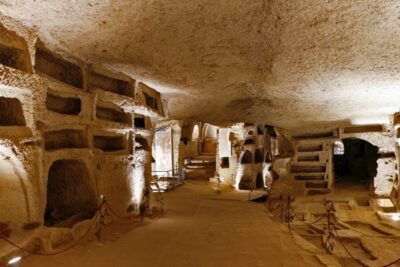 ★ 4.6Catacombs of San Gennaro Entry Ticket & Guided TourFrom $157,941 reviews
★ 5.0Pompeii Small Group Tour with an ArchaeologistFrom $356,593 reviews
★ 4.6Catacombs of San Gennaro Entry Ticket & Guided TourFrom $157,941 reviews
★ 5.0Pompeii Small Group Tour with an ArchaeologistFrom $356,593 reviews
Browse the lists this tour appears in