
Tour review · TOUR REVIEWS
Excavations of Herculaneum. Tour guide and skip-the-line ticket
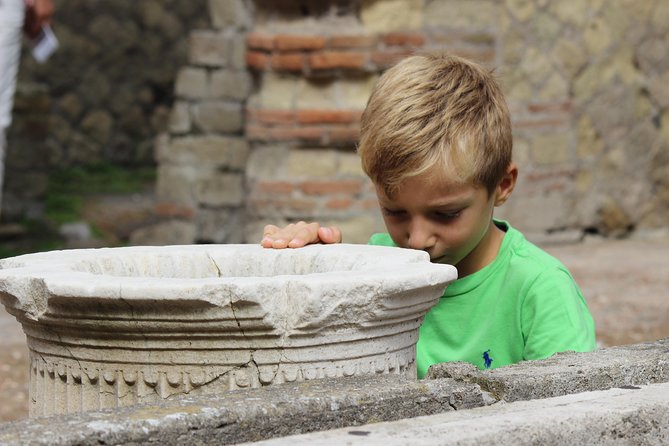
Herculaneum is a time capsule you can walk. This small-town-with-big-impact experience in Ercolano brings the streets, houses, and urban layout back to life, even though Vesuvius buried it in AD 79. With a licensed guide and skip-the-line access, you spend less time waiting and more time seeing what matters at the Herculaneum excavations.
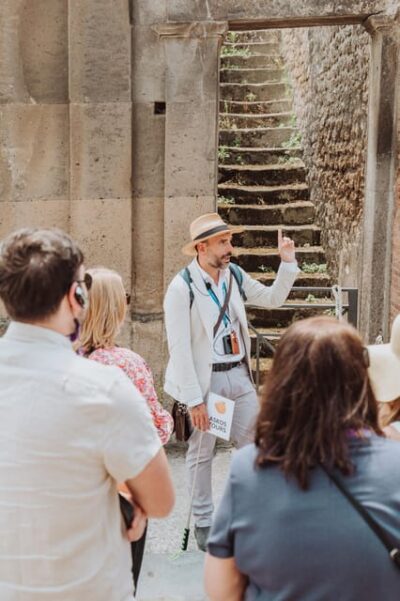
I like two things most. First, the tour keeps the focus on real, built spaces, not just general talk, so the site feels human. Second, you get the kind of guiding that points you to what’s actually preserved, including well-kept interiors and floor mosaics, plus the bath area with separate men and women spaces. A guide like Luciano is a great example of how the right commentary can make the place click.
One consideration: this is a walking-heavy visit on uneven archaeological ground, and you should have moderate physical fitness. You’ll also need to follow the bag size limits, which means packing light or planning to use the free wardrobe area at the park entrance.
Key things that make this tour worth it
- Licensed, monolingual guide who accompanies you through the excavation areas
- Small group size (up to 8), which helps questions and pace
- Skip-the-line ticket for the Herculaneum excavations so you can get moving
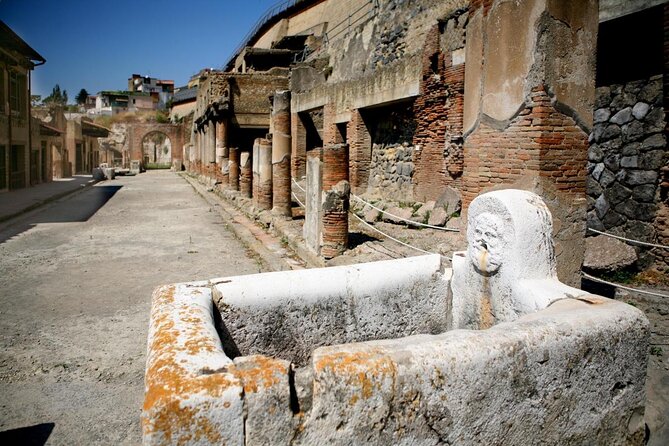
- Preserved urban layout, where streets and building interiors help you understand daily life
- Homes with standout mosaics and interiors that feel startlingly intact
- Bathhouses with men and women areas that show how routine and public life worked
Herculaneum’s street-level story, not just another Roman ruin
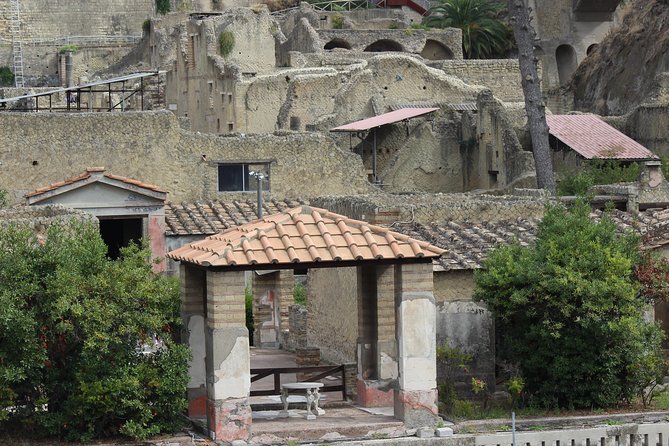
Herculaneum is often treated like the side dish to Pompeii. But that framing misses the point. This place gives you a sharper view of everyday life because the town’s urban structure and how people lived inside buildings come through clearly in what was excavated.
You’re not just looking at wall fragments. You’re walking through parts of a town that stayed under volcanic material for centuries, and what comes back is the layout, the feel of streets, and the edges of rooms. It’s the kind of site where you start thinking like a resident, not a tourist.
The best context I’d keep in your head is simple: Pompeii can help you see the bigger picture of a Roman city. Herculaneum helps you feel the scale of normal life at street level, which is exactly what you want if you already plan to visit Pompeii later.
More Naples tours, ruins, coast days, and city experiences to compare


Skip-the-line tickets and a licensed guide, the practical value
This experience pairs two key pieces: a licensed tour guide and an included ticket for the Herculaneum excavations. In real terms, that means less time sorting out entry and more time letting someone with site knowledge guide your eyes.
The group stays small, with a maximum of 8 travelers. That matters because Herculaneum’s best moments are “look closely” moments, like mosaics and building interiors. In a big group, it’s easy to miss what makes the place special.
The tour is also monolingual. That’s useful if you want clear explanations without bouncing between languages. If language is a deal-breaker for you, confirm what language your tour runs in before you go.
One more practical plus: the provider offers an information and assistance service 24 hours starting from booking. If you run into a timing issue, that kind of support can reduce stress when you’re already in the Naples area juggling trains, buses, and walking.
The 3-hour Parco Acheologico di Ercolano walkthrough
Your visit centers on the Parco Acheologico di Ercolano, starting at the main entrance area on Corso Resina in Ercolano. The tour runs about 3 hours, with time set aside for check-in about 15 minutes before the start.
The pacing is built around walking itineraries across the excavated site. You’ll cover enough ground to feel like you truly toured the place, not just “see a few highlights.” At the same time, it’s not marketed as a sprint, so you should have time to stop when the guide points out details.
Because the itinerary is entirely on-site, planning is straightforward. You’re basically choosing between using your energy wisely on the walk, or wasting it on logistics. This tour helps you do the first one.
Weather matters here. The program runs in all weather conditions, but the tour itself is described as requiring good weather, meaning you may be offered a different date or a full refund if conditions force a cancellation. On a clear day, the site is easier to read. On a rainy one, the ground can feel more slippery, so wear grippy shoes.
What you’ll actually see: mosaics, house interiors, and everyday design
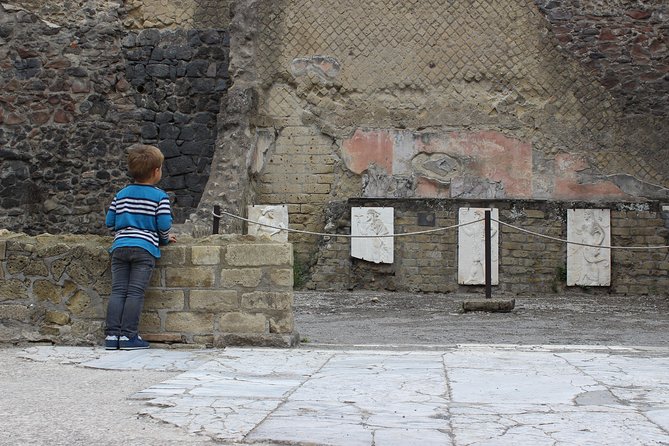
Herculaneum is famous for how well some spaces survived compared to what you see in many other Roman sites. This tour leans into that. You should expect to spend real time appreciating well-preserved interiors and the way rooms relate to streets and courtyards.
One highlight is the homes. You’re likely to encounter multiple typical houses with decorations that make you stop and look twice, especially mosaic floors. The mosaics are not just decorative. They help you understand how people used space and how wealth, taste, and daily routines showed up in normal rooms.
You’ll also see bathhouse areas, including sections that separate men and women. That’s a small detail, but it’s big for understanding Roman social life. It turns bathing from “a random room” into something you can picture as part of the rhythm of the day.
The best way to enjoy the interiors is to let the guide tell you where to focus. The eye catches broad shapes fast, but the meaning lives in small design choices: what’s preserved, what’s missing, how rooms connect, and how the city functioned as a whole.
How to pack, where to store bags, and how to stay comfortable
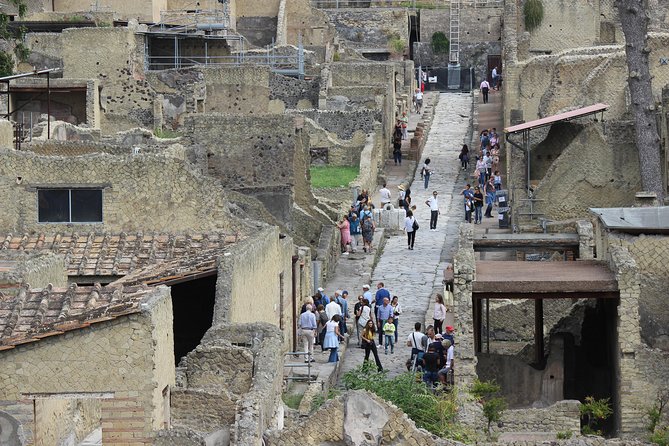
Plan for a walking tour with moderate physical demands. The site is archaeological, which usually means uneven surfaces, steps, and areas where you slow down to look. If you’re the type who hates slipping your foot on cobbles, choose shoes with grip and plan on taking your time.
You also need to know the bag rule. It’s not allowed to bring in bags or luggage larger than 30x30x15 cm. If you have a bigger bag, you can leave personal effects at the free wardrobe service at the park entrances. This is one of those rules that can quietly ruin a day if you show up with the wrong bag size, so pack light.
Clothing matters too. Wear layers and a hat if it’s sunny. The tour recommends appropriate clothing because the program remains valid in all weather conditions. Translation: you can’t assume the day will turn into a relaxed indoor visit.
Food and water are easier than you might fear. Near the arrival area, you can find small shops for water, and there are places to grab lunch if you want to eat before or after your tour. If you’re coming by train from nearby towns, build in a little buffer for strolling downhill and picking up supplies.
You can also read our reviews of more guided tours in Naples




Naples logistics made simpler: where to meet and how to arrive
You meet at the Archaeological Park of Herculaneum area, on Corso Resina. Your tour start is at Corso Resina, 187, and the end point is Corso Resina, 185, both in Ercolano. The ticket office and the main entrance to the excavations are the practical reference points.
Check in happens 15 minutes before the start time. The guide waits for you with a name board clearly visible. That detail sounds small, but it’s a lifesaver when you’re arriving in a new area and don’t want to wander for 20 minutes while the clock ticks down.
The tour runs with start times between 9:00 a.m. and 2:00 p.m. local time. Booking earlier in the day often feels easier, especially if you want more time for photos and less pressure if transport runs late.
There’s no pick-up service included. You’ll want to rely on public transportation and your own walking. The good news is that the location is described as near public transportation, so you’re not forced into a taxi for the whole trip.
You’ll receive a mobile ticket. Make sure your phone is charged and your confirmation is easy to access at the entrance.
Pairing Herculaneum with Pompeii for the full picture
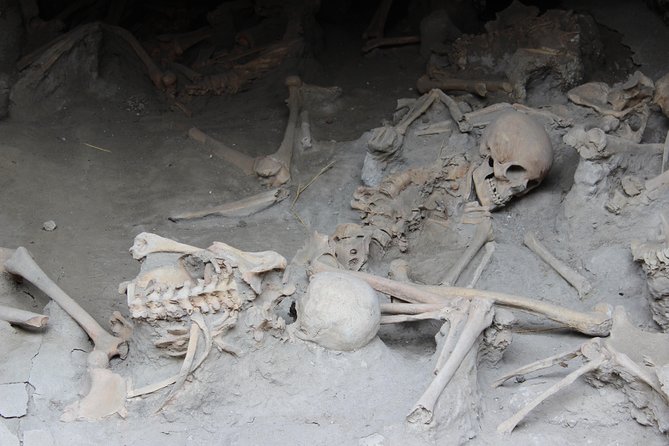
If Pompeii is on your list, I’d seriously consider treating Herculaneum as the complement. One of the clearest reasons is perspective: Pompeii gives a broader view of Roman urban structure, while Herculaneum helps you understand the city from inside the rooms and through the way daily life was arranged.
Think of it like this: Pompeii can help you map the city. Herculaneum helps you feel the city. You’ll likely get more satisfaction by doing both, especially if you like architecture, interior design, and how people used space.
Also, you may notice that Herculaneum’s tone feels more intimate. The site’s reputation as secondary to Pompeii can be misleading. In a good guided visit, it becomes its own experience, with its own strengths and its own emotional weight.
Should you book? My honest decision guide
Book this tour if you want a well-paced, guided walk that focuses on what’s preserved, not just the volcano story in general. The included ticket plus licensed guide gives you solid value for the price, especially when you consider you’re looking at a limited-time experience that lasts about 3 hours and keeps the group small.
Choose a different option if you don’t like walking on uneven ground or if you need more of a flexible, self-paced visit. Also, if your travel plans are tightly timed around the weather, keep in mind this experience requires good weather and can be canceled, with an alternative date or a full refund.
One more practical note: the experience can cancel if the minimum number of adult participants (4) is not reached. That’s normal for small tours, but it means you should not treat this as the only plan for your Ercolano day. If it gets rescheduled, you’ll be glad you booked with free cancellation.
Overall, I see this as a smart choice for first-time visitors who care about seeing interiors, mosaics, and the way Roman life worked on the ground floor.
FAQ
FAQ
How long is the Herculaneum excavations tour?
It runs for about 3 hours.
What does the price include?
The price includes a monolingual tour with a licensed tour guide and the ticket for the Herculaneum excavations. Mobile ticket delivery is included.
Is there pick-up service included?
No, pick-up service is not included.
Where do I meet the guide?
Meet at the Archaeological Park of Herculaneum, Corso Resina 187, 80056 Ercolano NA. The tour ends at Corso Resina 185.
What time should I arrive?
Check-in takes place 15 minutes before the start of your booked tour. Start times run between 9:00 a.m. and 2:00 p.m. local time.
Are bags allowed inside the excavations?
Bags, luggage, and backpacks larger than 30x30x15 cm are not allowed. You can leave personal effects at the free wardrobe service at the park entrances.
Is the tour suitable for people with limited mobility?
The tour notes travelers should have a moderate physical fitness level, since it includes many walking itineraries.
What happens if the weather is bad?
The experience requires good weather. If it’s canceled due to poor weather, you’ll be offered a different date or a full refund.
How many people are in a group?
The tour has a maximum of 8 travelers.
More Tickets in Naples
More Tours in Naples


More Tour Reviews in Naples

Not for you? Here's more nearby things to do in Naples we have reviewed










Tour Reviews, compared.
 ★ 4.8Pompeii: Entry Ticket and Guided Tour with an ArchaeologistFrom $3519,459 reviews
 ★ 4.2Pompeii: Entry Ticket with Optional Audio GuideFrom $2612,360 reviews
 ★ 4.8Pompeii: Small Group Tour with an ArchaeologistFrom $4012,264 reviews
 ★ 4.3Pompeii Ruins & Mount Vesuvius Day TourFrom $12011,459 reviews
 ★ 4.6Sorrento, Positano and Amalfi Full-Day TourFrom $10710,988 reviews
 ★ 5.0Sorrento, Positano & Amalfi Coast – Small Group TourFrom $768,643 reviews
 ★ 4.6Catacombs of San Gennaro Entry Ticket & Guided TourFrom $157,941 reviews
★ 5.0Pompeii Small Group Tour with an ArchaeologistFrom $356,593 reviews
★ 4.6Catacombs of San Gennaro Entry Ticket & Guided TourFrom $157,941 reviews
★ 5.0Pompeii Small Group Tour with an ArchaeologistFrom $356,593 reviews
Browse the lists this tour appears in