
Tour review · TOUR REVIEWS
From Naples: 2-Hour Herculaneum Kid-Friendly Tour
Herculaneum feels like a living time machine. This 2-hour, kid-customized walk brings you through one of Campania’s best-preserved Roman sites, with a guide steering the pace and attention while tablets, reconstructions, and multimedia help children make sense of what they are seeing. It is not just looking at ruins, you are walking through everyday spaces and letting the site do the storytelling.
What I like most is the way the tour is built around kids, not around speed, with a local certified guide specialized in tours with children. The second big win is that you get to see a lot of specific highlights in a short window, including houses, public spaces, and even the seaside area tied to the victims of the eruption. One consideration: it is a walking tour with no transportation included, so plan for a steady 2-hour walk among ancient streets and doorways.
Key Highlights You Should Know First
- Tablets and multimedia that keep kids engaged while you move from stop to stop.
- Entry into major houses and key public areas, so your children can picture real Roman routines.
- A family-focused guide experience with a local certified guide specialized in kids.
- A packed route in just 2 hours, from the northern Cardo to the seaside tragedy site.
- Skip-the-ticket-line access helps you spend more time inside and less time waiting.
- Private group format, which usually makes it easier to keep children on track.
Why Herculaneum Works So Well for Families
Herculaneum’s power is that it is not reduced to broken columns and silence. The site you see on this tour is described as well-preserved, and that matters for kids. When details survive, imagination has something concrete to grab onto, like the layout of a home, the feel of a public square, or the sense of scale in a bath or gym area.
This is also one of those places where “Roman life” is not an abstract theme. Your route includes spaces tied to eating, bathing, religion, community gathering, and everyday work. For younger travelers, that mix often beats a pure lecture style tour, because they can connect each stop to a simple question: What would people do here?
And yes, you will also encounter one of the most emotionally heavy parts of the story, the beach area where hundreds of skeletons were discovered. A good child-focused guide can help families handle that moment with care and clarity, rather than letting it become confusing or overwhelming.
More Naples tours, ruins, coast days, and city experiences to compare



The 2-Hour Walk: Starting Point and How You’ll Pace It
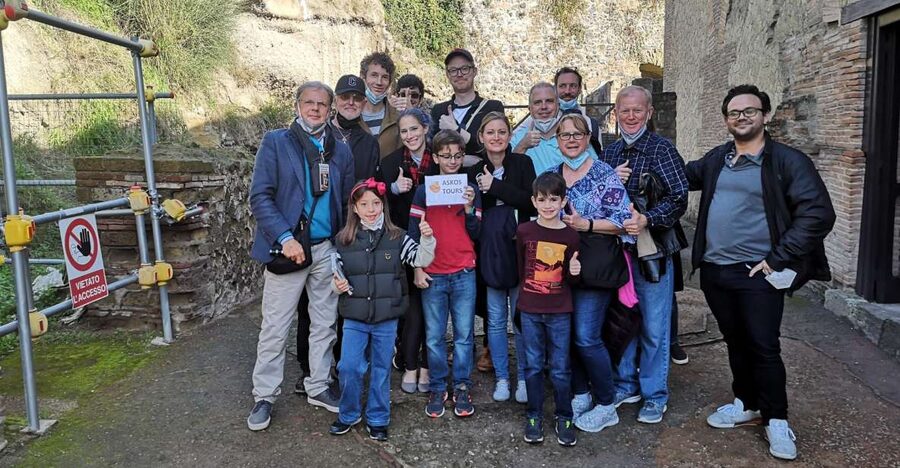
You meet at the ticket office of the Herculaneum ruins, at Via dei Papiri Ercolanesi, 21. The guide is holding a sign with your name, which is a small thing that saves you stress when everyone is arriving at the same time.
This is a walking tour with no transportation included. That means you will want to treat it like an active museum visit, not a sit-down excursion. The upside is you keep moving through the site and see how spaces connect, especially along the main north-south street (the northern Cardo). The downside is simple: if your kids tire easily, you will feel it, because the route is built to fit a tight 2-hour window.
The tour runs in English or Italian with a live guide. Even if your Italian is limited, the kid-focused approach and the on-site visual tools (tablets, reconstructions, multimedia) make it easier to follow what is happening at each turn.
Getting Oriented on the Northern Cardo
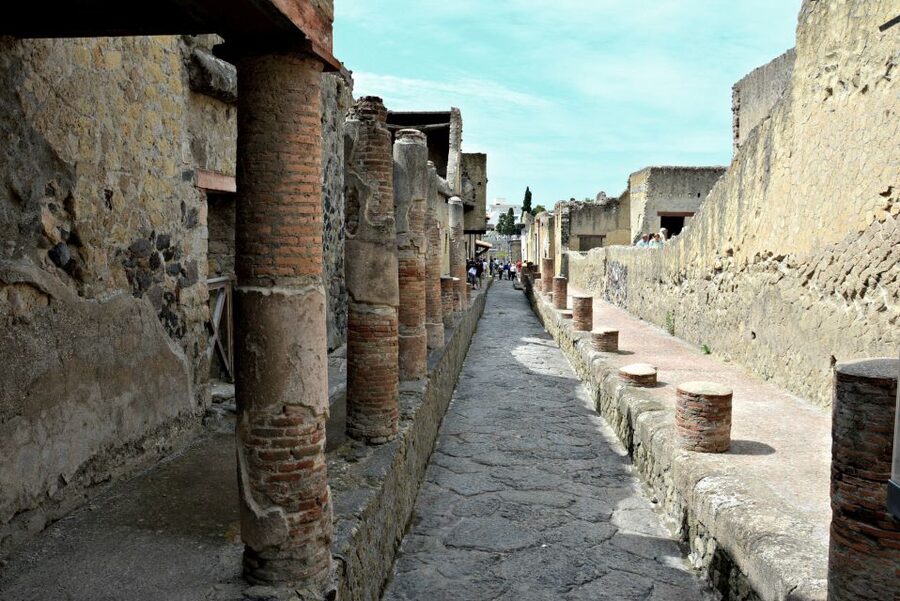
Your visit includes the Northern Cardo, the road oriented north-south. Think of it as your “spine” for understanding the site. Kids do better when they can picture a route instead of a collection of disconnected rooms, and starting with a main street helps you do that quickly.
As you walk, the guide uses kid-friendly cues to help you locate what you are about to enter or examine. Then the stops branch into specific houses, dining spaces, baths, temples, and civic areas. This is one reason I like this tour style: it feels structured without feeling rigid.
Practical note: because it is a walking route, you will likely spend more time standing and looking than you would on a bus tour. Wear comfortable shoes, and keep expectations realistic for young legs.
Casa di Nettuno ed Anfitrite: A House That Tells a Story
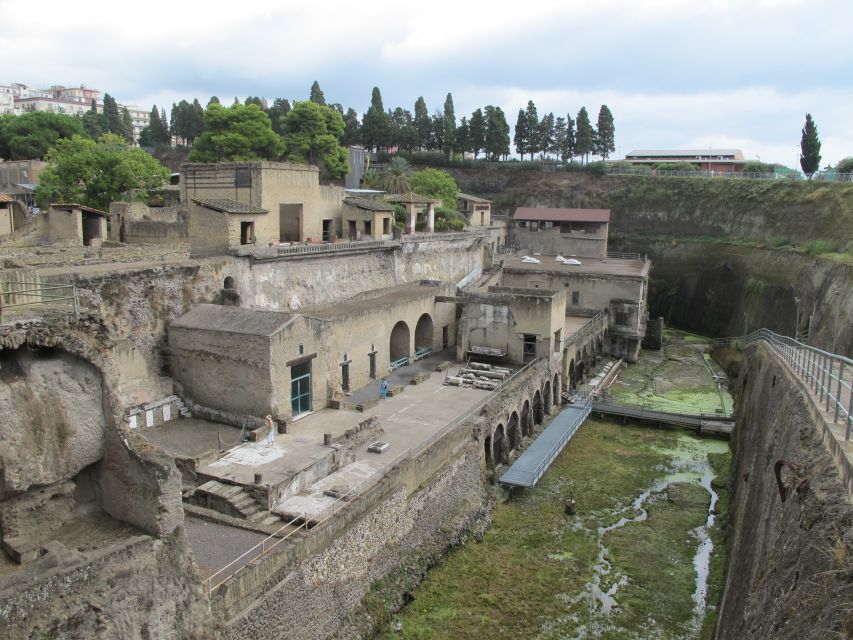
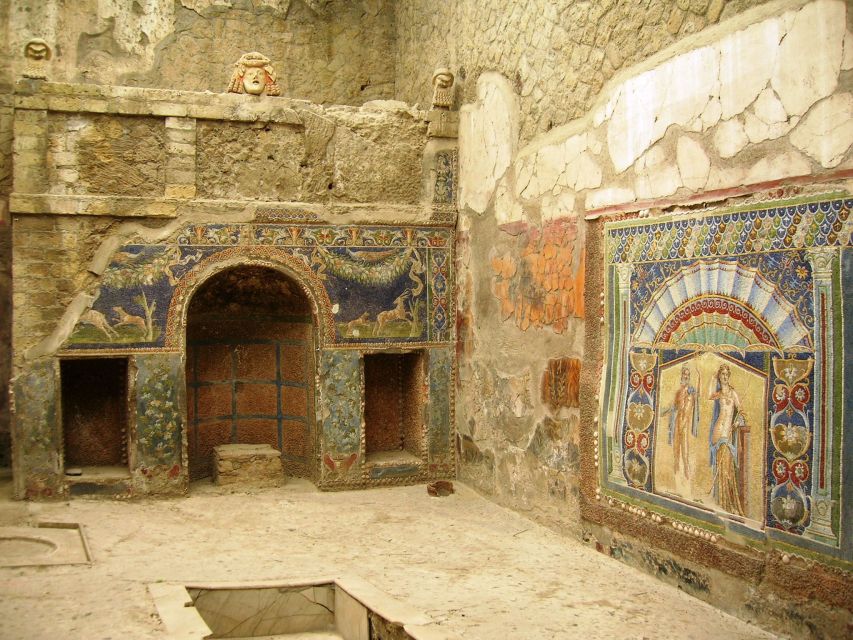
One of the highlighted stops is Casa di Nettuno ed Anfitrite. This is one of the best types of breaks for families: a focused look at a home inside the ancient city, rather than only looking from outside.
Herculaneum houses are valuable because they show more than architecture. You can see the kinds of spaces Romans used day to day, and your guide can connect those rooms to everyday life. For kids, that usually translates into a faster “I get it” moment. Tablets, reconstructions, and multimedia are meant to support this, especially when a room is partially preserved or needs context to understand how it functioned.
Drawback to consider: houses can involve narrow passages and doors. If your kids are very small or restless, ask the guide to slow down so they can process what they are seeing, not just rush past it.
Casa del Salone Nero and the House of Black Saloon
Next up is Casa del Salone Nero, also referenced as the House of the Black Saloon. This stop stands out because it is distinct enough for kids to remember. Even if they forget every architectural term, they often remember the mood of a space: darkened rooms, special features, and the way different areas connect.
What makes this stop work in a kid format is that the guide can use the multimedia tools to fill in the gap between “ruins now” and “how it might have looked then.” That is a key difference between a basic tour and this one. You are not left guessing.
Potential consideration: because the tour tries to cover many highlights in two hours, time inside each house can feel like a “good look” rather than a long wander. If your family likes to linger, you may want to save extra time for self-guided exploration after the tour, if your schedule allows.


Casa dei Cervi and the House of Skeletons
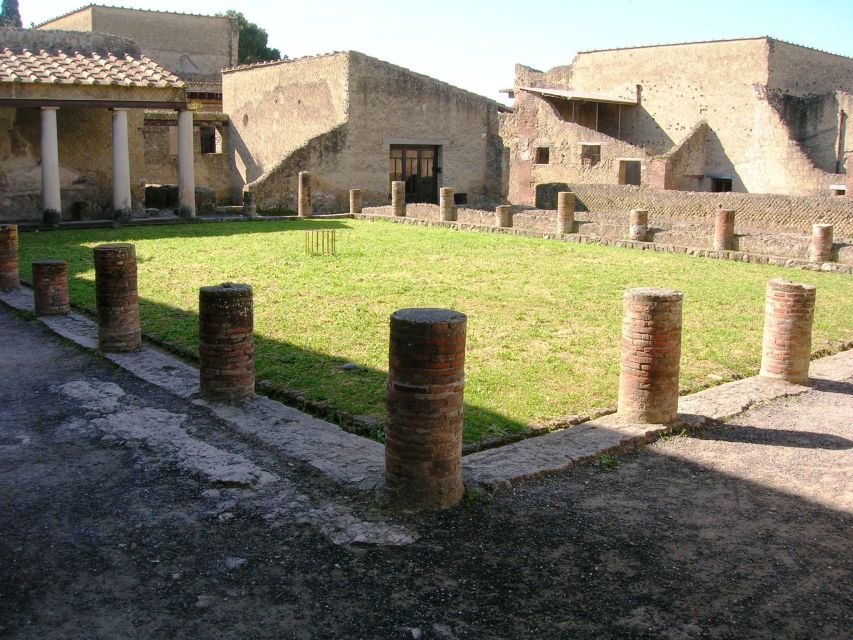
You will also visit Casa dei Cervi and the House of Skeletons. These are emotional stops, and they matter because they move the story beyond art and into real human consequences.
The House of Skeletons is specifically included, which means you are not just hearing that victims existed. You see part of the evidence tied to the eruption. For kids, this can be intense, but it can also be meaningful when explained clearly. The tour description emphasizes that the guide will focus on children’s needs and attention, and the route includes tools designed to guide understanding.
Here is my practical advice: if your kids are sensitive, decide beforehand how your family wants to handle it. Some families want quick, factual explanations and then to keep walking. Others prefer a calmer moment right at the stop. This tour structure gives you a way to do it without derailing the entire day.
Sacellum of the Augustales and Temple of Augustali
Another important religious stop is the Sacellum of the Augustales, also referenced as the Temple of Augustali. For kids, religion sites can be tough if they are only described in abstract terms. What helps here is that these are physical spaces you walk through, so your guide can point out what people might have used them for.
This is also a good place for the tablets and reconstructions to earn their keep. When you can see a room and then use a tool to understand its intended shape and function, you help your children turn vague ideas into something tangible.
Potential drawback: religious sites often include less “action” than houses or markets. If you notice your kids start to drift, lean into the guide’s prompts and ask them to point out a specific detail or symbol.
Thermopolium, Men’s Thermal Bath, Bakery, and the Gym
This tour is strong because it covers daily-life anchors. You will see stops like the thermopolium (essentially a Roman food spot), the men’s thermal bath, the bakery, and the gym.
Why this matters: it turns “Roman” into “human.” Kids connect faster when they can relate to what people did in daily routines, like grabbing food, washing up, or exercising. These are also excellent pauses in the route because each area has a clear function. Your guide can tie that function to what you see, and then reinforce it with multimedia support.
If you are traveling with kids who get bored with long explanations, these stops are built for you. The site gives the visual answer, and the guide adds the why.
The Forum: The Main Square Moment
The forum, the main square, is where a lot of Roman civic life would have happened. Including it in a kids tour is smart, because it is the most straightforward place to explain community. It is where people gather, talk, and connect the city together.
The drawback here is not the forum itself, it is the logistics of fitting everything into two hours. If you want extra time in the square to process and ask questions, you may feel a gentle time squeeze as the tour moves on to the next houses and special areas.
House of Neptune and Amphitrite and House of Bel Cortile
Two more house stops included are Casa di Nettuno ed Anfitrite and the House of Bel Cortile. You also cover the House of Neptune and Amphitrite among the highlighted route areas.
These home-based stops matter because they help your kids understand the “Roman home” as a system, not just a single room. With reconstructions and multimedia, the guide can show how spaces would have worked together, so children do not just memorize names. They start building a picture of how people lived.
If your kids love architecture or have a natural curiosity about how rooms work, these are the stops where they often ask the most questions.
The Samnite House and the House of the Wooden Partition
Other household highlights include the Samnite House and the House of the Wooden Partition. These names sound like a catalog, but on-site, what your guide can do is translate the significance into something kids can notice right away: room layout, how spaces divide, and what that might have meant for daily life.
This is where the tablet and reconstruction approach becomes practical. When kids can see how a space might have looked or how it is meant to function, they feel less like they are staring at random walls.
A consideration: if your group includes children who get overwhelmed in too many rooms, ask for a quick pace adjustment. A private group format can help with that, as the guide can focus on your family’s attention span.
Home of the Bucks and the Beach Area Near the Marina Gate Terrace
The route includes the Home of the Bucks and reaches the Marina gate terrace of Marcus Nonius Balbus, then moves to the beach where hundreds of skeletons of the victims were discovered.
This is the emotional endpoint of the story, and it is also one of the most memorable. Kids often remember the sensation of reaching the shoreline part of the narrative. It turns the eruption from a concept into a location-based event.
Practical advice: this is not the place for phone distractions. If your child is old enough, ask the guide to explain what you are seeing in a way that matches their level. If your child is younger, focus on simple observations and let the guide guide the pace.
If you are uncomfortable with heavy content for kids, this tour can still work, but you should go in with a plan for how you want to handle it. The guide’s child-specialized approach is a big part of why it is suitable, not the raw content alone.
Price and Value: Is $206.75 Worth It?
The price is $206.75 per person for a 2-hour experience. On its face, that is not cheap, but the value comes from what is included.
Here is what you get for that cost:
- A local certified guide specialized in tours with children
- Herculaneum admission fee included (16.00 euros each)
- Skip-the-ticket-line access
- A walking tour format that covers a lot of specific, named areas
- Private group style, with tablets, reconstructions, and multimedia tools
If you tried to do it solo, you would still need entry tickets and time spent figuring out where to go and how to keep kids focused. This tour is paying for structure and interpretation, plus the admission fee that is already baked in.
Also, the fact that it lasts only 2 hours changes the value equation for many families. You get a high-density route with minimal time lost to long transitions.
Consideration on value: because it is private-group, the experience can feel more “tailored” for your family than a big-group version. If your kids are easygoing and love ruins, you may feel the price is justified quickly. If your kids hate walking or heavy scenes, the cost may feel steeper for fewer moments that land well.
When Free Entry Happens, and Why It Still Needs Planning
On the first Sunday of each month, entrance is free of charge. That sounds great, and it can be. The catch is that tickets cannot be reserved ahead of time, so entry is not guaranteed.
If you are traveling during that window, keep your plan flexible. A free-entry day with uncertain timing can turn your day stressful if everyone in your group is counting on a specific time slot. For many families, the predictable experience is worth the standard cost.
What Type of Family Should Book This?
This tour is best for families who want structure and storytelling designed for kids. It is especially good if your children like to walk through places, enter spaces, and learn through visuals like tablets and reconstructions. You will be moving through a wide range of areas, including houses, temples, a forum, baths, and even the seaside tragedy site.
It is also available in English and Italian with a live guide, so it can work well for mixed-language groups.
Wheelchair note: the info says the activity is wheelchair accessible, but it also includes a note that it is not suitable for wheelchair users. Because that is contradictory, you should confirm suitability directly with the provider before booking, especially if accessibility is a must.
Quick Tips That Will Make It Feel Easier for Kids
You will be walking through ruins and entering rooms, so treat it like an active outing. I strongly recommend:
- Comfortable, grippy shoes for uneven ground
- A small water plan since meals are not included
- Sun protection if you are there in warm months
- A simple mindset, you are visiting Roman daily life, not just sightseeing
If your kids get restless, use the guide’s tools. Tablets and multimedia are part of the experience by design, so let them do the heavy lifting when attention starts to wander.
Also, because the tour starts at Via dei Papiri Ercolanesi, 21, plan your arrival so you are not rushing at the last second. Meeting points are smooth when you arrive early enough to find the ticket office and locate the guide holding your name sign.
Should You Book This Herculaneum Kid-Friendly Tour?
I would book it if you want a family-focused Herculaneum experience that keeps momentum. The combination of a children-specialized certified guide, a short 2-hour format, and built-in learning tools like tablets, reconstructions, and multimedia makes it easier for kids to understand a complex story fast.
Skip it if your group cannot handle steady walking for two hours, or if you know your children struggle with the emotional intensity tied to the beach area where many victims were discovered. For most families, though, the guided structure is exactly what turns Herculaneum into a meaningful stop, not just another archaeological site.
If you decide to go, arrive ready to walk, let the guide set the pace, and expect your kids to surprise you with what they remember.
FAQ
How long is the Herculaneum kid-friendly tour from Naples?
It lasts 2 hours.
Where does the tour start?
You meet the guide at the ticket office of the Herculaneum ruins at Via dei Papiri Ercolanesi, 21. The guide will be holding a sign with your name.
Is transportation included?
No. This is a walking tour, and no transportation is included.
What is included in the price?
Included are a local certified guide specialized in tours with children and the Herculaneum admission fee (16.00 euros each). The tour is also set up to skip the ticket line.
Are meals included?
No. Meals are not included.
What languages is the guide speaking?
The live tour guide speaks English and Italian.
Is it private?
Yes, it is a private group.
Is there free admission on the first Sunday of the month?
Yes, entrance is free of charge on the first Sunday of each month. However, tickets cannot be reserved ahead of time, so entry is not guaranteed.
Is the tour wheelchair accessible?
The information says wheelchair accessible, but it also notes not suitable for wheelchair users. You should confirm suitability with the provider before booking.
More 2-Hour Experiences in Naples



More Tours in Naples

More Tour Reviews in Naples
Not for you? Here's more nearby things to do in Naples we have reviewed





Tour Reviews, compared.
 ★ 4.8Pompeii: Entry Ticket and Guided Tour with an ArchaeologistFrom $3519,459 reviews
 ★ 4.2Pompeii: Entry Ticket with Optional Audio GuideFrom $2612,360 reviews
 ★ 4.8Pompeii: Small Group Tour with an ArchaeologistFrom $4012,264 reviews
 ★ 4.3Pompeii Ruins & Mount Vesuvius Day TourFrom $12011,459 reviews
 ★ 4.6Sorrento, Positano and Amalfi Full-Day TourFrom $10710,988 reviews
 ★ 5.0Sorrento, Positano & Amalfi Coast – Small Group TourFrom $768,643 reviews
 ★ 4.6Catacombs of San Gennaro Entry Ticket & Guided TourFrom $157,941 reviews
★ 5.0Pompeii Small Group Tour with an ArchaeologistFrom $356,593 reviews
★ 4.6Catacombs of San Gennaro Entry Ticket & Guided TourFrom $157,941 reviews
★ 5.0Pompeii Small Group Tour with an ArchaeologistFrom $356,593 reviews
Browse the lists this tour appears in