
Tour review · TOUR REVIEWS
Herculaneum small group tour with an archaeologist – skip the line
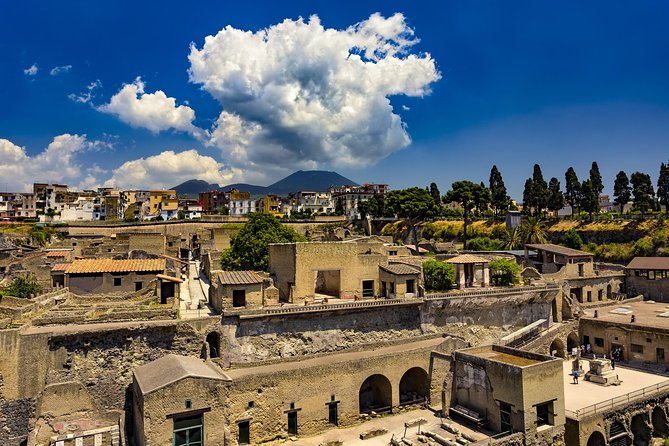
A Roman town trapped by ash still feels alive. This small-group, archaeologist-led visit to Herculaneum shows you how the ruins formed and what life looked like right before the eruption, with skip-the-line entry so you spend less time waiting and more time looking closely. I like that it stays focused on real places you can walk through, not just big ideas.
Two more things that work well for your day: the group caps at 20 people, so your questions do not get swallowed. And the pacing gives you short but meaningful time at key buildings, from villas to bathhouses, without turning the tour into a marathon. One possible drawback: finding the tour can be a little tricky if your ticket details do not match what you expect on arrival, so plan a few extra minutes to orient at the Archaeological Park entrance.
Key highlights at a glance
- Skip-the-line admission included, so you avoid the usual ticket queue shuffle.
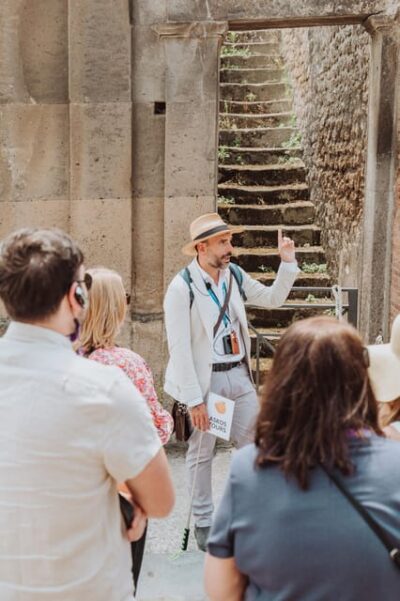
- Archaeologist-led guidance with the human story behind the eruption and daily life in a Roman resort town.
- Up to 20 people, which keeps questions practical and answers more specific.
- A stop-by-stop route through villas, bathhouses, and standout domus interiors.
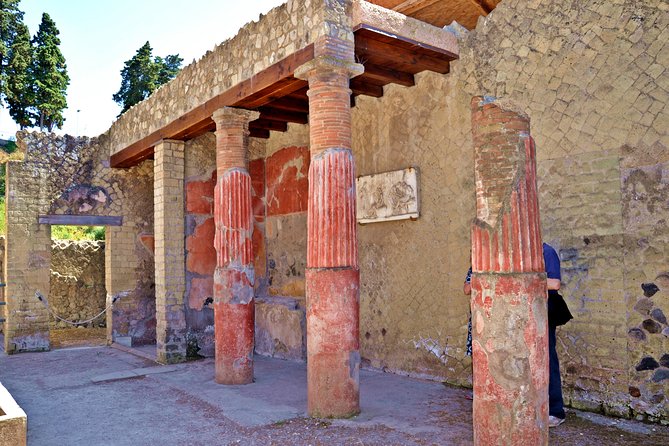
- Time for details like carbonized wood and how spaces were organized for men and women in the thermae.
First steps in Herculaneum: why this tour format works
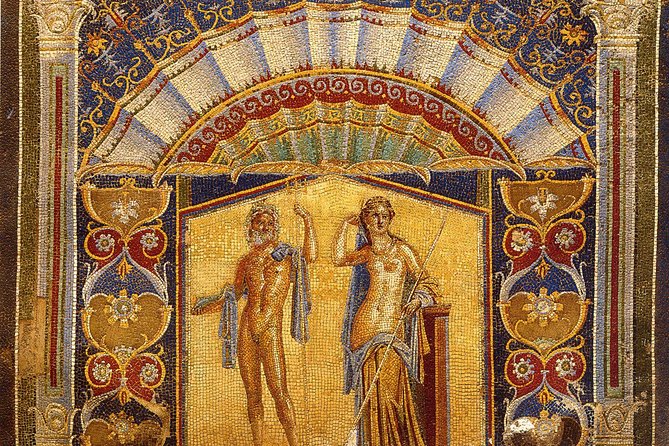
Herculaneum is one of those places where you can look at a wall and feel like you’re reading a message. The town was buried under volcanic ash for centuries, and that kind of preservation turns everyday features into evidence. With an archaeologist in the lead, you get more than a scenic walk. You get context for what you’re seeing and why it matters, including the moment of decision, whether residents fled or stayed put.
This particular tour format is built for attention. You’re not just “in the area,” you’re moving through a planned sequence of sites. Each stop is brief, around 10 to 15 minutes, which keeps the momentum going while still giving you time to ask follow-up questions. Over 2 hours, that adds up to a lot of visible ground, especially for a first visit.
The skip-the-line part is also real value in practice. Herculaneum can get busy, and buying tickets on your own often turns into an unnecessary time sink. Here, admission is included and the tour handles entry so you can start seeing instead of waiting.
More Naples tours, ruins, coast days, and city experiences to compare


Meeting point and what to do before you arrive
The meeting point is the Archaeological Park of Herculaneum, Corso Resina, 187, 80056 Ercolano NA, Italy. The tour ends in the same place.
My practical advice: give yourself a little buffer. One key lesson from real-world experiences is that some ticket details can be confusing at the park, so if you have any doubt about where to check in, arrive early enough to get your bearings. This is also smart because the tour is time-managed, and the group pace is steady.
You’ll have a mobile ticket, which helps you travel light. The experience is near public transportation, so you do not need a private car to make it work.
Price and value for a 2-hour archaeologist-led visit
The price is $57.26 per person for about 2 hours of live guidance. That might sound like a lot until you compare what you’re actually buying: guided entry plus a trained specialist leading a structured route.
Here’s where it becomes good value. Skip-the-line admission is included, so you’re not paying extra just to get inside. And the group size stays small, capped at 20, which makes the expert’s explanations more useful. If you’ve ever toured on your own in a big archaeological site, you know how quickly details turn into “I saw a thing, I think it was important.” A guided route changes that, especially at Herculaneum, where preserved textures, carbonized remains, and room layouts carry meaning.
If you only have a short window, this 2-hour plan is a strong way to get a well-guided first look. If you have all day and want to wander slowly, you might choose a self-guided visit. But for most people, this tour hits the sweet spot between time and depth.
Stop-by-stop: what you’ll see at Herculaneum
This route moves through 11 stops, each with a specific focus. Don’t expect a long lecture at each building. Instead, the guide points you toward the details that matter, then you move on.
Because the tour time is tight, your best move is mental: look, then listen, then look again. After the guide’s explanation, the same room can suddenly make sense.
Casa dei Cervi: statues of stags and a name that sticks
Your first stop is Casa dei Cervi, a house named for marble statues of stags or deer found in the peristyle. “Peristyle” is a helpful word here. It’s a courtyard space surrounded by columns, and it’s the kind of layout you can recognize quickly once you’re standing there.
What to watch for: the way the house is organized around that central open space. The guide’s explanation helps you connect decorative objects to the lifestyle of the household. Even in a small stop, this place sets the tone for the tour: Herculaneum wasn’t just ruins, it was a real neighborhood with real taste.


La Terrazza di M. Nonio Balbo: power, patronage, and public honor
Next is La Terrazza di M. Nonio Balbo, named for M. Nonius Balbus, the city’s major benefactor. He restored and built public buildings, and after his death he was honored as patron. The long inscription on the funeral altar tells part of that story.
This stop is great if you like the politics of everyday places. It’s easy to think ancient cities were only about emperors and wars. But in Herculaneum, local leaders shaped what people could use, from public spaces to civic projects. Look for how inscriptions and monuments work like public branding.
College of the Augustales: religion and civic space in one building
The College of the Augustales is next. The building is thought to have served as a centre connected to the cult of Emperor Augustus, and possibly as headquarters for the Collegium Augustalium. Another possibility is that it functioned as a local curia.
This stop matters because it shows how roles and beliefs were layered into city architecture. Instead of separating “religion” and “civic life,” Herculaneum blurs the line. Even if you’re not a Roman religion expert, you’ll leave with a clearer sense of what these social groups were and why a dedicated meeting space would matter.
Casa del Rilievo di Telefo: a luxurious house with a private connection
Casa del Rilievo di Telefo may have belonged to one of the town’s leading benefactors linked to Marcus Nonius Balbus. It’s especially notable for its private access to the adjoining Suburban Thermae to the south.
This is the kind of detail I love in guided archaeology. A “private access” idea turns a bathhouse from a public facility into something tied to status and convenience. You’re also seeing how the wealthy could control proximity to leisure.
If you’re short on time, this stop helps you understand that Herculaneum’s homes and public buildings were not always separated like modern zoning. The city was connected.
Partem Domus lignea and Casa del Tramezzo di Legno: the wooden partition you can’t ignore
One of the standout technical details is Partem Domus lignea, also described through the Casa del Tramezzo di Legno. This is important because of an elegant wooden partition that remained.
Even if you cannot visualize the original interior perfectly, the key point is that wood features survived in a preserved way. In a site like Herculaneum, charred and preserved materials are not just oddities. They help archaeologists reconstruct how people moved, used rooms, and divided space.
House of the Skeleton: the human story behind the name
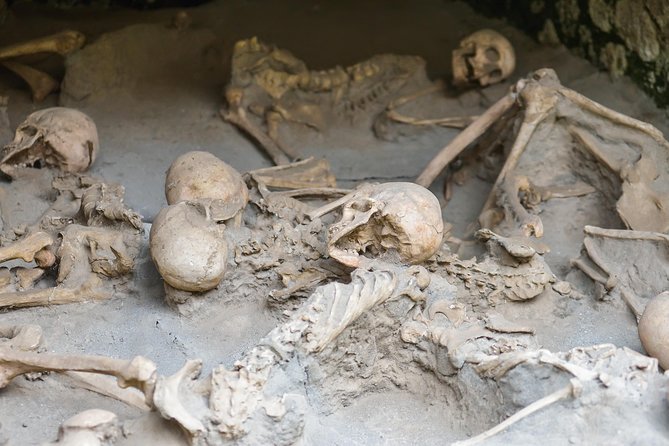
The House of the Skeleton likely combines three smaller buildings. It gets its name from human remains found in a second-floor room in 1831.
This stop is heavier than the villa stops, and that is the point. The guide’s explanation usually connects the site to the real emergency and the choices people made during the eruption. It also turns the location into a reminder that archaeology is not only art history. It is human history.
If you do not like morbid-sounding names, you might feel a little caught off guard, but the tour uses it thoughtfully and ties it to why the space ended up where the remains were found.
Central Thermae: men and women, separate entrances
Central Thermae were built around the beginning of the 1st century AD. The thermae were divided in a common practice of the time into men’s and women’s baths, each with separate entrances.
This is where you get a strong sense of Roman daily routines. Bathhouses were not just “places to wash.” They were social hubs with organized layouts and expectations. The guide helps you see how architecture tells you about gender roles and access rules.
Practical note: thermae areas can feel a bit open and exposed, depending on the lighting and weather. Plan to spend more time looking up and along doorways, not just at one wall.
Casa del Salone Nero: the black hall and carbonized doorposts
Casa del Salone Nero, also called the House of the Black Hall, is one of Herculaneum’s more luxurious mansions. The house has a monumental entrance, with carbonised remains of doorposts and the lintel still visible.
This is a fantastic stop for visual detail. When you see carbonized structural elements, it helps you understand how fast the disaster moved and how materials preserved the moment. The guide’s explanation often connects these burned remnants to how the eruption trapped and sealed the scene.
It’s also a reminder of why Herculaneum can feel so immediate compared to many other archaeological sites.
Casa Sannitica: Samnite layout meets frescoed rooms
Casa Sannitica has an arrangement typical of the Samnites, an ancient people of the Sabine race who occupied mountainous central Italy. The atrium is lined by a gallery with Ionic columns, and the rooms are decorated with frescoes.
This stop is good if you like architecture that mixes identities. You’re not just looking at an “all-Roman” design. You’re seeing a specific style linked to regional traditions, then blended into Herculaneum’s life.
Because frescoes can be easy to miss if you’re moving quickly, I recommend slowing your attention right when the guide points out decoration. That’s where you get the most return on the short stop.
Casa del Bel Cortile: a courtyard and a balcony instead of an atrium
Casa del Bel Cortile is one of the most original houses on the route. It features a courtyard with a stairway and a stone balcony instead of an atrium.
This is a layout lesson disguised as a house visit. Once you understand what replaces an atrium, you can read how the household organized light, movement, and space for daily use. It’s the kind of architectural difference that makes Herculaneum feel less like a museum display and more like a place people lived.
House of the Grand Portal: frescos, charred remains, and central layout
The tour ends with the House of the Grand Portal, described as a beautiful domus in the centre of the archaeological area. Expect various environments, collonnati, and frescoes, plus charred remains of wooden parts.
If you like the idea of a “final wow,” this is it. After seeing villas, partitions, bathhouses, and different layout types, you come to this central house with more context. The guide’s walkthrough helps you spot how features connect across rooms, rather than treating each stop as a separate story.
The eruption story: how the guide connects buildings to choices
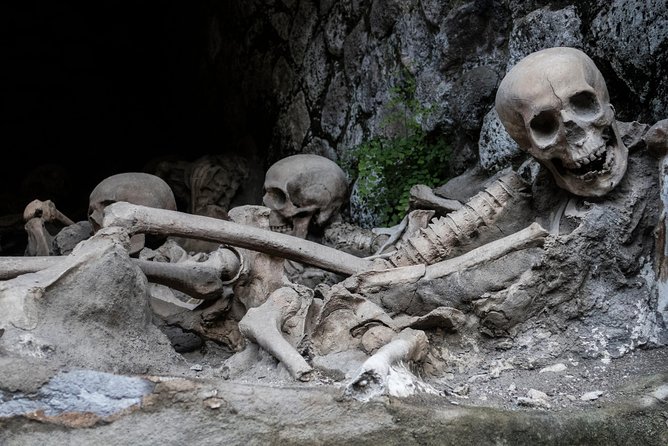
One reason this tour is worth it is that it doesn’t treat the eruption as background noise. The experience focuses on how residents decided whether to flee or stand their ground. That framing changes how you feel about the sites.
When an archaeologist talks through the scene, you start to link architecture to human behavior: where people gathered, what mattered for comfort, where leisure spaces sat beside more private rooms. With Herculaneum, the preserved remains often make those connections feel concrete, including carbonized items and signs of how everyday objects were caught in place.
And from what people report about the tour, the guide also brings these details to life in a way that sticks, especially when explaining carbonized things and people. That’s the difference between seeing a wall and understanding what it represents.
Pace, group size, and how to get the most out of 2 hours
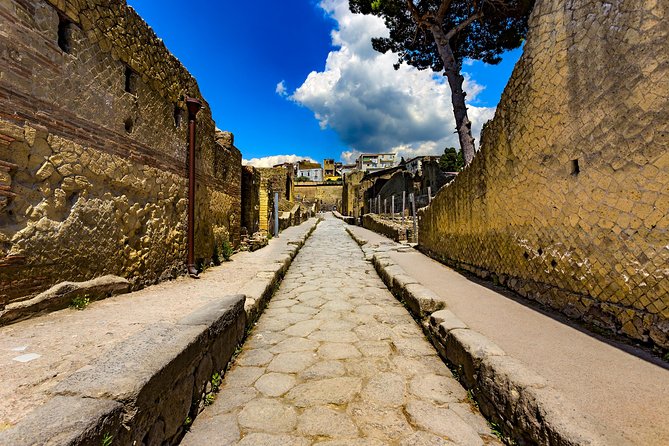
The tour caps at 20 travelers, which is the right size for a question-friendly format. You do not need to race to be heard. At the same time, because the itinerary has many stops, you should listen for the key prompt the guide gives at each location. That way, you can look with purpose even during short time windows.
This is also a “stand and look” style tour. There will be walking between sites, and you’ll likely be on your feet for most of the 2-hour visit. Wear comfortable shoes and plan to keep your phone away most of the time, so you’re not constantly looking down at a screen.
Weather and practical tips for comfort in the open ruins
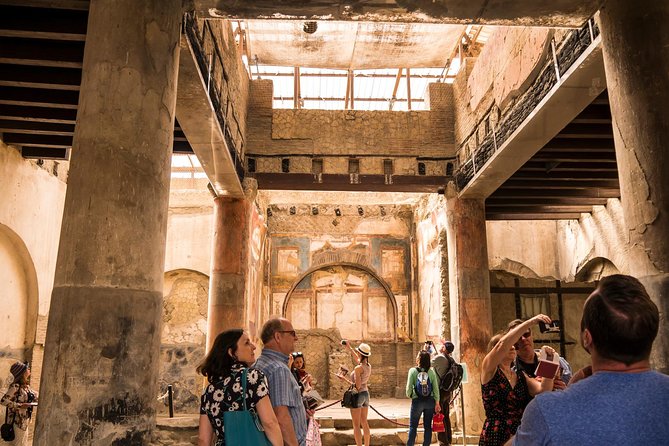
Herculaneum can be sunny, and one practical note you should take seriously is simple: bring a cap or hat. The sun can feel intense, and you’ll be outside through parts of the route.
If you can, carry water, wear sunscreen, and plan a light layer for shade when available. In a site like this, even short stops add up quickly, and comfort affects how much you actually absorb.
Who this tour is best for
This tour is a strong match if you:
- Want a guided introduction to Herculaneum in a short time
- Like archaeology that explains what you see, not just dates and labels
- Prefer small-group tours with room for questions
- Care about how Roman daily life worked, especially homes and bathhouses
It may be less ideal if you:
- Want to wander slowly without time pressure
- Get annoyed by structured itineraries and short stop durations
- Prefer very long museum-style explanations at fewer sites
Should you book this Herculaneum skip-the-line archaeologist tour?
Yes, I’d book it if you want the best shot at turning Herculaneum into something you understand quickly. The combination of skip-the-line entry, licensed archaeologist guidance, and a small group size is exactly what helps a first visit feel real. At $57.26 for about 2 hours, the value comes from skipping the waiting and getting explanations tied directly to the buildings.
Before you decide, do one simple thing: plan your check-in. If you tend to arrive right at start time, arrive a bit earlier so you can sort out where to meet. With that in place, this tour is one of the most efficient ways to experience Herculaneum’s preserved spaces and the human story inside them.
FAQ
How long is the Herculaneum small group tour?
It is approximately 2 hours.
Is skip-the-line admission included?
Yes. Skip-the-line admission fees are included.
How many people are in the group?
The tour has a maximum of 20 travelers.
Is the tour led by an archaeologist?
Yes. It includes 2 hours of live guidance by an archaeologist licensed guide.
Do I need to bring anything for the ticket?
You’ll use a mobile ticket.
Where does the tour start and end?
It starts and ends at the Archaeological Park of Herculaneum, Corso Resina, 187, 80056 Ercolano NA, Italy.
Is transportation included?
No. Transportation is not included.
Is the tour suitable for most travelers?
The activity notes that most travelers can participate.
How far in advance should I book?
On average, this tour is booked 42 days in advance.
What is the cancellation policy?
Free cancellation is allowed up to 24 hours in advance for a full refund. If you cancel less than 24 hours before the start time, the amount paid is not refunded.
More Skip the Line in Naples
More Tours in Naples

More Tour Reviews in Naples
Not for you? Here's more nearby things to do in Naples we have reviewed







Tour Reviews, compared.
 ★ 4.8Pompeii: Entry Ticket and Guided Tour with an ArchaeologistFrom $3519,459 reviews
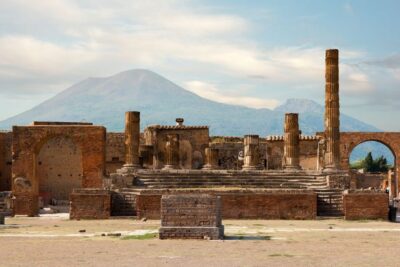 ★ 4.2Pompeii: Entry Ticket with Optional Audio GuideFrom $2612,360 reviews
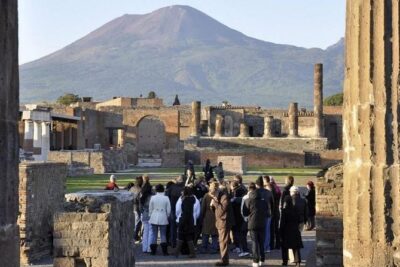 ★ 4.8Pompeii: Small Group Tour with an ArchaeologistFrom $4012,264 reviews
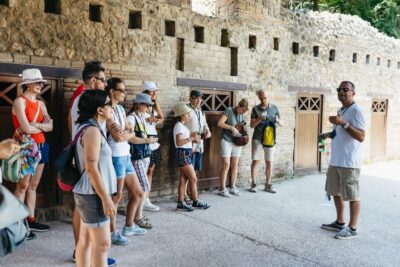 ★ 4.3Pompeii Ruins & Mount Vesuvius Day TourFrom $12011,459 reviews
 ★ 4.6Sorrento, Positano and Amalfi Full-Day TourFrom $10710,988 reviews
 ★ 5.0Sorrento, Positano & Amalfi Coast – Small Group TourFrom $768,643 reviews
 ★ 4.6Catacombs of San Gennaro Entry Ticket & Guided TourFrom $157,941 reviews
★ 5.0Pompeii Small Group Tour with an ArchaeologistFrom $356,593 reviews
★ 4.6Catacombs of San Gennaro Entry Ticket & Guided TourFrom $157,941 reviews
★ 5.0Pompeii Small Group Tour with an ArchaeologistFrom $356,593 reviews
Browse the lists this tour appears in