
Tour review · TOUR REVIEWS
Naples: City and Lapis Museum Tour with an Archaeologist
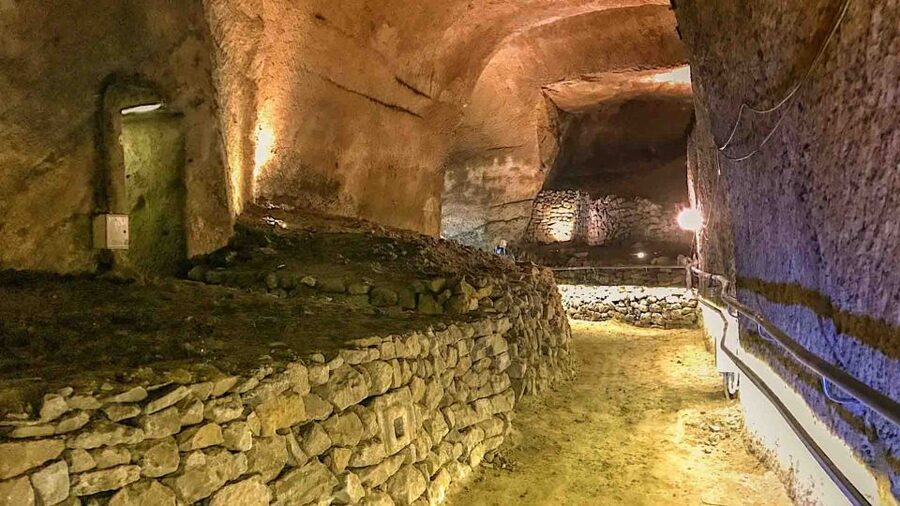
Naples keeps its best stories underground. This Naples walking tour connects the city’s street life to the world’s largest underground path, where you move between Greek cisterns and WWII shelters while an archaeologist guides the meaning behind each layer. It is a smart, timed walk through places most people never get to see.
What I love is the mix of water and survival. You get to understand how ancient Naples stored water in Greek and Roman structures, then you trace how the same underground spaces later served practical wartime purposes. I also like that it ends with the LAPIS Museum route, so the underground isn’t treated like a random side trip, it’s the whole point.
One consideration: the route goes about 40 meters below the crowds and it is not suitable for wheelchair users. If you have mobility issues or you hate tight stairs and enclosed spaces, it may not be your best Naples plan.
Key highlights you’ll care about
- Piazza San Gaetano to Piazza Bellini for an above-and-below Naples arc that stays efficient
- Professional archaeologist plus local guide, so facts come with context, not just dates
- Greek cisterns and Roman tanks that explain how the city functioned
- WWII shelters at the LAPIS Museum path, including preserved rooms and memorabilia
- Small group size (up to 10) to keep questions and pacing under control
Naples Underground Isn’t a Side Show, It’s the Main Story
Naples is one of Italy’s oldest cities, and a lot of its life happened underground. That is the core idea of this tour: you don’t just look at tunnels, you learn what they were for, who used them, and why they lasted.
You’ll hear how the underground route you walk through links Greek cisterns, Roman aqueduct systems, and World War II air shelters. The result is a timeline you can follow with your feet, including the fact that around 45% of Naples’ underground is practically empty, which is why these preserved passages feel so exposed and rare.
If you like history that explains daily life, not just monuments, this is a great match. You’ll also get a walking format that keeps you moving, so even if you are not a big “museum person,” you still get a satisfying experience in about two hours.
You can also read our reviews of more city tours in Naples



Piazza San Gaetano Meets the City’s Ancient Stage Set
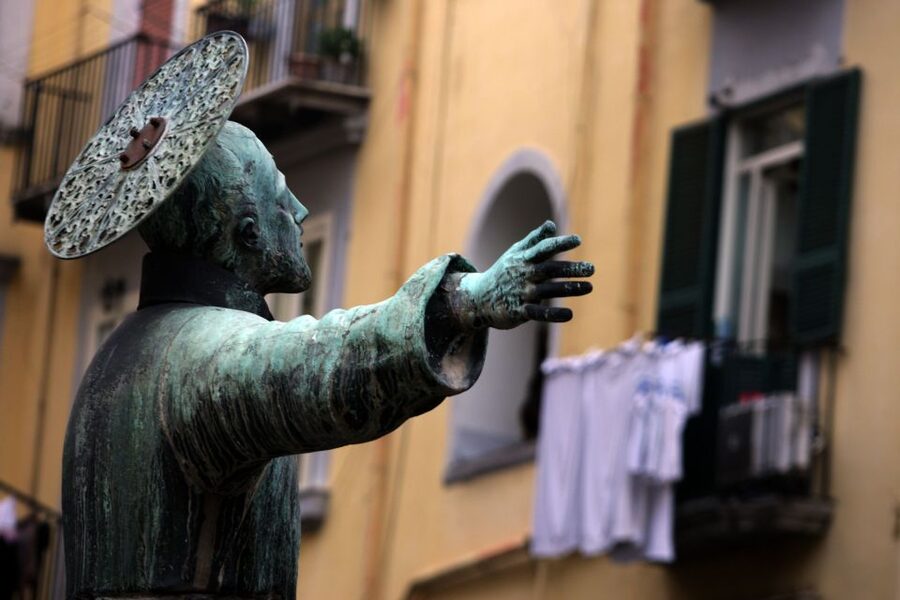
The tour starts in Piazza San Gaetano, at the foot of the statue. From there, you head along Via dei Tribunali, weaving through the older streets so you can get your bearings before the first descent.
This part matters more than it sounds. You are taught to connect what you see above ground to what comes below, including the idea of underground cults of Naples. That theme sets you up to interpret later sites as more than spooky basements, they were part of how people believed, lived, and survived.
Along the way, you also get a chance to admire a gothic church and peer through a glass floor at the remains of an earlier ancient mosaic. That moment is useful because it trains your eyes: you start noticing layered Naples everywhere, not only underground.
A practical note: wear shoes you trust. This is a walking tour where comfort helps you focus on details.
Basilica di San Lorenzo Maggiore and the Habit of Building Over Time
Next up is the Basilica di San Lorenzo Maggiore. This stop is guided, but the key value is how it reinforces the theme of repetition and reuse, Naples style.
You are not only looking at one era. You’re seeing how different periods piled onto earlier structures, so the city became a record that got edited again and again. That makes the later underground material feel logical, not random.
The tour also keeps you moving through local streets and guided stops, so you do not spend the whole time staring at a single wall. Instead, you build momentum toward the descent, which is where the experience really changes gear.
Church of Purgatory and the Mosaic Through Glass
The Church of Purgatory is another guided moment, and it’s one of those stops that can make you slow down. The highlight here is the view through glass at the remains of an ancient mosaic.
Why this works: mosaics are visual, and glass protection helps you see without risking damage. It is also a nice bridge between what you can identify immediately, colors and patterns, and what you need an archaeologist’s help to interpret, the why behind the placement and the reuse.
If you tend to miss details in church interiors because you’re worried about time, this stop is timed well. You get instruction first, then you get to look, and that usually makes the experience feel more personal.
40 Meters Down at Santa Maria Maggiore
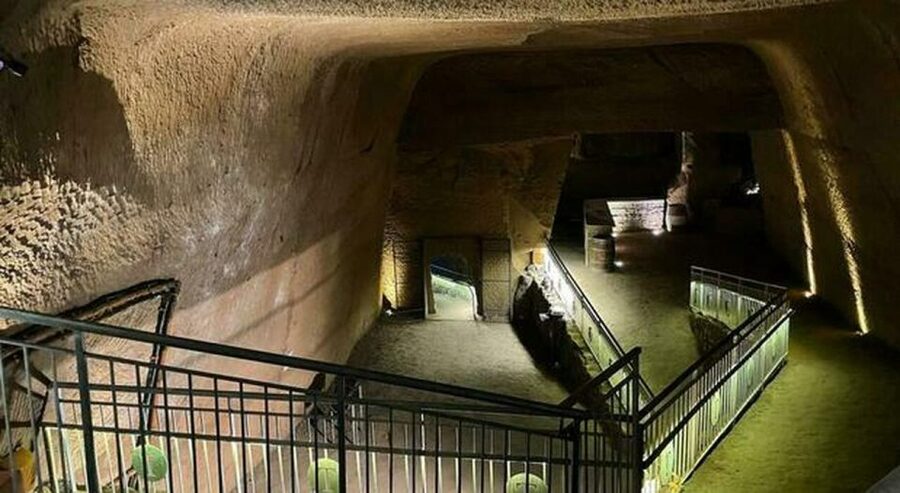
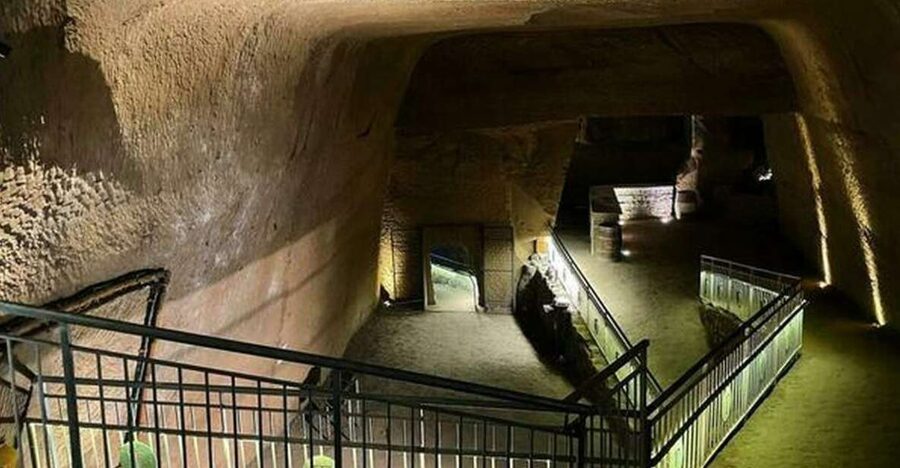
Here’s where the tour changes from streets to vertical history. You go about 40 meters below the crowds through a doorbell entry associated with Santa Maria Maggiore, one of the city’s oldest churches.
What makes Santa Maria Maggiore a standout is the continuity of sacred space. The church was built on a Pagan Roman temple dedicated to Diana, and Roman structures are still present. So, you are not only going underground, you are stepping into a continuity of religious sites that changed names and meaning over time.
If you like stories that show how cultures overlap, this is the moment you’ll remember. It’s also a good reality check for comfort, the descent is real and the underground portion follows.
You can also read our reviews of more museum experiences in Naples






Greek Cisterns Carved Into Tough Stone
Once you reach the Greek cisterns, the focus shifts from legend to infrastructure. You walk through spaces carved into tough stone, designed for storing water.
This is where the tour becomes practical in a satisfying way. Instead of treating “ancient Naples” like a postcard, you see how a city managed a daily necessity. Water storage is never just technical, it influences where people gather, how neighborhoods develop, and what authorities controlled.
The cisterns also set your expectations for the lower section. You can feel the change in scale and purpose as you go from storage spaces to connected passages built to move water and preserve supply.
If you’re the type who likes asking, How did they do this, you’ll get plenty of material for that.
Roman Tanks, Water Routes, and the Secret-Passage Layer
At the lowest point of the route, you transition from carved cisterns to tunnels that lead to the tanks used for Roman water collection. This is more than impressive engineering, it helps you understand the underground as a working system.
Then comes one of the tour’s most interesting points: the trail was used in medieval times as a secret passage by the Templar Knights, and in 1943 as an airplane retreat.
The value of that jump is that it shows how Naples reused space. Tunnels and underground rooms were already there, so later groups adapted them for their own needs. Even when the purpose changed, the geography stayed useful.
You’re also told that many bathrooms, kitchens, and memorabilia are still preserved to this day. That detail matters because it makes the underground feel inhabited rather than staged. You’re not only studying objects, you’re seeing rooms that suggest routines and real sheltering.
LAPIS Museum Path and WWII Air Shelters, Where Survival Leaves Traces
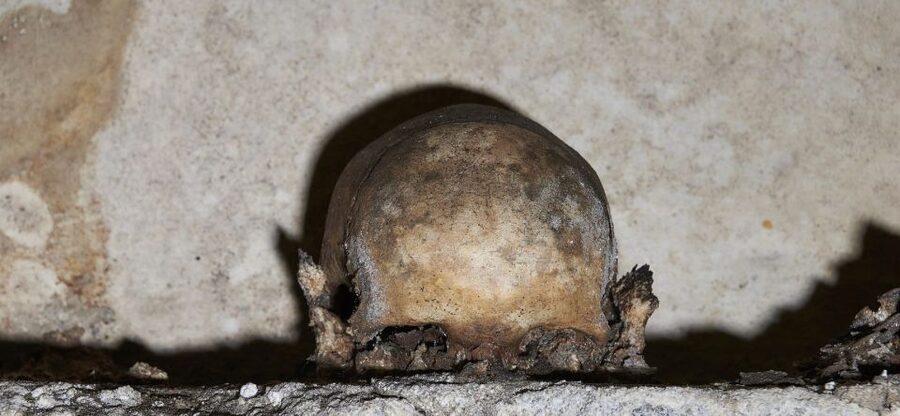
The tour includes admission to the LAPIS Museum route, plus tickets to a WWII Shelters Museum. This is where you connect the ancient water world to the modern crisis world.
The underground route becomes a story of continuity under pressure. Ancient cisterns were built to solve scarcity. WWII shelters were built for survival. Different threats, same need for protection, same advantage in reusing existing underground infrastructure.
The LAPIS Museum format helps you stay oriented. Instead of a vague “look at tunnels,” you follow a designed path with guided interpretation, so you know what you’re seeing and why it mattered to people at the time.
From a value perspective, the key is that these museum entries are included. You’re not paying extra on site for the underground part. For a short tour, that inclusion makes a real difference.
Pace, Small Group Size, and How to Prepare
This tour is designed for a comfortable 2 hours, and it runs with a small group limited to 10 participants. That small size matters underground. It reduces bottlenecks at doorways and makes it easier to hear your guide, especially when you are discussing layered architecture and preserved rooms.
The tour starts at Piazza San Gaetano and finishes at Piazza Bellini. That end point is handy because Piazza Bellini sits in a very walkable area for food and a post-tour stroll, so you can keep the momentum going.
What to bring, based on the provided guidance:
- comfortable shoes for uneven ancient surfaces
- a camera if you want to document the mosaic views and underground rooms
- weather-appropriate clothing since Naples conditions can change
- a packed lunch, cash, and a credit card (they are listed as recommended)
Even though the tour is short, the underground sections can make you appreciate snacks later. If you plan to eat soon after, having what you need helps you keep the day relaxed.
Also, pets are not allowed (assistance dogs allowed). If you’re traveling with a companion animal, plan for an alternate arrangement.
English or Italian, and Guides Who Stick With the Story
The tour is offered in English and Italian, and you get a local guide plus a professional archaeologist. That combination is a big deal. The local guide helps you connect the streets to daily context, and the archaeologist gives you the interpretive backbone.
From what’s been shared by past participants, the best moments are often about guide style: a passionate approach, strong subject knowledge, and patience with questions. Some guides named in the feedback include Riccardo and Theresa, with comments pointing to enthusiasm and calm answers when people asked things mid-route.
If you like a tour where you can ask follow-ups, a small group and an archaeologist make that easier. You are not stuck with a script that ignores curiosity.
Price and Value: Is $53 Worth Two Hours?
At $53 per person for a 2-hour walking tour, the price can feel like a lot until you break down what is included. Here you get:
- a local guide
- a professional archaeologist
- admission tickets for the Roman Cistern Museum, LAPIS Museum
- admission tickets for the WWII Shelters Museum
- skip the ticket line
That matters because the underground part is essentially the museum part. If you tried to do it on your own, you’d likely spend time queuing and paying separate entries. Here, the museum admissions are folded into the tour fee, and the guidance helps you understand what might otherwise look like disconnected tunnels.
The biggest value driver is interpretation. Greek cisterns, Roman tanks, and WWII shelters could be visually interesting but confusing without context. The archaeologist turns it into a clear story.
Is it expensive compared to a basic city walk? Yes. But compared to paying for multiple entries and losing time, it’s a practical choice.
Who Should Book This, and Who Might Prefer Something Else
This tour is a smart pick if you want Naples history that is hands-on. You’ll enjoy it most if you like:
- walking tours with a clear theme
- archaeology explained in everyday terms
- a timeline you can physically trace through underground spaces
It may not be for you if:
- you need wheelchair accessibility, since it is not suitable for wheelchair users
- enclosed spaces and steep descents make you uncomfortable
- you prefer long museum browsing over guided movement
Also, if you’re in Naples for a tight schedule, the structure helps. You get a finished arc in two hours, from ancient square to a different piazza afterward.
Should You Book This Naples Underground Tour?
Book it if you want Naples to surprise you in a way that feels structured and meaningful. The mix of Greek cisterns, Roman water systems, and WWII shelters gives you a rare kind of continuity, how one underground space served multiple eras.
Skip it or consider an alternate plan if stairs and enclosed spaces are deal-breakers for you, because the tour goes around 40 meters below the crowds and it is not wheelchair friendly.
If you do book, plan for comfort first: good shoes, weather-appropriate clothing, and a camera if you care about details. You’ll come away with Naples that makes sense, not just Naples that looks old.
FAQ
How long is the Naples city and Lapis Museum tour with an archaeologist?
The tour lasts about 2 hours.
Where does the tour start and where does it end?
It starts at Piazza San Gaetano and finishes at Piazza Bellini.
What does the tour cost?
The price is listed as $53 per person.
What is included in the ticket price?
The tour includes a local guide, a professional archaeologist, admission tickets to the Roman Cistern Museum, LAPIS Museum, and admission tickets to the WWII Shelters Museum.
Is there an archaeologist on the tour?
Yes, the tour includes a professional archaeologist.
What languages is the tour offered in?
The tour is offered in English and Italian.
How large is the group?
The group is limited to 10 participants.
Is the tour wheelchair accessible?
No, it is not suitable for wheelchair users.
What should I bring?
Bring comfortable shoes, a camera, a credit card, a packed lunch, and cash, plus weather-appropriate clothing.
Are pets allowed on the tour?
Pets are not allowed, but assistance dogs are allowed.
More City Tours in Naples
More Tours in Naples




More Tour Reviews in Naples

Not for you? Here's more nearby things to do in Naples we have reviewed










Tour Reviews, compared.
 ★ 4.8Pompeii: Entry Ticket and Guided Tour with an ArchaeologistFrom $3519,459 reviews
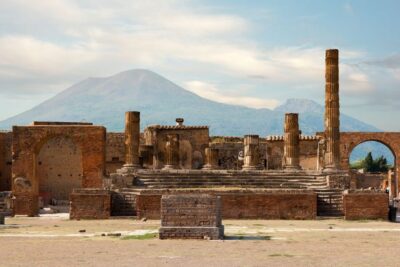 ★ 4.2Pompeii: Entry Ticket with Optional Audio GuideFrom $2612,360 reviews
 ★ 4.8Pompeii: Small Group Tour with an ArchaeologistFrom $4012,264 reviews
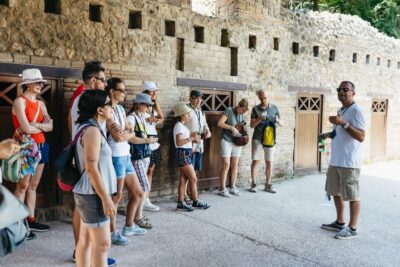 ★ 4.3Pompeii Ruins & Mount Vesuvius Day TourFrom $12011,459 reviews
 ★ 4.6Sorrento, Positano and Amalfi Full-Day TourFrom $10710,988 reviews
 ★ 5.0Sorrento, Positano & Amalfi Coast – Small Group TourFrom $768,643 reviews
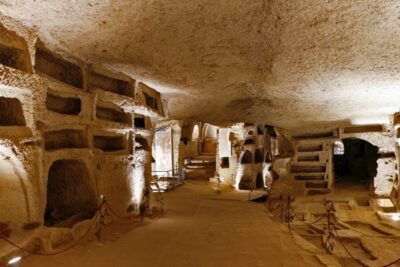 ★ 4.6Catacombs of San Gennaro Entry Ticket & Guided TourFrom $157,941 reviews
★ 5.0Pompeii Small Group Tour with an ArchaeologistFrom $356,593 reviews
★ 4.6Catacombs of San Gennaro Entry Ticket & Guided TourFrom $157,941 reviews
★ 5.0Pompeii Small Group Tour with an ArchaeologistFrom $356,593 reviews
Browse the lists this tour appears in