
Tour review · TOUR REVIEWS
Pompeii and Herculaneum day trip
Pompeii plus Herculaneum in one day is the real deal. You get round-trip pickup from Naples and a private driver, so you are not stuck waiting on group timing. The plan also pairs a first, deeper guided start at Pompeii with quick hit stops that keep the day moving.
I especially like the way guides such as Antonino are described as adjusting on the fly and steering you through the hardest parts of the crowds. I also love that this is built for real pacing, not just a photo sprint, with Pompeii’s big landmarks followed by Herculaneum’s better-preserved streets. One drawback to consider: several stops are time-limited, so if you want a slow, expert walk through every room, you may want the guided option where available and budget extra time inside.
Key takeaways before you go
- Private driver, real flexibility: pickup from hotels, ports, and even cruise docking areas keeps you in control.
- Pompeii starts with a guided walk: you meet a licensed guide after tickets are handled, then you continue through major zones.
- Herculaneum is smaller and often easier to absorb: it is better preserved due to different volcanic materials covering it.
- Clear fee structure helps you plan: some entries are listed as included or free on the route, but you still need to budget for Porta Marina and general site access.
- Guides can tailor the day: examples from Antonino and Pepino point to smooth communication and pacing adjustments.
A Drive Into the Blue: a one-day Naples plan that actually fits
If you are based in Naples and you only have one day to tackle the Roman ruins, this style of tour makes sense. You are not dealing with transfers on trains and buses, and you do not have to wonder where your group ends up next. The day is designed around a private vehicle with hotel, port, or station pickup, then a straightforward plan that hits both Pompeii and Herculaneum.
What makes it work is the balance between guidance and freedom. You get help at the start when the ruins can feel overwhelming, then you move through major highlights where you can look around more independently. That is a smart approach for first-timers who want context without feeling trapped in a long lecture.
More Naples tours, ruins, coast days, and city experiences to compare

Naples pickup and private driving: less stress, more ruins per hour
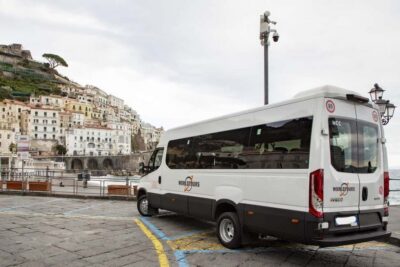
I like tours that remove the “logistics tax.” Here, pickup can be straight from your accommodation if the street allows. If it does not, the driver meets you at the nearest spot where the car can access. This is useful for many Naples neighborhoods, where streets are narrow and traffic rules can be strict.
For cruise passengers, the pickup area is set for the Naples region, which matters when you have a ship schedule to respect. You also get bottled water, plus an air-conditioned vehicle. On a warm day, that small comfort can save your energy for walking.
The biggest practical advantage is that a private driver gives you flexibility. Even when the day has set stops, you still benefit from not waiting on other groups to board, use the restroom, or figure out tickets.
Pompeii first: meeting the licensed guide at Porta Marina Seafood

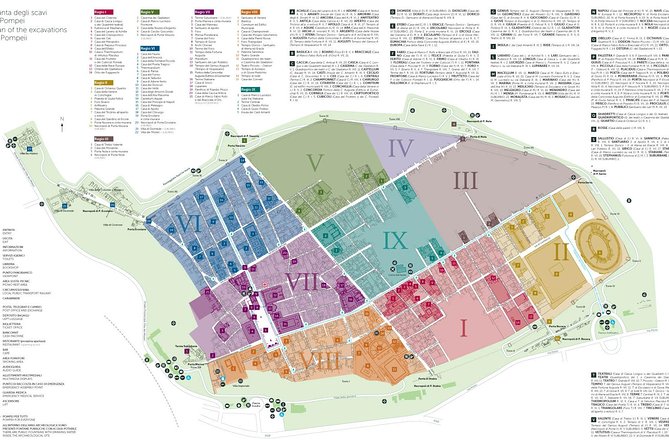
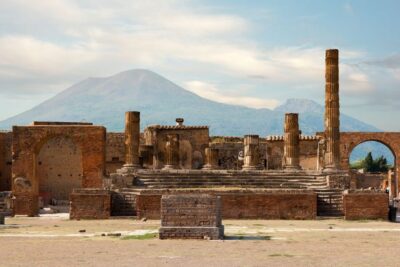
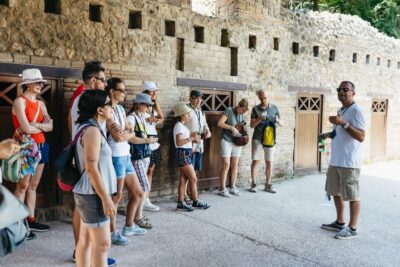
Pompeii can feel like a whole city, because it was one. The plan starts with a longer first block at the Porta Marina area, where you meet a licensed guide after handling tickets. That guided start is more than a nice extra. It is the moment you learn how to read what you are seeing, from street layouts to how public spaces worked.
You then move into Pompeii’s core spaces and major streets. The schedule is structured as a series of short stops, so you keep momentum while still getting enough time to look and absorb. The practical trick here is to treat each stop like a “chapter.” You do not try to understand every detail of Pompeii at once, you learn the city by sampling its most important parts.
One fee point to plan for: Porta Marina is listed as an entrance fee not included. So have that ready so the day starts smoothly.
Foro di Pompei: where Roman daily life centered
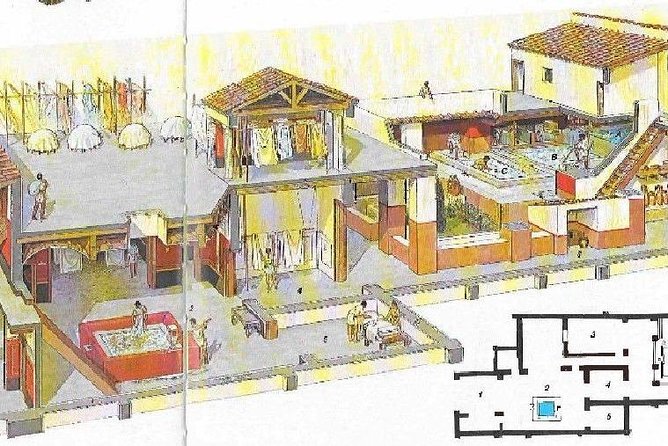
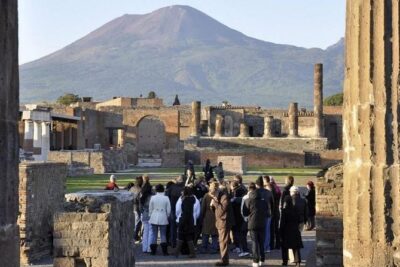
After Porta Marina, the plan heads to the Foro di Pompei. This is the civil forum, the heart of day-to-day activity: administration, justice, business, trade, and places of worship. If you want to understand how a Roman city functioned, this is a strong stop.
Even with a short visit time, the payoff is how the forum connects other sites around it. Once you see where meetings, commerce, and rituals overlapped, Pompeii feels less random. It also helps you notice how people would have moved through the city, because forums were built for crowds and repetition.
Via dell’Abbondanza and Teatro Grande: prosperity and entertainment
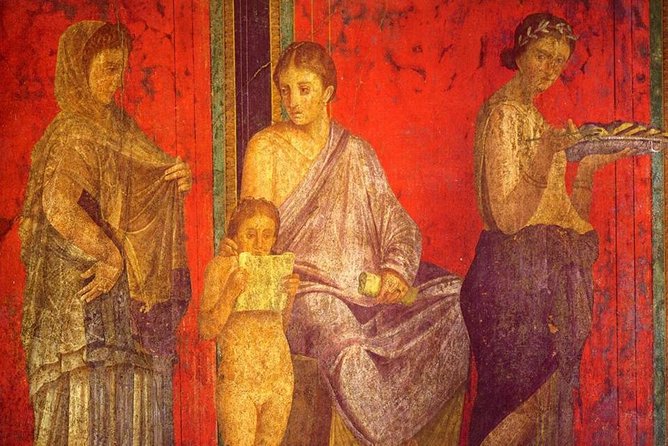
Next comes Via dell’Abbondanza, literally the street of abundance. This is one of Pompeii’s prosperous streets, and that matters because it explains the ruins you see along the way. You are not just walking past stone walls, you are moving through an area that once signaled wealth and business.
Then you reach Teatro Grande, the large theater complex area, plus related buildings. Three main pieces define the space: the Large Theatre, the Odeon, and the Quadriporticum. This zone gives you a clear sense of entertainment and social life in the city. It also helps you picture why Pompeii’s streets and public squares mattered. People gathered for performances, but they also used these places as meeting points.



Casa del Menandro and the baths: what rich homes and public life looked like
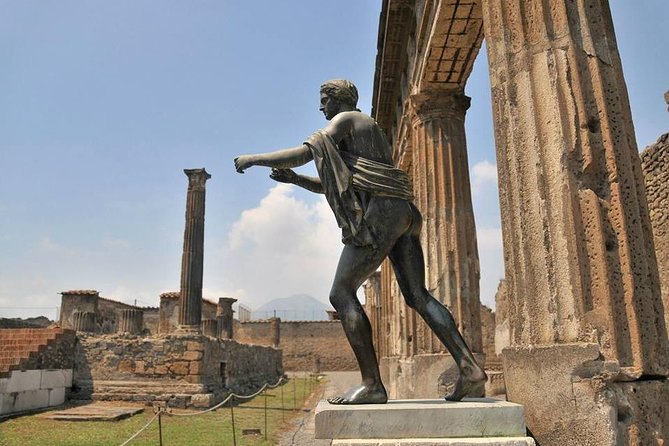
Pompeii is famous for its houses, and Casa del Menandro is one of the richer examples called out on this route. The stop is short, but the point is to show the contrast between everyday streets and the kind of home built for status. This house is described as one of the richest in terms of architecture, decoration, and contents, with a large footprint. Even if you only see selected areas, it changes your perspective on the city.
Then you shift to public life with Stabian Baths (Terme Stabiane). Roman baths were not just for hygiene. They were social hubs where people talked, relaxed, and passed time. The plan highlights these as the oldest and the largest of Pompeii’s public baths, which is a useful detail. When you stand in a site like this, you understand why the city functioned as a community, not just a collection of homes.
The Lupanar: a difficult stop, handled with context
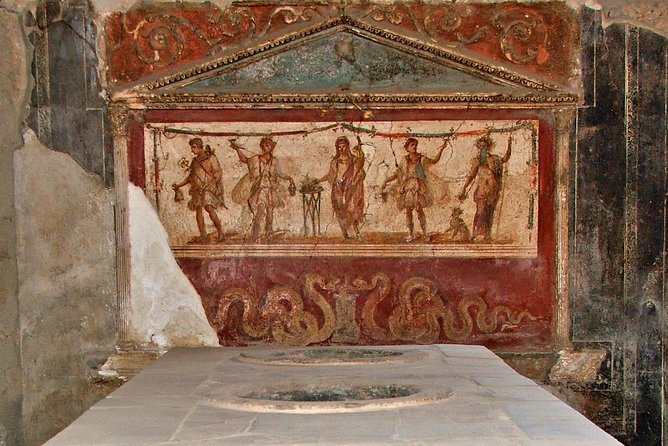
One of the most talked-about places in Pompeii is the Lupanar, a purpose-built brothel. The value of including it is not gossip. It is that the walls reportedly carried erotic paintings, which gives you a direct look at how the city documented and commercialized desire.
This is also a “personal comfort” stop. If you are sensitive to sexual content, you might want to spend less time here. Still, knowing it exists and seeing it in the context of daily Roman life helps you understand Pompeii as it truly was, not as a sanitized museum.
Antiquarium of Pompeii: casts and the story behind the ruins
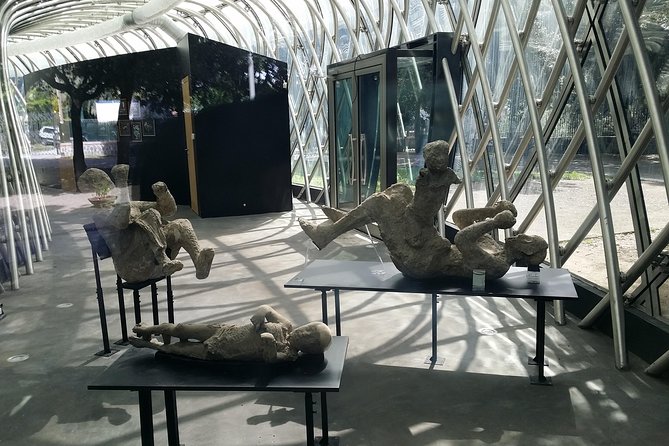
Pompeii does not only live in open air. The route includes time at the Antiquarium of Pompeii, described as an exhibition venue for archaeological finds and daily life artifacts. You can see archaeological discoveries from the excavations, casts of victims from the eruption, and displays about the city’s settlement history before it became a thriving Roman city.
I like that this stop gives the meaning behind the stones. When you walk through Pompeii without context, it can feel like tragedy plus tourism. A museum stop helps you connect what you saw outdoors to the larger story of the eruption and what archaeologists found afterward.
Crossing to Herculaneum: smaller site, often easier to take in
After Pompeii, you head to Parco Acheologico di Ercolano, the Herculaneum excavation area. This town is described as destroyed and buried by lava and mud during the AD 79 eruption, the same event that hit Pompeii.
Here is why many people find it worth the effort: Herculaneum is smaller and it is often better preserved due to the different volcanic materials that covered the town. That usually means the ruins can feel more intact as street-level evidence, not just broken remains. The schedule gives you a short initial block there, then continues through standout areas with extra included entries.
The plan also notes that Herculaneum was discovered before Pompeii, but excavation was repeatedly interrupted because it was difficult to work with. That detail matters because it helps explain why what you see today feels like an intricate, preserved window into daily life.
Herculaneum highlights: streets, baths, and a quieter feel
Once you are inside the Herculaneum zone, the route moves through several specific spaces.
- House of the Hotel: this is described as a big house for the wealthy. Even short visits can make you appreciate how prosperous neighborhoods looked.
- House of the Wooden Sacellum: the plan highlights the patrician facade and the oval cornice, plus masonry seats once used by waiting customers. The most vivid point is the tablinum area divided by a charred wooden partition with bronze rings for lamps. That kind of detail helps you picture the home’s layout rather than just the outside shell.
- Decumano Massimo: the main street. This is a key way to “read” the town, because the decumanus was a central east-west spine. Walking it, even briefly, helps you orient yourself.
Then you reach College of the Augustales, a building financed by two brothers and connected to the Augustan period. It is the kind of stop that turns ruins into community structure, not just architecture. A nearby cultural and social rhythm shows up again with the Suburban Baths, a public bathhouse in the area.
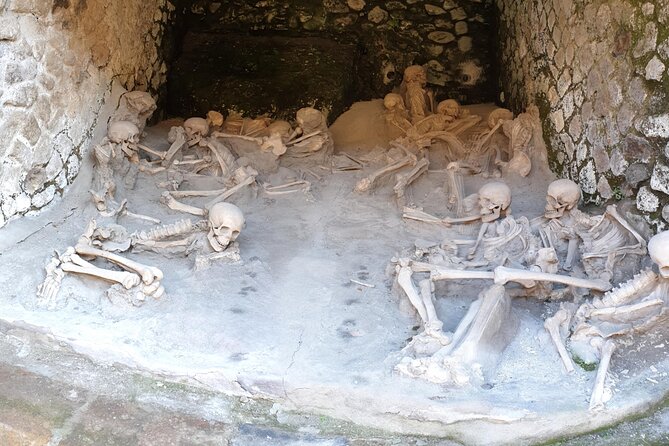
The route also includes the Antiquarium di Ercolano, described as holding amazing objects found next to skeletons. That line is heavy, but it is accurate to what the museum is about: the physical finds are paired with the human story behind the eruption.
Price and value: what $429.69 buys, and what you still pay
At $429.69 per person, the value depends on what you would otherwise spend and how much stress you want to avoid. This price includes air-conditioned vehicle, private transportation, bottled water, and pickup and drop-off across Naples area locations. You also get a mobile ticket, and the day is structured for one group only, not a shared bus schedule.
Site fees are where people often get surprised, so plan ahead. The plan lists access fees to ruins and monuments as not included, plus a separate Porta Marina entrance fee not included. Some specific stops in Herculaneum are marked as admission included, and several Pompeii stops are marked as admission free on this route. So the best way to think about it is: the tour covers the transport and guidance, while the site entrances split between included and not included.
If you are traveling as a small group and you want convenience plus a thoughtful sequence, this pricing can be competitive. If you are traveling solo on a tight budget and you are comfortable arranging transit yourself, you might find cheaper options. But for many people, what you are paying for is time, comfort, and the chance to see both sites without turning the day into a logistics project.
The guide factor: why Antonino and Pepino come up so often
The strongest praise in the guide descriptions centers on pace control and clarity. Names like Antonino show up repeatedly, with comments about his ability to adjust for sensory needs, plus his communication and English. That matters because Pompeii and Herculaneum can overwhelm even curious travelers. A guide who can point out what to look for makes the ruins feel legible.
Drivers matter too. Pepino is mentioned as prompt and a good communicator. That might sound minor, but on a day with multiple walking stops, good driving and clear coordination prevent the small delays that add up.
You may also encounter a Pompeii guide such as Anna, noted for being the best guide at Pompeii in one experience. The point is simple: when the guide gets the rhythm right, you end the day tired but satisfied, not confused.
What to expect on the ground: short stops, then real walking
Be ready for a format where you hit big named areas quickly. Several Pompeii and Herculaneum stops are around 5 to 20 minutes in the schedule. That is not “nothing,” but it is also not “linger forever.” You will likely get the best results if you decide what you want most before the day starts.
I suggest you treat this as a top-sights sampler. If you fall in love with one site, you can always return later for a longer, slower pass. This day trip is built for first contact and smart coverage.
Footwear matters. You will be on uneven ground and you will be moving between zones. Bring water, wear sun protection, and keep your camera ready but not controlling your attention.
Who should book this Pompeii and Herculaneum day trip
This is a great fit if you want:
- One-day coverage of both Pompeii and Herculaneum with private logistics.
- A guided start at Pompeii so you can understand what you are seeing right away.
- Flexibility from pickup to drop-off without battling local transit.
It is also a good choice for families, since guides are described as engaging kids with anecdotes rather than just facts. And if your group needs extra pacing or adjustments, the guide descriptions include examples of tailoring for visual and hearing impairment.
If you hate time limits and you want to read every inscription at length, you might prefer a slower tour option with more guided hours. In that case, you can still book this for the convenience, but plan to add time where possible.
Should you book this Pompeii and Herculaneum private day trip?
I would book it if your priority is efficiency plus comfort. Getting picked up in Naples, riding in an air-conditioned car, and having a driver who can keep the day moving is a big deal. Add a strong guide, and you get more than “ruins.” You get a guided way to connect streets, houses, baths, theaters, and the human story behind the eruption.
I would think twice if you are purely shopping on cost and you are confident building your own route and entry strategy. In that case, the site fees plus your own transit time could erase some of the value.
If you want the simplest path to seeing both Pompeii and Herculaneum in one day, this is the kind of tour that makes your day feel organized, not rushed.
FAQ
How long is the Pompeii and Herculaneum day trip from Naples?
It lasts about 6 to 7 hours.
Do you get pickup from Naples hotels and other locations?
Yes. Pickup is offered from your accommodation if the streets allow, otherwise at the closest car-accessible point. It also covers cruise docking areas, plus pickup and drop-off for the airport, train station, and ports.
What language is the tour offered in?
The tour is offered in English.
What is included in the price?
Included are an air-conditioned vehicle, private transportation, bottled water, and pickup and drop-off across Naples area locations. Mobile tickets are also included. A professional guide at the ruins is included only if you select an option that includes the guide.
Are entrance fees included for Pompeii and Herculaneum?
No. Access fees to ruins and monuments are not included, and Porta Marina has an additional entrance fee listed as not included. Some specific stops are marked as admission included, and others are marked as admission free on the route, but you should plan for extra site payments.
Is lunch included?
No. Lunch is not included.
Is this a private tour?
Yes. It is a private tour where only your group participates.
Can I tour on my own, or will I have a guide at the ruins?
The plan supports taking in the ruins on your own, and there is also an upgrade option for guided tours. If you do not choose the option that includes the guide at the ruins, you would not have a professional guide for those stops.
What is the cancellation policy?
You can cancel for free up to 24 hours in advance for a full refund. If you cancel less than 24 hours before the start time, the amount you paid is not refunded.
More 1-Day Tours in Naples


More Tour Reviews in Naples
Not for you? Here's more nearby things to do in Naples we have reviewed






Tour Reviews, compared.
 ★ 4.8Pompeii: Entry Ticket and Guided Tour with an ArchaeologistFrom $3519,459 reviews
 ★ 4.2Pompeii: Entry Ticket with Optional Audio GuideFrom $2612,360 reviews
 ★ 4.8Pompeii: Small Group Tour with an ArchaeologistFrom $4012,264 reviews
 ★ 4.3Pompeii Ruins & Mount Vesuvius Day TourFrom $12011,459 reviews
 ★ 4.6Sorrento, Positano and Amalfi Full-Day TourFrom $10710,988 reviews
 ★ 5.0Sorrento, Positano & Amalfi Coast – Small Group TourFrom $768,643 reviews
 ★ 4.6Catacombs of San Gennaro Entry Ticket & Guided TourFrom $157,941 reviews
★ 5.0Pompeii Small Group Tour with an ArchaeologistFrom $356,593 reviews
★ 4.6Catacombs of San Gennaro Entry Ticket & Guided TourFrom $157,941 reviews
★ 5.0Pompeii Small Group Tour with an ArchaeologistFrom $356,593 reviews
Browse the lists this tour appears in