
Tour review · TOUR REVIEWS
Skip-the-Line Pompeii Guided Tour from Naples
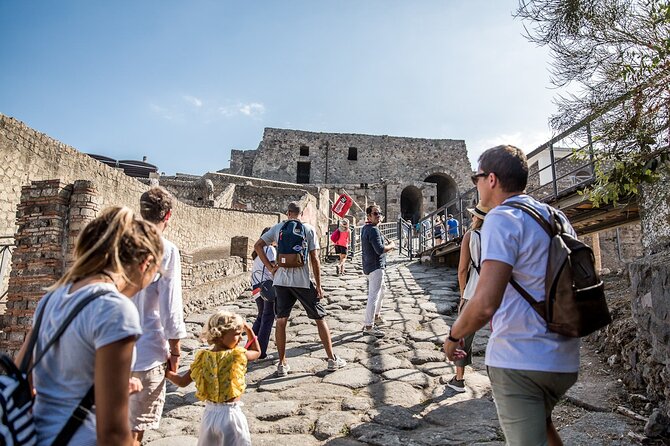
Pompeii is huge, so timing matters. This guided, skip-the-line Pompeii tour from Naples gets you into the site faster and then helps you make sense of streets, homes, and public life without feeling lost. You also get priority admission tickets that cut the worst of the waiting.
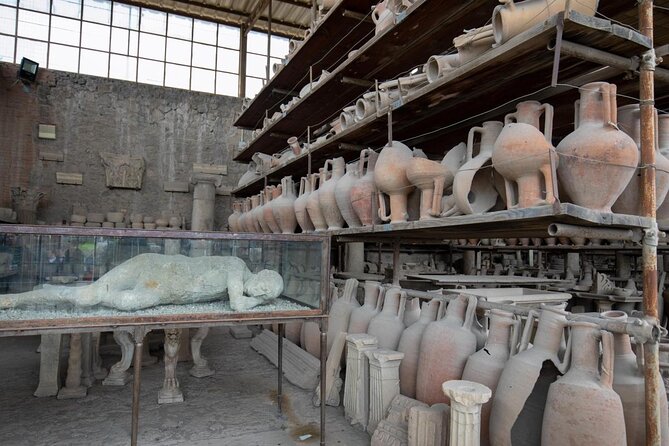
What I like most is the way the guide turns scattered ruins into something you can follow. You hit major landmarks like the Civil Forum and the Basilica, plus quieter highlights like the Baths and the Theater, instead of bouncing around randomly.
One thing to consider is that the day moves at a guided pace. A couple of stops are brief, so if you want long, wandering time in just one area, you may finish Pompeii wanting more hours on your own.
Key things to know before you go
- Priority entry saves time so you can start seeing Pompeii sooner rather than queuing in the heat
- Official guide + headphones help you understand the site, especially in larger groups
- Focused highlights cover public life, elite homes, and entertainment in a half-day window
- Comfort matters because you will walk on site, often in strong summer sun
- Group size stays small-ish with a maximum of 29 people, which usually keeps the flow manageable
Why This Pompeii Tour Works From Central Naples
If you are starting in Naples, the biggest win is getting away from the complicated, time-draining transfer on your own. This tour builds in round-trip transportation from a centrally located meeting point in Naples and then delivers you to Pompeii with a group setup that stays organized.
The meeting spot is P.za Giuseppe Garibaldi, 91, 80142 Napoli NA, Italy, and the tour ends back at the same place. That matters because after a few hours walking through an archaeological site, you want your return plan to be simple, not another puzzle.
The tour is designed for real visitors with limited time. Expect an overall duration of about 4 hours, which is a practical fit for first-time Naples travelers who want Pompeii as a “must-do” without turning the day into a full expedition.
Group size also plays a role. With a maximum of 29 travelers, you are not stuck in a mega-coach where you constantly lose sight of the group. Many parts of Pompeii are spread out, so staying in a manageable group helps you keep momentum and hear the guide when you are close.
One more small but meaningful detail: for groups bigger than 10 passengers, you get headphones in Pompeii. That is a big deal because noise can be a problem in popular ruins, and you do not want to keep squinting at faces trying to figure out what was just explained.
You can also read our reviews of more guided tours in Naples

Skip-the-Line Entry: Turning Waiting Into Seeing
Pompeii can feel like two different experiences: the part where you are waiting, and the part where you are finally inside and trying to cover ground before your feet give out. This tour targets the waiting part directly by including skip-the-line access and admission tickets, so you do not have to treat the entrance like a test of patience.
You also get a mobile ticket. In plain terms, that means less time spent hunting down printed documents and more time focused on getting oriented at the site. It is not glamorous, but it helps your day run smoother.
Once you are in, the official guide is what turns the ruins into a readable story. Pompeii is massive and the layout is not intuitive. A good guide helps you understand what you are looking at, what it was used for, and why different areas were important to daily life. You can see the streets, but without context you miss the “why.”
From what I know about how these guided routes work, the biggest practical advantage is that you are guided between the biggest public structures and the most visually memorable areas. That reduces the chances you will spend your energy on the “wrong” parts simply because they are near your route on a map.
Still, keep your expectations realistic. This is a half-day style tour. You will not see every doorway, fresco fragment, and courtyard in Pompeii. You will, however, get a smart outline of the city’s public core and key elite and entertainment sites.
Pompeii’s Civil Forum, Basilica, and Temple of Jupiter
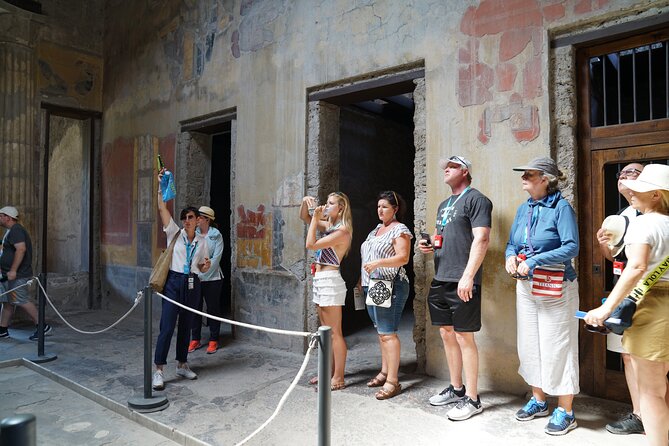
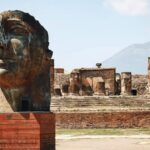
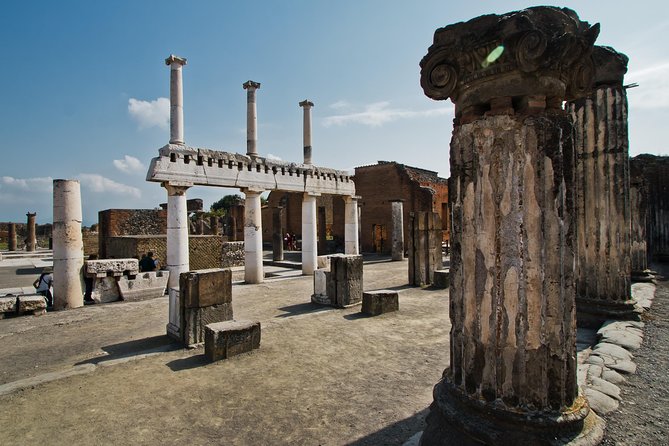
The heart of Pompeii’s daily life is the Civil Forum, and this is where the tour makes the most sense for first-timers. The Forum is described as the core of public administration, justice, business management, and trade activity, including markets and places of citizen worship. Translation: this was not just a pretty square. This is where the city ran.
You will focus on several landmark clusters here.
First up is the Basilica. It is one of the Forum’s most important buildings, with an extension of 1,500 square meters. Its space was used for business and administration of justice, so it is a natural place for the guide to connect the dots between what people did and where they did it. If you like structure and function, this stop gives you both.
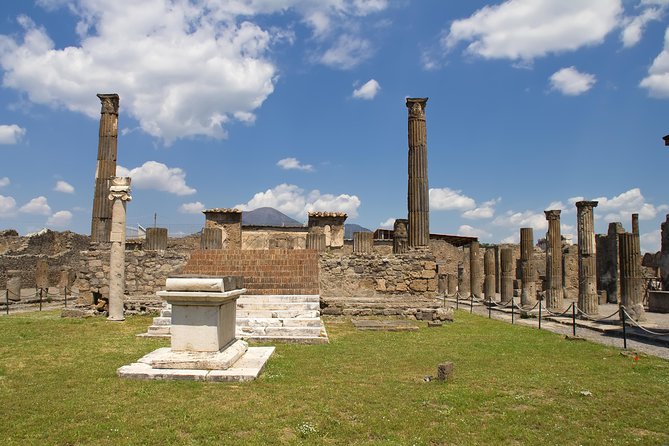
Next is the Temple of Jupiter on the north side of the Forum, with Mount Vesuvius rising in the background. The tour explains how the colony was founded in 80 BC and how the temple went through a radical renovation. It became a Capitolium-style complex, tied to the cult statues of Jupiter, Juno, and Minerva, placed on a raised base so passersby could see them from the Forum square.
Then there is the Macellum, which is tied to commerce and food culture. This area includes a tuff quadriporticus and an elevated hall for worship on the eastern side. The tour description also calls out the niches with copies of two marble statues, a female and a male armed, plus a fragment of a larger statue likely connected to imperial cult messaging. Even if you do not remember every name, what you gain is an understanding of how politics, religion, and food markets blended into one public zone.
A nice bonus at this stage is how the guide can help you “read” the ruins as a city system. You are not just collecting photos. You are learning where people gathered, where disputes were handled, where trade happened, and where religious attention was displayed.
Time-wise, you get about 2 hours at the Pompeii archaeological park during the main initial block. If your goal is to see Pompeii in an orderly way, that is useful. If your goal is to slowly photograph every mosaic and doorway, you may want extra time beyond the tour window.
Via dell’Abbondanza: Following Pompeii’s Main Street Energy
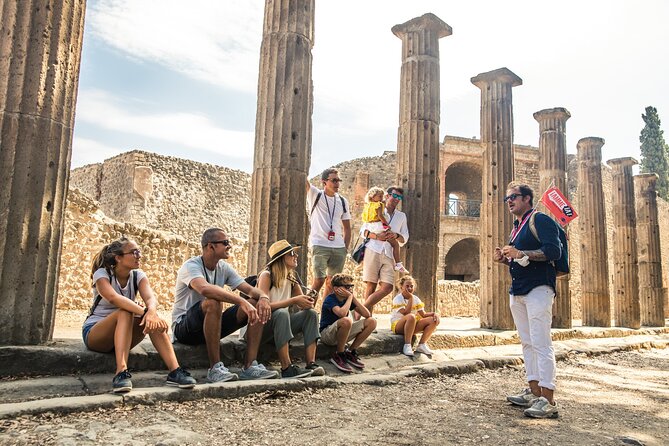
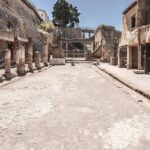
After the Forum core, the route heads to Via dell’Abbondanza, the ancient main street. This is the decumanus maximus, running east and west from the Forum toward the Porta Sarno. The tour frames it as a noisy, crowded street in ancient times, lined with shops, workshops, cafes, and snack-bars.
What makes this stop valuable is that it helps you shift from civic buildings to street life. You start to imagine the rhythm of movement and commerce. Even today, the street geometry and the clustering of structures give you a clue about how shoppers and workers navigated the city.
Practically, this stop is short, about 10 minutes. So your best move is to use it for orientation. Look at the street lines, get a sense of direction, and then let the guide point out the key features that explain how the street worked.
If you are traveling with family or friends who want a calmer pace, this part can still work because street stops can be less physically demanding than climbing around. Still, the site is sun-heavy, so I would treat Via dell’Abbondanza as a quick photo and look-around moment, not a place to hunt for everything.
Stabian Baths and the House of the Faun
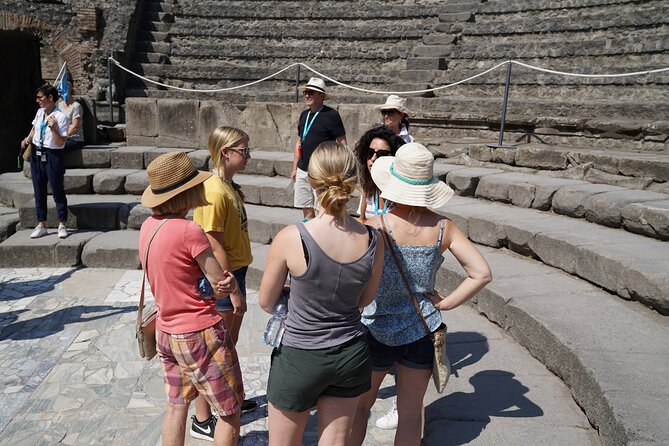
Pompeii was a city where people relaxed in public spaces, and the Stabian Baths are one of the clearest examples you will see on this route.
The Stabian Baths (Terme Stabiane) are located behind the Temple of Jupiter and date to the years after the founding of the colony of veterans by General Silla in 80 BC. The tour also explains that women’s and men’s quarters had separate entrances.
Inside the men’s section, you are given a walkthrough concept of the bath progression: an apodyterium used as a tepidarium, then frigidarium for cold baths, and calidarium for hot baths. One concrete detail matters here. Pompeii was hit by the earthquake of 62 AD, and the baths were heavily damaged. Seeing a building that was altered by disaster makes the city feel less like an exhibit and more like something that was interrupted.
This stop is also about 10 minutes, so again, think of it as a guided highlight. The guide helps you focus on the functional layout rather than just walking through stone rooms with no context.
After that, you move toward elite private life, which is where the House of the Faun comes in. This residence is described as one of the largest and most luxurious private houses in Pompeii, occupying an entire city block. It is named after the bronze statue of a dancing faun found in the atrium.
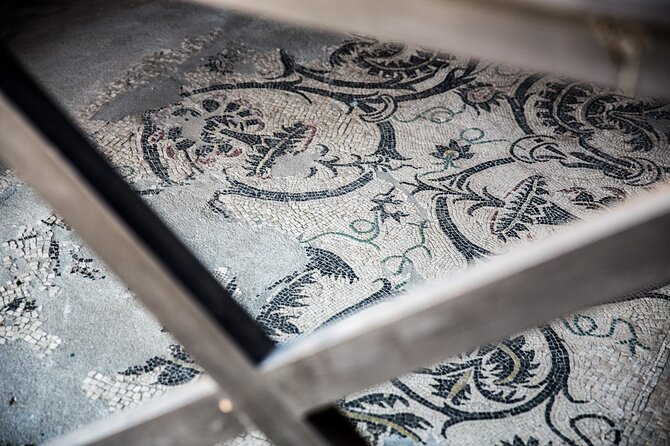
The key attraction is the Alexander Mosaic, which depicts the battle between Alexander the Great and Darius III of Persia. The house also has two peristyle gardens and intricate floor mosaics, pointing to wealth and high taste.
Why I like this contrast: Pompeii’s Forum gives you public life. The House of the Faun shows you private display. You start to understand that the ruins are not just public monuments. They are homes where art and social identity were built into daily space.
If you love mosaics or interiors, you will probably want more time here than the tour can offer. Still, the guide’s interpretation makes it easier to appreciate what you are seeing even with limited minutes.
More Naples tours, ruins, coast days, and city experiences to compare


Via delle Ville to Villa of the Mysteries and Teatro Grande
This part of the tour shifts away from the city’s public center and toward a sense of how Pompeii connected with the suburbs and beyond.
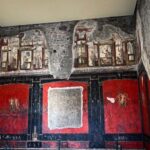
Via delle Ville is described as a scenic road outside Pompeii’s city walls, leading away from the Porto Ercolano gate. The tour frames it as an ancient route connecting the urban center to the suburbs and mentions a necropolis lined with impressive tombs. The most famous destination associated with this route is the Villa of the Mysteries, known for breathtaking frescoes depicting Dionysian rites.
This is one of those Pompeii moments where the tone can change. The Forum area feels like official power and everyday business. The Via delle Ville route can feel more atmospheric, with a quieter sense of space and distance from the city grid.
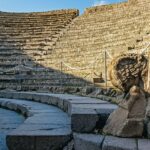
Then you get Teatro Grande, the horseshoe-shaped auditorium built into a natural hillside. The tour points out it could hold roughly 5,000 spectators and dates to the 2nd century BC. It is described as the first Greek-style stone theater in Pompeii and served as the city’s primary venue for comedies, tragedies, and pantomimes.
If you like the “how did they entertain themselves” side of archaeology, Teatro Grande is a great stop. You can stand where the stage once faced the audience, then mentally map where people sat based on the tiered design and the scenae frons, the stage background.
One extra benefit of having a guide here is that theater shapes your view of the whole city. When you understand where entertainment happened, Pompeii starts to feel more complete. It is not only courts, markets, and baths. It is also art, performance, and social gathering.
From the experiences shared by people who did this route, the guidance tends to keep you moving efficiently even when multiple groups are trying to see the same big targets. That is not magic. It is just good pacing and clear instructions about where to go next.
Price, Value, and How to Plan Your 4 Hours
At $72.01 per person for about 4 hours, the value depends on one thing: how much you value your time inside the site. The biggest cost saver is not just skip-the-line access. It is also round-trip transportation from Naples, an official guide in Pompeii, entry to the Pompeii archaeological site, and headphones for larger groups.
If you were trying to do this on your own, you would still need tickets, planning time, and enough walking coordination to cover the biggest highlights quickly. This tour packages that into a set route with priority entry, so your day is less trial and error.
The schedule is tight enough that it is best for people who want a strong first impression rather than total coverage. Pompeii really does require more time to wander, especially if you want to go slow on the mosaics, dwell on specific frescoes, or revisit the same building twice. This tour is built to give you the coherent overview first, then leaves room for you to decide what you personally care about later.
Practical planning tips matter here. The tour suggests sunscreen and comfortable shoes, and that is exactly right. Pompeii sun can turn a short walk into a sweat session, especially when you are outside between stops.
I would also plan to arrive early at the meeting point and double-check which group is boarding. There are reports of meeting point confusion and pickup timing issues, so building in extra buffer protects your mood. If you are meeting at a popular central Naples location, you do not want to start your Pompeii day stressed.
As for what to bring, the tour data calls out sunscreen and comfortable shoes. I would add water to your mental checklist, since Pompeii is a long sun exposure even during shorter guided segments. Also, if you tend to get distracted in crowds, your headphones will help you lock onto the guide’s explanations.
One more nuance: some people associate Pompeii tours from this region with an added vineyard stop afterward. That is not stated as a guaranteed part of this exact Pompeii itinerary, but if you see it mentioned on your booking, it can be a nice way to round out the day with local wine and a slower pace after the ruins.
Should You Book This Pompeii Skip-the-Line Tour?
Book it if you want a structured overview of Pompeii from Naples, with priority entry and an official guide to help you understand what you are seeing. This tour fits first-timers, people short on time, and anyone who prefers not to piece together logistics in a place as spread out as Pompeii.
Skip it, or consider a different style of visit, if your dream Pompeii day is slow, deep exploration of just a few spaces. This route covers major landmarks, but the shorter stops mean you cannot fully “linger” the way you can with longer individual entry.
FAQ
How long is the Pompeii guided tour from Naples?
The duration is about 4 hours.
What is the meeting point in Naples?
The tour meets at P.za Giuseppe Garibaldi, 91, 80142 Napoli NA, Italy.
Is Pompeii admission included?
Yes. Entry to the Pompeii Archaeological Site is included.
Does this tour include skip-the-line access?
Yes. It includes skip-the-line access with priority admission tickets.
What languages are available?
The tour is offered in English, and it may be operated by a multi-lingual guide.
Are headphones provided?
Yes, headphones are included in Pompeii to hear the guide clearly for groups bigger than 10 passengers.
Can I cancel and get a full refund?
Yes, you can cancel up to 24 hours in advance for a full refund. If you cancel less than 24 hours before the start time, the amount paid is not refunded.
More Guided Tours in Naples
More Tours in Naples




More Tour Reviews in Naples

Not for you? Here's more nearby things to do in Naples we have reviewed






Tour Reviews, compared.
 ★ 4.8Pompeii: Entry Ticket and Guided Tour with an ArchaeologistFrom $3519,459 reviews
 ★ 4.2Pompeii: Entry Ticket with Optional Audio GuideFrom $2612,360 reviews
 ★ 4.8Pompeii: Small Group Tour with an ArchaeologistFrom $4012,264 reviews
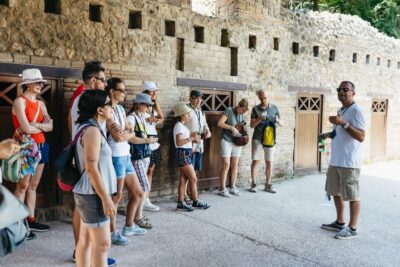 ★ 4.3Pompeii Ruins & Mount Vesuvius Day TourFrom $12011,459 reviews
 ★ 4.6Sorrento, Positano and Amalfi Full-Day TourFrom $10710,988 reviews
 ★ 5.0Sorrento, Positano & Amalfi Coast – Small Group TourFrom $768,643 reviews
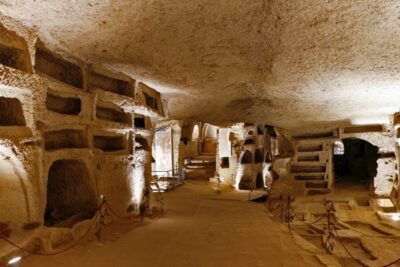 ★ 4.6Catacombs of San Gennaro Entry Ticket & Guided TourFrom $157,941 reviews
★ 5.0Pompeii Small Group Tour with an ArchaeologistFrom $356,593 reviews
★ 4.6Catacombs of San Gennaro Entry Ticket & Guided TourFrom $157,941 reviews
★ 5.0Pompeii Small Group Tour with an ArchaeologistFrom $356,593 reviews
Browse the lists this tour appears in